The Crisis in American Politics

What the 18th century Framers of our government feared, abuse of power and corrupt politicians taking control of our system of government, has apparently come to pass, if this election season and those who are our choices for President, are any indication.

The Framers—people such as Washington, Franklin, Adams, Jefferson, Madison, Jay, Hamilton, Dickinson—feared that Democracy would result in demagoguery, as it did in ancient Athens, and Republicanism, if not checked and balanced, would result in unbridled power, especially in the hands of the Executive.

The Framers were particularly influenced by the ancient Roman Republic, which was a very successful government for a time. The success of Rome was because of the checks and balances on executive power: two consuls were elected annually, could not be re-elected, and had the veto over the other; the Senate, the membership of which was comprised of former magistrates, also had a check on the power of the consuls, who were charged with enforcing laws and commanding the military—as does the President of the United States.

The Romans also had a worldview based on moral principles that seemed appropriate for Republican government. They believed in pietas: piety–respect for elders, respect for ancestors, following the ways of tradition; gravitas: gravity–seriousness, commanding respect, and stolidity; and virtus: virtue—prompt and effective action in the face of problems, tasks, and enemies.

Some of our Presidents have had these characteristics: Washington had gravitas; Roosevelt had virtus; Lincoln had pietas.

I wonder: what quality does our current President have that sets him apart from others? What quality does Hillary Clinton or Donald Trump have that would fit pietas, gravitas, and virtus? Clearly, it is difficult to answer these questions, in part because the highest office has increasing succumbed to arrogance, vanity, hubris, callousness, corruption, and demagoguery. The President of the United States is far too powerful a person to elect anyone who cannot show humility, restraint, wisdom, piety, dignity, strength of character, honesty, and foresight.

Based on our choices and who we have had for the past eight years, I would say that the American people have their work cut out for them, to find a solution to the demagoguery, corruption, political correctness, and subordination to special interests, that dominate our politics, and have effectively made the President and the Executive Branch a tool of ideologues and their political interests.

Posted in American History, Government | Tagged , , | Leave a comment

The Answer Is: Power, Love, Self-Control

I once belonged to a group of men, the Brotherhood of St. Andrew, most of whom were of the Anglican tradition, who met weekly to discuss Christianity, and to share a meal as well as Eucharist or Morning Prayer from the Book of Common Prayer. One day I read the scripture lesson, and presented my ideas and interpretation of four readings, two from the Old Testament, and two from the New Testament. I discussed Paul’s Second Letter to Timothy.

During the course of the discussion, one man asked how an older person should respond to a young person who has embraced atheism. The following was my answer:

Atheism is a philosophy that is a figment of the imagination. It derives from a lack of satisfaction, from unhappiness, from feeling unfulfilled, from fear of the many tragedies that befall humans. How can God allow, if he exists, the many disasters that we read about, experience, on a daily basis? How can God allow the random deaths of children, cancer coming to a person who is apparently healthy and happy, tornadoes that sweep through neighborhoods, terrorist attacks, random murders of the innocent, civil wars, fires sweeping through apartment buildings, the attacks of 9/11, and so on, and so on? There are too many disasters and tragedies and chance occurrences that kill and dismember to list them all. Think of the hunger that exists, the poverty, the disease, the drug abuse, the crime. One wonders: where is God in all of this? God, why have you forsaken us?

These questions have been asked for thousands of years by thoughtful and despairing people who question God even as they realize He exists. God is so much a part of our existence that to deny Him is to deny Self, to subject oneself to never-ending anxiety about what was, what is, and what will be. Jesus on the Cross quoted Psalm 22, God why have you forsaken me?, rhetorically, for he knew that God, Self, never forsakes.

We live in times of terror, disaster, crime, racial conflict, economic woes—but of course all times are alike, never has there been a time of peace, happiness, love, plenty, unending fair skies and full stomachs. So, because each moment has sufficient cause for worry, humans, indeed all animals, fear.

Fear, timidity, cowardice, one could say, is the natural state of humankind. For how can we confront each moment of uncertainty with certain courage and faith? It is quite impossible, because the next moment of uncertainty comes, followed by the next, and the next, and the next. It doesn’t end until death. The anxiety of each passing moment convinces some people that there is absolute uncertainty in the world, that is, there is no God.

In Paul of Tarsus’s s second letter to his friend Timothy, Paul, in one sentence, summed the human dilemma, summed Christianity, and summed why atheism is a philosophy that is based on fantasy. He told Timothy that God asks us to be fearless: fearlessness derives from power, love, and self-control. The Greek word for power, dynamis, is the same word used in the Gospels to describe Jesus’s power in healing others. It is the power of love. And a person can only use this power of love by means of self-control, that is, self-awareness, to realize that love is found in oneself. And this love is God, for as John truly said, God is Love.

Love is a universal, a constant throughout time and place, found wherever there is hate, despair, tragedy, suffering. Love is the universal, the transcendent, the eternal, the infinite. The atheist proclaims there is no God, then proclaims that love exists, not realizing the inherent contradiction.

To discipline oneself, to channel love toward others, is a work of great power. It is the means by which love combats hate.

There is much noise in our society: television, movies, videos, cell, tablets, pc, iphones, speakers, headphones—the list goes on and on. Humans are constantly talking and listening, though rarely is the communication relevant. If a person retreats to his or her own room, there he or she might find God. A wonderful example of this is the song by Thousand Foot Krutch, “In My Room,” the lyrics for which can be found at this link: http://www.azlyrics.com/lyrics/thousandfootkrutch/inmyroom.html

See also my book, Metamorphosis: How Jesus of Nazareth Vanquished the Legion of Fear, available at https://ash-hill-publishing.square.site/product/metamorphosis-how-jesus-of-nazareth-vanquished-the-legion-of-fear-hardcover/ETEBDKWQ5QIVJBWDA4T6JD64?cp=true&sa=true&sbp=false&q=false


Posted in Christianity, God's Providence, Great Commission, Reflections on the Psalms | Tagged , , , , | Leave a comment

Narrative History Rescues the Past

“Narrative History Rescues the Past”–You’re not likely to see this headlining the latest news feed, though subtle truth rarely makes the news.

Moreover, narrative history is rarely sensational, rarely fantastic, and is (unfortunately) not imaginary, rather based on real people and real places; reality rarely captivates the way fantasy and the unreal do. Yet fiction is not likely to rescue the past.

Doubtless I appear to be writing nonsense: how can people living in the present, anticipating the future, rescue something that has disappeared, gone, never to be relived? The past can be remembered, recollected, but rescued? Hardly.

Stubbornly, perhaps, I maintain that the past can be rescued, and that narrative history wrought by narrative historians is precisely the means to do it; a good narrative historian is a rescuer of the past.

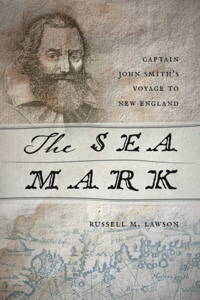
Take my latest book, The Sea Mark: Captain John Smith’s Voyage to New England. There have been many books written on John Smith, of course, and movies made, and poems written, and caricatures drawn, and monuments dedicated to—and more. Why would he need to be rescued, if by that obscure, if pithy, word rescue I mean to bring to awareness, to make known, in the present?

No, that’s not what I mean by rescue. But I am getting ahead of myself. Let me define terms. First, what is meant by narrative history?

Narrative history is an account of sequence of events over time restricted to actual sources or implied events; it uses the historical imagination to re-create a particular episode (if consistent with sources); it uses quotes from writings as a replacement for dialogue; it does not manufacture or imagine a plot, rather the plot occurs as a matter of course based on what really happened; it re-creates scenes based on actual experiences; events and sources guide the imagination and storytelling (not vice-versa); and it relies on honesty: honest use of sources, honest presentation of past, honest evocation of human experience.

A narrative historian must write about a person or topic for which they wish to re-live, re-create, re-experience. Sources must exist to allow for this mental exercise, as well as the penchant to understand human nature, which is gained by reflection into self. Added to this is a good imagination: to imagine the past, imagine what happened, imagine the people, then conform the imagination to the sources, to what really happened. Empathy unites, organizes, creates the whole portrait of the past: as the historian researches and imagines, visits places, he/she must feel, must sense the past, must empathize with those who once lived.

Empathy is the means by which the past can, as it were, be rescued. Empathy with another, even another long dead, requires a vicarious dialogue to be created in one’s head. This dialogue with the past was perfected by a highly imaginative philosopher of the 14th century: Francesco Petrarca, who conversed by means of his pen and paper with past people, Cicero and Augustine: he asked them questions, and heard, in his mind, a response.

A dialogue with the past: this is how the historian rescues the past. This dialogue is a mixture of the subjective (feeling based on imagination) with the objective (reason based on sources); it is getting to know the past person: their habits, feelings, thoughts, interests, aims, emotions, accomplishments; it is dealing honestly with the past: the honest appraisal of person by not imposing one’s own point of view, one’s own preconceived notions, on the past, which is anachronistic.

To empathize with the past one must feel the past as well as feel the present. To understand the life of a past person, one must understand his/her own life. The historian’s own life helps to write the story of the past: the historian’s own feelings helps to understand past feelings; the historian’s thoughts helps to understand past thoughts; the historian’s experiences helps to understand past experiences.

In short, narrative history/biography is the story of two lives, one life explicitly told (the past person) and one life implicitly told (the historian or biographer). In studying these two lives, the life of the past person is rescued, comes alive in the present, to live again in the historian’s mind and in the words put on paper.

For an example, see

Posted in American History, Biography, books | Tagged , , , , , | 1 Comment

In Praise of Every[hu]man

Pre-eminent American historian Carl Becker in 1931 sounded a theme for the 1930s when he pronounced, “Everyman His Own Historian.” The great American composer Aaron Copland in 1942 composed “Fanfare for the Common Man,” a wonderful piece for horns and percussion that announced the greatness of the common person. As I am a very common man, these works have had a profound impact on my own writing. My research interests and my books tend to focus on everyman, every human, on the common man, the common person.

I have written about people in the past who are hardly household names: Jeremy Belknap, a New Hampshire minister; John Evans, a guide, mountaineer, and hunter; Thomas Nuttall, an explorer and botanist; Ebenezer Hazard, an early postal surveyor and businessman; Jean Louis Berlandier, an explorer, apothecary, and artist; and John Smith, a relatively obscure explorer and adventurer who through self-promotion and chance became quite famous.

Passaconaway’s Realm: Captain John Evans and the Exploration of Mount Washington

I have typically eschewed writing about the rich and famous: I suppose I could have added another to the hundreds of biographies on Lincoln, but would I have anything different to say? Rather, I enjoy studying those who have not beem studied, people who are relatively unknown, people who were among the billions of humans who have lived on this earth, most of whom are anonymous, unknown, unremembered. Whenever I research and write about a person who is generally unknown, it is an act of rescue, in my mind, of rescuing from oblivion, and bringing their story to the present from which people can know and learn.

This is what I like about narrative history: the story of a person in the past. I find someone I can identify with, someone whose life intrigues me, a life that I wish to relive, as it were, re-create. I love to read memoirs, diaries, letters, and other personal reflections into a person’s feelings, beliefs, and soul. Often, when these sources are sparing, I rely on empathy, the ability to make sense of a person, of a past time, to use imagination to feel the past, feel what really happened. As I research and imagine, and visit the places where people once lived, I can sense the past, and write what I believe is an accurate portrayal of what once was.

This involves what I call the dialogue with the past, a mixture of the subjective (feeling based on imagination) and objective (reason based on sources), by which to get to know the past person: their habits, feelings, thoughts, interests, aims, emotions, accomplishments. I feel compelled to deal honestly with the past: to have an honest appraisal of a person by not imposing my point of view, my preconceived notions, on the past (which would be anachronistic). To feel the past, I must feel the present. To understand the life of a past person, I must understand my own life. History is autobiography. Reflection on my life helps me write the story of the past: my feelings help me understand past feelings; my thoughts help me understand past thoughts; my experiences help me understand past experiences.

In short, narrative history (and biography) is the story of two lives, one life explicitly told (the past person) and one life implicitly told (the life of the author).

Posted in American History, Biography, books | Tagged , , , , | 2 Comments

Alexander Posey and the Vernacular of Nature

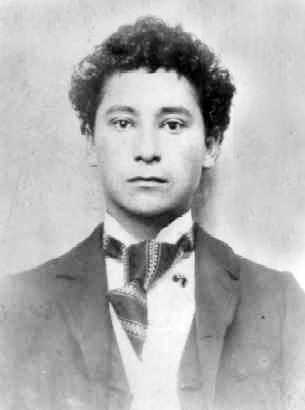
Alexander Posey was a poet. His poems about nature are some of the most beautiful ever published. Growing up on a farm in the Creek Nation, near Eufaula, Posey’s native language was Creek, but his “vernacular,” as he once wrote about all American Indians, was poetry: “not necessarily the stilted poetry of books, but the free and untrammeled poetry of Nature, the poetry of the fields, the sky, the river, the sun and the stars.” Posey’s gift of poetry blossomed during the years, from 1889 to 1895, when he attended and worked at Indian University, the school founded by Almon Bacone in 1880. At Indian University, later called Bacone College, the young mixed-Creek studied, served as librarian, contributed to school publications, and discovered himself to be a gifted artist of the English language.

Raised by his Creek mother Pohas Harjo and Scotch-Irish father Lewis Posey, Alex spoke Creek growing up at home until one day, as he later related, his father forcefully requested that his son henceforth speak in English, which the young man embraced and mastered. Alex matriculated at Indian University in 1889, when the school had been located in Muskogee for four years. There was a single large academic building, Rockefeller Hall, that served as dormitory, classroom building, administrative building, dining facility, and chapel. Almon Bacone was a Baptist missionary from New York who had traveled west a decade earlier to teach Cherokees in Tahlequah; he envisioned a school for all North American Indians, and worked with the Creeks to create a campus on Creek land north of Muskogee. Alex’s mother was Baptist, and he was raised in a Christian household, so he found Indian University, a Christian school teaching the liberal arts to American Indians, a perfect fit.

Alex was a secondary school student in the “Academic Department” until 1891, when he became a college student and school librarian. A bookworm and literary artist, Alex was a natural librarian. He was a prolific writer and helped two of his teachers, history professor Marion L. Brown and science professor C. H. Maxson publish a weekly newsletter, the Bacone Indian University Instructor. In the only surviving issue, from May 20, 1893, Alex contributed a story on the mythical Creek anti-hero, Chinnubbie Harjo, and alter-ego and pseudonym who appeared in many of Posey’s writings.

Alex Posey at Indian University was typically very well dressed, charming and elegant; he made a fine orator, would in time be something of a statesman, and believed wholeheartedly in the means and ends Almon Bacone envisioned for Indian University. In a surviving photo from 1891, Alex sits in the front row with a carnation in his lapel and a book, characteristically, in his hand, not bothering to lift his gaze from the written word even for the photographer. Such studious manner enabled Alex to form sophisticated ideas about learning, human character, politics, and nature. In 1892, for example, in response to a call from the American Baptist Home Mission Society for students at Indian University to respond to the question, “Why do I want an education?”, A. L. Posey, “a Creek,” responded:

“The world’s noblest citizens are educated men and women; they are the ornaments of human society and the gems that adorn the sea-shores of human progression.  Nothing contributes more to the intellectual wealth of the world than the education of its inhabitants.  And nothing imparts more happiness to man than the consciousness of a well disciplined mind to govern and control the higher aims of life.”

With such a personal philosophy of lifelong learning, Posey, upon graduating from Indian University, became a leader in the Creek community, serving in the House of Warriors, as well as Superintendent in succession of the Creek Nation Orphan Asylum, of Public Instruction for the Creek Nation, of the National High School in Eufaula, and of the Wetumpka National School. Posey the man of letters worked for the Indian Journal in Eufaula and the Muskogee Times. He wrote a series of satirical letters, featuring Fus Fixico and his Creek friends, writing about the Dawes Commission, land allotments, and the tense relationship between Indians and the U. S. federal government. His bilingual ability served him well as a worker for the U. S. Indian Agency in Muskogee, during which he sought to administer fairly the allotments of land to Creeks as prescribed by the Dawes Commission. In 1905, Posey served as secretary for a convention of Indian Territory leaders who met in Muskogee to compose a constitution for the proposed state of Sequoyah. Posey suggested the name of the proposed state and wrote a good part of the constitution.

During his busy, short life Posey married and had children and worked a farm near Eufaula. Death came to him early, when he drowned in 1908 while attempting to cross the Canadian River. His poems suggest that he was not unprepared for his final moments on Earth.

When flowers fade, why does

    Their fragrance linger still?

Have they a spirit, too,

    That Death can never kill?

Is it their Judgment Day

    When from the dark, dark mould

Of April and of May

    Their blooms again unfold?

His, poem, “To a Daffodil,” suggests that Posey felt at one, in life and death, with all forms of life:

                When Death has shut the blue skies out from me,

                               Sweet Daffodil,

                                 And years roll on without my memory,

                                 Thou’lt reach thy tender fingers down to mine of clay,

                                      A true friend still,

                                 Although I’ll never know thee till the Judgment Day.

When Almon Bacone founded Indian University in 1880, he hoped that the Whites and Indians would be able to live and learn together. Posey, a mixed-race Indian, believed in, and represented, peoples coming together to live in Oklahoma:

I pledge you by the moon and sun,

As long as stars their course shall run,

Long as day shall meet my view,

Peace shall reign between us two.

I pledge you by those peaks of snow

As long as streams to ocean flow,

Long as years their youth renew,

Peace shall reign between us two.

I came from mother soil and cave,

You came from pathless sea and wave,

Strangers fought our battles through–

Peace shall reign between us two.

One can imagine a day in October in the 1890s, when a young Creek-American, Alex Posey, wandered the fields and meadows surrounding Indian University, pondering life:

In the dreamy silence

Of the afternoon, a

Cloth of gold is woven

Over wood and prairie;

And the jaybird, newly

Fallen from the heaven,

Scatters cordial greetings,

And the air is filled with

Scarlet leaves, that, dropping,

Rise again, as ever,

With a useless sigh for

Rest—and it is Autumn.

Amid the peace and quiet of Indian University, there was conflict in Oklahoma and the surrounding nation. Near the end of his career at Indian University, in 1895, Alex Posey declaimed before an audience of students and teachers his view on how a thoughtful, reflective person should act in a world filled with movement and change:

“If a calm sea never made a skillful mariner, a calm life never made a great man.  Time, toil and vicissitudes; these are the cost of success.  The world can use the man who is willing to pay this price.  Its progress is dependent upon just such men; verily, upon men who are the devotees of mental embellishment and excellence of character; upon men who scorn from their soul’s inmost recesses the vanity of fashion and the folly of luxury.”

In the end, Posey bridged the gap between the two cultures, White and Indian, and identified both as American, proclaiming that America gained her independence from England because of the “persistence and determination” of the “forest born sons of America,” both those indigenous to this land and those who had arrived to start a new life in the 1600s. Posey the American was “like the tree, he strikes root, grows, puts forth his leaves and becomes the giant of his surroundings before the world is aware.”

Posey’s widow Minnie published Alex’s collected works in 1910: The Poems of Alexander Lawrence Posey (Crank & Co., Topeka, Kansas).
undefined

For more on Posey, see see Marking the Jesus Road: Bacone College through the Years, newly republished in January 2026 and available at Marking the Jesus Road: Bacone College through the Years | Ash Hill Publishing
Posted in Christianity | Leave a comment

The Sanctity of Life

In my last post, I discussed Just War. To continue…

The key to solving the issue, the plague, of war, just or unjust, is for humans to adapt a culture of life.

We are raised from infancy in a culture of death. Whenever anything is uncomfortable, inconvenient, or fearsome, we kill. So if a spider appears, I kill it. If a fly is on my hamburger, I swat it. My hamburger itself, of course, comes from a dead animal that was killed for my convenience. Because my culture is so advanced, I can eat anything I want anytime I want from a variety of forms of life killed for my convenience. If my yard is being destroyed by a mole, poison will do the trick. If a mouse is haunting my pantry, a mousetrap will stop it cold.

Death is all around us, and death caused by the human propensity to kill at will. We have few compunctions about taking life for our own purposes. Girls and women are taught that if a pregnancy is inconvenient, that it can be terminated—i. e., the fetus, a life, is killed. Some prospective parents will terminate pregnancy because the fetus has been determined to be “deformed,” hence kill and try again.

War is just an extension of the human propensity to kill other forms of life, now brought to the same life-form, ourselves. Because a person looks or acts differently, they are fearsome, and humans have long figured out that the easiest way to deal with fear is to cut it off at its apparent source—of course, the fear remains, often now combined with guilt.

Fear of the other combined with narcissism leads us to assume that we have a right to our possessions, have a right to defend ourselves (defensive war has long been the explanation for going to war), have a right to take another life to preserve our own life or our culture. Life as a thing of wonder and beauty is lost when all we can think about is me: my convenience, my safety, my rights, my possessions.

Jesus taught in the Gospels that life is to be treasured, life is sanctified. God concerned himself with even lowly forms of life such as birds. How much so does God concern himself with human life? Jesus said, “I am the way, the truth, and the life”—that last word, life, is the essence of the Creation, the essence of God, the essence of who we are.

Who, in short, has given us the right to determine who should live and who should die?

For more, see my book on the incarnation of Jesus, Metamorphosis: How Jesus of Nazareth Vanquished the Legion of Fear available at https://ash-hill-publishing.square.site/product/metamorphosis-how-jesus-of-nazareth-vanquished-the-legion-of-fear-hardcover/ETEBDKWQ5QIVJBWDA4T6JD64?cp=true&sa=true&sbp=false&q=false


Posted in books, Christianity, Reflections on the Psalms | Tagged , , , , | 2 Comments

Healing History

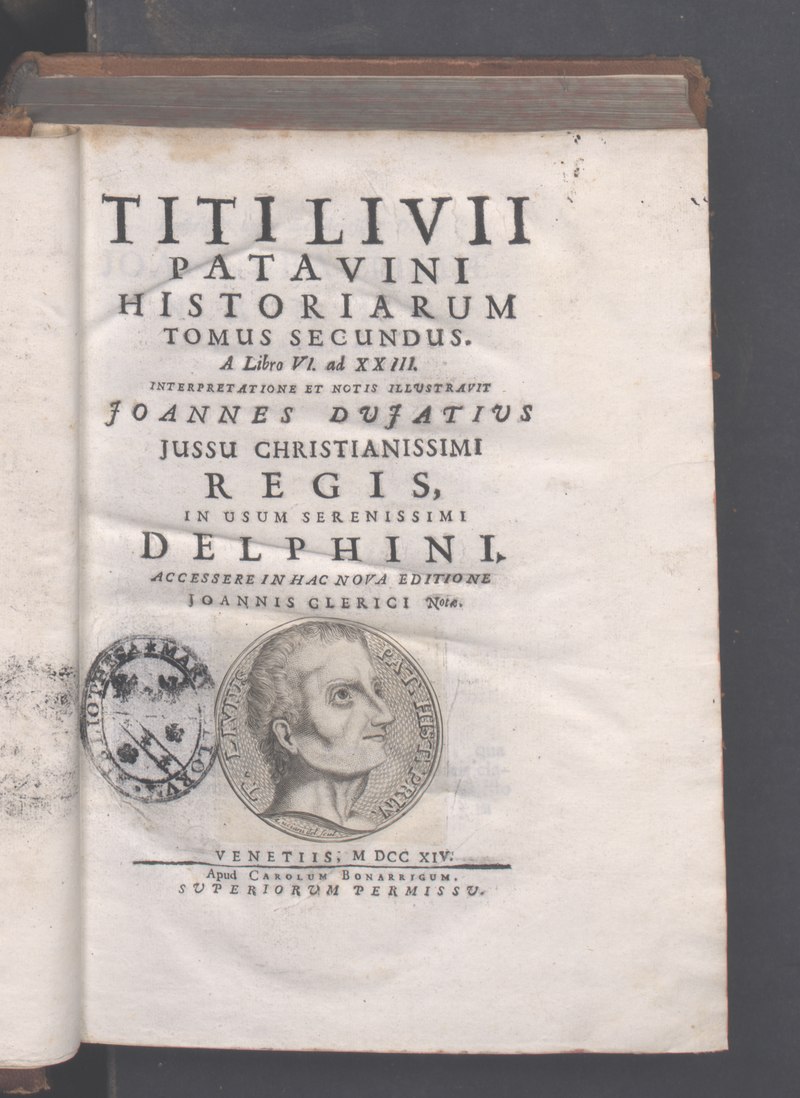
Two thousand years ago Titus Livius, in his History of Rome, declared that his book, indeed any narrative history of human events told with empathy and truth, is therapy for mental malaise, especially the malaise that is a product of conspicuous consumption, avarice, lust, fear, violence, narcissism, and all of the other sins that beset humankind. History is therapeutic, Livy argued, because its study is the means by which a person can find the good in past human behavior to imitate, and discover the evil in past human behavior to avoid. History provides a didactic purpose of moral reform.

undefined

Does it still? Is this still the point behind historical inquiry, to educate people in moral behavior, to teach them how to act, how to achieve contentment? I wonder . . . especially in our age of cultural and moral relativism, where “anything goes” seems to be the moral prerogative of people—as long as one’s behavior does not apparently hurt anyone else (no matter what it does to the self), then the behavior is acceptable

One argument against didacticism in historical study is that there is no longer a recognized universal moral system that unites people of such diverse cultural, ethnic, racial, religious, and philosophical backgrounds. Narrative history such as Livy wrote tends to reflect the worldview of the writer who typically represents the majority view of the time, leaving out the cultural, ethnic, and racial minorities.

Livy wrote, however, during a golden age of historical inquiry, when the likes of Tacitus and Plutarch wrote. Plutarch, the author of Lives and Moralia, believed that the historian/biographer should treat the past like a person inviting a guest to visit; Plutarch would settle down to his writing desk and, looking through the writings of Caesar (for example), invite the Roman general and writer, as it were, to sit down with him, and vicariously discuss the issues and ideas of his time. This dialogue with a person of the past allowed Plutarch to build an intellectual and empathetic connection with the past person, which allowed the subject and object (Plutarch and Caesar in this case), to join together, seeing what united them, what divided them, and discovering the common human experiences, feelings, and thoughts that bridge time and place.

undefined

The dialogue with the past is the didactic purpose behind historical inquiry that I seek to reproduce and engender in my writing. This is the kind of moral history that I believe in. When two humans—and many more—join together in a dialogue, enabled by surviving historical sources, joining feelings and thoughts together, then I believe the historian and his/her readers discover what is universally true in human affairs, and yes, as Livy would have it, what is the good to imitate, and what is the evil to avoid.

Posted in Biography, books, Christianity | Tagged , , , , | 2 Comments

Time and the Church

The Church, that is, organized Christian religion, has always struggled to make sense of time. The date of Christian holy days, such as Easter and Christmas, has been under dispute for centuries. Some Christians in the past, and even today, are annoyed that Christ’s birth and resurrection are celebrated during pagan ceremonies of the winter solstice and spring equinox. The Christian calendar begins with the year 1, anno domini, yet Jesus most certainly was not born on this year, rather in any one of a dozen years before or after 1 A. D. New Testament writers refused to date annual events except according to the system of dating used by the Romans. The first great Christian historian after Luke, Eusebius of Caesarea, was very unclear when Jesus was born, and it was not until Dionysius Exiguus in the 6th century that a system, ante Christos and anno domini, became accepted by the Christian world. Yet even in the past century the Church has gone along with the politically correct decision to change BC/AD to BCE/CE—Before the Common Era and Common Era—essentially denying that the Western dating system has anything to do with Jesus of Nazareth.

Many Christian denominations are beholden to the Christian calendar according to the supposed chronology in the life of Jesus. The calendar begins with Advent, then proceeds to Christmas, Epiphany, Lent, Easter, Pentecost, and Ordinary Time until Advent returns in late autumn. Hymns, liturgy, prayers, and sermons are guided by this calendar, and some of it can be quite moving and wonderful; but as with anything repeated over and over, it often becomes stale and repetitive, requiring new ideas, new approaches, new ways to celebrate the same events. Indeed, liturgy in more formal Christian denominations can be mystifying to outsiders, and even to insiders, the participants and members, the words are said and the hymns are sung, not always with meaning and feeling.

Even more perplexing is the scriptural basis for the church calendar, indeed for the church itself. Jesus rarely used the word ekklesia, which meant not church, rather assembly. Indeed, he was extremely vague as to how his followers should go about spreading the good news, loving one another, doing God’s will. Once, in the Gospel of Mark, he is told that his mother and brothers are waiting for him, and he responds that those who do the will of God are his mother and brothers. The will of God, he says over and over, is to love: others, friends, enemies. Jesus sometimes preaches to a group of people, sometimes to individuals. The New Testament can speak to groups, and to the individual. The assembly of believers, the ekklesia, might be people in a certain community who join a set organization, but it can refer to people worldwide, in different places reading the same words, worshiping the same God, or it can refer to people across time and place, those who a thousand years ago worshiped God and those who worship God at this particular moment. Doing the will of God matters little when one does it, at what season one does it, or where one does it, alone or with others. Doing the will of God is something not subject to the constraints of time and place, to the Christian calendar or the Church. Love, after all, cannot be set by the clock, the calendar, the venue, or the particular people joined together. Love is timeless, placeless, simply love.

For more on Jesus and Time, see my book Metamorphosis: How Jesus of Nazareth Vanquished the Legion of Sin, https://ash-hill-publishing.square.site/product/metamorphosis-how-jesus-of-nazareth-vanquished-the-legion-of-fear-hardcover/ETEBDKWQ5QIVJBWDA4T6JD64?cp=true&sa=true&sbp=false&q=false


Posted in books, Christianity, God's Providence | Tagged , , , , | Leave a comment

The Sea Mark and Missionaries

I was a Fulbright Visiting Research Chair at Brock University in Ontario in 2010, during which time I taught a class on the History of the First Nations of Canada and researched Anglican missionaries to the First Nations during the 18th and 19th centuries.
It was during this Fulbright sabbatical that I began to consider the various expressions of missionary work in America. I studied Roman Catholic, Methodist, Baptist, and Anglican missionaries to American Indians throughout North America. As I studied Anglicans, I realized that the Great Commission, Jesus’s command to his disciples to spread the Good News to all nations, to the whole creation, was something that motivated many more people than just missionaries and priests. Indeed, many of the sailors and explorers who crossed the Atlantic to North America seemed to have had the Great Commission in the fore, or at least in the back, of their minds. I found this to be the case with John Smith, who though he was a man of action, soldier and discoverer and colonist, still believed that he was driven by God’s will, which included the Great Commission.
There were many sides to John Smith, as there were many sides to other explorers and discoverers of America. They  had many failings, they committed many sins. But part of their motivation was the Great Commission, and God’s commandment to love one-another.
Posted in Biography, books | Tagged , , , , | Leave a comment

Jesus and Time

Time is a mystery. Is time a physical phenomenon? Is it a geologic phenomena? Does time exist outside of human consciousness? Is time absolute or relative? Why do humans put so much emphasis on time, so that we gauge our entire lives by hours, days, months, years?

The Bible, Old Testament and New Testament, says little that is concrete about time. Time, indeed, seems more of a metaphor for passing than an exact instrument of measuring movement. Like all ancient literature, there are no dates, no clear chronology, in the Bible. And yet Jesus, as the Gospels record his comments and sayings, appears to have been very aware and concerned about time.

Take Matthew chapter 6, after Jesus tells his disciples that one cannot serve both God and Mammon. Mammon–riches–are acquired in time: people spend their hours, days, weeks, months, and years trying to figure out how to gain property and accumulate riches. Jesus brings Mammon down to an everyday level: the food we eat, the clothes we wear. He cautions the disciples not to spend their days worrying about food, drink, clothing, and shelter. Life is more than this.

Anxiety adds little to our existence, yet, Jesus implies, people spend their days anxiously trying to secure food, drink, clothing, property, wealth, riches. He argues that if God provides for the birds of the air, the flowers of the field, then God will provide for us.

Each day has it owns challenges, its own evil. One should focus on the moral challenges of the day rather than what to eat and drink. Each moment should be savored for the life that is being lived rather than constantly anticipating what will happen next, what I will eat and wear and where I will go to do it.

I constantly feel oppressed by time and worry over its passing and the passages of my family and my life. I seem to want to record or grasp hold of passing moments, perhaps to the exclusion of actually experiencing and savoring them. Each moment is a gift from God and should be savored—one doesn’t know how many such moments one has in life, how many are left. On the other hand, I have also felt dissatisfied in various moments, like I cannot wait for them to pass to get to another time, another day, another week. I feel restless and often at a loss as to what to do. My books often seem to be a panacea for this restlessness, but in the act of writing them I am restless for the end of the book to come and for the next project to begin. What folly!

Jesus taught that there are increments of transcendent truth found in the everyday, in the isolated moments of existence, in the sensations and feelings that appear real if fleeting, true if just for an instant, that we can gleam from everyday life. We hardly see them in the distractions of the moment but these increments we see combined as we reflect on the past in retrospect, and we see revealed the transcendent, that truth exists.

Therefore, he says, don’t be anxious for tomorrow, for tomorrow will have enough in it to produce anxiety. Think of today, the present, and achieve contentment now, in God. Each day has it own challenges, its own evil: to find peace–rather than a good dinner and excellent glass of wine–is the key to happiness, to living as Jesus taught us to do.

For me, see “Metamorphosis: How Jesus of Nazareth Vanquished the Legion of Sin”: https://ash-hill-publishing.square.site/product/metamorphosis-how-jesus-of-nazareth-vanquished-the-legion-of-fear-hardcover/ETEBDKWQ5QIVJBWDA4T6JD64?cp=true&sa=true&sbp=false&q=false


Posted in Christianity, God's Providence | Tagged , , | Leave a comment