Fear had attached itself to his very being. It was a presence, something a part of him, deep inside, usually hidden, absent from awareness.
All creatures in each moment sense the Fear. Instinct usually takes over to impel the creature to act, to survive, to put off, for a time, the inevitable. Humans sense the Fear but willingly brush it aside, submerge it, ignore it, make it appear ludicrous, mask it. But it is unrelenting. TheFear arrives from everywhere, nowhere, instantly surrounding its prey, overwhelming, suffocating.
The Fear is the most horrible nightmare, the most disgusting creature that attacks without warning, its coils, or pincers, or tentacles grab, overpower, squeeze, cut, tear the flesh, wrap around the throat, strangling, excruciating.
TheFear strikes, a plague, erupting with horrible swelling boils, aching, bulging with pus, sickening, bringing about a slow agonizing end to life. Fear has a tendency to reproduce, like a virus splitting, dividing, becoming infinitesimal in number, legion, finding obscure parts of the brain to hide and wait for a moment of weakness in the host at which time to emerge, attack, disable.
The Fearinvaded a man.
It was the most hideous torture, burning the man alive at the stake of thoughts and emotions, drowning him slowly in his past guilt and sin, nailing him to the cross of the mistakes of all humankind and forcing him to bleed, suffocate, and thirst to death.
The Fear was his dark side, always on the brink of taking over his mind. In each moment, the fear convinced him that he would lose control, give in to the obsessions, do exactly what he did not want to do. To become something different, unrecognizable. To become legion.
Thousands of images, experiences, memories, feelings of guilt and humiliation, times of wanting to do something but being afraid to do it, moments of embarrassment and inaction, other times of action that were wrong, sinful: These were legion, stored in his mind, penetrating every aspect of the present, like countless atoms banging against the walls of his brain, wishing to exit, to be free—but the Fear kept them in control, waiting for the right time, the exact moment—when the man never knew—and without warning the legion of demons, of the images of the past, would come together, marshaled under the commanding Fear, and the man then would be faced with images of committing the unthinkable.
He thought of the most disgusting things, the most horrible crimes, the excruciating details of murder, all a product of his ruminating mind. He was like a cow, a horse, a donkey, an ass, grazing, hungering for grass, and more grass, unable to fill himself, unable to stop, obsessed with eating, compulsively swallowing–but it was never enough.
The thought, the panic, gripped him, as images, a legion of images, erupted in his consciousness about death and destruction and evil and sorrow. His future appeared determined. Fantastic thoughts foretold reality.
He was a demon, an agent of Hell, intent on destruction, on murder, biding his time, awaiting the moment when suddenly he would lose all sanity, all control, and he would throttle, strangle, and his victim would die horribly without a sound, silently.
The webs of fear were spun in earlier years. To live is to experience fear. The man’s fear was in response to the uncertainty of his environment–the constant possibility of loneliness, the darkness of night, the unknown, pain. The Fear was the result of restlessness, the dependence on the passing moment, as well as the narcissistic search for constant gratification, for pleasure to counter the pain of existence. The wisdom of the past supports the reliance upon doubts and fears to guide humans through the years; this message of despair and unhappiness seeps into the brains of old and young alike, instilling an infernal hubris and arrogance, that what cannot be known for sure is not worth knowing, indeed does not exist. Decay overwhelms delight and joy. Pleasure, beauty, and euphoria give way to pain, blemishes, and sorrow.
The man was a certain person in a certain place in a certain time who represented all humans in all places and in all times. Ancient sources briefly describe the man tortured by fear. He is unnamed save for his own appellation: Legion.
Whatever creature inhabited his brain, whatever legion of demons possessed his soul—it stirred the pot of fantasy with so many ingredients of fear and foreboding, so many tormented images of crime, of uncontrollable sins, insane murders. followed by accusations, torture, dungeon, chains, trial, confession, guilt, execution.
The Fear became the dominating force in his life. Every morning upon awakening his mind ferreted within to find a thought, an obsession, with which to destroy his sense of peace, his happiness. The legion of images flocked about him, settled upon him, determining the day of fear and anxiety. He could not rid himself of the thoughts that entered his consciousness; he could not reason them away; he could not convince himself that he would not do what he imagined. The Fear was like a great automaton within him, calculating, indiscriminate, unpredictable, and completely autonomous from what this man, Legion, wanted, wished, thought, or said.
He was unable sometimes to think because of the overwhelming presence of the Fear, his mind jumbled by so many images of disaster and despair—unspeakable images that he could not believe he was having, and yet he was. They were images of folly, one after the other. He dreamed of murder, of patricide, of random death, of rape and torture, involving people known and unknown. He envisioned himself as the agent of destruction. The resultant guilt mixed with confusion of how to explain it, what to do about it. So random were the fantasies that they were ultimately nonsensical.
Legion tried everything he could think of to resist, to fight, to avoid, to ignore; to embrace fear so to familiarize himself with it, to laugh at it. Nothing worked. Only death would bring it to an end. But death is not an option for a person unwilling to die. Death is to be resisted. Every part of one’s being—mind, body, spirit—must fight to survive.
Resist. Resist the foe. Resist the fear. Struggle against it. Force it away. Throttle it. Destroy it. Murder it. Free yourself from it at all costs. Run from it.
Legion had tried running from fear time and again. When the thoughts came, he tried to stifle the fear by going outside into the summer heat or cool winter nights; he drank wine beyond normal intoxication; he had sex, thought of sex; he hid in places of darkness to see if the Fear would go away; he called out to Heaven for help; he tried hiding in the city, anonymous, normal; he tried secluding himself. Fruitless. Winless. Exhausted.
How does a person resist Fear? How does a person resist the countless images from the past of error, sin, wretchedness, lust, violence? How is a random thought, a sensation, an image, a horrible feeling in the pit of the stomach, the stark loneliness, the seclusion from reality, the temptation, the deception, the demonization of the mind, the overwhelming presence of a legion of fear—how is it to be resisted?
Legion’s entire life had been focused on resisting. He had resisted how he looked, who he was, what he was taught, how he lived, where he lived, his society, his culture, dominant institutions, religious leaders, education, teachers, morals, ethics, government, war, life, death, and the present. He resisted anything that tried to pigeon-hole him, to define him, to control him, to institutionalize him, to make him what he was not.
To spend a life resisting yields questions upon questions. Some questions are simple, childlike: Why do we steal? Why do we lust for another? Why do we lie? Why do we seek to hurt? Why are we only concerned with Self? Some questions are profound, unknowable: How can the diversity of nature have a single point of origin? How can the years and months of countless centuries have a representative moment? How can the multitude be singular? How can the lives and thoughts of humans throughout time be contained in one? Then there were the ultimate unanswerable questions: Is there a god or gods? Who? What does he, they, want from us? Why does he, they, allow chaos, destruction, war, disease, hunger, death? What deity/deities would allow the suffering seen everywhere, every day, throughout time? What deity/deities would allow such Fear?
Legion personified the age-old struggle between freedom and order, liberty and authority. The liberty and freedoms human yearn for are opposed by the restrictions of society, artificial rules that impede natural inclinations, systems that guarantee order in a world filled with potential chaos. Youthful ideas of wantonness and misbehavior are confronted by authority imposing restrictions and regulations. The ways of the body, feeling, going against the ways of the mind, thought. Legion’s fantasy world—some of it he allowed, some of it he could not help—was opposed by the standards, norms, and decorum of society.
His fears were a veritable army of images, thoughts, recollections, fantasies, and dreams covering years of angst about physical cowardice, angst about self-control and obsessive thoughts, guilt about so many actions based on fantasy and images. He had obsessed about making mistakes, saying the wrong thing, looking askance at a person, appearing ridiculous, obsessing over the erotic.
He was insane with guilt, grief, and fear. Guilt is a deep well in the human psyche, and it takes much effort to descend deeper and deeper into the well of the past to discover the pangs of conscience that represent guilt. His guilt combined with poor self-esteem and an appalling lack of confidence; it burdened him with chains of the weight of the past. He was known throughout the region as a man in chains, naked and savage, violent and angry, fearsome, haunting. He was a man pursued. All throughout the village. Everywhere. No place to hide. Who were the pursers? Legion did not know. Likewise, he did not know what they wanted, why he was being pursued. He kept trying to hide. He found the best place of refuge to be living among the tombs of the dead.
Available online from Amazon, Wipf and Stock, and other online sellers
When in 1911 Claude Christopher Largent and Bessie Lura Amos were married, they brought to their union centuries of ancestral history that spanned the American South and Southeast, as well as early modern England and France. They descended from families who immigrated to America in the 1600s.
The Largent side of the family descends from French common people, artisans and farmers, who lived in the Old Regime of France, when monarchy and aristocracy dominated society and government and common people were typically living on the edge of poverty and exploited by the ruling elite. The name Largent is derived from L’Argent, meaning silver, or silversmith, which hints at the family’s forebears. The shadowy and distant past implies that the Largents emigrated from France to America in the 1600s. The earliest traceable ancestor was Sinon De L’Largent, who lived from 1590 to 1659 in the Bourgogne region of northeastern France. His son was Jean De L’Largent, born in the same place, who married Elizabeth Gonsal and relocated to the Ardennes region of northern France. Elizabeth was the daughter of Jacques and Jeanne (Carre) Gonsal of the Bourgogne region. She lived from 1615 to 1682; she and Jean had a son, Louis, who lived from 1648 to 1740. Louis appears to have been the Largent who emigrated to America along with his wife Jeanne St. Suplice, 1660-1740, daughter of Guillaume and Martine Cornuau St. Suplice. Louis and Jeanne had a son, Jean (or John).
The records that tell the story of John Largent’s life are vague, contradictory, and anecdotal. In the Maryland census/tax list for 1704 a John Largent is listed as residing in Baltimore Co., N. Side Gunpowder Hundred. Another record indicates that a John Largant arrived at Maryland in 1716. In “Virginia Select Marriages, 1785-1940,” there is a vague record of a John Largen son of Lewis Largen married to Rachel. Perhaps this was Rachel Moss, born September 21, 1701 in Wigan, Pemberton, Lancashire England to John Moss (1668-1735) and Rachel Fairhurst (1672-1747). An anecdotal account of Rachel (also known as Roselle Eviss Rachel DeMoss) is that she was a Protestant Huguenot from France who had escaped with her family from religious persecution. Perhaps this is what brought them, at some unknown date at the beginning of the 18th century, to America. More likely, because the Moss (or DeMoss) family goes back in time several generations in England, John and Rachel Moss emigrated to America for other, unknown reasons. When John Largent and Rachel Moss married is uncertain, perhaps about 1720; and how many children they had is similarly uncertain.
In a letter written from Lewis Largent to Joseph Largent in 1913, Lewis wrote confidently that John and Rachel had in addition to their first three sons probably another, Thomas, born about 1728. Thomas was apprenticed in 1738 apparently upon the death of John. “Thomas Largent removed with his guardian Daniel Burnett to South Carolina and was the progenitor of the North Carolina and South Carolina Largents,” Lewis wrote in the letter. Burnett was a blacksmith.
Meanwhile, the earliest known Amos that relates to this family history was Nicholas Amos, whose forbears, whoever they were, doubtless derived from England in the 1600s. Nicholas himself was born to unknown parents in New Kent, Virginia, in or about 1640, perhaps before. He was christened at St. Peter’s Parish. This parish, in New Kent, is situated near the Pamunkey River east of Richmond. He married perhaps in the 1650s though this is uncertain, probably to Mary, whose maiden name was perhaps Lowe. She was, perhaps, the daughter of Charles and Frances Lowe. Nicholas and Mary’s children included Rebecca, Margaret, Valentine, and Francis, born 1677 in the same parish. Francis married Elizabeth Lowe, born in 1690, in 1712; their children were Valentine, Charles, John, Francis, Judith, Mary, William Valentine, and James. Elizabeth’s father was William Lowe and her mother was Selina Ann Bailey, both of North Carolina.
Francis and Elizabeth’s son James was born on October 15, 1716, in St Peter’s Parish, New Kent County, Virginia. He married Elizabeth Carlysle in 1720, and they had a son, James Jr., born in 1755 in Lunenburg, Virginia, far to the southwest from St. Peter’s Parish, where James and Elizabeth had relocated. James Jr. married Lena Bradford, and they had a son in 1785, George Washington Amos. The Bradford’s had a long and varied history dating from sixteenth-century England and the seventeenth-century New England colonies.
Lena Bradford was the daughter of a North Carolina farmer, Thomas Bradford and his wife Sarah Ransom; he was the son of Thomas Bradford and Elizabeth Smith, who had migrated from Virginia to North Carolina in the mid 1700s. His father Richard Bradford was married to Frances Taylor. They emigrated from England to Virginia in the 1650. His father Richard Bradford lived in England, married to Jane Kendall. Richard’s father was Vespasian Bradford.
Vespasian Bradford of early 17th century London was a craftsman belonging to the city livery company, or guild, of cooks, people involved in the preparation of food. His namesake was the Roman Emperor Vespasian, who ruled Rome from 69 to 79 AD. Who named the English child born in 1560 this unique name is a mystery. His parents were either William and Alice Bradford or Richard and Catherine Bradford.
Vespasian was likely born in Yorkshire, England, in 1560, during the reign of Queen Elizabeth Tudor. He died during the reign of Elizabeth’s successor, James Stuart. Vespasian married late in life, to Joane Burrowse, on May 28, 1604, when he was 44, and she was 12. This young woman was the daughter of Sir Richard Burrowse and Lady Barbara Burrowse. They were married in the Shoreditch Church in London.
According to The Parish Registers of St. Thomas the Apostle, London, containing the Marriages, Baptisms, and Burials from 1558 to 1754, London, 1881, Vespasian and his wife had a son Richard, baptized June 25, 1605, a daughter Margaret, baptized May 15, 1606, a daughter Elizabeth, baptized May 9, 1607, a daughter, Anne, baptized June 18, 1608, a daughter Jane, baptized July 6, 1609, a daughter, Joane, baptized Aug. 7, 1610, and a son Richard, baptized Dec. 9, 1611.
Vespasian was a member of the Worshipful Company of Cooks in London, a very old livery company. In 1616 he was listed in the charter of the Worshipful Company of Cooks as an Assistant, one of a small group of liverymen who were in charge of the guild—the Court of Assistants.
Vespasian was buried April 11, 1618, at St. Antholin Church, Budge Row, London—an Anglican church in the heart of the city. Joane outlived Vespasian by seven years, dying in 1625.
Back to the Largent family: Thomas (Largin) Largent, according to marriage records, was born in Virginia in 1728 and he married Nancy Lang in 1750. Little is known about the early lives of Thomas and Mary besides the anecdote about Thomas’s apprenticeship to a blacksmith noted above. Thomas and Nancy at some point migrated from Virginia south to Burke County North Carolina, where their son Thomas was born; and then they moved on further south to South Carolina. In 1780, Thomas was fifty-two and Nancy was fifty; a South Carolina census record from the ninety-sixth district indicates that Thomas was on the Grand Jury, “Petit-Jury men and Jury Men in Civil Causes,” in a region of northwestern South Carolina between the Broad and Saluda Rivers. More specifically, he lived on the Little River near its confluence with the Saluda River in Newberry County. In the 1790 federal census, he was listed as having seven family members, one male over sixteen years, one male under sixteen, and five women. In the 1800 census, there were thirteen household members, all free, six males and seven females. In his last will and testament, dated 1802, we learn that Thomas, Nancy, and family had migrated south of Newberry County to Edgefield County, on the southern border of South Carolina with Georgia, near Augusta. In his will, Thomas divided his lands into thirds, giving equal amounts to his sons Reuben, William, and Thomas Jr. The remainder of his moveable estate he divided among his daughters Mary, Sarah, Janey, Ann, Nancy, and Elisabeth. He left his widow Nancy most of his stock, tools, furniture, and money. She did not long enjoy this, as she died soon after Thomas.
Nancy Lang, Thomas’s wife, was the daughter of Robert Lang, born in Portsmouth, NH, in 1728. Robert Lang moved to South Carolina, became a plantation owner, and died in 1763. His wife was Millicent Higginbotham, who was born in Barbados in 1675 and died in 1740. Her father was a sea captain, hence the reason for her birth in the Caribbean. The Higginbotham’s of Barbados were quite wealthy because of the sugar trade.
The life of Thomas and Nancy Largent’s son Thomas, Jr., is shadowy at best, in part because of the scarcity of records, in part because he is easily confused with his father of the same name. I speculate that Thomas, Jr., was born in North Carolina, meaning that Thomas Sr. and Nancy in their peregrinations from Virginia to South Carolina must have lived in North Carolina, where Thomas Jr. was born. Thomas Sr. and Nancy lived in North Carolina long enough for their son to take up roots there and stay when they moved south to South Carolina. Thomas Jr. lived in Burke County, in central North Carolina. He likely served as a soldier during the American War for Independence, as he received a grant of one hundred acres in 1800. The land was located on Smoky Creek, a tributary of the Catawba River. It is possible that his children included William Anson, Thomas Washington, Elijah, Elizabeth, Mary, and James. However, the records are so unclear, that even the name of his wife—possibly, Nancy—is not known for certain.
Meanwhile, while this line of the Largent family moved west from Virginia to North Carolina to Illinois, the line of the Amos family I am tracking was moving from Virginia to Georgia to Alabama. George Washington Amos, son of James Amos Jr., who died in 1818, and Lena Bradford, who died in 1829, traveled with his parents from Virginia to Georgia in the early 1800s. George married Anna Bentley in Virginia before their move. They benefited in 1832 from the Cherokee Land Lottery in Georgia, purchasing perhaps 160 acres in Hancock County of land confiscated from the Cherokee Tribe by the state of Georgia. George and Anna had a large family; their children were Daniel, Martha Ann, George Washington Jr (II), Henry, Beverly, John W., William, Wyatt, Millyann E., James M., Caroline F., Mary J., and Susan C. They also acquired a number of slaves to work the land, owning 22 in 1840, half of whom were children. Anna died in 1843, and George followed two years later.
Their son George Washington II was born February 9, 1813 in Hancock, Georgia. During his life he relocated west to Grimes Alabama, where he died April 1, 1889. His wife was Catherine Hammock, born April 8, 1817 in Georgia; she died 1886; they were married August 24, 1831 in Georgia. George Washington II was a successful land owner both in Georgia and Alabama. He and family relocated to Alabama sometime during the 1850s. According to 1850 slave schedule, he owned 14 slaves ranging from age 69 to age 1; in the 1850 census owned land worth $600. In the 1860 census his land was worth $3200. After the war the value of his real estate declined precipitously to $900. George and Catherine’s children were Willborn, Jane, Henry, Beverly, William, George Washington III, Martha, and Zachary. Surviving portraits of George Washington II and Catherine show him to have been a strong, severe, serious man and his wife a pious woman with a somewhat gentle demeanor.
George Washington Amos II and Catherine Hammock
Meanwhile Thomas Largent Jr’s son James migrated from Burke County North Carolina to Bond County Illinois sometime in the early 19th century—perhaps after Illinois became a state in 1818. It is possible that James lived for a time in Tennessee, a place where many North Carolinians migrated in the late 18th and early 19th century. His brother William Anson Largent migrated to Tennessee. There is a vague record of one James Largent having served as a private from April 3 to 12, 1812, in the Tennessee Militia during the War of 1812.
In the 1830 Federal Census for Bond County, Illinois, James’s family included 1 son under age 5, 1 son between 5 and 10, 2 sons between 10 and 15, and a male between 40 and 50 (himself), 1 girl aged 5 to 10, 1 girl from 10 to 15, and 1 girl from 15 to 20, and 1 female 40 to 50, his wife. Their children were Thomas, Archibald, Harriet E., Margaret Mahala, Hugh Fox, Nancy Adeline, and John Marshall.
James died in 1830; his wife Margaret Fox Largent outlived him by 10 years. She was born in North Carolina in 1780 to James Hugh and Mary Fox. James and Margaret were both buried in southern Illinois.
Of their children, Archibald was born Feb. 1, 1806, in Burke, North Carolina; he died Nov. 20, 1838, Fayette, Illinois (buried at Mulberry Grove Cemetery, Mulberry Grove, Bond Co., Illinois); his wife was Lucenda Beach; they married April 26, 1825, in Burke County, North Carolina, when she was 17.
More is known about Lucenda A. Beach (who was Thomas Largent’s mother, George Washington Largent’s grandmother, and Claude Christopher Largent’s great-grandmother). Before her husband Archibald’s death in 1838, she bore five children: Thomas W., Eveline, Mahala Caroline, Archibald, and John. Lucenda was born in North Carolina, and died in 1875 in Illinois, living in Bond County. The Bond County federal census for 1830 lists Archibald and Lucenda with one child, the firstborn Thomas. As Thomas was born in Tennessee in 1827, we can assume that Lucenda and Archibald had lived in Tennessee until recently, moving to Bond County, Illinois soon after 1830. She was the daughter of John Marshall and Sarah Beach.
In the 1850 federal census for Fayette County, Illinois, Lucenda (spelled Lucinda) was a 41-year-old widow owning real estate valued at $600. She had living in her family the following: Eveline Merryman, age 20, Caroline Largent, age 17, Archibald Largent, age 15, John Largent, age 13, and James Largent, age 1. Archibald was listed as a farmer. Caroline, Archibald, and John attended school. There are several interesting items about this census. First, Eveline was called Merryman, and there were two families living next to the Largents with the last name Merryman. Eveline was a widow, her first husband was Cayson Harris Merriman, who was born between 1825 and 1828 and died in his twenties in 1850. James, their son, was 1 year old and living with Lucenda. Thomas, first born son of Archibald and Lucenda, and his wife Narcissa and child Nancy lived nearby on their own farm worth $150.
In the 1860 federal census, Lucenda lived in Vandalia, Fayette County Illinois, with Eveline and her new husband, James Thomas Davis. Eveline and Thomas were married Dec 18, 1852. Eveline was to die soon after, in 1861. Her son Thomas would live until 1887. Lucenda’s other daughter, Mahala Caroline, married William Stokes on Dec 12, 1855. Also living with Lucenda in 1860 was Rosetta Davis, age 2, James Merriman, age 11, Augustus Davis, age 19, Mary Evans, age 14.
Lucenda was a significant landowner. The year that her husband died, 1838, the land office of Fayette. Illinois, issued her “the South half of Lott number two of the South west quarter of Section eighteen in Township Six North of the base line of Range one West of the third principal Meridian, in the District of Lands Subject to sale at Vandalia, Illinois, containing forty acres.”
Lucenda’s eldest child, Thomas, departed Illinois for Missouri during the 1860s. Born in Tennessee, having moved with his father and mother to Illinois, Thomas lost his father when he was 10. Thomas met Illinois native Narcissa Ann Hayes and they were married Jan. 4, 1848, in Fayette County. He was 22, she was 17. They had five children together: Nancy, Narcissus Archibald, nicknamed Norris, George Washington, Lauretta, and Charles. Thomas and Narcissa lived at Township 12, Range 9, Macoupin, Illinois. Unfortunately, Narcissa died in childbirth or soon after when she bore Charles, leaving Thomas a widower with five young children.
Death and dislocation were common experiences for Thomas Largent and his family. A land record listed under Thomas Largin Largent, has one Thomas Largent purchasing land (34.94 acres) July 15, 1854, in Hickory Co., Missouri. Perhaps this was Thomas Largent father of George Washington Largent. Indeed, during the 1860s Thomas and his small family moved to Missouri. He remarried Lydia Stout in 1866. In the 1870 census from Missouri, Thomas is called Largin; he was 43, a farmer; Lydia was 23, at home, taking care of children Norris (17), a laborer on their farm, as well as George (14), also a laborer, Laura (4), and Thomas (1). The children of Thomas and Narcissa, Nancy, Lauretta, and Charles, were either dead or did not make the move to Missouri. Thomas and Lydia could read but not write; Norris and Grace could neither read nor write. They lived in Deer Creek township, Bates, Missouri.
While Thomas Largent and Lydia Stout Largent and their children were trying to make a living in west-central Missouri, further south, in western Arkansas, a family had arrived from Alabama: this was George Washington Amos III, son of George Washington Amos II and grandson of George Washington Amos Sr. GW Amos III was born in Talbot County, Georgia, on February 28, 1845. His family moved to Alabama when he was young, and after his marriage and service in the Civil War, he moved his family to Arkansas.
In the 1850 census, GW Amos III was six years old with seven siblings. His father, GW Amos II was 37, married to Catherine Hammock (married August 24, 1831). GW Amos II had been born in Hancock Georgia, south of today’s Oconee National Forest, near Atlanta. He would die on April 1, 1889 in Grimes, Alabama. The grandfather, GW Amos I, was born in Lunenburg, Virginia, in 1785. He married Anna Bentley on Oct 8, 1807. They moved to Georgia, where GW Amos I died on April 3, 1845.
During the 1850s, George Washington II and Catherine Amos and family moved to Pike County, Alabama, where they farmed. After the war began in 1861, and when George Washington Amos III reached his 18th birthday, he enlisted as a private in Company B, 57th Infantry Regiment organized at Troy, Alabama. He fought in numerous battles in Tennessee and Georgia, fighting against the invading armies of the North. Many of his comrades died, but he survived. A monument erected by the Atlanta Historical Society in 1944 commemorated the “American Valor” of the “participants in the Battle of Peachtree Creek, July 20, 1864,” in which GW III fought.
After the war, GW married Mary Jane Carter, born Sept. 29, 1842; she was 24 and he was 21. Mary was a native Alabaman, daughter of Seaborn and Hannah Carter; Seaborn Carter was a fairly wealthy Alabama farmer. According to the propriety of the time, GW (along with his brother Henry W.) had to post a bond of $200 guaranteeing that there were no impediments to the marriage: “Know all men by these presents, that we .. are held and firmly bound unto the State of Alabama in the penal sum of two hundred dollars; for payment of which, well and truly to be made, we bind ourselves and each and every of our Heirs, Executors, and Administrators, jointly, and severally, firmly by these presents….The condition of the above obligation is such that if there be no lawful cause why George W. Amos and Jane Carter should not be joined together in the Holy union of Matrimony, then this obligation to be void; otherwise, to remain in full force and virtue.”
Their first born was William Wilburn, 1867, followed by Seaborn Washington, 1868, John Henry, 1871, James Belvy 1873, Mary Catherine, 1875, Martha Matilda “Mattie”, 1877, Alexander Zacariah, 1879, Nettie, 1887, and Ada Lee, 1892. Remarkably for the time, all of their children survived childhood to die in adulthood.
In the 1870 census GW III and Mary Jane lived in Pike Co., Alabama, and had two young children (William Wilburn and Seaborn, 3 and 1); GW was listed as a farmer. His wife was illiterate, unlike him. He lived next to his father GW Amos II, probably farming the family land, as he was listed as having no real or personal estate. GW II was 58, wife Catharine was 53; two daughters lived with them, Rebecah and Isabella, 18 and 16.
In the 1880 census eldest son William Wilburn, aged 12, was listed as farm laborer to his father. The family had relocated to Arkansas, living in Big Creek, Sebastian, Arkansas (southeast of Fort Smith).
The move must have been in 1870 or 1871, as the following letter, from GW Amos III to his brother William Greensberry Amos, who was two years older, reveals:
febuary the 19 1871
To Mr. Wm. G. Amos
Der Brother it is with mutch pleasure that I seat myselfth this eavening to drop you A few lines to let you no that mea and my famerley is well at this time and I hope that these few lines may cum safe to hand and find you and your famerley snjoying they saim blessings brother I hant got no nuse to right to you onley we are getting A long verry well if I can just have good helth and A plenty to eat I think that I am all right brother this is A grate farmeing cuntry A man can make as mutch as he can gether here and not have to wirk near as hard as they do there if you was here you cold make as mutch in one year as you can there in too and stop every saturday and go A fishing land an’t as hy here as it is there but it is wirth three times as mutch A man can make enny thing here that he wants and there is A verry good range here and there is timber A plenty we don’t have no pine here but we can have just as mutch good oak wood to burn as we wont and hit burnes as well without lightwood here as hit does there with it brother hit lookes like ruiming A man to sell out everything and moove this fure but I dont burgrudge my move my selfth I han’t got nuthing but I hope hit won’t bea so all ways I have wirked A nuff since I landed here to get as mutch corne as I wont and to get 10030 lbs of meat I am getting A doler A hundard for splitting rails and they ant but 8 feet long timber is as good as I ever saw
Brother A man can get wirk to do here at enny time there is a right smart of people that han’t dun picking coton yet A man can get a doler and a quarter for every hundard poundes of coten they will pick brother you must excuse my bad rightting and spelling for this time for I am so fat and lazy that I can’t right good brother you must right to mea as soon as you get this and right to mea all of they nuse Tell all of my friendes to right to mea and al so tell them howdy brother it lookes like that you all wait for mea to right first I have rote this makes 7 or 8 leters that I have roten but I han’t got no anser from men onley those that I rote to pa and beckey brother I will Close for this tim by saying to you that I remain as ever your loveing brother until death so give my love to all of they famerly and receive A potion for your selfth so good by
G.W. Amos to W. G. Amos, Sabaston Conty Ark Greenwood To
The letter reveals that GW Amos grew corn, hunted or traded for meat, split rails for fencing and railroads, and picked cotton; he counted himself happy even if struggling to make a living. His family was large: five boys and two girls.
Mary died in 1895; GW married Martha Ann Harper, aged 47, in 1899. They had two children, one out of wedlock, Emma, born in 1897, another, Nada, born in 1901 (died, 1973). Martha died in 1902, and GW remarried Sarah E. Alford; they had no children. She was 49 when they were married.
In the 1910 census, GW and Sarah had three grandchildren living with them and one child, Emma, from his previous marriage. They were homeowners, farming in Bloomer, Sebastian Co. Arkansas, near Big Creek.
GW Amos III was a strong-looking man, according to several surviving photos. The photo taken when he was 18 before he enlisted reveals a pudgy, healthy young man with a full face and narrow, penetrating eyes. A later family photograph taken shortly before Mary Jane’s death shows a middle-aged man, stern, with a square face, no longer pudgy, thick hair and beard (without moustache). A photo taken around 1910 with four of his children shows a stern-faced man, lean, with heavy eyebrows, penetrating eyes, and a thick white beard sans moustache. A portrait perhaps drawn from a photo with his third wife Sarah Rambo Amos shows a white-bearded, brown-haired, stern man with sunken cheeks.
George Washington Amos III and Mary Jane Carter
In 1902 GW applied for an Arkansas pension as a Confederate veteran. His widow Sarah applied again after his death on Feb. 20, 1916. GW is buried at Greenwood, Arkansas. Sarah outlived him by six years.
GW and children Ada, Alexander, John Henry, Mary
About a hundred miles to the north in the 1870s, when GW Amos III was writing his brother about the virtues of his farm at Big Creek Township, Sebastian County, Arkansas, another family lived at War Eagle Township in Madison County, Arkansas. George Washington Largent, his first wife Armenty Dunagan, nicknamed Mittie, and their two daughters Louisa, 2, and Rosettie, 6 months, lived and farmed in 1880. Soon another child would arrive, Mae (or May). Nearby, GW’s brother Norris and his wife Amanda and children also farmed.
George Washington Largent’s life has a bit of mystery about it. His gravestone lists his birth date as August 15, 1859. The month and day are probably correct, though the year of his birth was probably 1855 rather than 1859. According to the 1860 U. S. Census, the family of Thomas Largent, in Macoupin Co., Illinois, was comprised of four children, including five-year old George Washington. He could not have been born in 1859, as he had two younger siblings, Lauretta, two, and Charles, four months. His mother, Narcissa Ann Hayes, died with the birth of Charles. So, George Washington was five-years old when his mother died. (The 1870 census lists him as 14—so he must have been born in 1855.)
When George was 10 or 11, his father married a 19-year-old, Lydia Stout. They moved from Illinois to Missouri at some point. In the 1870 federal census, Thomas farmed in Deer Creek Township, Bates, Missouri. He and his wife Lydia could read but not write, but his son George Washington was completely illiterate, and apparently remained so his entire life.
George had four wives during his life, outliving three. He was married to Armenty Dunagan, Sarah Bryant, Mary Lue Smith, and Annie Pool. George’s first three children were born to Armenty: Louisa, Rosettie, who was born Nov. 23, 1877, and lived for 85 years, and Mae, who was born Feb. 14, 1881, and lived for 47 years. When Mae was born, the young family and moved south to Chismville, Arkansas, north of Booneville.
After Armenty died Oct. 23, 1883, in her 28th year, George married Sarah Bryant on Feb. 7, 1884. Their marriage was childless, and she died within four years, date unknown.
The rest of GW’s children were born to Mary Lue Smith, who was, according to family tradition, ½ American Indian, tribe unknown. Her family lived in Dahoma, Franklin, Arkansas, in north central Arkansas, where George and Mary were married. George and Mary conceived their first child, Claude, out of wedlock, as they were not married until July 25, 1888, and Claude was born on July 2, three weeks earlier. George was about 33, Mary was 17. Overall, they had 13 children.
George Washington’s namesake, born in 1889, died in infancy; GW and Mary Lue’s third child, Norris, seems to have been favored over their first born, Claude. In the 1920 federal census, Norris and his family lived next door to GW and Mary Lue; meanwhile Claude and his family lived in a shack on GW’s land. In 1920, GW was 60, Mary L was 50; four daughters lived at home. He was a general farmer, owned his land. He and Mary L were illiterate. He was born in Illinois, his parents also. She was born in Arkansas, her father in Missouri, mother in Arkansas.
According to family traditions, GW left “Illinois under some kind of trouble,” which would be strange as he was but a child when they moved. Perhaps family tradition referred to Missouri. Another tradition has it that GW would lock the gate to keep suitors from courting his grand-daughter Marie.
GW and Mary Lue Largent
Mary Lue Smith Largent died Nov. 3, 1924, at age 53. GW remarried Annie Pool, age 63, on Feb 19, 1925. In the 1930 federal census GW owned his house, farmed, was 71, was illiterate and had no schooling. He was 71 and Annie was 68.
When GW died in 1936, he was buried next to his third wife Mary Lue in Ferguson Cemetery, Chismville, Logan Co., Arkansas. His epitaph reads: “An honest man’s the noblest work of God.”
By this time of the late 19th and early 20th centuries, branches of the Largent and Amos families were living in western Arkansas and eastern Oklahoma. They were soon to be joined together.
The eldest child of George Washington Amos III was William Wilburn Amos, who was born on April 18, 1867, in Pike Co., Alabama, in the southern part of the state, to George Washington Amos III and Mary Jane Carter Amos. William was their first-born son. He was brought up as a farmer and was so designated in the 1880 census. At age twelve he had not yet learned to read and write. He had six siblings. At some point in the 1870s the Amos family moved to Big Creek, Sebastian, Arkansas, on the Arkansas River. Nearby was the Calhoun family, whose youngest daughter, Arsula, met William at some point; they were married on Christmas Day, 1890, in Greenwood, Sebastian Co., Arkansas, south of Fort Smith in western Arkansas. She was seventeen and he was twenty-three.
Arsula was the daughter of William and Martha Rhodes Calhoun. William was an Illinois and Arkansas farmer and carpenter. He was born in May, 1826, in Williamson, Tennessee, to Jacob (Jack) Julian Calhoun (1802-1856) and Rebecca McCall (1797-1869). Martha Rhodes likewise was born in Williamson, Tennessee. the daughter of Christopher and Elizabeth Rhodes. Martha married William C. Calhoun on October 17, 1850 in Marshall, Tennessee. He was 24 and she was 19 years old. William and Martha had eight children. In 1852 their daughter Elizabeth was born, followed by William Thomas in 1853. After his birth the family moved to southern Illinois, Johnson County, in the corner of the state between the Mississippi and Ohio rivers. There their daughter Amanda F. was born in 1856, James A. in 1862, Susan in 1863, Samuel H. in 1866, Robert M. in 1868, son Alphus in 1871, and daughter Arsula Jane in 1873. Martha apparently died in childbirth or soon after the birth of Arsula.
In the 1860 federal census, William listed himself as a carpenter. He registered for the Northern Civil War draft in 1863. In the 1870 census William listed himself as a farmer. He and Martha were both listed as illiterate. The value of their real estate was $800, personal estate $600. In 1870, the Calhoun family lived in Township 11, Range 21, Johnson Co., Illinois; the post office was at Goreville (southern corner of Illinois north of Ohio River and east of the Mississippi River).
After Martha’s death, William took his family of eight children to western Arkansas, Bates Township, south of Fort Smith, just east of the Oklahoma border, where he farmed and worked as a carpenter. By this time, William as well as all of the children were listed as literate. His oldest daughter Elizabeth kept house for William.
After Arsula married William Wilburn Amos Christmas, 1890, they had a daughter, Bessie, born on December 24, 1891.
In the 1900 census, Will was listed as a farmer who could read and write; perhaps Arsula helped him to learn. They rented. Their children were Bessie, 8, Harland, 6, Charley, 4. The lived in Center, Sebastian Co., Arkansas, southeast of Fort Smith. Ten years later the family had moved a few miles east to Boone Township (Booneville), where Will still farmed. By this time, Will and Arsula (or Sula) owned their own farm. Their children were Bessie, age 18, Harland, age 16, Charley, age 14, Reba, age 8, and Wayne, age 3.
During the next decade, one would assume that hard times came upon the family. They left Arkansas and moved to Oklahoma, settling in the town of Stigler, in eastern Oklahoma. They lived on N. Ninth St, and Will still farmed, working on his “own account,” either as a renter or farm laborer—it is not clear. His son Charley, still living at home, worked as a salesman at a drugstore. Bessie and Harland had left home, but Reba (Elizabeth Reba) and William Wayne were living at home. Will was 52 and Sula was 46.
During the next ten years, all of their children left home. Will and Sula lived at 341 S. 3rd St. in 1930. Will was no longer a farmer, rather a caretaker of the town cemetery. He was 60, she was 55.
Will and Sula Amos
Will died soon after, on died Feb. 17, 1931; he is buried in the cemetery in which he had once worked. Soon after Sula moved to Holdenville. There she lived in a small house by herself; no doubt she often visited with her children and their spouses Ray and Reba, Wayne and Willa Mae, Charles and Rose, all of whom lived in Holdenville. Sulla outlived Will by 17 years, dying on June 10, 1948. They are buried next to each other in Stigler.
Bess and Sula Amos
Will and Sula’s oldest child, Bessie, married Claude Christopher Largent on December 3, 1911, in Booneville, Arkansas, where they made their residence during their early years of marriage.
Claude Largent was born to George Washington Largent and Mary Lue Smith in Booneville, Arkansas, on July 2, 1888. George Washington (GW) was a farmer and Mary Lue, who was half Indian (tribe unknown) was his third wife. Mary Lue and GW had thirteen children, of which Claude was the first. His siblings were: George (November, 1889-December, 1889), Norris (Narcissie) A. (1892-1952), (Mary E, 1893-infant), Bettie (1893-1960), William (1896-1896), Evert (1898-1899), Sarah E. (1900- ?), Tommy (1901-1907), Mattie (1904-1981), Mae (1906-2002), Viola M. (1907-2002), Georgia Naoma (Oma) (1909-1984), and step siblings Louisa (1979-?), Rosettie (1879-1963), and May (1881-1926).
For many years Claude’s children and relations believed he was born in 1889, and indeed the 1900 U. S. Census claims as much. However, George Washington II was born in November, 1889, and died the following month. Hence what Claude recorded on his 1917 draft registration, that he was born in 1888, was true. (Strangely, however, in his 1942 draft registration, Claude listed his birth erroneously at 1889.) Claude was born a few weeks before GW, aged about 32, and Mary L, aged 17, were married. So Claude was an illegitimate, firstborn son. Perhaps the illegitimacy haunted him and he did not receive some of the benefits of the second living son, Norris.
Claude’s early life was undoubtedly a struggle, in part because he was illegitimate and ¼ Indian (perhaps), he was not well educated, though he sometimes attended school (his parents were both illiterate). A family tradition has it that Mary Lue stood up to GW in support of Claude when he wanted to attend school. Of Claude’s many siblings, five died in childhood; hence Mary Lue was pregnant a lot and the babies and infants died regularly—death was a frequent visitor to the Largent household.
In the 1900 federal census, he was listed as 10 years old, born in July, 1889–an error. Claude’s father George W. was born August, 1860, in Illinois, as were his parents, and Claude’s mother Mary L., born Oct. 1871 in Arkansas. Her father, about whom little is known, was born in Missouri, and her mother, otherwise unknown, was born in Arkansas. GW in 1900 owned his own farm, and had no mortgage. Mary was mother of 7 children, 4 living. Their place of residence was Washburn, Logan Co., Arkansas.
Claude’s draft registration in 1917 reveals that he was a self-employed farmer, was married with two children under 12. He lists himself as Caucasian. He was medium height, slender, brown eyes, black hair in June 5, 1917.
Claude and Bess had four children: Marie, born in 1913; George Amos, born in 1915; Joyce, born in 1919, and Wanda June, born in 1928.
In the 1920 federal census, Claude and Bessie and three children—Marie, Amos, and Joyce—were living in Center Haskell, Oklahoma on the road between Stigler and Keota. Claude was a farmer who owned his own home with a mortgage.
Claude was ambitious enough to educate himself so that he could eventually serve as a school teacher. His daughter June recalled that “the folks talked about several towns where they lived and Dad taught. I believe Pawnee, Shawnee, and towns around Seminole were some. Dad taught in Oklahoma and Arkansas. I remember them talking about him teaching “up on the mountain” in Arkansas.” This was probably Mt. Home School, established in 1920 on Beaver Mountain, Haskell County, Oklahoma.
Claude Largent
In 1928, they were living in Booneville, Arkansas, where GW lived. GW allowed Claude and family to live in a small shack on his land. June recalls that “Mother talked like she didn’t like him; I don’t remember why. Of course, he didn’t leave Dad anything, and I think he had a lot of land. He also had a lot of kids.” Their youngest daughter Wanda June was born in this shack December 15, 1928.
The 1930 census shows Claude and Bessie living in Seminole County, Econtuchka township, Oklahoma. It reveals that they did not own a farm, rather rented. Claude was a school teacher in Econtuchka.
During the Depression, according to family tradition, “Claude taught school for some $40.00 per month. Walked 10 miles to teach singing lessons during the summer. Sold newspapers in Wewoka. . . . Was not easy, but they made it.” Wewoka is 35 miles from Econtuchka, so either Claude drove to sell newspapers, or the family lived in Wewoka for a time.
Claude moved his family to Stigler in 1934. For a few years they lived in the home of Bessie’s parents, Will and Sula Amos (Will having died, and Sula living in Holdenville). The 1940 census reveals that Claude and Bess continued to live in Stigler, Oklahoma. They rented a home and did not farm. Claude had completed the second year of college, attending Northeastern University in Tahlequah. His son George Amos had completed the third year of college. Claude taught music in a Works Progress Administration school in Stigler, now the Stigler Grade School, at 5th and B streets. Claude and Marie were a singing duo in local Stigler churches. The Largent family were Methodists.
In 1942, they were living in Stigler, Oklahoma; Claude was employed by Claud Frix, who was the proprietor of a retail dry goods store. But that same year Claude, Bess, and June, their youngest child, made the trek of the Okies to California to look for work. They lived in San Diego in 1942, moved back to Stigler, then moved to Santa Monica, California in 1943, living there until 1944. Claude worked in the aircraft industry and in a lumber yard. June attended Santa Monica schools. They returned to Stigler in 1945, and Claude worked as an elementary school custodian while they lived outside of town. Nearby, Claude’s sister Bettie lived near Stigler Lake with her husband Newton McCaslin.
Claude, Bess, and daughter June
The family moved to Tulsa in 1945. Claude worked for the Tulsa Public Schools, Irving and Mark Twain schools, as a custodian. He also worked for a church in Tulsa. They purchased a house in West Tulsa in 1946 with a Teacher’s Credit Union loan. Claude, who didn’t drive, walked just about everywhere to work. Claude daily walked from their home at 3613 W. Admiral Blvd. in Tulsa (in a home that no longer stands) down the street to S. 33rd W. Ave to the grocery store on the Sand Spring Line, now Charles Page Blvd—a walk of a mile.
Claude retired in 1959 from Tulsa Public Schools and spent his time working in a large garden in the backyard where he grew all sorts of vegetables. Every Christmas the entire extended family of children, grandchildren, and great-grandchildren filled the house and enjoyed Christmas cheer. Claude and Bess had their own easy chairs, from which they could sit and watch television. Claude enjoyed smoking his pipe and Bess enjoyed dipping tobacco. They were both quiet people. Bess, especially, was tough, no-nonsense. Claude’s grandson, Rusty, remembers him as very old, thin, cross-eyed, yet quiet, possibly thoughtful. He wore sun-glasses, even inside, perhaps because of his cross-eyes. Rusty would sometimes join his grandfather in the vegetable garden. Claude said little but walked about gathering the vegetables and pruning branches; Rusty followed, watching. One time, Claude gave Rusty some books without comment. The books were a two-volume biography of Abraham Lincoln by Carl Sandberg. The books appeared well-used, so clearly his grandfather had read them again and again. They must have been his favorite books, and now he was giving them to Rusty—perhaps his grandfather’s wisdom and Carl Sandberg’s wisdom and Abraham Lincoln’s wisdom would combine to provide the sixteen-year-old inquisitor with wisdom itself. And so, despite the fact that most of the books he read were about sports, Rusty began to read. Sandberg’s portrayal of Lincoln was of a humorous, shy, witty, thoughtful, caring, empathetic man who became President of the United States. Rusty’s grandfather had the same body-type, the same apparent demeanor, as Abraham Lincoln, though as far as Rusty knew his grandfather had only been a custodian for his working years. Sandberg’s Lincoln cared for people, for all people of whatever color, and for this care he became a martyr, a sacrifice to the principles of equality and freedom.
Claude had a slight stoke a year or so before he died. “Never the same,” his daughter June recalls. Claude predeceased Bess by three years, dying July 21, 1975. Bess lived for a brief time in a nursing home and died on April 29, 1979.
Claude and Bess, 1967
The descendants of Claude Largent and his ancestors extending back to Jean Largent and Bess Amos Largent and her ancestors extending back to Nicholas Amos continue to live in Arkansas and Oklahoma, and throughout the United States.
As the War for Independence drew to a close in 1783, leaving so much death and destruction in its wake, it gave pause to many thinkers of the time as to the role of God in such affairs: was God’s providence active or a figment of the imagination?
The correspondence of two Christian Enlightenment thinkers of the time, Jeremy Belknap and Ebenezer Hazard, sheds light on the grand questions that faced all Americans at the end of the war. Whence is God? Where is God’s love on the battlefield, in the prison ships, in the sick room, on the death bed?
These questions were uppermost in Ebenezer Hazard’s mind at the end of the war when he ended his bachelor days and married. He had been on the road for a good part of the war, a postal official ensuring good communications for the American Patriots. With war’s end, the cautious Hazard decided it was time to marry and begin a family. But when his wife became pregnant, and she gave birth to a boy, the haunting fear of death, which had been so familiar to him during the war, began to interfere with the joy he felt at the presence of his newborn son. These fears became excruciating when during the summer and fall months of 1784 his son became dangerously ill.
Jeremy Belknap, a clergyman living in New Hampshire, tried to advise Hazard about his fears. Writing at the end of November, particularly in response to Hazard’s mixed feelings of the past months of fear for his son’s life, tremendous love for the boy, and a sense that a more distant attachment to children is best, Belknap had to disagree. Speaking as a friend and pastor, he counseled: “I have no fondness for encouraging parents in making themselves uneasy because they love their children, as if they were in danger of idolizing them. It is natural to love them, it is necessary we should. Reason, prudence, and time will teach us how to set bounds to this fondness; but where is the harm of indulging it, especially at first, when the thing is new? How much more rational to play with a darling child than with a lapdog, or parrot, or squirrel! Let Nature have vent. ‘Enjoy the present, nor with needless cares, Of what may spring from blind misfortune’s womb, Appal the surest hour that life bestows’.”
“I have administered,” Belknap continued, “the same wholesome advice to our good friend the Metropolitan [Joseph Buckminster of Portsmouth], who has the same fears respecting his child. For my part, I think it is an exercise of gratitude to Heaven for its blessings, to enjoy them. As they are sent to sweeten the bitter cup of life, let us taste the sweet, and thank the Giver.”
Hazard, unconvinced, responded laconically three weeks later: “Your advice about loving children is natural, but not prudent; for, in case of their being taken away, the pangs of separation must be in proportion to the strength of the attachment, and that must be very, very, very great.”
For Belknap, the suffering and violence of war taught him to have complete faith in God, to accept all experiences, pain, suffering, even death, with piety and happiness, allowing God’s love to extend even in life’s most bitter moments. Belknap realized during the war that the love of God is limitless, found even during war, even during death. The love of God is ubiquitous, if mysterious.
For Hazard, however, the light of God’s love was dimmed by the experiences of the world, the pain and fears respecting the prospective loss of loved ones: for all of those whom one loves will eventually suffer and die. Hazard had seen the suffering of war during his travels, and it overwhelmed his sense of God’s love. There were too many orphans, too many widows. Sorrow is too much. How can one live life happily when in the next moment, or in the next year, or even in a decade, those whom one has lived life for become ill and die?
The disciple John wrote in his first letter, “perfect love knows no fear.” Hazard, who admitted to Belknap that he often focused on God’s wrath rather than his love, could find little solace in this passage of Scripture. Yet for Belknap the words of John meant everything. Total and complete love vanquishes all fear. Yet who has total and complete love? No one, of course. But it is a goal, a pursuit, and one must make the attempt at such love. To deny love because of the fear of death is to fail in life, and goes against the ways of God, who requires his creation to procreate, to spread love, to enjoy each other.
Belknap eventually was tested in his words and faith, when in 1789 one of his sons became terminally ill and died. Belknap cared for him at the death bed and asked him to commit himself to the love of Christ. He buried his son content that God’s love had triumphed over death: how? This is the mystery of God’s love. How can love allow pain and death? Christ Himself experienced pain and death, yet became triumphant in love. Belknap believed that God was an efficient Creator who would not lose any of His Creation, but all Creation would be embraced in the unrestrained love of God. Death is the moment at which the perfect love of God overwhelms and vanquishes all fear: for the one who passes if not the one who stays, who has to wait, be patient, accept God’s love, and know that in time the transcendent love of God will embrace all the living—at the end.
The Psalmist begins his Psalm 32 in extreme fear. It overwhelms. It incapacitates. How has he come this far, only to be washed over, drowning, in fear. How many times have I uttered in extreme fear? Countless. I figure I am not alone, though when the fear attacks, and I am reeling from it, I feel very alone. The fear attacks my thoughts, and I am disabled by it. I don’t cry out vocally, but in my mind. The Psalmist reached out and sought succor from the Lord, as do I.
Thou art my strength and my refuge . . .
The Psalmist found God, His power, His promises, a recurrent house of refuge, a place to go for safety, for healing, for renewal. All life requires refuge. The challenges of the moment bring about demands for an adequate response of survival in the face of fear and dissolution, the enemies, the predators, the hunger and cold that arise in each and every moment, which force each individual to cry out in despair, to seek the help of the Lord, to retreat into the house of refuge, whether it be an actual or virtual place, of the body or the mind, where the enemy of time and place cannot penetrate and take hold.
Into Thine hands I will commit my spirit . . .
In the face of fear that threatens to shatter me, I will give myself to you, I will surrender to your love. In the quiet of the early morning when I am overwhelmed by images and thoughts I call out to God, and He responds, saying Accept.
God of truth . . .
The refuge of the Lord is truth. God is the absolute, the unwavering, the certain, the fortress of sameness that counters the contingent, the frivolous, the apparent chances of time and place, the falsehoods that dominate the moment. God’s truth is not a temple, or building of any kind, nor a cave, nor a place under the covers where one can hide and shut out fear. God’s truth is the spirit, the essence, that within us that is unchanging, the core of being, that which connects us to God, to the timeless, to Being itself. The challenge is to find it, to recur to it in times of fear.
Thou hast hated them that idly persist in vanities . . .
Contrary to truth are the frivolities of existence that excite, occupy the mind and body, form momentary shelters from the storms of terror. Running from the moment, from truth, hiding in the house of pleasure, the cave of folly, where titillating experiences act as a blinder, earmuffs, a box to retreat into and tape shut to avoid humiliation and pain, the dire straits of time and place. These temporary shelters for the homeless of spirit provide illusory warmth and protection from that which cannot be stopped, from an enemy of time that will break down any vain shelter that is not of the Lord’s.
I am afflicted . . .
How can it be so, when I know You, know Your truth, know Your presence. I am so weak. Where is my strength?
My life is spent with grief . . .
But how could it be so, when my life has been showered with goodness and love? How could I only see grief? Why am I so blinded? How can grief so overwhelm joy?
My bones are troubled . . .
My body aches because of the weight of time that I allow to oppress me, when the years should buoy me up with gladness for the many miracles and joys I have experienced. With age, the mind should overpower the body: why hasn’t it happened for me?
I became a reproach . . . and a fear to mine acquaintance . . .
So I imagine, and assume, that who would want to be near me who clouds the bright sun of love and hope with images of misery and doom.
A broken vessel . . .
I am cracked throughout. I seek mending.
They were gathered together against me . . .
Notwithstanding great words, wondrous thoughts, the Psalmist, like so many others, found emptiness, loneliness, uncertainty, staring him in the face. Time washed over the Psalmist constantly taking away resolutions and faithfulness. Doubt submerged him, fear overwhelmed him. And after feeling God’s nearness and wonderment he felt, in the next instant, nothing: affliction, pain, impoverishment, reproach; he was frightened, broken, censured, and plotted against.
My lots are in Thy hands . . .
All the Psalmist could do, in such times of despair, was give his lot, his time, the future, to God, place his past, present, and future into God’s hands and say, Here God, here I am, I put myself in your hands, I put my soul, my fate, my sin, my weakness, my folly, in your hands. Do what you will with them. Complete surrender. What else can a person do? If grand theories, and great philosophies, and the wisdom of the past, and the sublime words of preachers, had any effect, any staying power, then the affliction would vanish, the fear would subside, and peace and contentment would take the Psalmist to a new place.
How abundant is the multitude of Thy goodness . . .
If only I would recognize the good, ponder my blessings rather than the imaginary evil. Why won’t my mind, my thoughts, work for joy rather than sorrow?
Thou hast laid up for them that fear Thee . . .
I fear everything, save God. I have it all wrong, opposite. I must go the opposite way. Fear God, not everything else that flutters about in the wind, bubbles that pop as soon as they pass by.
Thou wilt screen them in a tabernacle . . .
The new place, God’s shelter, His tabernacle in the words of the Psalmist, is where contentment and peace are found, but only for a moment. Then another moment comes, and the fear returns, and the despair and the hopelessness. But how wonderful is God, that the tabernacle is always open, a place of refuge always there, always apparent, in thoughts, in deep contemplation, in going within to find God’s peace.
In extreme fear . . .
Childlike, under God’s protection, the Psalmist, like myself, still cries out in extreme fear, an infant needing the succor of God’s blessings.
The Lord seeks for truth . . .
There is no falsehood in God, no deception in God’s tabernacle, no uncertainty in the refuge of the Lord. Time will not stand still, until death, when the frivolity, fear, absurdity, expressed so many times by the Psalmist, comes to an end, and there is a new beginning: of peace, contentment, sameness, certainty, truth, love.
Be of good courage.
Courage comes from embracing the Lord, embracing God’s love, and not slinking away from the consequences of love, which can instill utter fear. Love is not an easy path. Love is challenging. It brings despair. But it counters loneliness. And it is through love that a person discovers God.
“Every creature is thus the object of the Father’s tenderness, who gives it its place in the world. Even the fleeting life of the least of beings is the object of his love, and in its few seconds of existence, God enfolds it with his affection.”[1]
The Logos is the force of life. When John wrote the words, He through whom all things are made, he meant that the Logos is the mediator between the Creator and Life.
Yet, in remarkable blindness and arrogance of “tyrannical anthropocentrism,”[2] humans now and have for millennia considered themselves the masters of creation. For hundreds of thousands of years—a period lost in time, far beyond the power of human memory to recall—humans have fought the war of survival against other creatures, and slowly emerged victorious, in apparent control. Yet humans are themselves animals and have throughout recorded human history displayed the characteristics of what they disparagingly called brutes: savagery, instinctual competition, bloodlust, mercilessness—anything to survive. The battle to live results in the death of the other. Humans, like all animals, learned that to survive required the extermination of the enemy. The enemy could be large and ferocious, an individual creature that could alone fearlessly face many humans in conflict: such as a tiger, lion, shark, or bear. More often, the enemy was small, individually insignificant, yet collectively powerful, lethal: swarms of insects could cause greater destruction than a pride of lions or a pack of wolves. Death has always been the great equalizer. Nature does not appear to select one above another life: all life is equally at the mercy of the forces of nature, of disease, of predators, of conflict. A lion is equal to a human in the chance for survival. Matching the lion’s hunting prowess, guile of the predator, and strength, is the human’s prowess with tools, guile of the prey, and ability, through use of reason, to adapt to a given situation. Although different animals use tools in a rudimentary fashion, humans contrive tools to different challenges of survival, share tools in community, and manufacture sophisticated forms of technology. Long ago human tool users slowly tipped the balance of the equality of nature.
So began the reign of humans as the self-appointed masters of all creation. Humans hurt, injured, destroyed, tortured, all creatures, including other humans, to serve the particular interests of the individual or group. This mentality of domination is found in all human cultures, past and present. Humans learned from other humans how to use, control, exploit, overwhelm, destroy. Befitting the sense of superiority of the human over all other creatures, the power exercised was often spontaneous, frivolous, purposeless. Destruction was a by-product of dominance; death was a random act upon a perceived insignificant creature.
Creatures of the Earth have existed, according to this anthropocentric view, to serve humans in all matters of life and culture: food, work, entertainment, religion. Yet fundamental scriptures of the world’s philosophies and religions provide clear guidelines, which contradict self-congratulatory human power, on how humans should treat other creatures. The implication in the Old Testament book of Genesis, Chapter One, is that humans have the moral obligation to treat all things, all of existence, as good, to cherish, to embrace, to love, to preserve. In Genesis, Chapter Two, humans arrogantly disobey God, take the fruit from the tree of knowledge, and as a consequence suffer humiliation, pain, and death. Human arrogance, to determine our own destiny, to seek more knowledge than is good for us, than is consistent with the goodness of Creation, is wrong. But this lesson is of course the teaching of world philosophies: hubris is the key to self-destruction. Skeptical Greeks such as Aeschylus condemned hubris as inconsistent with the power of the divine. The wise laughed at the human pretension to know. The poet of Ecclesiastes argued that in much wisdom is much sorrow. In Plutarch’s “On the Use of Reason by ‘Irrational’ Animals,” he questioned whether human existence was more valuable than the existences of other creatures. Michel de Montaigne, the great skeptical mind of Renaissance Europe, who wrote witty, critical essays questioning human reason, wondered when he played with his cat, who was actually in control, he or the cat? In the Creator’s eyes, whose life is more important? Renaissance and Enlightenment thinkers, though the scientific revolution was convincing humans of their ability to figure everything out, could not help but realize that human knowledge was dependent upon Elder Scripture, the wonderful works of the Creator—so that Cotton Mather pointed out that even the miracle of a simple fly contradicts the arguments of an atheist.
As increasing knowledge in the physical and life sciences began to move more people away from the old ideas about human hubris and dependency upon Providence, there continued to be thinkers and writers who challenged the rising arrogance of humanity. Living at a time during which human activities were having such an impact on nature as to bring about the extinction of animal species, the English naturalist Thomas Nuttall wondered in his many books why humans believed they had the right to discontinue the lives of any beings of the “feathered race.” His view is echoed today by Pope Francis, who writes: “We read in the Gospel that Jesus says of the birds of the air that ‘not one of them is forgotten before God’. . . . How then can we possibly mistreat them or cause them harm?” A profound and religious American Indian writer, Alexander Posey, wondered if the simple beauty of a flower such as a daffodil was less significant than human actions and concerns. In the wake of the expansion of human power worldwide, the naturalist John Muir wandered about the coasts and mountains of California, Oregon, Washington, British Columbia, and Alaska, empathizing to such a degree with all God’s creatures as to see beauty and significance—and the right to live—even in those creatures that humans feared most, such as the rattlesnake.
Even so, the 20th and 21st centuries have seen humans reveling in their superiority over other creatures, mass-producing slaughter of countless individuals of countless species, disregarding the teachings of centuries that warned that such hubris could have disastrous consequences. One scientist, J. Robert Oppenheimer, discovered this when he watched his creation, a plutonium atomic bomb, explode with the apparent force of the sun on a summer day in 1945. He could not help but conclude that he had become death, the destroyer.
Human power has increased yearly since 1945 with predictable consequences in terms of environmental change and the wholesale destruction of life, both human and other creatures. But if humans are advanced over other creatures, as we think, should not then humans act in such a way that human civilization means something besides the exercise of human power? Civilization should have something to do with taking the lead among all creatures to preserve and protect life: humans must turn back to the old philosophies, the old ways, of respecting life, recalling those thinkers who have advocated the idea that all life is to be respected and protected, and live in harmony with each other, and all other creatures.
In the Gospel of Mark, Jesus tells his disciples, “Go into all the world and preach the gospel to the whole creation.” Jesus’s comments in Mark differ from those in Matthew, “Therefore go and make disciples of all nations.” Mark uses the Greek word, “ktisis,” literally meaning “creature” or “creation.” Mark uses the word on several occasions, always meaning creation, implying the beginning as described in Genesis chapter one. The word can mean as well all things or beings, the whole or a part, the many and the one. Paul, in the Epistle to the Romans, 1, 20, uses the word to imply the creation as a historical whole, from the beginning to the end, including the present. In the Epistle to the Colossians, 1, 23, Paul refers to the Gospel being proclaimed to “all creation under heaven” in the same manner as Mark.
In Hebrews: 4, 13, the word ktisis refers to creature: “And there is no creature hidden from His sight, but all things are open and laid bare to the eyes of Him with whom we have to do.” This passage enlightens us as to what Jesus meant by the creation, which includes all creatures. Likewise, in Revelation, 5, 13, John’s vision includes “every creature” in heaven, on earth, under the earth, and in the seas, singing “to the Lamb be praise and honor and glory and power for ever and ever.” In Luke, 19, 40, Jesus tells the Pharisees that even if humans at the excitement of the Son of Man coming were silenced, “the stones will cry out,” an explicit reference to the idea that “through him all things were made” includes more than just living things.
But how does one preach to all creatures, to the whole creation? In the Great Commission to his disciples and followers Jesus commanded them to care for all of God’s creatures, even bringing the Good News of God’s love to all members of God’s Creation. The ability to love each individual form of life in the Creation is what Jesus had in mind in preaching the gospel to the whole creation.
The ancients, at the time when the Gospel accounts were written, thought of the creation as involving a physical as well as a spiritual component. Philosophers expressed this as the chain of being. The chain involved the spiritual levels of incorporeal beings as well as physical levels of corporeal beings. There was a sense of a rank, an orderly hierarchy of existence that would never change. There was no sense, as in later centuries, of movement, of evolving, of change from one level to another. Change occurred within time, from birth to death, but not in and among the different levels of life. If the Creation, ktisis, therefore includes all beings in a hierarchical arrangement, then Jesus’s words, His commission, is meant to reach all beings, all creation, from first to last, from top to bottom.
The Great Commission, then, outlined in Mark, calls upon humans to embrace all creation, not just other humans, in the love of God, which encompasses the entire creation, not just humanity—only when humans realize that we are part of something greater than ourselves rather than the means as well as the end, will we be able to turn back the clock on environmental destruction and ecological chaos, to fully preach to the Creation God’s message of Love.
[1] Pope Francis, Encyclical Letter on Humans and God’s Creation, Laudatum Si, On Care for Our Common Home.
“Lord God of the High Places,” Abraham called the Lord. God dwells on high, which is a metaphor for any place that stands out: a mountain, a city, a temple, a soaring place among our hopes and dreams. God from on high looks upon us and blesses us.
Glorious things have been spoken of thee, O City of God . . .
Such was the title of St. Augustine’s book, The City of God. The earthly city, the city of concrete, will someday become shaken, become rubble. The City of Man, as St. Augustine wrote, is doomed to destruction. Such is the way of concrete, of buildings, of human artifice. But there is a part of us that is not built, rather is, not artificial, rather natural. We are born with it, and it is with us throughout life, even until and after death. This, Augustine called the City of God, which is the abode of hope, of peace, of trust, of love. This is the abode of God, for God is love. God is not built. God is not contrived. God is. And God is, throughout all times and places. If we accept the presence of God, and see that disasters are not disasters, rather a part of God’s will, part of God’s overall scheme of love, then we will be at peace, and truly not fear.
Augustine told his readers of his relationship with God of the High Places based on his experiences of doubt, frustration, sorrow, and apostacy. Augustine found God in the smallest, most humble venue, and yet it was as if he had stood on the highest mount when he heard God call him. A citizen of the City of God, Augustine wrote, is anyone who puts their faith in, fears, the Lord, and humbly submits to His will: these can be people from any place: Philistines, Phoenicians, Ethiopians, Asians, Europeans, Americans, or people from North Africa, as was Augustine. Place of birth and residence have little to do with citizenship in the City of God.
The Lord shall recount it in the writing of the people, says the Psalmist.
God keeps tabs on us, He enrolls us in His census, He finds a place for us, all who claim citizenship in the City of God. The writings of those who work for God’s purpose, who submit their writings to the ultimate prose and verse of God, claim citizenship in God’s City.
The dwelling of all within thee is the . . . dwelling of those that rejoice . . .
I dwell in the City of God when I commit my life to God and allow my thoughts and feelings to be put to the service of God.
In 2017, an elementary school librarian in Massachusetts criticized a gift of Dr. Seuss books from then First Lady Melania Trump as being “steeped in racist propaganda, caricatures, and harmful stereotypes.” A school district in Virginia claimed that “Research in recent years has revealed strong racial undertones in many books written/illustrated by Dr. Seuss.” This from a PBS article.
Was, therefore, Dr. Seuss a racist?
NBC published a piece, “Why Dr. Seuss got away with anti-Asian Racism for so Long,” proclaiming that “Dr. Seuss, the pen name for Theodor Seuss Geisel (who died in 1991, at 87), . . . perpetuated harmful Asian stereotypes in a series of political cartoons. From 1941 to 1943, he published more than 400 cartoons for the New York newspaper “PM,” many of which displayed anti-Japanese racism during World War II.”
From a historical point of view, Dr. Seuss, Theodore Giesel, was part of U. S. propaganda against particularly Japan during WWII. But then, after Pearl Harbor, and hearing about death marches and other atrocities, Americans viewed the Japanese as Americans today view terrorists such as the Islamic State and Al Quaeda: as a people who fail the commonly accepted standards for what is just and true. Yes, Dr. Seuss and almost every other American thought ill about the Japanese and sometimes caricatured them in non-too flattering ways.
After the war, Dr. Seuss, through his books, became a champion against hatred, fighting for the moral values that the U.S. stood for after WWII: peace, truth, justice, equality.
In retrospect, I don’t approve of Dr. Seuss’s wartime racial caricatures, but I understand why he drew them during that time in history, just as I understand why artists today might caricature terrorist fighters.
Educators should use Seuss’s example as a teaching moment to inform students that the historical perspective does not give us the right to judge people’s attitudes in the past.
The poet Walt Whitman, visiting army hospitals along the Potomac River in 1862, came upon “a heap of amputated feet, legs, arms, hands, &c., a full load for a one-horse cart,” hospital waste of soldiers of the Army of the Potomac. Amputation was a last resort to save the life of a human being. Likewise, institutions find themselves forced to cut away appendages to save the core body.
I was a professor at a small liberal arts college that has for many years been facing institutional death due to financial disaster. Often, the approach of administrators to financial crises is to amputate the limbs—by means of budget cuts, retirement cuts, and furloughs—of those who sustain the body of the college: the faculty.
The administration, because they are paid to do so, and have a worldview that is increasingly separate from the day to day job of interacting with students in the classroom, devise strategies, plans, budgets, forecasts, and so on, by which to anticipate how many students will attend, what the retention and graduation rates will be, and how to keep the institution afloat. All the while the teacher engages the student in the sine qua non of higher education: thinking, learning, reading, writing, analyzing, hypothesizing, concluding, growing.
To keep the body alive sometimes requires amputation. But the quality of life diminishes over time. If there is an alternative to drastic cuts, perhaps the quality of educational life will not be sacrificed according to the mentality of “the end justifies the means”.
I am a historian. The value of historical study is that it provides a long term perspective of the past to the present, which often helps suggest guidance for the future. The history of my experience in higher education convinces me how wrong-headed the modern administrative approach to college education is, and how colleges can save the limbs along with the body to continue to grow into the future.
The small private college where I taught once had a modest endowment, but no more. The college is completely tuition driven, and has to compete with a variety of less expensive state schools in the region. At one time the college was directed by an outside missionary organization with a clear sense of purpose. But a half century ago, the college was turned over to an independent board of trustees that had more flexibility in decision-making but lacked the same mission-centered drive, and had far fewer resources. Henceforth, the college has limped along, remarkably able to open its doors every year, but lacking the financial resources to make disinterested decisions to put higher education above the ever-present concern of “keeping out of the red.”
Like many small colleges, athletics and professional programs have come to dominate the once single-minded concern to graduate students with a good liberal arts education. Athletic programs (such as football) keep the doors open, though of (apparent) necessity athletics must come before academics. This is an unworkable situation for a college. It is like increasing debt: as the debt and interest rates rise the debtor can scarcely get out of debt without taking on more. As the college grows ever more dependent on athletics it can scarcely rid itself of this non-academic encumbrance and indeed must continue to recruit and take on more. As more college resources go toward athletic programs and staff, academics by comparison suffer.
Likewise, the old liberal arts focus of the college slowly became lost in a morass of income-generating professional programs. Students were taught that a degree in business or nursing would get them a job fast. Whether or not students would be educated people who loved learning throughout their lifetime, contributing to a larger society with their thoughts and ideas, became a secondary concern.
This small college trying to make ends meet has had no realistic, workable strategic plan. Such a plan must be based on set, established academic programs that are consistent and comparable in order to attract a pool of students. Caught between professional and academic programs, something like a split personality has developed, and the tug-of-war between professional programs and academic programs has led to a Robert Frost situation of facing two paths in a wood without knowing which to take. A college that focuses its resources on athletics and professional (job-getting) programs sacrifices academic programs that can prepare students for graduate school; hence top-notch students who want to pursue academics beyond the bachelors degree eschew such a place. A college that has a shotgun approach to majors will find it hard pressed to attract serious students—hence the reliance upon athletics. There are many professional schools all over the region that compete with this small private school’s professional programs; the state school programs cost less, hence bring in more students.
The keys to college success are not athletics, clubs, stylish dorms, a wonderful dining experience. Success resides in the faculty. Faculty have to feel invested, central to planning and decision making, because they are the ones who ultimately can attract students and bring students forward to degree completion to ensure continuous successful enrollment, year after year. College administrators typically embrace a top down administrative model in which faculty are very little, and rarely, directly involved.
Rather, faculty must be equal to the administration in terms of planning and decision-making because the faculty, in their day-to-day interaction with students—and not the administration—are ultimately in charge of academics. This is why successful schools have some sort of means of embracing faculty and making them feel central to the academic experience without the fear of cut-backs, demotions, furloughs, reduction of benefits. Students do not after all obtain a degree in football or debate club. Faculty must feel invested and central to the college without having to fear for their jobs. Successful schools have active and forthright faculty governance that is engaged equally to the administration.
In time anesthetics, cleanliness, and antibiotics allowed for fewer limbs to be severed from mangled soldiers’ bodies. The discovery of long-term approaches to health, rather than short-term techniques to save a life, meant that people survived to live longer and happier. Likewise, in higher education institutions, the short-term solution of making the annual enrollment goal at the expense of the body’s many appendages might allow for another year of survival, yet the quality of the experience will always suffer until the end.
THE GREAT COMMISSION AND THE EXPLORATION AND COLONIZATION OF NORTH AMERICA[1]
Russell M. Lawson
Captain John Smith was arguably the greatest of the English explorers, discoverers, and colonists of America. He was as well the first American historian. His human and natural histories include: A True Relation of Such Occurrences and Accidents of Noate as Hath Hapned in Virginia Since the First Planting of that Collony, published in 1608; A Map of Virginia, published in 1612; the Description of New England, published in 1616; New Englands Trials, published in 1620; The True Travels, published in 1629; the Advertisements for the Unexperienced Planters of New England, published in 1631; and his most ambitious effort, The General Historie of Virginia, New England, and the Summer Isles, published in 1624. The General History has quite a story to tell, of journeys and battles, of harrowing escapes from enemies intent on torturing their captives, of explorers penetrating lands and waters hitherto unseen by Europeans, of dramatic episodes involving the American Indians. With so many possible themes—of adventure, romance, discovery—with which to open his book, it is instructive to see how Smith chose to open his General History. The first paragraph reads:
“This plaine History humbly sheweth the truth; that our most royall King James hath place and opportunitie to inlarge his ancient Dominions without wronging any; (which is a condition most agreeable to his most just and pious resolutions:) and the Prince his Highness may see where to plant new Colonies. The gaining Provinces addeth to the Kings Crown: but the reducing Heathen people to civilitie and true Religion, bringeth honour to the King of Heaven.”[2]
Contained in this first paragraph of the General History are the three fundamental assumptions that guided the life and activities of John Smith, and indeed of all the English explorers who journeyed to America in the late sixteenth and early seventeenth centuries, during the Elizabeth and Jacobean ages. Smith identified himself—as well as the English—as conqueror, colonizer, and commissioner: a conqueror who will “reduce heathen people,” a colonizer who will “plant new colonies,” and a commissioner who will “bringeth honour to the King of Heaven.”
To use civilization and conversion as the ultimate ends to justify conquest and colonization seems disingenuous to say the least, a crass example of an expedient moral system that defends evil because it results in an ultimate good. Forcing others to convert to Christianity was not Smith’s style, and English discoverers anyway tended not to force religion down the throats of disbelieving Indians. Even so, it often appears that, of the three apparent reasons for European colonization, God, Glory, and Gold, God was least important, mere window-dressing, something that sounded good in theory but was in reality little practiced.
If, however, the words of the English are allowed to explain their motives and assumptions, it appears that the narratives of English colonization repeatedly cite the Great Commission as the ultimate end for the means of conquest and colonization.
Captain Smith was not, of course, ordained and commissioned by the Anglican or any other Church to spread the Gospel according to the tenets of the Great Commission. But Smith did believe that Jesus’s commandment to his disciples to go, and spread the Gospel to all nations, applied to English colonizing efforts. Smith was an ad hoc commissioner who, because of his Anglican beliefs, felt compelled not only to journey to America and colonize the land, but to do so because the Great Commission commanded it, and, as a consequence, to bring knowledge of the teachings of Christ to the American Indians. Smith was joined in this endeavor by other explorers, colonizers, and scientists, such as the voyagers who founded Roanoke in the 1580s, and the men of the Martin Frobisher, Humfrey Gilbert, and George Waymouth voyages. Smith is the best known of the early American explorers, and a person that on the surface would not appear to be inclined toward the concerns of the missionary to spread the knowledge of Christianity to others. But the Anglican worldview had quite an impact on Smith, and he responded with a strong sense of the importance of the Great Commission in the work of colonization.[3]
During Smith’s time, scholars and theologians took the words of the Great Commission literally, at face value. Jesus’s Commission required commissioners who were willing to travel, explore, discover, and engage the peoples and places of hitherto unknown lands. Commissioners spread the word to an unknown people in an unknown world of unknown geography, flora, fauna, and natural history. Some were commissioned by monastic orders or church agencies. Others were ad hoc, commissioners who in the process of exploring, discovering, fighting, investigating, and studying also spread the teachings of Jesus.[4]
The Church of England was involved in the Great Commission from the true beginning of English activities in North America under Queen Elizabeth I. The Church commissioned some missionaries to go to America in an official capacity; yet many other missionaries were self-appointed, commissioners simply because they were Anglicans.[5] Martin Frobisher, for example, soldier and adventurer, made three voyages to North America in the 1570s seeking the Northwest Passage. He made contact, and had pitched battles, with the native Inuit people. One contemporary account of his second, 1577, voyage, explained that Frobisher and his men sought, “that by our Christian study and endeavour, those barbarous people trained up in paganism, and infidelity, might be reduced to the knowledge of true religion, and to the hope of salvation in Christ our Redeemer.” The ordained agent in this goal of spreading the Christian message was Robert Wolfall, an Anglican priest, who was chaplain and missionary with the Frobisher voyage to Canada in 1578. Wolfall, according to contemporary chronicler Richard Hakluyt, “being well seated and settled at home in his owne countrey, with a good and large living, having a good, honest woman to wife, and very towardly children, being of good reputation amongst the best, refused not to take in hand this paineful voyage, for the onely care he had to save soules and to reforme these infidels, if it were possible, to Christianitie.” Wolfull was busy on the voyage with homilies, prayers, and communion: “Wolfall,” Hakluyt wrote, “made sermons, and celebrated the Communion at sundry other times in severall and sundry ships, because the whole company could never meet together at any one place.” There is no record that Wolfull actually converted any of the Inuit to Christianity, though he did counsel Frobisher’s men and performed the “divine mystery” for the crew.[6]
Wolfull was by and large a chaplain, and the relations between the English and the Inuit were more of conflict than peace. A decade later, however, in another part of North America, another commissioner, not ordained but ad hoc, had friendlier relations with the Native peoples, and enjoyed more positive results. Scientist Thomas Hariot accompanied the Grenville voyage, sponsored by Walter Raleigh, to Roanoke Island, off the coast of North Carolina, in 1585. Hariot wrote A Briefe and True Report of the New Found Land of Virginia, of the Commodities and of the Nature and Manners of the Naturall Inhabitants: Discouered bÿ the English Colony there seated by Sir Richard Greinuile Knight In the yeere 1585. Hariot was a naturalist and mathematician, a learned man who communicated, through interpreters, with the native Algonquians about their religious beliefs and tried to impart his knowledge of Anglicanism in turn. He described the Indians as intelligent, having an anthropomorphic and a polytheistic system, including a belief in Heaven and Hell. They were, he wrote, quick to abandon their beliefs in the face of more compelling ideas. Christianity and the Bible fascinated them. “Through conversing with us,” Hariot wrote, “they were brought into great doubts of their owne [religion], and no small admiration of ours, with earnest desire in many, to learne more than we had meanes for want of perfect utterance in their language to expresse.” Hariot, not a priest but devoted to the Great Commission, wrote:
manie times and in every towne where I came, according as I was able, I made declaration of the contentes of the Bible; that therein was set foorth the true and onelie GOD, and his mightie woorkes, that therein was contayned the true doctrine of salvation through Christ, which manie particularities of Miracles and chiefe poyntes of religion, as I was able then to utter, and thought fitte for the time. And although I told them the booke materially & of itself was not of anie such vertue, as I thought they did conceive, but onely the doctrine therein contained; yet would many be glad to touch it, to embrace it, to kisse it, to hold it to their brests and heades, and stroke over all their bodie with it; to shew their hungrie desire of that knowledge which was spoken of.[7]
Hariot believed that the Indians were attracted to Christianity in part because English science and technology so impressed them that they admired all of the possessions and beliefs of the English. That the Indians succumbed to diseases of which the English appeared to be immune was also impressive. The chief “called ‘Wingina’, and many of his people would be glad many times to be with us at our praiers, and many times call upon us both in his owne towne, as also in others whither he sometimes accompanied us, to pray and sing Psalmes; hoping thereby to bee partaker in the same effectes which wee by that meanes also expected.”[8]
Hariot’s Briefe and True Report implies the interaction of two cultures imparting godly knowledge, one to the other. Of course, one was attempting to colonize, to discover, to exploit, while the other was attempting to survive and thrive in a place they already possessed. During the reign of Elizabeth, the English turned from exploration to colonization, from bringing the Gospel to pagan peoples during voyages of discovery to settling among them and Christianizing them. Such a process was marred by sin. The promoter of colonization and Anglican priest Richard Hakluyt wrote in the Principal Navigations, Voyages, Traffiques and Discoveries of the English Nation that the English failed to establish the colony at Roanoke because they were driven away by “the hand of God,” which “came upon them for the cruelty and outrages committed by some of them against the native inhabitants of that country.”[9]
Such was the typical response of an Elizabethan Christian who believed in God’s active Providence. Failure was obviously a product of God’s will, and failure could best be explained by sin. Hakluyt’s comment implied a larger question: Was it valid to conquer, colonize, and bring the Great Commission to the indigenous inhabitants of America?
The English answered in the affirmative, in part because the Elizabethan and Jacobean English believed that England was an Elect nation, in part because of their tremendous sense of God’s Providence at work in their own lives and in the world at large. The English Reformation and founding of the Church of England under Henry VIII, its repression under Mary Tudor, and growth under Elizabeth I, had convinced many English that God particularly blessed England, which would carry out His will.[10] God’s providential role in English voyages of discovery and the English assumption that the Great Commission was of necessity the driver of such voyages can be seen in many of the narratives of voyages of discovery from that time. Edward Hayes, for example, who wrote the account of the 1583 voyage of Sir Humfrey Gilbert, argued that planting “the seed of Christian religion . . . must be the chiefe intent of such as shall make any attempt that way”—“whatsoever is builded upon other foundation shall never obtaine happy successe nor continuance.” He admonished adventurers who prosecuted such voyages to beware such journeys for material rather than spiritual gain. Hayes associated the fulfillment of the Great Commission to all corners of the world with the Second Coming of Christ; hence he believed that God had chosen the Elizabethan age as the time to begin to prosecute the Commission in earnest. Likewise, a contemporary of Smith, James Rosier, who voyaged with and penned accounts of the journeys of Bartholomew Gosnold and George Waymouth, wrote of the ultimate goal of the Waymouth voyage: “a publique good, and true zeale of promulgating Gods holy Church, by planting Christianity, [was] the sole intent of the Honourable setters foorth of this discovery.”[11]
Captain John Smith’s actions and writings reveal that he agreed that England, the Elect Nation, had a particular role to play in the Great Commission of converting a people ignorant of Christ. He defended the English conquest and colonization of America in his book Advertisements for the Unexperienced Planters of NewEngland: “Many good religious devout men,” Smith wrote, “have made it a great question, as a matter in conscience, by what warrant they might goe to possesse those Countries, which are none of theirs, but the poore Salvages. Which poore curiosity will answer it selfe; for God did make the world to be inhabited with mankind, and to have his name knowne to all Nations, and from generation to generation: as the people increased they dispersed themselves into such Countries as they found most convenient.”[12] To Smith, the Great Commission is a historical plan, a commandment of the past guiding people in the present and into the future. Jesus came to earth when the population was not great enough, at that time in the first century, to spread the message of the Gospel to all people. But as time passes and the world’s population increases—and England’s population increases—people have the human and material resources to carry out the Commission. The English colonization of America is therefore part of a great plan. Not to journey to other lands, not to extend the Gospel to other peoples, is to disobey God, indeed to reject God’s plan for history, which in Smith’s time was an even greater sin than using intimidation and violence by which to bring about God’s will.
Part of God’s historical plan is civilizing the human race. Smith wrote, in Advertisements for the Unexperienced Planters of New England, that, “had the seed of Abraham, our Saviour Christ Jesus and his Apostles, exposed themselves to no more dangers to plant the gospell wee so much professe, than we, even we our selves had at this present beene as Salvages, and as miserable as the most barbarous Salvage, yet uncivilized.”[13] It took the courage of other great men, sojourners like Abraham and the Son of Man himself, Jesus, to conform to God’s plan in the face of great danger, even death. Smith and his contemporaries referred to the Indians as salvages, meaning forest-dwellers. Smith believed that the Great Commission would take the salvages from primitive forest existence to the civilized existence of English Christianity.
How actively involved was Smith himself in bringing the Gospel to the Indians? There are many examples in Smith’s writings of his attempts to convince the American Indians of the truth of the Christian God. “Our order was daily to have Prayer,” he wrote, “with a Psalme, at which solemnitie the poore Salvages much wondered.” “To divert them from . . . [their] blind Idolatry,” Smith and his companions
did our best endevours, chiefly with the Werowance of Quiyoughcohanock, whose devotion, apprehension, and good disposition, much exceeded any in those Countries, with whom although we could not as yet prevaile, to God as much exceeded theirs, as our Gunnes did their Bowes & Arrowes, and many times did send to me to James Towne, intreating me to pray to my God for raine, for their Gods would not send them any. And in this lamentable ignorance doe these poore soules sacrifice themselves to the Devill, not knowing their Creator; and we had not language sufficient, so plainly to expresse it as make them understand it; which God grant they may.
Smith believed that his words and actions illustrated the power of God in his life, as he wrote: “That God that created all things they knew he [Smith] adored for his God: they would also in their discourses terme the God of Captaine Smith. ‘Thus the Almightie was the bringer on, The guide, path, terme, all which was God alone’.”[14]
Smith supported the New England Puritans in their work to establish religious societies and convert the natives. God has decided, he wrote, “to stirre up some good mindes, that I hope, will produce glory to God, honour to His Majesty, and profit to his kingdom.” Smith had himself journeyed along the coast of New England in 1614 and believed that the land was reserved by God for some special purpose, that is, English colonization and the fulfillment of the Great Commission. He thought it was possible that God had purposefully spread disease throughout New England prior to the Pilgrims’s coming, preparing the way for the Lord, as it were. The surviving natives of Maine, New Hampshire, and Massachusetts would benefit from the English goal of “civilizing barbarous and inhumane nations to civility and humanity.” Indeed, the English owed this work to the New England Indians; it would otherwise be a “want of charity to those poore Salvages, whose Countries we challenge, use, and possesse.” Personally, Smith felt that it was his Christian duty to pursue this work. “Our good deeds or bad,” he wrote in Advertisements, “by faith in Christs merits, is all wee have to carry our soules to heaven or hell.”[15]
Smith wrote Advertisements toward the end of his life, when he was reflective about his accomplishments and role in history and considered what were his greatest achievements. Significantly, he dedicated Advertisements to the archbishop of Canterbury and the archbishop of York. He wished to show his dedication to the Anglican Church and proclaimed his desire that the New England colonies result in “the increase of God’s Church, converting Salvages, and enlarging the Kings Dominions.” He called the two archbishops his “Fathers and Protectors unexpectedly.” Smith felt compelled to defend himself for doing whatever he could to begin and sustain the Anglican Church in Virginia during the two years he was there. He wrote: “Now because I have spoke so much of the body, give me leave to say something of the soul, and the rather because I have been often demanded by so many how we began to preach the Gospel in Virginia, and by what authority, what churches we had, our order of service, and maintenance of our ministers, therefore I think it not amiss to satisfy their demands, it being the mother of all our plantations.” The Jamestown colonists established Church as they knew it the best way they knew how: “When I first went to Virginia, I well remember, we did hang an awning (which is an old sail) to three or four trees to shadow us from the sun, our walls were rails of wood, our seats unhewed trees till we cut planks; our pulpit a bar of wood nailed to two neighboring trees; in foul weather we shifted into an old rotten tent, for we had few better.” “This was our church, till we built a homely thing like a barn, set upon cratchets, covered with rafts, sedge and earth; so was also the walls; the best of our houses (were) of the like curiosity, but the most part far much worse workmanship, that neither could well defend wind nor rain, yet we had daily Common Prayer morning and evening, every Sunday two sermons, and every three months the holy Communion, till our minister died. But our prayers daily with an homily on Sundays, we continued two or three years after, till more preachers came.”[16]
Surveying from afar the continuing growth of Anglicanism in England, Smith worried that such would not be the case in New England, and counseled readers of his Advertisements in what he considered to be the true approach to Christianity, both in England and in America. Smith thought that the strength of Christianity lay in its unity to a common creed and unified authority, both of which were found only in “one God, one Christ, one Church”—of England of course. Dissensions from the church splintered the belief, making it prey to non-Christians.[17]
His books, at least, especially those toward the end of his life, inform us that he believed his own life was guided by the will of God. “If you but truly consider how many strange accidents have befallen those plantations and my self,” he wrote in Advertisements, [you] “cannot but conceive Gods infinite mercy both to them and me.” Smith saw himself as a playing an important role in acting upon the Great Commission. God’s “omnipotent power onely delivered me to doe the utmost of my best to make his name knowne in those remote parts of the world.”[18]
Smith wrote a short apology, as it were, for English colonization, in the General History:
But we chanced in a Land even as God made it, where we found onely an idle, improvident, scattered people, ignorant of the knowledge of gold or silver, or any commodities, and carelesse of any thing but from hand to mouth, except bables of no worth; nothing to incourage us, but what accidentally we found Nature afforded. Which ere we could bring to recompence our paines, defray our charges, and satisfie our Adventurers; we were to discover the Countrey, subdue the people, bring them to be tractable, civill, and industrious, and teach them trades, that the fruits of their labours might make us some recompence, or plant such Colonies of our owne, that must first make provision how to live of themselves, ere they can bring to perfection the commodities of the Country:[19]
The Stuart kings who granted charters for colonies agreed with Smith that the Great Commission should be a priority of colonization. For example, when James I granted Virginia a new charter in 1612, he granted the charter “for the Propagation of Christian Religion, and Reclaiming of People barbarous, to Civility and Humanity.”[20] A tract published by the Virginia Company titled True and Sincere Declaration of the Purposes and Ends of the Plantation declared that a motivating purpose of the endeavor was, “First to preach and baptize into Christian religion and by the propagation the Gospel, to recover out of the arms of the devil a number of poor and miserable souls wrapped up unto death in almost invincible ignorance; to endeavor the fulfilling and accomplishments of the number of the elect which shall be gathered from out of all corners of the earth; and add to our myte the treasury of heaven.”[21] Alexander Whitaker, the “Apostle of Virginia,” who baptized Pocahontas and married Rolfe and Pocahontas, wrote in his 1613 tract, Good News from Virginia, that “the promise of God . . . is without respect of person”—humans are equal before God.[22] As the English were centuries before able to be converted from their ignorance to Christ, so too could the Indians of America.
John Smith’s goal to conquer, colonize, and commission ultimately bore fruit in America. The Anglican Church took root throughout the colonies, and slowly the work of the Great Commission was pursued by self-appointed and ordained commissioners. The Anglican worldview, shared by Smith, that colonization coexisted with civilizing and converting the Indians, could not be accomplished quickly, rather was long and draw out, an encumbrance to which was the inability of Indians to read the Gospel. As a result, either missionaries had to teach English or translate the Bible in the Indian vernacular. This was precisely the aim of the Society for the Propagation of the Gospel in New England, often called the New England Company, an organization comprised of Anglicans as well as dissenters who collected and invested funds, from which they supported and paid missionaries and schoolteachers and supplied them with books, sermons, and Bibles by which to educate and convert the Native inhabitants. One of the founders of the New England Company, Anglican and scientist Robert Boyle, wrote, in OnTheology: “But neither the fundamental doctrine of Christianity nor that of the powers and effects of matter and motion, seems to be more than an epicycle . . . of the great and universal system of God’s contrivances, and makes but a part of the more general theory of things, knowable by the light of nature, improved by the information of the scriptures: so that both these doctrines . . . seem to be but members of the universal hypothesis, whose objects I conceive to be the nature, counsels, and works of God, so far as they are discoverable by us . . . in this life.”[23]
Further south, the Society for the Propagation of the Gospel (SPG), formed in 1701 after founder Thomas Bray spent some time in Maryland, embraced the theory of converting by civilizing. Bray and the SPG also believed that white settlers living on the frontier needed the Gospel as much as their Indian neighbors. In A Memorial Representing the Present State of Religion, on the Continent of America, addressed to the archbishop of Canterbury, Bray castigated the Church of England for not responding vigorously to the missionary efforts of the dissenters in New England, the Quakers in the Middle Colonies, and the Catholics in New France. He advocated that the SPG send missionaries who were bachelors without children and possessed uncommon zeal. SPG missionaries such as Bray distributed books and Bibles, and promoted schools and libraries, among Indians and whites. Bray himself was lauded by the SPG for his initial efforts and expenditures of funds for “divers ministers” send to America and for “many Parochial Libraries” established in the colonies.[24]
Bray and others in the SPG, such as George Berkeley, believed that the Great Commission must extend to all peoples in the colonies. Berkeley promoted in a 1724 pamphlet that a school should be opened in Bermuda for American Indians to prepare native missionaries to engage in work among their own people.[25] In the first anniversary sermon of founding of SPG in 1702, the speaker, the dean of Lincoln, proclaimed that an important goal was “the breeding up of Persons to understand the great variety of Languages of those Countries in order to be able to Converse with the Natives, and Preach the Gospel to them . . . ; especially this may be a great Charity to souls of many of those poor Natives who may by this be converted from that state of Barbarism and Idolatry in which they now live, and be brought into the sheepfold of are blessed Saviour.”[26] SPG missionaries worked up and down the coast, ministering to colonists, slaves, and Indians. Thomas Bray worked in the early 1730s to encourage the SPG to establish schools on plantations to educate and inculcate Christianity in African-American slave families.[27] The SPG helped to establish King’s College in New York in 1758; part of the aim of the college was to train messengers to interact with and teach all people.[28] Missionaries to Indians were taught that the natural religion of Indians would help them to understand Holy Scripture. One of the first tribes so tested was the Mohawk of New York.[29] French Franciscans and Jesuits had long been at work among the Algonquian and Iroquoian tribes of the east coast, Great Lakes, and Canada. The French had better personal relations with Indians, but the English had more wares and better opportunities for trade.
The focal point for Anglican missionary work during the eighteenth century before the War for Independence was at Fort Hunter, which was up the Mohawk River from Schenectady. Anglican missionaries such as Thomas Barclay and William Andrews began to bring the Gospel message to the Mohawks in the early 1700s. A Mohawk prayer book appeared in 1715, published by the Society for the Propagation of the Gospel, under William Andrews’ supervision. Henry Barclay, son of Thomas, was missionary at Fort Hunter from 1735 to 1746, when he became rector of Trinity Church, New York. John Ogilvie succeeded Barclay at Fort Hunter, serving from 1750 to 1760.[30]
The Rev. John Ogilvie was an accomplished scholar and missionary, educated at Yale, ordained at London in 1748, and assigned to Fort Hunter in 1749. He worked out of Albany. He knew Dutch and Mohawk by which to converse with the local inhabitants of the Mohawk Valley. He revised William Andrew’s Mohawk prayer book, believing that the Anglican Book of Common Prayer was the greatest strength that the English had to combat French Catholicism among the Indians. Upon his arrival at Fort Hunter, he was quickly disillusioned by the job before him. “I wish I could be more sanguine in my Hopes of Success,” he wrote, “but the want of Missionaries & Schoolmasters; the Opposition of the Romish Priest; the Ill examples of Christian professors; the Indians strong Propension to strong Liquors, are such Impediments to this Glorious Work, as fills me with very dark Apprehensions; but I’m somewhat relieved when I consider whose Cause I have in Hand; even His, who is exalted at God’s Right Hand to be a Prince & Saviour, who is Lord of all; who has promised to be with his Ministers to support & assist them in accomplishing the Purposes of his Grace.”[31]
Ogilvie met with the British superintendent of Indians in the northern colonies, William Johnson, who believed that the Iroquois responded better to the more serious-minded Anglican missionaries rather than the more enthusiastic-minded Methodists.[32] There was a battle, as it were, during the years between King George’s War, which ended in 1749, and the onset of the French-Indian War in 1755, over the hearts and minds of the Iroquois. Anglican missionaries such as Ogilvie were pitted against French missionaries from Upper Canada and Quebec, who were moving about the Mohawk Valley, trying to woo the Indians to the “French interest.” Besides Fort Hunter, the English had located another fort at the Indian village of Canajohaire, west up the Mohawk River. Fortunately, Ogilvie found an ally in “a very pious Indian whose name is Abraham. This Indian has for some time past intirely [sic] neglected his hunting, in order to instruct his brethren in the principles of Religion, & to keep up divine service among the good people & children whilst the others are in the woods. He has likewise visited some of the upper [Iroquois] Nations to instruct them & seems intirely [sic] devoted to the interest of Religion.” To assist Abraham in these efforts, Ogilvie arranged for the Society for the Propagation of the Gospel to pay him £5.[33]
With Abraham’s help, and working with thirteen Christian Indians already converted by his predecessors, Ogilvie preached every Sunday in Mohawk to the Mohawks at Fort Hunter, and had an interpreter read the liturgy while Ogilvie performed Holy Eucharist. Of the thirteen Indians, some “have preserved some sense of religion on their minds, & have behaved very soberly since.” During his first year, Ogilvie baptized nine children: six whites and three Indians. He catechized adults and children alike, and even had a separate class for black slaves. Ogilvie also found time to hold school, “instructing the native children himself” in reading and writing. Abraham’s son, Petrus Paulus, also a committed Mohawk Christian, assisted Ogilvie, and the Society for the Propagation of the Gospel recompensed him to be a “schoolmaster to the Mohawks.”[34]
Like other eighteenth-century Protestant messengers, Ogilvie believed wholeheartedly that civilization must accompany Christianization for success to occur. He wrote to the Society for the Propagation of the Gospel in 1751: “I am verily persuaded ’till some scheme be concerted for the education of the children [of the Mohawks], this generous work will proceed very slowly. I mean such a scheme as will, by the Blessing of God, change their whole Habit of thinking & acting & tend to form them into the condition of a Civil Industrious people so that the principles of Virtue & Piety may be instilled into their minds in such a way, as will be most likely to make the most lasting impression upon them, and withal introduce the English language among them instead of their own barbarous dialect.” To change their thinking, to change their fundamental assumptions about life, their assumptions about learning, acting, therefore to be a civil, industrious people in the Anglican mode, required thoughtful, serious people, which Ogilvie believed he had found among the Mohawks.[35]
One of the biggest challenges facing Anglican missionaries was the influx of intoxicating liquors among the Mohawks and other Iroquois of New York. More, the scoundrels who sold the alcohol to Indians were the worst examples of the impact of Christianity upon white civilization. Most whites, Ogilvie proclaimed, who are
Professors of Christianity, who have any considerable dealings with the Indians by [their] Conduct give the most convincing proof that they regard them only as meer [sic] Machines to promote [their] secular interest; & not as [their] fellow creatures, rational & immortal agents, equally dear to the Father of spirits, capable of the same Improv’ments in Virtue, & the purchase of the same precious Blood; in short, the salt of the earth hath (in these parts) lost its savour; & [there is] not one thing that I can mention, as a circumstance of encouragement, in this momentous undertaking. I have made use of everything that had the least probability of being serviceable to the main end. I’ve only been (as it were) rowing against [the] stream, & have not been able to stem the torrent by reason of the extravagant quantities of rum, that is [sic] daily sold to those poor creatures.
Although the Mohawks had, Ogilvie believed, the same intellectual and moral capabilities as whites, they nevertheless, like their white counterparts, often fell into the path of sin. Whenever he returned to Albany, the Mohawks “fell to drinking in ye excess.”[36]
Ogilvie’s successor, John Stuart, experienced some success that had evaded his predecessor. Upon Ogilvie’s departure in 1760 during the French-Indian War, missionary work among the Mohawk languished until the coming of Stuart, a native Pennsylvanian and former Presbyterian, who arrived under the authority of the Society for the Propagation of the Gospel in 1770. Stuart worked with the Mohawks at Fort Hunter and at nearby Canajoharie. At Canajoharie Stuart met Joseph Brant, whose Mohawk name was Thayendanegea. Brant had embraced Anglicanism under the influence of Ogilvie and collaborated with Stuart in translating the Gospel of Mark into Mohawk. This collaboration was cut short, however, by the coming of war. The Mohawks and most New York Anglicans stayed with the English against the American rebels. While Brant led Mohawks in battle, Stuart was put under arrest, and lived an imprisoned lifestyle at Schenectady until he was part of a swap of prisoners in 1781.[37]
Indeed, many Loyalists and Anglicans departed their homeland for Nova Scotia, New Brunswick, and Upper Canada (what is generally, today, Ontario) during and after the war. Their loyalty to the king was twofold: loyalty to his majesty as head of state and loyalty to his role as head of the Church of England. There were no American bishops of the Church of England, so Anglicans during the seventeenth and eighteenth century always had to look to London for direction and holy orders.[38] It was natural for Anglicans, then, who had never experienced the independence of Congregationalism, to yearn for the order and direction of the Church of England not only in religion but in politics and institutions as well.
Loyalists were not convinced that the disorder of revolution would in any way or form be preferable to the order of the British Constitution. Such a person was Samuel Andrews, an Anglican minister in Connecticut, who fled the disorder of revolution to travel north to the British dominions of Canada. Andrews was a member of the SPG in Connecticut and continued his association with the society upon his arrival in New Brunswick in 1786. Andrews became rector of a small parish of St. Andrews on the Passamaquoddy Bay; the town had been settled by Loyalists in recent years. Andrews believed he worked from the same Commission and for the same goals as the first apostles. Missionaries were agents of God teaching others, whites and Indians, to be agents of God as well. “What we understand by an agent is, a being capable of instruction,” he wrote, “or able to understand, and to be governed by laws, or to be influenced by the sanctions of law.” Messengers have the awesome responsibility to teach not only the Gospel but the ability to live according to human and divine law. Andrews believed that God, by giving us the choice, free will, to decide to live or not according to His laws, and by giving us grace to help us in our weakness, has embraced humans as His agents, and is working with us in his scheme of redemption.[39]
Samuel Andrews was clearly influenced by Richard Hooker, the great Elizabethan theologian, who stressed that the focus of the church should not be about condemnation but redemption, not about sin but forgiveness, not about expiating guilt but work on behalf of God’s kingdom. Human agents work to spread God’s kingdom even though said agents are often held back by sin; sin is weakness, but God works with us to make this weakness a strength through Him, which allows us to continue our work on His behalf rather than sinking beneath the weight of guilt.
With such theology girding their belts, Anglican messengers arrived throughout Canada intent on establishing the Church of England among wayward whites and suspicious American Indians alike. John Stuart, for example, spent four years in Montreal, serving as chaplain in the 2nd battalion of the King’s Royal Regiment of New York during and after the American Revolution. Stuart traveled to Upper Canada to Niagara-on-the-Lake (Newark) at the mouth of the Niagara River in 1784 to minister to Loyalist settlers and Mohawks. At this time, the 1780s, there were no settled parishes in the region west of the Niagara River and south of Lake Ontario. There were many Catholics, Lutherans, and Congregationalists attempting to reach out to the refugees from the thirteen colonies and the native inhabitants. Into this quagmire of uncertainty, Stuart entered and labored. From here, he relocated to the northern shores of Lake Ontario at Kingston (Cataraqui), where he ministered to the Bay of Quinte Indians. His church for many years was a log cabin. He traveled to Brantford, where Brant had brought his people, on the Grand River (north of Lake Erie) in 1785, and was appointed chaplain of the legislative council by Lieutenant Governor John Graves Simcoe in 1792. The Anglican bishop of Quebec, Jacob Mountain, appointed Stuart Bishop’s commissary in Upper Canada from 1789 to his death in 1811. The Society for the Propagation of the Gospel named him “Missionary to the Mohawks.”[40]
Bishop Mountain, who according to Stuart “is a Scholar, Gentleman, Orator & Zealous Churchman” and of whom “we expect great Things from . . . ; especially, that he will rescue our Church from the Contempt into which it is fallen, by the Prudence & Wisdom of his Counsels & the Splendor of his Example,” worked to “promote Literature by establishing an University” in Ontario, which according to Stuart was much desired by the people, whites and Indians.[41] Indeed, when Bishop Mountain traveled from Montreal to Kingston, then along the northern, western, and southern shores of Lake Ontario, in 1794, he was perplexed that “Religious Instruction” is “truly deplorable.” “From Montreal to Kingston, a distance of 200 miles, there is not one Clergyman of the church of England: nor any house of religious worship except one small Chapel belonging to the Lutherans, & one, or perhaps two, belonging to the Presbyterians. The public worship of God is entirely suspended, or performed in a manner which can neither tend to improve the people in Religious Truth, nor to render them useful members of society.” Mountain knew that Upper Canada needed Anglican missionaries to influence the people and win them back from other denominations, or worse, no religion at all.
In my whole progress of my visitation I found the better part of the people extremely unhappy under the privation of Religious Instruction, & to the last degree earnest in their entreaties that I would use the power, which they supposed me to possess, of sending Ministers of the Church of England among them; They represented in the strongest terms not only the uneasiness which the more serious and reflecting persons among them feel, for themselves & for their families; but the dreadful consequences which follow a total want of Religious principles among some of the lowest orders of the people; whose ignorance, profligacy, & barbarism, they represent as being more shameful, & degrading, than those of the savages, by whom they are surrounded, & whom they affect to despise.[42]
Such was the environment of, in the bishop’s words, savages of all sorts—whites and Indians—to which Robert Addison arrived in 1791. Addison, a missionary appointed by the Society for the Propagation of the Gospel, came to Newark, as Niagara-on-the-Lake was then called, in the spring of 1792. Addison, according to a memoir found in the archives of the Diocese of Niagara, “had the blessing of being the son of parents whose circumstances enabled them to give him a liberal education.” He attended Trinity College, Cambridge, and excelled in the classics and mathematics, though he was constantly challenged, in the words of one of his mentors, “to overcome the natural indolence and diffidence of his character.” This intelligent, humble man, lacking in self-confidence, recruited by the Society for the Propagation of the Gospel, found himself in 1792 in a small village from which he was to minister to the people of the Niagara peninsula and beyond, including the Mohawks living along the Grand River. Addison was the only Anglican minister in the Niagara Peninsula extending west to Detroit.[43]
Observers of the time commented on Addison’s patience, commitment, and zeal. “The Reverend Robert Addison was Invited to this Country by the principal Inhabitants, thro’ the aid of the Bishop of Nova Scotia, prior to the division of the Provinces of Canada” wrote one in 1797; “he was induced to Accept of this Invitation, by a promise of an annual Subscription from the Settlers, to be continued till Government should otherwise provide for the established Clergy.” A person cannot, however, survive on good intentions. “Mr. Addison has born his disappointment with a manly Fortitude that evinces his Merit. Ever since he has resided among us, he has performed all the Public offices of his Station with becoming Regularity, and with decent zeal; when called into our families for the Exercise of the private functions of a Clergyman we have ever found him attentive, kind, & Humane.” The Society for the Propagation of the Gospel paid Addison £50 per annum, though he was promised £250-300 from the local inhabitants. Another £100 had been promised for a church building, but upon the arrival of a “Presbyterian Clergyman . . . from Scotland the Inhabitants of all denominations built a place of Worship, so that I apprehend very little assistance will be expected from them in the Erection of the Episcopal Church.”[44]
The bishop of Quebec stepped into this situation, requesting that “Rations” be allowed “to Mr. Addison as a Missionary to the Indians.” He agreed with Peter Russell that “the stationing a resident Missionary in every Indian Village has my most hearty concurrence, but more especially in the Settlement of the five Nations on the Grand River, where there is a very decent Church, and the Indians attend Divine service with exemplary Piety.—Mr. Addisons [sic] Mission is more peculiarly appropriated to that Settlement than to any other, and he is I believe as regular in his attendance to that part of his Duty as the distance of his residence and his other Ministerial duties can permit him.” Eventually Addison was presented with a grant of land at Four Mile Creek south of Lake Ontario.[45]
Bishop Mountain reported in 1795 that “at Niagara there is a Minister, but no Church. The service is performed sometimes in the Chamber of the Legislative Council, & sometimes at Free Mason’s Hall, a house of public entertainment. The congregation is numerous & respectable.”[46] Eventually a parish building was begun in Niagara-on-the-Lake, in 1805; the congregation raised £1200 for the purpose. Before and after the erection of the parish building, Rev. Addison performed the typical duties of a parish priest. In 1800, he baptized “Peggy a Mulatto (filia populi),” a year later, in 1801, he baptized “David Son of Isaac a Mohawk Indian,” in 1804, “Cloe’ a Mulattoe,” and in 1813, “Catherine Wife of Captn Norton a Mohawk Chief.” As soon as Addison arrived he married Captain James Hamilton to Louisa “his Wife . . . they had been married by some Commanding officer or Magistrate and thought it more decent to have the office repeated” by an Anglican priest. In 1793 Addison presided over the burial of “A Sergeant of the 5th Regt. Shot for Desertion. He was attended a good while before he sufferd—he behav’d well.” In 1802 “Cut.Nose Johnson a Mohawk Chief,” was buried. Addison performed many burials from 1812 to 1815 during the War of 1812. When the United States invaded in 1812, the parish church, St. Mark’s, was occupied and burned. American soldiers spared Rev. Addison’s property, including his library, considered to be the best in Upper Canada. Nevertheless, he wrote the Society for the Propagation of the Gospel that he had been “plundered made prisoner of war, & harrassed till he was dangerously ill.” Once the Americans evacuated, “on our reoccupying Niagara in winter ’13-14, it was again taken possession of by the public and made a provision store of, and continued so until I think 1816, when application was made to His Majesty’s Government for some aid toward putting it into a state to perform Divine service in.”[47]
Rev. Addison possessed the compulsion, found in many of these Protestant messengers, to reach out, which leads to an awareness of, an empathy toward, others. Addison felt that Christians had a responsibility of stewardship toward others, the unfortunate, including indigenous people. He encouraged his parishioners to help others, friends as well as foes: “to relieve the necesitious [sic], tho the object should be unworthy of bounty this would not detract from our virtue. If we err let us err on the side of a Mercy, and leave the Justice and Judgment to Heaven. . . . Alas! Such is the uncertainty of Human life and every thing connected with it so thin the partition between happiness and Misery life and Death that in one short moment the whole Scene can be changed, and sadly reversed. To day all Joy and Sunshine, tomorrow affliction and Clouds, and which of us can say, even the most affluent, that such reverse of Fate is not impending over and ready to burst upon our head.”[48]
Twice a year, for decades, Addison journeyed throughout Upper Canada to bring the Message to all inhabitants. His itinerary included south of Niagara-on-the-Lake (Newark) to the soldiers at Butler’s Barracks, along the river to the falls, then south to Fort Erie, which guarded the entrance to the Niagara, across from Buffalo. Addison visited York, across Lake Ontario from Niagara-on-the-Lake, and at the southwestern corner of the lake, the small hamlet of Hamilton, west of which, on the Grand River, was the Mohawk town of Brant’s Ford, Brantford. There, Addison conducted services in St. Paul’s Chapel, later called the Mohawk Chapel. He was convinced that his labors would lead to the probable conclusion “that other tribes might be induced by the example of the Mohawks to profess Christianity.” He convinced many Indians to act as missionaries in neighboring villages. Addison never learned Mohawk but relied on Joseph Brant and another Mohawk chief, Captain John Norton, to translate. Among the archives of the local parish at Niagara-on-the-Lake is this record from 1813: “The Mohawk chief Captain Norton was married to his Wife Catherine on the 27th July when she was baptised; and Jacob Johnson another Mohawk Chief was married to his Wife Mary on the 21st August this Year.” On every visit to Brantford and the Mohawk Chapel, he baptized about twenty, and only those who “seemed to offer themselves from a persuasion of the truth and value of our holy faith, without which he had no wish to baptize any of them.”[49] Addison appears to have not been terribly sanguine about his efforts in this regard. Anglicanism taught, then as now, that the Christian journey toward redemption is a long journey, and transformation does not occur in an instant. Anglican conversion, indeed, is lifelong, and one rarely finds an Anglican who experiences the blinding light of the Apostle Paul on the roa
[1] This essay is in part the fruits of research enabled through the generosity of a grant provided for the author in 2011 by the Historical Society of the Episcopal Church. The author was also assisted by a grant from Fulbright Canada in 2010.
This essay was originally published in the journal Anglican and Episcopal History.
[2] John Smith, General History, in Works, 1608-1631, Edward Arber, ed. (Birmingham, 1884), 278.
[3] For Smith’s Anglican beliefs, see Russell M. Lawson, The Sea Mark: Captain John Smith’s Voyage to New England (Hanover, New Hampshire: 2015).
[4] This was James Rosier’s view about the George Waymouth voyage of 1605. See the account at “A True Relation of the Voyage of Captaine George Waymouth, 1605, by James Rosier,” in Early English and French Voyages, Chiefly from Hakluyt, 1534-1608, ed., Henry S. Burrage (New York, 1906).
[5] Thomas Hariot was such a self-appointed apostle, as revealed in Thomas Hariot, A briefe and true report of the new found land of Virginia, of the commodities and of the nature and manners of the naturall inhabitants: Discouered bÿ the English Colony there seated by Sir Richard Greinuile Knight In the yeere 1585. Project Gutenberg Etext/
[6] William Stevens Perry, The History of the American Episcopal Church 1587-1883, vol 1 (Boston: 1885), 7.
[7] Hariot, A briefe and true report of the new found land of Virginia.
[9] Richard Hakluyt, Principal Navigations, Voyages, Traffiques and Discoveries of the English Nation (London: 1589).
[10] William Haller, The Elect Nation: The Meaning and Relevance of Foxe’s ‘Book of Martyrs’ (New York, 1963).
[11] Rosier, “A True Relation of the Voyage of Captaine George Waymouth,” and “A Report of the Voyage of Sir Humfrey Gilbert, Knight, 1583, by Master Edward Haies” Early English and French Voyages, Chiefly from Hakluyt, 1534- 1608, ed., Henry S. Burrage (New York, 1906), 180, 181, 183, 388.
[12] John Smith, Advertisements for the Unexperienced Planters, in Works, 1608-1631, Arber, ed. (Birmingham, 1884), 934.
[22] Alexander Whitaker, Good News from Virginia (London, 1613), 25.
[23] See William Kellaway, The New England Company, 1649-1776: Missionary Society to the American Indians (New York, 1961; Robert Boyle, “Of Theology,” in The Works of the Honourable Robert Boyle, vol. 4 (London: Johnston, et.al., 1772), 19.
[24] Thomas Bray, A Memorial Representing the Present State of Religion, on the Continent of America (London, 1700); C. F. Pascoe, Two Hundred Years of the S. P. G.: An Historical Account of the Society for the Propagation of the Gospel in Foreign Parts, 1701-1900, vol. 1 (London, 1901), 6.
[25] Daniel O’Connor, et.al., Three Centuries of Mission: The United Society for the Propagation of the Gospel (London, 2000), 20-21.
[26] Pascoe, Two Hundred Years of the S. P. G., 7-8.
[30] Owanah Anderson, “Anglican Mission among the Mohawk,” in O’Connor, Three Centuries of Mission, 235-48.
[31] John Ogilvie’s Journal, New York State Library, quoted in Peter M. Doll, Revolution, Religion, and National Identity: Imperial Anglicanism in British North America, 1745-1795 (Cranbury, NJ: Associated University Presses, 2000), 74. See also A. H. Young, “The Revd. John Ogilvie D.D., an Army Chaplain at Fort Niagara and Montreal, 1759-1760,” Ontario History 22 (1925).
[43] Diocese of Niagara Archives, Hamilton University.
[44] The Correspondence of the Honourable Peter Russell with Allied Documents…, vol 1, ed. Ernest A. Cruikshank and Hunter (Toronto, 1932), 127-128; Simcoe Correspondence, vol. 4, 135.
[45] Russell Correspondence, 2:62-63, 98-99; Simcoe Correspondence, 4:320-21.
[47] Diocese of Niagara Archives, Hamilton University; Robert Addison’s Library: A Short-Title Catalogue of the Books Brought to Upper Canada in 1792 by the First Missionary Sent Out to the Niagara Frontier by the Society for the Propagation of the Gospel, compiled by William J. Cameron and George McKnight (Hamilton, 1967).
[48] Robert Addison Papers, Niagara Historical Society.
[49] Diocese of Niagara Archives. See also Ernest Hawkins, Annals of the Diocese of Toronto (London: Society for Promoting Christian Knowledge, 1848), 45-57.
My new Kindle ebook, God is Love: Reflections on the Psalms, is the product of years of reflection on the 150 Psalms of the Old Testament. The book is an ecumenical, spiritual, meditative, historical reflection on the Psalms of David. The book is meant to inspire reflection on the historical and existential purpose of the Psalms, an active search for and communication with God, and a meditative dialogue with God’s words that links the meditative person with so many like seekers and thinkers over the centuries.
The approach of the book is simple, reading the Psalms in order, beginning with the first, and ending with the last. I do not reproduce the Psalms, which is unnecessary, rather I provide passages from each Psalm from the Septuagint version of the Old Testament and reflect in brief paragraphs on the meaning of the passages.
The Psalms require an emotional, spiritual, and thoughtful response. Each psalm challenges humans collectively and individually. It is the individual response to the Psalms that inspires this book, God is Love: Reflections on the Psalms. Each individual is engaged in a pilgrimage to know God and Self, to understand how the Self fits in with the whole of humanity and God’s Creation. My spiritual journey has been informed for many years by reflecting on the Psalms. I am of course by no means alone in using the Psalms in this way, as countless others do and have and will use the Psalms similarly. My offering in this book is a unique way to reflect on the Psalms. I advocate reading and reflecting on the Psalms by means of a personal dialogue with the past.
The Psalms purport to be written largely by David, the Hebrew king who lived three thousand years ago. David was warrior, poet, lover, judge, sinner, man of feeling, student of God’s creation. He knew much about himself because of his search to know God. His Psalms are reflective pieces that consider the distance between the Creator and the Creation, between the all-wise and good God and the limited sinful human. God is a shepherd to His people, David wrote, a Father to His children who are repeatedly errant and wayward. These poems are wonderful psychological portraits of the human search for peace and love in a world of conflict and hate.
The Psalms have been my prayer companions for many years. The Psalms are some of the greatest literature ever written. Their depth in terms of spirituality and human reflection has few counterparts.
The Old Testament Psalms are constant reminders of how easily humans forget God’s blessings and have to be renewed by daily prayer.
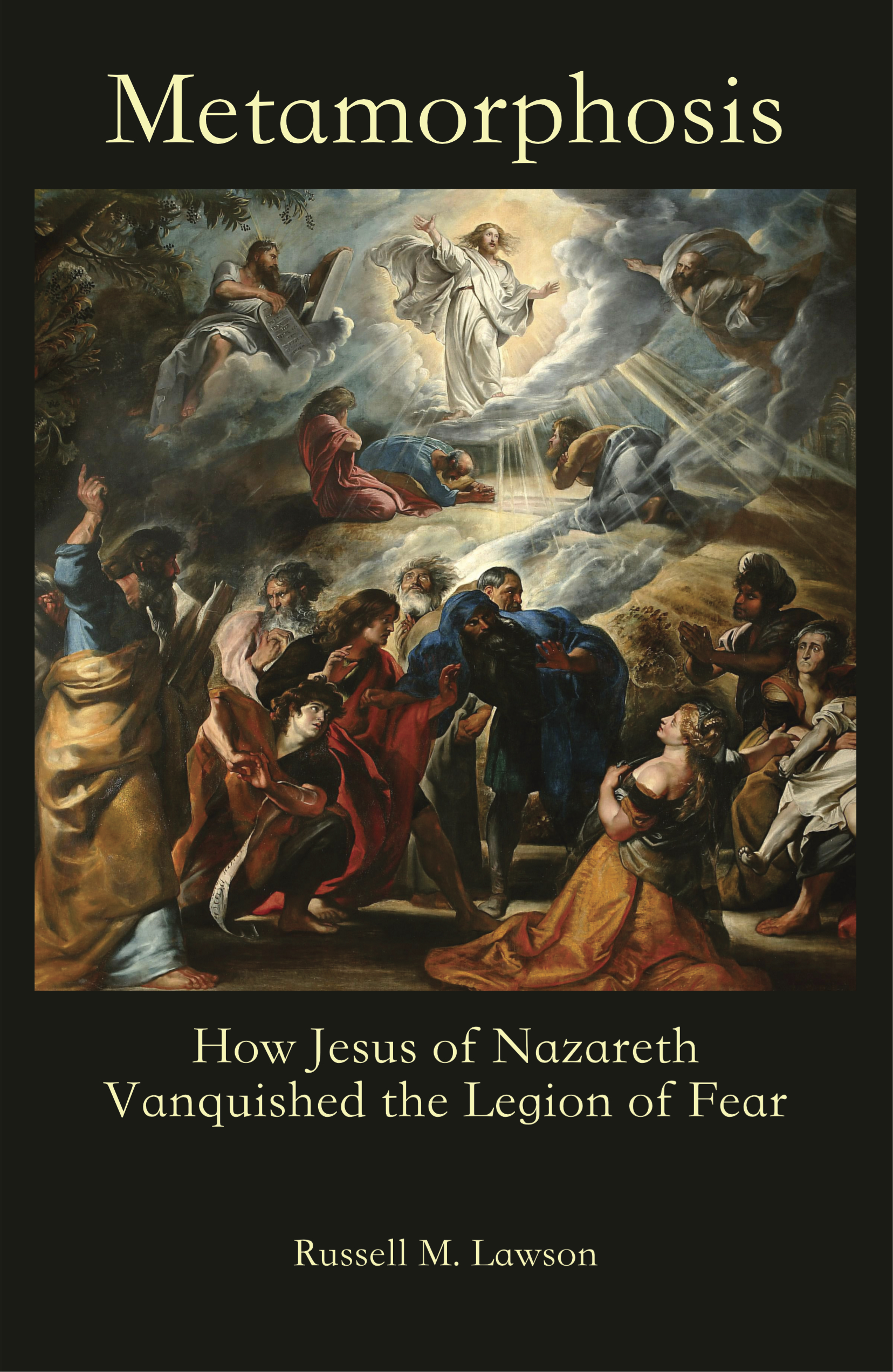

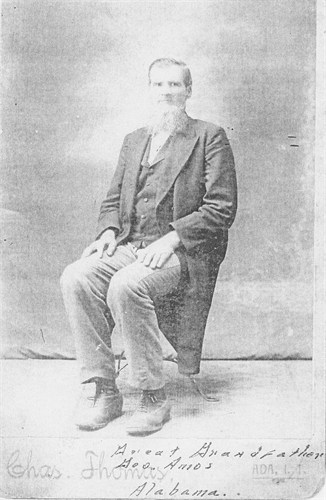
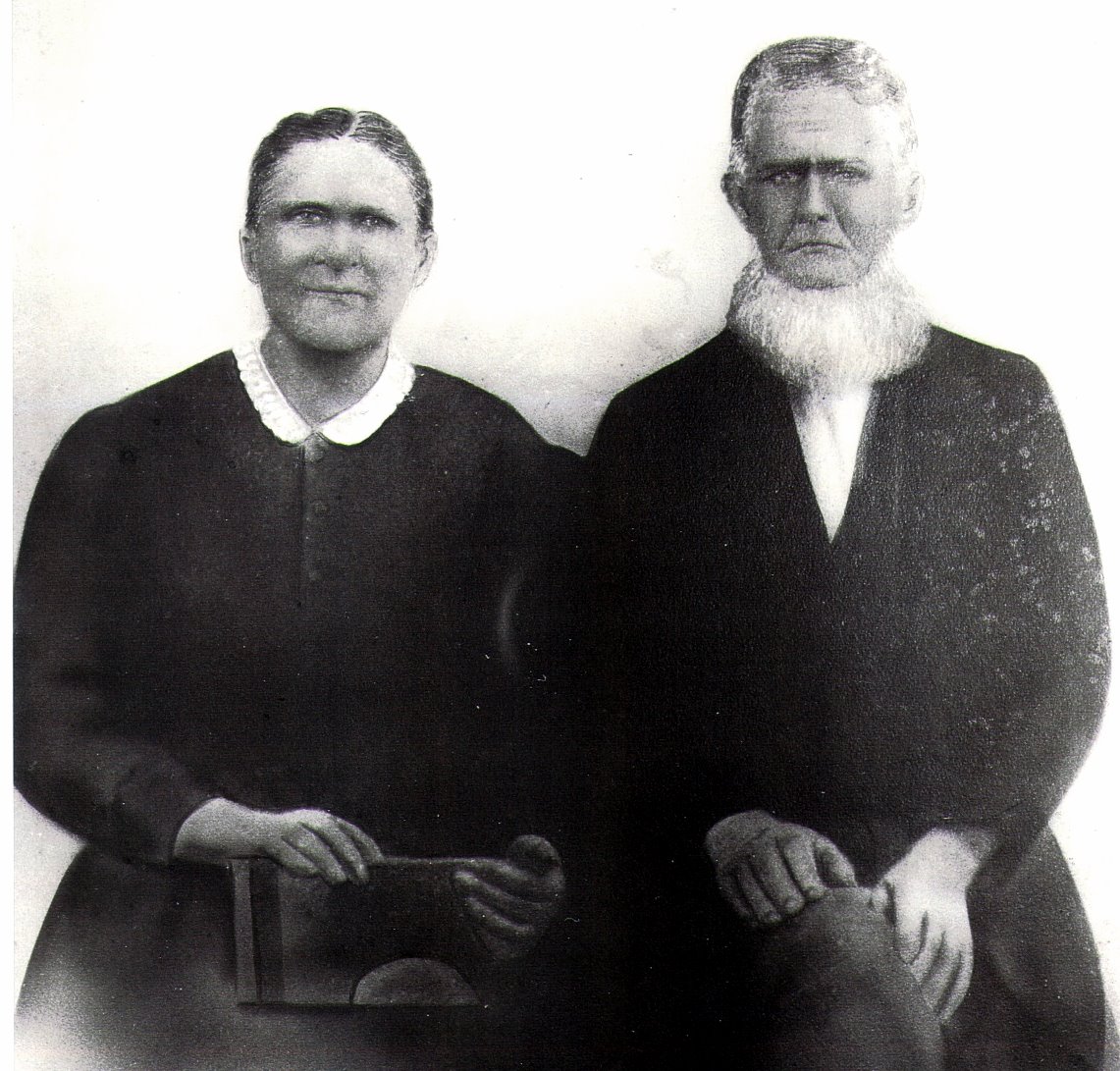


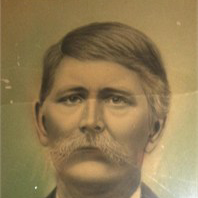


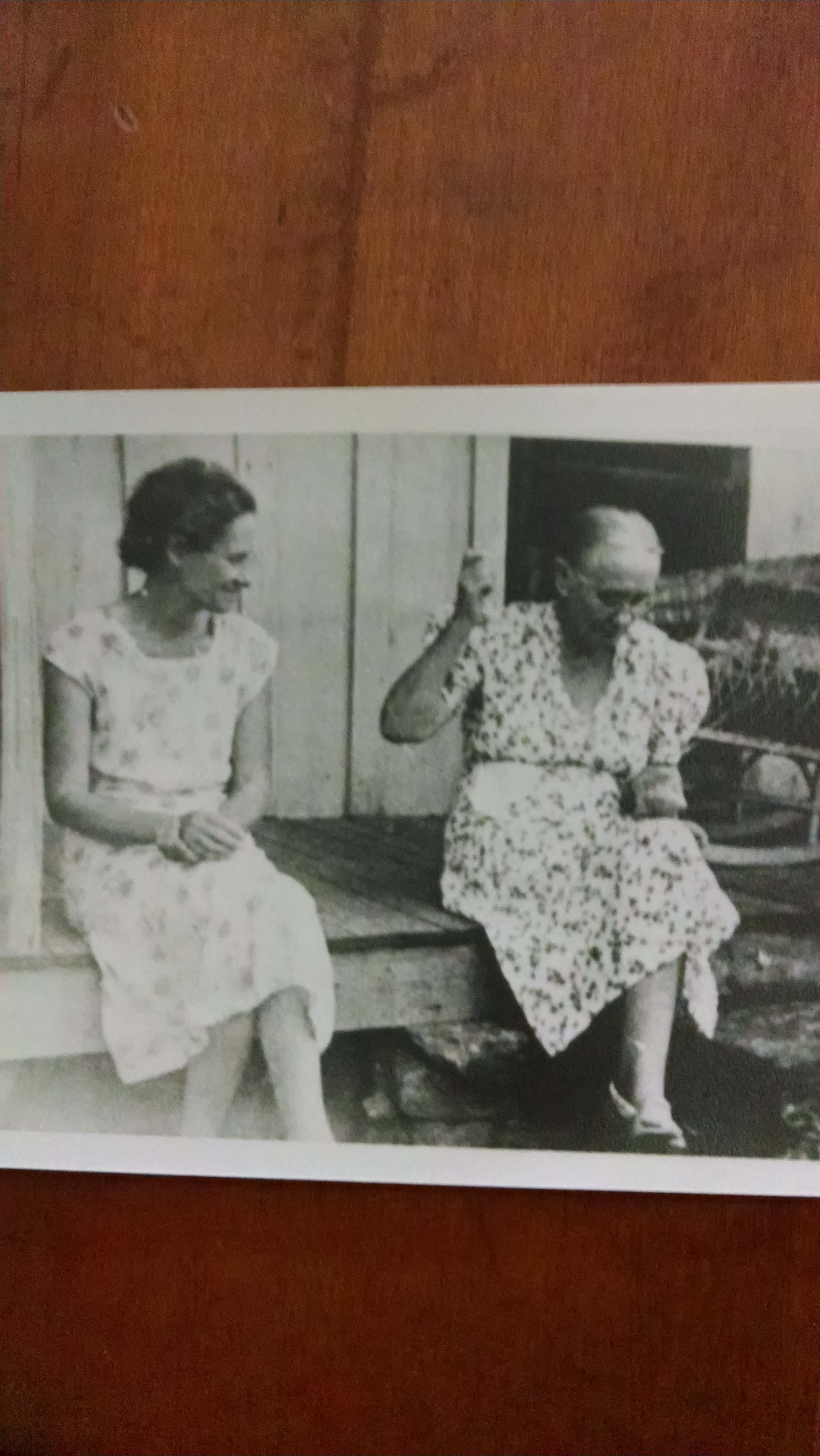
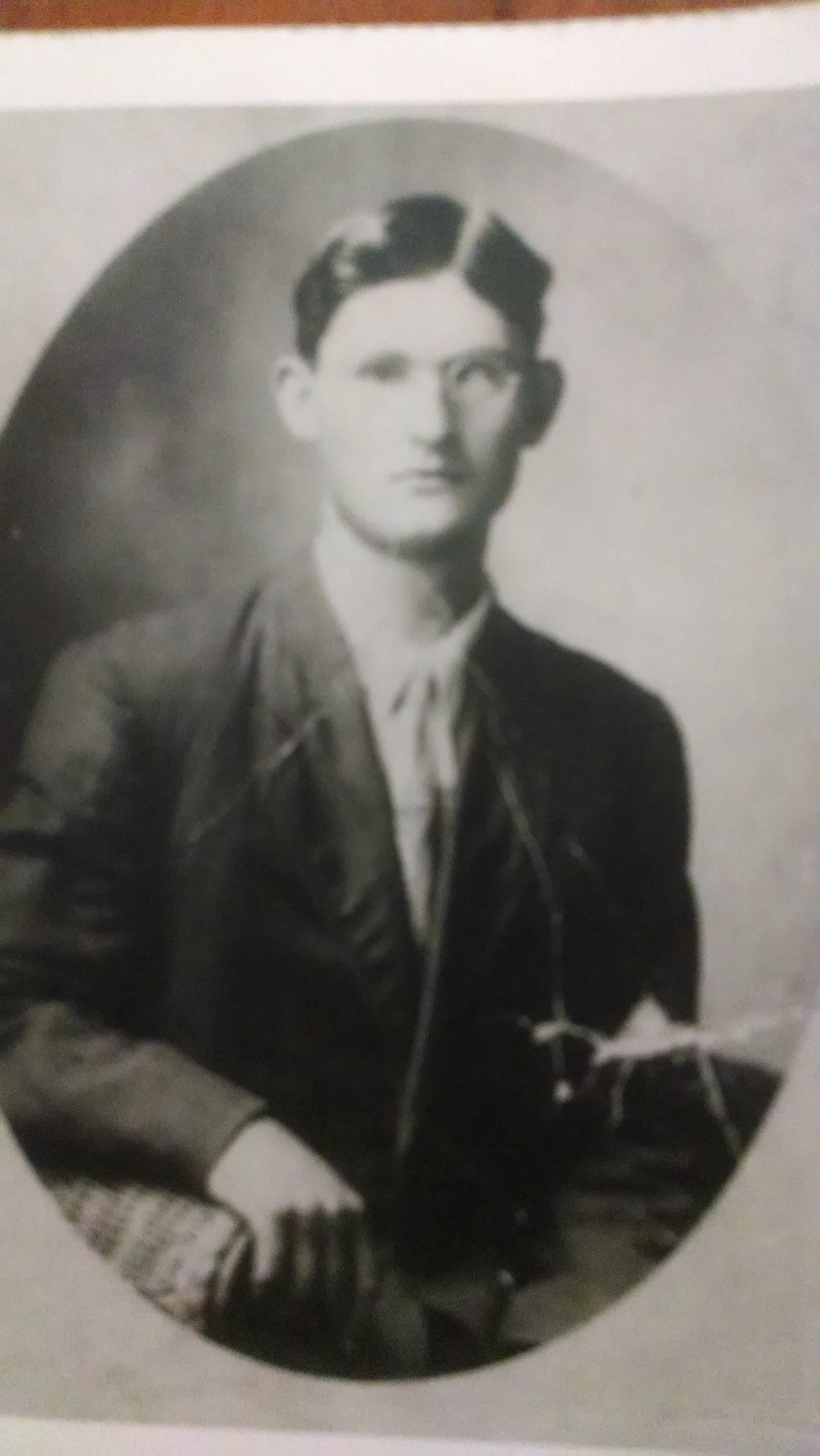


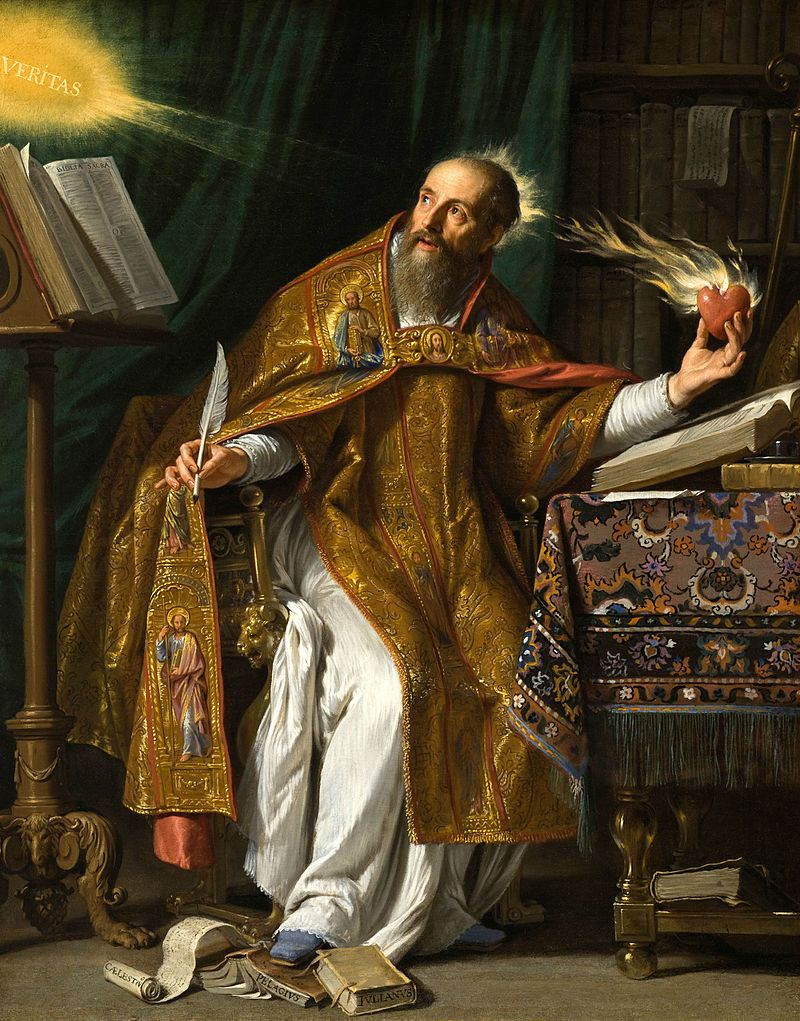

 The American Plutarch