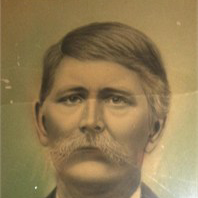
Claude Christopher Largent: Teacher in Early Oklahoma

Claude Christopher Largent, July 2, 1888-July 25, 1975.
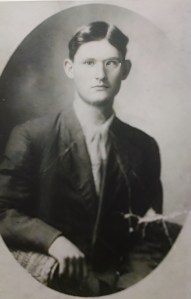
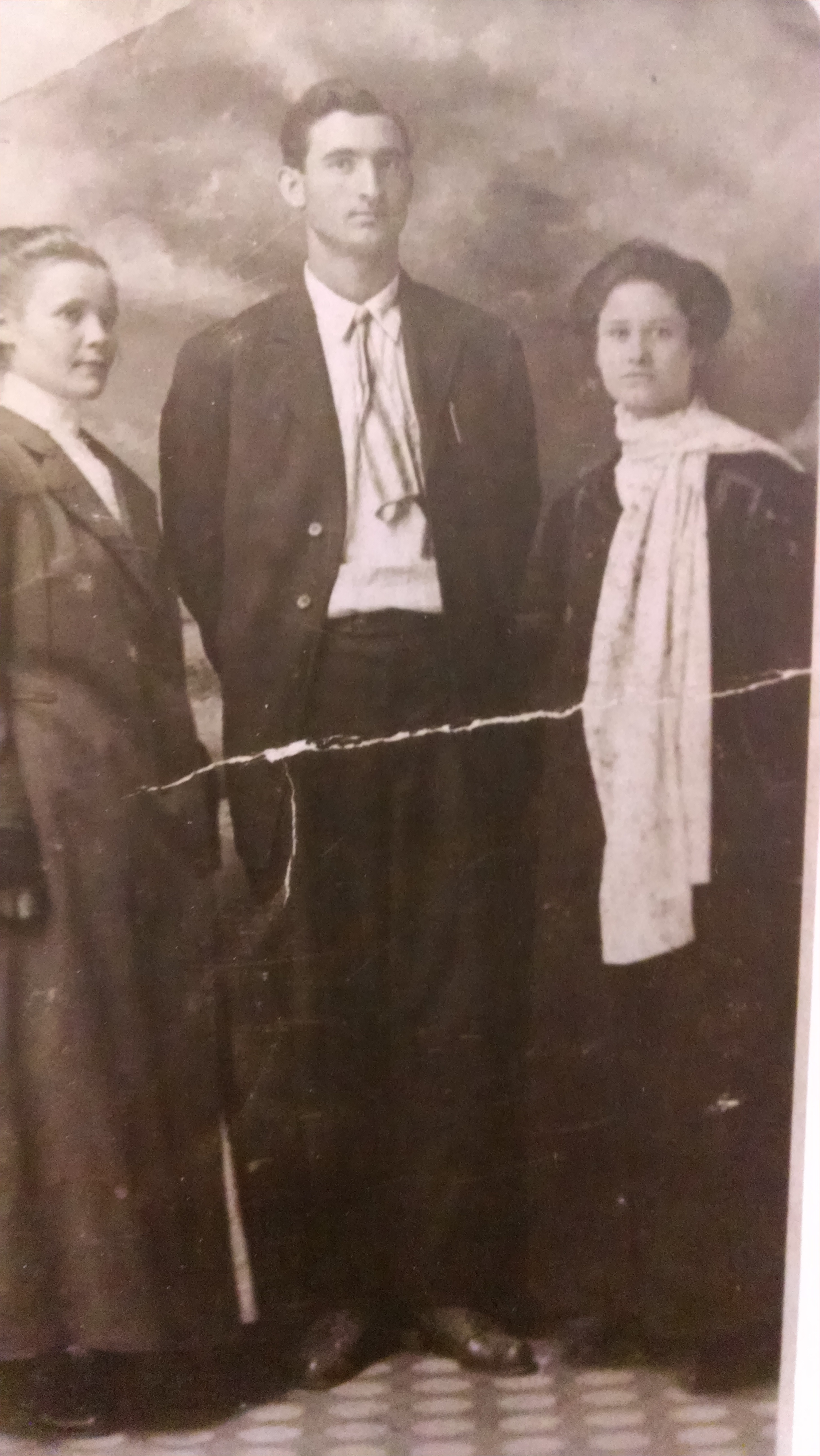
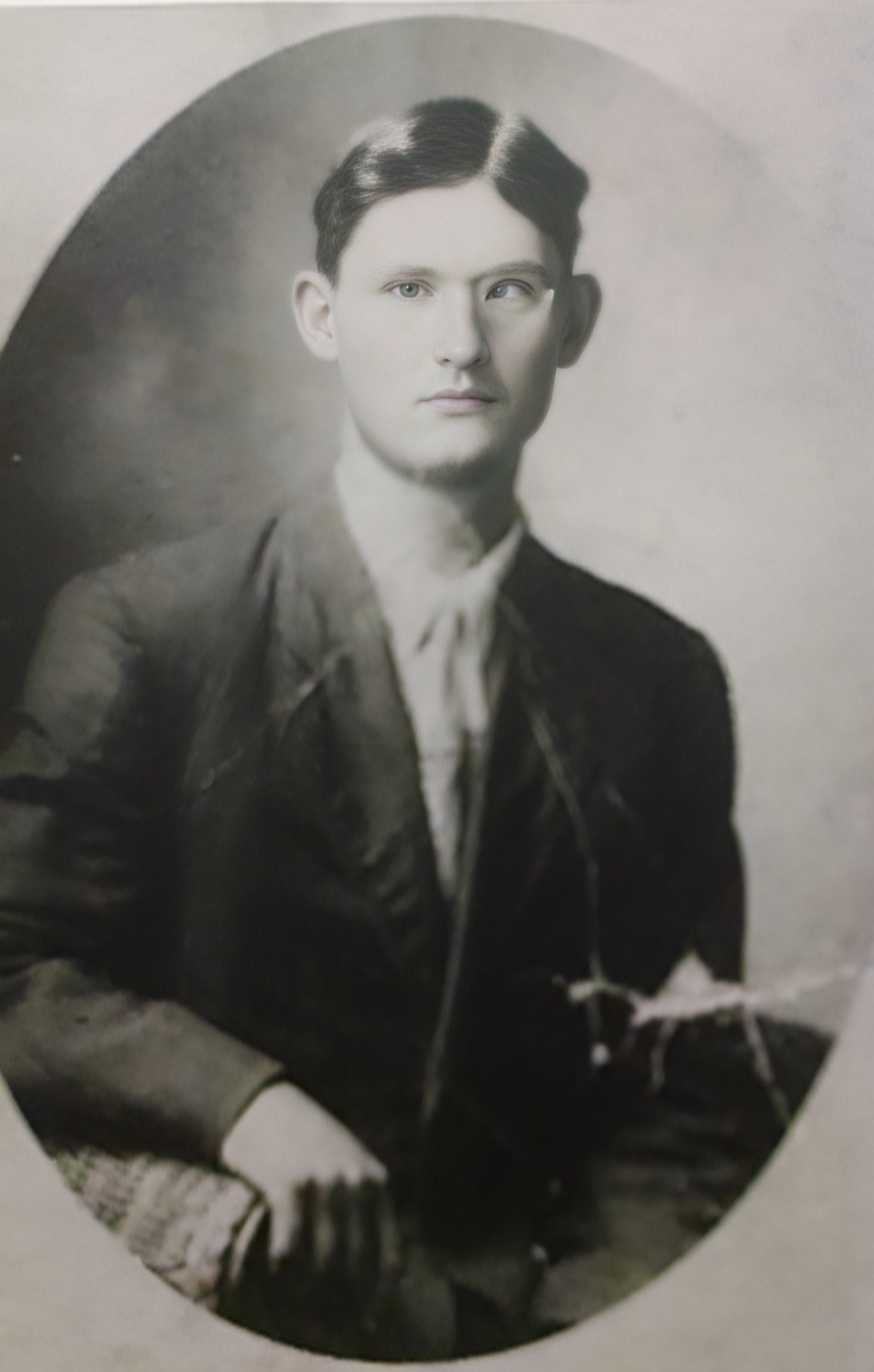
claude as young man

Claude Largent was born to George Washington Largent and Mary Lue Smith in Booneville, Arkansas, on July 2, 1888. George Washington (GW) was a farmer and Mary Lue, who was half Indian (tribe unknown) was his third wife. She and GW had thirteen children, of which Claude was the first. His siblings were: George (November, 1889-December, 1889), Norris (Narcissie) A. (1892-1952), (Mary E, 1893-infant), Mary L. (Bettie), (1894-1960), William, (1896-1896), Evert (1898-1899), Sarah E. (1900- ?), Tommy (1902-1907), Mattie (1904-?) May (1906-?), Viola M. (1907-?,) Georgia Naoma (1909-?).

For many years Claude’s children and relations believed he was born in 1889, and indeed the 1900 U. S. Census claims as much. However, George Washington II was born in November, 1889, and died the following month. Hence what Claude recorded on his 1917 draft registration, that he was born in 1888, was true. (Strangely, however, in his 1942 draft registration, Claude listed his birth erroneously at 1889.) Claude was born a few weeks before GW, aged about 32, and Mary L, aged 17, were married. So Claude was an illegitimate, firstborn son. Perhaps the illegitimacy haunted him and he did not receive some of the benefits of the second living son, Norris.

Claude’s early life was undoubtedly a struggle, in part because he was illegitimate and ¼ Indian, he was not well educated, though he sometimes attended school (his parents were both illiterate). A family tradition has it that Mary Lue stood up to GW in support of Claude when he wanted to attend school. Of Claude’s many siblings, only two appeared to have survived childhood; hence Mary Lue was pregnant a lot and the babies and infants died regularly—death was a frequent visitor to the Largent household.

In the 1900 federal census, he was listed as 10 years old, born in July, 1889, which was an unfortunate error. Claude’s father George W. was born August, 1860, in Illinois, as were his parents, and Claude’s mother Mary L., born Oct. 1871 in Arkansas. Her father, about whom little is known, was born in Missouri, and her mother, otherwise unknown, was born in Arkansas. GW in 1900 owned his own farm, and had no mortgage. Mary was mother of 7 children, 4 living. Their place of residence was Washburn, Logan Co., Arkansas.

Claude’s draft registration in 1917 reveals that he was a self-employed farmer, was married with two children under 12. He lists himself as Caucasian. He was medium height, slender, brown eyes, black hair in June 5, 1917.

Claude married Bessie Lura Amos on Dec. 3, 1911. They lived in Booneville, Arkansas, and had four children, three daughters and one son.

In the 1920 federal census, Claude and Bessie and three children—Marie, Amos, and Joyce—were living in Center Haskell, Oklahoma. Claude was a farmer who owned his own home with a mortgage.

Claude was ambitious enough to educate himself so that he could eventually serve as a school teacher. His daughter June recalled that “the folks talked about several towns where they lived and Dad taught. I believe Pawnee, Shawnee, and towns around Seminole were some. Dad taught in Oklahoma and Arkansas. I remember them talking about him teaching “up on the mountain” in Arkansas.”

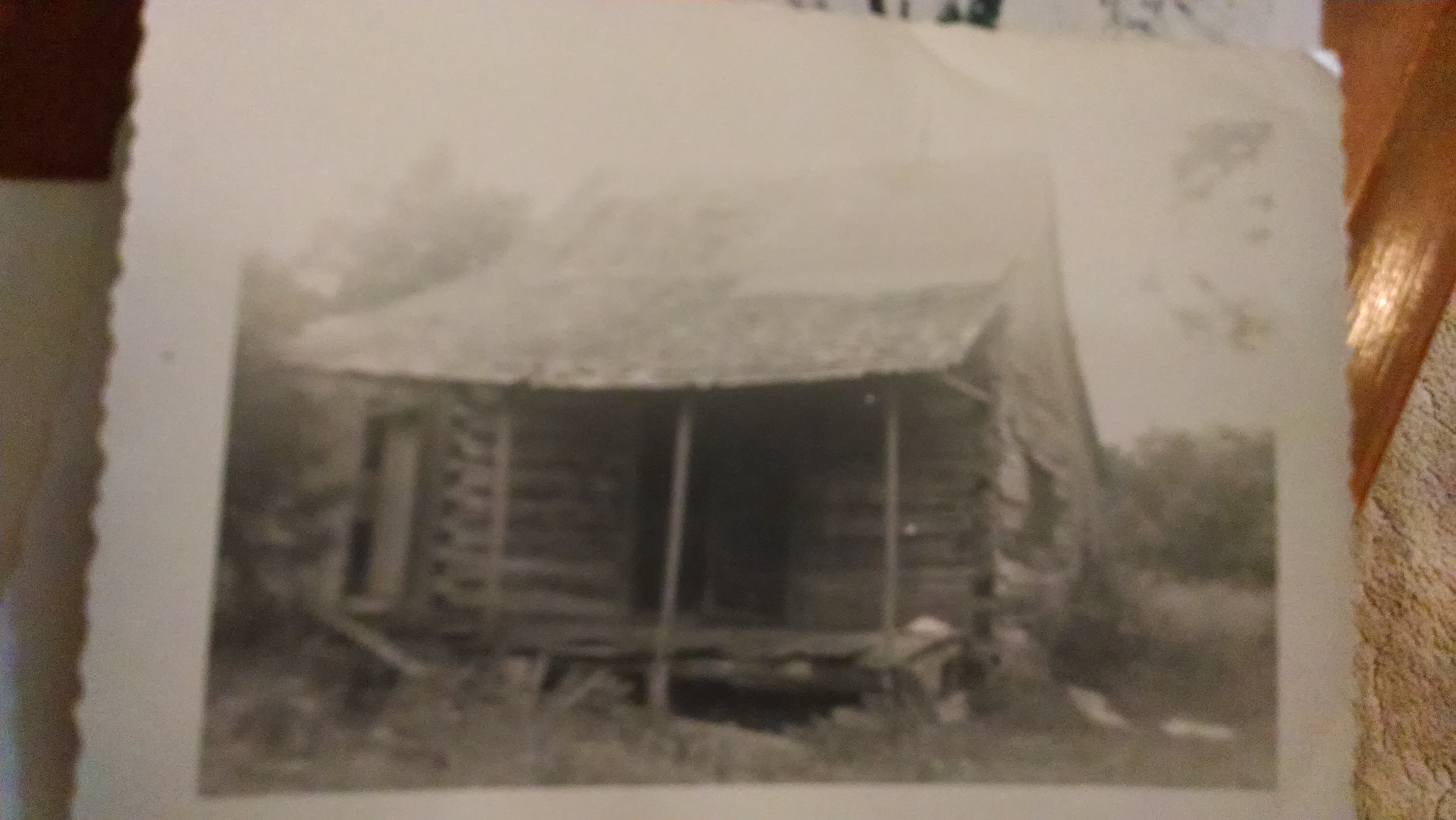
In 1928, they were living in Booneville, Arkansas, where GW lived. GW allowed Claude and family to live in a small shack on his land. June recalls that “Mother talked like she didn’t like him; I don’t remember why. Of course, he didn’t leave Dad anything, and I think he had a lot of land. He also had a lot of kids.”
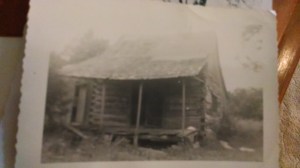
house where Claude and Bess lived and June born

The 1930 census shows Claude and Bessie living in Seminole County, Econtuchka township, Oklahoma. It reveals that they did not own a farm, rather rented. Claude was a school teacher in Econtuchka, which was a small town near the North Canadian River that divided the lands of the Seminole and Pottawatomie Indian tribes.

During the Depression, according to family tradition, “Claude taught school for some $40.00 per month. Walked 10 miles to teach singing lessons during the summer. Sold newspapers in Wewoka. . . . Was not easy, but they made it.” Wewoka is 35 miles from Econtuchka, so either Claude drove an auto to sell newspapers, or the family lived in Wewoka for a time.

Claude moved his family to Stigler in 1934. The 1940 census reveals that the family continued to live in Stigler. They rented a home and did not farm. Claude had completed the second year of college, attending Northeastern State University in Tahlequah. His son George Amos had completed the third year of college. Claude taught music in a Works Progress Administration school. Claude and Marie were a singing duo in local Stigler churches. The Largent family were Methodists.

In 1942, they were living in Stigler, Oklahoma; Claude was employed by Claud Frix, who was the proprietor of a retail dry goods store. But that same year Claude, Bess, and June, their youngest child, made the trek of the Okies to California to look for work. They lived in San Diego in 1942, then moved to Santa Monica in 1943, living there until 1944. Claude worked in the aircraft industry and in a lumber yard. June attended Santa Monica schools. They returned to Stigler in 1945, and Claude worked as an elementary school custodian.

The family moved to Tulsa in 1945. Claude worked for the Tulsa Public Schools, Irving and Mark Twain schools, as a custodian. He also worked for a church in Tulsa. They purchased a house in West Tulsa in 1946 with a Teacher’s Credit Union loan.

Claude retired in 1959 from Tulsa Public Schools and spent his time working in a large garden in the backyard where he grew all sorts of vegetables.

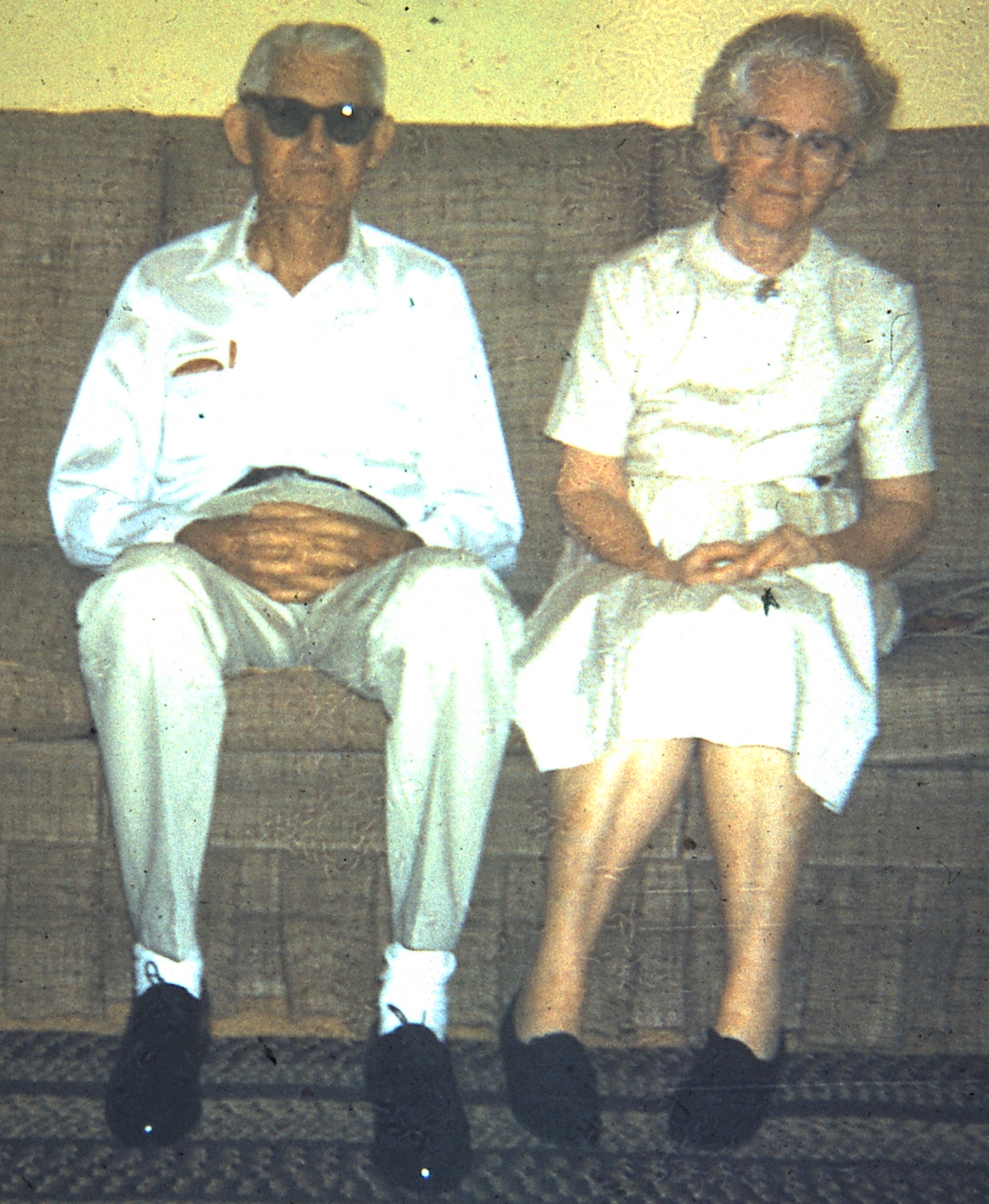
His grandson, Rusty, remembers him as very old, thin, cross-eyed, yet quiet, possibly thoughtful. He wore sun-glasses, even inside, perhaps because of his cross-eyes. Rusty would sometimes join his grandfather in the vegetable garden. Claude said little, but walked about gathering the vegetables and pruning branches; Rusty followed, watching. One time, Claude gave Rusty some books without comment. The books were a two-volume biography of Abraham Lincoln by Carl Sandberg. The books appeared well-used, so clearly his grandfather had read them again and again. They must have been his favorite books, and now he was giving them to Rusty—perhaps his grandfather’s wisdom and Carl Sandberg’s wisdom and Abraham Lincoln’s wisdom would combine to provide the sixteen-year-old inquisitor with wisdom itself. And so, despite the fact that most of the books he read were about sports, Rusty began to read. Sandberg’s portrayal of Lincoln was of a humorous, shy, witty, thoughtful, caring, empathetic man who became President of the United States. Rusty’s grandfather had the same body-type, the same apparent demeanor, as Abraham Lincoln, though as far as Rusty knew his grandfather had only been a custodian for his working years. Sandberg’s Lincoln cared for people, for all people of whatever color, and for this care he became a martyr, a sacrifice to the principles of equality and freedom.

Sandberg’s Lincoln by means of a Claude’s gift opened up a new world for Rusty. It was a world of thought, of stories, of people, of the past. It was a world of the distant and not-so-distant past, which was huge, vast, so vast as to be unknowable. Only a few things about the past could be known. Most past experiences were not known, would never be known. But the possibilities inherent in the past, the countless lives and experiences, were simply too tempting to turn away from. And so Rusty began a quest to know, to read. He was not a gifted intellectual, merely an average student, but he had a desire to know. He began to read science fiction, much of which was based on past human experiences. He read philosophy. The summer after his senior year in high school, as he prepared to go to the university, he read Plato’s Republic—and didn’t understand much. But the whole idea of being able to read the great thoughts of a philosopher from over two thousand years ago, to wallow in the wisdom of the past, was irresistible, and he continued to try to read great books. He particularly enjoyed reading Greek mythology. He read Homer’s Iliad and Odyssey, and not only did he understand these works, but he loved them. He loved the stories of battle, of heroes, of gods and goddesses, of monsters, of revenge, all set in the distant past in a distant land.

By this time in his life, when he turned eighteen and was preparing for the experience of the university, Rusty enjoyed thinking that the mind could elevate him above all the cares and questions of life. It sometimes worked. When in July, 1975, his grandfather Claude became terribly ill, and Rusty went to the hospital to visit the old man, he found him in his bed, partially clothed, senseless, thrashing about in convulsions. It was deeply disturbing, but to a rational, logical person, acceptable as the consequence of life, and Rusty left the hospital as emotionless as possible, as would a philosopher.

Claude Christopher Largent, a kind, quiet man, died in Tulsa on July 21, 1975.
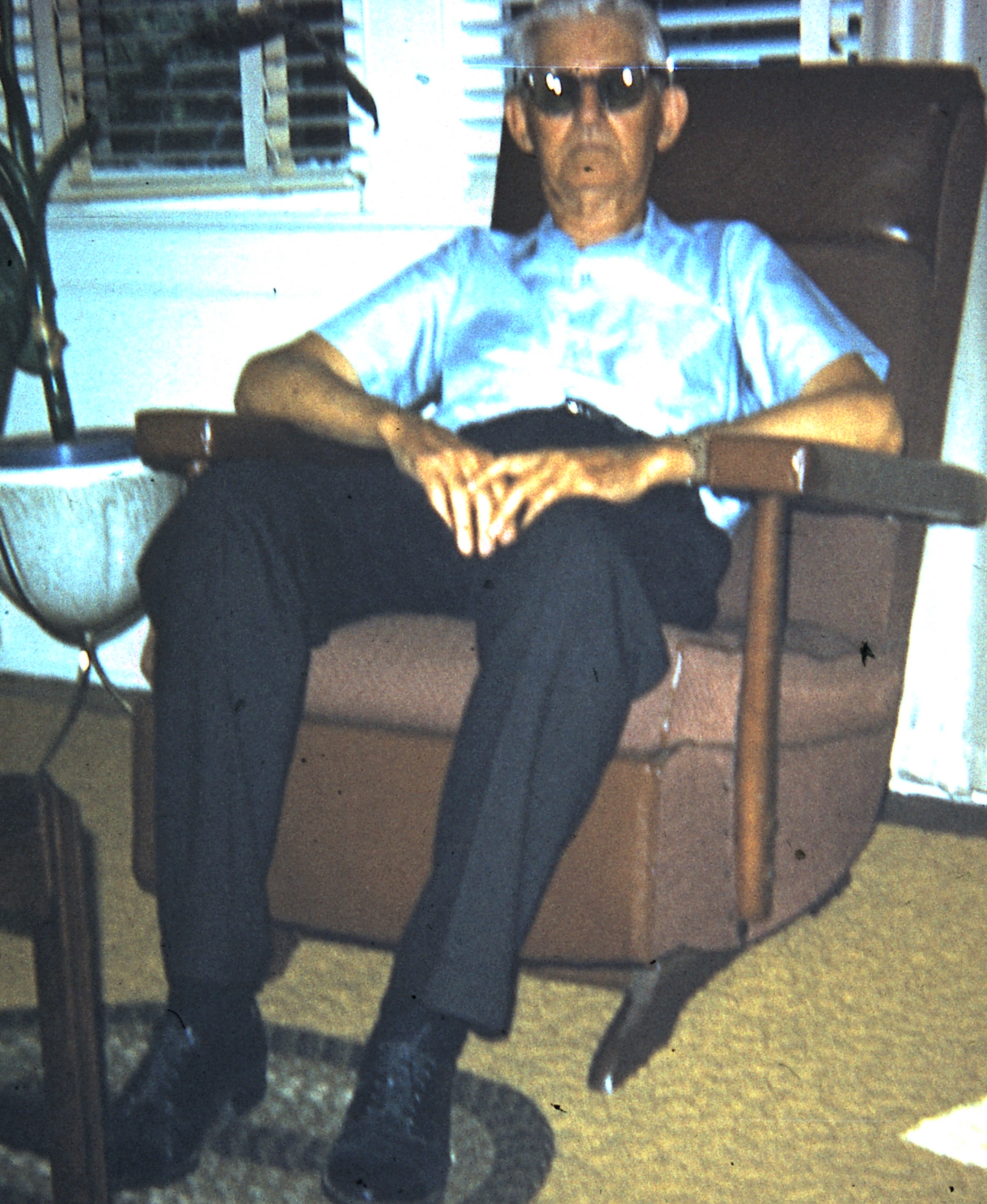
claude largent 1967

Posted in American History, Biography | Tagged , , , , | 2 Comments

George Washington Largent, Arkansas Farmer

George Washington Largent, August 15, 1855-Feb. 26, 1924

George Washington Largent’s life has a bit of mystery about it. His gravestone lists his birth date as August 15, 1859. The month and day are probably correct, though the year of his birth was probably 1855 or 1856 rather than 1859. According to the 1860 U. S. Census, the family of Thomas Largent, in Macoupin Co., Illinois, was comprised of four children, including five-year old George Washington. He could not have been born in 1859, as he had two younger siblings, Lauretta, two, and Charles, four months. His mother, Narcissa Ann Hayes, died with the birth of Charles. So George Washington was five-years old when his mother died. (However, the 1870 census lists him as 14—so he must have been born in 1855 or 1856.)

When George was 10 or 11, his father married a 19-year-old, Lydia Stout. They moved from Illinois to Missouri at some point. In the 1870 federal census, Thomas farms in Deer Creek township, Bates, Missouri. He and his wife Lydia can read but not write, but his son George Washington was completely illiterate, and apparently remained so his entire life.

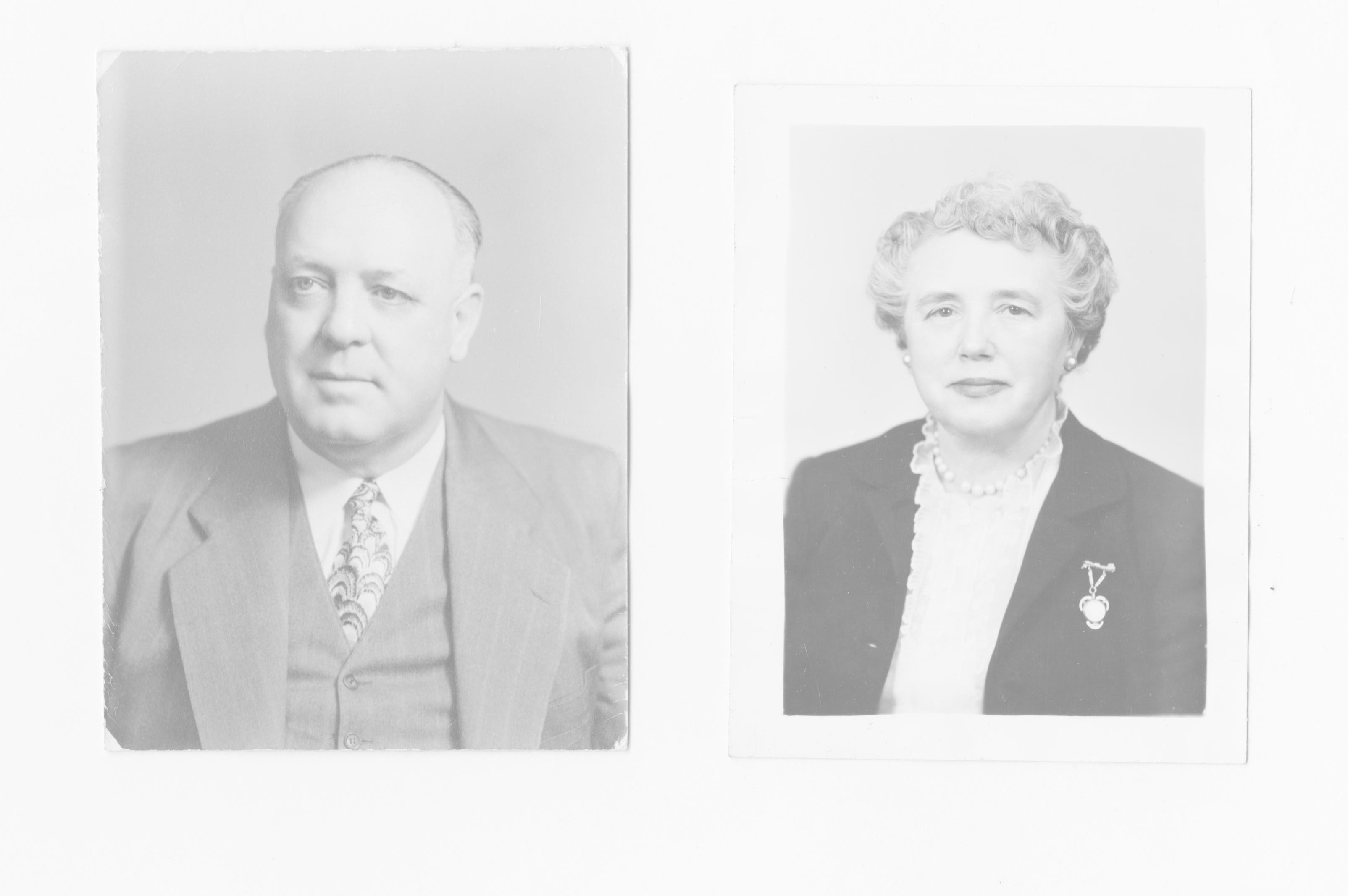
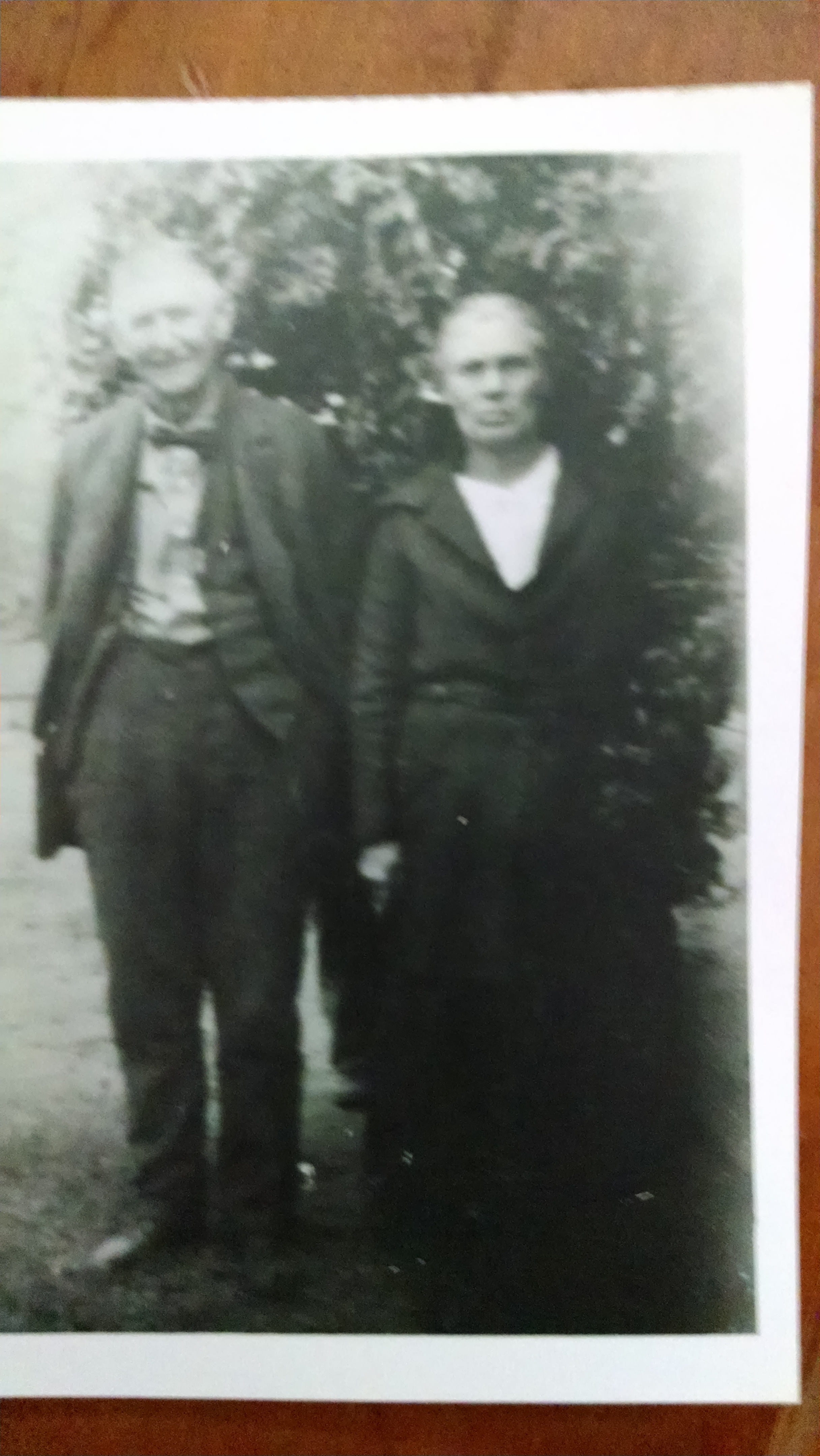
George had four wives during his life, outliving at least three. He was married to Armenty Dunagan, Sarah Bryant, Mary Lue Smith, and Annie Pool. George’s first child was born to Armenty–Rosettie, born in 1859. The rest of his children were born to Mary Lue Smith, who was, according to family tradition, ½ American Indian, tribe unknown. George and Mary conceived their first child, Claude, out of wedlock, as they were not married until July 25, 1888, and Claude was born on July 2, three weeks earlier. George was about 33, Mary was 17. Overall, they had 13 children.gw largent    George Washington Largent

GW and Mary Lue

(The above photo shows GW and Mary Lue Largent, date unknown)

George Washington’s namesake, born in 1889, died in infancy; GW and Mary Lue’s third child, Norris, seems to have been favored over their first born, Claude. In the 1920 federal census, Norris and his family lived next door to GW and Mary Lue; meanwhile Claude and his family lived in a shack on GW’s land. In 1920, GW is 60, Mary L is 50; four daughters live at home. He is a general farmer, owns his land. He and Mary L are illiterate. He is born in Illinois, his parents also. She is born in Arkansas, her father in Missouri, mother in Arkansas.

According to family traditions,  GW left “Illinois under some kind of trouble.” Also, Mary Lue stood up for Claude when he wanted to go to school, and GW would lock the gate to keep suitors from courting his granddaughter Marie.

In the 1930 federal census GW owns his house, farms, is 71, cannot read or write, has no schooling. He is remarried to Annie Pool.

GW and Mary Lue were buried side by side in Ferguson Cemetery, Chismville, Logan Co., Arkansas. His epitaph reads: “An honest man’s the noblest work of God.”

Posted in American History, Biography | Tagged , , , , | Leave a comment

Waiting

Reflections on Psalm 40

Waiting

I waited for the Lord . . .

Waiting. Everyone is waiting. The whole world is in expectation. Such is the way of time, that each moment passes and a new one is coming, and we await to see what it brings us. Will it be good or bad? Blessings or curses? What is to become of us? The Psalmist waited on the Lord, and was brought out of the mire to the sturdy land, where he could stand, walk firmly, and gaze ahead. He felt strong in the Lord and he was able to put behind fear and hope in the Lord.

Happy the person whose hope is in the name of the Lord . . .

Notwithstanding what faces us, what tragedy, or epidemic, or war, looms before us, so that the future seems so uncertain, and tomorrow can bring doom, we must put our hope in He who overcomes fear, He who transcends time, He who holds the world in His hands. Many put faith in vanities, in things of a day, in riches, and reputation, and power, but the Psalmist put hope in the one and only certainty in life, God.

In a scroll of a book it is written of me . . .

The book is the Lord’s and God is the author. I can only read it in retrospect. But the book has been written, and God knows. It is for me to trust in God’s authorship, His plan, the Chapters that remain, and I will hold fast to what God wills for me. Perhaps the book ends tomorrow, or the next day, or in ten or twenty years. There is a certainty–if hidden from me.

The glad news of righteousness . . .

There is good news, notwithstanding what happens today or tomorrow. The news is always good when it is the Lord’s. Human news is never good. The Lord’s news is truly good news. It is the news that reassures us that all is well—even when it appears otherwise.

My heart failed me . . .

It does in each moment. I am not alone, knowing that the Psalmist felt the same way, so many thousands of years ago. Each moment brings more bad news, more fears, more to worry about. But the Psalmist declared, and I agree, “Let the Lord be magnified!”

Poor I am and needy . . .

Always. I am never rich and full. It is the consequence of moving time, that I can feel momentarily rich and full only to have it siphon out, and I am alone again, waiting.

O my God, do not delay.

Posted in books, Christianity, Reflections on the Psalms | Tagged , , , , | Leave a comment

Prisoners’ take on “The Storyteller,” by Mario Vargas Llosa


The Storyteller, by Mario Vargas Llosas, is a complex book that interweaves two different narratives, one by a writer, one by a storyteller; the book explores the people of the Amazon rain forest in eastern Peru from the 1950s to the 1980s.

This book was taken up by a half dozen inmates at the Dick Conner Correctional Center, a medium security prison in Hominy, Oklahoma, as part of the Oklahoma Humanities Council’s Let’s Talk About It Oklahoma.

The inmates, some of whom had read the book, some of whom listened to the guest scholar’s (your’s truly) opening discussion, were receptive to questions asked and possible answers posed.

The Storyteller begins with an unnamed narrator visiting Florence, where he goes into a small museum that features photographs from the Peruvian Amazon region. The narrator is from that area, and had spent time in the Amazon, and the photos brought back various memories. One photo featured a person who looked vaguely familiar to him.

The narrative returns to the 1950s in Peru and a conversation between the narrator and another person, Saúl Zuratas, nicknamed Mascarita, who is a person with a noticeable large birthmark covering one side of his face. It distinguishes him from others, who consider him a freak, almost like a monster, and he is the butt of ridicule. He is also a converted Jew, and knows the bias held by many Roman Catholics against the Jews. The two men discuss the indigenous people of the Amazon rainforest, and the slow movement of civilization into the region: scholars seeking to study them and record their language; missionaries seeking to bring Christianity to the animistic, pagan people; developers and exploiters seeking to turn the jungle into a place to secure natural resources, and build civilized settlements. The narrator believes that it is inevitable that humans will change the region, which is after all part of the progress of science in modern civilization. These primitive people will benefit from such progress. Mascarita argues that such interference is a crime perpetrated against these people, who should be able to continue with their way of life, however primitive.

The narrative then shifts to a story, told by an unknown narrator, that portrays the beliefs of the people known as the Machiguenga. The story tells of their inherent belief in the supernatural engaging the natural, and humans, in every moment; of demons and divine beings—some good, some evil—that interact with the humans of the rainforest. It is a primitive, animistic, anthropomorphic, demonic, world where all life, corporeal and spiritual, are connected together, where the moon and sun come among the people, where taboos and rituals and magic are the ways to make sense of things.

After this evocative description, the narrative of The Storyteller shifts one again to the unnamed narrator who began the book, who describes his experiences in the Peruvian academic world, the linguists and anthropologists who seek to understand people such as the Machiguenga, to record their rituals, to preserve their language. But some people, such as Mascarita, believe that even such academic work is an incursion on these people, that such scholars have an ulterior motive to change these people, to civilize them. Indeed, academics are no better than Catholic and Protestant missionaries actively involved in trying to convert the Machiguengas to Christianity, hence to change their way of life, to civilize them.

Again, the narrative of the book alters to the same unknown narrator of before who tells other stories, focusing quite a bit on a mysterious figure, somewhat humanlike, somewhat godlike, called Tasurinchi. Various stories are told that reveal the worldview of these people, who see themselves as intricately connected to the creation, to the divine, to all life.

The narrative returns again to the unnamed narrator, who describes his experiences in the 1980s working with a television station in Peru that produced human interest stories, one of which was to visit the Machiguengas to find out their way of life, a life slowly vanishing in the face of civilized society. The narrator hears from Christian missionaries of a person among the Machiguenga who tells stories; he is a storyteller, and he provides the oral means for this illiterate people to recall their past, to understand their supernatural worldview, to preserve their rituals and taboos. The narrator discovers from the missionaries that the storyteller has a distinctive birthmark on one side of his face, and to his astonishment, he realizes this is his old friend Mascarita, who has apparently given up on civilized life, gone to the Amazon, lived with these people, become one of them, accepted by them, and has become their storyteller. He has been born again, he has experienced a transformed life, he has so yielded to his disgust of civilization, and its attempts to conquer a primitive people, as to become one of them, to help preserve them in a way no anthropologist, no missionary, no linguist, could have done. Because of his birthmark, his Judaism, his concern for the outcasts, for the helpless, Saúl decided to renounce his life, civilization, and go primitive. He is reborn, almost like a Christian conversion.

At the Dick Conner Correctional Center, as discussion leader, I asked the inmates what they thought about the story and the questions it poses, such as:

  1. How is the contrast between civilization and primitive society portrayed in The Storyteller? Is one better than the other?
  2. What has been the history of civilization spreading into the Americas?
  3. How are Christian missionaries portrayed? Is it justified for missionaries to go among such primitive, animistic people to convert them to a new belief and new way of life?
  4. What has been the history of Christian missionaries in the Americas?
  5. How should human progress be gauged, according to The Storyteller? When is progress disruptive, and when is it necessary?
  6. How is Saúl Zuratas, Mascarita, portrayed in the book: is he heroic or misguided? Can people undergo a new birth, a conversion, and is it always religious?
  7. What is the worldview (basic fundamental assumptions about existence) of the Machiguenga Indians? How does their worldview compare to the worldview of modern civilized Peruvian society?
  8. What was the significance of the storyteller in the lives and culture of the Machiguenga in that he provides through oral stories their histories, their religion, their relationship with the supernatural, their explanation for all life?
  9. The book has an environmental approach; the people are at one with the environment: what if all society was like this? Could it ever be?


  1. The figure of Tasurinchi appears almost Christlike at one point of the book. Is the author perhaps showing that all religions are essentially the same in their connection of the supernatural, natural, thought, and life?

These are difficult, sophisticated questions, which the inmates embraced and discussed extensively. I was pleased to find a nuanced, open-minded approach to answering these questions. The inmates saw the difficulties in the movement of progress in our society. They understood the challenges of the penetration of the academic world into primitive societies: to understand them will result in changing them. They realized the difficult questions that the missionary faces: that even though missionaries might feel like they know the truth, should they bring this truth to other people, who might have their own version of the truth?

Ultimately, the discussion resulted in no answers, only ongoing questions, which is the nature of The Storyteller itself: a book that brings forth manifold questions with no apparent answers.

Posted in American History, books | Tagged , , | Leave a comment

Psalm 23

The Old Testament Psalms are constant reminders of how easily humans forget divine blessings and have to be reminded by daily prayer.

The Psalms have been human prayer companions for centuries. The Psalms are some of the greatest literature ever written. Their depth in terms of spirituality and human reflection have few counterparts. Take Psalm 23, for example.

The Lord is my Shepherd, I shall not want . . .

The Psalmist reassures us that nature is at peace with us, that we must embrace its peace to feel peace. God’s creation is not in opposition to us, rather complementary to us. We restore our souls, we find peace of mind, next to the cool clear waters and verdure of the natural environment. Psalms use the imagery of a pastoral people. God the Creator of nature is pictured as a shepherd to his sheep, the humans. Sheep are peaceful ruminants who seek to live contented in nature’s grasp. There is only one shepherd. When each human decides he/she is a shepherd, then conflict results.

He leads me in paths of righteousness . . .

The path is overwhelmingly clear, even if one loses the way. The path is before, in the heart, the soul, the brain; bodily passions often lead the other way, stray from the path, or blind one to the guide. Open the eyes, see the path, see the guide.

In the midst of death’s shadow . . .

The path often seems to lead this way, toward death and destruction, annihilation, nonexistence. The darkness can be overwhelming. The light snuffed by death’s shadow allows all of the nascent fears of being to come rushing in, and one feels alone, scared, abandoned, and thrust into a deep dark pit of no return.

I will fear no evil, for you are with me . . .

God can vanquish the fear, but only if allowed. How can evil be nearby if God is present? How can one be on a path of death and destruction when God is before, leading the way?

You prepare a table for me in the midst of my enemies . . .

Surrounded by the enemies of my mind and body—fear, anxiety, pain, sickness, death—You bid me to share a meal with You, to find comfort in the everyday, in the regular habits and tasks of existence.

Your mercy shall pursue me all the days of my life . . .

Mercy is in pursuit, trying to catch up to a human’s wandering ways while humans search for light in the twisted path of darkness. Allow mercy to make up the distance, to come alongside, to be the partner in the race to the end.


If you like this reflection on Psalm 23, you might like my book, God is Love: Reflections on the Psalms, available here: https://www.amazon.com/God-Love-Reflections-Russell-Lawson-ebook/dp/B09TBM6MWK?ref_=ast_author_dp_rw&th=1&psc=1&dib=eyJ2IjoiMSJ9.v-hcX1V-CNngJcagQsbTaqygYVqTI4Nq0ElsODLYDyq4MapGwvs0oGcXondEmFjLhNcSJQ2zgT5AWiJLUXgBuSvYGOHB3FH7fYsqWU1ml9QxyoT1725OY5XUt4hIujjIaKaeS2QhjcZORBRh7VUrBqXlwC-7TVgdTczo1PrxDCOzNALrSNb45NmyU57xYY1t2reqbwvSMt20DKOigowNY3FCodGeIaL0KYyCWYAoMPU.gy1jvqzWQ-L7Cz_G_uUlyW3jAeNrwdV_RyhPRwkLwMY&dib_tag=AUTHOR


Posted in Christianity, Reflections on the Psalms | Tagged , , , | Leave a comment

Cyberspace, Virtual Reality, AI, and All that Stuff

First, disclaimers: much of the stuff about virtual reality and gaming is gibberish to me. I am not interested, and I don’t play games or engage in virtual reality (at least the sophisticated forms).

At the same time, I am an author/creator and I am a recipient, and I am a historian and sometimes philosopher, so I might make a few reasonable comments.

Henry David Thoreau. in Walden, responding to the new invention of the telegraph, said, to paraphrase: We can send information and communications much more rapidly—but do we have anything useful to say?

This is my impression of virtual reality and virtual interactivity. It is bringing technology to humans who often have little to say to each other that is meaningful.

Technology is important. And when it is happening now, in our lifetime, it can seem so important, so revolutionary. So did the telegraph in Thoreau’s time, the printing press in Guttenberg’s time, the wheel in caveman’s time. What doesn’t change is our basic humanity.

Can technology, virtual reality, virtual interactivity, AI, impact humanity in a meaningful way?

It can change communication, it can provide more information (but much of the information is Fake, therefore meaningless), it can provide exciting sensory experiences, it can provide a panacea to boredom, but does it actually change, or mean, anything?

I have lived in pre-computer times and now in computer times, in rotary phone times and smart phone times. Computers and phones provide entertainment, information, and quick communication, but otherwise they don’t alter me as a human, or alter my thoughts, or my creativity, or my self as author, or myself as recipient of an author. They are merely tools.

I used to saw tree limbs. Now I use a chain saw. What is different? I put less physical energy into the job, I save time, I have more time for leisure, but in sum, I am still cutting a tree limb down. There is no difference. I still perform work.

Humans are enthralled with themselves and their creations. Humans have unsurpassed hubris. We are so taken with what Prometheus did, and are Promethean ourselves. We can’t help but invent, try to alter the environment, change space and time: and yet we end up, perhaps, being chained to a rock enduring nightly torture for all of our efforts.

The relationship between creator and recipient in computer software, games, virtual reality, movies, and so on is the same relationship that I have with a book I am reading. I still have to use my mind, still have to engage the author, still have to put in some effort to get something from it. But it is all done in my head, my brain, without the titillating images, without the distractions of sight and sound, and as a result, book-reading it is still a more cerebral, more valuable experience.

So, yes, we have smart phones, 5G, interactive games, wonderful movies with incredible visual displays, incredibly sophisticated means of communicating and sharing information.

But do we have anything important to say?

Posted in Christianity | Leave a comment

The Sea Mark: A Poem

I published a book about John Smith several years ago entitled The Sea Mark. Smith himself wrote a poem of that name. Inspired by Smith, here is my version of the Seamark.

Seamark
I have searched, the pages of history
To answer a problem, a personal mystery
A haunting call, ghosts of the past
Echoes of the soul, internal ballast.

Something within, keeps me afloat
No matter the seas, that rock my boat
Mast stays firm, bends but won’t break
Mariner’s dream, riding eternity’s great lake.

What is this anchor, that hold me fast
This thing that joins, to what will ever last
that sews my self, onto life’s tapestry
That merges my being, with what will ever be?

It draws me in, after a wave its wake
Can’t resist it, my strength I foresake
Into the sea, its cold water coat
Envelopes me, a castle its moat.

Into the fog, blanketing the harbor
The cool wet mist, wets the skin and more
It penetrates, inside to the mind
Fog on the brain, a pervasive bind.

Knits together, thinking and feeling
Sailor’s seamark, spiritual sealing
Lighthouse gleaming, in the fog a sign
Crossing the sea, the sweet smell of pine.

I sail the sea, but what do I find?
An unknown deep, my mind the same kind
Explore myself? Search whatever for?
Unless within, there exists a core.

Must scape away, barnacles of mind
Sail through the shoals, navigate a line
Compass settings, sky’s starry ceiling
Starbeam pathway, internal healing.

I’ve found the door, I know the key
Escape the wind, and find the lee
Peaceful harbor, anchor to cast
Retire sails, undress the mast
And beach the boat, my line to tote
Haul it to shore, beach it encoat
The hull in sand, the anchor take
Bury it well, landlubber’s sake.

Posted in books, poetry | Tagged , , | Leave a comment

Bucephalus

One of my heroes of the past is Alexander the Great. This is due in part to Plutarch, whose portrait of Alexander, in his Parallel Lives, is arguably one of the reasons I became a historian. Plutarch’s story of the taming of Bucephalus is a classic, and I have, if you will indulge me, put it into verse:

Ox-Head

Bucephalus—unlikely name,
unlikely horse.
Of flashing mane, the powerful one,
the source
Of pride for the man of the north,
a king,
Macedonian warrior of whom
bards sing.
Philip, bred of horse-flesh.

The day arrived, not any day, a
trading day;
Impatient traders waited on the king
whose say
Was law in the mountain kingdom.
“Thirteen talents?” the king roared, a
king’s roar;
“The horse is worth but a drachma–
no more.”
For none of his grooms could mount him.

An ox-head watched an ox-head, the
stubborn one;
Young in years, not knowledge, Philip’s
kingly son.
Taunting the king and his men.
“Questioning your elders? Why do
you annoy?”
Asked the king to the boy, not
a boy.
When it came to horses.

The boy made challenge
to mount
The horse, if he did he
could count
Bucephalus as his own.
They boy knew something—he showed
no fear;
He had a secret no one
could hear;
Save the giant horse.

He turned the horse to
the sun,
A blind steed, impatient
to run,
For Alexander.

Who gently called the horse
by name,
And onto his back clutching
the mane,
He vaulted.

They raced away the two ox-heads,
now one,
Alexander the king and Bucephalus, the horse he
had won.

Posted in poetry | Tagged , | Leave a comment

Grunter’s Plea: The Ancient Philosophy of Vegetarianism

One of the more fascinating tales of Homer in the Odyssey is that of the bewitching of Odysseus’s men by the witch Circe. Odysseus and his men have arrived at an unknown wooded island. Odysseus sends a detachment of men to find food on the island. Soon one of his men comes running in haste, terrified, lamenting the sad fate of the others. When Odysseus goes in search and arrives at Circe’s cottage, he discovers that she has transformed his men into swine. In the world of Odysseus, swine are the most disgusting of creatures fit only to be slaughtered and eaten. One can hardly sink lower than a pig in a pig-pen eating swill!

A thousand years after Homer penned the Odyssey, the philosopher and essayist Plutarch provided an unexpected and humorous twist to Homer’s story. In the essay, On the Use of Reason by ‘Irrational’ Animals, Plutarch imagines that Odysseus is rhetorically challenged by one of his men-turned-swine, whom Plutarch calls Grunter. In response to Odysseus’s goal to force Circe to free his men from their pig-pens and return them to human form, Grunter tells Odysseus that he would prefer to stay as a pig. The reason for this astonishing request is that Grunter has found that he has never felt so content than during his brief stint as a pig. Indeed, he engages the most wise and witty man of his time, Odysseus, in a philosophical argument in which he proves to Odysseus that the fate of humans is discontent and despair. Swine, on the other hand, are happy.

Grunter’s argument is that swine possess a natural, instinctual intelligence unencumbered by human societal norms. Humans, Grunter argues from experience, are constantly worried in every moment by what the next moment will bring. Anticipating the future, humans fear time and its consequences: old age, ugliness, poverty, humiliation. Swine, lacking the niceties of human civilization, live content in the moment, unafraid of what the future will bring. Pigs anticipate only one future occurrence, death, which is the lot of all living things. And since each moment in a pig’s life is the same, unconcerned with wealth, status, and power, they live happily, day by day.

Plutarch was a philosopher influenced by Plato and his forebears, such as Pythagoras. Although Plutarch was unwilling to accept the Pythagorean philosophy of the transmigration of souls, he did agree with Pythagoras that the vegetarian lifestyle is best. Pythagoras feared that in killing and eating an animal he might be ingesting a former acquaintance. Plutarch’s reasons for vegetarianism were more common-sensical.

For one, Plutarch argued that meat is difficult to digest, and by filling the stomach slows down the mind. He believed, as many do today, that meat is not part of a healthy lifestyle. He was clearly disgusted by the idea of taking a living creature and in the wink of an eye, bashing its brains out, skinning, it, cooking it, and gorging oneself over something that just a short while before was enjoying life just like any other creature.

There is no good reason to eat meat, Plutarch argued. Nature is so plentiful with all sorts of vegetables and fruits, which are better tasting, more healthy, and less apt to dull the mind. If humans are starving, and there is nothing else to eat, then meat might be the only choice. But in Plutarch’s time of first century Rome, just like in our time, he believed that meat-eating was little more that sheer gluttony.

Plutarch also argued for the sanctity of all life. To take a living creature, inherently equal to all other living beings, and to kill it only to satisfy a carnal appetite, is to disrespect the Author of all Life.

Grunter’s ultimate argument, that pigs are intelligent, happy creatures, who deserve to live, found Odysseus at a loss for words–as might be the case for many of us today.

Posted in European history, General Essays, Natural History | Tagged , , | Leave a comment

Icons

We live in a world of icons: cloth, stone, digital, metal, paper: money, electronic devices, flags, statues, scriptures, media stars, and so on. Icons have been the stuff of human worship for centuries: the Hebrews worshiped the golden calf, early Christians worshiped fragments of the true cross, modern Christians adore Christ’s body and the crucifix, people all over the world will die to defend their particular country’s flag, the media produces household names and images that everyone knows.
​The following is a versification of the power of icons:

Icons

Statue straight, statue tall
Ever ready for when I fall,
Props me up when I am down
Gives me peace without a sound,
Mirror image of my dreams,
Gives me hope when all else seems
Empty, lonely, full of hate,
Mind and body, a terrible state.

Beautiful icon, destroy my fear,
Through clouds and darkness make it clear
What is true, what is fact,
How I ought to be and act,
You tell me what to perceive
Revealed in you, what to believe,
How do I know if what I see
Is an accurate reflection of what’s in me?

Tell me, Icon, that you are real
Tell me that the confusion I feel,
Deep inside, within my being
Is false, since not the same as seeing
The matchless beauty of human art,
Marble complement to the human heart.

No need for God, no need for Scripture,
All I need is a secular mixture,
Of stone from the soil,
And the sculptor’s toil–
To produce a heavenly deity,
Wrought from earthly fealty.

Posted in Christianity | Leave a comment