September 1, 1939, Marian Piotr Opala was an eighteen-year-old student living with his parents in Lodz, Poland, when he heard the news that the Germans had invaded his homeland and were headed toward Lodz from the west.
Marian, a law student, discovered a resourcefulness and a will to live that took him through the years of the Nazi occupation of Poland. These characteristics served Marian Opala just as well in later years when he served as a justice on the Oklahoma Supreme Court from 1978 to 2010.
After the German occupation of Lodz, Marian and his family awaited English action to liberate Poland, which never occurred. Antony Opala, Marian’s father, thought that the Germans would not be as brutal as they turned out to be. Realizing that the Germans were trying to eradicate the Polish element in what had been western Poland, he reluctantly allowed his family to leave Lodz for Warsaw in January 1941. The Opala family departed surreptitiously and walked the distance to Warsaw, living for a time with Marian’s uncle in an apartment. Marian witnessed violence, oppression, and arbitrary arrests.
In Warsaw, the Polish Home Army, also known as the Polish Underground, a highly organized defensive and offensive organization operating by subterfuge to resist the Germans, conscripted nineteen-year-old Marian Opala. Working with the British, the Polish developed an organization in which most members knew very little of general operations. Marian received orders from people in disguise, and he never knew who his compatriots were. He lived at home, pretended to be a normal citizen, and never told anyone, even his parents, about his resistance activities. If he had, they and he would have faced death.
The Underground used Marian mostly as a translator. He was one of the few Poles who was fluent in English. He was given messages to translate from Polish to English, which were sent on to the British forces. On other occasions, he saw direct action committing violence against the Germany occupiers. Two occasions he was involved in assassinating German officials. The whole time he was, he recalled in an interview almost seventy years later, “scared to death each inch of the way. Absolutely scared to death.”
Eventually the Polish underground sent Marian Opala to join the British in Istanbul. He stayed with the British for several years, seeing action in Italy, Ethiopia, and Egypt. Eventually in 1944, soon after the D-Day invasion, Marian parachuted back into Nazi-occupied Poland. He was captured, and sent to Flossenburg, a concentration camp near the Czech border. Marian recalled it as “a plain murder camp.” He survived, however, and was liberated by the invading American army.
Marian, very ill, was taken to a British camp in Germany, where he recovered. An army captain from Oklahoma, Gene Warr, agreed to sponsor him in obtaining a visa to go to America. Marian ended up in Oklahoma City in 1947. There he studied law, was admitted to the Oklahoma Bar, served as a lawyer and judge, then in 1978 became a justice in the Oklahoma Supreme Court.
Living through utter fear and tragedy helped Marian Opala, during the war and afterwards in America, to develop a moral compass of right and wrong, based on pain and suffering, experiencing the oppression of one against another.
Justice Marian Opala’s resistance of Nazi repression during World War II resulted, later in life in America, in a fight against the oppression of government in any form, as signified by his embrasure of the cause of First Amendment rights in Oklahoma.
According to Psalm 139 of the Old Testament, “O Lord, Thou hast proved me, and known me.” This psalm is a wonderful source of essential knowingness, a source of truthfulness, a source in which a person knows God and knows that God made him/her, makes the individual human self.
Ironically, it was written by King David, a warrior, murderer, adulterer, and conqueror who was also a poet and singer of extraordinary talent and sensitivity. He composed verse and hymns to express piety and love, fear, the search for redemption, the need for deliverance. He knew that God knew. His awareness of God’s awareness is most profoundly stated in this psalm. “Thou knowest my downsitting and mine up-rising: Thou understandest my thoughts from afar.”
God’s love and will are the same. God loves David, and knows David’s actions and thoughts, and witnesses whether David’s actions and thoughts conform to God’s will, and God blesses accordingly. If God does this for David, he does it for every human. “Thou hast traced my path . . . , and hast foreseen all my ways.”
God is with David always–whether awake or asleep, He is part of him, as He is part of all the Creation. David was exceptional only in that he had such a profound awareness of God’s presence in every moment of his life. “O Lord, Thou hast known all things, the last and the first.”
God does not form the word on the tongue, but God nevertheless knows. Such awareness allows David the insight to be able to speak and act in a way that is apt to conform to God’s will. God is present in the past and future, before and after, in the previous step and the forthcoming step. Awareness of this is a sure guide in taking the multifarious steps of life.
“The knowledge of Thee is too wonderful for me; it is very difficult, I cannot attain to it.” The greatest counter to hubris, David knew, was the realization of the supremacy of God’s knowledge and the overwhelming gulf separating David from God. He could not come close to God or His knowledge. Rather, he must wait upon God. “O Whither shall I go from Thy Spirit?” David imagines the ways a being could escape from Being, and it is impossible. One cannot hide from God. If I imagine that I can hide in the dark, the dark is but light to God, who sees all.
“For Thou, O Lord, hast possessed my reins; Thou hast helped me from my mother’s womb.” God has been with David always, even from the womb, and has held onto his path, directed him, as David ran along through life. “Thine eyes saw my unwrought substance, and all men shall be written in Thy book.” God formed the flesh and bones and spirit, brought David out of the depths into the light, and composed the record of his life in the book of life.
“I awake, and am still with Thee.” It is not a dream, this utter connection with the Lord. Though the knowledge of the relationship is intuitive, found deep within the self, in the innermost being, nevertheless daily, upon awakening, Being is among us.
“Prove me, O God, and know my heart; examine me, and know my paths.” David has proven his devotion to God by the point of his sword; the blood dripping from his enemies is his testament to his faith in God. And he asks God, “See if there is any way of iniquity in me, and lead me in an everlasting way.” Bloodshed on behalf of God to David is not iniquity, but such are the king and warrior’s way. As the Hebrews came to know God more fully, and as the descendants of David grew to accept God’s will and ways, to accept defeat as well as victory, no longer was the sword needed. And Jesus counseled His disciples: put away the sword.
Karl Marx was a German intellectual, philosopher, journalist, and atheist Jew who wrote anti-government publications and radical pamphlets and dense analyses of economic, political, and social philosophy. After being exiled from France, he lived in Britain. His collaborator in his most famous and approachable work, Communist Manifesto, was Friedrich Engels. Marx was a utopian thinker who thought he had the solution for the plagues of humankind: oppression, poverty, conflict, war. It was Communism.
Marx argued that the history of humankind involves social and economic conflict between the rich (lords, aristocrats, nobles, business owners, factory managers) and the poor (slaves, serfs, peasants, laborer, factory worker/wage earners). He argued that by his time of the 1800s, class division was highlighted by the conflict between the business owners/factory managers and the laborers/factory workers. The former he called the bourgeoisie, and the latter he called the proletariat. The former were owners, managers, bankers, lawyers, doctors, professors, government leaders; all who owned or controlled the superstructure of society: education, government, hospitals, transportation, communication, military. They were the minority of the population but possessed the majority of the power. The Proletariat on the other hand were the propertyless: the majority of people; they don’t own anything, they live according to the work of their hands and the wages they received as a consequence. The worker who became too old or became disabled–tough luck, there were no government institutions to help.
The Bourgeoisie exploits the proletariat, because the proletariat does all the work but has no wealth, no power, no decision-making, no security. Marx called for revolution, the revolution of the proletariat, where they would rise up, take control of superstructure of society, the money, the power; the bourgeoisie would have to accommodate the proletariat or die. The Proletariat will create a dictatorship; they will assume complete control over everything. The Bourgeoisie destroyed, a classless society will result. Without classes, without division of money and property, conflict will come to an end. War will come to an end, because war is caused by different countries attempting to control the resources of other countries. With only one class there will be no nations, no states, but the entire world will be united. Marx’s ideas required world communism.
The plan as he outlined it was this: destroy industrial capitalism via revolution, which results in a world dictatorship: Socialism—but this is temporary. Under the Dictatorship of the Proletariat, the government will work itself out of existence, and this results in Communism.
Government only exists because of class differences; government solves disputes between the rich and poor. If there no longer are the rich and poor, there will be no reason for government.
Classes have always been based on private property. Private property, private ownership will come to an end. All will be shared by all people. No reason anymore for money.
The needs of all will be equally met. Humans will be the same.
Government before it dissolves itself will change how humans think, it will change human nature. The crux of Marx’s philosophy is education, which is the basis to change human nature. All babies born will be raised alike together and educated together. Same clothing. Same hairstyle. Same name. No presents. No ownership. No toys. This will eliminate the desire for private possessions, which is the bane of society, and the cause of class conflict.
Marx ultimately argued that human nature will change, and a communist society will be the result.
These steps are clearly outlined in the Communist Manifesto. Those who read the pamphlet and believed it knew what they were in for: the terror and murder of the Soviet Union and Communist China, for example.
Marx’s most dangerous idea was this: “Does it require deep intuition to comprehend that man’s ideas, views and conceptions, in one word, man’s consciousness, changes with every change in the conditions of his material existence, in his social relations and in his social life?”
Hitherto, most philosophers would argue that what makes each human different was a sense of self, a sense of individual consciousness that was God given: this is what makes humans unique, different, specific individuals. A most profound statement of this philosophy is found in Psalm 139 in the Old Testament: God know everything, everyone, and there is no place an individual can hide from God, because God is the creator of the human self.
But Marx argued the atheistic point of view that human consciousness or the human self is based on the material conditions of life. Materialism: this is Marx’s philosophy. Change the environment, change the human.
It is almost impossible to be a Marxist and a Theist. The ideas are so completely contradictory.
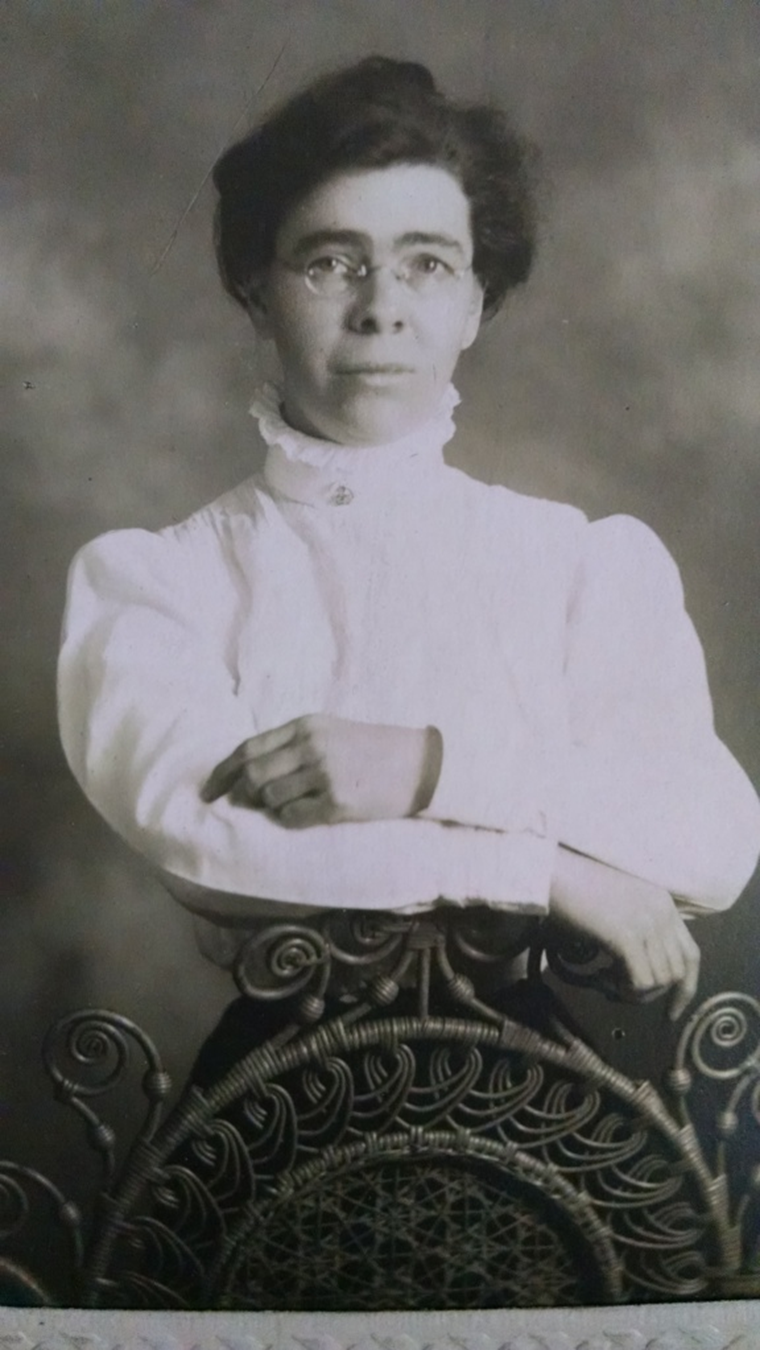
Katie Perkins was born in 1875 in Pawtucket, Rhode Island, a small factory city of traditional New Englanders and immigrants from Europe. Her parents were George Henry Perkins of Rhode Island and Margaret Rennie Crawford, an immigrant from Glasgow, Scotland. Katie had three siblings, half-brother George, brother William, and sister Hattie. Katie lived her entire life in Pawtucket, sometimes living with her parents, her widowed mother, and late in life by herself. She was educated at Pawtucket High School, and worked in various jobs as a bookkeeper, brush-maker, and house-cleaner. She died alone in 1937.
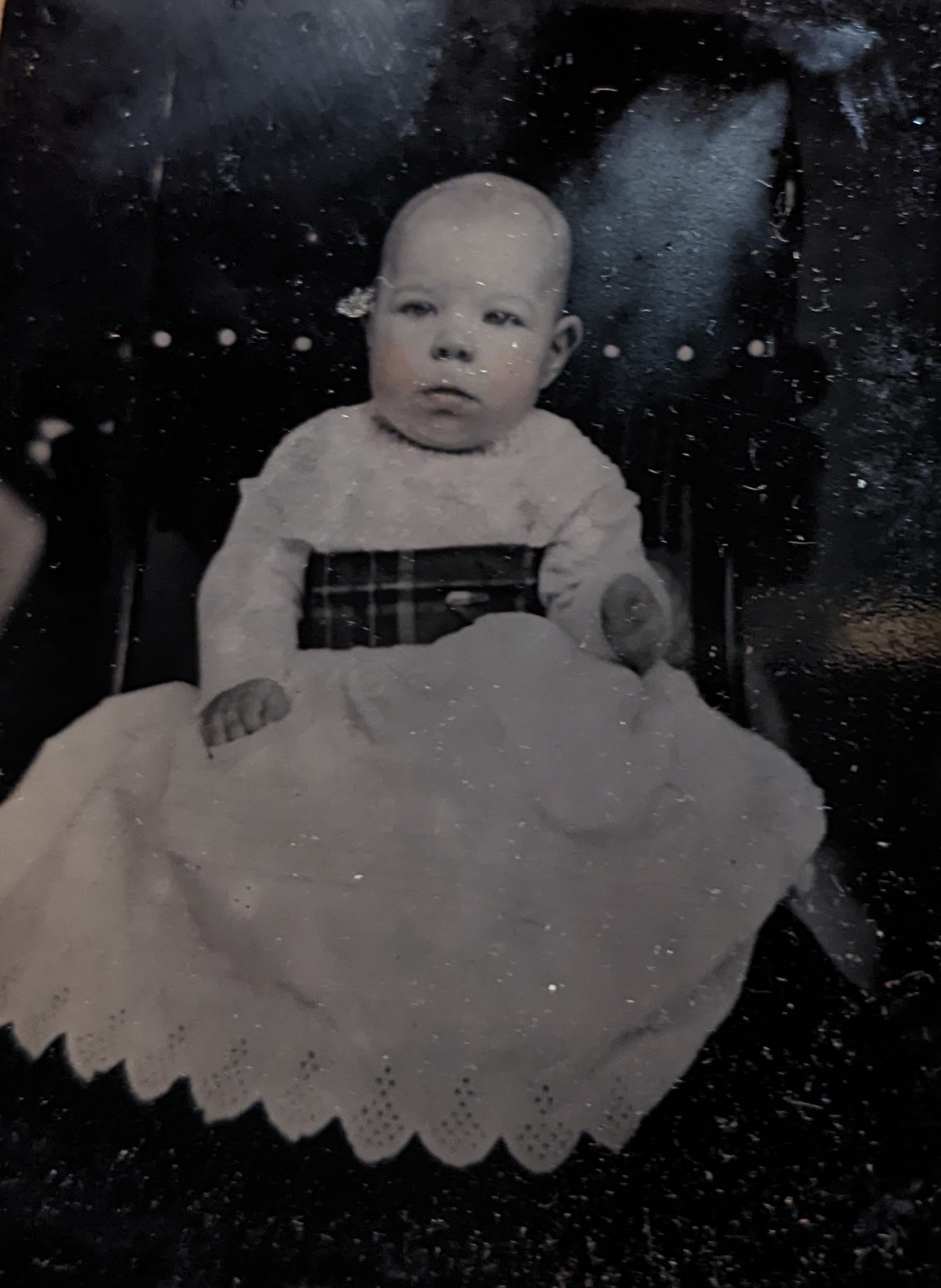
Infant Katie
Katie’s heritage on her father’s side was the Perkins, who immigrated from England in the 1600s. Her grandfather was John Prosser Perkins, a farmer, married to Huldah Tyler. John Prosser and Huldah had five children: Hannah Mahala, born 1827, Charles C., born 1838, George Henry, born 1833, John Riley, born 1834, and Palmer Gersham, born 1834. Their youngest son, Palmer, was thirty, married with a child, when he was killed at Cold Harbor in Virginia, during which thousands of Union and Confederate troops died.
George Henry Perkins, born November 9, 1833, departed during the 1850s from the small farming town of Exeter, where he grew up and where his parents and siblings would live out their lives; George moved northeast to Pawtucket, where there were more opportunities for a person engaging in industrial work. George married Mary Ann Tourgee of North Kingston, a town east of Exeter, on July 3, 1854. The Tourgee’s were descendants of French Huguenots. He was twenty-one and she was seventeen. In the 1860 census for North Providence/Pawtucket, George and Mary Ann lived as tenants with a family; George was a mill operative, that is, he worked in a spinning mill. Husband and wife had a personal estate of $200. The couple had a child, George Francis, in 1862. Unfortunately, Mary Ann died three years later on May 13, 1865. George remarried a Scottish immigrant, Margaret Rennie Crawford, nineteen months later, on December 27, 1866. He was thirty-three and she was twenty-five. By 1870, George and Margaret Rennie had thrived sufficiently that they owned their own home in Pawtucket. Besides George Francis, George had another child with Margaret, William Lennox, born July 12, 1868. George was no longer a mill worker, rather a peddler. In 1880, the family lived at 24 Woodbine St. in Pawtucket. (Apartment complexes now occupy the spot where they lived.) By this time, they had two more children, Katie, age five, and Hattie, age one. In time George gave up his occupation as a peddler. In 1900 he was an overseer at a cotton mill, living on Central Avenue (in a dwelling that no longer exists).
Margaret Rennie Crawford had immigrated to America from Glasgow, Scotland, along with her parents Hugh and Margaret Crawford on April 9, 1853, arriving at Pawtucket. Hugh Crawford was born in Glasgow on January 31, 1789; he died in Pawtucket, Rhode Island on July 1, 1857 when he was 68. He was the second-born son to John Crawford and Agnes Wright of Glasgow. He had many siblings, though most died in childhood. His mother died in childbirth in 1809 when Hugh was twenty. His father died at age of 86 in 1853.
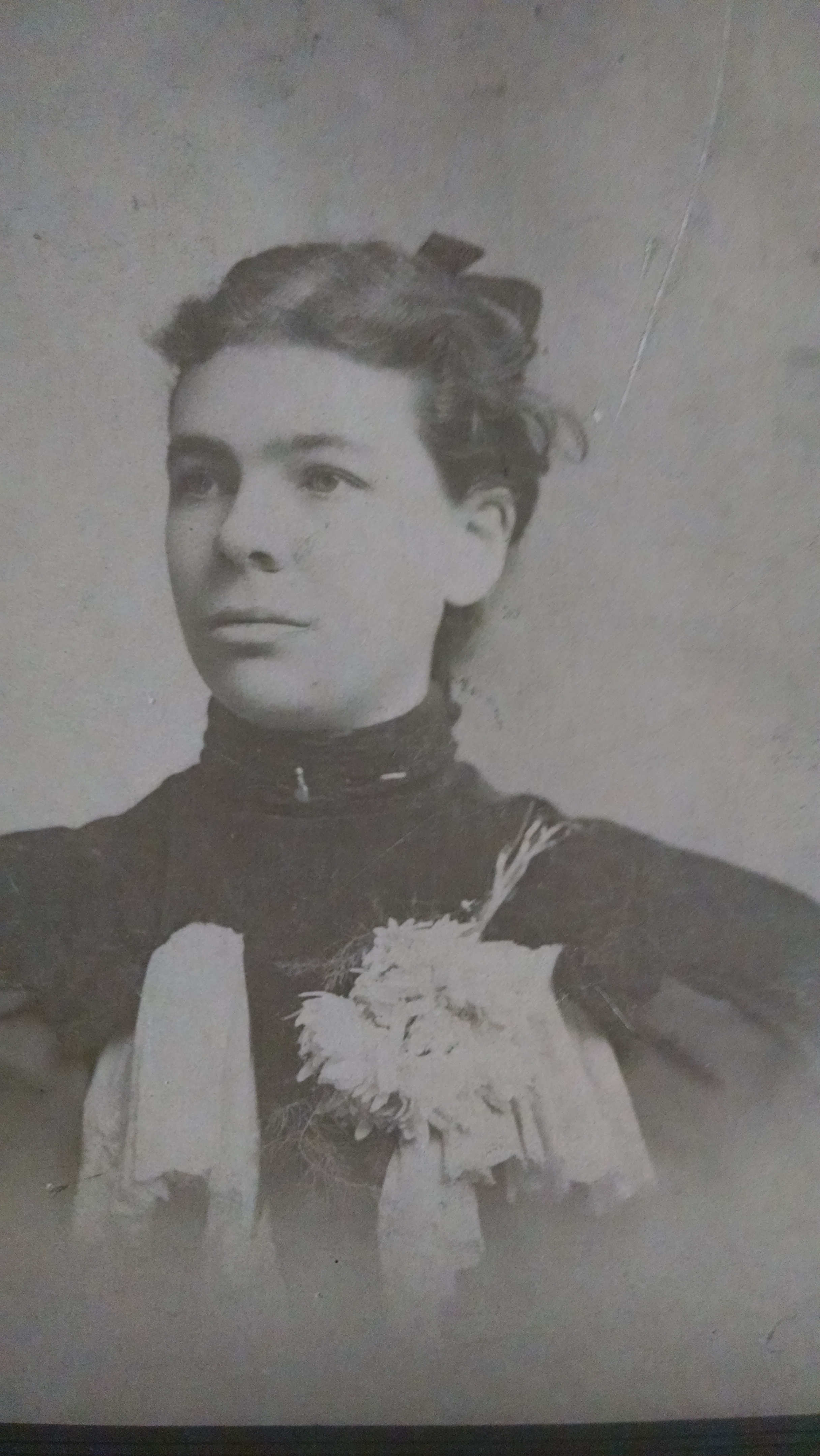
Katie as a young woman
Hugh married Janet Rowan at Canongate, Edinburgh, Midlothian Scotland on April 4, 1809. Janet was twenty-one and Hugh was twenty. Their firstborn son was John in 1811, followed by Hugh, Jr., in 1814, George Hugh in 1816, Janet in 1818, and Agnes in 1819. Wife Janet died in 1839, and Hugh remarried Margaret Lennox on August 19, 1840 in Glasgow. She was thirty-five and he was fifty-one. They had two children, daughter Margaret Rennie, born Oct. 9, 1841, and son William, born in 1845.
The 1851 Scotland Census listed Hugh as a paper stainer who lived at 55 High St. in St. Paul parish in Glasgow. He was erroneously listed as sixty-seven years old (actually sixty-two). His wife Margaret was forty-three, daughter Margaret Rennie was nine, and son William was six. A paper stainer was an old and honorable profession in the British Isles, typically involving the staining of wall hangings such as wallpaper, sometimes engravings. Hugh’s son Hugh Jr. had been trained in this craft as well, as seen in a letter written from son to father in September, 1852.
Hugh Jr. had sailed for America in 1843, arriving at New York on August 13. He migrated to Providence, Rhode Island, and established himself in business as a paper box manufacturer. His wife Catharine Blair Crawford followed eight years later, arriving at New York on the vessel StatiraMorse on Sept 15, 1851, from Glasgow. Accompanying her was their daughter, Janet, age sixteen.
Hugh Jr. became a citizen Sept. 1852, which perhaps inspired him, joined by Catherine, in writing a letter of invitation to America to his father, on Sept. 27. Hugh Sr. was sufficiently impressed by the prospect of America to emigrate with his family, arriving at Pawtucket on April 9, 1853.
Hugh died in 1857. His widow Margaret worked to raise her children Margaret Rennie and William during the rough times of the Civil War. William served with the Union troops for four years. In 1860 Margaret was eighteen years old and was like her half-brother Hugh a box maker. William was sixteen and also employed. The mother and widow Margaret was a wash woman. Margaret, who went by “Maggie,” outlived Hugh by 18 years, dying May 3, 1875. Before she died she lived with her daughter Margaret Rennie and son-in-law George at their home in Pawtucket. Hugh and Margaret are buried next to Hugh Crawford Jr and Catherine Blair Crawford at Mineral Spring Cemetery in Pawtucket.
George and Margaret in 1880 had a growing family. Son George was seventeen; he worked as a clerk in a Pawtucket store. William was eleven, Katie was five, and Hattie was one. A niece of George and Margaret, Hannah Caroline Perkins, daughter of John Riley and Susan Perkins, lived with them at this time. She was seventeen, and worked in a woolen mill. Twenty years later, George and Margaret lived at 439 Central Ave. in Pawtucket. They had quite an extended family living them. George was sixty-seven and Margaret was fifty-eight. Son William Lennox was thirty-one, and lived at home after the tragic death of his first wife, Harriet L. Johnson, who had passed away three years earlier in 1897. Will and his unmarried sister Katie, twenty-five, worked as bookkeepers. Daughter Hattie, twenty-one, was by this time married to Samuel Brown, age twenty-five. He was listed by the census taker in 1900 as a chemist. Their daughter Florence Beatrice was an infant, born in 1899. Samuel, Hattie, and Florence lived with George and Margaret at the house. Charles and Margaret also had a family living as borders with them: a husband, wife, and young daughter. All in all ten people lived at this home on Central Ave.
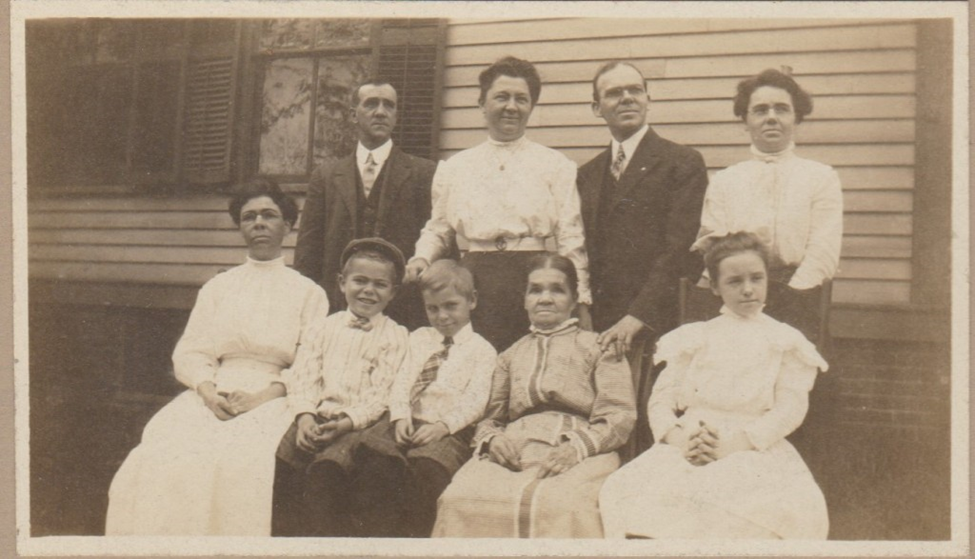
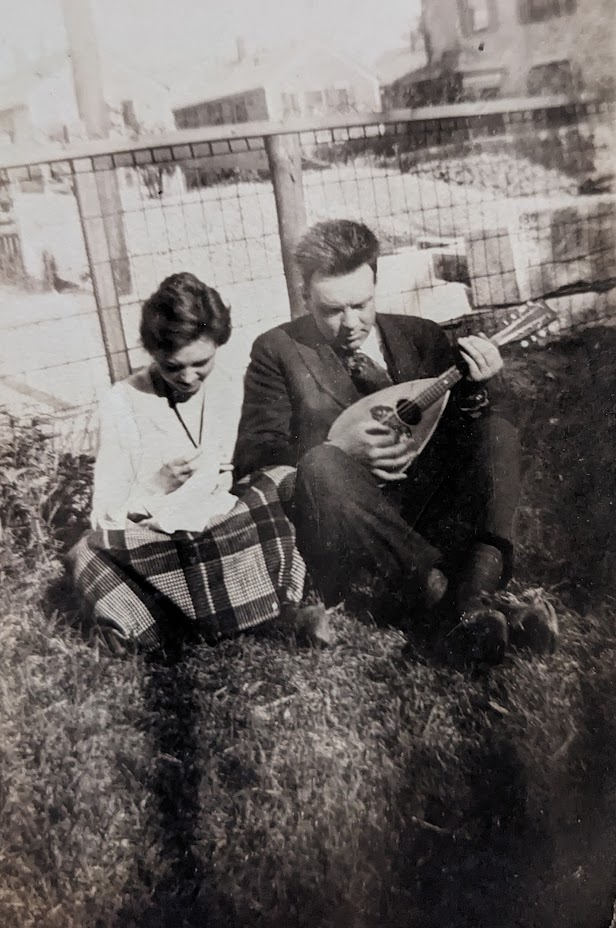
Brown/Perkins Family: Katie is on the lower left; her nephews Will and Henry are next to her; next to them is Margaret Rennie; her granddaughter Florence is next to her; above Florence is Hattie; next to her is Will, and next to him is his second wife Lizzie; next to Lizzie is Samuel Brown
Katie, who was single her whole life, was surrounded by family. Living nearby were many of the Perkins’s. About 25 miles away, in Exeter, Rhode Island, Katie’s aunt Hannah Mahala Perkins Reynolds lived until her death in 1911. Her husband Almon Perkins had died in 1899. Her son Whitman Greene Perkins continued to live in Exeter. Katie’s uncle John Riley Perkins died in 1912 in Exeter, Rhode Island. He was married to Susan and had children David G. Perkins and John Palmer Perkins. They all lived and died in Exeter. In 1900 Katie lived with George and Margaret Perkins as well as her siblings William, Hattie, and Hattie’s husband and daughter. After George’s death Katie and Margaret continued living at the home on Central Ave. They took in a boarder as well. In 1900, Katie was a bookkeeper; in 1910, she was a brush maker; in 1920, she did not work. Perhaps she was taking care of her mother, who was dying. At this time, she and her mother lived with Samuel, Hattie, and Florence. After her mother’s death in 1921, one assumes that Katie lived with Samuel and Hattie until Samuel’s death in 1928, when Hattie moved in with Earl and Florence Phillips. In the 1930 federal census, she was listed as a servant working for a private family; she lived alone at 33 Clark Ave, an apartment in a tenement house, in Pawtucket. In the 1935 Rhode Island census, she listed her occupation as a housekeeper. Katie died October 3, 1937; she was buried at Oak Grove Cemetery.
Maria Antoinette McCrillis was a 24 year old widow with two children from her marriage to James Sullivan Collamore: Eliza, born in 1871, and Edith, born in 1873. James was a carpenter, born in 1838. Maria, nicknamed Nellie, was born in 1851. James registered to vote in California in 1869, though he was listed in the 1870 census as living in Maine. He was listed in the June 1870 census as having been married in May. One gathers he went to California, came back and got married, then took his wife back to California, where they had Eliza (nicknamed Lida) and Edith (nicknamed Eddie or Edie). His parents also went to California with him, and all three died in short order in 1874. After her husband’s death Maria took in a tenant but also worked for Charles Samuel Barney and his wife Emma Fanning Barney, their son was Charles Roy Barney who was born in 1874, so he was two years old when Maria took care of him. She refers to this family as Mr. B, Mrs B, and Roy.Maria’s younger brother Charlie Collamore also boarded with the Barneys. Maria returned to Maine in October, as this diary relates. A year later she remarried on Aug 11, 1877, William P. Sinclair, of Maine.
The diary is generally in bad shape. Maria apparently put a tin type photo in the pages of the diary, which over the years disintegrated and rusted, and destroyed many pages. Other pages were damaged by water. She wrote usually in pencil, which is sometimes impossible to make out. Places where I am uncertain of her wording or meaning are labeled with a question mark [?]. She often spelled words in different ways, and sometimes went shopping; the items she purchased are often very difficult to transcribe.
At the time of this diary San Rafael California was an old Spanish mission town that was north of San Francisco.
Wednesday, Jan. 5
Pleasant—washed in fornoon
Cared for Roy His mother went out
Mrs. B gave me ? Roy. Mr B paid??
Pratt $7.10 get ?? Got up very unwell
?? settlement
Thursday Jan. 6
Pleasant in morning
Clouded at noon
Blowed after noon
Evening got up very unwell
??went to bed soon as get work?
Friday Jan. 7
Rained and blowed all day
All day swept house, cleaned it
Very tired at night Sat with Mr. and Mrs B
Saturday Jan. 8
Rather cloudy, rained Cared for Roy While his mother went up towne
Children has al-night [or al- right]
Not feeling very well my self
Sunday Jan 9
Pleasant.
Stayed at home. Charlie did not go to church in morning Cared for Roy in morning {Charlie is her brother Charles M. A. , 7 years younger, so in 1876 she was 24 and he was 17; [Emma at home in Maine was a sister, ten years younger, so she was 14]
Very unwell all day
Monday Jan. 10
Very pleasant. Went to walk with the children. Roy went
Not feeling very well
Charles stayed at home
In evening get out the children’s pants
Tuesday Jan. 11
Clear and cold
Washed.
Sat with Mrs. B a while in the afternoon
Charles went up towne in evening
Sewed on pants for the girls
Wednesday Jan 12
Pleasant
? baked sewed on girls pants
Thursday Jan. 13
Frosty and Cold.
Sewed on Pants for girls
Had late lunch 1 ½ o’clock
Mr B ?? sick
Got up towne
? evening Mr B B [?]went out
Friday Jan. 14
Very cold swept house in the forenoon went up towne in afternoon
Called ?? Mr B ??
Feel very blue, Charlie stayed ? home in evening
Saturday Jan. 15
Pleasant, Baked, cleaned, sewed some not feeling well
Charlie gave me 2 ?
Sunday Jan 16
Clear Cold
Cared for Roy in morning
And family went for walk with children in afternoon
Called on Mrs Earle {??]
Monday Jan 17
Clear windy
Went up towne went in Charlie’s office
Sat with Mr Mrs B
Felt so blue
Two years tonight since husband died [James Sullivan Collamore died Jan 17, 1874, in San Rafael California]
Wake to sunrise
Tuesday Jan 18
Foggy morning. Sewed on machine … pants
Feel so very miserable all day my back hurts so
Charlie went up towne in evening
Wednesday Jan. 19
Rained. Washed cleaned kitchen. Mr B did not come home for lunch
Thursday Jan 20
Very cold Washed sewed some. Cared for Roy in after-noon
Mrs Barney gave me ??
Paid Mr Duboise 2.00 for milk
Friday Jan. 21
Frosty Swept house. Mr. Barney stayed at home and built fence sold chickens to Mr Dubois he gave me 3.00
Saturday Jan 22
Rained hailed ?? Baked worked around house Mr Barney did not come home at lunch
Sunday Jan 23
Rained blowed all day read very interesting book about alcohol
Monday Jan 24
Rained Maid ruggs ???? Rain in evening
Tuesday Jan 25
Cloudy Sewed our ruggs Mr. B get thread ??
Wednesday Jan 26
Showers all day Cleaned windows and pantry
Thursday Jan 27
Showers in morning
Cared for Roy
Friday Jan 28
Clear cold. Swept house cleaned. Went up towne
Charlie did not come home at lunch Called on Mrs Berry Mrs Shower Mrs ??
Charlie gave me 2.00
Saturday Jan 29
Pleasant Washed worked all day cleaning baking cared for Roy
?? went to city
Got sick head-ache gave her 2.50 gal 12 ?? or cash
Sunday Jan 30
?? Rained a little Mrs B went to church Mr B went up-towne Cared for Roy morning and evening
Not feeling well wrote to mother
Monday Jan 31
Pleasant Got up very unwell been sick most of day so as not to do anything etc of towls [towels?] hemmed ? a few
Tuesday Feb 1
Very pleasant Sewed on towls went to towne to Mrs. Sordans ?? very unwell
Wednesday Feb. 2
Pleasant Washed sewed some. Mr. Barney did not come home at lunch
Mrs B gave me 3.00 for caring for Roy
Thursday Feb 3
Pleasant Cared for Roy after-noon while his mother went out Had severe trial with Lida Mrs Barney gave me 3.00 Mrs Barry (or Berry) called
Friday Feb 4
Pleasant Swept house ?? not feeling well
Saturday Feb 5
Foggy morning Stayed at home Miss Berl called in after noon
Sunday Feb 6
Pleasant Went to walk with Eddie went ?? went Miss Mrs Berry
Monday Feb 7
Rained blowed all day Charlie did not come home at lunch Alone in evening cut my wrapper [She never mentions her children: where are they?]
Tuesday Feb 8
Rained ?? Charlie did not come home at lunch Had sick head-ache went to bed at eight
Wednesday Feb 9
Clear cold windy. Swept parlor worked around house Charlie got me a chyme Paid acct ?? .2.00
Thursday Feb 10
Cloudy showers Cared for Roy Washed Rain and blowed in evening Got Eddie ribbon at ??[store]
Friday Feb 11
Rained terrible storm Cleared in after-noon Swept house Charlie did not go up-towne [Charlie lives at same home as her]
Saturday Feb 12
?? very pleasant
Eddie and I went up towne ..to Mendells not very well my self
Sunday Feb 13
Very pleasant Called on Miss Berl in afternoon went for walk with girls
Cared for Roy in morning Mr. Mrs did not go to church in evening
Monday Feb 14
Pleasant. Went to walk with the three children [her daughters and Roy] Not feeling well. Mrs. Barney gave $4.00
Tuesday Feb 15
Very pleasant Went up towne
Got paper at printing office The three children went Miss Berl called loaned me a book
Wednesday Feb 16
Pleasant Worked Went to walk with the children Feel quite unwell
Thursday Feb 17
Pleasant went to ?? church heard Miss Childers play
Mrs Barney went out get ???? [purchases] received a letter from Father and Mother
Friday Feb 18
Pleasant swept house Stayed at home sewed in after-noon
Saturday Feb 19
Very windy Mrs B cared for children. Went up towne Mr Barney gave me ??[money] get ?? of peddler
Sunday Feb 20
Pleasant Mrs. B went to church. Went to walk with the three children. Cared for Roy in evening.
Monday Feb. 21
Pleasant Washed Feel very unwell Sent to ?? got apron back. Peddler Recd like ?? Wrote to father[?]
Tuesday Feb. 22
Pleasant Baked Went down to Mrs Berry’s Charlie stayed at home and ?? Mrs Dubois called They are going east first of April Wanted me to go Charlie did not say goodbye
Wednesday Feb 23
Cloudy feel unwell Sewed on machine ??? Charlie stayed at home
Thursday Feb. 24
Rained Sewed on ?? dresses. Charlies Collermore Wife was sick had a little Boy [this is James’ brother Charles who died in California in 1899; there is a record of him marrying an Amanda Buker or Baker in California July 1874; they appear to have been separated by the time of the 1880 census]
Friday Feb. 25
Showery Swept house ?? Baking Charlie ??
Charlie C. called. He has got a little boy [his name was George]
Saturday Feb. 26
Cold Cloudy Most sick with cold. Cared for Roy his mother went out Baked Mr. Barney ??
Sunday Feb. 27
Rained. Mr. Mrs. Barney went to church morning and evening my cold is no better
Monday Feb. 28
Pleasant Went up towne Paid ??
Tuesday Feb. 29
Cold Sick not do much in fore noon as is sick Get up very unwell ?? She went over to ?? Mr. B gave me 3.00
Wednesday Mar 1
Very very windy feel miserable. Mrs. B went out Cared for Roy Edith [Eddie nickname or Edie] was sick last night with ear and leg ache ? a very little and the girls dressed Mr Barney get the bill $29.83 he paid Duboise $6.00 it rained hard he get linen ? 7b
Thursday Mar 2
Rain blowed terrible last night and this day Mr Barney did not come home for lunch stayed at home in ?? most sick all day
Friday Mar 3
Rained and blowed swept house washed ? few things Charlie stayed at home in evening
Saturday Mar 4
Clear blowed Cold washed cleaned ? Mrs. Barney went out cared for Roy Mrs Sharer ? McDonald called so very tired at night
Sunday Mar 5
Rained. Mr Mrs B went to church morning and evening cared for Roy
Monday Mar 6
Rained blowed all day fearful in evening Charlie did not go up towne he got ??
Tuesday Mar 7
Rained morning cleared in after noon fine evening sewed got by Charles thrice yards of silk braid at Mendells
Wednesday Mar 8
Showers all day Washed sewed and received a letter from Emmie and Aunt B Grandfather is dead died on the 19th wrote to father [Grandfather was Samuel Elkins, died Feb 19 1876; she would have written to her father Randall McCrillis]
Thursday Mar 9
Very cold and windy Stayed at home Edith [Eddie or Edie] is quite unwell Ironed in fore noon sewed some
Friday Mar 10
Cold windy swept house
Eddie and I went up towne settle with Manglett ? owed him $21.16 Paid him. Mr. B gave me $20 got candy 10 ? 10 Mr Mrs B went to the Centennial Party tea party Cared for Roy
Saturday Mar 11
Baked very cold Cared for Roy his mother went up towne
Sunday Mar 12
Rained and blowed all Stayed at home Read in magazine Wrote to Brother [Charles Collamore brother in law on her husband’s side or Nelson Davis, brother in law husband to sister Ellen]
Monday Mar 13
Pleasant but windy Stayed at home Eddie is very winsome Sewed swept up stairs
Tuesday Mar 14
Pleasant Went up towne Eddie Roy went Lida visited Leanna
Wednesday Mar 15
Cold sprinkled thrice children went up towne sold eggs
[many purchases listed]
Spent the after noon at Miss Berls
Thursday Mar 16
Lida’s Birth-day
Cold Washed so very sick at night feeling very unwell
Lida got a set of dishes for her birth-day present
Friday Mar 17
Pleasant swept house baked cleaned all day so very tired at night Charlie did not come home and very lame in my knee.
Saturday Mar 18
Pleasant and warm Ironed baked cared for Roy Suffered all day with sore knee got belt and ??
Sunday Mar 19
Very warm and pleasant Mrs B went to church Mr Mrs went in evening Care for Roy Children went to look at Mr Grant’s house
Monday Mar 20
Nice and warm Charlie went to city went up towne get candy at Mrs Smith’s 10 [something] 10 Paid Mendels for ?? balance due
Tuesday Mar 21
Some wind but pleasant went to walk with the children went ?? so tired and gloomy all night
Settled estate a gain [or again] Madnour does business
Wednesday Mar 22
Very windy feel so very miserable ?? sewed a very little
Thursday Mar 23
Very pleasant washed Charlie did not come home at lunch so very tired at night Paid ???
Friday Mar 24
Swept house cleaned so tired at night very pleasant Charlie did not come home for lunch
Saturday Mar 25
Windy Baked Cared for Roy His mother went out very tired at night ??
Sunday Mar 26
? Mr B stayed at home Cared for Roy in evening. Called on Miss Berl ?
Monday Mar 27
Pleasant. Went up towne Bought [varied items ribbon, maybe pastries not sure what else]
Tuesday Mar 28
Pleasant Stayed at home Mr B ??
Wednesday Mar 29
Rained. Very unwell Got up Fainted in morning. Feel miserable
went to Popper signed return ?
Thursday Mar 30
Blowed all day very cold not feeling well done nothing very unwell
Friday Mar 31
Pleasant but windy. Swept house washed ?? tired at night
Saturday Apr 1
Pleasant Baked ?? cared for Roy his mother went out
Sunday Apr 2
Pleasant Stayed at home all day Mrs B went to church in morning Cared for Roy in evening
Monday Apr 3
Pleasant Cut Lida some pants. Not feeling well Mr Barney did not come home for lunch.
Tuesday Apr 4
Pleasant Went up-towne Got 25 yards print at Mendells
200 paid solo … drugs
Paid E. Duboise 300 Charlie went to Palermo ?
Wednesday Apr 5
Went up towne Got Eddie ?
Sold something plaid
Bought items, perhaps pepper
Charles got home
Thursday Apr 6
Pleasant … sewed on pleating
Friday Apr 7
Pleasant but windy
Swept house Charlie did not come home at noon
Saturday Apr 8
Cold Eddie is quite unwell fear she is going to have measles
Sent for candy Mrs ? Perl called in afternoon
Sunday Apr 9
Mrs B went to church. Cared for Roy in evening
Monday Apr 10
Windy Went up to Coral house Mr Moore did not come
? was there get a letter from Emmie write to her and mother
Tuesday Apr 11
Pleasant Washed in fore noon went up towne
Got at Pratts one yard muslin thread [also something else]
Eddie is sick with – cold Charlies is going to morrow
Lida went over to see Annie Ward
Wednesday Apr 12
Pleasant Went to court house saw Mr Moore
Charlie went?? In afternoon ..went to church in evening
Eddie has got the measles and think she is very sick ?? went to see her sent by Mrs. B to get ?? peddler
Thursday Apr 13
Pleasant Did not sleep much last night Eddie was sick she is very sick with the measles got ?? gave her she is very sick too much done nothing but care for her. Lida went up to Leannas she is not sick Charlie did not come home
Friday Apr 14
Very pleasant swept house Eddie got better Went up towne in evening. [apparently bought supplies, bread candy oil]
So very tired got letter from home. Charles will be home tomorrow Mrs B ?
Saturday Apr 15
Very pleasant Eddie is some better but terrible worrisome in afternoon ironed baked sewed some Charlie get home in early evening so glad to see him
Sunday Apr 16
Pleasant Eddie less worrisome cared for Roy in evening His papa went up towne in fore noon
Monday Apr 17
Pleasant Eddie was ?? Lida spent the day with Leanna feel so very miserable
Tuesday Apr 18
Pleasant but windy. Went up towne [did her business purchasing; she does this every Tuesday, difficult to make out what she buys/sells]
Wednesday Apr 19
Pleasant Washed made Lida’s blue print dress so she could go to the formal so terrified Mrs Berry called sent up ???
Thursday Apr 20
Pleasant Lida went to ?? Cared for Roy in ??? Went to bed early
Friday Apr 21
Swept house rained all day cleaned windows very tired at night went to bed early
Saturday Apr 22
Pleasant Charlies went to Petaluma [town north of San Rafael] came back at night cleaned swept baked timed very tired at night
Sunday Apr 23
Pleasant Called on Mrs. Berry (or Perry) cared for Roy in evening
Monday Apr 24
Pleasant. Stayed at home swept house stairs sewed a very little
Tuesday Apr 25
Pleasant Get up very early did not sleep ? much Mrs B went to city cared for Roy got up very unwell had a very unwell headache
Wednesday Apr 26
Pleasant feel very unwell slept ?? able with Eddie Charlie gave me 5.00 he went to P in after noon [she] went up towne [did some apparent purchases] Eddie quite sick
Thursday Apr 27
Very gay warm washed cooked all day Mrs B and Roy went up towne bought of old lady embroidery buttons [at price] feel so lonely while Charlie is gone received a letter from home from all
Friday Apr 28
? so pleasant rained {a bit at something o’clock] sent Mrs B after the doctor for Eddie She is ?? worse ?? Dr Clark ? some days she has a very severe cold will be back in a few days she is very sick to night
Saturday Apr 29
Windy pleasant Eddis is better Lida was sick with earache ? [last] night. She has been in bed all day. Dr was here in the afternoon. Thinks she will be well in a few days with care. Charlie is home to night so glad to see him he sat with me for a while
Sunday Apr 30
Pleasant Slept bad part of ? night. Eddie cough [was better] but Lida was very sick Dr was here She came out with measles at night Cared for Roy while his father went up towne Mr Ludlow was here. Gardners bill 17.00
Monday May 1
Pleasant Lida was quite sick Dr came. Slept very little on account of Lida. Eddies rested much better. Eddie has the intermitting fever. Eddie was quite sick in after noon
Tuesday May 2
Very windy Slept and that a very little Eddie rested quite well Lida fretted great ?? fever ?? C. Filemelt [and other items purchased, sold] Dr was here days ? that are better
Wednesday May 3
Cool and windy. Eddie was well enough …… Lida is gaining fast? Dr was here in [? Evening]
Thursday May 4
Very very windy. Dr came last visit Sewed Lida was ? for the first time. Cared for Roy. Mother went out ? Children appear to be well
Friday May 5
Very windy Girls quite well Swept cleaned Feel very miserable
Saturday May 6
Very fine windy. Sew most all day Girls improving Charlie got one quart of paint?????
Sunday May 7
Very warm Mrs B went to church Mr went up towne Stayed home all day went to bed early was sick
Monday May 8
So very warm Washed Cared for Roy his mother went out I went up towne in evening Paid for 25 mandill ? Cared my own chit? .bought belt of Mendells
Tuesday May 9
Went up towne [shopping for items—]
Muslin
Got Lida hat…Mrs smiths
Cambrie eddging at Mendells [a store]
Wednesday May 10
Cool and windy went up towne got bread
[unclear I think another shopping list]
Thursday May 11
Went up towne got buttons, [much more hard to decipher].
Pleasant Girls went up to Leannas ??
Friday May 12
Swept house sewed
[smudged difficult to read; Charlie, to bed, ??]
Saturday May 13
Wind blowed went up towne got Lida shoes at Mendells swept house ?.Charlie got home
Sunday May 14
Pleasant Stayed at home had such a terrible time in evening I went down to Mrs B after noon ??
Monday May 15
Very human? [garbled message about buying]
Tuesday Mat 16
Very very windy sewed went up towne in evening got three needles not feeling well
Wednesday May 17
Very pleasant put up carpets in dinner and bed room put bedroom one down again Mr Beggling ? did it for me Mr B said he will buy my carpet and get me a new one
Thursday May 18
Pleasant went up towne bought me ?? a present for me Charlie gave me ? for my old one bought …Paid Dr C 10.—
Friday May 19
Cleansed and washed ?? Cleaned dining room Paid Charles ?
Saturday May 20
Cleaned carpet ? ….pleasant
Sunday May 21
Eddies birthday three years old pleasant get up very unwell Evening cared for Roy He sat up with Mrs L
Monday May 22
Very pleasant
Wrapper sent up to ? Deli ?
Cared for Roy
Very unwell Received a letter from Lida ?
Tuesday May 23
Rained Took up carpet Mr and Mrs B room and cleaned it very tired at night
Wednesday May 24
Pleasant Cleaned up stairs all day
Thursday May 25
Cleaning up stairs finished
Friday May 26
Pleasant up late
Saturday May 27
Baked …… unwell
Sunday May 28
Cool …went up towne … with children went over to Mrs B Mrs B did not go to church Mr went up towne and went to church ??
Monday May 29
Mrs Berl called
Pages destroyed until
Tuesday June 13
Very warm sewed paid Wells Mrs B paid her
Wednesday June 14
Pleasant went up towne [business notes]
Thursday June 15
Very warm sewed cleaned parler cleaned up stairs cared for Roy
Friday June 16
War swept ???
Saturday June 17
Cleaned baked much cooler very unwell in afternoon sick all night
Sunday June 18
Quite cool stayed in bed most all day cared for Roy in evening
Monday June 19
Very windy went up towne in afternoon Girls stayed alone
Cared dress up to get cut went up in evening [something about girls]
Tuesday June 20
Pleasant went up town Mrs. ? Eddie went to get my dress she charged me ?? gave her ?
Lida played with Annie
Wednesday June 21
Windy washed ironed washed blankets so very tired at night
Thursday June 22
Very warm but windy?? Sewed ..got supper Went to Bareas? With children Mr B gave me 1.25
Friday June 23
Pleasant but windy
Swept whole house in fornoon went up towne in after noon [made purchases] feel so very miserable
Had a long talk with Charlie in evening did nothing …?
Saturday June 24
Pleasant [rest can’t be read]
Sunday June 25
Pleasant and warm Lilly out ? Stayed at home till night Called on Miss (Mrs) Barry a few moments Charlie ?? with his brother ?
Monday June 26
So very hot washed before breakfast Sewed ?? Mrs Barney had a little boy dog sick ??
Tuesday June 27
Been very warm sewed a very little Eddie sick again feel miserable discouraged blue?? Came home sick Tired of being ? alone in the world Sold rags
Wednesday June 28
Very warm sewed Eddie and I went up towne in evening I’m ??? Charlie did not come home for lunch
Thursday June 29
Very hot Swept sewed till twelve. Mrs. B went out at night. Mr B stayed home cared for him Eddie sick in fore noon
Friday June 30
So very warm swept stairs cared for Roy his mother went out Jerome think .. sick through the night Charlie sat up with ? sit with Mrs B. in evening. Paid peddler ladie. Jerome died to night at 10 o clock
Saturday July 1
Very early Grandfather [Augustus Barney, Jerome’s father] came over ate lunch going to stay to night Charlie came in morning said Jerome was dead went over and ? went up towne Mrs. B cared for Roy??
Sunday July 2
So warm in morning Mr and Mrs Barney went to funeral Grandfather …was here for dinner. Felt very miserable today
Monday July 3
Been quite warm ?? went up towne quiet in evening put some flowers on Jeromes grave feel miserable
[Jerome A Barney was a printer, involved in publishing in California, related to Mr and Mrs B in this diary. His father, referred to as Grandfather above, was Augustus Barney. The Oakland Daily Evening Tribune for July 7, 1876 said he was “formerly editor of the San Rafael Journal.” He died of “dropsy of the heart.” A Maryland native, he came to CA in 1853. He was buried at Mt Tamalpais Cemetery in San Rafael.]
Tuesday July 4
Very windy .[Something about Charlie putting out fire]
Feel so miserable
Wednesday July 5
Not so warm washed went up towne in evening Mrs B cared for children came home with Charlie feel so miserable Mrs ? was sick Mrs Barney gave me ? for caring for Roy
Thursday July 6
Not very warm swept down stairs not feeling well
Friday July 7
Quite cool swept Mrs B ? swept Roy’s
Mrs B went to city on three black ? Mr Barney ? is sick cared for Roy
Charlie left home at night gave Mrs B [$] to getting girls? Grandfather went
Saturday July 8
Windy rained swept cared for Roy his mother went out three black trimes? Something about children
Sunday July 9
Gloomy did not feel well went over to Mrs Berys Roy went Mr Mrs B went to church Eddie ?
Monday July 10
Quite warm
Put up clothes and mended shirt Mr Bashew Mcdonald Mrs ? called the men appraised the property
Tuesday July 11
Very warm cleaned pantry
Grandfather came in for noon said April could not live Charlie went towne at six and Charlie gave ???
Wednesday July 12
Quite warm Charlie in city all day came home at night ?? lied in bed all day
Thursday July 13
Cool and windy felt some better washed ??
Friday July 14
Swept house very tired went up towne in evening [did shopping] Mrs B cared for children
Saturday July 15
Pleasant Cared for Roy his mother went to city get up unwell sick all day drained ??
Sunday July 16
Very warm nice in evening Mr Mrs Barney went to church in evening Roy went to walk with Eddie and I over to Mrs Burrys very unwell ?
Monday July 17
Quite warm Grandfather came hom took lunch went back Charlie went down to city in evening ?? Mrs. Barneys brother in law came stayed all night went up towne got girls book…went home…Berrys
Tuesday July 18
Very warn went to Charlies with ? stayed home ..very tired…went up towne ..[shopping]
Wednesday July 19
Overcast and gloomy cared for Roy in after noon his mother went out worked in garden in afternoon Charlie gave me 15.00
Thursday July 20
Done but very little sewed a very little took a wrap out >>>> event up towne Eddie was a bed Mrs Barney gave me 7.00
Friday July 21
Very windy swept whole house unwell all day cleaned all of the windows paid sales ?? Went out to Mrs. Feullers ? a few moments
Saturday July 22
Pleasant but windy baked cared for Roy his mother went out paid peddler woman 2.00
Sunday July 23
Windy cared for Roy morning and evening Charlie went to city stayed at home all day
Monday July 24
Cool and windy washed sewed in ….went in evening
Tuesday July 25
Very windy Charlie went on stage to Palermo gave me $ went up towne in after noon [varied shopping]
Wednesday July 26
Very windy stayed at home all day sewed on my dress bought peaches ??
Thursday July 27
Pleasant Mrs B went out cared for Roy friend called went up towne in evening ..Eddie..
Friday July 28
Swept out Mrs B went out sent got me ?? at ?? Mary Duram ? came in evening
Saturday July 29
Windy went up towne to market went to ??[shopping] Charlie came home at night
Sunday July 30Pleasant cared for Roy morning evening …
Monday July 31
Pleasant very warm sewed went up town got [shopping]
Tuesday Aug 1
Pleasant Cared for Roy his mother went ? in evening sewed Miss Berry called
Wednesday Aug. 2
Pleasant went up towne [shopping]
Thursday Aug 3
Pleasant sewed all day Miss Berl called. Stayed for a long time
Friday Aug 4
Very pleasant swept baked Mrs B went out in afternoon I went out in evening [shopped for things like ambric for supplier?] Charlie came home with me
Saturday Aug 5
Pleasant Ironed Baked Paid ? Mrs Fuller and mother called spent the evening
Sunday Aug 6
Pleasant Mrs B went to church and Mr B stayed home and ?
Miss Berl wore ? new hat cared for Roy in evening
Monday Aug 7
Very pleasant stayed at home went into Mrs Fullers a little while in evening. Mr B gave me 4.00
Tuesday Aug 8
So very windy sewed went up towne in evening got load of prin ? and bells ….Went over to Miss Berys she came home with me to the bridge ? Mr B paid 6.00
Wednesday Aug 9
Very warm sewed and swept Lida went up to ?? I went to Mrs Fullers to get ??? very unwell before going to bed
Thursday Aug 10
Been very warm washed baked very unwell all day worked ….. Cared for Roy his mother went out Grandfather came back Mrs B get ????
Friday Aug 11
Been very warm swept whole house cleaned windows feel so tired Put children to bed went up towne to Miss Berl she is going to get me a shawl ? I gave her 3.00 Went into Mrs Baregas to see her about silk Mrs B came home with me sat ?
Saturday Aug 12
Very warm baked ironed sent up to Pratts?? [shopping]
Sunday Aug 13
Muggy and windy Charlie owed Miss Berl get the shawl ??
Spent a miserable evening
Monday Aug 14
Foggy and cold spent a sick miserable day Paid ?? unwell ?
Tuesday Aug 15
Very warm Mr B gave me $ gave Dibbe $ went up towne rode home with ?? Lida went to school went into ? asked Mary ? about wrapper?
Wednesday Aug 16
Windy sewed a wrapper Charlie gave me some candy in evening feel miserable
Thursday Aug 17
Pleasant washed went up towne Eddie went to Mrs ? brought home ?? [shopping] suffered last night with tooth ache ache to night
Friday Aug 18
Pleasant swept house feel very tired sewed some Grandfather went to city
Saturday Aug 19
Very windy baked cleaned pantry feel miserable Grandfather came home ??
Sunday Aug 20
Windy stayed at home ?? went to Miss Bery [perhaps a sister of Mr. Barney?] wore my new dress Mr B stayed home all day
Monday Aug 21
Windy went into Miss Berls ?? a while swept got tooth ache
Tuesday Aug 22
Windy went up to court house Mr Moon? Did not come feel very unwell Mrs B cared for Eddie
Wednesday Aug 23
[cannot read]
Thursday Aug 24
Very hot washed in fore noon ?? cared for Eddie and Roy went to walk called on Mrs Berrys to come home with me after a while went ? crossed the bridge with her Charlie came stayed but few moments
Friday Aug 25
Very warm swept whole house washed ?? feel sick in after noon cared for Roy wait to get out ?? Children ..came home with Mr B
Saturday Aug 26
Very hot Mrs Shefield got hair ??
Sunday Aug 27
Pleasant Mr B stayed at home ????
Monday Aug 28
Quite windy went up town [shopping, muslin] Roy and Eddie went into C. office
Tuesday Aug 29
Cannot read Ready to go to city Eddie ??
Wednesday Aug 30
Details about making payments shopping up towne
Thursday Aug 31
Pleasant felt sick all day Mr Barneys friend ? lunch all went but Mrs B
Friday Sept 1
Feel miserable swept house had dinner at 3 went for walk Eddie and Roy packet of needles went into Mrs ? one hour
Saturday Sept 2
Pleasant stayed at home retried ??from home
Sunday Sept 3
Cloudy stayed at home all day Rained at night first time
Monday Sept 4
Showery washed went up towne in evening Mr B gave me $ [shopping] Mr B came home with me
Tuesday Sept 5
Pleasant done but very little cryed most all day
Wednesday Sept 6
Pleasant went up to the country with children ??went up to dr Charles got medicine unwell in afternoon
Thursday Sept 7
Was unwell felt miserable all day ?? Charlie says he can’t board with me this winter
Friday Sept 8
Pleasant swept house
Went up town [shopping]
Cryed myself sick
Saturday Sept 9
Rather windy baked. Oh I feel so sick of living and don’t know what I shall do this winter Charlie told me he could not stay with me Oh I will die of ?? My poor little girls
Sunday Sept 10
Been very warm but pleasant
Had a long talke with Charlie says ?? to do best go home feel very bad all day cryed so much He will furnish money for me will rent my house. Mr Mrs B sat up with me for a while
Monday Sept 11
Put up ?? sent into Mrs Fullers a few moments got the girls dresses Charlie get one sit with me a while
Tuesday Sept 12
Pleasant went up towne [purchased] muslin the girls went up to ? it showered
Wednesday Sept 13
Pleasant sewed all day on my girls dresses Mrs Barney and Roy went out Charlie gave me some ??
Thursday Sept 14
Pleasant sun quite hot sewed on dresses made aprons for girls Charlies gave me ???? sold his first ??
Friday Sept 15
Pleasant swept whole house cleaned parlor went up towne [purchases]
Saturday Sept 16
Cloudy ad windy looks like rain finished girls dresses ?? aprons
Sunday Sept 17
Quite pleasant Mr B stayed at home I went up to dressmakers get measure for children ? went into Mrs Berrys went to get ?? with children going to city Charlie stopped a few minutes in in evening with me
Monday Sept 18
Pleasant went to city spent $60.00 Mr B gave it to me
Tuesday Sept 19
Sewed washed went up towne in evening get bill of goods
Wednesday Sept 20
Pleasant went up towne got dyes etc. paid China ? .75
Thursday Sept 21
Pleasant Mrs B cared for children went to get my dress some billions of ? Gave Mrs Perls 2.00 Mr B gave me 2.00 Mrs B worked buttons also
Friday Sept 22
Swept house sewed my pants
Saturday Sept 23
Cleaned windows sewed on girls pants got a wrapper full about one
Sunday Sept 24
Very hot stayed at home all day Read and burned old letters Charlie sat with me a while
Monday Sept 25
Very hot sewed all day sat at sofa sewed on after close cut out wrapper had to send get 22 yards more
Tuesday Sept 26
Very hot set out girls dresses Mrs Barney lined them and bested ? them sent to city got22 yards of Aspera ? of? 2.00 so very tired at night cleaned parlor in evening
Wednesday Set 27
Very warm sewed all day on girls dresses Mr and Mrs Macdonald called on Mrs B judge Abring ? comes over to ?? Mr Barney gave 1.00 gave Mr Feller? 8.00
Thursday Sept 28
Very hot Charles went to PalmeroPlea in after noon has bought him a horse and buggy gave me 2.00
on girls dresses ??
Friday Sept 29
Swept house sewed Charlie gone very warm [bought materials such as silk]
Saturday Sept 30
Pleasant sewed finished girls dresses went up towne [made purchases] Charlie came home
Sunday Oct 1
Pleasant Went up to Charles Collamore’s got him to exchange trunks. Charlie B. carried ? my and Eddies and Lidas he went to city in post boat his brother and sister starting over ?? I shall give Mary D 25 to get ? I went over the Jeny Tilers ? Mrs B and children got the mumps
Monday Oct 2
Pleasant Washed Oh so very tired. Mr Barney’s brother came in after noon trivial ? took dinner eat [something about taking dress and hat to city to get $]
Tuesday October 3
Very warm Mr Barney’s sister, brother father had lunch with me went up towne in after noon and evening Took short ride with Charlie Went into Mrs Fullers stayed a while in evening Got my ?? from est 1.50 ? Unwell in evening
Wednesday Oct 4
Quite ? got up feeling very unwell so all day sewed on my wrapper Mr B ? for me
Thursday Oct 5
Pleasant Sewed all day Mrs Spiller took lunch here Mrs fuller and mother was in .. in evening sewing my wrapper
Friday Oct 6
Swept house went up towne after sweeping Charlie brought me home ? up pleating got it pleated got ??[shopping needles buttons] went into the office of Mr Barney’s sister Grandfather over in evening put my pleating on in evening
Saturday Oct 7
Pleasant Sewed up sleeves. Mr and Mrs Barney went to socialize ?? in after noon I went up to get sequin ?? but ?? ….buttons feel so miserable had late dinner Mr Mrs Spiller was in in evening so ?? with and was dead ../
Sunday Oct 8
Cloudy but warm Charlie spent a few moments with me in morning went ??? with girls with Charlies team gave Miss Berl a short ride engaged ??
Monday Oct 9
Pleasant Mrs Mour ? come up in first boat I went to court house Girls cared me ?? home Girls went over to Llamas ? got sequin went up to ? in evening ????
Tuesday Oct 10
Pleasant sewed all day Grandmother Barney ???
Wednesday Oct 11
Pleasant sewed while Charlie was eating lunch and rode over to Mrs Berrys finished my black ?? Mrs Fullwer to lunch All in in evening
Thursday Oct 12
Cold foggy in morning ??Browne dryers and maid ??? then went up towne got Eddie ?? ….all in evening
Friday oct 13
Cool foggy Charlies gone to Petuma ?? his brother went Mrs Spiller had lunch and dinner with Mrs Spiller and mother ?? in evening ?? girls wrappers
Saturday Oct 14
Foggy cold in morning Sewed all day Charlie came home at 6:30 seemed so cold towards me Oh am so lonely Granner ? Grandma? Went out get my switch 2.25
Sunday Oct 15
Quiet pleasant look over things in trunk all day get things Charlie had so long ??John Mrs Spiller came I was done in evening
Monday Oct 16
Cool and cloudy rained last night hard
Looked over trunks cleaned up our kitchen
Tuesday Oct 17
Rained all day packed trunks and sent some almost through John and sister in in evening
Wednesday Oct 18
Pleasant Mrs Barney went to city sent got hat for Lida washed so tired at night
Thursday Oct 19
Pleasant Cleaned around Mrs. Barney went to city I went up towne get things get ?? and some ?? things at Montells
Friday Oct 20
Pleasant Mrs. B. help me and went up towne Paid Montell 9.90 go ?? shoes 2.20 [other list of purchases whale oil, ] sold husband watch for 20.00 ??to-morrow
Saturday Oct 21
Pleasant ate breakfast with Mrs. Fuller went up to ? paid …Mr Dubois came over was very angry ? and would not pay him went to city [bought supplies] slept at Johns
Sunday Oct 22
Started east
slept a very little Lida ?? breakfast at Colfax
Charlie rode to ?
Lida and Eddie not bad ?? .. first or porter John went to Oakland ?
Porter gave me a ? cup of tea?
Monday Oct 23
Slept better. Rode through sage brush had a cup of tea 25 grapes 25 bread 10 tea 15 ? eggs 25 ?? 1.00
Tuesday Oct 24
Got up with head ache bas fell better get into Ogden at 8.20 reserved a ??? to ?? got pleasant Porter
? bring up a table or cable Got to Stackms 4 vail 75
Wednesday Oct 25
Pleasant Road all day crest the Rocky Mountains slept nice
Apples 10
Thursday Oct 26
Gave Porter 1.00 got to ?? left my friends ?? [changed trains]
Chicken 1.00 bread 10
Friday Oct 27
Got into Chicago and father left Mr pednar ??
Slept nice
Saturday Oct 28
Gloomy and miserable rode through Canada slept well so very nice
Sunday Oct 29
Pleasant got into Boston at 10 o clock lodged at ? hotel till Monday morning
Monday Oct 30
Started for home rode all day got home at night Charlie met me at ? felt so glad to see him
Tuesday Oct 31
Pleasant some friends came into see me felt pretty well
Wednesday Nov 1
Pleasant wrote to Mr B sewed for Emmie [Emmie is her sister, Emma B. McCrillis, age 14, who lived with her mom and dad as did Marie when she got back from CA, and Charlie too, I assume. She became Emma Huff and lived until 1952
Thursday Nov 2
Quite pleasant sewed for mother paid father ?? felt very homesick
Friday Nov 3
Quite cool mother and father went to funeral I went down to Ellens [Ellen is her sister Ellen McCrillis, who was six years older, married in 1864 to Nelson Davis] went to Pittsfield with Emmie Nelson [Nelson Davis, brother in law] ? get some drinks
Saturday Nov 4
Very cool went up to Hartland ? with Charlie and Emmie Paid girls fees or furs 3.00
Called to Uncle Nels
Sunday Nov 5
Pleasant but cool
Lewis and Floris spent the afternoon Nelson Ellen May ? and Henry spent the evening Emmie and I went to H=?? Harland unwell head ache
Monday Nov 6
Pleasant washed in fore noon got Nelson’s > Emmie and I went to Pittsfield Mother sent ?? get her some chairs she gave me 5 and paid the rest 3.50 get change 10.00 wrote to Mr Palmer
Tuesday Nov 7 Election snowed all day Pepper went to meeting Charlie went to Hartland got Pepper Pepper bedroom ??
Wednesday Nov 8
Rained hard all day furled ?? carpet Mrs Ham Lilla Towle called went up to buy a organ asked 125 Lebbeus Collamore came to board with mother and four others while they ?? hay
Thursday Nov 9 [he was brother of James and son of Sullivan and Jane Collamore]
Cloudy went up to Harland with Mr Bowsman get table 25.5 [perhaps other furnitute] Charlie went and got the furniture get picture frame? charlies barney got his collar ?? Mrs /Spaulding called get Pepper
Friday Nov 10
Cloudy did nothing but ?? Ellson came up feel limes?? And John Hay called wrote to Charlie
Saturday Nov 11
Rained blowed Pressus left???/fixed ?? got a letter from Charlie
Sunday Nov 12
Rained almost all day Stayed at home with brother sister mother father went ? to Ellens Charlie went ? afternoon wrote to Mr Peterson
Monday Nov 13
Cleared off washed ironed was very tired at night first day of school Emmie and Charlie went ??
Tuesday Nov 14
My birthday 26 years
Rained some cleared some in afternoon got ? 1.00 fur for suits 65 a ? send to Mr Barney received a letter from Mr Palmer
[the rest is garbled]
Wednesday Nov 15
Very cold and clear Libby and Seal? stayed all night
Had long talk with them
Thursday Nov 16
Very pleasant finished pleating sent a letter to Mr Palmer
Mrs Parks and Sarah came up spent most of day Ellen ??? Promised Mrs Parks ?? next week Father paid me 4.00?
Thursday Nov 17
Very pleasant vixed my brown or broom ?? [rest unintelligible]
Friday Nov 18
Mrs Parks came down and I promised her I would come up this after noon
Charlie came down helen’s kidd ? home and went up to P. Sarah and Ellen went stayed all night
Saturday Nov 19
Gloomy Got up saw the boys Ellen carried one home to ? at 11 Charlie came after me at 4?? Living ? called I and ? went to Hartland went into Ellen’s ? et Portlo? At Millers..came home ?
Friday Nov 24
Cold but pleasant went down to Palmyra village with Emmie Lida stayed at home Father went down to Ellens Mother and I went Girls stayed at home looked for Mr Palmer All day feel ?? did not get any better head ache
Saturday Nov 25
Pleasant Mr Clive Brown took supper with Charlie Emmie and I went up to Hartland ?? get letter from Mr Barney
Sunday Nov 26
Pleasant but cool went to church morning and afternoon Eddie and Lida went
Father and I went to ? after Mr Palmer ? Did not come ?
Monday Nov 27
Pleasant but cool Washed and ironed mostly Charlie ? Nelson and Ellen came up in evening ? letter to Mr Palmer
Tuesday Nov 28
Pleasant Came down to mothers at night ? Katee and Charlie
Pleasant I went after Charlie and Mr Formeshan ??? father killed his cow
Wednesday Nov 29
Came down to Mothers at night eat Katee and Charlies pleasant
Thursday Nov 30
Very cold Ellen Sarah ???? came over to mothers spent the day Went to bed early Eddie was sick at night
Friday Dec 1
Pleasant stayed at mothers sewed for her ??
Saturday Dec 2
Snowed Sewed for mother washed dishes Charlie came up ? in after noon ? a letter for me from Mr Peterson Went up town with Emmie and Charlie get a letter from Mr Palmer says he thinks he will come down spend ? cents for ruffs calice ????
Sunday Dec 3
Cold stayed at home all day Mother father went to church all day stormed at night [rest garbled]
Monday Dec 4
Cold and pleasant washed sent a letter to Mr Palmer and Mr Peltson or Peterson fixed bedroom felt homesick [for deceased husband buried in CA?]
Tuesday Dec 5
Clear and cold read charlie’s letter felt lonesome hang out clothes ?? them all went off
Wednesday Dec 6
Pleasant and rained in fore noon went over to Newport at uncles and w [idow] shaw had a nice time left Lida with mother sent father $7.00 [which father?]
Thursday Dec 7
Pleasant but cold stayed at home with Aunt felt sick unwell all day
Friday Dec 8
Snowed some went over to Aunt Whiteness of Whitman in afternoon saw ? she says she is going to start for California on the 14th
Saturday Dec 9
Snowed and blowed Uncle says he will sell me a machine [sewing] this week for $40 ?father came over after one ? was cold Walter and Genie? Mrs got home at 1:20 o’clock see ? Lida
Sunday Dec 10
Cold and blowed stayed at home all day Henry ? come ? spent the afternoon and evening
Monday Dec 11
Clear and cold washed went down to Ellens stayed all night had good time
Tuesday Dec 12
Snowed and blowed all day came up home in morning Ellen came up and children get a paper ? for me Charlie wrote to Mr and Mrs Peterson
Wednesday Dec 13
Look like rain and rained some Batched ? my letter had tooth ache went up town put my letter in office saw the torch light procession did not get any letter
Thursday Dec 14
Gail fine feel homesick Uncle Elisha was out in fore noon he is going away to Minnesota stayed at home had a good cry feel homesick. Get the girls to bed early
Friday Dec 15
Gail nice weather knit an ?? Father was to write for Rlson? Charlies and Emmie and I went up to Fenell Falls in evening
Saturday Dec 16
Very cold and clear went up town and go knit needles and crotchet needles and sarkes ? whole amt .44 cts
Went mile see Viola Neff (or Nett) she is very sick saw Daisy came home commenced to blow and know it is terrible tonight I wonder if Jimey ? is well
Sunday Dec 17
Clear and terrible cold stayed at home all day Mother went down to Wirrens? Charlie went to church I knit I am ?? very lonesome write PM small letter to Jimmie?
Monday Dec 18
Snowed and blowed all day Knit on my trelz? Charlie and Fashe? Went over to Newport so terrible cold to night
Tuesday Dec 19
Clear and cold stayed at home knit in evening on Eddie’s mitten
Wednesday Dec 20
Clear and cold washed in forenoon Nelson came up Ellen and we went down to make Mrs Bowman [Bowmans were neighbors, Samuel and Elizabeth] a visit Father and mother came downe and get me and stayed the evening
Thursday Dec 21
Cloudy snow in evening we went over to ?? in evening get a pepper ??
Friday Dec 22
Cold snowed received a letter from Mr Barney long and one homesick Father and Mother went downe to ?? Ellen came up and we went up to Hartland
Saturday Dec 23
Snowed blowed lent Charlie 5.00 he got me some ? for girls .35 cts
Sunday Dec 24
Clear and cold went to church morning and afternoon
Monday Dec 25
Clear and cold went to Harland get ? for myself went to Christmas [party] with Gillman Burleigh had nice time [there was a Gilman S. Burleigh who lived in Waterville, Kennebec Co, born in 1838]
San Rafael ??? my little ??? writing this thinking when I will [forget?] Christmasses
Tuesday Dec 26
Pleasant Mrs Farnnigan came over spent the afternoon and evening Mr Finniman came in evening Mr and Mrs Bowman came in evening
Wednesday Dec 27
Pleasant done housework for mother Nelson came in evening
Thursday Dec 28
Very pleasant get sewing machine to try Mr and Mrs Morrison called Emmie and I went down to Ellen’s in evening wrote to Mr Barney
Friday Dec 29
Pleasant blowed in afternoon went up Mr Burleigh in evening snowed blowed fearful Harry and ??
Saturday Dec 30
Snowed blowed Gillman called Frank ?? called ???stayed home in evening bright moon light send a letter to Mr Barney
Sunday Dec 31
Get up late very clear and cold stayed home all day beautiful evening write in Gillman book the last evening of the year wonder what will happen hope to be here ????
Memoranda
Jan ? Paid ? 7.10get roll poppers get bowls ? for Lida $1.50 get shipped Wells Fargo 2.00
27th
Gave mrs barney $ [she then bought items]
Bought of Mendell
[items including Brush]
29th gave mrs barney $2 [she then bought items such as 6 yards of cloth and wrapper]
Under cash account for January a list of purchases toward
Wells Fargo, Mandel, Barney
Under cash account for January money received from Barney’s totaling 12.50
Under cash account for February a list of money received from Barney’s totaling $19
Under cash account paid for February a list of purchases such as
To Pratts, Mandells, Barney, and peddler
Feb 10
Mrs Barney got Eddie?
13th
Went Ida up to Mendells [items like popper]
17th
Purchases
February 19th
Went up town to Mandels [list of purchases boots comb]
21got pattern
25 pain
Chair mended
[Toddler scribbling]
Under cash account for March a list of money received from Barney, Peddler Pratt
Under cash account paid for March a list of purchases such as Mandell, Birdwell, Pratt, Smith, Barney
Similarly for April a small amount received from Barneys and purchases to Mandell, Duboios, Peddler
Likewise for May including Wells Fargo China, Dr. Black
Likewise for June receiving money from Barneys and rag man and purchases Dubois, China, peddler among other
Same for July August September
For October, her travels, she paid for tea, grapes, eggs, bread, stockings
A table for cash account shows summaries for Jan, Feb, Mar then a note under the end of year I went up towne and got there things print or pain clamneddle tobacco and ribbons
Another garbled list for September
[The memoranda backs up the diary in showing that she worked for the Barneys and she was a dress maker either for family or retail or both]
Toward the end in Memoranda
For the golden chime of memory kind of [or kindly] think for me Nellie Collamore Dec. 31, 1876.
Florence Beatrice Brown was born August 1, 1899, in Pawtucket Rhode Island to Samuel and Hattie Perkins Brown. She was 17 years old and still a student when she kept this diary for the first three months of 1917. She wrote in pencil, and many words are unclear; some of the pages were ripped and/or destroyed. In the diary she makes reference to Earle, who was her future husband Earle Phillips; to Aunt, who is either Katie Perkins, or Lizzie Perkins, wife of Will Perkins; to Harold, who was Harold Phillips, brother to Earle. Her friend Lou was Luella Bowen.
Florence after she was married
p. 1 January 1 1917
Stayed at Luella’s last night. Mrs. Cahoon came in the afternoon. Stayed to supper. Charles, Harold, and Anna Link were there in the evening. Stayed till 9:45. “Early for them!” Played victrola. Midnight brunch. Brown parade with ??. Spanish … and tenor solos. . . Called Harold at 12:01, 1917. Went to bed at 2:00. Telephone all morning. Ate in our ?? Going at eleven. …afternoon ….evening {Harold is probably Harold Phillips, Earle’s brother]
p. 2 January 2, 1916 [17]
School again. Broke typewriter. Nobody going skating. I wonder if Earle went. Louella [Luella Bowen] & Sport here this afternoon. Mr. Wicks made N. Y. call. Mrs. Duxbury brought perfume, box chocolate, this book to me. [Mrs. Duxbury a friend of family] Skating spoiled; all thawed.
Wednesday
Bookkeeping exam. Planned to go to Rumford. Mrs. Burke sick. Worked till 5:10. Went, arrived 6:45. No skating. Retired 12:00. Mouse interrupts my slumber.
p. 3 January 15, 1917.
Victoria Putnam, Margaret C., and I went to Slater tonight. Went down car with Edna & Sydney T. Fellow broke skate-strap. Plenty of escorts. Saw the “Professor” with a girl on Main St. Said “Hello” instead of “How do you do?” Took her to Fisk’s. Like to know who she is.
p. 4 Thursday.
Arose at 7:00. Helped Sadie. Went to Rumford Store, chemical Works, and Garage. Dinner. Walked in deep mud home. Started 2:45 arrived at 3:45. Ray called up to go skating. Refused—because French exam to study for.
Friday.
Day of fate—“French” Comparatively easy. Elizabeth Ingles & I went skating. Ice—great. El Margeriden & Mrs. Rambottom added to
p. 5 company. Wrote letter to Emma & Annie on my celebrated pink love letter paper. Read Sopagen’s “Grace Harlowe” [adventure stories of young woman]
Saturday.
Work -morning. Pressing & repairing – shining and brushing. Wedding anniversary. Dandy time. Played popular pieces—great singer—Victrola. Square dance. Caught ?? on Consolidated [locomotive]. Jump on back platform after a wild race. Basketball team in train—not very excited.
P 6 presume they lost. Out on train. Good connections. Came on car with Pa [Samuel Brown] Paid our fares again. 11:45.
Sunday
Got up at 9:40. Went back to bed with Dream Book for ¾ hr. Breakfast at 11:30. Dinner at 3:15. Marion Lyons at Lee’s Fudge!!! Boys spent evening. Like old times. Everything agreeable. 2 escorts!!
Monday
School as usual. Skating—Bochrake ?? Met Miss L’Amereau—named Miss
P 7 Camisole. Vota & another. Brown Soph present. P.H.S. volunteers, hockey. Spent last nickel. Crabby conductor. Walk from downstreet. Study evening.
Tuesday
School again. “Less than the Dual”—Mary Pickford. “Fair.” Study evening. –[movies]
Wednesday.
School. Walk to park suggested. Mrs. Bowen, Ma [Hattie Perkins Brown] & Aunt [Katie Perkins] went away’s so I went too. Louella’s destination. Flora Sweet. Fudge!! Boiled
P 8 dinner. Palm read 10 cents a piece. Going to marry. 4 children—2 girls & 2 boys. Prosperity, money & happiness. Mind unknown now. Wish not this year but after next New Year or later. Good girl friend. Stay Lou’s all night. Study in bed. Lou goes to sleep on “Tale of Two Cities.” Not exciting & romantic enough for her not mentioning me-with Victor Hugo’s drama!
Thursday Feb. 1, 1917.
6:45 Mrs. Bowen awakes us. Up at 7:00. Out at 8:08. School Study afternoon. 5:30 get shoes, gown & music. Leave at 7:30 after curling iron performance. Play great—Clark—whole show. Walk down with Doris & Marion M. Last car. Got chocolates—best—of course. Earle in car. Didn’t thank him for paying fares. Thought I
P 9 heard Lou doing it. Should study shorthand. Test tomorrow. Earle has Biology. Interesting!! Broach hospital again—Sometime —- —- — Go to bed!!
Florence around 1917
Friday Feb. 2, 1917.
School. Went down street to watch Ma and the P. N. G’s dialogue. Bought Lou’s bag. Read and studied in evening.
P 10 Feb. 25, 1917
I don’t know exactly what has happened since Feb. 2 but I do know that I have been too busy to write in this book. We went to L[ou]’s Aunt Fannie’s two or three weeks ago to-night. Inspected Georgie’s garage. Splendid time. Was going skating next day but we had a terrible snowstorm. Friendly [restaurant] in evening. Earle has the scholarship. Went to Borden’s two weeks ago to-night. Albin Pilblat walked down with me
P 11 every morning for few weeks. He has consented to sharpen my pencils. E[arle] went to see a girl I expect last Sunday night. I studied all evening. O! I forgot about my auto ride with Arthur. Brought me home from down street in his machine. Finest I have ever ridden in. Very slow driver. Very thoughtful of him. Enjoyed it immensely. Same day Harold & Lu’ went skating. All I know about it is that Sport knocked Harold over, which caused considerable amusement, to me at any rate.
P 12
Feb 19.
Monday morning Arthur stopped in front of the doctor’s [she works at a Dr.s office] and took me down to school. Everybody thinks both him and his car are quite handsome. Costume party. High School fellows and the Baker. Very enjoyable evening.
Feb. 20.
Percle Francais Francis Burke came home with me. Clark wanted to but did not like to butt in. Got off car at Oak Hall Bldg and walked down Main St., when much to our surprise Monsieur Clark appeared on the scene.
P 13 greatly excited, he had been searching for us and couldn’t find us. He walked up. Clark also Decided to come up cottage St. instead of Broadway. Then to Orchard St. instead of Allen Ave. We asked if he wouldn’t come the rest of the way but he declined as he thought it might be too forward I guess. However I enjoyed his company as he is a great talker.
Wed. Feb. 21
Clark going to Miss Holt’s to see about French Play. I will stay out I guess.
P 14 Work in afternoon. Met Harold & Myrtle at the corner. Costume Party in evening. Lu’ a gypsy. Florence, Dutch, Earle, a n–, and Harold—a Lizzie [fun person]. Talk about style! I wish E[arle] could have got into the girl’s clothes. Harold was certainly great. Plenty of rouge, and pencil. Ma & Pa came about 10. Went home at 12.
Thurs. Feb. 22
Earle & I went to Brown. Most unexpected holiday. The day before I had been wondering what I could do out of the ordinary. It was simply great. Left at 9:40 O. G. Car. Lecture by Chinese. Very good. Uncle Will [Perkins] sat in reserved seats in front. Didn’t know it until Fri night though. Visited Biology & Chemistry bldgs.. and 3 libraries. Perfectly wonderful. Biology is not half as bad as I thought it was. I think I will have to take a special course in it. I forgot, we went to the John Hay Library too. It was an immense bldg.. Oh! I don’t
P 15 know what I am writing, I mean we went into Brown Union. The rooms are great. Baby sat in back of us coming out from Providence, which was very tired. Brought a new subject for conversation, I won’t say what. Went to buy some honey for the baby. Another topic of interest. Met Charlie Jones, had a chat. Velvet Kisses—another topic. It seems very queer to me that people find so much in mere signs. E[arle]. spent the afternoon. Told his fortune which is
P 16 surely coming true. I’m waiting to see who will die Wednesday. Called up in evening.
Newlyweds Earle and Florence Phillips
Fri. Feb. 23
School. Purchased graduation dress material—embroidered marquisette. Went to Florence P. to see about my “butterflies.” Earle called in evening.
Sat. Feb. 24
Work. Bertha and I went down street. Leo called me up; also wanted me to come up do day. I wish he’d forget it. I told B[ertha] to tell him I had a “steady”
P 17 but I know he won’t believe it.
Sunday Feb. 25.
Church! Saw Nettie getting ready to go out in the machine. Ma’s gone, out soliciting for church. I’ve got to call L’ up. I don’t know what is the matter with her. She has gone to Aunt Fannie’s. Charlies & Anna out. Uncle Will & Aunt Lizzie [Perkins]. Called the boys. Been out sliding & skating. Olive said “Hello.” Played all the rags I could find.
P 18 Monday March 5, 1917.
Tonight I have found time to write a summary of the important events of the past week.
Monday Feb. 26.
School in the morning. L, Ma & I went to Imperial to see “Black Wolf.” [movie] Geroaldime ?? Faraan’s ?? husband. Saw a college picture. “A Speedy Hanging.” Lou became so excited thinking it was horrible being so cruelly treated that she dusted the floor with her hat. Didn’t go to Free dly [Friendly]—excuse—
P 19 too much studying. Told my fortune, however, regardless of studies. Wished everything I had time for—going to get all my wishes! Quite surprising!!
Tuesday Feb. 27.
School as usual. Theme—comparison of mobs. Went to Lou’s in evening to study Mobs. Harold called her up. Wonderful conversation lasting about 15 min., more or less. Told my fortune and became terribly excited over some of events against which I naturally protested. Ma
P 20 informed me Earle had called twice, so I called him. Told me about Banquet. I forgot to record that Pa came home with good news that he would have a vacation until Monday. Invitation for rest ??
Wednesday, Feb. 28.
School. Went down street with L[ou]. Offered to buy her some flowers, or rather, I promised to buy her some in the near future, I hope. Everybody waiting for dinner. Study all afternoon. All used up and went to Lou’s to
P 21 meet those 2 young gentlemen. Some dudes. Mr. Pierce had a very attractive plaid shirt. Mr. Kerwin, I believe his name was, was the more sociable. Played games and sang all evening. Mrs. Pierce and Mrs. Kinney chaperoned. Well escorted. Ladies in back. Had to run for car. Just got my hat and coat off when bell rang—thought sure it was Lou—but—it was Earle—highly elated over Sophomore
P 22 success.
Thursday March 1.
School in morning—nearly asleep—resolved to go to bed in afternoon. Nothing to do but French Literature. Everybody was out. Went to bed for about 20 min. Greatly refreshed. Mrs. Duxbury ready for evening. Earle called just as I started dishes—consequently, Mrs. Duxbury did most of them. Plan that all should come up if Lou had special invitation. Invitation
P 23 refused—too much studying—reason not enough of Harold. Wild goose-chase follows getting Mrs. Duxbury ready. Cars late. Earle called about 7:45—decides to come over alone—Rushed out and jumped onto car with Mrs. D. after 8:00—no gloves—except old gray ones. Put her into Ma’s hands and flew. Came up in ?? Just got hat & coat off again when Earle arrived. He always comes or calls just as start something or finish.
P 24 Inspection of his diary. Absolutely no secrets. Wonderful fortune. I do not always read all that I see. Harold came after 11:00. Went around 11:30.
Friday March 2.
School. Called on Myrtle in afternoon. She has a very nice home and the dandiest tenement! A bedroom just like I have always wanted. Asked me to come up Thurs aft. And stay in evening as allow [?] goes to lodge. Alfred
P 25 has a telephone. I was just in the act of arranging my hair. Talked about 10 min.; almost time to go—didn’t dare to have him sit down. Earle calls up so Alfred goes. Conversation short and sweet as Ma was waiting and I was not ready. Nearly went to sleep in church. Uncle Will [Perkins], Aunt L[izzy Perkins], Ma & I all in same boat. Told fortunes after church!! Keeping Lent well.
Saturday March 3.
Work. Hattie came for me.
P 26 Told of the exciting event of the week between Mr. Brown & Hattie. Miss Burke and I expect most anything from her now. Oh! I forgot! I cut my finger yesterday. Bled a couple of periods. Needed the surgeon to dress it but I had to be my own. Had to typewrite with one finger in the air all morning. Went to bed again. I was completely exhausted after so many late nights. Nearly went to sleep but not quite. Bertha [Perkins], Nellie [Perkins Thompson], her husband [Waldo Thompson] and baby [Robert Thompson] arrived—had to
P 27 appear out in a wrinkled waist. Had a great time. Bertha surprised me. She chose the craziest pieces I possess. She took one of my pictures I had taken in Agnes’ front yard but Promised not to give it to Leo for he has asked for my picture, I have refused. Grandma {Margaret Perkins] & Auntie [Katie Perkins] spent evening. I studied quite late. Last one to bed as usual with the terrible act of putting out the light and putting up the curtains.
P 28 Sunday March 4.
Got up at 8:00—got my book and went back to bed. The most wonderful love story I have ever read. Of course I might have known it would be as Irene said it was peachie and she is well versed in such things. Ma is sick. Had all the work to do. Pa helped with dishes. Ma started the meat. Dinner dishes done after 4:00. Uncle Will & Henry [Perkins] came up. Called Lou—she was up stairs sleeping. I disturbed her slumber
P 29 deep and her dream. I was really very sorry for it must have been thrilling. Pa bought us some ice cream. Mr. Borden and everybody body [sic] under the sun called up. Just finished “Lucida” and started to strap books when Earle called. He & Harold went to E. Prov. to the uncle’s only. Something escaped me in Earle’s diary—his marks—perhaps something else did but I will take his word. Read my book until 10:45. Every night seems to be engaged but
P 30 he promised to let me know the first night, possible.
Monday, March 5.
Hailing terribly. Called Superintendent Tiride ??—line busy. Heard whistle at 7:45 and 8:00. Took it for granted there was no school. It so happened that there was but any way I had a vacation. Got the meals and did the work. Finished my book—the first is better than the last. Shampooed my hair. Did some shorthand and brushed up on English: “Experience” connect to Providence.
March 26 Wed. Met ?? $1.00 last seats
P 31
Sat. matinee and evenings $1.50. The actors are all well known and became popular in Boston. I would love to go. I guess I’ll start saving my money.
P.S. Polyanna Mar. 19. Prov. Opera House
Tuesday March 6.
Already for school this morning when Ma nearly fainted away—called Lou—to get my lessons—neck bad again. Mrs. Duxbury came back about 10:00. Did the work—dressed ?? down to school at recess. Every body stopped me in the corridor.
P 32 Vi Butman & her crowd hailed me before I reached the school. Mr. Wright gazes and smiles until he can stand the strain no longer and then asks me if I am going to stay. Later comes over and asks if I am sick. Got my assignments went to library look up Washington Irving’s life. Got home just in time for dinner. Houseful of company—P.N.S.’s—Ma formed her advocacy board, or executive board. Mrs. Stanley ?? stayed to suffer [supper?]. Earle called up, of course, just as I
P 33 was going to eat my supper. Played a new one step. Decided to come Wednesday night so I could go to Cescles Francais. Good time—best time waiting for car and the rider in the car. Games, singing, and dancing. Got twisted and started to go home toward Lonadale Ave with Miss Keough & Miss Macey. Thomas escorted Eliz. Butler to car. Come up with me. Studied till 11:45
Wed. March 7
Went to school. Alvin very glad to see me back. Doesn’t bother me any. Earle called
[Next page ripped]… noon—informed
P 34…. Earle’s going to start practicing in 6 yrs. Earle’s going to be surprised in 7 years by Mildred … . Oh! I forgot! E and I are going to stand up for K & L. Won’t that be scramption ??. I forgot to ask it where I am going to live. Told Earle’s fortune—just the same as every he always gets part or all of his wish. After great difficulty in doing up Ouija he left with a bound on the 4:25 train not the 5:15.
Thursday March 7. Alvin waited in all the …
[Lacuna several days]
P 35 street about 4 o’clock. Howard Curtis went down with me. Track meet` to-night. Howard’s going to have Paige instead of an Overland [automobile] this year. Talked up tennis and dentists. Harold working diligently. Looked around the store in search of pattering shoes and dresses. Didn’t buy a thing. Chatted with M. Rawlings and Ham ? Trott in Boston Store. Ham’s going to have a reception dress just like I want. She showed me the material she’s going to have for the supper.
P 36 Earle called up. Requested me to put this in my diary—The meaning of Necco Wafers.
He promised to tell me next summer. ?? came …….
Monday March 12.
Went down to school with Margaret & Mrs. Ward. Men’s … connected the place so pages “Long” ?? Studied.
P 35 all afternoon. Did shorthand French for Wednesday. Inez came for me to go to the Friendly ?? We voted to have a dance the Wednesday after Easter. Hazel brough her Character Book—I refused to put my name in it—it was perfectly awful. Bertha Hernick & Miss Holt posted me on the Necco Wafers. [diachronic marks/shorthand] Came home with a splitting headache. Could hardly see out of my eyes.
P 36 Tuesday March 13.
Albin went down to school with me. 15 pages of Lang. Called Lou. Went to Aunt Etta’s [Etta Brown Pierce]. Studied on the E. Prov. car going and coming. Played piano and played Grofonola. Hazel’s friend Burgess bought Aunt Etta some ice cream, Ward’s silver cake, and some perfectos. We had a dandy time. Got home at 9:30. Earle called up in evening. Too late to call as 9:45.
P 37 Wednesday March 14.
Albin went down with me again. He waits for me even though he’s down to the Royal Weaving. He says that he likes court life and stories where a fellow falls in love with a girl and marries her! Albin has got over his bashfulness at last. Vera & I nearly had heart failure this morning. We talked all Penmanship period. Sue was telling me about fortune telling by palmistree.
P 38 At the end of the period he stopped and very slowly said “Everybody, except Miss Brown & Miss Porter—everybody turned around, and sat up straight and looked right at him, already for an invitation to come to the desk and receive a 2 o’clock slip when he continued—may write a page of this word—and Miss Boehnke & Miss Ainscough may write 2 pages for talking. “Everybody was anxious to see if our papers were better than
P 39 theirs but I put my in the drawer immediately. I think they were rather surprised to hear that verdict rather than a 2:00 verdict. They couldn’t have been as surprised as we were. Boehnke says that we “stand in” and they “stand out.” Vera showed me how to tell a fellow’s fortune. [shorthand markings] I wouldn’t say such an impudent thing except to some people—perhaps Albin. I had some dandy fruit salad.
Called
P 40: Lou [END]
P 41: [list of names and addresses]
Edna Angell 22 Crescent
Irene Ainscough 13 French
Marion Boehnke 6 Montgomery
Agnes & Margaret Dott 133 Newport
Hattie Macdonald 102 Central
Miss Burke Pond St.
Margaret Campbell 64 Cottage
Caroline Wheeler [care of] Hotel Mathewson, Narragansett Pier.
I have taught history in a variety of venues for 40 years. I began as a graduate teaching assistant teaching American History Survey at the University of New Hampshire. I taught as an adjunct with the University System of New Hampshire for about 5 or 6 years. I taught at Northern Essex Community College in Haverhill, Massachusetts; at Pease Air Force Base in Portsmouth, New Hampshire; at Bradford College in Bradford, Massachusetts; at Merrimack College in North Andover, Massachusetts; at St. Joseph College in Rutland, Vermont; Plymouth State University in Plymouth, New Hampshire; Rose State University in Midwest City, Oklahoma; the Oklahoma School of Science and Mathematics; for 18 years at Bacone College; and recently at Northeastern State University and Tulsa Community College. I have had dozens of classes, thousands of students. I once penned a poem about my experience, which follows:
History Teacher
Sea of heads, nodding asleep Lecturing to myself, Glazed silent eyes, sleep is deep Words put on a shelf.
Gathering dust, words of the past No one hears the song, Voice drones on to the very last They’ll be gone before too long.
Life renewed, movement begins As soon as the class bell rings, Story is over of mankind’s sins That’s all that history brings.
Lessons of time, meaning irrelevant Apathy everywhere, Those of today whom we call intelligent Simply don’t seem to care.
Futile effort, to compete with the trends Of today’s popular culture, They think of the means, I think of the ends The wolf leaves scraps for the vulture.
Teaching is a most difficult task Helping others to learn, How can you know if you never ask? Not the answer but the question should burn.
So I teach students to question The truths handed down from above, Seek by means of reflection The nature of courage and love.
Questions and answers both from the heart The source of all that is true, Comes from the unity, not just the part The one more than the few.
“It’s there don’t you feel it?” I ask– And as they start to believe, And hum the inquisitive anthem One simply asks, “Can we leave?”
In the book of Acts, 14, 12, the author calls Hermes (the Greek messenger God) the deceiver–hence paganism (that is, a religion based on naturalism, hedonism, superstition) deceives its adherents, even deceives them into thinking men are gods. Hermes is a perfect symbol for paganism and its many offshoots–humanism, narcissism, hedonism–because Hermes is the Deceiver, as such convinces humans that living in the moment, physical pleasure, escape, materialism, self-satisfaction, are all acceptable, valid, good. If this life is all there is then why not enjoy it to the fullest before it is gone? If this life is all there is then the transcendent, that is, any kind of truth, does not exist. Without a sense of truth, to have only a truth in every moment, means that experiences that have the highest value, or rush, in the moment have meaning—such as the orgasm, high from drugs, violence–any sensual experience that is immediate and not long lasting. And these momentary experiences, done to experience life in the instant, actually end in deadening the person to the meaningful truths of life. Love is universal, the most powerful transcendent truth, such that it requires exceptional deception to convince a person that something is more important. Only the most powerful temptation, the most powerful and exhilarating momentary experience, can do this. The more powerful the more deceptive.
The following is taken from a 19th century English prose and poetry magazine. It is a useful remembrance for those of us who have suffered recent loss of family, friends, or pets.
“The sinless soul of the cherub child, that dies on its mother’s breast, wings its way to heaven, unconscious of the joys it might share here, as well as of the many, many miseries of which it might be partaker. This can hardly be called death. It is but the calm, soft ebbing of the gentle tide of life, to flow no more in the troubled ocean of existence; it is but the removal of a fair creature –“too pure for earthly stay”– to make one of that bright band of cherubims which encompasses in glory and in joy the throne of the living God.”
I wrote the following whimsical, nutty poem many years ago when my two oldest sons were in elementary school. Every Christmas Eve my family reads this poem along with the traditional Night before Christmas and the Christmas story in the Bible.
Christmas Eve, and Papa Mouse
Is at work throughout the house
Gathering up presents for the little mice
Yummies that will taste so nice.
Oh look! There’s a piece of cheese
(So dusty it will make a mouse sneeze!)
Oh yay! A crust of bread
(So moldy it looks quite dead.)
To make a long story short
Of Christmas presents found, there’s no news to report
Papa found absolutely nothing, zero, none
It looked like mouse Christmas would be no fun.
But then Papa heard a strange sort of noise
Perhaps it was stirring little mouse boys?
But no, he heard it again, but louder now
And down the chimney it came with a pow!
There he was, covered in soot, dressed in red, big as a cat–
But no!, to Papa’s horror, it was Santa Rat!
With long, shiny whiskers, and a skinny long tail
“Curses,” yelled Papa, “he’ll see me without fail!”
But Santa Rat didn’t see him, just heard a yell,
From who, in the dark room, he couldn’t quite tell.
But then he saw a shivering frightened mouse
And asked, matter-of-factly, “how many mice in this house?”
“And where are the stockings, hanging about the room?”
“I’ve go to fill them and go—zoom, zoom, zoom!”
Papa, however, was amazed by the thing with the hat
and red coat, the jolly fat pack-rat.
Santa Rat said, “Don’t just stand there, give me a hand!”
“I’ve got many more stops tonight in winter mouse-land.”
So Papa came and helped him unload
The bag so big it was ready to explode
With toys and candy, and other mouse yummies
Just waiting for morning, and hungry mouse tummies.
Then up the chimney went that jolly old rat
And upon his sleigh the fat rat sat.
Then off he flew to other rodent houses
To ensure that Christmas morn would have many happy mouses.
And Papa heard him exclaim, as he went from sight: