The Psalmist takes to honorific writing to praise the king, the anointed of God. God indeed anoints. And God’s will is known throughout the world. The Apostle Paul counseled his followers to obey kings and magistrates as the secular agents of God, who impose order and law on society, so that we may direct our hearts and minds from secular to spiritual things, and contemplate God and His works.
Because of truth and meekness and righteousness . . .
The Psalmist praises the king for these qualities for which God’s will is accomplished through the secular arm of rule. Truth, meekness, and righteousness appear oxymoronic compared to government–rather falsehoods, arrogance, and sinfulness seem to be the attributes of government. If only a philosopher-king, such as David, would appear among us!
The sceptre of thy kingdom is a sceptre of righteousness . . .
Such is the will of God among his secular counterparts who govern society. God loves righteousness and law-abiding. What, then, has gone wrong? Why is the world filled with the exact opposite? Why are kings and prime ministers and governors so corrupt? God anoints the powerful with power, but after the ceremonies and parades, when the task of government becomes real, and the objective wielding of power is required, humans, weak and sinful, cannot abide by the will of God. If humans cannot abide by God’s will in their personal lives, how can they in public lives?
All her glory is within . . .
Such is the praise the Psalmist declares to the wife of the king, who appears in glory, and radiant clothes, and all her subjects worship her, as if she were the Lord. But of course she is not. Rulers and rulers’ families are the same as us all, for God loves equity, not only among humans, but among all life. Should the king or queen, the minister or magistrate, give the glory to God, not self, then perhaps equity and righteousness will be accomplished among human society.
The nations give thanks to thee for ever . . .
If the anointed, the king, rules according to the will of God, then yes, people will acknowledge the king as a great ruler. There have been so few, however. The problem with government and society is that riches anoint, power anoints, rather than God. Notwithstanding if the government is secular or religious, monarchy or democracy, government concerns itself with things of a day, with the present, never the past or future, hence government is shortsighted, and rarely sees beyond the power and riches of today. God sees yesterday, today, and tomorrow. Only when government adopts such a point of view, making all decisions according to the past, in anticipation of the future, acknowledging in the present the will of God, will government ever achieve the justice and equity that has eluded humans for millennia.
The idea of democracy, like the idea of capitalism, promises much, though the reality always falls short. The promise is of wide participation in government, free and open competition among diverse groups, self-determination. Democracy offers the vision of individuals working together to achieve their own particular goals, using similar means to accomplish collectively individual wealth and freedom. History offers few examples of really successful democracies, success being defined as actual structures of government and society that make concrete the image that the word democracy conjures up. Democracy, like liberty, freedom, equality, is elusive, visualized in the mind and a part of one’s dreams yet never quite fulfilled. That these concepts, democracy, liberty, freedom, equality, are linked to capitalism implies that capitalism itself is more image than reality.
The word “democracy” is a combination of two classical Greek words from the fifth century BCE. The Greek deme was a tribe in ancient Athens; there were ten such tribes (demes) that comprised the city-state, or polis, of Athens. The demos was therefore the people of the ten tribes. The Greek word kratos implies power, strength, control–the attributes of government. Demos joined with kratos means to give the people the power, hence the English word democracy, the “rule of the people.”
Around 500 BC, Athens had experienced centuries of government by kings (monarchy, rule by one), by the aristocracy (rule of the best men), and by tyrants (Greek tyrannos), which came to mean oppressive rule. But under the leadership of Cleisthenes the Greeks adopted a form of government that developed from the interchange of goods and ideas at the marketplace, the agora. Here the citizens of Athens met in assembly to vote on proposals offered by speakers at the rostrum. The Council of 500, composed of fifty citizens selected by lot from each of the ten demes, typically set the agenda for the assembly. The assembly of citizens passed legislation by acclamation, in time by secret ballot. Athenian citizenship was restricted to adult men; women had little power in Athenian society. Slavery was practiced at Athens as well. Hence the majority of people living at Athens did not exercise power–they were disenfranchised. However, it was remarkable that among the male citizens there was no property qualification for voting, nor even for addressing the assembly.
The relationship of democracy and capitalism, seen in ancient Athens, is also exemplified in the Later Middle Ages and early Renaissance in European history. Medieval feudalism was the antithesis of democratic society and government. The Medieval manor, in which serfs worked the land of an aristocrat and warrior, the Lord, who was the sole authority and judge, was a closed system of few rights, fewer opportunities, and no government participation on the part of the landed serfs. As long as the Medieval economy was primitive, relying on agriculture and barter, lacking widespread surpluses, having few of the components and resources for trade, serfs had no outlet, no way to change their condition. A thousand years ago, various technological improvements in agriculture led to increasing surpluses, which generated wealth, trade, markets, and eventually market centers–villages, then small cities. This generation of a very limited capitalism provided the serf with the alternative to lifelong service on the Medieval manor. Market centers were places of diversity and transiency, where one could blend in, be anonymous, and start a new life. Trade has always raised the potential for newness, growth, and opportunity.
The Commercial Revolution after 1100 AD continuing into the early Modern period represented the replacement of feudal with urban structures. The organic, static, unequal, monarchal, aristocratic Feudal society gave way to the independent, free and equal, republican and democratic European towns and cities. These towns were incorporated, that is, the residents joined together into a common self-governing cause where each person had certain rights and responsibilities incumbent upon citizenship. Such an open environment encouraged the self-made man and woman, who in turn knew that without towns, their freedoms, open markets, and mobility, such opportunity for personal success would be limited.
Most of the Founders of the American Republic, it is true, were less supportive of democracy, fearing the disorder and possible anarchy of a people who exercised influence over the government without control. This was the theme of James Madison’s famous FederalistPaper #10, in which he argued against democracy, which would yield a tyranny of the majority. Madison supported instead a republican government of important, if controlled, freedoms. Madison, who wrote the draft of the Constitution, was joined by Alexander Hamilton in rejecting the first government of the United States, the Articles of Confederation, which allowed too many freedoms to states, localities, and individuals–for example freedom to determine the rules of interstate and international commerce. Under the Constitution, Congress has the power to regulate interstate and international commerce, which to some was an undue restriction imposed on the capitalistic inclinations of early Americans.
Thomas Jefferson, the gifted tragic Virginian who was one of great liberal intellectuals of the eighteenth century yet was imprisoned to the system of slavery in the American South, was one of the strongest advocates of free trade in the early republic. Jefferson was heavily influenced by the thinking of John Locke, the English philosopher who argued that humans are naturally good, free, and equal; that government is not a requirement, rather a choice; that humans choose to join together into voluntary association, giving up some of their rights and freedoms for the overall goal of mutual survival and prosperity. Jefferson once told his friend John Adams, when both were in retirement reflecting upon the past, that the American Revolution was unfinished, and would continue uncompleted for generations to come, only reaching finality when freedom became “intuitive,” and Americans could exercise true self-government. Jefferson’s image of a pure democracy existing in the future depended in part on free trade.
Free trade has been throughout American history the perceived foundation of American, and world, democracy. Free trade means trade without restrictions, without the encumbrances of tariffs, quotas, embargo, and other means to hamper trade. The principle of free trade eschews using trade as a means of political policy, or using trade as an incentive in diplomacy. The foundations of the ideology of free trade emerged during the eighteenth-century Enlightenment. Adam Smith, for example, in The Wealth of Nations (1776) argued against the control of trade as practiced by the British imperial system of mercantilism. Smith applied liberal ideas to the economy. He argued that self-interest drives the economy and society. Benevolent altruism is not the stuff of capitalism, or of democracy.
The American experience of having trade controlled by the Navigation Acts and other forms of British mercantilism spurred American thinkers such as Jefferson to develop similar principles of American free trade. Jefferson believed that free trade would be an agent of the spread of the American system of self-government throughout a world that engaged in constant aggression and warfare, the origins of which often occurred because of trade restrictions. Free trade was the principle of the open mind and open society informed by reason and liberty rather than the narrow-minded, closed system of trade restrictions.
During the whole of American history, even up to the present, free trade has been considered the agent of democracy. Free trade has been one of the primary cornerstones of American diplomacy. Right from the beginning, presidents have generally refused to engage in trade wars and restrictions. Americans responded to the wars between England and France of the late eighteenth and early nineteen centuries with proclamations of neutrality and free trade. Jefferson’s embargo of 1808 was an exception, and a failure–it completely contradicted Jefferson’s own principles of free trade. The Monroe Doctrine of 1823 was issued in part to promote free trade throughout the Western Hemisphere. Free Trade was the cornerstone of Woodrow Wilson’s post World War I plans and Franklin Roosevelt’s post World War II plans. Recently, American political leaders have supported such free trade programs as NAFTA (North American Free Trade Agreement).
Alexis de Tocqueville in Democracy in America observed, respecting nineteenth-century American society, that the typical American, without pretense to birth or social rank, engaged in lifelong entrepreneurship. The American commoner was restless, hardworking, always seeking something, especially a satisfactory amount of wealth, which was always just out of reach. Such characteristics formed the backbone not only of American capitalism but of American democracy as well. The aggressiveness of the American in business spilled over to local assemblies, state legislatures, and courthouses. Ideas of American justice, morality, and law had a pragmatic, business-like approach. The American democracy, like American business, involved controversy rather than conciliation, anger and argument rather than acceptance and apathy. Even in the twentieth century, in the wake of World War I and World War II, when traditional values were being challenged everywhere, and democracy was under attack from the left and the right, it was diversity rather than sameness, relativism rather than absolutism, that strengthened American democracy.
After centuries of development, democracy is still the rule of the people. The people, however, rarely act in unison, rarely agree, but it is in disagreement and disunity that democracy thrives. American democracy is based on pluralism. If America ever becomes uniform, predictable, and at one with itself, it might still be an American society, but it will not be American democracy.
Modernization is a major social scientific theory that emerged in the 1950s to explain different levels of development in the world’s societies. Although the roots of modernization theory developed in the response of nineteenth-century American and European intellectuals to industrialization, social scientists in the immediate decades after World War II developed a precise theory to explain the transformation throughout the world, past and present, from traditional agrarian to modern urban societies. Modernization theory reached its peak in the 1970s, then declined thereafter; critics complained of the theory’s ethnocentrism and tendency to associate modernization with westernization; the theory lacked empirical evidence, was too abstract; and it simplified the diversity and complexity of change in both contemporary and historical societies. The world systems theory of Immanuel Wallerstein replaced the emphasis on modernization among social scientists in the 1980s. Recent scholars have developed a globalization paradigm that attempts to explain the relationship of modern developing and developed societies in terms of economic dependence and interdependence.
European Background
Modernization theory derived from the philosophic writings of Karl Marx, Jacob Burkhardt, Ferdinand Tonnies, Emile Durkheim, and Max Weber. Karl Marx set the stage with his arguments, in The Communist Manifesto, German Ideology, Capital, and other works, that economic and social forces, especially those engaged in production, direct human institutions and behavior more than ideas and human consciousness. Burkhardt, a German historian, wrote in his 1860 publication The Civilization of the Renaissance in Italy that modernity was the result of individualism brought by the origins of capitalism in Europe rather than feudal, communitarian thinking. Ferdinand Tonnies argued in Community and Association (1887) that the Industrial Revolution in Europe resulted in the diminution of traditional values and relationships, the community, replaced by impersonal relationships and values, the association. Max Weber echoed Tonnies’ lament of a deteriorating traditionalism in a modern context, citing rationalism as the prime culprit for the change. Emile Durkheim adapted Tonnies’ thought to social change and believed that the traditional community would transform into a great community in the modern world.
By the beginning of the twentieth century, then, European social theorists had identified a change that had occurred in the West during the eighteenth and nineteenth centuries from one sort of society based on community and farming to another based on artificial associations and urban existence. This dichotomy of a traditional and modern society gained the status of a self-evident, a priori theory that required no real empirical proof. At one extreme of this social and historical polarity was the traditional (or peasant) society, characterized by a static existence focused on continuity and tradition, a product of a rural, agrarian existence where keeping the family name tied to the same parcel of land was of utmost importance. Religion and superstition rather than rational, secular thinking captivate the people. Organic institutions such as kin, family, and community orient the people; the group is more important than the individual. The modern society is the polar opposite. Family is disrupted and community is lost as the past is forgotten, traditional values give way to individual whim and artificial associations. Modernity’s search for progress, scientific knowledge, and the latest technology come at the expense of the old ways of doing things, faith, and reliance upon the natural environment. Social hierarchy gives way to social and geographic mobility. Society becomes fragmented, specialized, bureaucratic, urban, industrial, and secular.
American Modernizationists
American social theorists, students of urbanization and community, political scientists and sociologists, such as Jane Addams, Robert Park, Louis Wirth, and Talcott Parsons, embraced modernization theory as a way to explain changes in America from 1850 to 1950. Louis Wirth studied the city and discovered the replacement of “primary relationships,” such as would be found in a traditional community, with “secondary relationships,” those of a modern, anonymous, mass society. Talcott Parsons, in several books published in the 1950s, developed a theoretical framework for analyzing social systems, expanding upon Tonnies’ dichotomy of community and association. Parsons argued in The Social System (1951) that a traditional society is characterized by a willingness to express feelings (affectivity), a focus on self, a belief in moral and religious absolutes (universalism), and personal strength and individual achievement. A modern society, however, demands counterparts such as a cold rational approach to feelings (affective neutrality), an orientation toward the group, relativity toward morals and beliefs (particularism), and behavior ascribed by society.
During the decade of the 1960s and 1970s social scientists tried to being empirical substance and more concrete definitions to Parsons’ theoretical construct. W. W. Rostow, for example, examined modernization according to stages of economic growth. Alex Inkeles used a survey of thousands of people living in Third World countries to determine characteristics of a modern personality. Cyril Black, The Dynamics of Modernization (1966), discussed the transition of a traditional to a modern society in terms of a transfer of leadership as the entire social structure changes as the economy transitions from rural-agrarian to urban-industrial. Samuel Huntington attempted to provide a clear definition of modernization: “The essential difference,” he wrote in “The Change to Change: Modernization, Development, and Politics” (Comparative Politics, 1971), “between modern and traditional society . . . lies in the greater control which modern man has over his natural and social environment. This control, in turn, is based on the expansion of scientific and technological knowledge.”
Increasingly during these years American historians began to embrace modernization as a means of describing and analyzing American history. The “new social history,” “new urban history,” and community studies movement advocated by scholars such as Darrett Rutman, Kenneth Lockridge, and John Demos provided social-scientific theory along with empirical evidence based on statistical analysis of tax, land, census, and town records to document the transition from a traditional to a modern society from the seventeenth to the nineteenth centuries in America. Richard Brown epitomized this synthesizing approach toward early American history in Modernization: The Transformation of American Life, 1600-1865 (1976). The community studies movement among social scientists during the 1960s and 1970s was a reflection of the concern during those years particularly among youth that traditional American values of community and reliance upon the natural environment were being lost to urbanization and artificial relationships and the mindset of environmental exploitation. To study the early American community was to capture the material and spiritual bases of a time that was forever fading into the distant past. This longing for the ideal traditional community reflected fear that modernization was bringing about an irrevocable society that nobody really wanted.
World Systems Theory and Globalization
The increasingly development of the economies and technological sophistication of “Third World” developing countries added to the revolution in communications inaugurated by digital technology and the internet, along with the fall of the Soviet Union and the apparent triumph of capitalism, led many scholars to question the legitimacy of a theory of development dependent on the traditional-modern model as well as a West-East dichotomy. Immanuel Wallerstein inaugurated a revolution of sorts among social scientific theorists with the publication of The World System. “World systems theory” advocated looking at the world according to developing systems leading eventually to one world system wherein core countries exploit economically peripheral countries. Wallerstein predicted that a world socialist system will eventually dominate the world’s economic, political, and social structures. Many scholars have disagreed with Wallerstein’s assessment, arguing that capitalism will not fall to the wayside, rather will continue to become an integrative, universal force leading to one global economic system. Globalization implies that capitalism might come full circle, realizing the dream of Adam Smith (The Wealth of Nations, 1776) that free trade might dominate the world’s peoples, bringing enlightened political ideas in its wake.
Liberalism refers to a system of thought that focuses on the good of the whole of society as opposed to its neglect in the service of the restricted few. Liberalism began at a time of rejection of traditional feudal values, structures, and institutions; the opposition to hierarchical forms of government; and the attack on aristocratic privilege. Liberals, the adherents of the philosophy of liberalism, have supported modernizing change as leading to increased freedoms for the individual, the establishment of democratic governments worldwide, and the development of the idea of government as a guide and protector of human happiness.
Liberalism’s first great apostle was the English philosopher John Locke (1632-1704). Conflict, crisis, and civil war dominated the political history of England during the seventeenth century. In 1660 after over a decade of exile Charles Stuart was restored to power in England as King Charles II. Thomas Hobbes the English philosopher defended the Restoration of the monarchy in England. Humans, sinful by nature, require the strong imposition of government authority, Hobbes argued. Strong central government is necessary to corral the passions of humans, to impose order upon chaos. Hobbes’ vision was fulfilled during the reign of Charles II. It was a different story for his successor James II. Parliament, representing the English people, forced James from power in what the English called the Glorious Revolution. A new king, William, agreed to limitations upon his power. Centuries of struggle by the English people had come to a conclusion in the conquest of royal oppression and the accession of law as the true ruler of England.
John Locke was the philosopher of the Glorious Revolution of 1688. Locke had experienced the vast changes that England underwent during the seventeenth century, not only in politics, but in the English economy and thought as well. The power of the landed English aristocracy was slowly waning in light of the continued expansion of manufacturing and trade. Merchants involved in rudimentary corporations employed workers intent on achieving material success. The English economy was breaking away from a landed, agrarian base toward a money economy rich in opportunity for entrepreneurs willing to take risks with capital to invest and to build. Some investors supported colonies in America and Asia; hard-working commoners traveled to such far away places to make their fortune. Political philosophers worked out the theory of mercantilism to justify colonial expansion, arguing that colonies would provide raw materials and serve as markets for English goods. Capitalistic expansion and the consequent attack on the old aristocratic, feudal structures was reflected in politics. After centuries of struggle the English Parliament of the seventeenth century, representing the people of England, stood equal to the King.
John Locke’s Second Treatise of Civil Government provided the philosophical underpinning for the dramatic political, social, and economic changes occurring in England. Locke sought from the beginning to distance himself from the thinking of his predecessors, particularly Thomas Hobbes, who in Locke’s words believed “that all government in the world is the product only of force and violence, and that men live together by no other rules but that of beasts, where the strongest carries it, and so lay a foundation for perpetual disorder and mischief, tumult, sedition, and rebellion.” On the contrary, Locke argued that government is not an angry paternal authority, rather an extension of the goodness of human nature itself. Humans in the state of nature, Locke believed, are competitive but not violent toward one-another. They discover soon enough that by joining together they can more successfully take what they need from nature to survive. This mutual need for greater survival, even happiness, is the basis of government. Humans don’t absolutely require government; rather government is a choice, a voluntary association, which is formed by rational people who realize it is in their own best interest. Humans do operate according to self-interest, yet working for the self does not have to mean warfare, chaos, and competition requiring constant government intervention. Humans, rational by nature, join together into a compact for mutual protection and happiness. Naturally one among their number is chosen to manage the whole. And as long as this one leader, or king, works for the interests of the people, they will obey; otherwise the compact, the association or government, will be dissolved.
Locke’s theory of property was as follows: He believed that God the Creator endowed the world with sufficient resources to care for all humans. Locke thought that humans should use care with the creation, practice economy with the world’s resources, use only what is necessary and spare the rest for another’s use. Private property was one of Locke’s natural rights (the others being life, liberty, and health). Since humans are inherently free and equal, the resources of creation are therefore equally available for the use of all humans. When, however, a person forages for an item of food, such as acorns, which are initially in this “public domain,” upon retrieving the acorns by one’s own labor, the acorns become a possession of the one who retrieved them. Labor toward the accumulation of goods that are initially open to all human use is the basis of private property. The entrepreneur is the one who expends the most labor to accumulate the most goods. But Locke was adamant that one must labor to achieve only what is necessary, and nothing more.
England’s Glorious Revolution, as Locke understood it, stood for freedom, equality, liberty, the open society, the good of society and of man, and a government that works for the people rather than to accentuate its own power. These were precisely what Thomas Jefferson, the early American philosopher, third President of the United States, founder of the University of Virginia, and author of the Declaration of Independence, believed about the rights of Americans living under the British government. Jefferson and other Americans believed that King George III and the English Parliament had by 1776 generally rejected the principles of its own government as defined by John Locke and implemented during the Glorious Revolution. Jefferson followed Locke’s thinking closely when he proclaimed: “We hold these truths to be self-evident, that all men are created equal; that they are endowed by their Creator with certain unalienable rights; that among these are life, liberty, and the pursuit of happiness. That, to secure these rights, governments are instituted among men, deriving their just powers from the consent of the governed; that, whenever any form of government becomes destructive of these ends, it is the right of the people to alter or to abolish it, and to institute a new government, laying its foundation on such principles, and organizing its powers in such form, as to them shall seem most likely to effect their safety and happiness.” There is no better statement of liberal philosophy than these words of the Declaration of Independence.
Actions do not, however, always follow the precise meaning of grand words. Jefferson, for all of his great ideas, was a slave owner throughout his life, not manumitting his slaves until his death fifty years later in 1826. More striking is the example of the French Revolution. French thinkers such as Jean Jacques Rousseau were inspired by Locke to press for a government and society in France based not on the privilege of birth, but on human equality. The French people broke the compact with the French monarchy in 1789, creating in time a government based on the principles of equality. “The Declaration of the Rights of Man and Citizen,” echoing Jefferson and Locke, proclaimed that “men are born and remain free and equal in rights. Social distinctions can be based only upon the common good.” Freedom, unfortunately, can sometimes reduce itself to anarchy, as American and French conservatives often feared. The French Revolution in time degenerated into a power struggle and blood bath that had hardly anything to do with the rule of law, so dear to Jefferson and Locke.
Liberalism in England continued to focus on the ideas of Locke even as Great Britain fought to retain its empire. Adam Smith, a Scottish philosopher who wrote The Wealth of Nations in 1776, argued that self-interest among humans resulted in healthy competition that did not need government regulation. This was in contrast to the British mercantilist system of the sixteenth and seventeenth centuries, the advocates of which believed in strict government supervision of trade.
Nineteenth-century liberals continued to voice the concerns and develop the ideas of the eighteenth-century Enlightenment. In England, Jeremy Bentham and John Stuart Mill expanded on the moral thinking of Adam Smith, creating the philosophy of utilitarianism, which sought the greatest good for the greatest number in a society. The Industrial Revolution and new technology deriving from changing ideas of science inspired the same sense of optimism and dedication toward continued progress among nineteenth-century thinkers that had defined previous expressions of liberalism. Liberal thinkers generally embraced the opportunities for social and cultural change suggested by the new philosophies of the nineteenth and early twentieth centuries. The social and behavioral sciences became important professional fields for those who sought ways to reform social structures, institutions, and human behavior. The challenges of the Industrial Revolution-such as the increasing poverty; class disparity between bourgeosie and proletariat; and urban crowding, filth, crime, and pollution-were treated as challenges incumbent upon the process and progress of modernization. Socialists such as Sidney and Beatrice Webb, Progressives such as Jane Addams and Woodrow Wilson, and Humanists such as Bertrand Russell and John Dewey, embraced new ideas and their implications for society. Naturalism, the philosophy inspired by Charles Darwin; behavioralism, inspired by Sigmund Freud; materialism, the product of Karl Marx; relativism, the offshoot of the theories of Albert Einstein; existentialism, the vague catalog of ideas identified with Kierkegaard and Nietzsche; and the dada movement and other such nihilist philosophies, tended toward the aim of the common good, social justice, free will and freedom, a rejection of traditional ideas and assumptions, and the value of diverse, open societies.
Politics and economic policies reflected the changes in modern society. In both England and America, conservative politics (signified by the Republicans in America, and the Tory party in Great Britain) gave way after the turn of the century to the liberal politics of reform-the Democrats in America and the Labour party in England. “Laissez-faire” economic policy was slowly discarded as liberal politicians such as David Lloyd George and Ramsay McDonald in England and Woodrow Wilson and Franklin Delano Roosevelt in America adopted interventionist policies wherein government would have a more direct role in economic development and bring government into the fight of the common person for good wages, good working conditions, help when ill or aged, and the general promise of a satisfying material existence.
Franklin Delano Roosevelt’s New Deal, for example, began decades of social and economic reform conforming to a liberal agenda of broadened government policies and agencies to help the poor, disadvantaged, unemployed, retired, and disabled. The New Deal was in direct response to the Great Depression, which caught the Republican Hoover administration by surprise. The Democrat Roosevelt further implemented the initial liberal policies of Woodrow Wilson to fight the depression of the 1930s. Roosevelt’s consequent “alphabet soup” of acronyms for a dizzying number of social and economic programs still inspires today’s liberal politician. The New Deal churned out the Banking Act, creating the Federal Deposit Insurance Corporation (FDIC) to back investor’s deposits in case of bank runs and closures. Farmers were helped with the Agricultural Adjustment Act (AAA), which paid farmers to destroy crops and increase land lying fallow so to lessen agricultural supplies and raise farm prices. The New Deal helped the unemployed with a variety of programs. The Civilian Conservation Corps (CCC) brought young men out of the urban areas into the countryside to work on conservation and forest projects in return for a bed, three square meals a day, and a little money. The Works Progress Administration (WPA) and Public Works Administration (PWA) provided government funds to employ men in public works projects, helping to build the infrastructure of America and helping the confidence of fathers and husbands who were glad once again to bring home good wages to wives and children. The Social Security Act (SSA) created the Social Security Administration (and the Social Security Number and Social Security Card) to protect America’s senior citizens from ever knowing the same degree of want as had older Americans during the Great Depression.
Subsequent liberal presidents were so inspired by the New Deal to continue its policies and programs. Truman’s Fair Deal and Kennedy’s New Frontier culminated in Johnson’s Great Society, which brought to America the liberal vision of civil rights. These Democrat presidents were not so successful in foreign policy. Johnson’s decision to escalate the war in Vietnam resulted in the dawn of the New Left, the venue for which were America’s college campuses, the members of which were largely student radicals.
Today’s liberal continues to embrace issues and actions that conservatives find offensive and controversial, but which to the liberal seems appropriate for people concerned with individual rights and government leadership of social and economic reform. The liberal continues to embrace modernization and its consequences, finding in relativism and secularism opportunities for continued human progress.
Sources:
Aaron, Daniel. Writers on the Left. New York: Avon, 1961.
Berman, Ronald. America in the Sixties: An Intellectual History. New York: Free Press, 1968.
Hartz, Louis. The Liberal Tradition in America. New York: Harcourt Brace Jovanovich, 1955.
Heilbroner, Robert L. The Worldly Philosophers: the Lives, Times, and Ideas of the Great Economic Thinkers. New York: time Incorporated, 1962.
Locke, John. Treatise of Civil Government. New York: Irvington Publishers, 1979.
Laissez-Faire, a French phrase that means literally “let do” meaning “let a person alone,” was applied to economics by English and French thinkers of the seventeenth and eighteenth centuries. The phrase generally applies to the same conditions in modern as in pre-modern times. Proponents of laissez-faire believe that government controls on economic behavior-trade, companies, prices, wages-curtail the freedom of the individual, not just in his economic life, but in all aspects of life, since economics are often closely tied to social status, moral behavior, and religious beliefs. Laissez-faire philosophy has been associated with both liberal and conservative political philosophies depending on whether it is the liberal or the conservative thinker of a given time who puts the most emphasis on liberty in economic matters.
The origins of the phrase are unclear save that it was apparently in use by the time Adam Smith wrote The Wealth of Nations in 1776. Indeed, Smith become of the early proponents of the doctrine. Previous to Smith, one finds isolated remarks by English and French observers that mercantilism hampers natural liberty. Mercantilism was (and is) the doctrine that a government imposes rules on trade, particularly international trade. A famous example of mercantilism involves the control of the trade of the British-American colonies in the colonial period before 1776. The British government passed a series of Navigation Acts that curtailed the freedom by which an American producer could export his crop. As a result farmers in the American south were forced to sell their produce to English merchants at a reduced price. Clearly such restrictions seemed to curtail economic potential and the freedom of the individual producer to exchange goods for the best price. Under mercantilism, the British were less apt to restrict domestic trade, which could reveal to any insightful observer the advantages of such liberty.
John Locke (1632-1704) the English philosopher of the Glorious Revolution anticipated Adam Smith, the greatest proponent of laissez-faire economics, in his Second Treatise of Civil Government. Locke argued that humans, though concerned with self-interest, tend to do good, and join together into governmental or economic associations for mutual benefit, but not at the expense of natural liberty. The earth is as it were a public domain set aside by God for all humans to enjoy equally. The apparently endless plenty of nature allows for each person to acquire sufficient materials for his needs. Excess is against the plan of the Creator, hence immoral. Competition among humans for their share of the public domain is natural, yet not harmful, as long as there is more than enough to satisfy every person’s needs. Private property, one of Locke’s fundamental natural rights shared by all humans, derives from a person putting forth labor to acquire goods from the public domain. Private property is therefore not evil, rather a good, as is the competition and labor that results in its acquisition.
Another group that anticipated Adam Smith was the group of diverse intellectuals known as the Physiocrats. During the mid-eighteenth century the French economy was still very much beholden to the old regime economy of aristocratic land owners and peasant laborers. The Physiocrats believed that such a dominant almost feudal structure limited the exchange of goods and use of capital in the French countryside. Part of the problem they identified was the extensive impositions of the French government on trade and the heavy taxes imposed on farmers. By removing restrictions and reducing taxes, that is by the government accepting a “hands off” or laissez-faire policy, exchange of goods and capital would flow more freely in France; economic liberty would be commensurate with more political liberty.
Adam Smith observed as much, agreed with the Physiocrats that government policies should give way to the natural liberty of economic production and trade, and agreed with Locke that private property is a sanctified right as a consequence of human labor, and that competition, even for private interests, is valuable and good. Smith despised the contrast of mercantilist policies with free trade. Adam Smith (1723-1790) was a Scottish intellectual who taught at the University of Glasgow. He was essentially a moral philosopher who published The Theory of Moral Sentiments in 1759. Smith believed that human self-interest is not a barrier to altruism because humans use reason to temper their acquisitiveness. This rational self-interest meant that economic competition would occur according to natural laws of human behavior instructed by reason. There was no justification, therefore, for government to impose restrictions on economic behavior. Such restrictions would be necessary only if humans irrationally engaged in destructive competitive behavior, which was clearly not true to the Enlightenment mind of Adam Smith.
Smith is usually identified as a proponent of economic liberalism, because he combined his optimistic view of economic competition and restrained self-interest with the liberal assumptions of man’s inherent goodness and collective goal to work for the interests of the common good. Unlike modern liberals, Smith believed that economic behavior did not require government intervention to achieve the maximum good for society. Said goodness could not be imposed, rather would be a natural consequence of human behavior.
The eighteenth-century American counterpart to the John Locke, the Physiocrats, and Adam Smith was Thomas Jefferson (1743-1826). Jefferson was the epitome of the Renaissance man, talented in architecture, music, philosophy, government, history, literature, and so on. He was one of the most complex men of his time, being simultaneously one of the great liberal thinkers of all time yet a slave owner, a proponent of laissez-faire economics yet the president who pushed for the trade embargo of 1808, a believer in limited government yet one of the architects of the United States of America. Jefferson epitomized eighteenth-century economic liberalism in his advocacy of limited government involvement in economic affairs, proponent of free trade among all nations, opposition to protectionism and tariffs, and firm supporter of the agricultural way of life. To Jefferson, as he wrote in his Notes on the State of Virginia (1784), the farmer is the most virtuous of humans because of the inherent liberty of the farming way of life. The farmer pursues self-interest but not at the expense of the common good. The farmer is the best republican because he votes his mind and believes that what is good for him is good for the whole. Jefferson feared the Industrial Revolution because he feared a nation of entrenched urban wage-earners who could not exercise their natural liberty in economic matters and who would become aggressively self-interested without a thought for the common good because of the intense competition waged for limited resources.
Jefferson’s powerful ideas came to be adopted by many nineteenth-century liberals in America. “Jeffersonianism” became synonymous with laissez-faire liberalism. It must be said, however, that Jeffersonian philosophy was altered over the course of the nineteenth century. The aggressive competition and exploitation consequent upon the Industrial Revolution in Europe and America resulted in a host of philosophies that contradicted classic economic liberalism. Karl Marx (1818-1883), for example, reacted to the perceived class competition between the proletariat and bourgeoisie by advocating (in the Communist Manifesto, co-written with Friedrich Engels in 1848) the destruction of the free market and the embracing of government controls over the economy. At the opposite spectrum, English and American philosophers reacted to Darwin’s theories of natural selection and survival of the fittest by developing a theory to explain human competition. “Social Darwinism” advocated the notions of the free market and the common good built upon the victory of the strongest and fittest over the weakest. Some Social Darwinists, such as Andrew Carnegie, tempered these ideas by arguing that the strongest, hence wealthiest, should eventually give back to the community by means of philanthropic behavior.
On of the strangest distortions of laissez-faire philosophy involved the Populists of the 1890s. The Populists were a political party made up of farmers of the American south and midwest. Suffering from the exploitation of railroad monopolies that set high prices for transporting farm produce, the Populists advocated government intervention to establish a society and economy consistent with Jeffersonian principles and economic liberalism. In other words, the Populists believed that economic self-interest among farmers resulted in activities for the common good, but corrupt industrialists, monopolists, and politicians were thwarting traditional American economic liberalism. The situation could be remedied only by involvement of the federal government into the economy by means of government ownership of railroads and other utilities, a rejection of the monetary Gold Standard, and the adoption of a national income tax.
The Populist political program only succeeded with the rise to political power and socio-economic influence of the Progressives. The Progressives possessed the heritage of American economic liberalism but at the same time realized and wanted to address the varied problems brought about by the Industrial Revolution. It was under the influence of the Progressives that the first two decades of the twentieth century in America witnessed the onset of the income tax, legislation putting restrictions on business practices and monopolies, a constitutional amendment to make United States senators more directly answerable to the people, the creation of the Federal Reserve, and the achievement of women’s suffrage.
Similar occurrences marked English politics of the nineteenth and early twentieth centuries. Jeremy Bentham (1748-1832) and John Stuart Mill (1806-1873), the two most important English utilitarian philosophers, mitigated the classical laissez-faire theory of Adam Smith to take account of industrialization and its negative consequences. The utilitarians believed that private interest working for the common good–the essence of laissez-faire economics–should continue to be the driving principle behind the relationship of government to the economy. But sometimes the common good demanded government intervention to aid the plight of the poor, to restrict unfair corporate practices, and the like.
The ironic twist that laissez-faire took around the turn of the century is best illustrated by the example of American political parties. The Republicans, formerly the Whigs and before that the Federalists, had long advocated government involvement in the economy. Alexander Hamilton, for example, proposed the federal support of investment in the economy, the accumulation of federal debt (assuming it from the thirteen states), and the promotion of manufacturing. The Whigs of the 1830s advocated the American System of federal investment in America’s infrastructure. Abraham Lincoln and the early Republicans promoted the interests of American corporations and sought a strong and united economic union. But industrial changes and the growing protests of wage-earners and the poor put the Republicans into a defensive posture, so that they increasingly returned to a defense of laissez-faire economic policy to prevent government restrictions on American capitalists. The hands off policy of the American government reached a climax during the 1920s and the Republican administration of Calvin Coolidge.
The Democrats, on the other hand, who had long promoted the interests of the individual and the state, by 1900 demanded the tempering of laissez-faire economics with government intervention. The initial programs of the Populists and Progressives bore fruit during the 1930s with the Roosevelt administration. The Democrat Franklin Delano Roosevelt, who cut his political teeth on Progressive and Wilsonian politics, realized that the Great Depression symbolized the bankruptcy of laissez-faire economics. The New Deal of the 1930s followed by the Fair Deal of the 1940s and 1950s, and the New Frontier and Great Society of the 1960s, revealed the commitment of the Democratic party to government taking over the pursuit of the common good. Twentieth-century philosophers like John Maynard Keynes declared that the once positive assumptions of economic liberalism had fallen short, that private interest did not somehow miraculously work for the common good, that it was up to government to temper private interest for the good of all people.
The Great Depression of 1929 and after was the watershed in the history of laissez-faire economics. The Depression caused such panic and anxiety, weakened and destroyed the economies of great nations, that no Western industrial government would advocate a return to the principles of laissez-faire. Even the conservative Republicans of American politics and the Tories in Great Britain were forced to concede the failure of economic liberalism. Pure laissez-faire economics had come to an end.
Sources:
Heilbroner, Robert L. The Worldly Philosophers: The Lives, Times, and Ideas of the Great Economic Thinkers. New York: Time Incorporated, 1962.
Ekelund, Jr., Robert B. and Robert F. Hebert. A History of Economic Theory and Method. New York: McGraw-Hill, 1975.
Jefferson, Thomas. “Notes on the State of Virginia.” In The Life and Selected Writings of Thomas Jefferson. New York: Modern Library, 1944. Hofstadter, Richard. The Age of Reform: From Bryan to FDR. New York: Knopf, 1981.
Conservatism is a system of thought that focuses upon upholding traditional values, social structure, government, and economic systems. Conservatives hold specific views about the role of government in the economy and the value of democracy. Conservatives have sometimes been suspicious of change in a modernizing world, and usually try to support to traditional institutions.
The origins of conservatism occurred in seventeenth and eighteenth century Europe and America. The philosopher Thomas Hobbes, author of “Leviathan,” argued that government is necessary to provide order that is typically lacking among humans subject to the consequences of original sin. For Hobbes, “all men in the state of nature have a desire and will to hurt” because they are all seeking the same thing, power. The solution, Hobbes believed, was that the English should “confer all their power and strength upon one man, or upon one assembly of men, onto one will: which is as much as to say, to appoint one man, or assembly of men, to bear their person.”
A century later another English philosopher Edmund Burke, reacting to the astonishing changes brought about by the French Revolution, sought to promote the stability of past tradition and absolute, unchanging values. Revolution is about utter change, chaos, ideas and institutions never before seen. Burke attacked the ideological program of the French revolutionaries, who worked to destroy the hierarchy of church and state and the aristocratic belief in human inequality. Burke was shocked by the revolutionary program to create a secular state, to abandon divine providence, to substitute traditional morality with humanistic values, to embrace modern capitalism and all of its implications. Burke feared the impact of laissez-faire economics and the rejection of landed property as the traditional basis of society, economy, and government.
Leading conservatives in America at the time of the American and French revolutions included John Adams and Alexander Hamilton. Adams and Hamilton were leaders of the Federalist political faction that strongly advocated the adoption of the Constitution of the United States. These American conservatives were heavily influenced by the writings of Thomas Hobbes. Adams and Hamilton did not go as far as Hobbes, defending the English monarchy, but they accepted his pessimistic assessment of human nature, and assumed that government must impose order upon its people. They applauded the Constitution for circumscribing the liberties of the American citizen within the structure of an orderly, rational government. American conservatives feared the disruptive consequences of the American Revolution, and sought to prevent anarchy and chaos by the overwhelming influence of the best men, that is, the economic, social, and cultural elite. Adams, for example, believed not in an aristocracy of birth (as did Burke) but in an aristocracy of talent and merit. This “natural aristocracy” represented the very few in America, who should inevitably supervise the liberties of the majority. Such was the reasoning behind the Electoral College, which would mediate the popular vote with the influence of the elite Electors. Hamilton, the first Secretary of Treasury, advocated an economic program that made the federal government very influential in the credit and banking structures of the United States. He encouraged the government to promote manufacturing, international trade, policies favoring the rich, and investment in the American economy.
The Industrial Revolution, new technologies, and the dominance of scientific thinking in the nineteenth century forced conservatives to reassess their ideas and policies. Conservative programs of continued government involvement in the economy during the early nineteenth century, such as Henry Clay’s American System, gave way in the post Civil War era to a view that embraced laissez-faire economics. Republicans advocated limited government involvement in the economy, and opposition to labor and trade unions and other such reforms that would impede unlimited economic progress. They advocated economic policies that supported the wealthy, big-business, and manufacturing interests, which in turn would benefit the entire economy, and all Americans, rich as well as poor. The maintenance of a limited money supply, which supported creditors over debtors, brought opposition to the Republican administrations of, for example, William McKinley, from liberal reform groups such as the Populists. Industrialists such as Andrew Carnegie spoke for the majority of conservatives in “The Gospel of Wealth,” arguing that competition dominates economic and social existence; those who compete the best also thrive the best. Social Darwinists such as William Graham Sumner applied the implications of Darwin’s theories of natural selection and survival of the fittest to humans: inequality is the natural state of things; the poor serve a purpose–performing the drudgery of human labor; likewise the rich serve a purpose–directing the application of labor to the infrastructure of society.
In the early part of the twentieth century American conservatives such as Irving Babbitt and Paul Elmer More, who led an intellectual movement called the New Humanism, feared the rise of the masses, the typical American and his rude habits and uncultured jargon, the anti-intellectualism in American life. The New Humanists believed modern society was under attack from the new ideologies of pragmatism, naturalism, materialism, behavioralism, and liberalism. Babbitt, More, and other New Humanists believed in the moral presence of decorum and order existing within the human soul, which by cultivation and intuition can be accessed–but only a very few can do so. The New Humanists were not alone in responding with concern that the post World War I era would bring new democratic, liberal forces to the world. The “Roaring 20s” in America included a conservative reaction to the war in the forms of prohibition, the Red Scare, the rise of religious fundamentalism, and the Republican administrations of Harding, Coolidge, and Hoover.
Late nineteenth- early twentieth-century American conservatives were clearly influenced by their European counterparts. In 1889, German intellectual Ferdinand Tonnies argued that the impact of modernization upon a traditional society had caused artificial associations to replaced the organic institutions of family and community; close-knit society and orderly class structure were giving way to a new middle class and working class with completely different moral assumptions, economic concerns, and social habits. Other European conservatives such as Max Weber, Emile Durkheim, and Auguste Comte examined past societies to question the validity of modern change upon medieval, communitarian institutions.
Conservatism after World War II was of two types. First, there was the intellectual conservatism of thinkers such as Russell Kirk, author of The “Conservative Mind” (1953). Kirk’s brand of conservative thought was similar to that of nineteenth-century conservatives in his focus on absolute truth and morality, elitism, and opposition to modern relativism and secularism. The horror of the madness of Hitler and the use of atomic bombs during World War II led to a confused and fearful response in America. Added to such uncertainty was the triad of tragedies in 1949 and 1950: the Soviet Union’s acquisition of the A-Bomb, the fall of China to Communism, and the attack of communist North Korea against South Korea. Anxiety about communism led to fears of espionage and the emergence of Joseph McCarthy to public attention. Many American conservatives rallied around McCarthy and his ideas of anti-communism and anti-liberalism–in short, opposition to anything that appeared un-American. Such was the mentality that William Buckley touted in starting the magazine, the “National Review,” in the 1950s.
The second expression of post war conservatism has been represented by the Republican Party. Barry Goldwater, who unsuccessfully ran for president in 1964 against Lyndon B. Johnson, became the spokesman for a new political conservatism embracing the economic principles of laissez-faire. Goldwater, author of The Conscience of a Conservative (1960), argued for a vastly reduced federal government and deregulation of economic and social policies in favor of turning power over to state and local governments. Conservatives, according to Goldwater, opposed the rights of labor, the fight for civil rights, and government intervention into the economy. He supported individual freedoms and the sanctity of private property. He saw the federal government as having a limited role, involving itself in maintaining public order and involvement in foreign affairs. Goldwater’s stance on the cold war and the spread of communism in Europe, Asia, and Africa was that of a “hawk.” He believed in aggressive military and economic containment and confronting the Soviet Union and its communist satellites with vast superiority of nuclear weapons.
Although Goldwater lost to Johnson, his ideals found new life during the Republican administrations of Richard Nixon and Ronald Reagan. Both Nixon and Reagan endorsed Goldwater’s run for president, and both gained important influence in supporting a lost cause. Nixon rode his conservative reputation to the White House in 1968, while Reagan became a leading conservative spokesman and governor of California. As a two term president from 1981 to1989, Reagan continued to be the point-person for the conservative movement.
Today, conservatism is still an important political philosophy focusing on government restraint, the free market, individual freedoms, and strong defense of American values both at home and abroad.
Sources:
Lora, Ronald. Conservative Minds in America. Chicago: Rand McNally, 1979.
Guttmann, Allen, The Conservative Tradition in America. New York: Oxford University Press, 1967.
Diggins, John P. Up from Communism: Conservative Odysseys in American Intellectual History. New York: Harper & Row, 1975.
Hoeveler, Jr., J. David. The New Humanism: A Critique of Modern America, 1900-1940. Charlottesville: University of Virginia Press, 1977. Hobbes Selections. Edited by F. J. E. Woodbridge. New York: Charles Scribner’s Sons, 1930.
(A version of this essay was originally published in the “Encyclopedia of Capitalism,” Facts on File)
Ancient science was the intellectual pursuit to understand the origins and workings of nature and humanity. Science is a term that encompasses many methods and varied disciplines over time. Science has engaged human thought for millennia. The questions that scientists ask tend to remain largely the same even as the answers differ according to time and culture. The strange and sometimes simple explanations that the ancient Greeks and Romans gave for natural phenomena appear less absurd to the modern mind when one considers that the answers of today may appear ridiculous to observers a thousand years from now. Among ancient scientists–the Mesopotamians, Persians, Indians, Chinese, Egyptians, Greeks, Romans, Africans, Americans–the Greeks were far and away the leaders in scientific inquiry because they asked the most penetrating questions, many of which still elude a complete answer. There is a temptation to view the past according to the standards and precepts of the present. The historian encounters countless similarities when comparing modern and ancient science; clearly the building blocks of today’s science were formed two to three thousand years ago in the ancient Mediterranean. Nevertheless, the development of ancient science occurred in a pre-industrial age before the dawn of Islam or Christianity, during a polytheistic, superstitious time. Magic and astrology were considered as legitimate as medicine and astronomy. The earth was the center of a finite universe; the planets twinkled like gods watching from above; the moon governed the fertility of nature and woman. Fertility symbols and statuettes of priestesses and mother goddesses dot the archeological finds from the dozens of millennia BCE, reminding us of the power women once had in ancient societies before the coming of male gods reflecting male dominance. Rhea, Cybele, Artemis, Hera, Isis, and Ishtar were early fertility goddesses who represented the universal mother image who brought life, love, and death to her children the humans.
In some ways ancient scientists would be scarcely recognizable to contemporary, twenty-first century scientists. The scientists described and portrayed in this book were priests, government officials, kings, emperors, slaves, merchants, farmers, and aristocrats. They wrote history, biography, essays. They were artists, explorers, poets, musicians, abstract thinkers, sensualists. The demands upon scientific study then were different than today. The study of astrology was necessary to know one’s fate, the future. Astronomy and mathematics were essential to forming calendars to fit the cycles of nature and seasons of the year. The ancient scientist was often seeking a practical result rather than pursuing scientific thought for its own sake. At the same time, the ancient scientist was something of a wise person, a community savant who was expected to know–or at least to have thought about, or investigated–all things natural, spiritual, and human. The Greeks called such a thinker polumathes, which is the origin for our word polymath, someone who is learned in many fields of knowledge. At the same time ancient scientists pursued some of the same goals as their modern counterparts. Modern physicists and chemists seek to know the basic particles that comprise matter in the universe; ancient Stoics and Epicureans hypothesized the same particles and sought the same knowledge of the movement and patterns of atoms. Albert Einstein the theoretical physicist wanted to know the mind of God, the ultimate secrets of the universe, which was a continuing search inaugurated three thousand years before in the ancient Mediterranean. Einstein would have liked Plato; Neils Bohr the twentieth-century Danish physicist would have found a friend in Aristotle. What are the abstract patterns present in the universe? Mathematicians today and millennia ago have been united in the quest to find out, to impose the rational human mind upon the most complex and least concrete inquiry. Psychologists today still work in the shadow of the great psychologists of the past, though the present concern to know the human mind and the nature of personality is a more secular pursuit than it once was. Political scientists today still rely on the initial systematic inquiries into human government that Plato and Aristotle made in the fourth century BCE. Students at modern medical schools take the Hippocratic Oath, recognizing that if the techniques of medicine have changed from the days of Hippocrates and Galen, the ultimate goals and humanitarian concerns have not. In short, the college arts and science curricula and professional scientific careers of today are not a recent development. Rather the moderns in pursuit of knowledge of man and the universe continually ascend the intellectual and methodological building blocks constructed during antiquity.
(From the Introduction, Science in the Ancient World: From Antiquity through the Middles Ages, published by ABC Clio, 2021).
The idols of the nations are silver and gold, the works of men’s hands . . .
Statues straight, statues tall, supporting those who fall, propping up those who feel down, giving peace without a sound. For “they have a mouth, but they cannot speak.” They mirror the dreams of humans, and stone and marble give hope to those who are empty, lonely, full of hate, mind and body a terrible state. They have a mouth, eyes, ears, noses, hands, feet, but cannot speak, see, hear, smell, touch, and walk.
Let those that make them become like them . . .
“Beautiful idol destroy our fears,” they pray to stone, “through clouds and darkness make it clear,” they ask, “tell us what is true, what is fact, how we should be and act.” Can stone tell us what to perceive, reveal to humans what to believe.? Can stone tell a person if what they see is an accurate reflection of what they see?
. . . and all who trust in them . . .
And those who trust in idols ask them: “Tell me that you are real, that the confusion I feel, deep inside, within my being, is false, since not the same as seeing the matchless beauty of human art, marble complement to the human heart. No need for God, no need for Scripture, all I need is a secular mixture of stone from the soil and the sculptor’s toil–To produce a heavenly deity, wrought from earthly fealty.”
Rather than idols, the Lord.
They that fear the Lord trust in the Lord . . .
“He is their helper and defender,” the Psalmist says. “The Lord has remembered us, and blessed us.” The Lord blesses not only humans but the Creation as well. And yet He puts the Creation in human hands. Such an apparent contradiction has a subtle purpose, a truth, that evades the philosopher and theologian. David says also, mistakenly that the dead do not praise the Lord, when in fact the dead have the loudest voices of praise to the Creator of the Creation.
The earth is the Lord’s and the fullness thereof . . .
Thousands, millions—countless—creatures die every day due to fire, floods, drought, heat, cold. But why? Why does God allow His creation to die, often en masse? Why are the young taken, sometimes before they are born? Why are the weak and helpless the first to go? Why are the strong and healthy enabled to live longest? Where is the compassion? Where is the mercy? The answer is found in the words of Psalm 24.
The world and all who dwell therein . . .
In the act of Creation God grants life: however long, it is still life. As Marcus Aurelius once said in Meditations, the longest and the shortest lives are in the end the same: duration doesn’t matter, rather the simple fact—the gift—of life. God is a plentiful God. His creativeness knows no boundaries. The Creation is full, and this fullness is an expression of compassion and love.
Who shall go up to the mountain of the Lord? . . .
The Psalmist, having established God’s sovereignty over the Creation, asks a sudden and astonishing question. Who will join with, be with, the Creator, in life and in death? When God creates, and when His creation dies, does that departed individual cease to exist, does it return to dust, to the primal elements?
He that is innocent in his hands and pure in his heart . . .
The Psalmist responds that the innocent and pure will be with God in His holy place. And yet who is innocent? Who is pure? How can any created being be truly innocent and pure? What are the standards for such status?
Who has not lifted up his soul to vanity, nor sworn deceitfully to his neighbor . . .
Vanity and deceit: these are the detractors from innocence and purity. What creatures are vain and deceitful? What creatures are full of themselves, so sure of their own power, so tied to the mirror, so convinced that they are in fact gods? What creatures are deceivers, who refuse the truth, refuse to surrender themselves to what is real, who embrace the false, who create idols by which to deceive themselves and others? These are the creatures, says the Psalmist, that will not ascend to God’s holy place.
He shall receive a blessing from the Lord . . .
The brute creatures, the forms of life that humans despise, control, destroy–these, says the Psalmist, will ascend to the Lord’s holy mount. They are innocent and pure. And humans? What of them? They have a choice. What will they embrace? What code will they live by? Who will they join? Who will they worship? Who will they allow to enter their dwellings, their public buildings?
Lift up the gates, . . . and the King of Glory shall come in . . .
Open the gates to the city and its establishments, the doors to dwellings and homes, the access to the human heart and mind, so that the King of Glory shall enter.
Who is this King of Glory? The Lord of Hosts, He is the King of Glory.
The United States is a land of immigrants. This is clearly seen when examining the Phillips, Camac, Brown, and Perkins families of Rhode Island, Massachusetts, and New Brunswick. These families were the ancestors of the current living Phillips descendants, including but not limited to Linda Phillips Lawson, Joy Phillips Bonitz, and Craig Arnold Phillips, and their children and grandchildren. The Phillips, Camac, Brown, and Perkins families were direct descendants from ancestors who lived in Canada, Ireland, Scotland, and England. Because their ancestors lived in these countries in the 19th century, and before, some of the records are unavailable or lost to time. Hence to reconstruct the ancestral past requires a bit of historical detective work.
A good place to begin in reconstructing the past is 17th century Rhode Island, which in terms of the historical extent of the Phillips, Camac, Brown, and Perkins families is situated about half-way between those ancestors who came before and those descendants who came after.
William Hawkins (1609-1699) and Margaret Harwood (1612-1687) were among the first English settlers of Rhode Island. William, by trade a glove-maker, was a native of Exeter, England, born in 1609; his parents were William Hawkins and Katharine Gonson. William, Jr, sailed from England in 1634 bound for St. Christopher (St. Kitts). On board the same ship was Margaret Harwood who listed her home as Stoke Gabriel, also in Devonshire, south of Exeter. She was born in Bulmer, Essex, north of London, in 1612. Her father was Thomas; one record said she was a bastard, hence her mother was unnamed.
Whether William and Margaret already knew each other, or romance blossomed onboard the ship to America, is not known. One record suggests the possibility that they did know each other before sailing: “February, 1634, among persons bound for St. Christopher’s who have taken the oath of allegiance before the Mayor of Dartmouth: William Haukins of Exter, Devon, glover about 25 and Margaret Harwood of Stoke Gabriel, Devon, spinster about 22.” A perplexing question is: what were these two young English people doing aboard a ship for the new English colony of St. Kitts? The youthful William and Margaret were perhaps strong and able-bodied. The English were recruiting such people to help colonize Caribbean islands, over which the English were competing with the French, Spanish, and Portuguese. St. Kitts was a new English colony in the Caribbean dedicated to sugar production. The work of clearing the tropical jungle of trees and plants, battling hordes of insects and rats, and planting crops such as tobacco and especially sugar was exhausting, and the more people involved the better. Also, there were conflicts with rival French colonists and the native Carib people.
William and Margaret married in 1634, and within a few years relocated to New England. Emigrating, William and Margaret were among those who in 1638 received lots of land in the new settlement of Providence, founded and headed by Roger Williams. The new town was on the western side of a hill on a broad peninsula bordered by the Seekonk river to the east and Great Salt River, or Providence River, to the west. William’s land, which was allotted to him on December 20, 1638, was at the southern edge of the peninsula, or neck, near Mile End Cove. Today, this is the urban region east of the Providence River along Main Street. William and Margaret eventually “acquired three house lots and the housing thereon bounded west by Town Street, 6 acres and a share of meadow, and lands between the Pawtuxet and Pawtucket Rivers.” The two lots were to the north, belonging originally to Robert West and Hugh Bewit; they also acquired the lot of Joane Tiler. William in 1640 along with his neighbors signed an agreement to form a government.
William and Margaret Hawkins’s land is third from the bottom.
It would be nice to know how and why a young immigrant to the sugar colony of St. Kitts had moved north with his wife to a new colony in North America just recently founded by Roger Williams—and became a landowner and one of the original stakeholders of the colony at that! Not only were they original proprietors, but William and Margaret were members of the church in Providence. William was repeatedly made a freeman—meaning a person of property and legal consequence–of Providence.
William and Margaret arrived at a contested region between Anglo-American newcomers and indigenous tribes. Roger Williams had befriended the Narragansett tribe and negotiated with them, and was for decades a supporter of the rights of freedom of conscience and fair-dealing with the American Indians. After the Pequot War of the 1630s, relations between the English and the Narragansetts were tenuous. War returned to New England in 1675: King Philip’s War. The English attacked the professedly neutral Narragansetts, who joined forces with the Wampanoags and Nipmucs; intense warfare in and about Providence followed. Many of the Rhode Islanders fled, but not William and Margaret Hawkins and family. William helped to man the garrison in Providence, notwithstanding the destruction all around. Because he “stayed and went not away” during the conflict, after the defeat of the Indian tribes, in 1677, the colony awarded Hawkins with land taken from the Narragansetts. Indian captives were treated as prisoners of war, often sold into slavery or bound into servitude. English veterans of the war, such as William Hawkins, earned the right to use Indian servants. William and Margaret were significant landowners with a “considerable estate of lands and livestock” and, it appears, a secure labor force, the consequence of his valiant behavior during King Philip’s War. Along with wealth came political status, as William was elected to represent Providence in the Rhode Island General Assembly in 1677 and 1678.
Bond labor was a phenomenon throughout the British, French, Dutch, and Spanish colonies in America. Bondage took many forms: slavery, servitude, apprenticeship. Children and adults, Blacks, Whites, and Indians, were bound to labor for periods of years, sometimes for life. Some colonists were early opponents of slavery in America. Some Rhode Islanders in 1652 requested that slaves serve only a term of years, “as the manner is with the English servants” rather than for life. William Hawkins eventually agreed. He purchased a twenty-year-old slave named Jack from a Barbados plantation owner in 1695. However, four years later he manumitted Jack “to take effect in 26 years from this date” because “he had respect for him.”
The document granting manumission is found in The Early Records of the Town of Providence, vol. 4, pp 71-72:
Be it knowne unto all People by these presents that Whereas I William Hawkins of the Towne of Providence in the Collony of Rhode Island & Providence Plantations, in the Narragansett Bay in New England haveing for Me my heirs & Assignes, Purchased, Procured, bought & obtained of one william Mackcollin of the Island of Barbados, Merchant a certaine Negro man of about twenty yeares of Age, Named Jack to be unto me my heirs & Assignes for Ever, as may appeare by a bill of sale under the sd William Mackcollins his hand & seale, beareing the date the seventh day of June. 1695; But notwithstanding I the sd William Hawkins bought the sd Negro Jack for Ever, yet upon further Consideration & in favour to the said Negro Man Jack (haveing a Respect for him) Doe by these presents: Relinquish, Release, Discharge & for Ever set free from all & all Manner of service or servitude to me, my heirs, Executors, Administrators or Assignes, after he hath by service Compleated the full & just terme of Twenty & six yeares time from & beginning upon the seventeenth day of June last past being in this present 1699; the said Negro Man Jack; And doe injoyne My selfe, my heirs & Assignes after the sd twenty & six yeares as aforesaid be expired never to make any Claime or Demand to the sd negro man Jack by vertue of My said Purchase of him from the said William Mackcollin as abovesd; In wittnes of the Premises I de here-unto set my hand & seale the Eighteenth day of November in the yeare One Thousand six hundred ninety nine. Signed & delivered in the presence of Tho:Olney senr: and John Whipple junior.
By this time, Margaret had died, probably in 1687. The couple had five children: John Hawkins, William Hawkins Jr, Edward Hawkins, Mary Hawkins Blackmar, and Madeline Hawkins Rhodes. William died sometime near the end of 1699.
Their youngest child, Madeline, was born June 24, 1641, in Providence. She married Jeremiah Rhodes, born June 29, 1647, son of Zachariah and Joanna Arnold Rhodes. Jeremiah inherited land from his grandfather William Arnold, who was one of the original settlers of Providence (a neighbor of William Hawkins). William Arnold led English settlers from Devonshire to Massachusetts in 1635. He and others, such as his son-in-law Stukeley Wescott, relocated to Providence. Jeremiah and Madeline were married in 1676. Jeremiah’s father, Zachariah, of Rehoboth, Massachusetts (east of Providence), died by drowning in 1665 at the confluence of the Pawtuxet and Providence rivers. Jeremiah and Madeline’s son, Zachariah, born in 1676, married, in 1700, Elizabeth Mowry; he died in 1761, and Elizabeth died at the great age of 100 in 1779. Their child Patience was born in 1704 in Warwick, near Providence. Patience married in 1735 David Knapp, who was the great-grandson of Aaron Knapp, who was one of the original founders of Taunton, Massachusetts; they had arrived from southwestern England. At their marriage Patience was ten years older than David. Their children included Ruth Knapp. The date of Ruth’s birth is unclear—some say 1740, some say 1760. Ruth married Jeremiah Wilcox; one of their children was Mary, born April 4, 1774. Mary, the great-great-great-granddaughter of William and Margaret Harwood Hawkins, married John Perkins February 16, 1792.
The Perkins family emigrated from Warwickshire, England, to New England in 1630. Warwickshire, the home of Shakespeare, is on the Avon River in central England. John, son of Henry and Elizabeth Perkins, of Hillmorton, Rugby, Warwickshire, born December 21, 1553, sailed aboard the ship Lyon, which departed from Bristol, England, in December, 1630, and which included as a passenger Roger Williams. The Lyon arrived at Boston in February when the colony was suffering from scarce provisions. John had married Judith Gater on October 9, 1608. John and Judith arrived with six children; they lived in Boston for two years; he became a freeman of the colony. He was involved in town government, and in 1632 was given exclusive right to go fowling on Noodles Island, then part of Boston Harbor. Soon the family moved to Salem situated on the Crane River north of Boston, eventually relocating to the settlement of Ipswich, north of Salem and Boston, in 1633, where he was a substantial landowner. They lived on East Street at the entrance of a large peninsula, Jeffries Neck, north of the Ipswich River. John was significant enough to serve as Deputy to the Massachusetts General Court (colonial legislature) from Ipswich in 1636. He also served on several Grand Juries. When they died John and Judith were buried in the Old North Burying Ground in Ipswich. John Sr. left most of his possessions, such as his house and lands, to his wife as well as their son Jacob Perkins. He left to his first born and oldest son John Jr. “a foale of my young mare being now with foale if it please the Lord.”
The region where John Sr and John Jr Perkins farmed and fished.
John, Jr., was born in Warwickshire in 1609; he married Elizabeth Whitgift in 1636. In 1634 the town of Ipswich granted him six acres. The following year he was granted another thirteen acres, including acres of land upon which he had already built a house. The town followed this up with another forty-five acres and rights to employ a weir on the Chebacco River for seven years to catch alewives; he soon sold this land and rights for another tract of land on Chebacco River, called Rowley River today. He owned a marshy island next to Plum Island Sound. John Perkins was nicknamed Quartermaster John in part because of his military experience. This region of coastal Massachusetts was periodically battling with American Indians from north of Merrimac River, which the colonists called the Tarantines. John Jr. was living in a hut on his father’s land on Jeffrey’s Neck when an Indian named Robin confided in him of an imminent attack. By this means the attack was foiled. John Perkins Jr “opened the first public house in Ipswich, and was chosen as Quartermaster of the military organization of the settlement, a title which he ever after retained.” This according to the history of the Perkins family written by George Augustus Perkins in 1884. John Jr. was not only a tavern owner and quartermaster and farmer but a fisher as well. According to George A. Perkins he dried his fish on flakes built on Little Neck, a small peninsula jutting into the mouth of Ipswich River across from Plum Island. He acquired enough property to leave land to all of his children. His wife Elizabeth died in 1684; he died two years later.
John Sr.’s children and John Jr.’s siblings included Thomas, who owned Sagamore Hill south of Ipswich, which he sold to John Jr. He removed to Topsfield, where he was a deacon and selectman. Sister Elizabeth married William Sargent in Ipswich; they removed to Amesbury, where she died in 1700. Another sibling was Mary, who married Thomas Bradbury in 1637. They lived in Salisbury, Massachusetts. When she was an old woman in 1692 she was accused of being a witch, tried and convicted, but not executed. Her testimony, according to George A. Perkins was: “I do plead not guilty. I am wholly innocent of such wickedness through the goodness of God that hath kept me hitherto. I am the servant of Jesus Christ and have given myself up to him as my only Lord and Saviour, and to the diligent attendance upon him in all holy ordinances, in utter contempt and defiance of the Devil & all his works as horrid and detestable; and have endeavored accordingly to frame my life & conversation according to the rules of his holy word, and in that faith and practice resolve, by the help and assistance of God, to continue to my life’s end. For the truth of what I say as to matter of practice, I humbly refer myself to my brethren and neighbors that know me, and to the searcher of all hearts for the truth & uprightness of my heart therein, human frailties & unavoidable infirmities excepted, of which I bitterly complain every day.”
Other children of John Perkins Sr. and Judith Gater were Jacob Perkins, who received the greatest share of the inheritance. He was a sergeant in the local militia, a farmer, and had the notable experience of being hit by, but surviving, a lightning strike. His sister Lydia was the only child of John and Judith Perkins born in America—in Boston in 1632. She married Henry Bennet of Ipswich.
John Perkins Jr. and Elizabeth Whitgift had nine children. Their oldest was John, followed by Abraham, Jacob, Luke, Issac, Nathaniel, Samuel, Thomas, and Sarah. Samuel, born in 1655 in Ipswich, married Hannah, daughter of Twiford and Hannah West. Samuel was a cordwainer, or shoemaker, as well as a militiaman who fought in King Philip’s War. He fought under Captain Daniel Henchman, whose company secured the Pocasset River of southeastern Massachusetts adjacent to Buzzard’s Bay. For his service Samuel, along with others, received a grant of land in Voluntown, Connecticut. He and other veterans moved there in the 1670s. There his children were born: Samuel, a mariner who died young at sea; Ebenezer, who inherited his father’s land in Voluntown; and a brother, John, who also died at sea. Ebenezer., born February 3, 1681, moved from Ipswich to Connecticut, sold his inheritance, and moved east to Rhode Island, settling at Coventry; eventually he relocated to Exeter. He married twice, Hannah Safford and Margaret Stewart. He died sometime before 1754, perhaps in 1743. By 1754 the heirs of Ebenezer as well as other Perkins’s sold the remaining land in Ipswich; so the Perkins’s left Massachusetts behind.
Ebenezer and Hannah Safford Perkins’s first-born son was Newman, born in Exeter, Rhode Island. Newman had seven siblings: Samuel, born 1712; Oliver, born 1713; Charity, born 1714; Ellenher, born 1718; Lemuel, born 1720; Ebenezer, born 1721, and John, birth year unknown. Newman was born in 1711; he married Mehitabel Godfrey on October 29, 1732. They were married by Justice of the Peace of East Greenwich John Spencer. According to Perkins family historian Will Perkins, Newman “was appointed by the Colonial Legislature as a Justice of the Peace for Exeter, Rhode Island, from 1753 to 1781. He was Captain of the Second Company of Exeter, Providence Horse Troop, from 1757 to 1758,” which would have been during the French-Indian War. His and Mehitabel’s children were John Perkins, born 1733; Oliver, born 1735; Ebenezer, born 1736; Uriah, born 1738, David, born 1741; Samuel, born 1745; Martha, born 1747; and Newman, birth date unknown.
Newman and Mehitabel are buried in the Perkins Family Lot in Exeter, Rhode Island, known as the Rhode Island Historical Cemetery Exeter #75. According to the Find a Grave website as well as the book Exeter, Rhode Island Historical Cemeteries by James Sterling and John Good, the cemetery is found on the south side of Austin Farm Road 700 feet west of the bridge over Woody River, then 100 feet south of the road up on a hill. This was evidently land owned by Newman, which was sold by his son Newman in 1817 to Oliver Wilcox of West Greenwich for $146.
Ebenezer, son of Newman and Mehitabel, was born August 20, 1736 in Exeter. He married Hannah Prosser, daughter of Ichabod (1710-1782) and Patience Lanphere Prosser (1713-1758) of Hopkinton, Rhode Island, on Christmas Day, 1762. He was twenty-six and she was twenty-two. Ebenezer and Hannah had seven children, one of whom was John, born in 1773. Ebenezer “was a Private in the Third Company, Exeter Militia of Exeter, Rhode Island,” in 1778, under the command of Captain George Wilcox. Their son John married Mary Wilcox of Foster, Rhode Island, the descendant of William Hawkins and Margaret Harwood Hawkins, in 1792. John died in 1821 when he was forty-eight years old; Mary outlived him by thirty-one years. William Lennox Perkins, in his memoirs, wrote that “a cousin of mine, Eunice Perkins Clark, remembered Mary Wilcox very well. She was of a very sweet disposition, and was in great demand far and near for her services in case of illness in her neighbors families.” John and Mary died in Exeter, Rhode Island.
Among their several children was John Prosser, born February 2, 1806. When he was twenty years old he married twenty-four year old Huldah Tyler of Foster, Rhode Island in June, 1826. Huldah’s parents were William and Lydia Reynolds Tyler. William was a veteran of the American Revolution. According to the Rhode Island state records commission, William Tyler was “Private, Capt. Henry Dayton’s Co., Col. William Barton’s Corps of Light Infantry, appointed June 24, 1779, for 1 year; served from Sept. 6, 1779 to March 13, 1780.” Before that, according to a record from the US War Department in 1917, he “served as a private in Capt. Joseph Springer’s Company, Col. Topham’s Regiment, RI State Troops, Revo. War, enlisting June 6, ’78. His name is found on the rolls of that organization to Dec. 6, ’78. No record of his discharge has been found.” William was born in Scituate, RI in 1748 and died in West Greenwich, RI, on April 1, 1823. Many years later, in 1914, William Tyler’s grandson, Charles M. Tyler, had a statement notarized claiming his “wish to place on record the fact that my grandfather, William Tyler, was a soldier in the American Revolution; that he is the same William Tyler of Foster, Rhode Island, son of Nathaniel, deceased, who married Lydia Reynolds, daughter of Samuel, deceased, of West Greenwich, Rhode Island. . . . I can remember perfectly that when I was a boy my father told me many times that his father, William Tyler, was a Revolutionary soldier, and I have heard my father say that he had a considerable quantity of paper money such as was issued by the Continental Government during the Revolutionary period which had been paid to my grandfather for his services as a soldier in the Revolutionary War. This money, of course, had no great value at that time and I do not know what became of it. My father also told me of many other incidents about my grandfather and his experiences as a soldier in the Revolutionary War.”
John Prosser was a farmer, and both he and his wife Huldah were illiterate. They had five children: Hannah Mahala, born 1827, Charles C., born 1838, George Henry, born 1832, John Riley, born 1834, and Palmer Gersham, born 1834. Their youngest son, Palmer, was thirty, married with a child, when he was killed at Cold Harbor in Virginia, during which thousands of Union and Confederate troops died.
Sometimes census records cloud more than enlighten, which is the case with John Prosser Perkins. In the 1850 census there are two records for the Perkins family, one for Exeter and one for Coventry, Rhode Island. About a dozen miles separate these two towns. The Exeter census records lists John P. and son Charles C., the former listed as a laborer. The census record for Coventry meanwhile lists Huldah and children; Charles is again listed, this time as a farmer. Palmer, George H., and John R. are listed as spinners. Was John P. working as a laborer for a relative in Exeter? He lived next door to Daniel Reynolds, who was perhaps Huldah’s cousin. Maybe John P. worked as a laborer for Daniel Reynolds. Why were he and Huldah not together? Was John P. working to save enough to purchase his own farm? In the 1860 census John and Huldah lived together in Exeter. John was listed as a farmer with an estate of $500 in property and $300 in personal property. The only child living with them was John R., listed as a farm laborer. They lived by relatives Almond and Daniel Reynolds. John and Huldah were buried in the Perkins Lot in Exeter; he died in 1883 and she in 1875.
Headstone for John Prosser Perkins
George Henry Perkins, born November 9, 1833, departed during the 1850s from Exeter and moved northeast to Pawtucket, where there were more opportunities for a person engaging in industrial work. George married Mary Ann Tourgee of North Kingston, a town east of Exeter, on July 3, 1854. The Tourgee’s were descendants of French Huguenots. He was twenty-one and she was seventeen. In the 1860 census for North Providence/Pawtucket, George and Mary Ann lived as tenants with a family; George was a mill operative, that is, he worked in a spinning mill. Husband and wife had a personal estate of $200. The couple had a child, George Francis, in 1862. Unfortunately, Mary Ann died three years later on May 13, 1865. George remarried a Scottish immigrant, Margaret Rennie Crawford, nineteen months later, on December 27, 1866. He was thirty-three and she was twenty-five. By 1870, George and Margaret Rennie had thrived sufficiently that they owned their own home in Pawtucket. Besides George Francis, George had another child with Margaret, William Lennox, born July 12, 1868. George was no longer a mill worker, rather a peddler. In 1880, the family lived at 24 Woodbine St. in Pawtucket. (Apartment complexes now occupy the spot where they lived.) By this time, they had two more children, Katie, age five, and Hattie, age one. In time George gave up his occupation as a peddler. In 1900 he was an overseer at a cotton mill, living on Central Avenue (in a dwelling that no longer exists).
Margaret Rennie Crawford had immigrated to America from Glasgow, Scotland, along with her parents Hugh and Margaret Crawford on April 9, 1853, arriving at Pawtucket. Hugh Crawford was born in Glasgow on January 31, 1789; he died in Pawtucket, Rhode Island on July 1, 1857 when he was 68. He was the second-born son to John Crawford and Agnes Wright of Glasgow. He had many siblings, though most died in childhood. His mother died in childbirth in 1809 when Hugh was twenty. His father died at age of 86 in 1853.
The Crawfords and Wrights were Scottish families with a long heritage. Agnes’s father James was born in Kilmarnock, Ayr, Scotland, southwest of Glasgow, in 1734. He married Margaret Jack, about whom little is known. His father John Wright was born in 1706 in Kiroswald, Ayrshire. His wife was Janet Henry of Kilmarnock. One would assume the Crawfords and Wrights were farmers, but it is unclear.
Hugh married Janet Rowan at Canongate, Edinburgh, Midlothian Scotland on April 4, 1809. Janet was twenty-one and Hugh was twenty. Their firstborn son was John in 1811, followed by Hugh, Jr., in 1814, George Hugh in 1816, Janet in 1818, and Agnes in 1819. Wife Janet died in 1839, and Hugh remarried Margaret Lennox on August 19, 1840 in Glasgow. She was thirty-five and he was fifty-one. They had two children, daughter Margaret Rennie, born Oct. 9, 1841, and son William, born in 1845.
The 1851 Scotland Census listed Hugh as a paper stainer who lived at 55 High St. in St. Paul parish in Glasgow. He was erroneously listed as sixty-seven years old (actually sixty-two). His wife Margaret was forty-three, daughter Margaret Rennie was nine, and son William was six. A paper stainer was an old and honorable profession in the British Isles, typically involving the staining of wall hangings such as wallpaper, sometimes engravings. Hugh’s son Hugh Jr. had been trained in this craft as well, as seen in a letter written from son to father in September, 1852.
Hugh Jr. had sailed for America in 1843, arriving at New York on August 13. He migrated to Providence, Rhode Island, and established himself in business as a paper box manufacturer. His wife Catharine Blair Crawford followed eight years later, arriving at New York on the vessel StatiraMorse on Sept 15, 1851, from Glasgow. Accompanying her was their daughter, Janet, age sixteen.
Hugh Jr. became a citizen Sept. 1852, which perhaps inspired him, joined by Catherine, in writing a letter of invitation to America to his father, on Sept. 27. The letter reads:
“Pawtucket, Sept 27th 1852
Dear Father
We take this opportunity of writing you a few lines informing you of our welfare and hoping they will find you and Family enjoying good health and this leaves us with the blessing of God. You must excuse us for not writing sooner. We now write you sitting in our own House; it is now six weeks since we came in to it; it is 32 feet long 23 wide with an L 12 by 10 feet which gives us a house of a Parlor and Kitchen 2 Bed room a clothes room and Pantry and a good cellar the size of the building and the upper flat is a work shop the whole size of the building with a counting room below. It cost us about thirteen hundred Dollars which is about ₤ 268. It is in a location about a gun shot from the Rail Road Depot for Boston and Worcester rail road and we have a small garden. Sister Agness and her Husband is in Philadelphia. We had a letter from them a week ago which left them in good health. Agness is expected to be confined soon the youngest girl died about the end of July. We receive the Newspapers regularly and we are much obliged . . . for them as there is no paper here . . . worth the sending as we get the American news as same from the Glasgow paper as soon as we get it here some times but we in close a small bill of exchange in place of a paper. We carry on the business as yet but don’t know how long as Bliss and Potter has got me back to be there color mixer at ten dollars a week which is ₤ 2 and a little over.
Dear Father We have just taken it into consideration that if you wished to come out it would be a very good place for you to carry on the business for me till such time that you could get along your self and it would be for the benefit of your Family as it is easier to get along here than at home but the principle of total abstinence must be attended to and it is the first thing that causes a person to be looked down upon and then it is a hard case to get along if you thought of it you might come along this fall as I cannot get along very well with some responsible person to take charge I have a German at present but he can’t take charge of the half and so We will be under the necessity of getting another or selling out you could come along your self and see how you . . . along and send for your Family in the Spring. The fall is a very good time to come if you think of coming write by return of post. We will send a bill for your passage but we would have promised more but we have a good deal to pay just now with the building of the house anyhow write by return of post to let us know what to do give our respects to Mr and Mrs Murry if you see them and tell them that we received a letter from on last Saturday and we will write them soon. Give our respects to Brother John and family and Grand Father and Aunt and that we would like to Hear from them. We join in sending out respects to Brothers John and Andrew Bla[i]r and Families and all inquiring Friends.
We have no more to say at present
But remain your Affectioned Son and Daughter
Hugh and Catherene Crawford
NB We would have given you more time if we had thought of it sooner but as it is it is a good time to Cross the Sea and you will have a comfortable home to come to. I will send full directions how to come on receipt of your Answer if you come by Boston you will be here the same day and by New York the next day.
Answered 2 Nov 1852 HC”
In the letter Hugh made mention of his sister Agnes, who had immigrated to Philadelphia. She married David Wilson, also from Scotland.
Crawford Family Headstones
Hugh Sr. was sufficiently impressed by the prospect of America to emigrate with his family, arriving at Pawtucket on April 9, 1853.
Margaret Lennox Crawford
Hugh died in 1857. His widow Margaret worked to raise her children Margaret Rennie and William during the rough times of the Civil War. William served with the Union troops for four years. In 1860 Margaret was eighteen years old and was like her half-brother Hugh a box maker. William was sixteen and also employed. The mother and widow Margaret was a wash woman. Margaret’s parents are unknown. She had a sister, Mary Lennox, born around 1811, who lived in Glasgow. A letter survives from Mary to Margaret dated March 16, 1862:
“Dear Sister,
I take the Pleasure of writing to you to let you know that I Received your letter. I was sorrow to hear of Willian Being away but if he is spared to come home again I think he will be none the worst of it. I was glad to hear that you and Margaret was well. I am sorrow to hear that trade is so dull with you. But indeed it is dull every place. Glasgow is in a sore state at present. There was hundreds going idle there is no work for any person. I am keeping very poorly in my own health. I am getting little to do and altho’ I had it I would not be able to do it this last 3 weeks. I have been worse. Jannett Crawford got married on the 22 of November and she was confined on the 14 of February. She had a fine daughter. They are all staying together still in the same house. I have no more at present. But remain your loving sister.
Mary Lennox
292 High Street
Glasgow”
Margaret, who went by “Maggie,” outlived Hugh by 18 years, dying May 3, 1875. Before she died she lived with her daughter Margaret Rennie and son-in-law George at their home in Pawtucket. Hugh and Margaret are buried next to Hugh Crawford Jr and Catherine Blair Crawford at Mineral Spring Cemetery in Pawtucket.
Margaret Rennie Crawford
George and Margaret in 1880 had a growing family. Son George was seventeen; he worked as a clerk in a Pawtucket store. William was eleven, Katie was five, and Hattie was one. A niece of George and Margaret, Hannah Caroline Perkins, daughter of John Riley and Susan Perkins, lived with them at this time. She was seventeen, and worked in a woolen mill. Twenty years later, George and Margaret lived at 439 Central Ave. in Pawtucket. They had quite an extended family living them. George was sixty-seven and Margaret was fifty-eight. Son William Lennox was thirty-one, and lived at home after the tragic death of his first wife, Harriet L. Johnson, who had passed away three years earlier in 1897. Will and his unmarried sister Katie, twenty-five, worked as bookkeepers. Daughter Hattie, twenty-one, was by this time married to Samuel Brown, age twenty-five. He was listed by the census taker in 1900 as a chemist. Their daughter Florence Beatrice was an infant, born in 1899. Samuel, Hattie, and Florence lived with George and Margaret at the house. Charles and Margaret also had a family living as borders with them: a husband, wife, and young daughter. All in all ten people lived at this home on Central Ave.
Brown/Perkins Family
Samuel Francis Brown (1874-1936) and Hattie Tyler Perkins (1878-1948) were married in 1898 in Pawtucket, Rhode Island. Samuel’s father was Henry M. Brown, 1846-1909 (?) and his grandfather was Russell M. Brown. His mother was Angeline F. Cash (1844-1878[RL1] ) and his grandmother was Emily A. Follett.
Russell Brown and Emily Follett were married August 18, 1844, in Killingly, Connecticut, near the Rhode Island border. Emily was from Smithfield, Rhode Island, near Providence. Nothing is known about her parents. Nor is anything known about Russell’s heritage. The young family lived in Smithfield when the census was taken in 1850. Russell and Emily were both twenty-four, and they had a son Henry, age five. Russell worked in manufacturing. In 1860, thirty-eight-year-old Russell worked as a spinner in a factory. The family of three had a mother and daughter boarding with them at the home in Providence. Russell continued to work in a cotton mill as time passed. In 1865, he was listed as a laborer. In 1870, he and his wife had real estate valued at $5000. By this time, son Henry had married Angeline, “Angie,” Cash, and they had a child, Etta, aged three. Henry, Angie, and Etta lived with Russell and Emily. Also living with them were two borders, a teamster named William Blake and a five-year-old child named Frederick Bottler. The Rhode Island census for 1875 sheds more light on the Russell Brown family. Russell in 1875 was an overseer at a mill. He lived with Emily in their own house. Also living with them was Frederick, this time with the surname Boylston, a ten-year-old “scholar” and boarder. Also living with them were James Waily, a boarder, Malisse Follett, a boarder and a relative of Emily, aged twenty-one. Also, Ella Batts, aged twenty-one, and Ella Cheak, aged eighteen, both boarders. All of the boarders worked in a mill, perhaps the mill overseen by Russell. Living next door were Henry, wife Angie, daughter Etta, son Samuel, and eight-year-old Carrie Follett, a boarder and scholar and relative of Emily. In 1880, Russell and Emily lived at 33 Washington Street in Providence. Russell, aged fifty-seven, was listed as a laborer in the census, whereas five years before he was an overseer. What happened? In the 1877 directory for Providence, he was similarly listed as a laborer. Their son Henry was listed as a jeweler. There is a record for the Laurel Hill Methodist Episcopal Church for Dec. 9, 1867, that indicates that twenty-one year old Henry Brown was a probationer, that is, preparing for admission to the parish. Henry was by this time a widower, Angeline having died in 1878 when she was thirty-four. Their son, Samuel, was five years old. Frederick Bottler still lived with Russell and Emily. The census taker listed Frederick as a boarder, but assigned him the surname Brown: was he adopted, or was this an error? Fifteen-year-old Fred worked at a brass foundry.
Henry Brown and Angie Cash were married on December 6, 1866, when he was twenty and she was twenty-two years old. Angie was the daughter of Samuel and Rosanna Chase Cash of Rhode Island. Samuel’s heritage was Massachusetts. He was born on August 4, 1809, in Harwichport, Barnstable Massachusetts. He died in Providence on August 9, 1889. His parents were David Cash (1781-1830) of Harwich, Massachusetts, and Hapseybath (Hepsibah) Phillips Cash (1787-1879). Little is known about Rosanna, save that she was born in Harwichport Massachusetts. Angie unexpectantly died September 12, 1878, from hepatitis and was buried in Pawtucket. After the death of Angie, Henry lived with his parents. By 1900 he was living with his daughter Etta and son-in-law Frank Pierce at 536 Central Ave in Pawtucket. The building looks to have once been an elegant Victorian home; today it is a dentist’s office. Also living with them was Etta’s aunt (Angie’s sister), Mary Ann Cash, seventy-seven years old. Frank and Henry were both listed as life insurance agents. In 1910, Henry was no longer living with Etta, which implies that he had died in the several years before.
Hattie Brown
Samuel Francis Brown, was born in Central Falls, north of Pawtucket, to Henry and Angie Cash on October 8, 1874. Samuel lost his mother when he was four years old; he, his father, and sister Etta moved in with his grandparents Russell and Emily Brown. When Samuel was twenty-three, he met and married Hattie Perkins, daughter of George and Margaret Crawford Perkins. In 1899 they had their only child, Florence Beatrice, born on August 1, 1899. Samuel, Hattie, and Florence in 1900 lived with Hattie’s parents George and Margaret Perkins at 439 Central Ave. Samuel worked as a chemist. Ten years later, in 1910, when Florence was ten-years-old, her father was thirty-five, and mother thirty-one, they lived at 437 Central Ave, next door to Hattie’s mother Margaret Rennie. By this time Margaret was a widow living with her unmarried daughter Katie, who worked as a brush-maker. Samuel and Hattie had a boarder living with them, named Mary King, who was twenty-three and worked in a textile mill. Samuel worked at a wireworks company. In 1915, according to the Rhode Island census, Samuel worked as a tool clerk in a machine shop. In 1915, Margaret and Katie lived with Samuel, Hattie, and Florence at 437 Central Ave. In the World War I draft registration of 1918 that Samuel filled, he listed his employment as foreman, Phillips Wire Co, Freeman St., Pawtucket. (Samuel either changed jobs quite a bit or the census-takers were not always clear about his occupation.) In the 1920 census, Florence, aged twenty, was unmarried, working as a stenographer in an office in Pawtucket. Samuel was listed as a machinist at a machine shop. The large home at 439 Central Ave, once the home of George and Margaret Perkins, now was occupied by nine people: Samuel, Hattie, and Florence; Margaret and Katie Perkins; and apparent borders, the family of William Schofield, who worked like Samuel as a machinist in a machine shop; perhaps they were co-workers. In 1921, Florence married Earle A. Phillips.
Earle was the son of Arthur and Elizabeth Walker Camac Phillips, who had wed in Providence in 1893. Arthur Phillips was born in New Brunswick in 1869; his father Thomas was an Irish immigrant. Elizabeth was born in Rhode Island but her parents were from Ireland. The heritage of the Phillips’s family is Canadian and Irish.
To whom Thomas Phillips was born around 1820 is uncertain, as is the date and place of his immigration to America. One record from Dublin, Ireland, St. Catherine’s parish, has a Thomas Phillips born on January 19, 1820, to Thomas and Anne Quinn Phillips. Was this the Thomas Phillips, ancestor of the Phillips family of Rhode Island? There are additional records. One has a Thomas Phillips arriving from Great Britain to Boston Jun 6, 1844. He was twenty-five and a carpenter. There is also a record of a Thomas Phillips, aged thirty, arriving at New York in 1849 from Ireland. A record exists for a Thomas Phillips, aged twenty-eight, being incarcerated in 1847 at Newgate Prison for an assault he committed in Dublin, Ireland. There are other such records. One is for the incarceration of a Thomas Phillips in 1851 to Nenagh prison in Tipperary, Ireland, for stealing clothes. In addition, a record exists of a Thomas Phillips being transported from Newgate prison to America in 1836. Did one of these men migrate to New Brunswick, starting a family in 1860s?
At any rate, an Irishman named Thomas Phillips living in New Brunswick married a Canadian named Charlotte Kingston at some point in the 1860s. He was seven years older than her. Her parents were Paul and Marion Kingston of New Brunswick, about which little is known of their lives. Charlotte was born March 29, 1827 at Millstream, east of the Canaan River. Thomas lived at Canaan Rapids on the Canaan River, upstream from the St. John River. Thomas and Charlotte’s first child was Elizabeth Jane Phillips, born April 28, 1856, at Coles Island, downstream from Canaan Rapids on the Canaan River. Coles Island was a large island hosting a settlement. A birth record for Eliza Jane, filled out in 1926, erroneously put her birth as 1866. According to the 1861 Canadian census: Thomas Phillips forty-years-old and Charlotte, thirty-years-old, had three children, Eliza, five, Kiram, son, three, and Anabella, eight months. Thomas was a farmer. They did well enough to have a servant living with them, twelve-year-old Ellen McKinzer. The census-taker listed the entire family as Methodists.
Many other Phillips’s lived nearby, of indeterminable relation to Thomas and Charlotte. Next door to them lived Andrew Phillips and wife Sarah, he a native of New Brunswick and a Baptist, she an Irishwoman and Episcopalian. Nearby was Robert Phillips, age forty-two, from Ireland. He was a farmer and Episcopalian. Could he have been Thomas’s brother? Next to Thomas’s next-door-neighbor Andrew Phillips lived another Andrew A. Phillips married to Elizabeth; he was thirty and Irish, an Episcopalian and farmer. Next to him was Thomas Phillips, sixty-one and wife Jane fifty-four, Irish Methodists: could these perchance have been Andrew’s parents, next door, and several doors down, Thomas’s parents? The older couple had a Canadian daughter, aged sixteen, named Deliverance. Next to him lived William Phillips, forty-eight, Irish with a large family and wife Margaret. They were Episcopalian.
The 1871 Canadian census lists head of household Thomas at fifty-two, a farmer from Ireland, mother Charlotte Kingston at forty-two, from at Millstream, New Brunswick. If they were once Methodists, in this census she is listed as Baptist, he as Episcopalian. Their children were Eliza Jane, fourteen, Melbourne, twelve, Anna Bella, ten, Alfred, eight, Thomas, six, William, six, Emma, four, and Arthur Phillips, aged two. The same neighbors as those listed under the 1861 census continued to live nearby.
Arthur Hamilton Phillips was born in New Brunswick in 1869. It is unclear precisely where in New Brunswick Arthur was born. His sister Eliza Jane, who was thirteen years older than him, was born at Coles Island on the Canaan River, a tributary of the St. John River. Arthur’s mother was born near the Canaan River as well. The Rhode Island State and Federal Naturalization Records for 1899, however, indicated that Arthur was born at the city of St. John, at the mouth of the St. John River. This was a mistake, as the Canadian 1871 census listed his residence as Johnston Parish, near the Canaan River.
The family lost the father sometime in the next few years, so that in the 1881 Canadian census Charlotte was a widow, and the head of the family was Alfred, aged eighteen, a farmer, although the oldest child was Eliza Jane at twenty-three. The family was listed as Baptist save Charlotte, Free Will Baptist. Likewise in 1881, when Arthur was twelve-years-old, the family was listed as Baptist.
When Arthur was nineteen-years-old he arrived at East Providence, Rhode Island. His sister Anna Bella and brother Alfred had emigrated to Massachusetts and Rhode Island respectively in 1885, so we might assume that they convinced Arthur to follow suit three years later, arriving at East Providence. on November 20, 1888. This left brother Andrew as head of the family in New Brunswick. A few of Arthur’s siblings remained in New Brunswick for their lives, but his mother Charlotte joined Alfred and Arthur in Rhode Island, precisely when is not clear. She died in 1909 and was buried in the North Burial Ground in Providence.
After five years in the States, Arthur married Elizabeth Walker Camac on June 29, 1893. She was born in East Providence in 1873; her parents, William and Elizabeth Walker Camac, were Irish immigrants. William’s father Thomas lived and died in Ireland, but his mother, Jane Brady Camac, though born in Ireland, immigrated to the United States. Jane and Thomas married in Eire, Ireland, in 1839. He died in 1865. Jane in 1880, aged 60, lived with her teenage son David and worked as a washer-woman. They lived at 24 Barney Street in Providence; today the neighborhood in Rumford, Rhode Island, is quite different than when she lived 140 years ago. She died in 1885.
Elizabeth Walker Camac is the adult woman on the right
William and Elizabeth arrived with their families to New York City in 1867. William and Elizabeth married upon arrival. In 1877 William applied to become a citizen and gained citizenship in 1880. In 1875, twenty-nine-year-old William and twenty-five-year-old Elizabeth had a family of three young children as well as her sixty-year-old mother, Elizabeth. Although they lived in East Providence, William was listed as a farmer. Five years later, thirty-three-year-old William was listed in the US census as a laborer. By this time, they had five children, and Elizabeth’s mother still resided with them. In 1900, William and Elizabeth lived at a place at Boston and Newport Road. Their children, besides Elizabeth Walker, born in 1873, included Joseph H., born 1874, William, born 1875, Sarah Isabell., born 1877, Thomas J., born 1879, Abraham, born 1881, Margaret L, born 1882, and Everett, born 1887.
In the 1900 census, Arthur and Elizabeth Walker Phillips had had four children: Harold, born in 1894, Nettie, born in 1895, Earle A., born in 1896, Lloyd, born in 1898. The census indicates that the couple had had five children; only four were living. They would have other children as well: Olive, born in 1902, Mildred, born in 1904, Alston, born in 1905, and Arthur Jr., born in 1916. In 1900, Arthur was a laborer in a chemical works factory. He and Elizabeth owned their own home at 68 Campbell St. The location today is occupied by an old structure that appears to be an apartment dwelling. In the 1910 census, they had seven children living at home. Arthur was now a foreman at the chemical works. Daughter Nettie worked at a mill. Son Harold worked as a laborer. These two did not have proper schooling, but the other children did. They continued to live on Campbell St. In the 1920 census, their residence was listed as 25 Campbell St., E. Providence; the location was apparently the same as that previously listed as 68 Campbell St. Arthur now worked as a “fireman” at a cold roll steel mill. Son Earle was a grocery manager, having briefly been a serviceman in World War I (but seeing no action). Harold was a foreman in a warehouse. Lloyd was a grocery truck driver. Olive and Mildred were threaders in a lace mill. In the 1930 census, the family lived at 25 Manton St, what is today a trailer park. They owned a radio. Arthur was listed as “literate,” though unschooled. Arthur by 1930 was no longer working. He lived at home with Elizabeth. Lloyd still lived at home, working as a truck driver for a steel company. Alston lived at home and worked as an order boy at a grocery warehouse. Arthur Jr. lived at home, attending school. Elizabeth died on November 14, 1935. Arthur lived with Alston and Lloyd at the Manton home until he died in 1939.
By the time that Earle, son of Arthur and Elizabeth Phillips, married Florence, daughter of Samuel and Hattie Brown, in 1921, and made their home in Pawtucket, Rhode Island, they had numerous neighbors from the Phillips, Camac, Brown, and Perkins families living nearby.
Florence Brown
The Camac Family: Joseph H. Camac, brother of Elizabeth Phillips and uncle to Earl, Joseph’s wife Mattie, and son Joseph Jr. lived on Beveradge Hill Ave. Next door to them lived Sarah Isabell Camac Russell, Earl’s aunt, her husband William, and their two children. Earl’s uncle William Camac Jr. died at age forty-four on Oct 25 1919, leaving behind his wife Christine Ridgeway Camac and daughter Jeannette. They lived at 6 Newport Ave. Thomas J. Camac, Earl’s uncle, born 25 Feb. 1879, died 25 May, 1892. Another uncle, Abraham Archibald Camac, born June 19, 1880, died Oct 5, 1902. He was buried along with his brother at Springvale Cemetery in Rumford. In 1910 Everett G. Camac was single, twenty-three, living at Harapat Ave in E. Providence. Aunt Margaret Camac Truesdale and her husband William Everett and family (four children and his mother) in 1925 lived at 27 Campe St in Pawtucket.
The Phillips Family: Earl’s aunt Anna Bella Phillips Denton and her husband George Denton and family of six lived in nearby Rehoboth, MA (just east of Pawtucket) in 1900. Uncle Alfred H. and Susan Phillips and their five children lived at 88 Waterman Ave in Pawtucket in 1910. He was a streetcar motorman. Harold Everett Phillips, Earl’s older brother, lived at 98 Cedar St. in Pawtucket. Married to Edith, he died in 1935 at age forty-one. In 1930 he was a manager at a grocery warehouse. Earl’s sister Nettie, wife of Robert Hesketh, lived at 31 Manton St. in 1921 and 104 Courtney Ave in 1938. Robert was an Englishman who worked as a chauffeur. They had a child, Gladys. Brother Lloyd Dewey lived at 25 Manton St. when he registered for the WWII draft. He worked at a steel company. He died in 1981. His wife was Bertha. She died in 1982. They were buried at Springvale Cemetery. Sister Olive married Harrold J. Gould and lived in Pawtucket. She died Aug 4, 1986, and was buried at Springvale Cemetery. In 1930 Harold, Olive, and Harold Jr. lived at 111 Crescent Rd. He was a lace weaver. In 1930 sister Mildred had married James Freebairn. They lived next door to Arthur, Elizabeth, Lloyd, Alston, and Arthur Jr. on Manton St. In 1940, they were living at 27 Campbell St. He worked at a steel mill. They had three daughters. Brother Alston Hamilton Phillips lived and died in Pawtucket as well. He was married to Isabell Harker. During World War II he lived at 5 Balch St. He died in 1967 in Attleboro MA.
The Brown Family: Florence was an only child, and Samuel, her father, had only one sibling. Etta and her husband Frank Pierce, and their three children lived at 92 Waterman Ave.
The Perkins Family: There were many Perkins’s living nearby. About 25 miles away, in Exeter, Rhode Island, Hattie’s aunt Hannah Mahala Perkins Reynolds lived until her death in 1911. Her husband Almon Perkins had died in 1899. Her son Whitman Greene Perkins continued to live in Exeter Hattie’s uncle John Riley Perkins died in 1912 in Exeter, Rhode Island. He was married to Susan and had children David G. Perkins and John Palmer Perkins. They all lived and died in Exeter.
The Perkins’s in Pawtucket included Hattie’s sister Katherine and her brother Will and his family. Katherine Florence Perkins was born March 16, 1875. Katie, who was single her whole life, lived with her parents. In 1900 she lived with George and Margaret Perkins as well as her siblings William, Hattie, and Hattie’s husband and daughter. After George’s death Katie and Margaret continued living at the home on Central Ave. They took in a boarder as well. In 1900, Katie was a bookkeeper; in 1910, she was a brush maker; in 1920, she did not work. Perhaps she was taking care of her mother, who was dying. At this time, she and her mother lived with Samuel, Hattie, and Florence. After her mother’s death in 1921, one assumes that Katie lived with Samuel and Hattie until Samuel’s death in 1928. Hattie moved in with Earl and Florence Phillips. Katie found her own residence. In the 1930 federal census, she was listed as a servant working for a private family; she lived alone at 33 Clark Ave, an apartment in a tenement house, in Pawtucket. In the 1935 Rhode Island census, she listed her occupation as a housekeeper. Katie died October 3, 1937; she was buried at Oak Grove Cemetery.
Katie Perkins
Brother Will Perkins was born July 12, 1868. He was the Perkins and Crawford family historian as well as a local historian of Pawtucket, Rhode Island. Will on several occasions penned extensive accounts of his family and his own life for the sake of local historical associations, especially the Rhode Island chapter of the Sons of the American Revolution.
William Lennox was born July 12, 1868 to George H. Perkins and Margaret R. Crawford. Margaret was George’s second wife, as his first, Mary Ann Tourgee, died in 1865. George and Margaret lived in the Pleasant View section of Pawtucket; Will spent his whole life there. Although George was born in western Rhode Island, in the town of Exeter, where the Perkins had for centuries owned land, he apparently moved to Pawtucket because of Margaret (or, he was living there when he met Margaret). Will recalled that “my father was a Baptist Deacon until about the time I was born. At that time, he became interested in a newly formed Episcopal Mission near our home, and when it was really organized as the Church of the Good Shepherd, he became its first treasurer and senior warden.” He “was a clerk, vestryman, junior and senior warden for a period of more than fifty-seven years.”
Will graduated from Pawtucket High School in 1886 with a focus on English studies. He wrote that when he “was a young man I used to spend a vacation every summer in Exeter, Rhode Island, on the farms of my aunt, Mahala Perkins Reynolds; my grandfather, John Prosser Perkins; and my uncle John Riley Perkins. I used to sit down with a notebook and write down different statements which were given me by Aunt Mahala. Aunt Mahala was born September 13, 1827. What she did not know about the family history was not worth knowing.”
Aunt Mahala Perkins
Will wrote further: “The various Perkins families owned a number of adjoining farms near Escoheag Hill, Exeter, Rhode Island. Exeter, on the west, adjoins Voluntown, Connecticut, which is only a short distance from where my ancestors’ farms were located. These farms were several miles from where my people lived when I spent my boyhood vacations, and so I had no early personal knowledge of them. A number of years ago my father showed me the different farms where his folks lived when he was a boy. Of course, these farms have been sold and resold, and to find, in most cases, where different people were buried is almost impossible. . . . The town of Exeter is about fifteen miles long and three miles wide. From where the Perkins families lived, it was a long distance to the Town Clerk’s Office, so not all of these births and deaths were recorded. Prior to the advent of the automobile, the town of Exeter was nothing but country roads and very high hills; the country roads have disappeared but the hills are still there; so that it was difficult for people living in this remote district to go to the Town Clerk’s Office and to other places like Providence, which was about forty miles away, in order to record various events.”
Will recalled that “there is quite a large cemetery on top of Escoheag Hill. It runs back to somewhere around 1700. With my father, I visited this cemetery on Memorial Day, 1897. I have good reason to remember the date. Most of the stones were common field stones with simply initials and dates, in most cases, scratched on.” This was undoubtedly the Perkins’s Lot.
Will was extremely proud of the Perkins’s family history. The first Perkins in America, John Perkins, “came over in the Ship Lyon with Roger Williams in 1631 and settled in Ipswich.” Indeed, “from the time of Roger Williams down to the date of my birth,” Will wrote, his family “were all very good Baptists.”
Will was a bookkeeper: from 1900 to 1920 he was Head Bookkeeper, Greene and Daniels Manufacturing Co., which when taken over by Fisk Rubber Co., Will became Purchasing Agent in the textile division until 1927, when he retired. He was active in all sorts of civic associations. He was a member of the RI Society of the Sons of the American Revolution, the Odd Fellows Association, and the Masons. He served “thirty years active service as a vestryman, [and] in 1934 was elected honorary vestryman for life. He is also the church historian” of the Church of the Good Shepherd, writing a history in 1918. In 1930, he wrote a history of Pawtucket High School for its 75th anniversary. In
1939, he wrote a history of Pleasant View Baptist Church.
Will and Harriet L. Johnson were married on March 18, 1896. Harriet was the daughter of Maria L. Smith Johnson (1842-1932) and Daniel Leighton Johnson (1841-1912). Maria Levina and Ellen F. Smith were sisters born to George and Levina C. White Smith in Worcester, Massachusetts. Harriet died Feb. 8, 1897.
Ellen Smith
Maria Smith
On May 20, 1902, Will and Anna Elizabeth Ullrich were married. Their children included William Perkins, Jr., a schoolteacher who died in 1942, Henry C. Perkins, who was a Captain in the Coast Guard and eventually a Rear Admiral, and Miriam M., who died as an infant.
Will wrote proudly in 1945: “Earle A. Phillips, the husband of . . . Florence, is the Head of the Science Department in the Pawtucket West Senior High School, and Florence’s son, Milton Arnold Phillips, graduated with high honors from Brown University February 25, 1945, and is now an Ensign in the Navy.”
Will had a sense of humor. In a letter sent to his sister Hattie, he wrote:
May 4, 1936
Rhode Island Tercentenary
Dear Sister Hattie:
Greetings! I have waited for 300 years to send you this message. Fearing I may not be here 300 years more am sending it to day.
Roger Williams wanted to be remembered to you all. He says Providence has changed some, since he saw it last.
We are going to have a fine dinner at the Biltmore with the S[ons of the] A[merican] R[evolution] and D[aughters of the] A[merican] R[evolution] in honor of the occasion.
With love
From Brother Will and Lizzie
Will died August 25, 1946.
His sister Hattie Perkins, a widow in 1928, moved in with Earle, Florence, and Milton Phillips. In the 1930 federal census, the Phillips’s lived at 758 Newport Ave in a white two-story home with black shutters; the house still stands today.
Earle and Florence’s home on Newport Ave.Earle and Florence
Earle was a public-school teacher and Hattie was listed as a practical nurse. In 1940, however, the census listed her as having no job. Earle, even though he was forty-five years old in 1942, was still required by the US government to register for the draft. Florence had worked for a time for Kirby-Smith Associates, a Christian fund-raising organization–exactly when is unclear. After Earle died on March 12, 1955, Florence, for the last dozen or so years of her life, lived with her only child Milton and his family, both in Rye, NY, and Tulsa, OK. She died December 3, 1973.
Milt Phillips
My wife, the first daughter of Milton Phillips, inherited from her ancestors the northern Yankee personality, while her husband (myself) inherited the southern Appalachian hill country personality. Northern Yankees and Southern hill people: two different ways at looking at life. The former is more accepting, but still has the same fears and trepidations as others, but masks the fears in the formalities and structures of urbanized living—the associations or gessellschaft of modern society. The other is suspicious of such formalities, befitting a more rural people; the fears and trepidations of life are often dealt with not by masking them in formalities, rather by submerging them in the informalities of a more community existence: gemeinschaft.
To read more about the Perkins and related families, see my new book, The Memories of Katie Perkins, which can be purchase through Amazon:

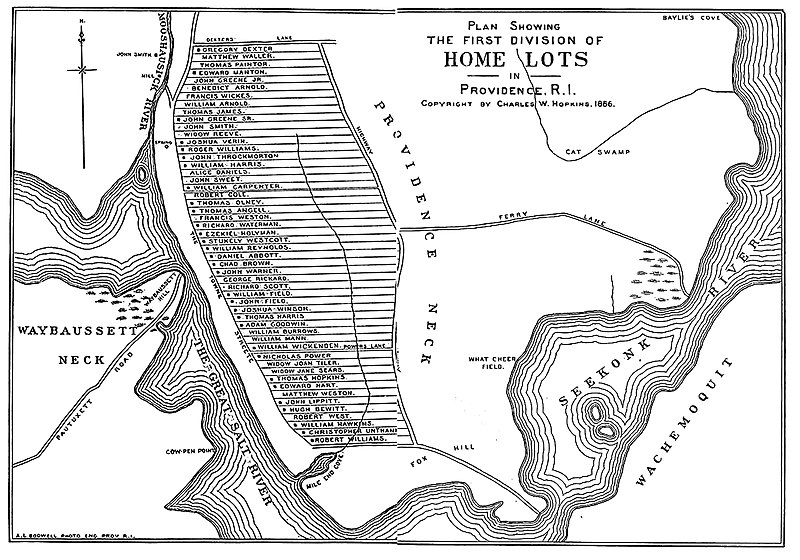
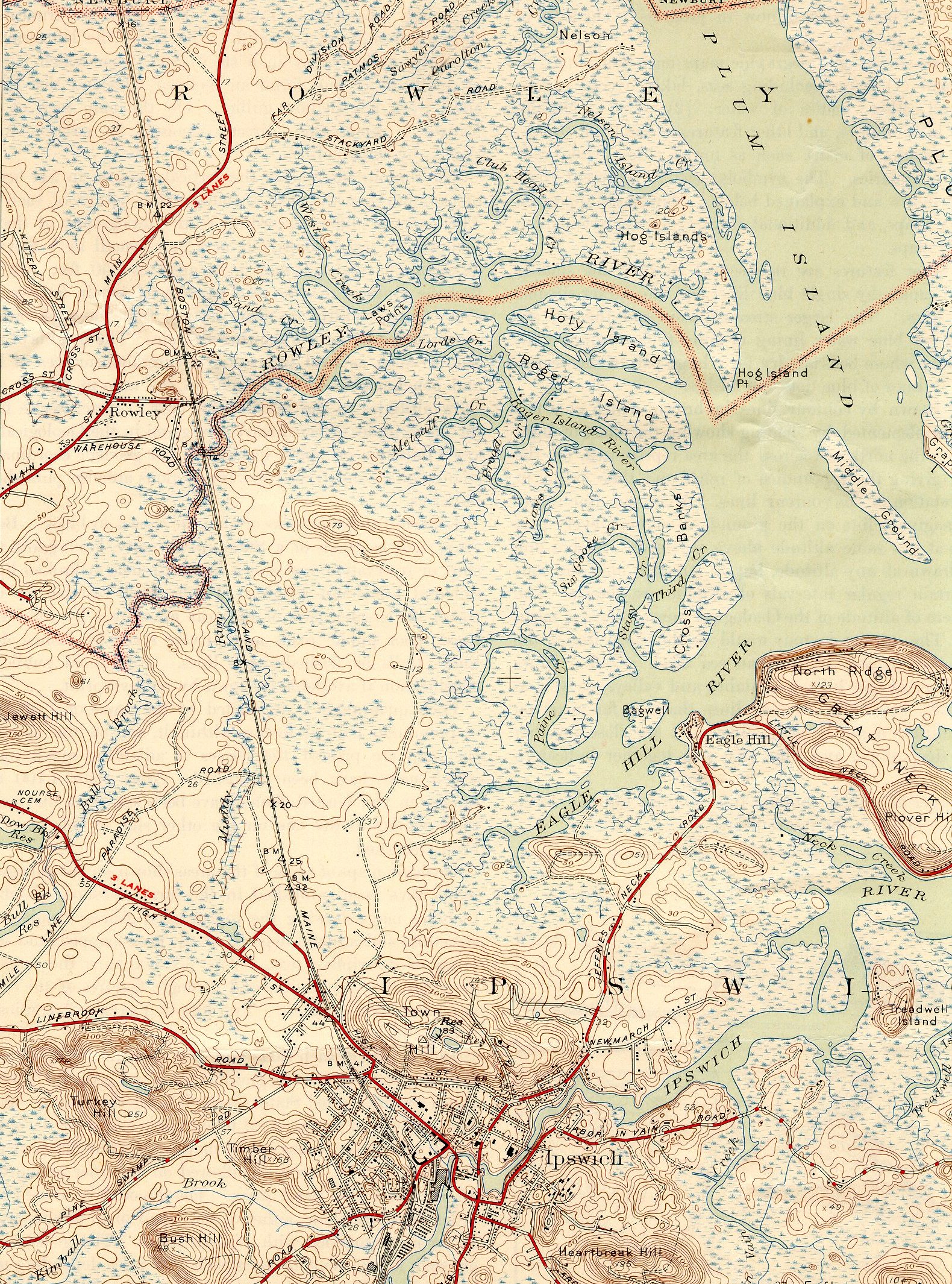
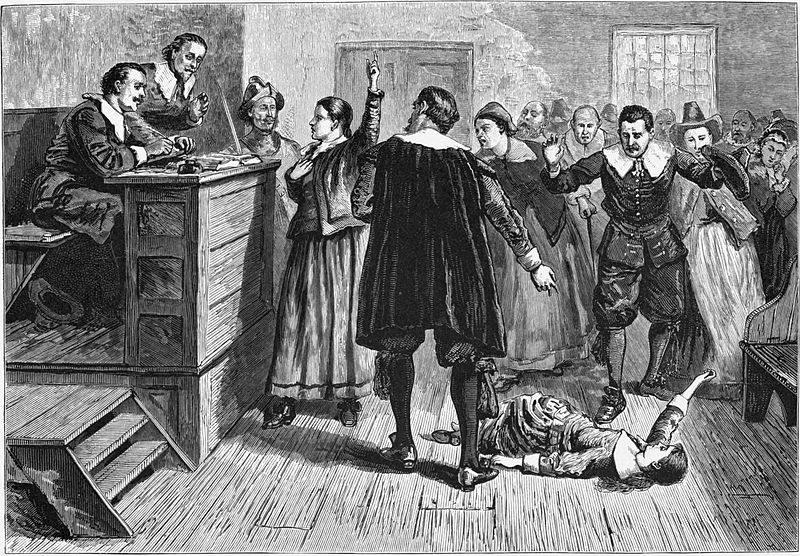
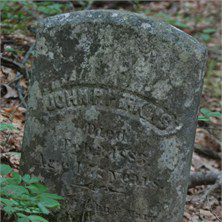
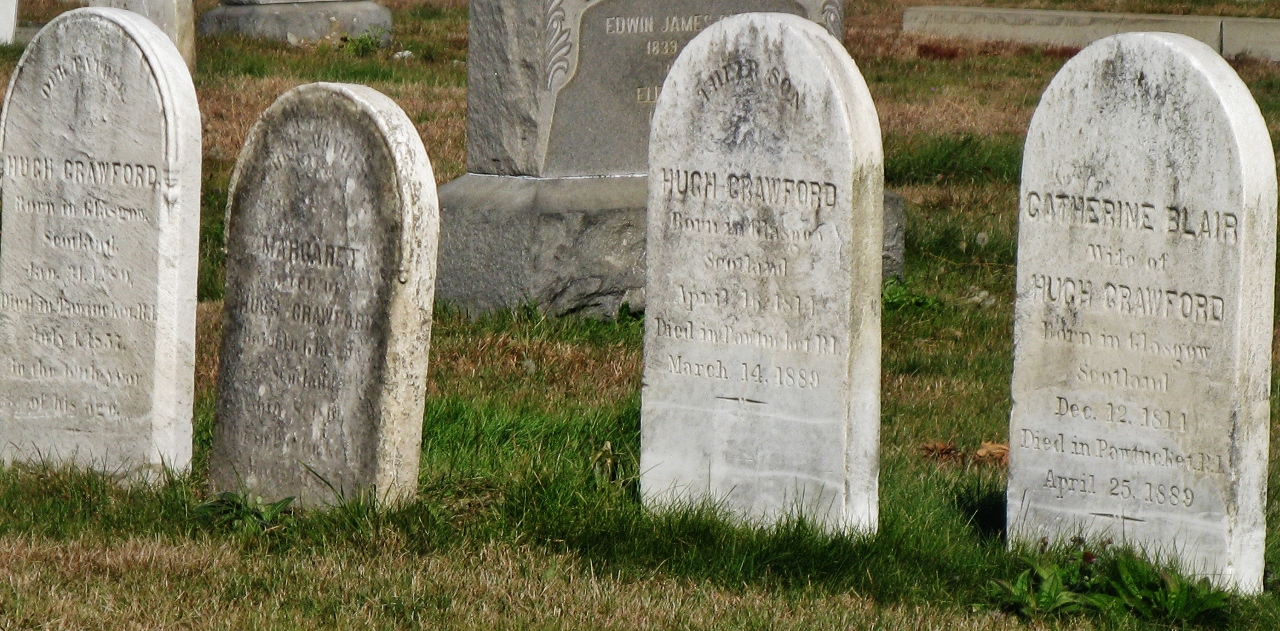
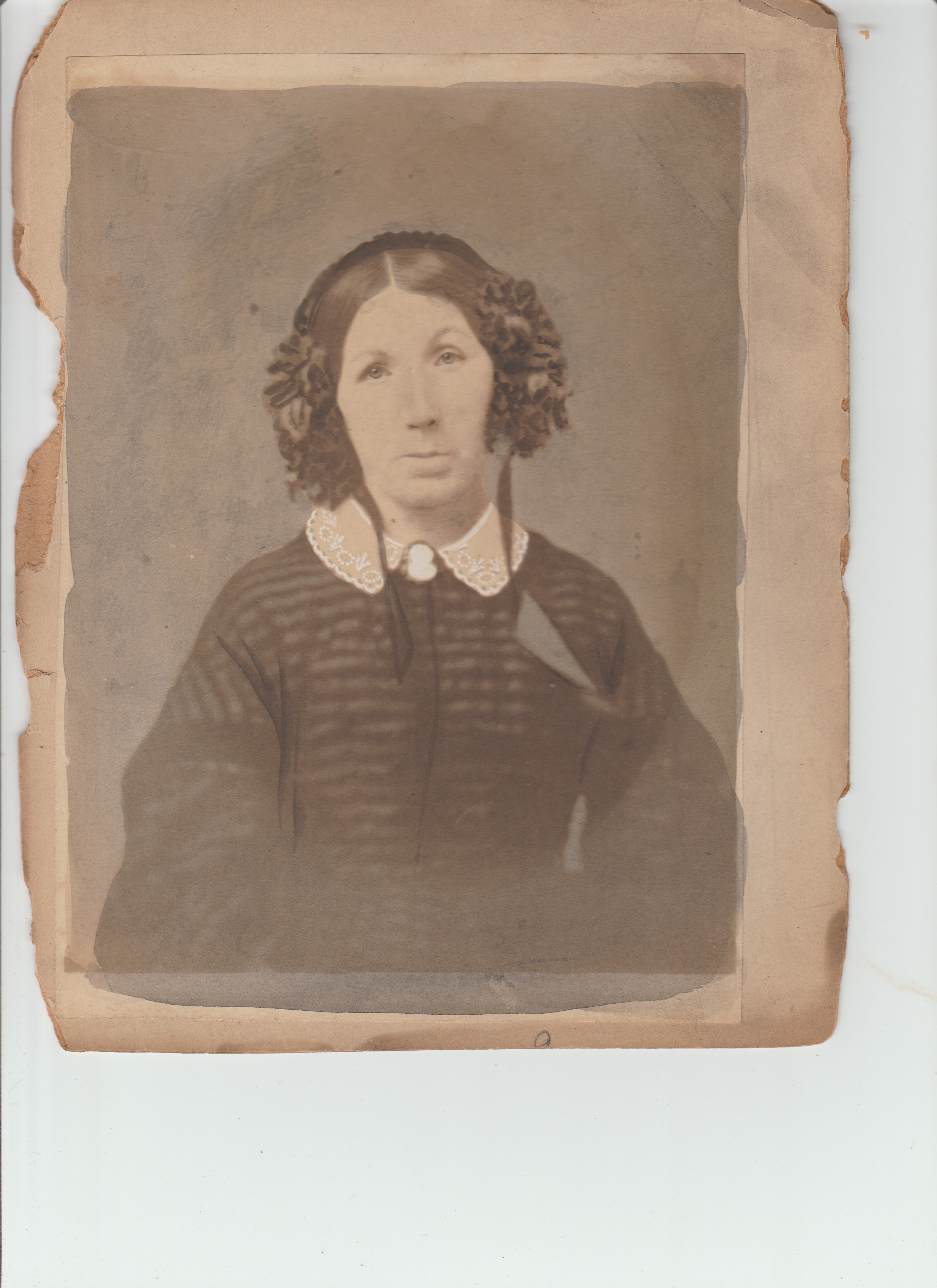
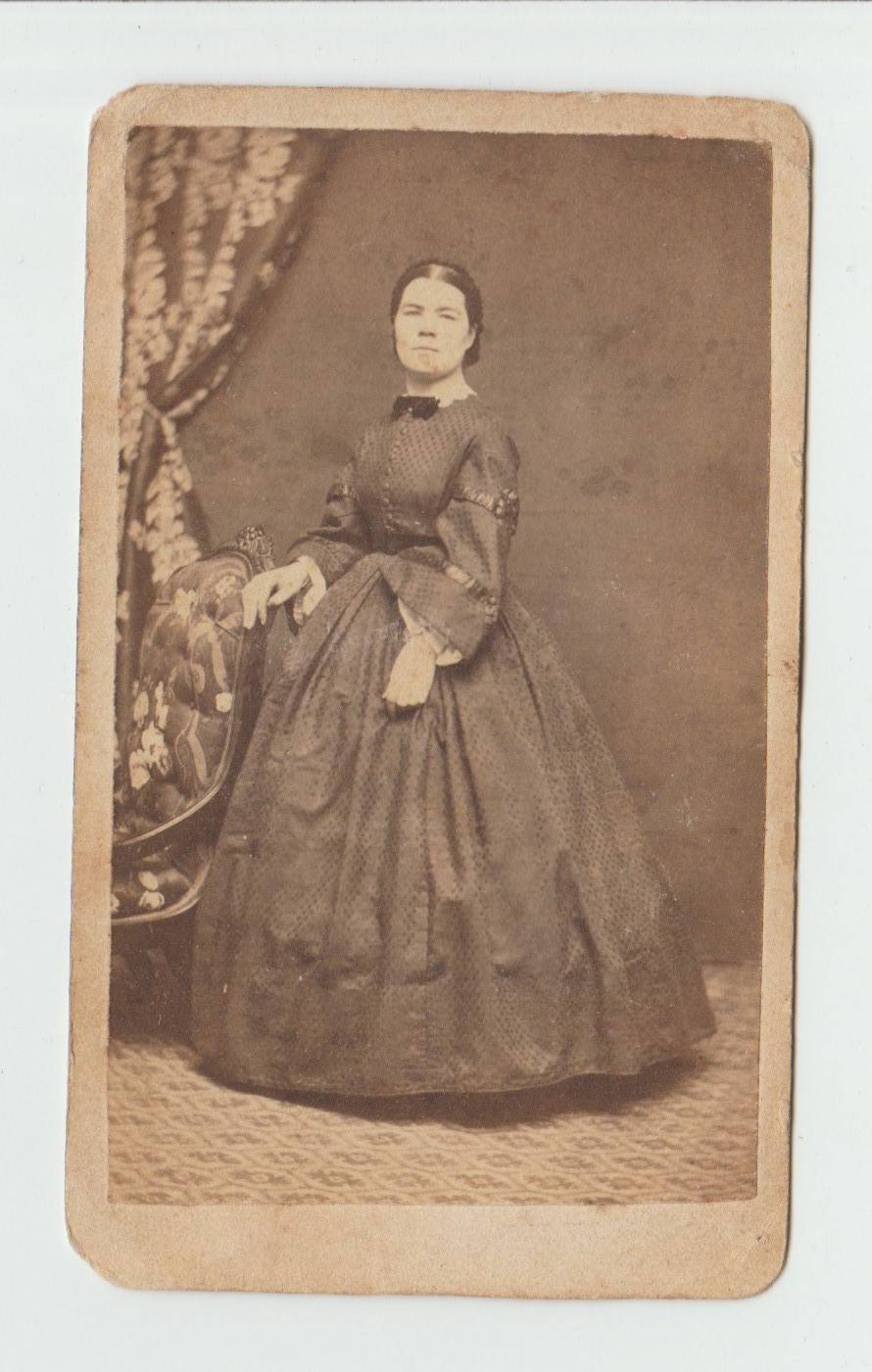
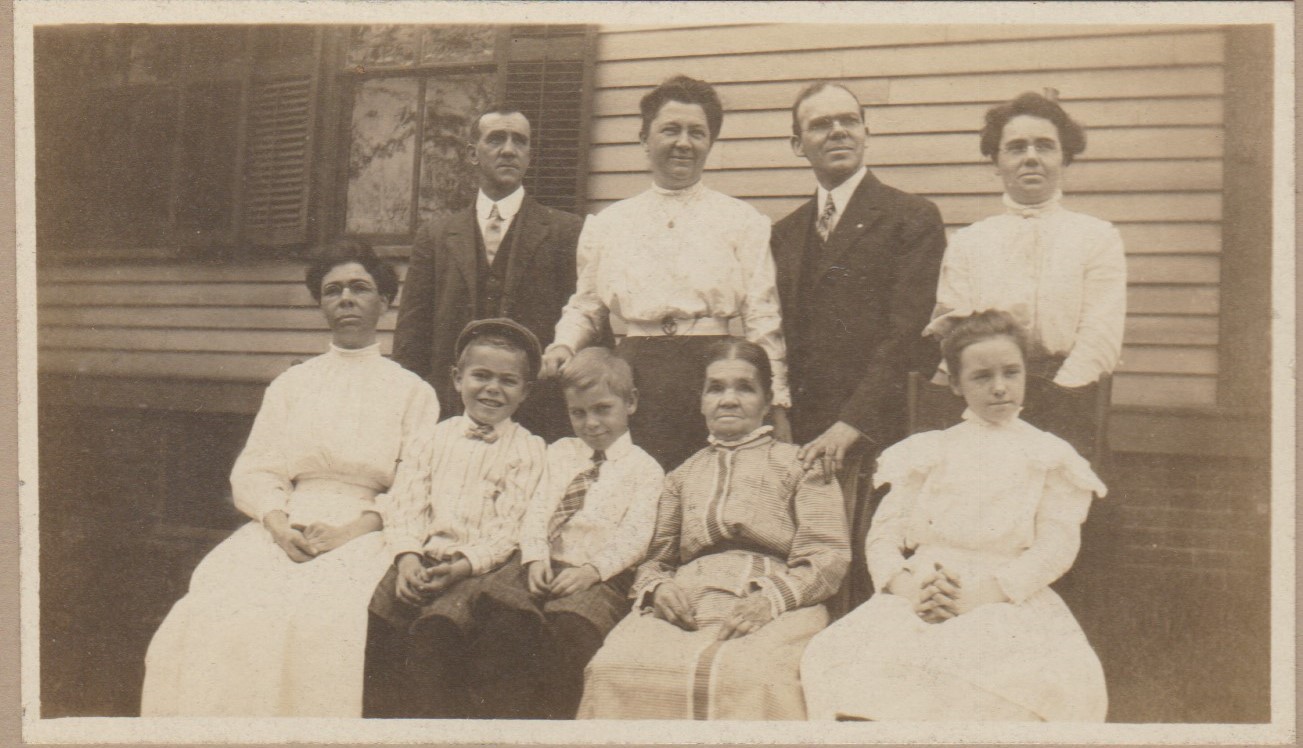
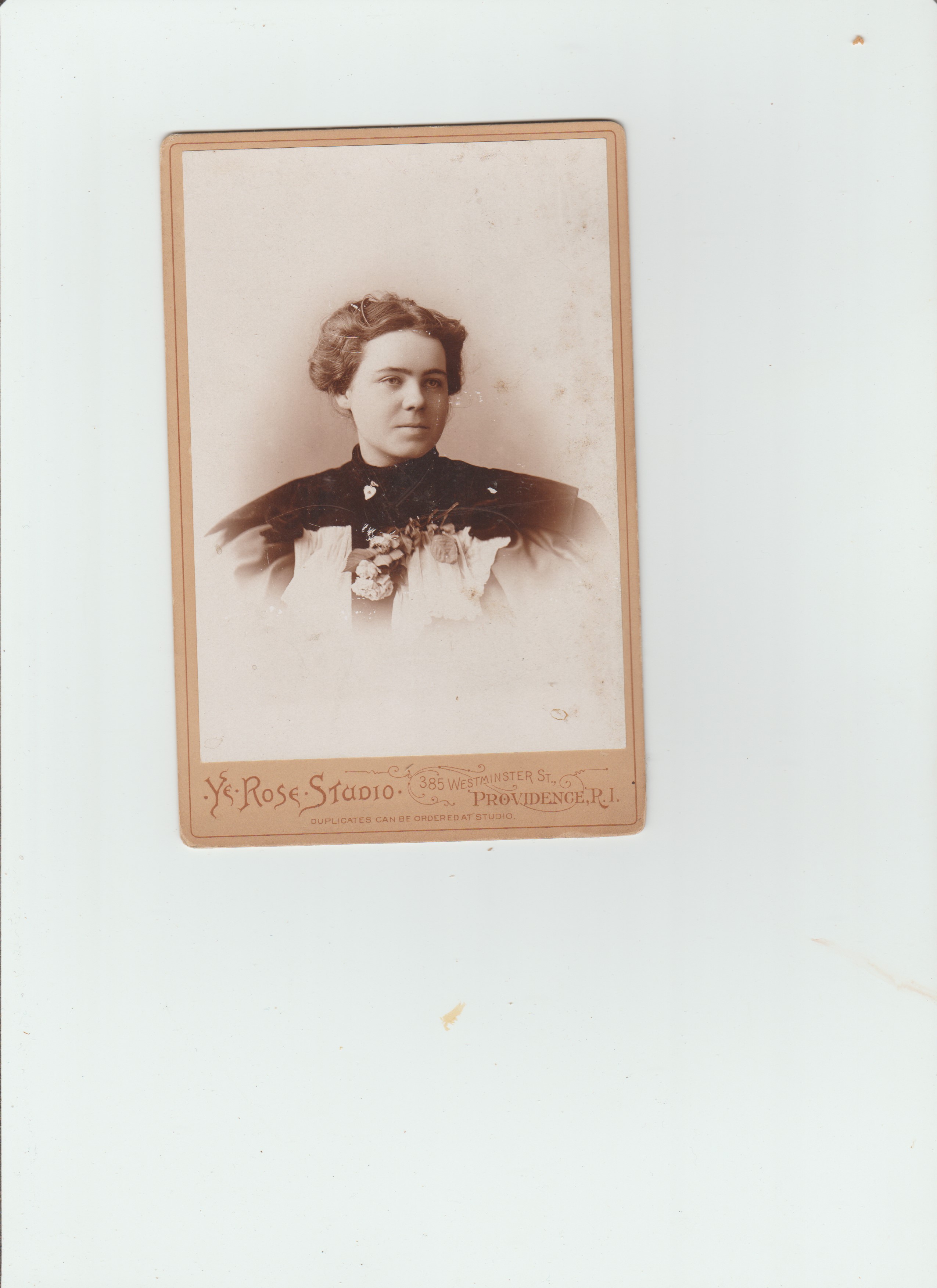
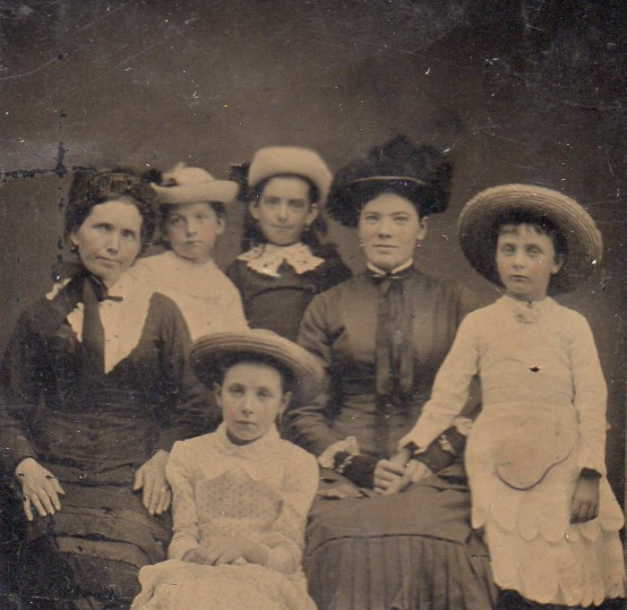
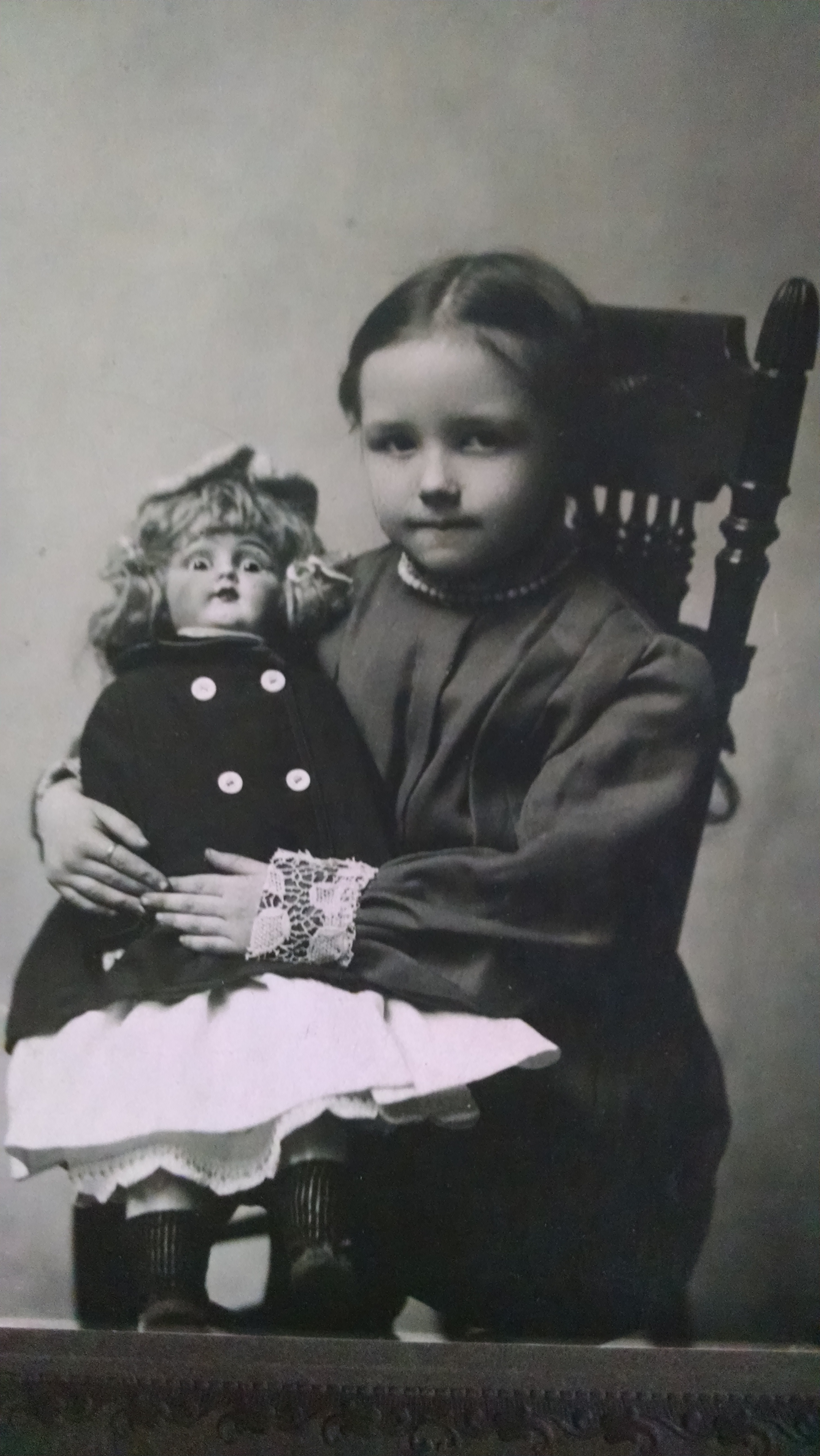
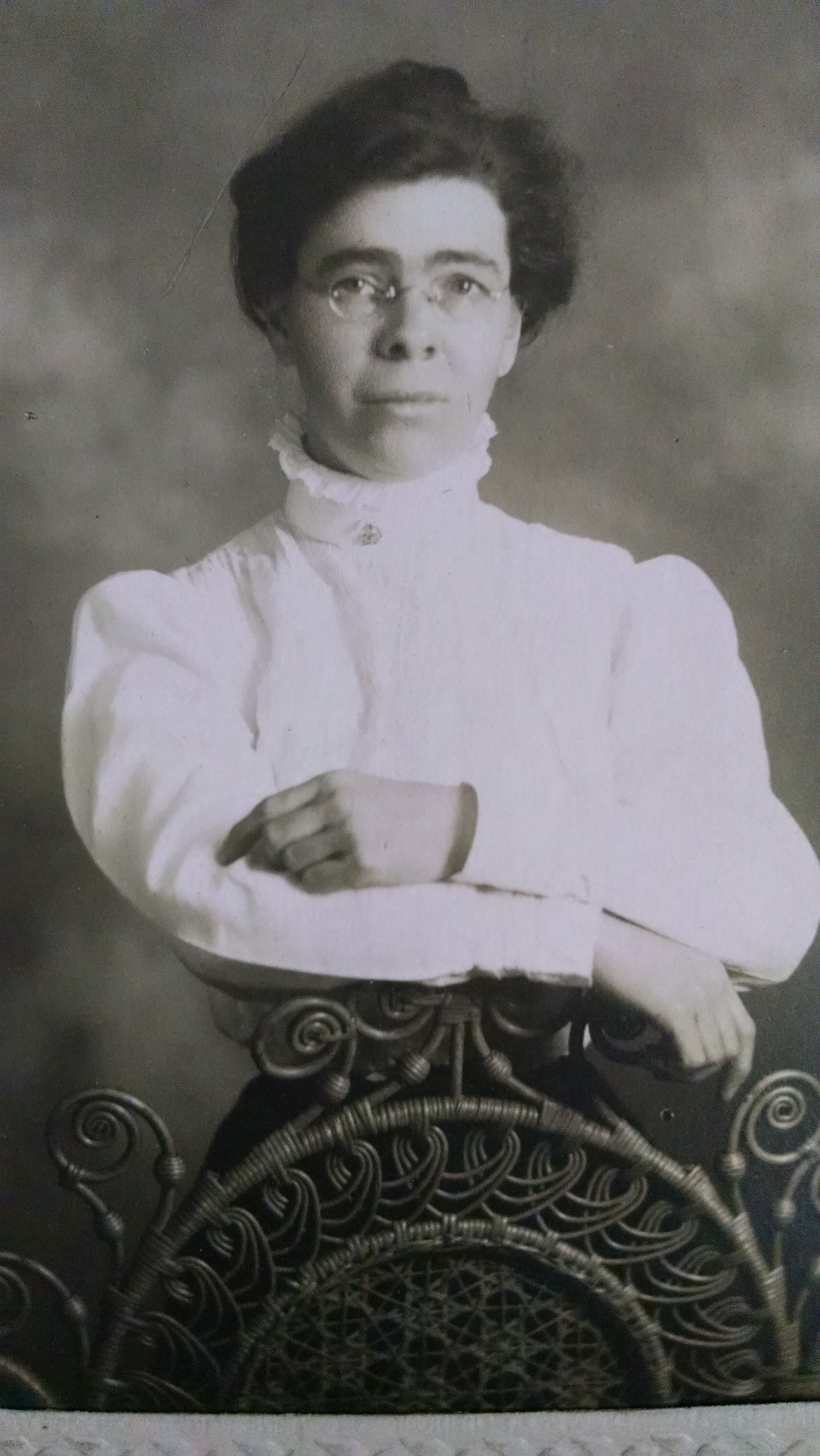
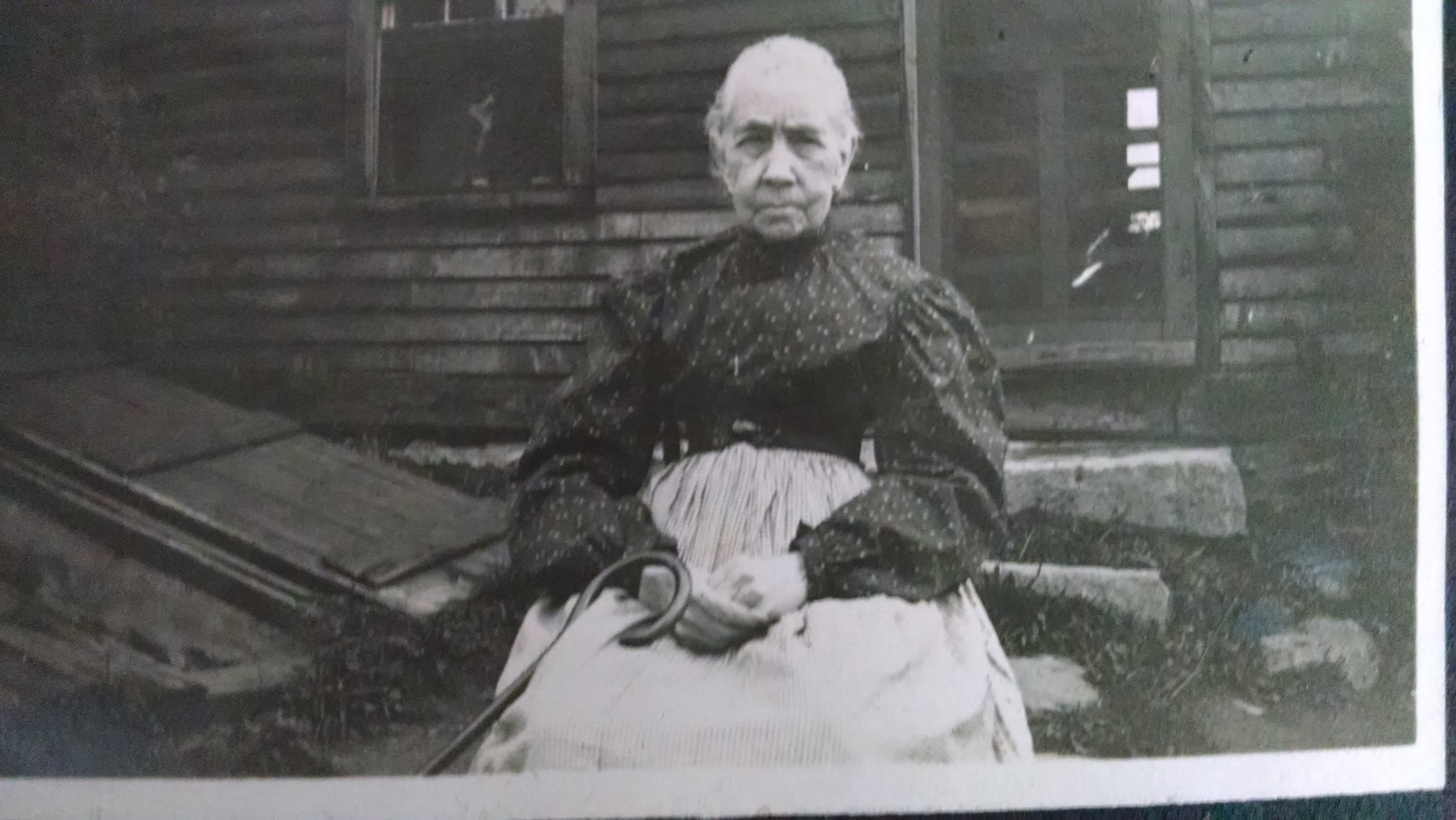
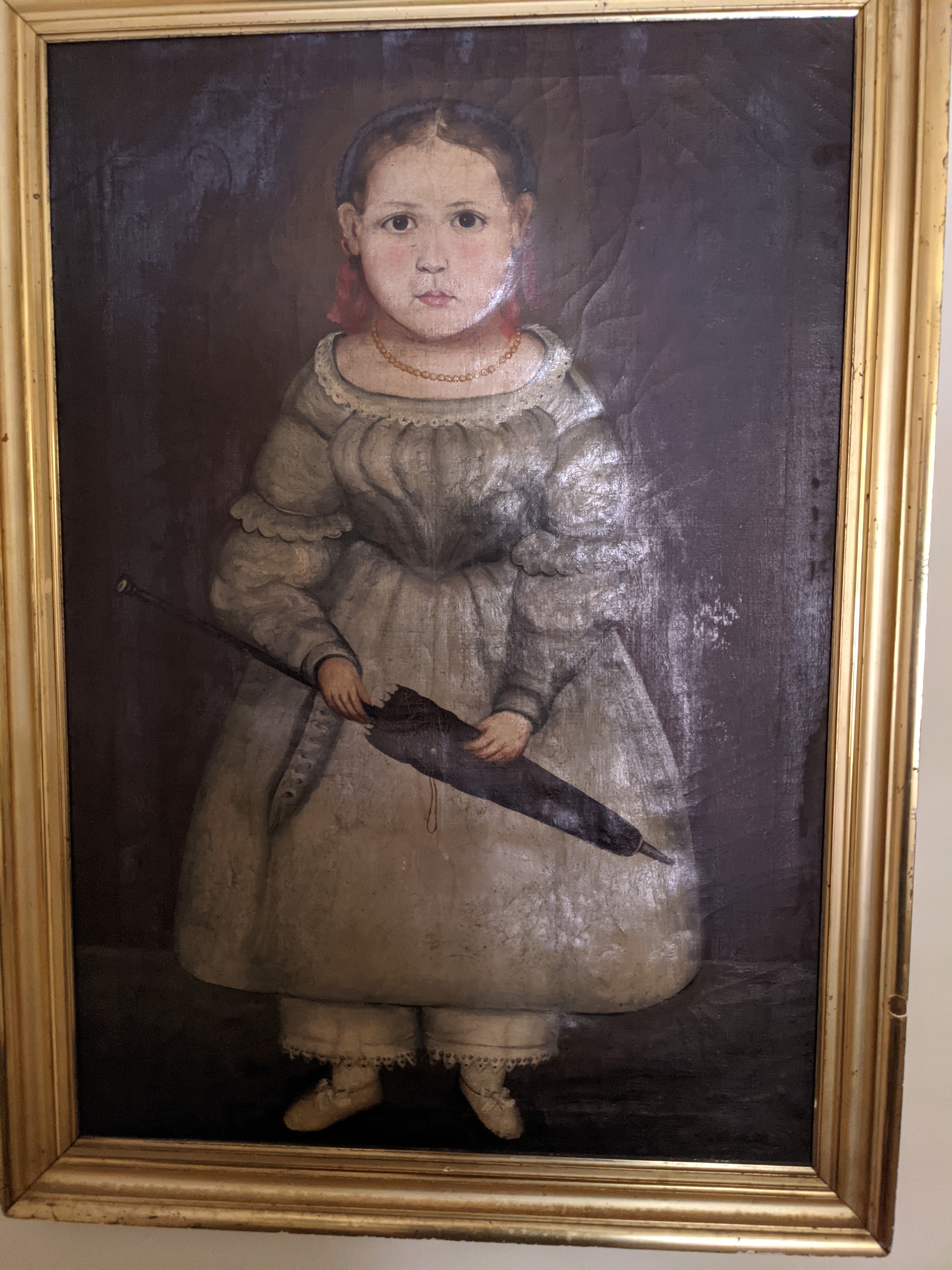
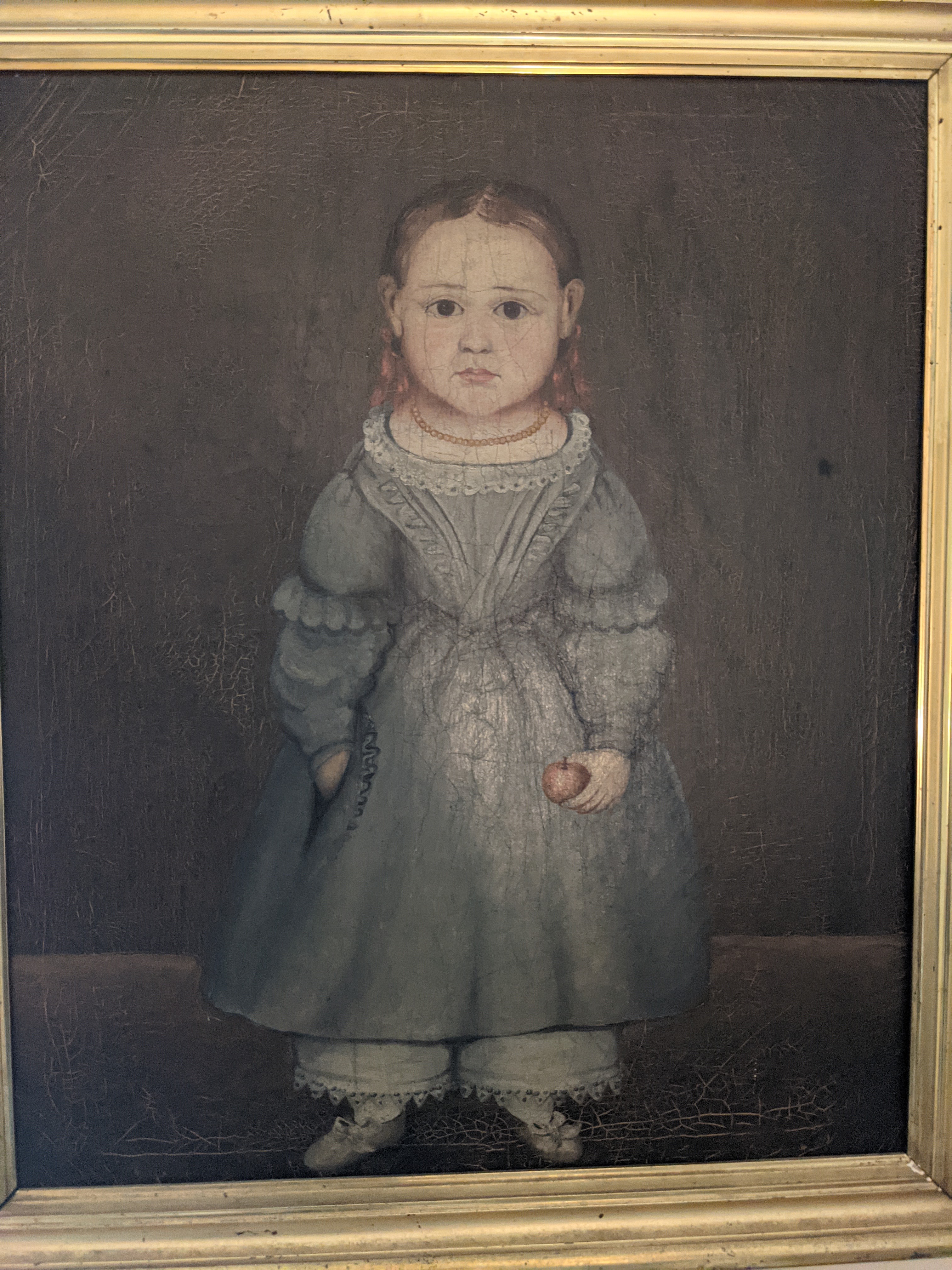
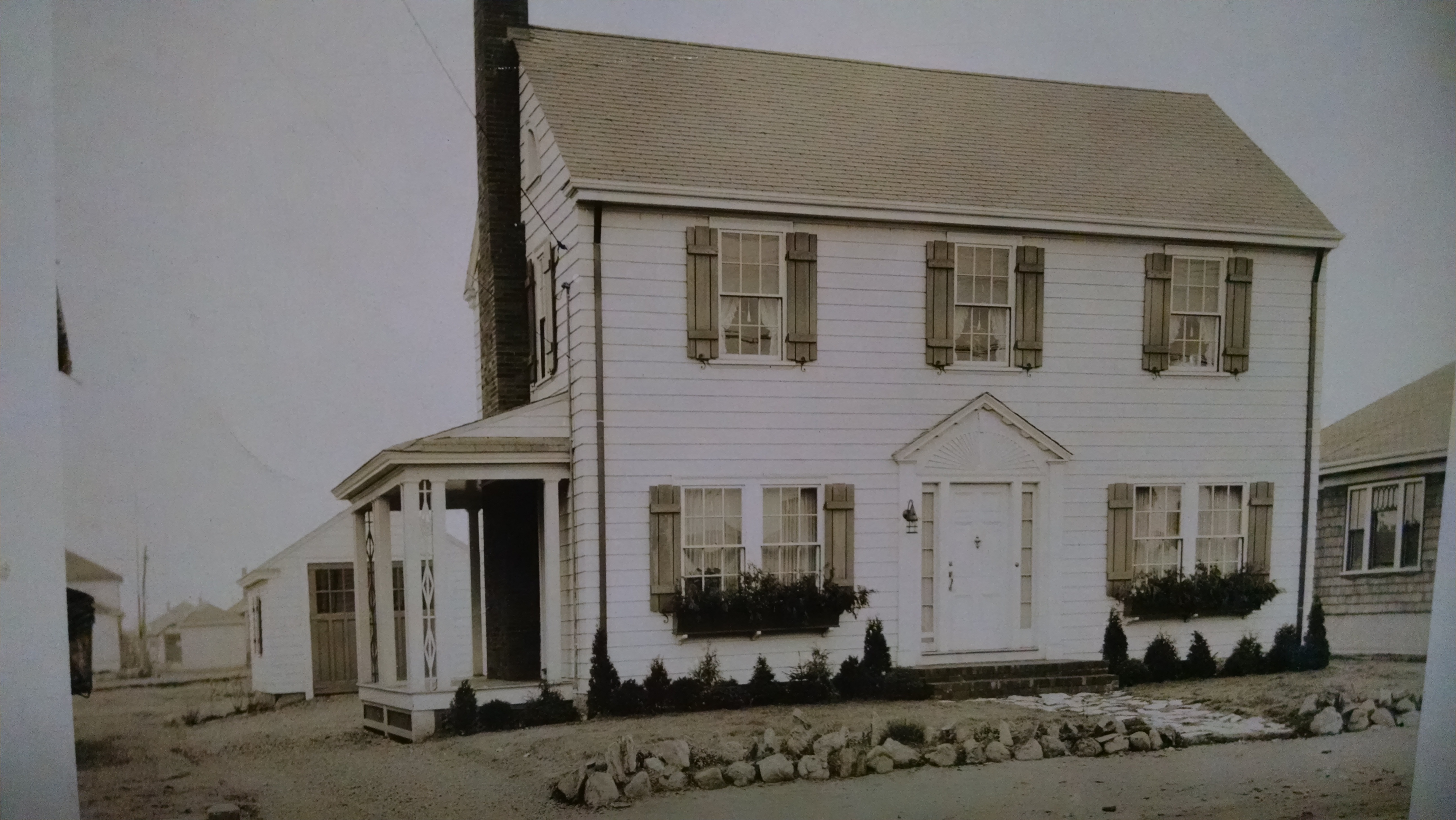
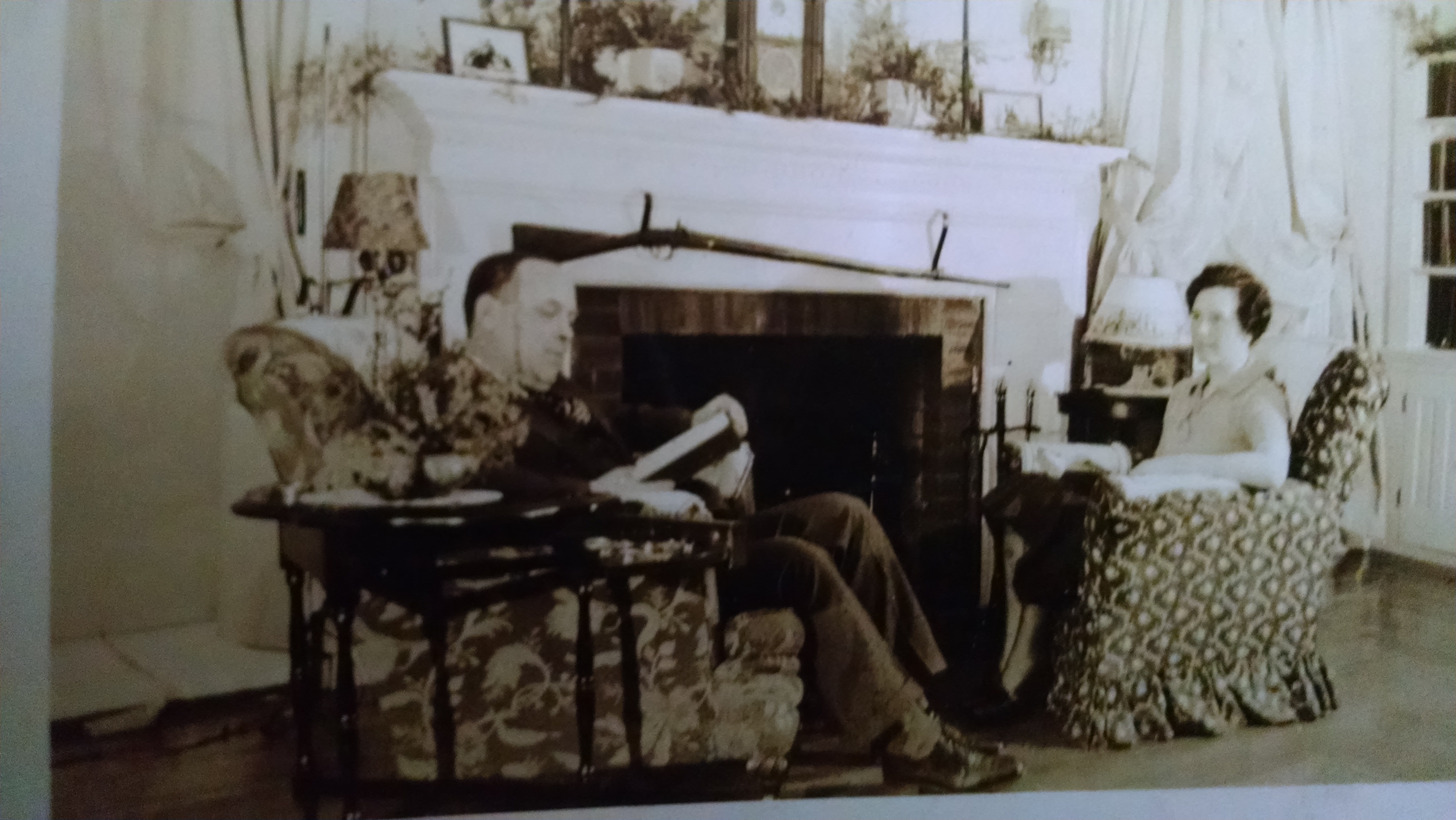
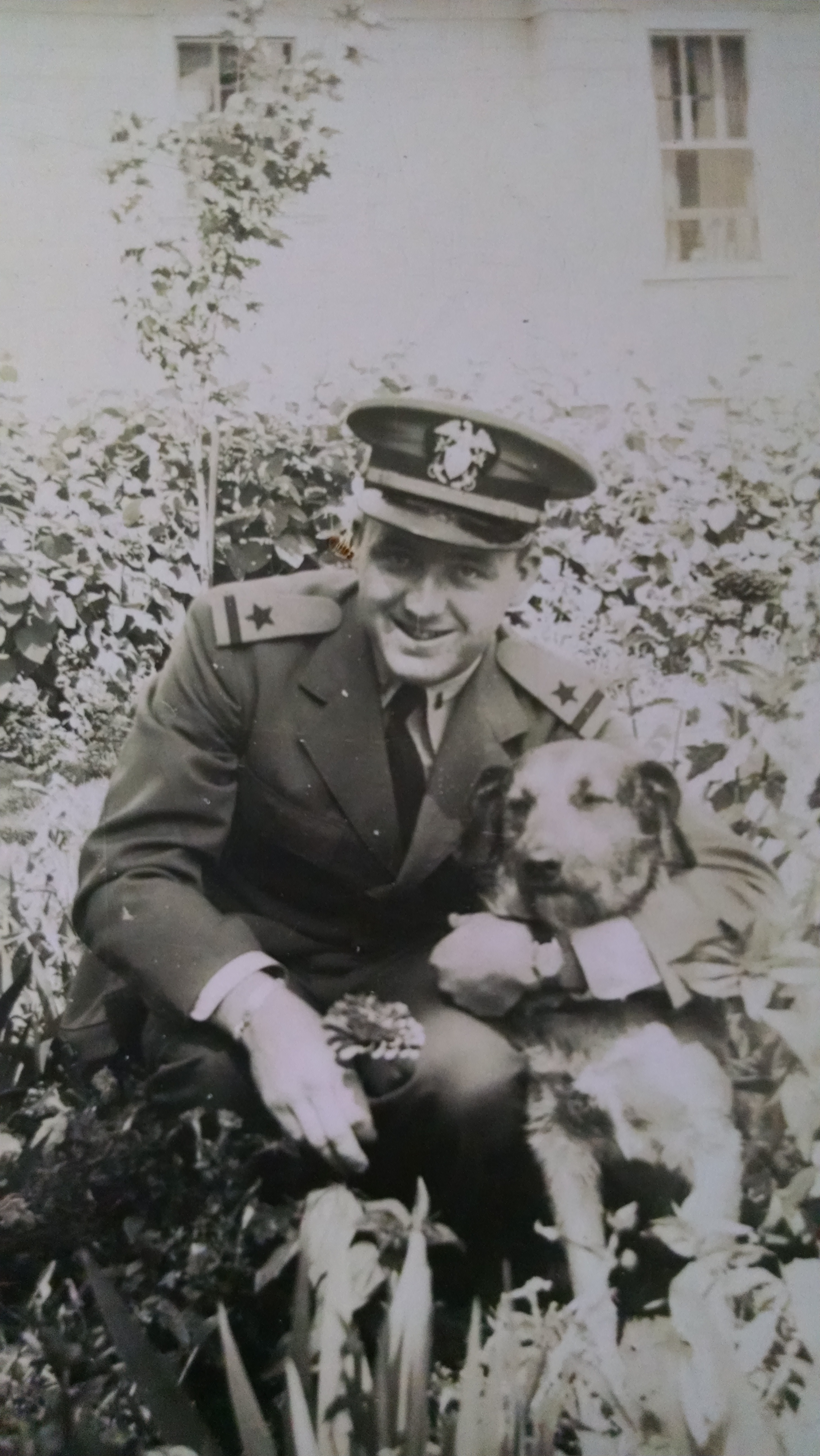
 The American Plutarch