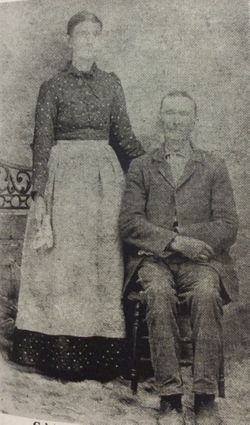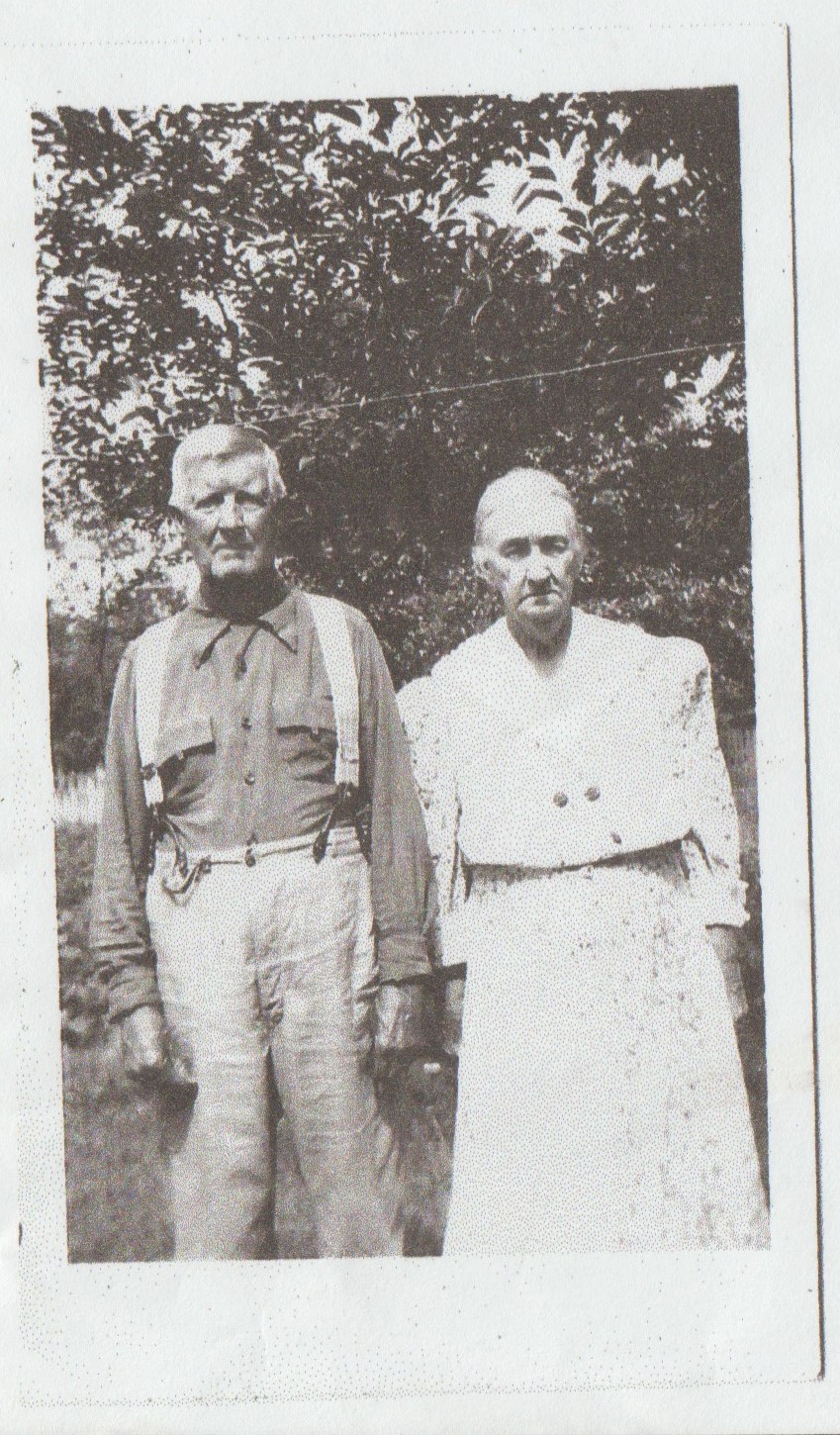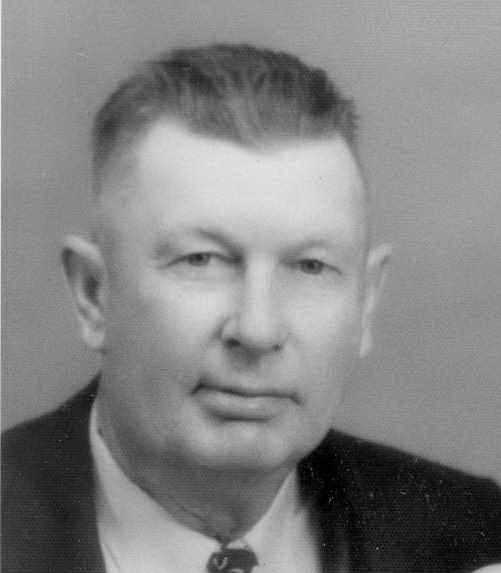
The United States is a land of immigrants. This is clearly seen when examining the Phillips, Camac, Brown, and Perkins families of Rhode Island, Massachusetts, and New Brunswick. These families were the ancestors of the current living Phillips descendants, including but not limited to Linda Phillips Lawson, Joy Phillips Bonitz, and Craig Arnold Phillips, and their children and grandchildren. The Phillips, Camac, Brown, and Perkins families were direct descendants from ancestors who lived in Canada, Ireland, Scotland, and England. Because their ancestors lived in these countries in the 19th century, and before, some of the records are unavailable or lost to time. Hence to reconstruct the ancestral past requires a bit of historical detective work.
A good place to begin in reconstructing the past is 17th century Rhode Island, which in terms of the historical extent of the Phillips, Camac, Brown, and Perkins families is situated about half-way between those ancestors who came before and those descendants who came after.
William Hawkins (1609-1699) and Margaret Harwood (1612-1687) were among the first English settlers of Rhode Island. William, by trade a glove-maker, was a native of Exeter, England, born in 1609; his parents were William Hawkins and Katharine Gonson. William, Jr, sailed from England in 1634 bound for St. Christopher (St. Kitts). On board the same ship was Margaret Harwood who listed her home as Stoke Gabriel, also in Devonshire, south of Exeter. She was born in Bulmer, Essex, north of London, in 1612. Her father was Thomas; one record said she was a bastard, hence her mother was unnamed.
Whether William and Margaret already knew each other, or romance blossomed onboard the ship to America, is not known. One record suggests the possibility that they did know each other before sailing: “February, 1634, among persons bound for St. Christopher’s who have taken the oath of allegiance before the Mayor of Dartmouth: William Haukins of Exter, Devon, glover about 25 and Margaret Harwood of Stoke Gabriel, Devon, spinster about 22.” A perplexing question is: what were these two young English people doing aboard a ship for the new English colony of St. Kitts? The youthful William and Margaret were perhaps strong and able-bodied. The English were recruiting such people to help colonize Caribbean islands, over which the English were competing with the French, Spanish, and Portuguese. St. Kitts was a new English colony in the Caribbean dedicated to sugar production. The work of clearing the tropical jungle of trees and plants, battling hordes of insects and rats, and planting crops such as tobacco and especially sugar was exhausting, and the more people involved the better. Also, there were conflicts with rival French colonists and the native Carib people.
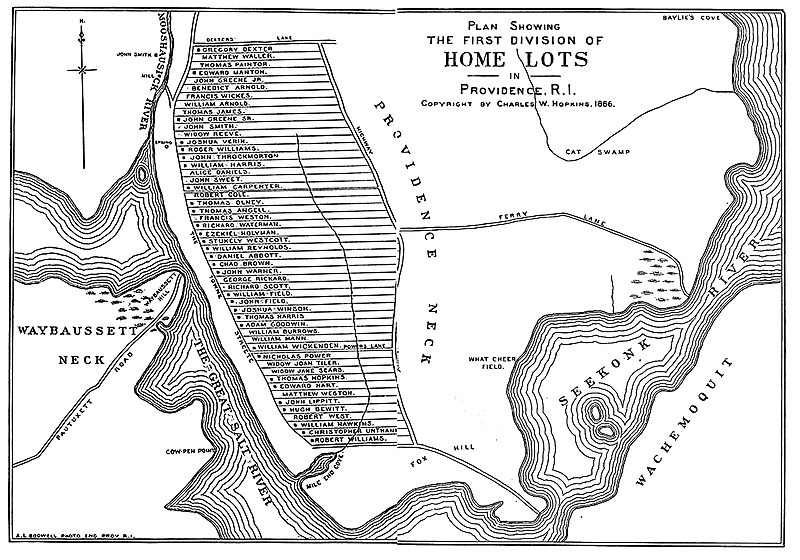
William and Margaret married in 1634, and within a few years relocated to New England. Emigrating, William and Margaret were among those who in 1638 received lots of land in the new settlement of Providence, founded and headed by Roger Williams. The new town was on the western side of a hill on a broad peninsula bordered by the Seekonk river to the east and Great Salt River, or Providence River, to the west. William’s land, which was allotted to him on December 20, 1638, was at the southern edge of the peninsula, or neck, near Mile End Cove. Today, this is the urban region east of the Providence River along Main Street. William and Margaret eventually “acquired three house lots and the housing thereon bounded west by Town Street, 6 acres and a share of meadow, and lands between the Pawtuxet and Pawtucket Rivers.” The two lots were to the north, belonging originally to Robert West and Hugh Bewit; they also acquired the lot of Joane Tiler. William in 1640 along with his neighbors signed an agreement to form a government.
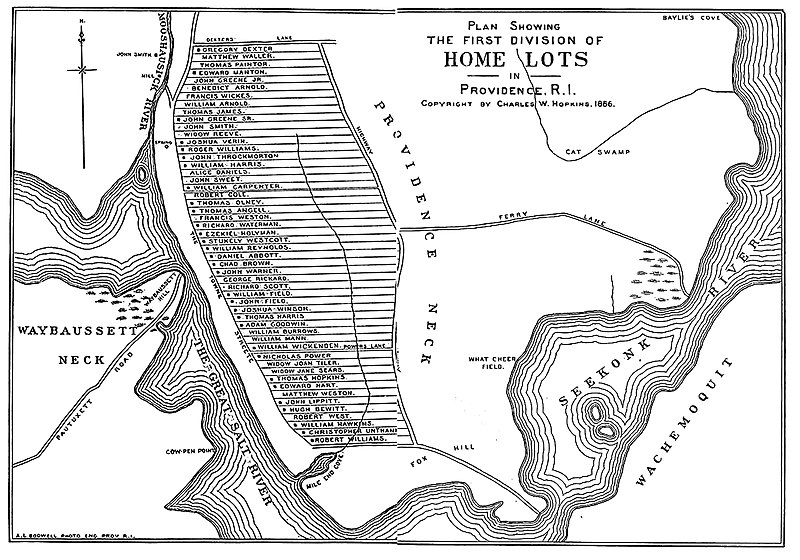
It would be nice to know how and why a young immigrant to the sugar colony of St. Kitts had moved north with his wife to a new colony in North America just recently founded by Roger Williams—and became a landowner and one of the original stakeholders of the colony at that! Not only were they original proprietors, but William and Margaret were members of the church in Providence. William was repeatedly made a freeman—meaning a person of property and legal consequence–of Providence.
William and Margaret arrived at a contested region between Anglo-American newcomers and indigenous tribes. Roger Williams had befriended the Narragansett tribe and negotiated with them, and was for decades a supporter of the rights of freedom of conscience and fair-dealing with the American Indians. After the Pequot War of the 1630s, relations between the English and the Narragansetts were tenuous. War returned to New England in 1675: King Philip’s War. The English attacked the professedly neutral Narragansetts, who joined forces with the Wampanoags and Nipmucs; intense warfare in and about Providence followed. Many of the Rhode Islanders fled, but not William and Margaret Hawkins and family. William helped to man the garrison in Providence, notwithstanding the destruction all around. Because he “stayed and went not away” during the conflict, after the defeat of the Indian tribes, in 1677, the colony awarded Hawkins with land taken from the Narragansetts. Indian captives were treated as prisoners of war, often sold into slavery or bound into servitude. English veterans of the war, such as William Hawkins, earned the right to use Indian servants. William and Margaret were significant landowners with a “considerable estate of lands and livestock” and, it appears, a secure labor force, the consequence of his valiant behavior during King Philip’s War. Along with wealth came political status, as William was elected to represent Providence in the Rhode Island General Assembly in 1677 and 1678.
Bond labor was a phenomenon throughout the British, French, Dutch, and Spanish colonies in America. Bondage took many forms: slavery, servitude, apprenticeship. Children and adults, Blacks, Whites, and Indians, were bound to labor for periods of years, sometimes for life. Some colonists were early opponents of slavery in America. Some Rhode Islanders in 1652 requested that slaves serve only a term of years, “as the manner is with the English servants” rather than for life. William Hawkins eventually agreed. He purchased a twenty-year-old slave named Jack from a Barbados plantation owner in 1695. However, four years later he manumitted Jack “to take effect in 26 years from this date” because “he had respect for him.”
The document granting manumission is found in The Early Records of the Town of Providence, vol. 4, pp 71-72:
Be it knowne unto all People by these presents that Whereas I William Hawkins of the Towne of Providence in the Collony of Rhode Island & Providence Plantations, in the Narragansett Bay in New England haveing for Me my heirs & Assignes, Purchased, Procured, bought & obtained of one william Mackcollin of the Island of Barbados, Merchant a certaine Negro man of about twenty yeares of Age, Named Jack to be unto me my heirs & Assignes for Ever, as may appeare by a bill of sale under the sd William Mackcollins his hand & seale, beareing the date the seventh day of June. 1695; But notwithstanding I the sd William Hawkins bought the sd Negro Jack for Ever, yet upon further Consideration & in favour to the said Negro Man Jack (haveing a Respect for him) Doe by these presents: Relinquish, Release, Discharge & for Ever set free from all & all Manner of service or servitude to me, my heirs, Executors, Administrators or Assignes, after he hath by service Compleated the full & just terme of Twenty & six yeares time from & beginning upon the seventeenth day of June last past being in this present 1699; the said Negro Man Jack; And doe injoyne My selfe, my heirs & Assignes after the sd twenty & six yeares as aforesaid be expired never to make any Claime or Demand to the sd negro man Jack by vertue of My said Purchase of him from the said William Mackcollin as abovesd; In wittnes of the Premises I de here-unto set my hand & seale the Eighteenth day of November in the yeare One Thousand six hundred ninety nine. Signed & delivered in the presence of Tho:Olney senr: and John Whipple junior.
By this time, Margaret had died, probably in 1687. The couple had five children: John Hawkins, William Hawkins Jr, Edward Hawkins, Mary Hawkins Blackmar, and Madeline Hawkins Rhodes. William died sometime near the end of 1699.
Their youngest child, Madeline, was born June 24, 1641, in Providence. She married Jeremiah Rhodes, born June 29, 1647, son of Zachariah and Joanna Arnold Rhodes. Jeremiah inherited land from his grandfather William Arnold, who was one of the original settlers of Providence (a neighbor of William Hawkins). William Arnold led English settlers from Devonshire to Massachusetts in 1635. He and others, such as his son-in-law Stukeley Wescott, relocated to Providence. Jeremiah and Madeline were married in 1676. Jeremiah’s father, Zachariah, of Rehoboth, Massachusetts (east of Providence), died by drowning in 1665 at the confluence of the Pawtuxet and Providence rivers. Jeremiah and Madeline’s son, Zachariah, born in 1676, married, in 1700, Elizabeth Mowry; he died in 1761, and Elizabeth died at the great age of 100 in 1779. Their child Patience was born in 1704 in Warwick, near Providence. Patience married in 1735 David Knapp, who was the great-grandson of Aaron Knapp, who was one of the original founders of Taunton, Massachusetts; they had arrived from southwestern England. At their marriage Patience was ten years older than David. Their children included Ruth Knapp. The date of Ruth’s birth is unclear—some say 1740, some say 1760. Ruth married Jeremiah Wilcox; one of their children was Mary, born April 4, 1774. Mary, the great-great-great-granddaughter of William and Margaret Harwood Hawkins, married John Perkins February 16, 1792.
The Perkins family emigrated from Warwickshire, England, to New England in 1630. Warwickshire, the home of Shakespeare, is on the Avon River in central England. John, son of Henry and Elizabeth Perkins, of Hillmorton, Rugby, Warwickshire, born December 21, 1553, sailed aboard the ship Lyon, which departed from Bristol, England, in December, 1630, and which included as a passenger Roger Williams. The Lyon arrived at Boston in February when the colony was suffering from scarce provisions. John had married Judith Gater on October 9, 1608. John and Judith arrived with six children; they lived in Boston for two years; he became a freeman of the colony. He was involved in town government, and in 1632 was given exclusive right to go fowling on Noodles Island, then part of Boston Harbor. Soon the family moved to Salem situated on the Crane River north of Boston, eventually relocating to the settlement of Ipswich, north of Salem and Boston, in 1633, where he was a substantial landowner. They lived on East Street at the entrance of a large peninsula, Jeffries Neck, north of the Ipswich River. John was significant enough to serve as Deputy to the Massachusetts General Court (colonial legislature) from Ipswich in 1636. He also served on several Grand Juries. When they died John and Judith were buried in the Old North Burying Ground in Ipswich. John Sr. left most of his possessions, such as his house and lands, to his wife as well as their son Jacob Perkins. He left to his first born and oldest son John Jr. “a foale of my young mare being now with foale if it please the Lord.”
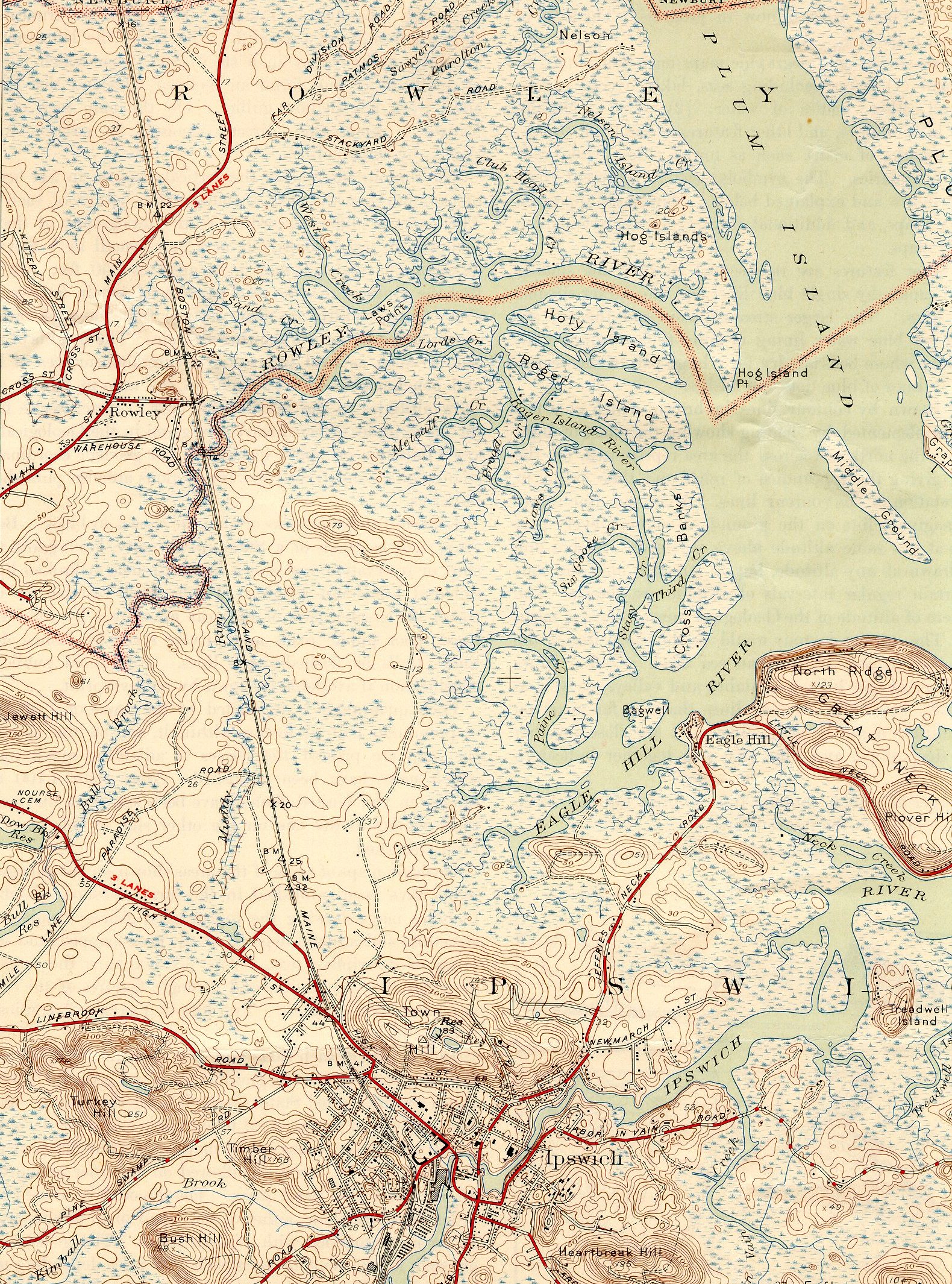
John, Jr., was born in Warwickshire in 1609; he married Elizabeth Whitgift in 1636. In 1634 the town of Ipswich granted him six acres. The following year he was granted another thirteen acres, including acres of land upon which he had already built a house. The town followed this up with another forty-five acres and rights to employ a weir on the Chebacco River for seven years to catch alewives; he soon sold this land and rights for another tract of land on Chebacco River, called Rowley River today. He owned a marshy island next to Plum Island Sound. John Perkins was nicknamed Quartermaster John in part because of his military experience. This region of coastal Massachusetts was periodically battling with American Indians from north of Merrimac River, which the colonists called the Tarantines. John Jr. was living in a hut on his father’s land on Jeffrey’s Neck when an Indian named Robin confided in him of an imminent attack. By this means the attack was foiled. John Perkins Jr “opened the first public house in Ipswich, and was chosen as Quartermaster of the military organization of the settlement, a title which he ever after retained.” This according to the history of the Perkins family written by George Augustus Perkins in 1884. John Jr. was not only a tavern owner and quartermaster and farmer but a fisher as well. According to George A. Perkins he dried his fish on flakes built on Little Neck, a small peninsula jutting into the mouth of Ipswich River across from Plum Island. He acquired enough property to leave land to all of his children. His wife Elizabeth died in 1684; he died two years later.
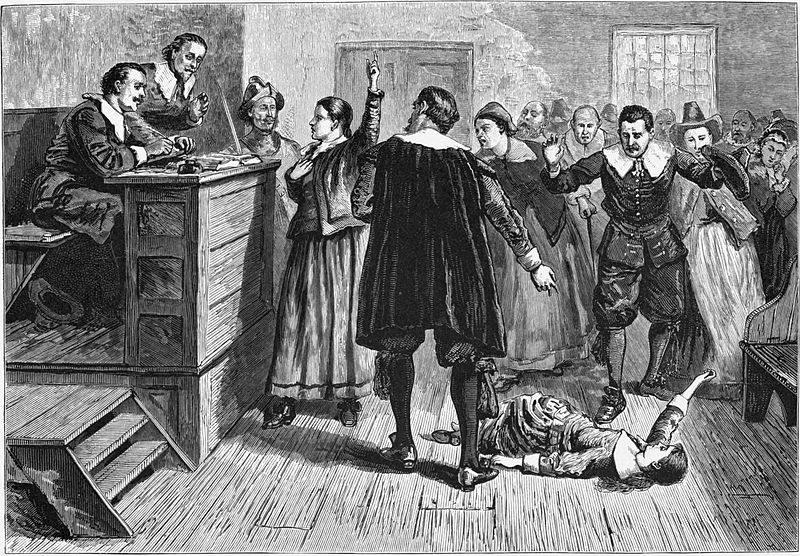
John Sr.’s children and John Jr.’s siblings included Thomas, who owned Sagamore Hill south of Ipswich, which he sold to John Jr. He removed to Topsfield, where he was a deacon and selectman. Sister Elizabeth married William Sargent in Ipswich; they removed to Amesbury, where she died in 1700. Another sibling was Mary, who married Thomas Bradbury in 1637. They lived in Salisbury, Massachusetts. When she was an old woman in 1692 she was accused of being a witch, tried and convicted, but not executed. Her testimony, according to George A. Perkins was: “I do plead not guilty. I am wholly innocent of such wickedness through the goodness of God that hath kept me hitherto. I am the servant of Jesus Christ and have given myself up to him as my only Lord and Saviour, and to the diligent attendance upon him in all holy ordinances, in utter contempt and defiance of the Devil & all his works as horrid and detestable; and have endeavored accordingly to frame my life & conversation according to the rules of his holy word, and in that faith and practice resolve, by the help and assistance of God, to continue to my life’s end. For the truth of what I say as to matter of practice, I humbly refer myself to my brethren and neighbors that know me, and to the searcher of all hearts for the truth & uprightness of my heart therein, human frailties & unavoidable infirmities excepted, of which I bitterly complain every day.”
Other children of John Perkins Sr. and Judith Gater were Jacob Perkins, who received the greatest share of the inheritance. He was a sergeant in the local militia, a farmer, and had the notable experience of being hit by, but surviving, a lightning strike. His sister Lydia was the only child of John and Judith Perkins born in America—in Boston in 1632. She married Henry Bennet of Ipswich.
John Perkins Jr. and Elizabeth Whitgift had nine children. Their oldest was John, followed by Abraham, Jacob, Luke, Issac, Nathaniel, Samuel, Thomas, and Sarah. Samuel, born in 1655 in Ipswich, married Hannah, daughter of Twiford and Hannah West. Samuel was a cordwainer, or shoemaker, as well as a militiaman who fought in King Philip’s War. He fought under Captain Daniel Henchman, whose company secured the Pocasset River of southeastern Massachusetts adjacent to Buzzard’s Bay. For his service Samuel, along with others, received a grant of land in Voluntown, Connecticut. He and other veterans moved there in the 1670s. There his children were born: Samuel, a mariner who died young at sea; Ebenezer, who inherited his father’s land in Voluntown; and a brother, John, who also died at sea. Ebenezer., born February 3, 1681, moved from Ipswich to Connecticut, sold his inheritance, and moved east to Rhode Island, settling at Coventry; eventually he relocated to Exeter. He married twice, Hannah Safford and Margaret Stewart. He died sometime before 1754, perhaps in 1743. By 1754 the heirs of Ebenezer as well as other Perkins’s sold the remaining land in Ipswich; so the Perkins’s left Massachusetts behind.
Ebenezer and Hannah Safford Perkins’s first-born son was Newman, born in Exeter, Rhode Island. Newman had seven siblings: Samuel, born 1712; Oliver, born 1713; Charity, born 1714; Ellenher, born 1718; Lemuel, born 1720; Ebenezer, born 1721, and John, birth year unknown. Newman was born in 1711; he married Mehitabel Godfrey on October 29, 1732. They were married by Justice of the Peace of East Greenwich John Spencer. According to Perkins family historian Will Perkins, Newman “was appointed by the Colonial Legislature as a Justice of the Peace for Exeter, Rhode Island, from 1753 to 1781. He was Captain of the Second Company of Exeter, Providence Horse Troop, from 1757 to 1758,” which would have been during the French-Indian War. His and Mehitabel’s children were John Perkins, born 1733; Oliver, born 1735; Ebenezer, born 1736; Uriah, born 1738, David, born 1741; Samuel, born 1745; Martha, born 1747; and Newman, birth date unknown.
Newman and Mehitabel are buried in the Perkins Family Lot in Exeter, Rhode Island, known as the Rhode Island Historical Cemetery Exeter #75. According to the Find a Grave website as well as the book Exeter, Rhode Island Historical Cemeteries by James Sterling and John Good, the cemetery is found on the south side of Austin Farm Road 700 feet west of the bridge over Woody River, then 100 feet south of the road up on a hill. This was evidently land owned by Newman, which was sold by his son Newman in 1817 to Oliver Wilcox of West Greenwich for $146.
Ebenezer, son of Newman and Mehitabel, was born August 20, 1736 in Exeter. He married Hannah Prosser, daughter of Ichabod (1710-1782) and Patience Lanphere Prosser (1713-1758) of Hopkinton, Rhode Island, on Christmas Day, 1762. He was twenty-six and she was twenty-two. Ebenezer and Hannah had seven children, one of whom was John, born in 1773. Ebenezer “was a Private in the Third Company, Exeter Militia of Exeter, Rhode Island,” in 1778, under the command of Captain George Wilcox. Their son John married Mary Wilcox of Foster, Rhode Island, the descendant of William Hawkins and Margaret Harwood Hawkins, in 1792. John died in 1821 when he was forty-eight years old; Mary outlived him by thirty-one years. William Lennox Perkins, in his memoirs, wrote that “a cousin of mine, Eunice Perkins Clark, remembered Mary Wilcox very well. She was of a very sweet disposition, and was in great demand far and near for her services in case of illness in her neighbors families.” John and Mary died in Exeter, Rhode Island.
Among their several children was John Prosser, born February 2, 1806. When he was twenty years old he married twenty-four year old Huldah Tyler of Foster, Rhode Island in June, 1826. Huldah’s parents were William and Lydia Reynolds Tyler. William was a veteran of the American Revolution. According to the Rhode Island state records commission, William Tyler was “Private, Capt. Henry Dayton’s Co., Col. William Barton’s Corps of Light Infantry, appointed June 24, 1779, for 1 year; served from Sept. 6, 1779 to March 13, 1780.” Before that, according to a record from the US War Department in 1917, he “served as a private in Capt. Joseph Springer’s Company, Col. Topham’s Regiment, RI State Troops, Revo. War, enlisting June 6, ’78. His name is found on the rolls of that organization to Dec. 6, ’78. No record of his discharge has been found.” William was born in Scituate, RI in 1748 and died in West Greenwich, RI, on April 1, 1823. Many years later, in 1914, William Tyler’s grandson, Charles M. Tyler, had a statement notarized claiming his “wish to place on record the fact that my grandfather, William Tyler, was a soldier in the American Revolution; that he is the same William Tyler of Foster, Rhode Island, son of Nathaniel, deceased, who married Lydia Reynolds, daughter of Samuel, deceased, of West Greenwich, Rhode Island. . . . I can remember perfectly that when I was a boy my father told me many times that his father, William Tyler, was a Revolutionary soldier, and I have heard my father say that he had a considerable quantity of paper money such as was issued by the Continental Government during the Revolutionary period which had been paid to my grandfather for his services as a soldier in the Revolutionary War. This money, of course, had no great value at that time and I do not know what became of it. My father also told me of many other incidents about my grandfather and his experiences as a soldier in the Revolutionary War.”
John Prosser was a farmer, and both he and his wife Huldah were illiterate. They had five children: Hannah Mahala, born 1827, Charles C., born 1838, George Henry, born 1832, John Riley, born 1834, and Palmer Gersham, born 1834. Their youngest son, Palmer, was thirty, married with a child, when he was killed at Cold Harbor in Virginia, during which thousands of Union and Confederate troops died.
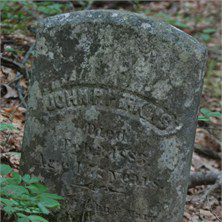
Sometimes census records cloud more than enlighten, which is the case with John Prosser Perkins. In the 1850 census there are two records for the Perkins family, one for Exeter and one for Coventry, Rhode Island. About a dozen miles separate these two towns. The Exeter census records lists John P. and son Charles C., the former listed as a laborer. The census record for Coventry meanwhile lists Huldah and children; Charles is again listed, this time as a farmer. Palmer, George H., and John R. are listed as spinners. Was John P. working as a laborer for a relative in Exeter? He lived next door to Daniel Reynolds, who was perhaps Huldah’s cousin. Maybe John P. worked as a laborer for Daniel Reynolds. Why were he and Huldah not together? Was John P. working to save enough to purchase his own farm? In the 1860 census John and Huldah lived together in Exeter. John was listed as a farmer with an estate of $500 in property and $300 in personal property. The only child living with them was John R., listed as a farm laborer. They lived by relatives Almond and Daniel Reynolds. John and Huldah were buried in the Perkins Lot in Exeter; he died in 1883 and she in 1875.
George Henry Perkins, born November 9, 1833, departed during the 1850s from Exeter and moved northeast to Pawtucket, where there were more opportunities for a person engaging in industrial work. George married Mary Ann Tourgee of North Kingston, a town east of Exeter, on July 3, 1854. The Tourgee’s were descendants of French Huguenots. He was twenty-one and she was seventeen. In the 1860 census for North Providence/Pawtucket, George and Mary Ann lived as tenants with a family; George was a mill operative, that is, he worked in a spinning mill. Husband and wife had a personal estate of $200. The couple had a child, George Francis, in 1862. Unfortunately, Mary Ann died three years later on May 13, 1865. George remarried a Scottish immigrant, Margaret Rennie Crawford, nineteen months later, on December 27, 1866. He was thirty-three and she was twenty-five. By 1870, George and Margaret Rennie had thrived sufficiently that they owned their own home in Pawtucket. Besides George Francis, George had another child with Margaret, William Lennox, born July 12, 1868. George was no longer a mill worker, rather a peddler. In 1880, the family lived at 24 Woodbine St. in Pawtucket. (Apartment complexes now occupy the spot where they lived.) By this time, they had two more children, Katie, age five, and Hattie, age one. In time George gave up his occupation as a peddler. In 1900 he was an overseer at a cotton mill, living on Central Avenue (in a dwelling that no longer exists).
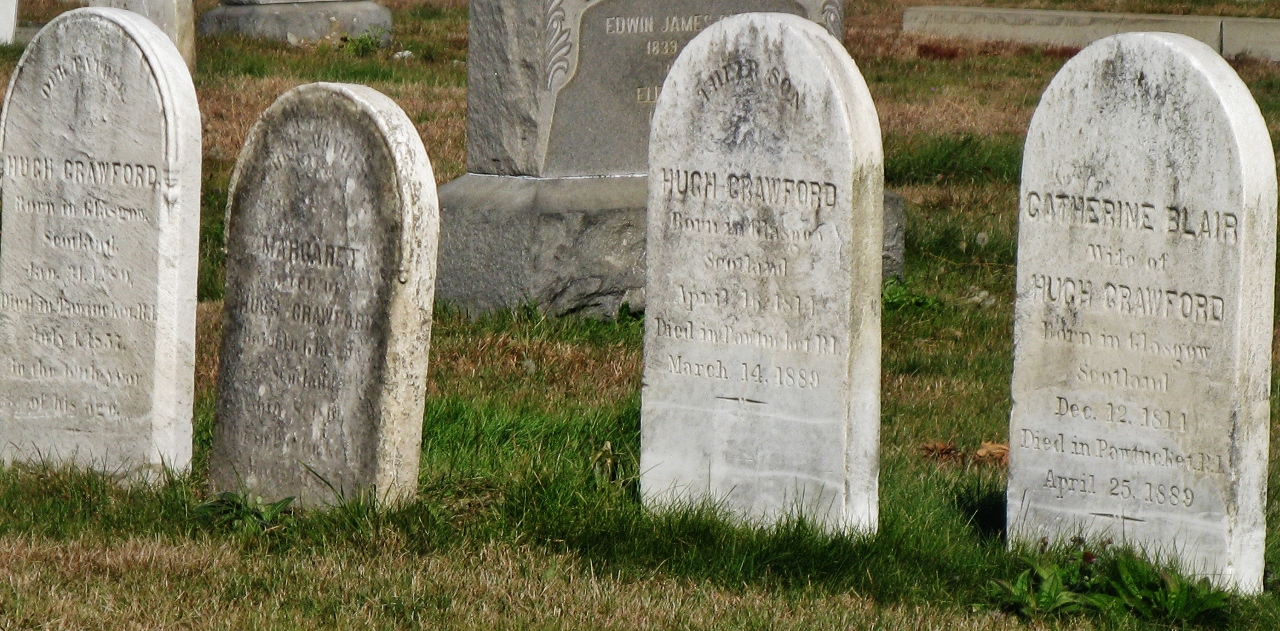
Margaret Rennie Crawford had immigrated to America from Glasgow, Scotland, along with her parents Hugh and Margaret Crawford on April 9, 1853, arriving at Pawtucket. Hugh Crawford was born in Glasgow on January 31, 1789; he died in Pawtucket, Rhode Island on July 1, 1857 when he was 68. He was the second-born son to John Crawford and Agnes Wright of Glasgow. He had many siblings, though most died in childhood. His mother died in childbirth in 1809 when Hugh was twenty. His father died at age of 86 in 1853.
The Crawfords and Wrights were Scottish families with a long heritage. Agnes’s father James was born in Kilmarnock, Ayr, Scotland, southwest of Glasgow, in 1734. He married Margaret Jack, about whom little is known. His father John Wright was born in 1706 in Kiroswald, Ayrshire. His wife was Janet Henry of Kilmarnock. One would assume the Crawfords and Wrights were farmers, but it is unclear.
Hugh married Janet Rowan at Canongate, Edinburgh, Midlothian Scotland on April 4, 1809. Janet was twenty-one and Hugh was twenty. Their firstborn son was John in 1811, followed by Hugh, Jr., in 1814, George Hugh in 1816, Janet in 1818, and Agnes in 1819. Wife Janet died in 1839, and Hugh remarried Margaret Lennox on August 19, 1840 in Glasgow. She was thirty-five and he was fifty-one. They had two children, daughter Margaret Rennie, born Oct. 9, 1841, and son William, born in 1845.
The 1851 Scotland Census listed Hugh as a paper stainer who lived at 55 High St. in St. Paul parish in Glasgow. He was erroneously listed as sixty-seven years old (actually sixty-two). His wife Margaret was forty-three, daughter Margaret Rennie was nine, and son William was six. A paper stainer was an old and honorable profession in the British Isles, typically involving the staining of wall hangings such as wallpaper, sometimes engravings. Hugh’s son Hugh Jr. had been trained in this craft as well, as seen in a letter written from son to father in September, 1852.
Hugh Jr. had sailed for America in 1843, arriving at New York on August 13. He migrated to Providence, Rhode Island, and established himself in business as a paper box manufacturer. His wife Catharine Blair Crawford followed eight years later, arriving at New York on the vessel Statira Morse on Sept 15, 1851, from Glasgow. Accompanying her was their daughter, Janet, age sixteen.
Hugh Jr. became a citizen Sept. 1852, which perhaps inspired him, joined by Catherine, in writing a letter of invitation to America to his father, on Sept. 27. The letter reads:
“Pawtucket, Sept 27th 1852
Dear Father
We take this opportunity of writing you a few lines informing you of our welfare and hoping they will find you and Family enjoying good health and this leaves us with the blessing of God. You must excuse us for not writing sooner. We now write you sitting in our own House; it is now six weeks since we came in to it; it is 32 feet long 23 wide with an L 12 by 10 feet which gives us a house of a Parlor and Kitchen 2 Bed room a clothes room and Pantry and a good cellar the size of the building and the upper flat is a work shop the whole size of the building with a counting room below. It cost us about thirteen hundred Dollars which is about ₤ 268. It is in a location about a gun shot from the Rail Road Depot for Boston and Worcester rail road and we have a small garden. Sister Agness and her Husband is in Philadelphia. We had a letter from them a week ago which left them in good health. Agness is expected to be confined soon the youngest girl died about the end of July. We receive the Newspapers regularly and we are much obliged . . . for them as there is no paper here . . . worth the sending as we get the American news as same from the Glasgow paper as soon as we get it here some times but we in close a small bill of exchange in place of a paper. We carry on the business as yet but don’t know how long as Bliss and Potter has got me back to be there color mixer at ten dollars a week which is ₤ 2 and a little over.
Dear Father We have just taken it into consideration that if you wished to come out it would be a very good place for you to carry on the business for me till such time that you could get along your self and it would be for the benefit of your Family as it is easier to get along here than at home but the principle of total abstinence must be attended to and it is the first thing that causes a person to be looked down upon and then it is a hard case to get along if you thought of it you might come along this fall as I cannot get along very well with some responsible person to take charge I have a German at present but he can’t take charge of the half and so We will be under the necessity of getting another or selling out you could come along your self and see how you . . . along and send for your Family in the Spring. The fall is a very good time to come if you think of coming write by return of post. We will send a bill for your passage but we would have promised more but we have a good deal to pay just now with the building of the house anyhow write by return of post to let us know what to do give our respects to Mr and Mrs Murry if you see them and tell them that we received a letter from on last Saturday and we will write them soon. Give our respects to Brother John and family and Grand Father and Aunt and that we would like to Hear from them. We join in sending out respects to Brothers John and Andrew Bla[i]r and Families and all inquiring Friends.
We have no more to say at present
But remain your Affectioned Son and Daughter
Hugh and Catherene Crawford
NB We would have given you more time if we had thought of it sooner but as it is it is a good time to Cross the Sea and you will have a comfortable home to come to. I will send full directions how to come on receipt of your Answer if you come by Boston you will be here the same day and by New York the next day.
Answered 2 Nov 1852 HC”
In the letter Hugh made mention of his sister Agnes, who had immigrated to Philadelphia. She married David Wilson, also from Scotland.
Hugh Sr. was sufficiently impressed by the prospect of America to emigrate with his family, arriving at Pawtucket on April 9, 1853.
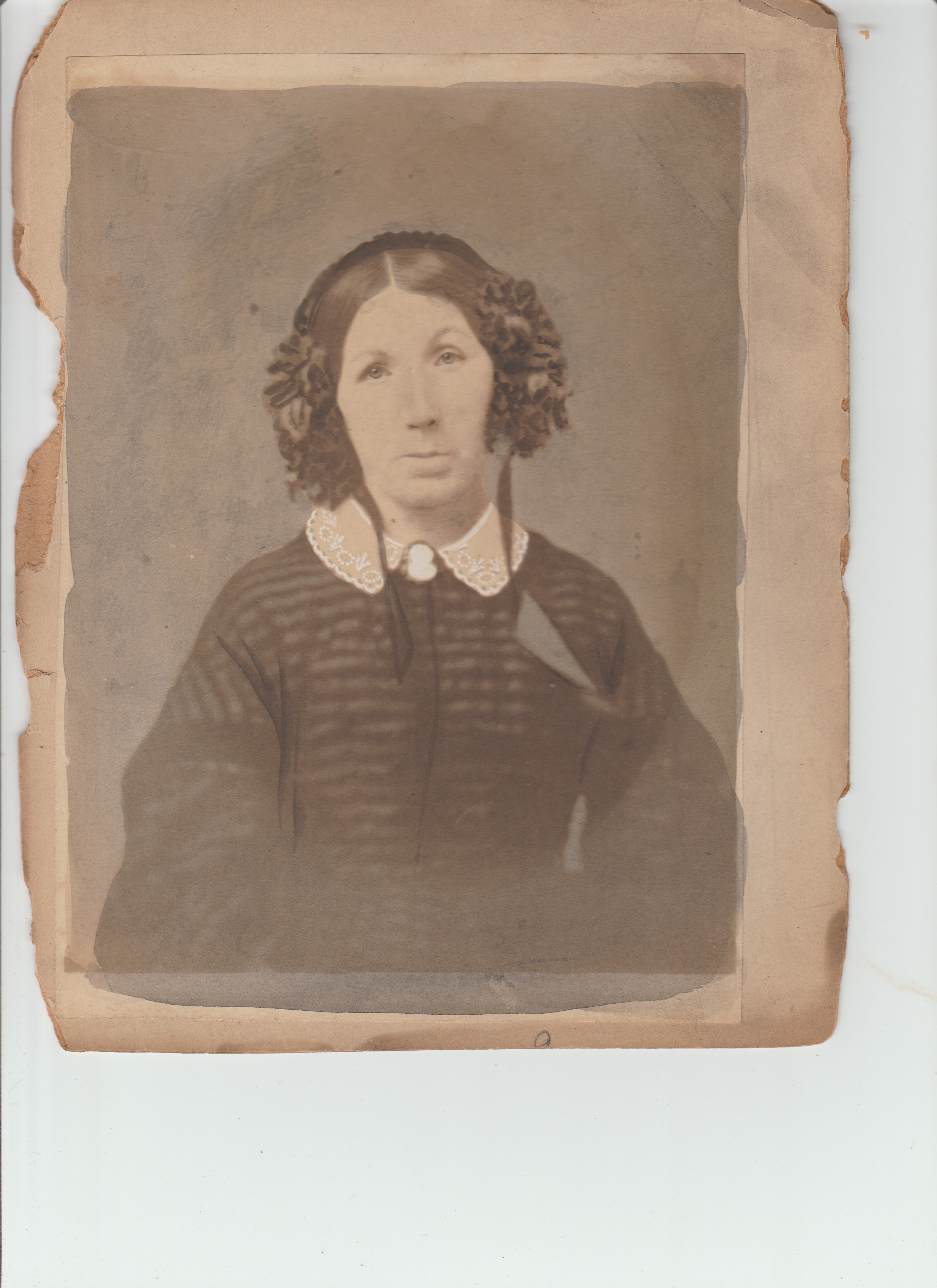
Hugh died in 1857. His widow Margaret worked to raise her children Margaret Rennie and William during the rough times of the Civil War. William served with the Union troops for four years. In 1860 Margaret was eighteen years old and was like her half-brother Hugh a box maker. William was sixteen and also employed. The mother and widow Margaret was a wash woman. Margaret’s parents are unknown. She had a sister, Mary Lennox, born around 1811, who lived in Glasgow. A letter survives from Mary to Margaret dated March 16, 1862:
“Dear Sister,
I take the Pleasure of writing to you to let you know that I Received your letter. I was sorrow to hear of Willian Being away but if he is spared to come home again I think he will be none the worst of it. I was glad to hear that you and Margaret was well. I am sorrow to hear that trade is so dull with you. But indeed it is dull every place. Glasgow is in a sore state at present. There was hundreds going idle there is no work for any person. I am keeping very poorly in my own health. I am getting little to do and altho’ I had it I would not be able to do it this last 3 weeks. I have been worse. Jannett Crawford got married on the 22 of November and she was confined on the 14 of February. She had a fine daughter. They are all staying together still in the same house. I have no more at present. But remain your loving sister.
Mary Lennox
292 High Street
Glasgow”
Margaret, who went by “Maggie,” outlived Hugh by 18 years, dying May 3, 1875. Before she died she lived with her daughter Margaret Rennie and son-in-law George at their home in Pawtucket. Hugh and Margaret are buried next to Hugh Crawford Jr and Catherine Blair Crawford at Mineral Spring Cemetery in Pawtucket.
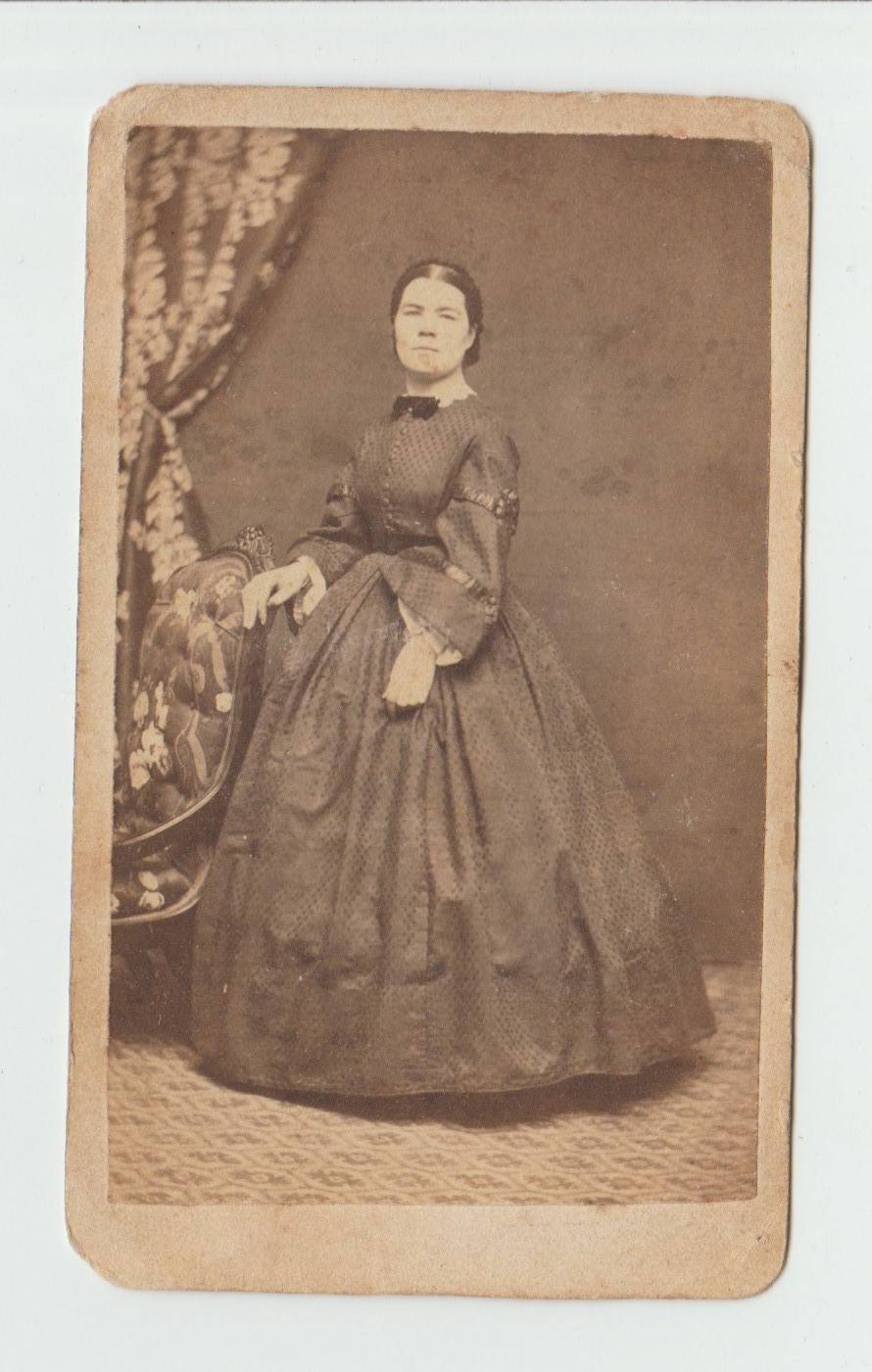
George and Margaret in 1880 had a growing family. Son George was seventeen; he worked as a clerk in a Pawtucket store. William was eleven, Katie was five, and Hattie was one. A niece of George and Margaret, Hannah Caroline Perkins, daughter of John Riley and Susan Perkins, lived with them at this time. She was seventeen, and worked in a woolen mill. Twenty years later, George and Margaret lived at 439 Central Ave. in Pawtucket. They had quite an extended family living them. George was sixty-seven and Margaret was fifty-eight. Son William Lennox was thirty-one, and lived at home after the tragic death of his first wife, Harriet L. Johnson, who had passed away three years earlier in 1897. Will and his unmarried sister Katie, twenty-five, worked as bookkeepers. Daughter Hattie, twenty-one, was by this time married to Samuel Brown, age twenty-five. He was listed by the census taker in 1900 as a chemist. Their daughter Florence Beatrice was an infant, born in 1899. Samuel, Hattie, and Florence lived with George and Margaret at the house. Charles and Margaret also had a family living as borders with them: a husband, wife, and young daughter. All in all ten people lived at this home on Central Ave.
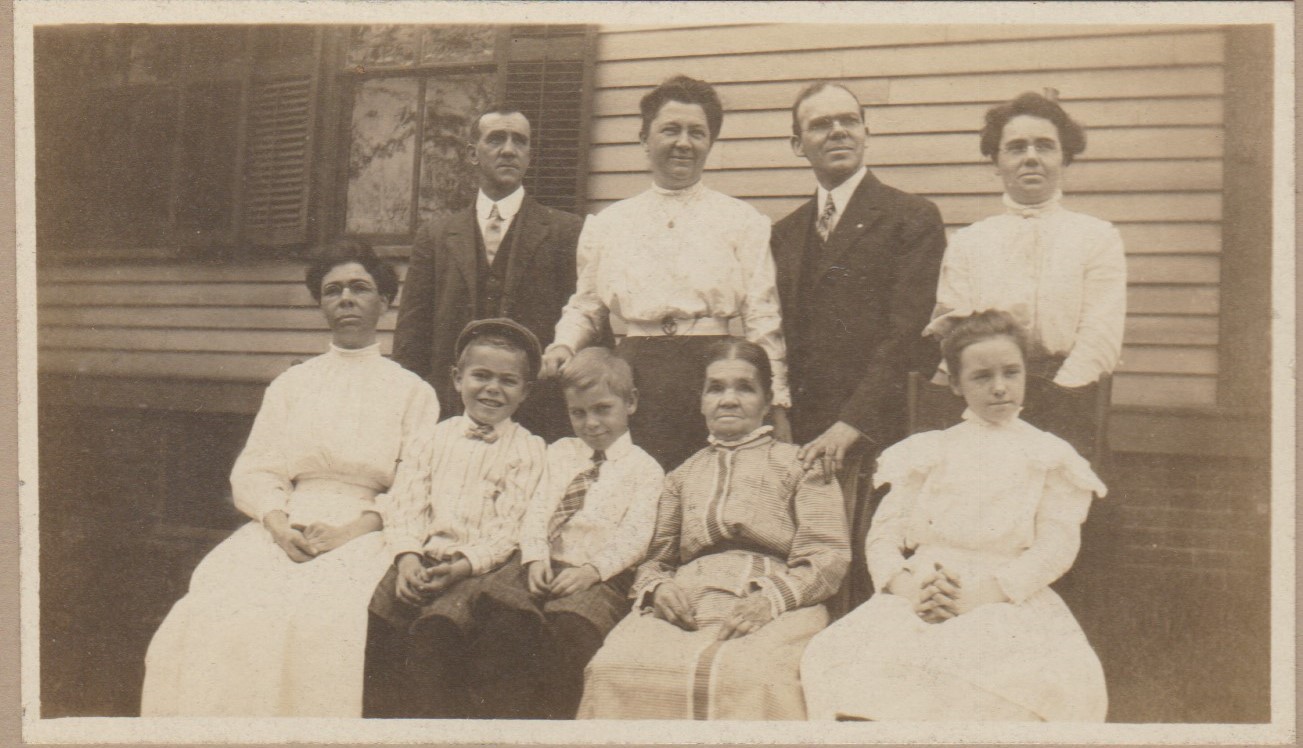
Samuel Francis Brown (1874-1936) and Hattie Tyler Perkins (1878-1948) were married in 1898 in Pawtucket, Rhode Island. Samuel’s father was Henry M. Brown, 1846-1909 (?) and his grandfather was Russell M. Brown. His mother was Angeline F. Cash (1844-1878[RL1] ) and his grandmother was Emily A. Follett.
Russell Brown and Emily Follett were married August 18, 1844, in Killingly, Connecticut, near the Rhode Island border. Emily was from Smithfield, Rhode Island, near Providence. Nothing is known about her parents. Nor is anything known about Russell’s heritage. The young family lived in Smithfield when the census was taken in 1850. Russell and Emily were both twenty-four, and they had a son Henry, age five. Russell worked in manufacturing. In 1860, thirty-eight-year-old Russell worked as a spinner in a factory. The family of three had a mother and daughter boarding with them at the home in Providence. Russell continued to work in a cotton mill as time passed. In 1865, he was listed as a laborer. In 1870, he and his wife had real estate valued at $5000. By this time, son Henry had married Angeline, “Angie,” Cash, and they had a child, Etta, aged three. Henry, Angie, and Etta lived with Russell and Emily. Also living with them were two borders, a teamster named William Blake and a five-year-old child named Frederick Bottler. The Rhode Island census for 1875 sheds more light on the Russell Brown family. Russell in 1875 was an overseer at a mill. He lived with Emily in their own house. Also living with them was Frederick, this time with the surname Boylston, a ten-year-old “scholar” and boarder. Also living with them were James Waily, a boarder, Malisse Follett, a boarder and a relative of Emily, aged twenty-one. Also, Ella Batts, aged twenty-one, and Ella Cheak, aged eighteen, both boarders. All of the boarders worked in a mill, perhaps the mill overseen by Russell. Living next door were Henry, wife Angie, daughter Etta, son Samuel, and eight-year-old Carrie Follett, a boarder and scholar and relative of Emily. In 1880, Russell and Emily lived at 33 Washington Street in Providence. Russell, aged fifty-seven, was listed as a laborer in the census, whereas five years before he was an overseer. What happened? In the 1877 directory for Providence, he was similarly listed as a laborer. Their son Henry was listed as a jeweler. There is a record for the Laurel Hill Methodist Episcopal Church for Dec. 9, 1867, that indicates that twenty-one year old Henry Brown was a probationer, that is, preparing for admission to the parish. Henry was by this time a widower, Angeline having died in 1878 when she was thirty-four. Their son, Samuel, was five years old. Frederick Bottler still lived with Russell and Emily. The census taker listed Frederick as a boarder, but assigned him the surname Brown: was he adopted, or was this an error? Fifteen-year-old Fred worked at a brass foundry.
Henry Brown and Angie Cash were married on December 6, 1866, when he was twenty and she was twenty-two years old. Angie was the daughter of Samuel and Rosanna Chase Cash of Rhode Island. Samuel’s heritage was Massachusetts. He was born on August 4, 1809, in Harwichport, Barnstable Massachusetts. He died in Providence on August 9, 1889. His parents were David Cash (1781-1830) of Harwich, Massachusetts, and Hapseybath (Hepsibah) Phillips Cash (1787-1879). Little is known about Rosanna, save that she was born in Harwichport Massachusetts. Angie unexpectantly died September 12, 1878, from hepatitis and was buried in Pawtucket. After the death of Angie, Henry lived with his parents. By 1900 he was living with his daughter Etta and son-in-law Frank Pierce at 536 Central Ave in Pawtucket. The building looks to have once been an elegant Victorian home; today it is a dentist’s office. Also living with them was Etta’s aunt (Angie’s sister), Mary Ann Cash, seventy-seven years old. Frank and Henry were both listed as life insurance agents. In 1910, Henry was no longer living with Etta, which implies that he had died in the several years before.
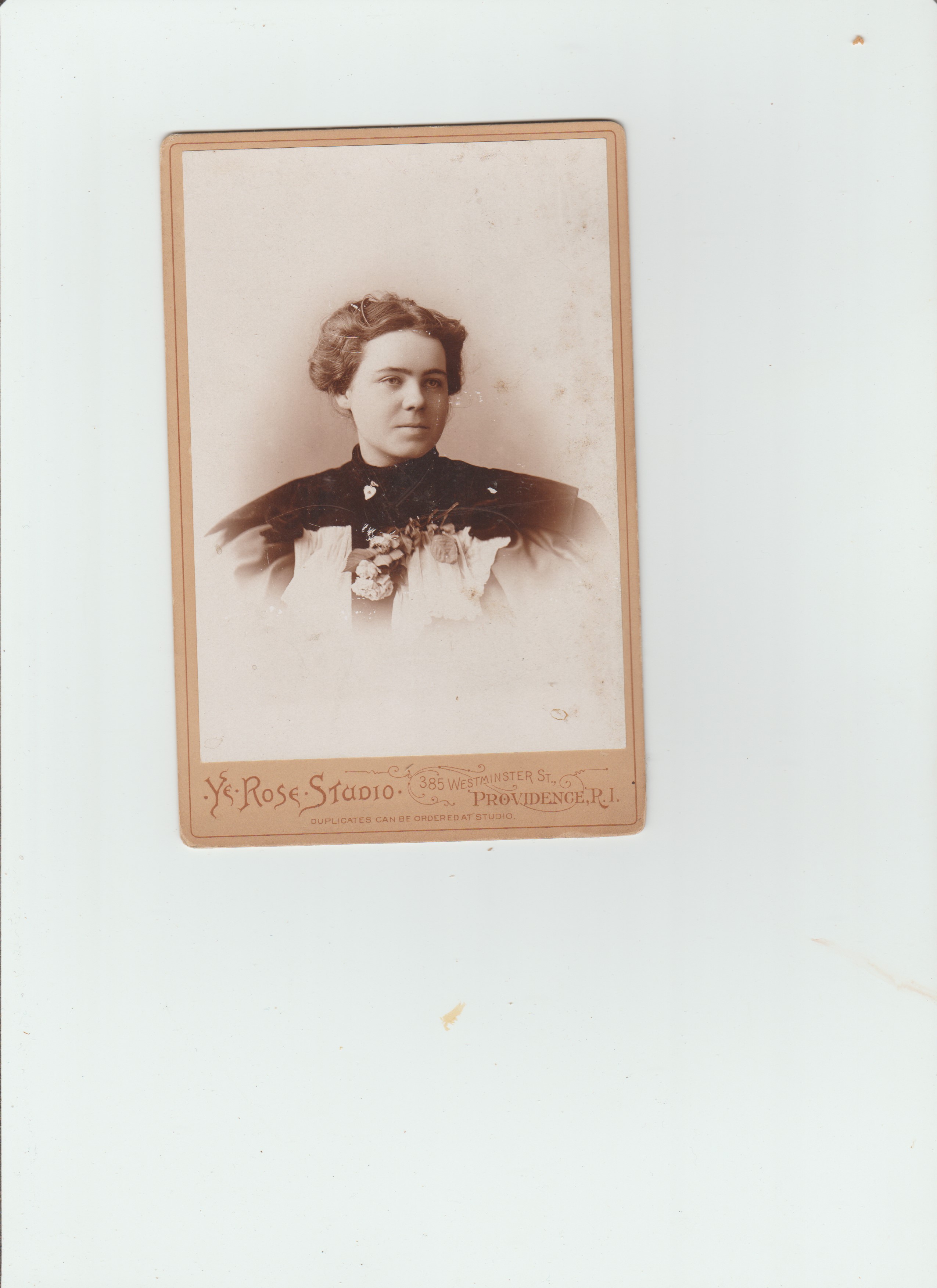
Samuel Francis Brown, was born in Central Falls, north of Pawtucket, to Henry and Angie Cash on October 8, 1874. Samuel lost his mother when he was four years old; he, his father, and sister Etta moved in with his grandparents Russell and Emily Brown. When Samuel was twenty-three, he met and married Hattie Perkins, daughter of George and Margaret Crawford Perkins. In 1899 they had their only child, Florence Beatrice, born on August 1, 1899. Samuel, Hattie, and Florence in 1900 lived with Hattie’s parents George and Margaret Perkins at 439 Central Ave. Samuel worked as a chemist. Ten years later, in 1910, when Florence was ten-years-old, her father was thirty-five, and mother thirty-one, they lived at 437 Central Ave, next door to Hattie’s mother Margaret Rennie. By this time Margaret was a widow living with her unmarried daughter Katie, who worked as a brush-maker. Samuel and Hattie had a boarder living with them, named Mary King, who was twenty-three and worked in a textile mill. Samuel worked at a wireworks company. In 1915, according to the Rhode Island census, Samuel worked as a tool clerk in a machine shop. In 1915, Margaret and Katie lived with Samuel, Hattie, and Florence at 437 Central Ave. In the World War I draft registration of 1918 that Samuel filled, he listed his employment as foreman, Phillips Wire Co, Freeman St., Pawtucket. (Samuel either changed jobs quite a bit or the census-takers were not always clear about his occupation.) In the 1920 census, Florence, aged twenty, was unmarried, working as a stenographer in an office in Pawtucket. Samuel was listed as a machinist at a machine shop. The large home at 439 Central Ave, once the home of George and Margaret Perkins, now was occupied by nine people: Samuel, Hattie, and Florence; Margaret and Katie Perkins; and apparent borders, the family of William Schofield, who worked like Samuel as a machinist in a machine shop; perhaps they were co-workers. In 1921, Florence married Earle A. Phillips.
Earle was the son of Arthur and Elizabeth Walker Camac Phillips, who had wed in Providence in 1893. Arthur Phillips was born in New Brunswick in 1869; his father Thomas was an Irish immigrant. Elizabeth was born in Rhode Island but her parents were from Ireland. The heritage of the Phillips’s family is Canadian and Irish.
To whom Thomas Phillips was born around 1820 is uncertain, as is the date and place of his immigration to America. One record from Dublin, Ireland, St. Catherine’s parish, has a Thomas Phillips born on January 19, 1820, to Thomas and Anne Quinn Phillips. Was this the Thomas Phillips, ancestor of the Phillips family of Rhode Island? There are additional records. One has a Thomas Phillips arriving from Great Britain to Boston Jun 6, 1844. He was twenty-five and a carpenter. There is also a record of a Thomas Phillips, aged thirty, arriving at New York in 1849 from Ireland. A record exists for a Thomas Phillips, aged twenty-eight, being incarcerated in 1847 at Newgate Prison for an assault he committed in Dublin, Ireland. There are other such records. One is for the incarceration of a Thomas Phillips in 1851 to Nenagh prison in Tipperary, Ireland, for stealing clothes. In addition, a record exists of a Thomas Phillips being transported from Newgate prison to America in 1836. Did one of these men migrate to New Brunswick, starting a family in 1860s?
At any rate, an Irishman named Thomas Phillips living in New Brunswick married a Canadian named Charlotte Kingston at some point in the 1860s. He was seven years older than her. Her parents were Paul and Marion Kingston of New Brunswick, about which little is known of their lives. Charlotte was born March 29, 1827 at Millstream, east of the Canaan River. Thomas lived at Canaan Rapids on the Canaan River, upstream from the St. John River. Thomas and Charlotte’s first child was Elizabeth Jane Phillips, born April 28, 1856, at Coles Island, downstream from Canaan Rapids on the Canaan River. Coles Island was a large island hosting a settlement. A birth record for Eliza Jane, filled out in 1926, erroneously put her birth as 1866. According to the 1861 Canadian census: Thomas Phillips forty-years-old and Charlotte, thirty-years-old, had three children, Eliza, five, Kiram, son, three, and Anabella, eight months. Thomas was a farmer. They did well enough to have a servant living with them, twelve-year-old Ellen McKinzer. The census-taker listed the entire family as Methodists.
Many other Phillips’s lived nearby, of indeterminable relation to Thomas and Charlotte. Next door to them lived Andrew Phillips and wife Sarah, he a native of New Brunswick and a Baptist, she an Irishwoman and Episcopalian. Nearby was Robert Phillips, age forty-two, from Ireland. He was a farmer and Episcopalian. Could he have been Thomas’s brother? Next to Thomas’s next-door-neighbor Andrew Phillips lived another Andrew A. Phillips married to Elizabeth; he was thirty and Irish, an Episcopalian and farmer. Next to him was Thomas Phillips, sixty-one and wife Jane fifty-four, Irish Methodists: could these perchance have been Andrew’s parents, next door, and several doors down, Thomas’s parents? The older couple had a Canadian daughter, aged sixteen, named Deliverance. Next to him lived William Phillips, forty-eight, Irish with a large family and wife Margaret. They were Episcopalian.
The 1871 Canadian census lists head of household Thomas at fifty-two, a farmer from Ireland, mother Charlotte Kingston at forty-two, from at Millstream, New Brunswick. If they were once Methodists, in this census she is listed as Baptist, he as Episcopalian. Their children were Eliza Jane, fourteen, Melbourne, twelve, Anna Bella, ten, Alfred, eight, Thomas, six, William, six, Emma, four, and Arthur Phillips, aged two. The same neighbors as those listed under the 1861 census continued to live nearby.
Arthur Hamilton Phillips was born in New Brunswick in 1869. It is unclear precisely where in New Brunswick Arthur was born. His sister Eliza Jane, who was thirteen years older than him, was born at Coles Island on the Canaan River, a tributary of the St. John River. Arthur’s mother was born near the Canaan River as well. The Rhode Island State and Federal Naturalization Records for 1899, however, indicated that Arthur was born at the city of St. John, at the mouth of the St. John River. This was a mistake, as the Canadian 1871 census listed his residence as Johnston Parish, near the Canaan River.
The family lost the father sometime in the next few years, so that in the 1881 Canadian census Charlotte was a widow, and the head of the family was Alfred, aged eighteen, a farmer, although the oldest child was Eliza Jane at twenty-three. The family was listed as Baptist save Charlotte, Free Will Baptist. Likewise in 1881, when Arthur was twelve-years-old, the family was listed as Baptist.
When Arthur was nineteen-years-old he arrived at East Providence, Rhode Island. His sister Anna Bella and brother Alfred had emigrated to Massachusetts and Rhode Island respectively in 1885, so we might assume that they convinced Arthur to follow suit three years later, arriving at East Providence. on November 20, 1888. This left brother Andrew as head of the family in New Brunswick. A few of Arthur’s siblings remained in New Brunswick for their lives, but his mother Charlotte joined Alfred and Arthur in Rhode Island, precisely when is not clear. She died in 1909 and was buried in the North Burial Ground in Providence.
After five years in the States, Arthur married Elizabeth Walker Camac on June 29, 1893. She was born in East Providence in 1873; her parents, William and Elizabeth Walker Camac, were Irish immigrants. William’s father Thomas lived and died in Ireland, but his mother, Jane Brady Camac, though born in Ireland, immigrated to the United States. Jane and Thomas married in Eire, Ireland, in 1839. He died in 1865. Jane in 1880, aged 60, lived with her teenage son David and worked as a washer-woman. They lived at 24 Barney Street in Providence; today the neighborhood in Rumford, Rhode Island, is quite different than when she lived 140 years ago. She died in 1885.
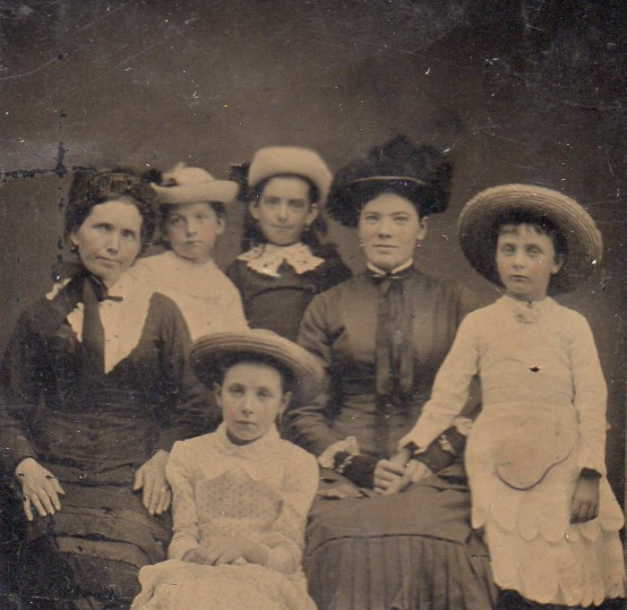
William and Elizabeth arrived with their families to New York City in 1867. William and Elizabeth married upon arrival. In 1877 William applied to become a citizen and gained citizenship in 1880. In 1875, twenty-nine-year-old William and twenty-five-year-old Elizabeth had a family of three young children as well as her sixty-year-old mother, Elizabeth. Although they lived in East Providence, William was listed as a farmer. Five years later, thirty-three-year-old William was listed in the US census as a laborer. By this time, they had five children, and Elizabeth’s mother still resided with them. In 1900, William and Elizabeth lived at a place at Boston and Newport Road. Their children, besides Elizabeth Walker, born in 1873, included Joseph H., born 1874, William, born 1875, Sarah Isabell., born 1877, Thomas J., born 1879, Abraham, born 1881, Margaret L, born 1882, and Everett, born 1887.
In the 1900 census, Arthur and Elizabeth Walker Phillips had had four children: Harold, born in 1894, Nettie, born in 1895, Earle A., born in 1896, Lloyd, born in 1898. The census indicates that the couple had had five children; only four were living. They would have other children as well: Olive, born in 1902, Mildred, born in 1904, Alston, born in 1905, and Arthur Jr., born in 1916. In 1900, Arthur was a laborer in a chemical works factory. He and Elizabeth owned their own home at 68 Campbell St. The location today is occupied by an old structure that appears to be an apartment dwelling. In the 1910 census, they had seven children living at home. Arthur was now a foreman at the chemical works. Daughter Nettie worked at a mill. Son Harold worked as a laborer. These two did not have proper schooling, but the other children did. They continued to live on Campbell St. In the 1920 census, their residence was listed as 25 Campbell St., E. Providence; the location was apparently the same as that previously listed as 68 Campbell St. Arthur now worked as a “fireman” at a cold roll steel mill. Son Earle was a grocery manager, having briefly been a serviceman in World War I (but seeing no action). Harold was a foreman in a warehouse. Lloyd was a grocery truck driver. Olive and Mildred were threaders in a lace mill. In the 1930 census, the family lived at 25 Manton St, what is today a trailer park. They owned a radio. Arthur was listed as “literate,” though unschooled. Arthur by 1930 was no longer working. He lived at home with Elizabeth. Lloyd still lived at home, working as a truck driver for a steel company. Alston lived at home and worked as an order boy at a grocery warehouse. Arthur Jr. lived at home, attending school. Elizabeth died on November 14, 1935. Arthur lived with Alston and Lloyd at the Manton home until he died in 1939.
By the time that Earle, son of Arthur and Elizabeth Phillips, married Florence, daughter of Samuel and Hattie Brown, in 1921, and made their home in Pawtucket, Rhode Island, they had numerous neighbors from the Phillips, Camac, Brown, and Perkins families living nearby.
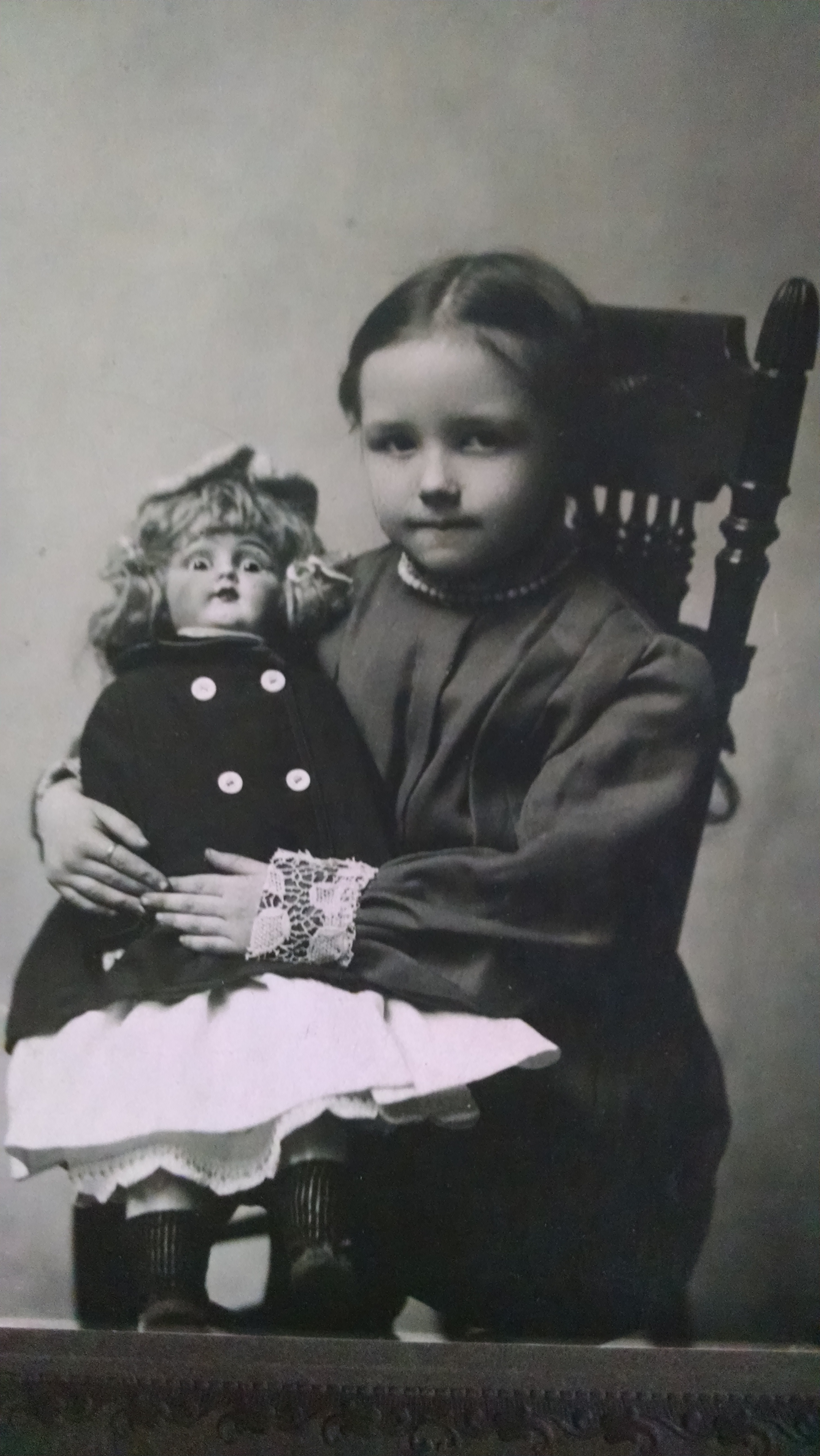
The Camac Family: Joseph H. Camac, brother of Elizabeth Phillips and uncle to Earl, Joseph’s wife Mattie, and son Joseph Jr. lived on Beveradge Hill Ave. Next door to them lived Sarah Isabell Camac Russell, Earl’s aunt, her husband William, and their two children. Earl’s uncle William Camac Jr. died at age forty-four on Oct 25 1919, leaving behind his wife Christine Ridgeway Camac and daughter Jeannette. They lived at 6 Newport Ave. Thomas J. Camac, Earl’s uncle, born 25 Feb. 1879, died 25 May, 1892. Another uncle, Abraham Archibald Camac, born June 19, 1880, died Oct 5, 1902. He was buried along with his brother at Springvale Cemetery in Rumford. In 1910 Everett G. Camac was single, twenty-three, living at Harapat Ave in E. Providence. Aunt Margaret Camac Truesdale and her husband William Everett and family (four children and his mother) in 1925 lived at 27 Campe St in Pawtucket.
The Phillips Family: Earl’s aunt Anna Bella Phillips Denton and her husband George Denton and family of six lived in nearby Rehoboth, MA (just east of Pawtucket) in 1900. Uncle Alfred H. and Susan Phillips and their five children lived at 88 Waterman Ave in Pawtucket in 1910. He was a streetcar motorman. Harold Everett Phillips, Earl’s older brother, lived at 98 Cedar St. in Pawtucket. Married to Edith, he died in 1935 at age forty-one. In 1930 he was a manager at a grocery warehouse. Earl’s sister Nettie, wife of Robert Hesketh, lived at 31 Manton St. in 1921 and 104 Courtney Ave in 1938. Robert was an Englishman who worked as a chauffeur. They had a child, Gladys. Brother Lloyd Dewey lived at 25 Manton St. when he registered for the WWII draft. He worked at a steel company. He died in 1981. His wife was Bertha. She died in 1982. They were buried at Springvale Cemetery. Sister Olive married Harrold J. Gould and lived in Pawtucket. She died Aug 4, 1986, and was buried at Springvale Cemetery. In 1930 Harold, Olive, and Harold Jr. lived at 111 Crescent Rd. He was a lace weaver. In 1930 sister Mildred had married James Freebairn. They lived next door to Arthur, Elizabeth, Lloyd, Alston, and Arthur Jr. on Manton St. In 1940, they were living at 27 Campbell St. He worked at a steel mill. They had three daughters. Brother Alston Hamilton Phillips lived and died in Pawtucket as well. He was married to Isabell Harker. During World War II he lived at 5 Balch St. He died in 1967 in Attleboro MA.
The Brown Family: Florence was an only child, and Samuel, her father, had only one sibling. Etta and her husband Frank Pierce, and their three children lived at 92 Waterman Ave.
The Perkins Family: There were many Perkins’s living nearby. About 25 miles away, in Exeter, Rhode Island, Hattie’s aunt Hannah Mahala Perkins Reynolds lived until her death in 1911. Her husband Almon Perkins had died in 1899. Her son Whitman Greene Perkins continued to live in Exeter Hattie’s uncle John Riley Perkins died in 1912 in Exeter, Rhode Island. He was married to Susan and had children David G. Perkins and John Palmer Perkins. They all lived and died in Exeter.
The Perkins’s in Pawtucket included Hattie’s sister Katherine and her brother Will and his family. Katherine Florence Perkins was born March 16, 1875. Katie, who was single her whole life, lived with her parents. In 1900 she lived with George and Margaret Perkins as well as her siblings William, Hattie, and Hattie’s husband and daughter. After George’s death Katie and Margaret continued living at the home on Central Ave. They took in a boarder as well. In 1900, Katie was a bookkeeper; in 1910, she was a brush maker; in 1920, she did not work. Perhaps she was taking care of her mother, who was dying. At this time, she and her mother lived with Samuel, Hattie, and Florence. After her mother’s death in 1921, one assumes that Katie lived with Samuel and Hattie until Samuel’s death in 1928. Hattie moved in with Earl and Florence Phillips. Katie found her own residence. In the 1930 federal census, she was listed as a servant working for a private family; she lived alone at 33 Clark Ave, an apartment in a tenement house, in Pawtucket. In the 1935 Rhode Island census, she listed her occupation as a housekeeper. Katie died October 3, 1937; she was buried at Oak Grove Cemetery.
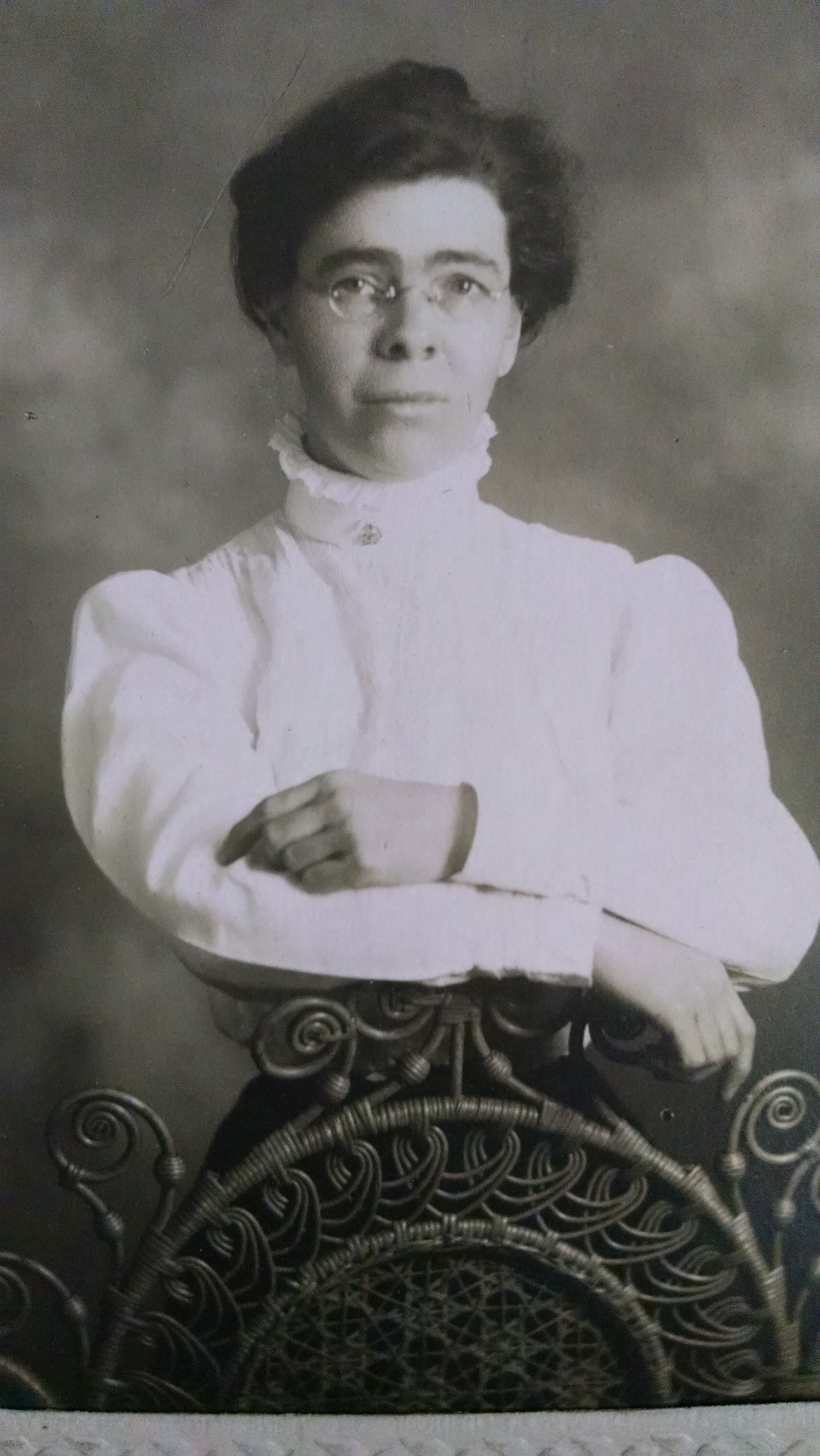
Brother Will Perkins was born July 12, 1868. He was the Perkins and Crawford family historian as well as a local historian of Pawtucket, Rhode Island. Will on several occasions penned extensive accounts of his family and his own life for the sake of local historical associations, especially the Rhode Island chapter of the Sons of the American Revolution.
William Lennox was born July 12, 1868 to George H. Perkins and Margaret R. Crawford. Margaret was George’s second wife, as his first, Mary Ann Tourgee, died in 1865. George and Margaret lived in the Pleasant View section of Pawtucket; Will spent his whole life there. Although George was born in western Rhode Island, in the town of Exeter, where the Perkins had for centuries owned land, he apparently moved to Pawtucket because of Margaret (or, he was living there when he met Margaret). Will recalled that “my father was a Baptist Deacon until about the time I was born. At that time, he became interested in a newly formed Episcopal Mission near our home, and when it was really organized as the Church of the Good Shepherd, he became its first treasurer and senior warden.” He “was a clerk, vestryman, junior and senior warden for a period of more than fifty-seven years.”
Will graduated from Pawtucket High School in 1886 with a focus on English studies. He wrote that when he “was a young man I used to spend a vacation every summer in Exeter, Rhode Island, on the farms of my aunt, Mahala Perkins Reynolds; my grandfather, John Prosser Perkins; and my uncle John Riley Perkins. I used to sit down with a notebook and write down different statements which were given me by Aunt Mahala. Aunt Mahala was born September 13, 1827. What she did not know about the family history was not worth knowing.”
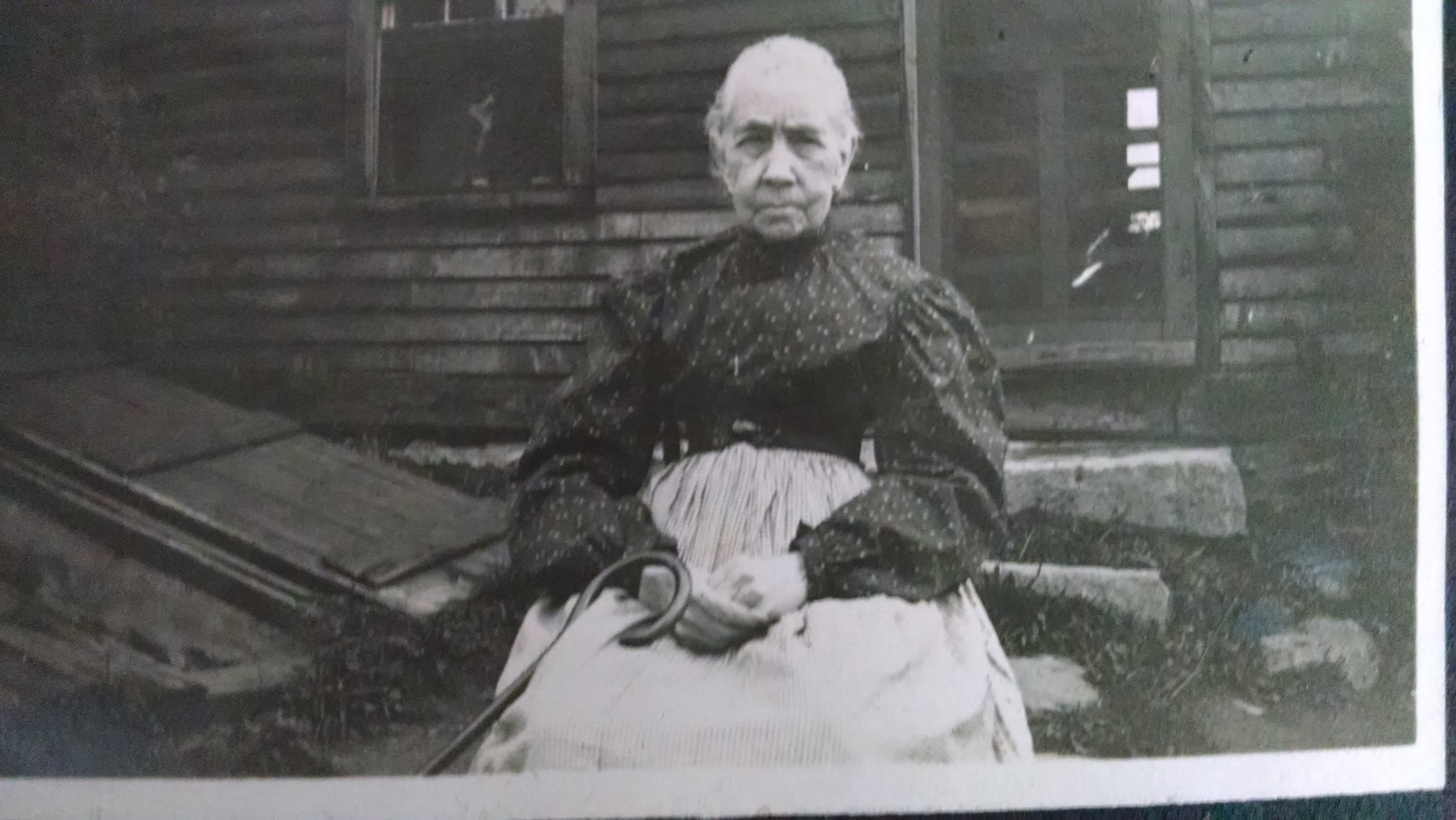
Will wrote further: “The various Perkins families owned a number of adjoining farms near Escoheag Hill, Exeter, Rhode Island. Exeter, on the west, adjoins Voluntown, Connecticut, which is only a short distance from where my ancestors’ farms were located. These farms were several miles from where my people lived when I spent my boyhood vacations, and so I had no early personal knowledge of them. A number of years ago my father showed me the different farms where his folks lived when he was a boy. Of course, these farms have been sold and resold, and to find, in most cases, where different people were buried is almost impossible. . . . The town of Exeter is about fifteen miles long and three miles wide. From where the Perkins families lived, it was a long distance to the Town Clerk’s Office, so not all of these births and deaths were recorded. Prior to the advent of the automobile, the town of Exeter was nothing but country roads and very high hills; the country roads have disappeared but the hills are still there; so that it was difficult for people living in this remote district to go to the Town Clerk’s Office and to other places like Providence, which was about forty miles away, in order to record various events.”
Will recalled that “there is quite a large cemetery on top of Escoheag Hill. It runs back to somewhere around 1700. With my father, I visited this cemetery on Memorial Day, 1897. I have good reason to remember the date. Most of the stones were common field stones with simply initials and dates, in most cases, scratched on.” This was undoubtedly the Perkins’s Lot.
Will was extremely proud of the Perkins’s family history. The first Perkins in America, John Perkins, “came over in the Ship Lyon with Roger Williams in 1631 and settled in Ipswich.” Indeed, “from the time of Roger Williams down to the date of my birth,” Will wrote, his family “were all very good Baptists.”
Will was a bookkeeper: from 1900 to 1920 he was Head Bookkeeper, Greene and Daniels Manufacturing Co., which when taken over by Fisk Rubber Co., Will became Purchasing Agent in the textile division until 1927, when he retired. He was active in all sorts of civic associations. He was a member of the RI Society of the Sons of the American Revolution, the Odd Fellows Association, and the Masons. He served “thirty years active service as a vestryman, [and] in 1934 was elected honorary vestryman for life. He is also the church historian” of the Church of the Good Shepherd, writing a history in 1918. In 1930, he wrote a history of Pawtucket High School for its 75th anniversary. In
1939, he wrote a history of Pleasant View Baptist Church.
Will and Harriet L. Johnson were married on March 18, 1896. Harriet was the daughter of Maria L. Smith Johnson (1842-1932) and Daniel Leighton Johnson (1841-1912). Maria Levina and Ellen F. Smith were sisters born to George and Levina C. White Smith in Worcester, Massachusetts. Harriet died Feb. 8, 1897.
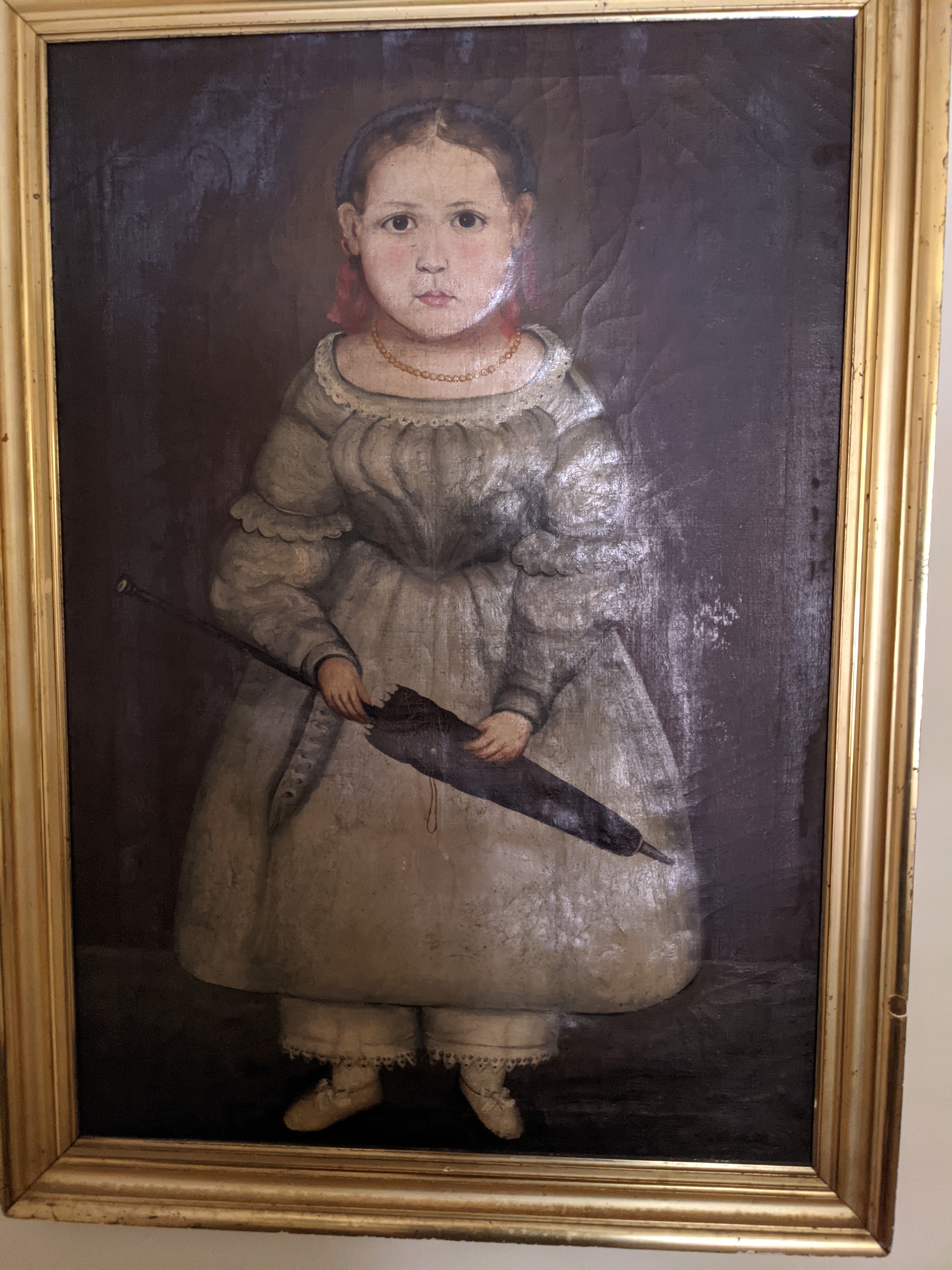
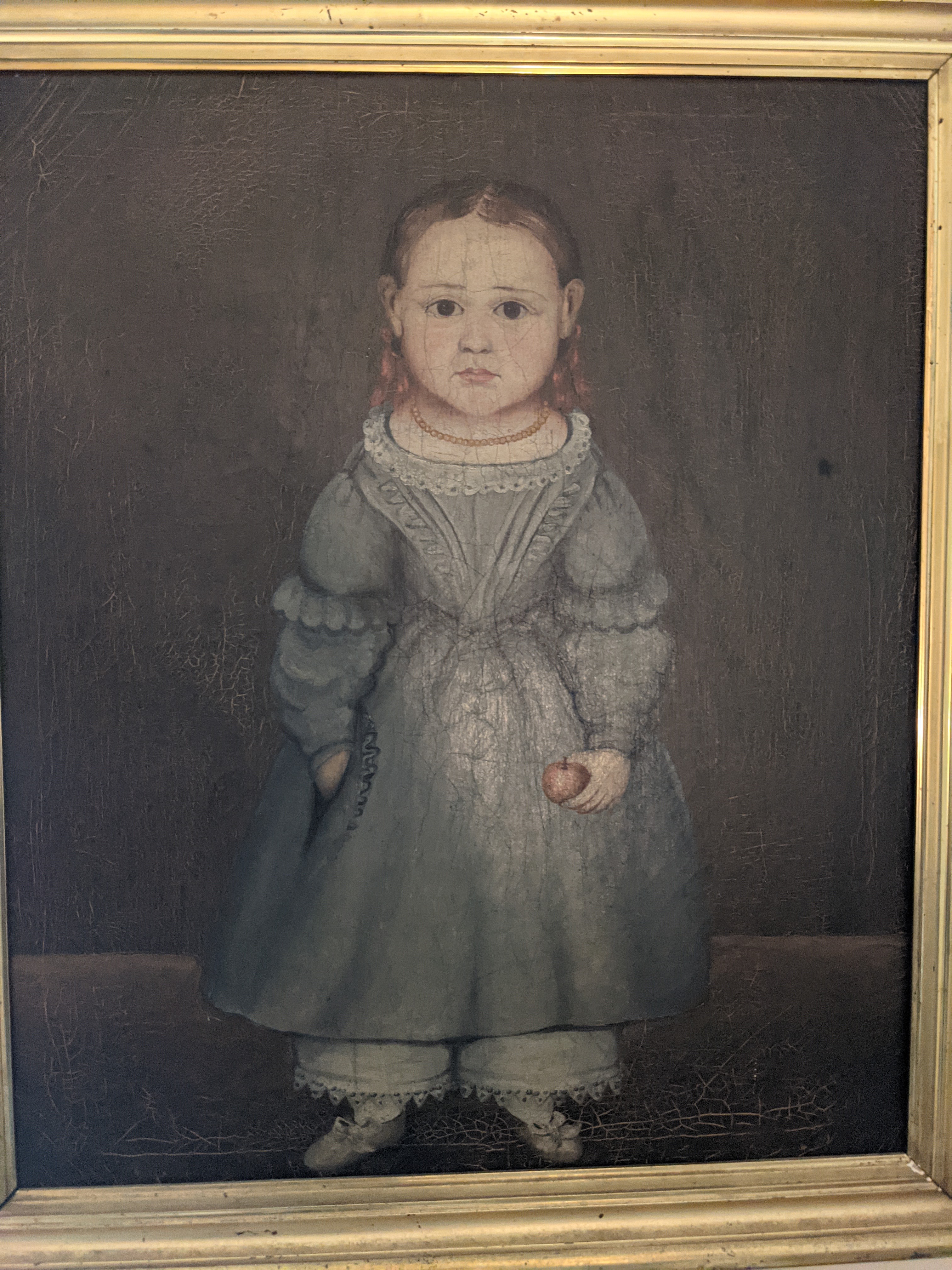
On May 20, 1902, Will and Anna Elizabeth Ullrich were married. Their children included William Perkins, Jr., a schoolteacher who died in 1942, Henry C. Perkins, who was a Captain in the Coast Guard and eventually a Rear Admiral, and Miriam M., who died as an infant.
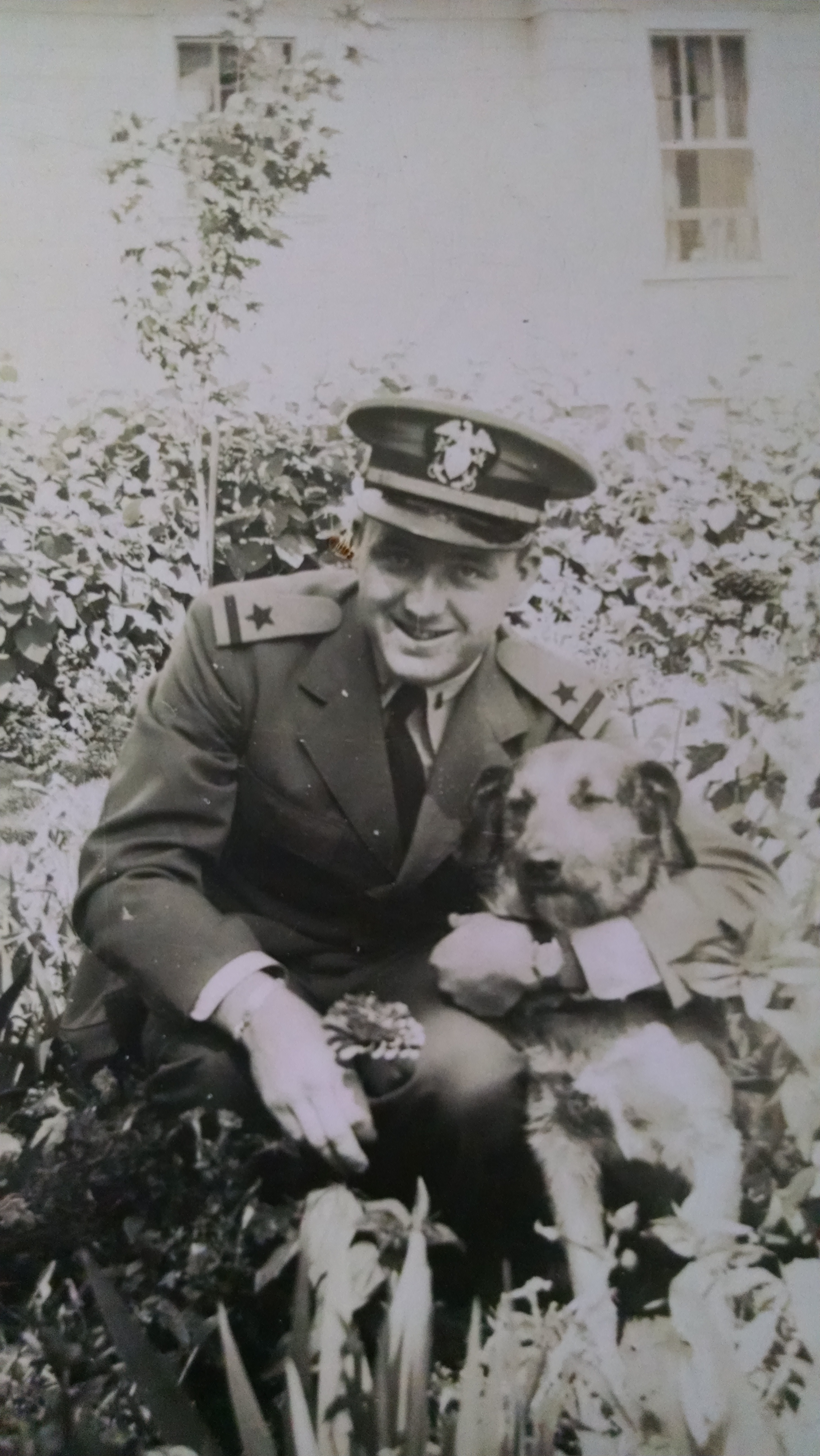
Will wrote proudly in 1945: “Earle A. Phillips, the husband of . . . Florence, is the Head of the Science Department in the Pawtucket West Senior High School, and Florence’s son, Milton Arnold Phillips, graduated with high honors from Brown University February 25, 1945, and is now an Ensign in the Navy.”
Will had a sense of humor. In a letter sent to his sister Hattie, he wrote:
May 4, 1936
Rhode Island Tercentenary
Dear Sister Hattie:
Greetings! I have waited for 300 years to send you this message. Fearing I may not be here 300 years more am sending it to day.
Roger Williams wanted to be remembered to you all. He says Providence has changed some, since he saw it last.
We are going to have a fine dinner at the Biltmore with the S[ons of the] A[merican] R[evolution] and D[aughters of the] A[merican] R[evolution] in honor of the occasion.
With love
From Brother Will and Lizzie
Will died August 25, 1946.
His sister Hattie Perkins, a widow in 1928, moved in with Earle, Florence, and Milton Phillips. In the 1930 federal census, the Phillips’s lived at 758 Newport Ave in a white two-story home with black shutters; the house still stands today.
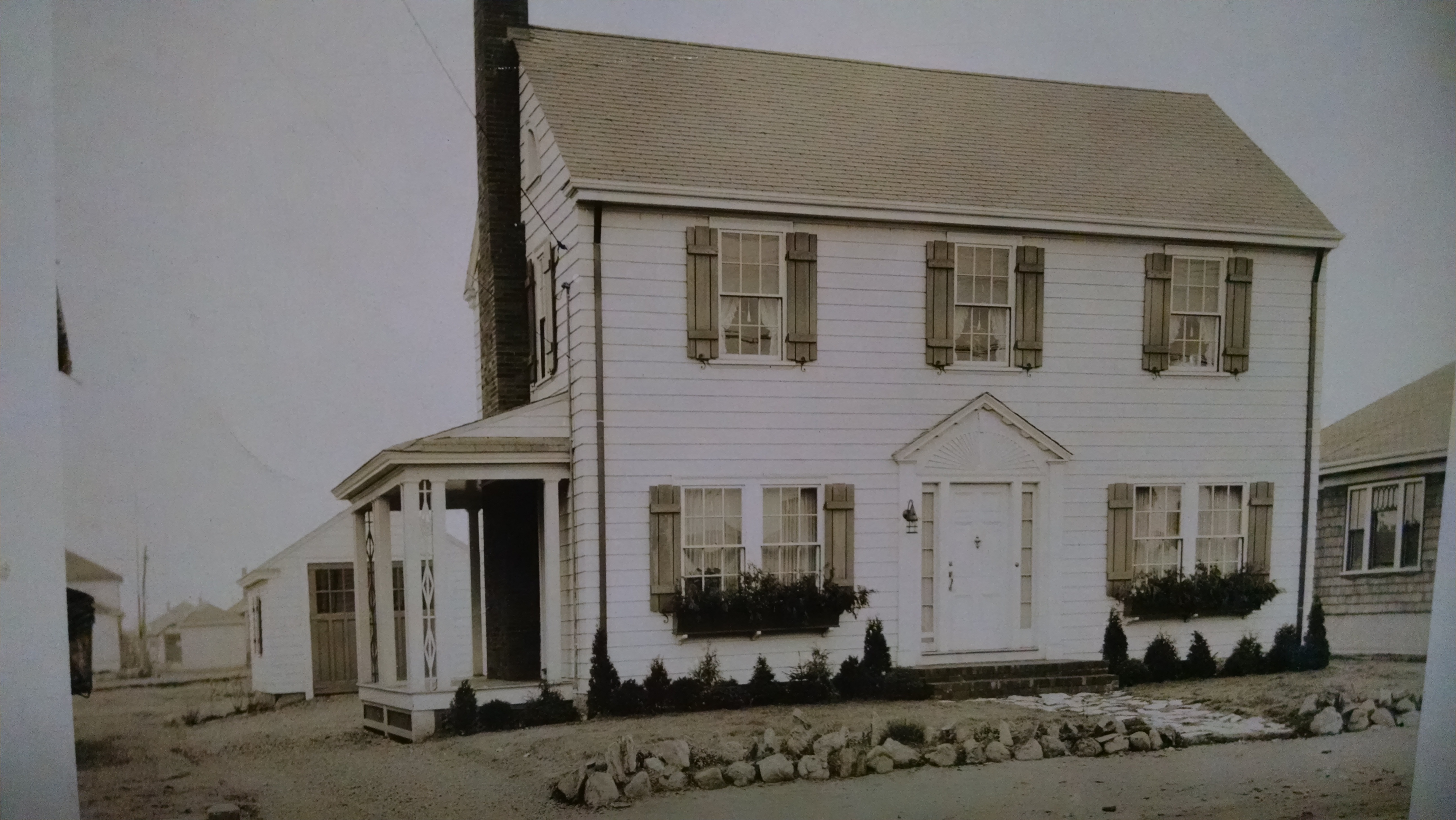
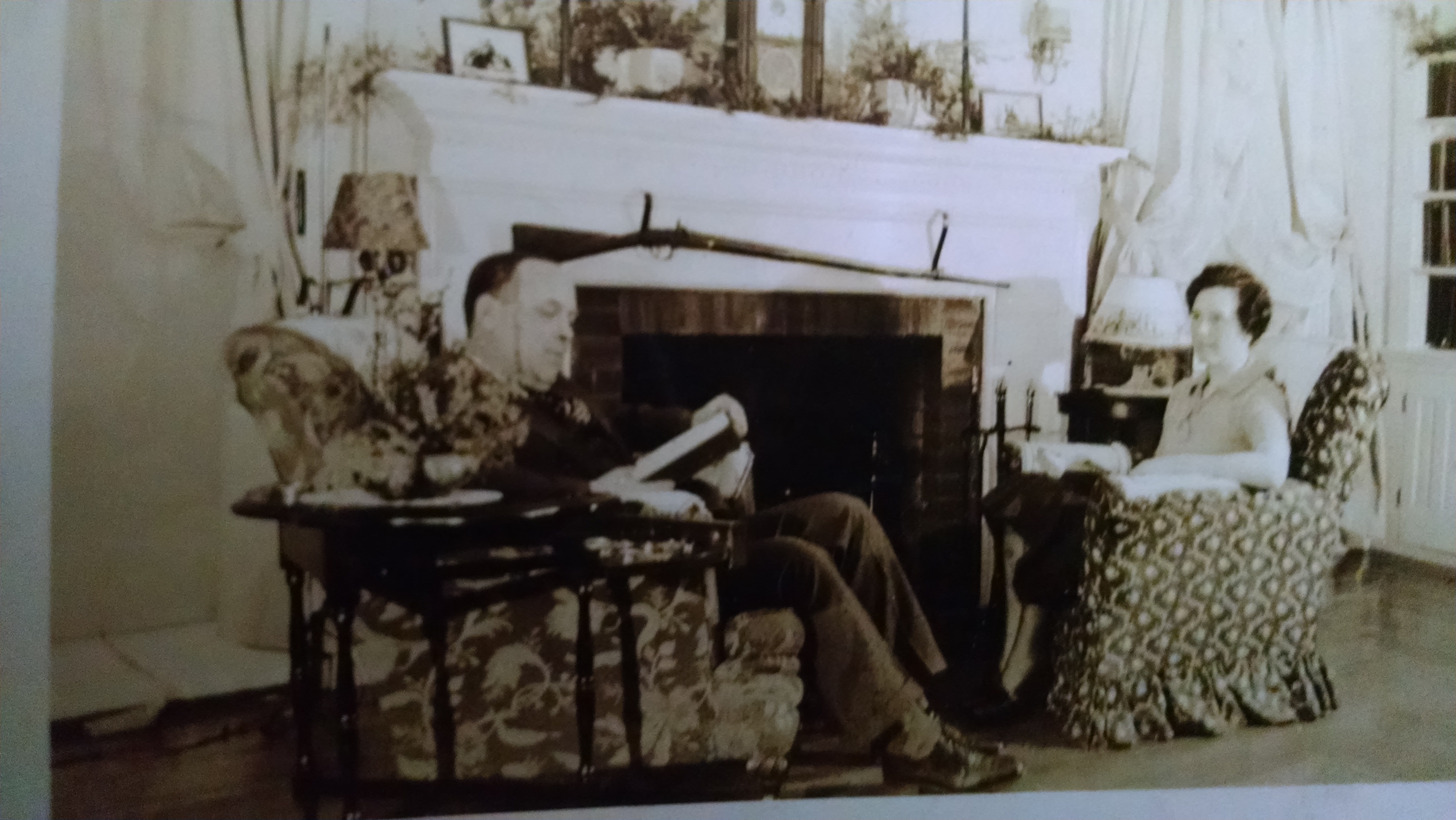
Earle was a public-school teacher and Hattie was listed as a practical nurse. In 1940, however, the census listed her as having no job. Earle, even though he was forty-five years old in 1942, was still required by the US government to register for the draft. Florence had worked for a time for Kirby-Smith Associates, a Christian fund-raising organization–exactly when is unclear. After Earle died on March 12, 1955, Florence, for the last dozen or so years of her life, lived with her only child Milton and his family, both in Rye, NY, and Tulsa, OK. She died December 3, 1973.
My wife, the first daughter of Milton Phillips, inherited from her ancestors the northern Yankee personality, while her husband (myself) inherited the southern Appalachian hill country personality. Northern Yankees and Southern hill people: two different ways at looking at life. The former is more accepting, but still has the same fears and trepidations as others, but masks the fears in the formalities and structures of urbanized living—the associations or gessellschaft of modern society. The other is suspicious of such formalities, befitting a more rural people; the fears and trepidations of life are often dealt with not by masking them in formalities, rather by submerging them in the informalities of a more community existence: gemeinschaft.
To read more about the Perkins and related families, see my new book The Memories of Katie Perkins | Ash Hill Publishin