George Washington and Providence

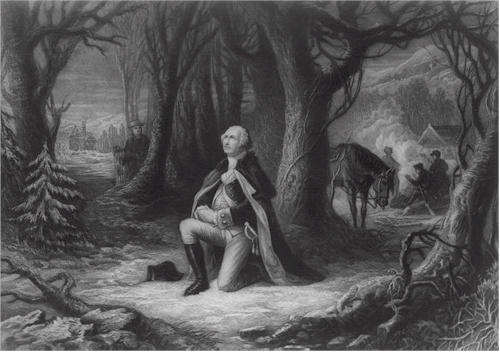
Jeremy Belknap, a patriot, scientist, historian, and minister in the late eighteenth century, wrote during the War for Independence to his friend Ebenezer Hazard, praising General George Washington: “A man is never more truly noble than when he is sensible that he is only a secondary instrument of bringing to pass God’s great designs.”

Indeed, one of the characteristics of George Washington was his humility before God, his realization that Divine Providence, the will of God, was the ultimate reason for American success during the American Revolution.

In his farewell address on leaving the Presidency in 1797, he told the American people:

“Of all the dispositions and habits, which lead to political prosperity, Religion and Morality are indispensable supports. In vain would that man claim the tribute of Patriotism, who should labor to subvert these great pillars of human happiness, these firmest props of the duties of Men and Citizens. The mere Politician, equally with the pious man, ought to respect and to cherish them. A volume could not trace all their connexions with private and public felicity. Let it simply be asked, Where is the security for property, for reputation, for life, if the sense of religious obligation desert the oaths, which are the instruments of investigation in Courts of Justice? And let us with caution indulge the supposition, that morality can be maintained without religion. Whatever may be conceded to the influence of refined education on minds of peculiar structure, reason and experience both forbid us to expect, that national morality can prevail in exclusion of religious principle.”

In short, the American Republic, and the supports of morality, peace, order, and tranquility, could only come about through a sense of reliance on God’s Providence.


He said further:

“Observe good faith and justice towards all Nations; cultivate peace and harmony with all. Religion and Morality enjoin this conduct; and can it be, that good policy does not equally enjoin it? It will be worthy of a free, enlightened, and, at no distant period, a great Nation, to give to mankind the magnanimous and too novel example of a people always guided by an exalted justice and benevolence. Who can doubt, that, in the course of time and things, the fruits of such a plan would richly repay any temporary advantages, which might be lost by a steady adherence to it? Can it be, that Providence has not connected the permanent felicity of a Nation with its Virtue? The experiment, at least, is recommended by every sentiment which ennobles human nature. Alas! is it rendered impossible by its vices?”

Government, therefore, must encourage, enable in its citizenry virtue, which in Washington’s mind was little short than humility before God.

Think of it: a nation, a people, who put God first, who put God’s ways, God’s teachings, God’s will, before all else. Would not such a nation be one of peace rather than conflict, order rather than disorder, love rather than hate?

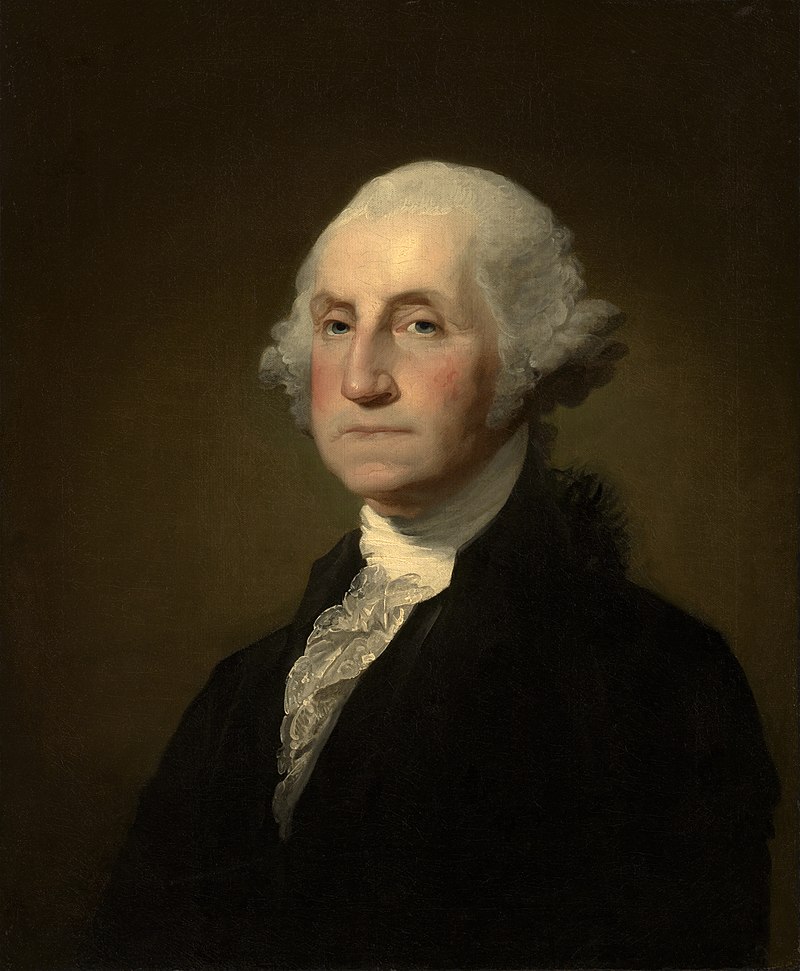
Head and shoulders portrait of George Washington

Posted in American History, Biography, Christianity, God's Providence | Tagged , , , , | 2 Comments

Leadership? If Only Washington was President

If George Washington was President of the United States today, in 2016, would we have problems with anarchy in the streets, and the lack of leadership in domestic conflicts?

In 1782/1783, the American Revolution was drawing to a close, and the central government, the Confederation, and the thirteen states were practically bankrupt; the soldiers who had fought for the past eight years were unpaid; officers were frustrated by the apathy that citizens and political leaders had toward the men who had sacrificed themselves and suffered privation since 1775.

In this scenario, military coup threatened. Many soldiers and officers believed that if George Washington, the commander of American forces, did not take military control of the United States, all that they had fought for—peace and independence—would be lost.

Today, we hear that the Executive abuses the power of the office, bypassing Congress by issuing Executive Orders. What would it be to have a leader who resisted the temptation of power? In 1783, at Newburgh, New York, officers of the army requested General Washington to take power over Congress, over the States, with the military to back him up, to ensure that order and domestic tranquility would prevail.

Washington, six years before he became President under the Constitution of the United States, as the Commander in Chief of the Continental Army at the end of war, when, history shows, countries are susceptible to military overthrow, refused to consider the coup, the chance to become king or military dictator. His answer was a resounding “no.”

Washington during the war had often come under attack for his evenhandedness. His military approach of outlasting the British was frustrating to some, who wanted to see great victories. It was precisely Washington’s ability to stand above the fray, to exhibit uncommon patience, to calm tempers, to seek the higher, middle ground, that guaranteed his success as Commander during the Revolution and President of the United States from 1789 to 1797.

Washington had many faults of course. He had errors in judgment when it came to his beliefs and actions toward people who really deserved his support and protection. Nevertheless, for the time in which he lived, he had uncommon wisdom, and was truly a father-figure for the American people.

When was the last time we had a father-figure as a President of the United States?

But Washington was such a man. And even though the officers at Newburgh wanted to take military control of the United States, Washington’s wisdom, patriotism, moderation, and superb leadership prevented this from happening. It set a precedent. Unlike so many other countries, never in our history have we had a military coup.

Who else but George Washington could have led America to independence? Who else but Washington could have served successfully as the first President in the experimental situation of the new American government in 1789?

There has never been a military leader, a President, like George Washington. We need such a leader today.

Head and shoulders portrait of George Washington

Posted in American History, Biography, Government | Tagged , , , , | Leave a comment

And God Saw Every Thing that He had made, and Behold, it was Very Good

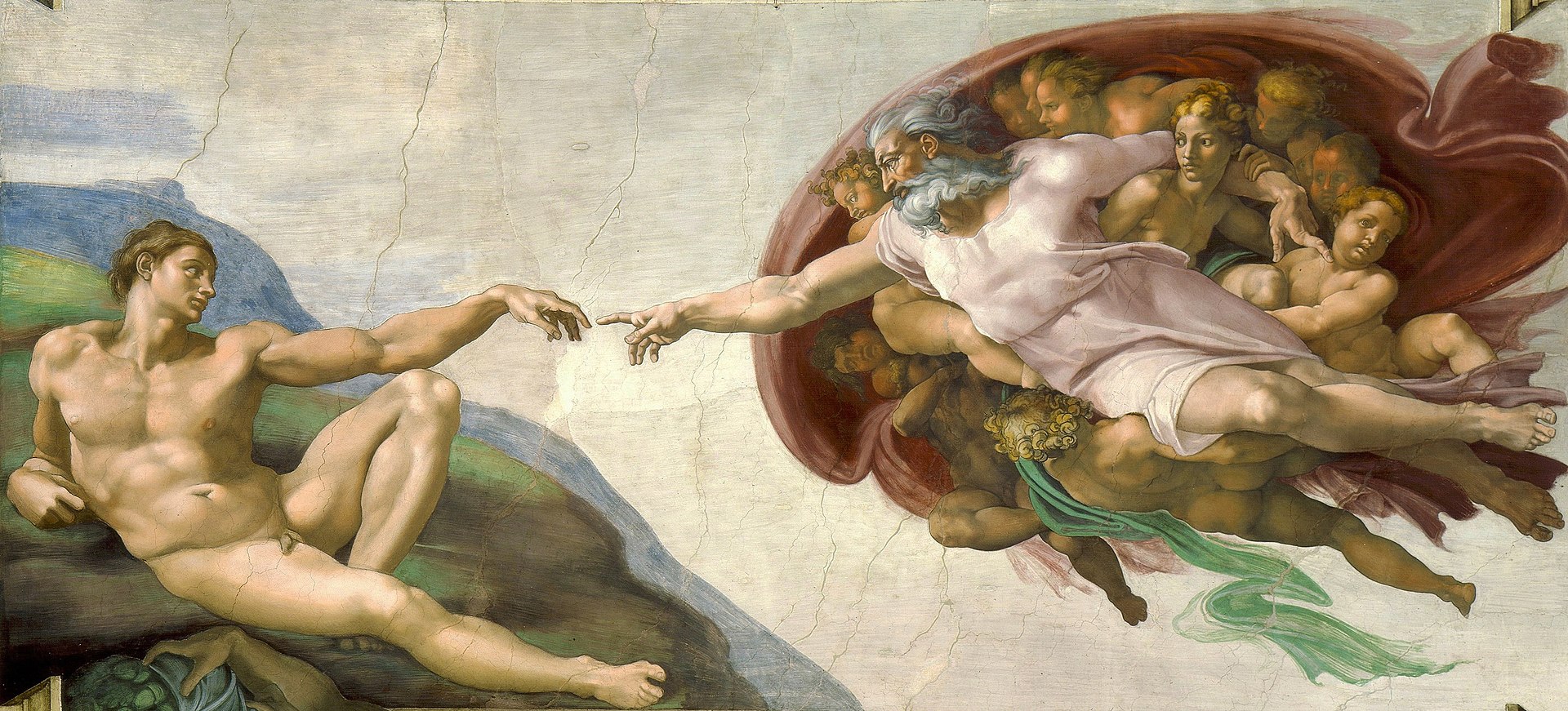
The title of this post comes from Genesis, 1:31, the final verse of the first chapter of the Old Testament. This final verse provides commentary on the sixth day of the Creation, in which God had, after the creation of humans, declared that they are masters of creation: “Be fruitful, and multiply, and replenish the earth, and subdue it: and have dominion over the fish of the sea, and over the fowl of the air, and over every living thing that moves upon the earth.”

undefined

On this fifth day of Creation, God made humans “in His own image, in the image of God created he him; male and female created he them.” The implication is that other forms of life do not reflect the image of God. This is reinforced by God giving dominion over the Creation to humans. Later, in the Pentateuch, the first five books of the Old Testament, the power of humans to classify animals is given greater depth, and different animals are selected and chosen to be clean and unclean—notwithstanding, of course, that what is clean and appealing or beautiful is in the eye of the beholder.

During the course of the different days of Creation, God examined His work—the creation of heaven and earth, of light, of vegetation, of lights in the firmament, of creatures in the water, in the air, and on land—and “saw every thing that he had made, and behold, it was very good.”

The Creation, therefore, is Good. Genesis, speaking for God the Creator, makes a moral, qualitative declaration and judgment that the Creation is good. Humans, as part of the Creation, are therefore good. The Creation is animate and inanimate, is alive as well as dead, but now, in its existential present, it is good. Goodness is something that occurs through time, just as humans occur, and exercise dominion, throughout time.

The implication in Genesis, Chapter One, is that humans have the moral obligation to treat all things, all of existence, as good, to cherish, to embrace, to love, to preserve.

After all, on the Fifth Day of Creation, God created “every living creature that moves” in the air, in the water, and on land, and “God saw that it was good.” The declaration that the creation before humans are created is good indicates that humans themselves are not the sine qua non of goodness in this creation, but just a part of the overall whole of goodness. God wishes not only humans to “be fruitful, and multiply,” but He commands the birds, fish, and crawling land creatures to do the same. All life is to be fruitful and multiply, not just human life.

It is true, as we humans like to point out, that in Genesis 1:28, God gave “dominion” over other forms of life: this dominion includes to “replenish the earth” as well as “to subdue it.” Humans can hardly replenish that which they subdue if by subdue it means to destroy. Rather, subdue means to cultivate, to encourage, to cause to grow and thrive.

The point behind replenishing and subduing is to provide food: “And God said, Behold, I have given you every herb bearing seed, which is upon the face of all the earth, and every tree, in the which is the fruit of a tree yielding seed; to you it shall be for food.” In addition, “and to every beast of the earth, and to every fowl of the air, and to every thing that creeps upon the earth, wherein there is life, I have given every green herb for food.”

Hence, plant-life is to be cultivated for the sake of providing food for all animals, including humans.

Genesis Chapter One does not inform us that humans can kill at will, kill and destroy whenever the inclination occurs to us, cultivate food to such an extent that we destroy other parts of the goodness of creation—rather, the goodness of creation implies the goodness of life, that life is good, and is not something to destroy, that humans are not, by having dominion, given the right to kill, dismember, torture, pollute, waste, and destroy in all manner in which humans, particularly in the past century, have done.

Does not the world’s philosophy teach us that hubris is the key to self-destruction? Do we not find such teachings reflected in Greek philosophy, Chinese philosophy, and Indian philosophy? Human arrogance, to determine our own destiny, to seek more knowledge than is good for use, consistent with the goodness of Creation, is the moral of the story in Genesis, Chapter Two, where humans arrogantly disobey God, take the fruit from the tree of knowledge, and as a consequence suffer humiliation, pain, and death.

Genesis Chapters One and Two provide us with the essential lesson of how humans should treat each other, other forms of life, and the entire Creation itself.

Posted in Christianity, God's Providence, Reflections on the Psalms | Tagged , , , , | 1 Comment

The “Best Administered” Government

The Constitution developed a system of government, federalism, that ideally is the best form of government, a combination of republicanism and democracy that balances power between the legislative, executive, and judicial. Federalism means that the Constitution is based on a working relationship between local, state, and federal government.

undefined

The first century of the U.S. under the Constitution featured an extensive, often violent, debate about the relationship between local, state, and federal power. At issue was the question: when does federal power trump state and local power, and should it?

The Constitution as written seemed to imply that federal power, the power of the whole, would trump the power of the individual, as represented by state and local government. This is the thrust of the Preamble.

But beginning in 1791 this apparent theme of the Constitution was altered by amendments, most importantly the Bill of Rights, such as:

1st Amendment: “Congress shall make no law respecting an establishment of religion, or prohibiting the free exercise thereof”;

5th Amendment: individuals cannot be “deprived of life, liberty, or property, without due process of law”;

9th Amendment: “The enumeration in the Constitution, of certain rights, shall not be construed to deny or disparage others retained by the people.”

10th Amendment: “The powers not delegated to the United States by the Constitution, nor prohibited by it to the States, are reserved to the States respectively, or to the people.”

And later amendments, such as the 14th: “All persons born or naturalized in the United States, and subject to the jurisdiction thereof, are citizens of the United States and of the State wherein they reside. No State shall make or enforce any law which shall abridge the privileges or immunities of citizens of the United States; nor shall any State deprive any person of life, liberty, or property, without due process of law; nor deny to any person within its jurisdiction the equal protection of the laws.”

But, during the first 70 years of the 19th century the federal government slowly grew in strength compared to the states. In the aftermath of the Civil War, the balance between state and federal power became more even, as Republicans turned more to a laissez-faire approach to federal power. But during the 20th century, and continuing to today, the power of the federal government has expanded.

The reason: most politicians, and the two dominant political parties, sensed that federal power was not a problem but a solution. But is this true?

If there was any sort of balance between federal and state/local power, it ended in the 1930s during the New Deal. With Franklin Roosevelt, the President, in addition to those powers constituted (power to execute laws and power of commander-in-chief), becomes:

  1. Economic Leader of the Nation: solutions for unemployment, solutions for prices, solutions for wages, solutions for relationships between workers (labor) and bosses (management), solutions for trade, solutions for production, solutions to banking, solutions to investment problems;
  2. Legislative Leader of the Nation: President will propose programs to address all of the economic/social problems, then Congress will act on them;
  3. Social Leader of the Nation: President is responsible to heal social wounds, to solve problems in society (race relations, labor relations, economic inequality, how to help the poor, education, drug abuse, immigration, and recently, gender and sexuality).

After Roosevelt, our economy/society/government became a mixed economy: some attributes of capitalism and some attributes of socialism.

undefined

The 18th century English poet, Alexander Pope, in Essays on Man, wrote of government:

“For forms of government, let fools contest,

That which is best administered is best.”

It is difficult to debate Pope’s conclusion, especially in light of the history of American government.

The question remains, which expression, which interpretation, of the Constitution, is best administered.

I would argue it is as the Constitution written and amended, without the concerns of party politics and ideology. This is what Madison thought (in Federalist #10) that the Constitution would do, but he certainly did not anticipate the dominance of our two-party system and all of the hidden (and not so hidden) consequences that result from it.

Best administered, to my idealistic mind, is what Aristotle had in mind when he wrote that government should be the means of promoting virtue among the citizenry.

Does government promote virtue among citizens?

The answer to this question will tell us whether or not our government is best administered.

Posted in American History, Government | Tagged , , , | Leave a comment

What does the Pledge of Allegiance Mean?

In America, the education of citizens in government begins at a young age at public school, sports events, church meetings, and other public assemblies. At such places and events people of all ages look to the flag, a piece of cloth made of three colors–red, white, and blue–, with thirteen stripes and fifty stars in a field of blue; we place our hands over our hearts, and we recite the Pledge of Allegiance.

“I pledge allegiance to the flag of the United States of America, and to the republic for which it stands, one nation under God, indivisible, with liberty and justice for all.”

What does it mean to stand before the American flag and say these words?
“I pledge”: to pledge is to commit oneself to an action or ideal–it is a singular act done not under compulsion but voluntarily.
“Allegiance”: allegiance refers to loyalty to a higher authority. Formerly, it implied a personal vow to a lord or king. Today, it means a citizen making a commitment to a state.
“Flag”: a flag is an icon, a symbolic representation of a people or group. It has been used since ancient times to identify people as common adherents to a place, government, king, or idea.
“United States of America”: a unified country with fifty states in a federal system of division of power. The United States of America (USA, or simply, America) is also an idea that represents freedom of choice leading people to stand willingly together under one belief (democratic-republicanism).
“One Nation”: Even in a pluralistic society we have one particular law that we all live under, one law that unites us, and that law is the Constitution of the United States.
“Under God”: Awareness that humans are dependent upon the divine, that a godless society cannot operate on principles of justice, liberty, and equality. Also a commitment to a society where God is recognized and worshiped. Nevertheless, we also have developed a tradition of separation of church and state.
“Indivisible”: that is, under a perpetual union: fifty states will always be equal, will always be a part of the federal republic.
“Liberty”: which derives from a Latin word that originally meant free. Hence to have liberty is to have freedom–of movement, of belief, of action (as long as liberty is consistent with order and the rights of others).
“Justice”: which derives from a Latin word that originally meant law, right. Hence to have justice is to experience a society that operates according to law and according to what is deemed right–a moral good.
“For all”: All is an inclusive word, meaning no one is excluded. All is in contrast to some, few, one. All implies diversity and pluralism, implies every resident in a given region. Over the centuries America has had a problem with the inclusion of all–women, Blacks, Hispanics, gays, Native Americans, Jews, Catholics, atheists, convicts, the poor, and especially, children.

Basic political ideas that are implied in the Pledge of Allegiance include:
1) Rule of Law: No human is above the law, which is based on assumed codes of what is right and good according to God and nature, the product of congresses of equal humans legislating codes and standards of behavior.
2) Democracy: “rule of the people,” a government based on the collective decisions of equals who directly participate in government.
3) Republicanism: “public matters,” a government based on representatives of the people who indirectly participate in government.
4) Freedom: free will of each person to have their own private beliefs, to go where they will, to possess private property, to worship as they choose, to present their petitions, to vote or select representatives.
5) Citizenship: a citizen is a member of a community who has rights of freedom and to vote as well as responsibilities to obey laws, work for the good of the whole, and promote and defend the community.
6) Federalism: a central (federal) government that works in cooperation with fifty individual state governments as well as with the hundreds of local and county governments.

The Pledge of Allegiance is something we memorize as children, often without the least understanding of what it means; and yet, it means everything.

undefined

Posted in American History, Government | Tagged , , , , | 2 Comments

Crevecoeur’s Vision of America

The French writer and philosopher Hector St. John de Crevecoeur, wondered in Letters from an American Farmer, written in 1782, “What, then, is the American, this new man?” Crevecoeur, a European writing for Europeans, believed that the immigrants who crossed the Atlantic Ocean to America were changed by the wide-open wilderness environment, and the social and cultural institutions peculiar to Americans. The European immigrant who had experienced the sameness and degeneration of European peasantry found in America a frontier environment conducive to feelings of liberty and opportunity. Land was available for those with the courage and energy to build farms from the forest. There was a profound sense of equality among the poor and middle class farm immigrants. America was not a land for aristocrats, those with privileges of inherited wealth and power, rather for the poor and downtrodden, the seekers and discoverers. The American in short, according to Crevecoeur, was a new human living in a new society that, like youth, was filled with purity, potential, and energy rather than the Old World society of Europe, stuck in the old ways and prejudices of a traditional society.

undefined

Many of the images and concepts by which we best know America–such as the Statue of Liberty and its proclamation “Give me your tired, your poor, Your huddled masses yearning to breathe free, The wretched refuse of your teeming shore. Send these, the homeless, tempest-tost to me, I lift my lamp beside the golden door!”; the American dream of economic independence; the ideal of American democracy; the words of the Declaration of Independence–“We hold these truths to be self-evident, that all men are created equal”–give weight to the contention that America is still a New World inhabited by Crevecoeur’s New Man who lives according to freedom, liberty, and opportunity. Americans see themselves as the defenders of freedom and the open society throughout the world.

undefined

The American is most often identified with the idea of democracy, which promises much, though the reality always falls short. The promise is of wide participation in government, free and open competition among diverse groups, self-determination. Democracy offers the vision of individuals working together to achieve their own particular goals, using similar means to accomplish collectively individual wealth and freedom. History offers few examples of really successful democracies, success being defined as actual structures of government and society that make concrete the image that the word democracy conjures up. Democracy–like liberty, freedom, equality–is elusive, visualized in the mind and a part of one’s dreams yet never quite fulfilled……

Posted in American History, books, Christianity, Government | Tagged , , , , | Leave a comment

In Praise of Every[hu]man

Pre-eminent American historian Carl Becker in 1931 sounded a theme for the 1930s when he pronounced, “Everyman His Own Historian.” The great American composer Aaron Copland in 1942 composed “Fanfare for the Common Man,” a wonderful piece for horns and percussion that announced the greatness of the common person. As I am a very common man, these works have had a profound impact on my own writing. My research interests and my books tend to focus on everyman, every human, on the common man, the common person.

I have written about people in the past who are hardly household names: Jeremy Belknap, a New Hampshire minister; John Evans, a guide, mountaineer, and hunter; Thomas Nuttall, an explorer and botanist; Ebenezer Hazard, an early postal surveyor and businessman; Jean Louis Berlandier, an explorer, apothecary, and artist; and John Smith, a relatively obscure explorer and adventurer who through self-promotion and chance became quite famous.

Passaconaway’s Realm: Captain John Evans and the Exploration of Mount Washington

I have typically eschewed writing about the rich and famous: I suppose I could have added another to the hundreds of biographies on Lincoln, but would I have anything different to say? Rather, I enjoy studying those who have not beem studied, people who are relatively unknown, people who were among the billions of humans who have lived on this earth, most of whom are anonymous, unknown, unremembered. Whenever I research and write about a person who is generally unknown, it is an act of rescue, in my mind, of rescuing from oblivion, and bringing their story to the present from which people can know and learn.

This is what I like about narrative history: the story of a person in the past. I find someone I can identify with, someone whose life intrigues me, a life that I wish to relive, as it were, re-create. I love to read memoirs, diaries, letters, and other personal reflections into a person’s feelings, beliefs, and soul. Often, when these sources are sparing, I rely on empathy, the ability to make sense of a person, of a past time, to use imagination to feel the past, feel what really happened. As I research and imagine, and visit the places where people once lived, I can sense the past, and write what I believe is an accurate portrayal of what once was.

This involves what I call the dialogue with the past, a mixture of the subjective (feeling based on imagination) and objective (reason based on sources), by which to get to know the past person: their habits, feelings, thoughts, interests, aims, emotions, accomplishments. I feel compelled to deal honestly with the past: to have an honest appraisal of a person by not imposing my point of view, my preconceived notions, on the past (which would be anachronistic). To feel the past, I must feel the present. To understand the life of a past person, I must understand my own life. History is autobiography. Reflection on my life helps me write the story of the past: my feelings help me understand past feelings; my thoughts help me understand past thoughts; my experiences help me understand past experiences.

In short, narrative history (and biography) is the story of two lives, one life explicitly told (the past person) and one life implicitly told (the life of the author).

Posted in American History, Biography, books | Tagged , , , , | 2 Comments

Thomas Jefferson and the Idea of Revolution

Thomas Jefferson had a lifelong dream when he died on Independence Day, 1826. The epitaph that he composed to mark his passing highlighted the three great achievements of his life: creating the Declaration of Independence, penning the Statute of Religious Freedom, and founding the University of Virginia. These three trumped, in his mind, his other achievements: President of the United States, Vice President of the United States, Minister to France, Governor of Virginia, Secretary of State. The focus of Jefferson’s life, as he reflected on it during his final years, was human freedom. Jefferson thought radically about human freedom, even as he contradicted his grand ideas by participating in the enslavement of other humans. Jefferson owned slaves for fifty years after the penned the words: “we hold these truths to be self-evident, that all men are created equal.” His dream of a society that fully promoted individual freedom, of individuals such as himself being willing to take extreme actions for the sake of human freedom, died with him July 4, 1826, unfulfilled. But Jefferson believed, despite his personal failings, as well as the failings of the United States in regard to human freedom, that the actions of revolutionaries, marked by the Declaration of Independence in 1776, would someday fulfill the promise of the American Revolution, which transcended his life and the lives of his contemporaries. Jefferson believed, as wrote in 1818 to his old friend John Adams, that with their passing, even so, the phenomenon that they had created, the American Revolution, was far from over.

Jefferson was one of the most radical of the Founders. He clearly seems to have been years ahead of his time, although the many years since his death have failed to realize his dream of the unshackling of the individual from the constraints of the standards and institutions of modern society and culture. To be sure, multicultural awareness, the emergence of women and people of diverse racial and ethnic backgrounds as political forces, expanding suffrage, the democratization and integration of education and public facilities, points to expanded individual freedoms. But this conclusion is only true if one’s definitions of revolution and freedom are limited to an external, institutional, structural meaning. There is a more fundamental meaning to these two concepts, one that transcends the normal meaning assigned by historians and politicians. Revolution has several standard definitions: a cycle or rotation; a successful colonial revolt; a violent political change; or a novel and dramatic change that completely supplants the past. Revolution usually means an event that occurs over a specific time period with a clearly defined end. Jefferson’s use of the word revolution, however, implies an ongoing process without end.

undefined

The Revolution never ended. The idea seems a bit absurd, but consider it. The idea of an ongoing revolution implies that revolution is made anew by each person who is willing to formulate, believe, and express his/her own singular experiences and ideals. The idea implies that revolution is not bound by war, government, or time, but is a more spiritual, amorphous phenomenon. It implies much about the time of the actual war for independence—that the people of the time had a personal experience. Below the surface lies a burning passion for freedom, for liberty of thought and conscience, for personal knowledge unencumbered by traditions, standards, institutions. One’s glorious cause, to use the phrase of the American patriots, is personal knowledge and liberty. Oppression comes in a variety of different forms: in the past it was the oppression of an imperialistic government; today it is the oppression of a well-meaning government built on a brilliant document, the Constitution, that was meant to provide order and stability more than freedom and liberty.

The perspective of history tells us that America has come closest to accomplishing freedom and liberty than any government of all time. Perhaps it is impossible to have a government that grants complete freedom. Indeed, as Thomas Paine noted two centuries ago, government and individual liberty are at odds. Government is often perceived as a “necessary evil”–necessary to prevent the chaos generated by rampant liberty. But deep inside, doesn’t the individual yearn to break from the oppression that forestalls complete freedom? It is there within us, this sense of wanting to do anything in one’s power to overcome oppression so to breathe free, unimpeded, unstructured air. Freud figured that such a sense of freedom, if realized, would yield random acts of sexual and abusive terror. Indeed, there have been those in American history who view liberty through pessimistic eyes. The Hamiltonians among us seek freedom as granted through government rather than government granted through freedom. No wonder Jefferson distrusted the Constitution, which was created while he was in France, in 1787. For it countered his meaning of revolution.

The great error of Madison, Washington, Adams, and Hamilton–the Federalists–was to make government an end in itself, rather than a means to an end—the means to the “end” of government. The wise parent who raises the child to be independent knows that the consequence is complete and utter independence. The best teacher teaches the student to be an independent learner. The old cliché, “the government that governs best governs least,” should perhaps be reworked to conform to the philosophy of Jefferson: “government should govern itself out of existence.” John Adams once wrote that he studied politics so that his sons and grandsons could study architecture, music, and art. But he clearly failed. His son John Quincy Adams lived his life in government and politics, as did his grandson Charles Francis Adams. Adams should have studied politics so that politics would never again exist.

The American Revolution first implemented the humanistic ideals of the European Renaissance and the 18th century Enlightenment. Renaissance thinkers, reaching the limitations on freedom of thought imposed by Aristotelian logic and Medieval Scholasticism, argued that individual experience was the cornerstone to knowledge, and the government that promoted this individual quest for knowledge would gain the greatest allegiance of its citizens. Such was the “civic humanism” of Renaissance city-states. Machiavelli’s other great work, the Discourses, argues precisely this point. The poet and orator Petrarch, not a statesman but the leader of the Italian literati, developed a historical perspective that established the uniqueness of a given historical epoch—and the uniqueness of the individual as well. Michel de Montaigne, the sixteenth century French essayist, though a conservative thinker who resisted political change, nevertheless fought to retain the sanctity of personal knowledge and free thought. Montaigne was an intellectual revolutionary who fought battles against oppression from the library of his Bordeaux chateau. But was he therefore any less a revolutionary than Jefferson?

The battle for the ideas of freedom of conscience are most grimly fought within one’s own mind. It is an easy thing to give in to the ways of culture, the standards and trends of another’s choosing rather than one’s own. The great challenge of human existence is to formulate one’s own views independent of one’s times, then to live accordingly, “to live appropriately,” in Montaigne’s words.

Portrait of Jefferson in his late 50s with a full head of hair

Posted in American History, Biography, Government | Tagged , , | 1 Comment

George Washington: The First (and Best?) President

In Philadelphia, the summer of 1787, the members of the Constitutional Convention, following the lead of James Madison and Alexander Hamilton, decided that the office of a single executive, with his power checked and balanced by the Congress and Courts, was too advantageous to negate. The assumption among the members was that the president of the convention, George Washington, would be the first President of the United States. There was no better choice. Washington combined patriotism, self-sacrifice, and devotion to the cause and his duty with the same fears of his countrymen in excessive, unrestrained power. Washington was the perfect person, the “indispensable man,” to trust with such power at such a delicate time, when the new United States of America had just won independence yet was vulnerable both in foreign as well as in domestic affairs.

The debate over the Constitution in the state of New York during the autumn of 1787 led to the writing of the Federalist Papers by three statesmen, Alexander Hamilton, James Madison, and John Jay. These papers set out in logical and historical detail the basis for the Constitution, explaining the reasons for a strong executive, bicameral congress, and independent judicial, the purpose of the electoral college, and how the Constitution would be able to mitigate factions, which is the root of evil in governments. Alexander Hamilton of New York wrote a series of papers describing the Executive Branch, and the power of the President.

Hamilton had served under Washington during the War, became a close adviser, then the first Secretary of the Treasury. He was the leader of the Federalist faction. The Federalists believed in the importance of having a strong central government focused on order, but not at the expense of liberty. They believed in a flexible interpretation of the Constitution, that words and phrases in the document, such as “necessary and proper” in Article I, Section 8, imply rights and powers that the federal government can use. They argued that a focus on states’ rights had already been tried with the Articles of Confederation, and had failed. The Federalists advocated a strong executive enforcing the laws. They believed that the government should encourage the economic development of the United States and expanded world trade. They tended to focus their attention on the health of the economy, and believed that as the richer became more wealthy, the economy as a whole, hence the poor, would be helped as well. Because of the Federalist focus on manufacturing and trade, they tended to have more support in the northern states, and quickly became the party in opposition to slavery.

undefined

George Washington perceived his role as President to eschew taking part in the factionalism of political parties, to rise above such disputes to provide an anchor for the ship of state amid the storms of political controversy. Such controversy was, ironically, a repeated occurrence during his presidency, as his two chief advisers, Secretary of the Treasury Hamilton and Secretary of State Thomas Jefferson, were inveterate enemies of one-another, both personally and politically. Jefferson constantly advised the President to take a strict interpretation of the Constitution, to use restraint in the role of Commander in Chief, to make friends and be at peace with the two great powers of the day, the British and the French. Jefferson especially advised Washington not to push the French away, even though that country was engaged in a Revolution that swept away the power of the king, aristocracy, and church in a bloody series of executions. Hamilton, on the other hand, abhorred the disorder of the French Revolution, advising Washington to prefer the stability of the English. Hamilton believed that the Constitution implied powers to the federal government, and that the President should provide an example of firm, military leadership in domestic as well as foreign affairs.

Washington tended to listen to Hamilton more than Jefferson, as he feared disorder and chaos, and believed that the federal government, and the President, must provide for the safety and security of the citizens of the United States. Even so, he refused to identify himself with one particular political faction, and tried to hold himself aloft in such disputes. The President therefore often seemed aloof and removed, which was Washington’s intention. He believed the office of the Presidency was one of great symbolic force, that the President should not appear to be a political animal, rather a leader of state not swayed by the opinions and feelings of the moment.

Washington was aware of the burden he carried, for as the first President of the United States his actions would establish the policies and traditions of the office for years to come. Of the many titles by which he could be addressed–your excellency, your highness, your grace–he chose to be addressed in simple fashion, as “Mr. President.” Washington’s Cabinet of executive branch officials answering to him–Secretary of State overseeing foreign policy, Secretary of Treasury overseeing finance, Secretary of War overseeing military affairs, and Attorney General overseeing the enforcement of laws–became the kernel of the cabinet of the executive branch that now comprises fifteen departments. Opponents of the Presidency feared that the president could be re-elected continuously, becoming little more than a king. Washington laid this fear to rest by declining to run for a third term. His standard of two terms at the most held up until 1940, When Franklin Delano Roosevelt decided to break with tradition and run for an unprecedented third term. Six years after his death the 22nd amendment made the two-term limit law.

Washington’s decision not to run for a third term was expressed in his Farewell Address to the American People at the end of his second term, in which he also assessed the strengths and weaknesses of the American Republic, and advised the American people on what course to set to accomplish their aims of peace, order, and tranquility. Washington addressed the concern, expressed since the United States was formed and the Constitution was adopted, that the American Republic was too large. He believed that the Union of such a large country worked toward its advantage rather than disadvantage. He argued as well that a strong republic with a strong executive provided the leadership and power to accomplish successful foreign policy, such as treaties with other countries, including Great Britain and Spain, who were jealous of America’s rise to power. One concern that Washington had, expressed by other Americans as well, was the party spirit, or factionalism, that threatened to tear the republic apart. In Federalist #10, James Madison had argued that the biggest threat to a free nation is factionalism, that is, the formation of interest groups that push their own ideas and try to achieve their own ends. One phrase in Madison’s essay, “Liberty is to faction what air is to fire,” was precisely the point of contention between the two emerging parties during Washington’s presidency. The Federalist response was to control the effects of faction. The Democratic Republican response was to allow liberty its fullest extent, for to control it was to snuff out its flames.

Washington, influenced more by the Federalists, argued in his Farewell Address that the order of government was the means to control the effect of faction. Washington also warned the Americans of conniving people who would try to change the Constitution and the nature of government to fit their own ends. He counseled that patience and experience would indicate that the Constitution should rarely be altered, or amended. He believed that religion and morality are the cornerstones of good government and liberty. Further, Washington counseled wise expenditures in government to prevent the build-up of a national debt. He advised Americans to have a disinterested view toward other countries, to let reason not passion dictate foreign affairs. Americans should avoid alliances with other countries that entangle us in their affairs.

The symbol of George Washington the President long outlasted Washington the man. His name came to symbolize the capitol of the United States; a state; the highest mountain in northeast America (Mount Washington, New Hampshire); and countless towns and places throughout America. After his death biographers rushed to put out glorified accounts of his life. Some, such as clergyman Mason Weems, produced fabricated accounts of Washington’s life including stories (such as Washington and the cherry tree) that have become inextricably linked with Washington’s life.

There have been 43 other Presidents since Washington left office in 1797. How does he rank next to his predecessors? Was he as great a leader as Lincoln? Did he have the same force of personality as Theodore Roosevelt? Did he have the same genius as Jefferson? Was he as much of a consummate politician as FDR?

Besides the many other things I have written about Washington above, in favor of my vote that he was the best, is the following: First, he was admired by contemporaries in a way no one living today has seen a President admired. When Washington made journeys to the South and North after his inauguration, the crowds who assembled, the hymns written, the verse composed, the joy at his coming, were incomparable. People saw him as the savior of the United States, the man who had guaranteed Independence. At the same time people believed him modest, and humble before God, knowing that he was, after all, but a man. Second, and most important, is my belief that Washington was perhaps the only person who served as President who did not seek the office. He served because the people wanted him to serve.

Think of it: a person who serves as President not because he/she is hungry for power, not because he/she is arrogant and narcissistic and immodest enough to seek the office of the most powerful person in the world, but for the simple reason that the American people think that such a person is best, and, notwithstanding the individual’s humility and modesty, he/she agrees to serve, knowing that the work and pain will overwhelm the glory and pleasure. Such a person was George Washington.

Painting by Howard Chandler Christy, depicting the signing of the Constitution of the United States, with Washington as the presiding officer standing at right

Posted in American History, Biography, Government | Tagged , , , | Leave a comment

Alexander Posey and the Vernacular of Nature

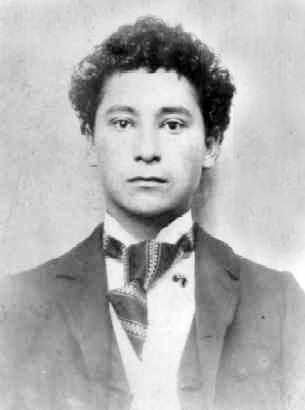
Alexander Posey was a poet. His poems about nature are some of the most beautiful ever published. Growing up on a farm in the Creek Nation, near Eufaula, Posey’s native language was Creek, but his “vernacular,” as he once wrote about all American Indians, was poetry: “not necessarily the stilted poetry of books, but the free and untrammeled poetry of Nature, the poetry of the fields, the sky, the river, the sun and the stars.” Posey’s gift of poetry blossomed during the years, from 1889 to 1895, when he attended and worked at Indian University, the school founded by Almon Bacone in 1880. At Indian University, later called Bacone College, the young mixed-Creek studied, served as librarian, contributed to school publications, and discovered himself to be a gifted artist of the English language.

Raised by his Creek mother Pohas Harjo and Scotch-Irish father Lewis Posey, Alex spoke Creek growing up at home until one day, as he later related, his father forcefully requested that his son henceforth speak in English, which the young man embraced and mastered. Alex matriculated at Indian University in 1889, when the school had been located in Muskogee for four years. There was a single large academic building, Rockefeller Hall, that served as dormitory, classroom building, administrative building, dining facility, and chapel. Almon Bacone was a Baptist missionary from New York who had traveled west a decade earlier to teach Cherokees in Tahlequah; he envisioned a school for all North American Indians, and worked with the Creeks to create a campus on Creek land north of Muskogee. Alex’s mother was Baptist, and he was raised in a Christian household, so he found Indian University, a Christian school teaching the liberal arts to American Indians, a perfect fit.

Alex was a secondary school student in the “Academic Department” until 1891, when he became a college student and school librarian. A bookworm and literary artist, Alex was a natural librarian. He was a prolific writer and helped two of his teachers, history professor Marion L. Brown and science professor C. H. Maxson publish a weekly newsletter, the Bacone Indian University Instructor. In the only surviving issue, from May 20, 1893, Alex contributed a story on the mythical Creek anti-hero, Chinnubbie Harjo, and alter-ego and pseudonym who appeared in many of Posey’s writings.

Alex Posey at Indian University was typically very well dressed, charming and elegant; he made a fine orator, would in time be something of a statesman, and believed wholeheartedly in the means and ends Almon Bacone envisioned for Indian University. In a surviving photo from 1891, Alex sits in the front row with a carnation in his lapel and a book, characteristically, in his hand, not bothering to lift his gaze from the written word even for the photographer. Such studious manner enabled Alex to form sophisticated ideas about learning, human character, politics, and nature. In 1892, for example, in response to a call from the American Baptist Home Mission Society for students at Indian University to respond to the question, “Why do I want an education?”, A. L. Posey, “a Creek,” responded:

“The world’s noblest citizens are educated men and women; they are the ornaments of human society and the gems that adorn the sea-shores of human progression.  Nothing contributes more to the intellectual wealth of the world than the education of its inhabitants.  And nothing imparts more happiness to man than the consciousness of a well disciplined mind to govern and control the higher aims of life.”

With such a personal philosophy of lifelong learning, Posey, upon graduating from Indian University, became a leader in the Creek community, serving in the House of Warriors, as well as Superintendent in succession of the Creek Nation Orphan Asylum, of Public Instruction for the Creek Nation, of the National High School in Eufaula, and of the Wetumpka National School. Posey the man of letters worked for the Indian Journal in Eufaula and the Muskogee Times. He wrote a series of satirical letters, featuring Fus Fixico and his Creek friends, writing about the Dawes Commission, land allotments, and the tense relationship between Indians and the U. S. federal government. His bilingual ability served him well as a worker for the U. S. Indian Agency in Muskogee, during which he sought to administer fairly the allotments of land to Creeks as prescribed by the Dawes Commission. In 1905, Posey served as secretary for a convention of Indian Territory leaders who met in Muskogee to compose a constitution for the proposed state of Sequoyah. Posey suggested the name of the proposed state and wrote a good part of the constitution.

During his busy, short life Posey married and had children and worked a farm near Eufaula. Death came to him early, when he drowned in 1908 while attempting to cross the Canadian River. His poems suggest that he was not unprepared for his final moments on Earth.

When flowers fade, why does

    Their fragrance linger still?

Have they a spirit, too,

    That Death can never kill?

Is it their Judgment Day

    When from the dark, dark mould

Of April and of May

    Their blooms again unfold?

His, poem, “To a Daffodil,” suggests that Posey felt at one, in life and death, with all forms of life:

                When Death has shut the blue skies out from me,

                               Sweet Daffodil,

                                 And years roll on without my memory,

                                 Thou’lt reach thy tender fingers down to mine of clay,

                                      A true friend still,

                                 Although I’ll never know thee till the Judgment Day.

When Almon Bacone founded Indian University in 1880, he hoped that the Whites and Indians would be able to live and learn together. Posey, a mixed-race Indian, believed in, and represented, peoples coming together to live in Oklahoma:

I pledge you by the moon and sun,

As long as stars their course shall run,

Long as day shall meet my view,

Peace shall reign between us two.

I pledge you by those peaks of snow

As long as streams to ocean flow,

Long as years their youth renew,

Peace shall reign between us two.

I came from mother soil and cave,

You came from pathless sea and wave,

Strangers fought our battles through–

Peace shall reign between us two.

One can imagine a day in October in the 1890s, when a young Creek-American, Alex Posey, wandered the fields and meadows surrounding Indian University, pondering life:

In the dreamy silence

Of the afternoon, a

Cloth of gold is woven

Over wood and prairie;

And the jaybird, newly

Fallen from the heaven,

Scatters cordial greetings,

And the air is filled with

Scarlet leaves, that, dropping,

Rise again, as ever,

With a useless sigh for

Rest—and it is Autumn.

Amid the peace and quiet of Indian University, there was conflict in Oklahoma and the surrounding nation. Near the end of his career at Indian University, in 1895, Alex Posey declaimed before an audience of students and teachers his view on how a thoughtful, reflective person should act in a world filled with movement and change:

“If a calm sea never made a skillful mariner, a calm life never made a great man.  Time, toil and vicissitudes; these are the cost of success.  The world can use the man who is willing to pay this price.  Its progress is dependent upon just such men; verily, upon men who are the devotees of mental embellishment and excellence of character; upon men who scorn from their soul’s inmost recesses the vanity of fashion and the folly of luxury.”

In the end, Posey bridged the gap between the two cultures, White and Indian, and identified both as American, proclaiming that America gained her independence from England because of the “persistence and determination” of the “forest born sons of America,” both those indigenous to this land and those who had arrived to start a new life in the 1600s. Posey the American was “like the tree, he strikes root, grows, puts forth his leaves and becomes the giant of his surroundings before the world is aware.”

Posey’s widow Minnie published Alex’s collected works in 1910: The Poems of Alexander Lawrence Posey (Crank & Co., Topeka, Kansas).
undefined

Posted in Christianity | Leave a comment