In July, 1819, up the Arkansas River several score miles from here, a remarkable conversation took place that could have only happened in the Old West of cowboys and Indians. The conversation involved an Indian, but not a cowboy, rather a scientist, a dandy from Liverpool, England. This transplanted Englishman in the early nineteenth-century American West was Thomas Nuttall, who conversed with a chief of the Osages, whose name was Clermont. Nuttall was out from Philadelphia, from whence he had departed nine months earlier, intent on journeying on foot and by boat across Pennsylvania to the Ohio River, down which to the Mississippi River, down which to the confluence with the Arkansas River, up which to the western prairies, eventually the southern Rocky Mountains. That was at least his intent. Having arrived at the Arkansas River in February, he had ascended the river with the help of traders and French boatmen, landing at Fort Smith in April. At Fort, Smith Nuttall had befriended the army physician, Thomas Russell, and had, on the invitation of the post’s commander Major William Bradford, journeyed with the troops to the Red River in May. Returning to the post in June, he had awaited passage up the Arkansas, had hitched a ride with French boatmen paddling a pirogue, and had arrived at Three Forks, at the confluence of the Arkansas, Verdigris, and Grand rivers, in July.
Nuttall was one of the premier naturalists of early America. He was an expert on America’s flora, having made numerous journeys throughout America beginning with his arrival from Liverpool to Philadelphia in 1808. He was, then, a young former newspaper apprentice who had began to teach himself about botany. In Philadelphia, Nuttall became the protege of Benjamin Smith Barton, one of the preeminent botanists of the early nineteenth century. Barton introduced Nuttall to the Philadelphia scientific community, honed his latent talent for identification and categorization of plants, and sent him on numerous journeys of discovery, the most significant lasting two years and taking Nuttall to the Great Lakes, down the Mississippi, and up the Missouri in the company of French and American fur traders. Nuttall sat out the War of 1812 in England, returning to America in 1815. His mentor Barton having died, Nuttall became the leading botanist in America, publishing in 1818 the Genera of North American Plants and a Catalogue of the Species to 1817. Restlessness and wanderlust, however, drove him forward. He departed Philadelphia in October, 1818, on a journey that would take him over a year. His goal was to make a complete examination of the flora of what had once been the southern Louisiana Territory: the lower Mississippi, the Arkansas and Red rivers, tributaries to these great rivers, and the eastern edges of the southern Rocky Mountains.
Nuttall wore many hats. He became a leading ornithologist in nineteenth-century America. The study of geology and zoology fascinated him. He had a great interest in the American Indian, and made it incumbent upon himself, whenever chance led him into their presence, to record their culture, customs, history, and habits. This he had faithfully done on his journey, meeting with and describing, in particular, the Quapaws and the Cherokees. Presently, in July, 1819, Nuttall met the Osages of the western Arkansas Territory and learned about their superstitions and science. Of the latter, Nuttall wrote that “habitual observation had taught [the Osages] that the pole star,” or north star, “remains stationary, and that all the others appear to revolve around it.” Examining the winter sky, the Indians had become “acquainted with the Pleiades,” the cluster of seven stars during winter in the northern hemisphere, “for which they had a peculiar name.” Nearby in the winter night sky, they “remarked the three stars of Orion’s belt.” Like many cultures past and present “they recognized [the planet Venus] as the . . . harbinger of day.” Familiar with the Milky Way galaxy, they called it “the heavenly path or celestial road.” The “filling and waning of the moon” guided their sense of time, “the concomitant phenomena of the seasons,” and “the natural duration of the year.” Beyond these simple astronomical observations, Nuttall said little else about the Osage’s proclivities toward rational thought.
He had much to say, however, about their proclivities toward superstition. They perceived the sun and the moon as spiritual beings. They considered dreams clear prognostications of reality, and would alter plans and behavior accordingly. They likewise believed in “the observance of omens, the wearing of amulets, and the dedication of offerings to invisible or miraculous agents, supposed to be represented in the accidental forms of natural objects.” They invoked in their prayers the “four quarters of the earth” according to the medicine wheel, and “before going out to war they raise the pipe towards heaven or the sun, and implore the assistance of the Great Spirit to favour them in their reprisals, in the stealing of horses, and the destruction of their enemies, &c.” “Their priests or elders” served as physicians, administering “charms” to the “sick.” “They fear, but do not adore bad spirits.” “Anticipating the contingencies of a future state of existence, they . . . inter with the warrior his bow and arrows.” Their anarchic lack of formal government, Nuttall argued, and “want of legal restraint,” kept the Osages from reaching the level of civilization of their white neighbors.
Nuttall discovered on his journey up the Arkansas that the Osage were not exceptional among American Indians in having far more superstition, and far less scientific thought, than their white American counterparts. “The Quapaws” of the Arkansas valley, he wrote, “are indeed slaves to superstition, and many of them live in continual fear of the operations of supernatural agencies.” The Cherokees, whom Nuttall perceived as happily approaching civilization, nevertheless continued to be overwhelmed with the typical Indian penchant toward blood vengeance to right perceived wrongs.
Nuttall’s experience of observing and communicating with the American Indians on his Arkansas journey, his growing understanding of their superstitious proclivities mitigated by sporadic hints of enlightenment, suggested their comparative place in relation to other human societies over the course of human history. Contemplating the Osages, Nuttall perceived a resemblance between their culture and that of the ancient peoples of Asia, as recorded in the Greek historian Herodotus’s Histories. Reflecting on other tribes, such as the ancient Natchez of the Mississippi valley, Nuttall believed that Indian ceremonies worshiping the sun and burying the dead were similar to those ascribed to the ancient Greeks by Homer in the Iliad. He thought that the customs of the Cherokees, on the road to civilization, were comparable to other “imperfectly civilized nations,” past and present.
The Indians were superstitious, yes, but Nuttall thought that they never quite embraced nonsense and irrationality to the fullest extreme. North American Indians refused to believe in sorcery, nor did they embrace “that kind of irrational adoration called idolatry.” Nuttall would disagree with exaggerated claims of some Americans that the Indians worshiped the devil. Rather, not altogether unlike their white counterparts, Nuttall wrote that “all the natives acknowledged the existence of a great, good, and indivisible Spirit, the author of all created being. Believing also in the immortality of the soul, and in the existence of invisible agencies, they were often subjected to superstitious fears, and the observance of omens and dreams, the workings of perturbed fancy. By these imaginary admonitions, they sometimes suffered themselves to be controlled in their most important undertakings, relinquishing every thing which was accidentally attended by any inauspicious presage of misfortune.” But Nuttall refused to allow their irrational belief in fate to mask the contrary observation that the Indians had a certain common sense, even elevated thought, in their perception of the deity.
All of this is to say that Nuttall, like other naturalists of his time who viewed the Indians with interest and understanding, while agreeing that Indian thought and society had not yet reached civilization, nevertheless perceived the Indians as moving toward a nascent state of civilization, similar to the ancestors of Western civilization and science, the ancient Greeks and Romans. The development of ancient Greek science two thousand five hundred years ago, for example, was superstitious and irrational at the same time as it began to approach the rational analysis and superb conceptualization of the natural world for which they are justly famous. It is well to remember that even the greatest Greek scientist, Aristotle, believed in the geocentric universe, thought that the planets of the solar system were perfect, god-like spheres, and thought that all forms of matter naturally tend toward the center. Even so great a scientist as the Roman physician Galen believed that dreams heralded reality. Greeks and Romans were just as credulous about fate, astrology, and magic as the American Indians. One of the great scientists of first-century Rome, the Elder Pliny, was convinced of the efficacy and reality of alchemy. Greek and Roman soothsayers read the future in the shape of a goat’s liver or the patterns in the flight of birds. Indeed, even more modern thinkers, such as the seventeenth-century European and American scientists Tyco Brahe, Isaac Newton, and John Winthrop, Jr., believed in the hidden powers of the supernatural world.
At the same time, the scientists of the late Renaissance and Enlightenment, from 1600 to 1800, were the ones to establish the bases of modern physics, chemistry, biology, and mathematics. Their achievements in calculus, geological sciences, Newtonian physics, and human anatomy and physiology established a clear difference in rational, empirical science from their predecessors, the scientists of Medieval and Ancient Europe. English, French, Swiss, German, and American philosophers and scientists such Locke, Hume, Newton, Lavoisier, Voltaire, Linnaeus, Kant, Franklin, and Jefferson established such clear, apparently objective knowledge about the universe, world, and human existence that they moved far beyond the apparently primitive speculations of proto-civilized people such as Nuttall confronted on his Arkansas journey. This distinction would remain true if the there were such clear differences between the objective, scientific mind and the subjective, intuitive mind, the former represented by Euro-American science since the eighteenth century, the latter represented by Indians and other such primitive, tribal peoples worldwide. Twentieth-century anthropologists such as Robert Redfield, in his book The Primitive World and Its Transformations, were convinced, for example, in the clear distinctions between the primitive and scientific mindsets: the former, primitive mindset, is focused on the organic and alive, on feelings and beliefs, on the oneness of life and being, on nature as an extension of self, on the mythical and mystical, on the subjective; the latter, scientific mindset, is focused on the concrete, objective, rational, methodical, controlling, reducing, materialistic, and utilitarian.
Theorists of science, however, since the mid-twentieth century have challenged the notion of objective, positivist science. Thomas Kuhn, for example, in the Structure of Scientific Revolutions, argued against the old perception of empirical science, where scientists worked collectively toward the common goal of absolute knowledge. Kuhn presented evidence of the subjective element of science. He and other theorists have posited that faith and intuition have quite a bit to do with science, that science is not so much the individual pursuit of a great mind pursuing absolute truth as a collective pursuit of people (university professors) who essentially indoctrinate others (graduate students) into a received belief in a group paradigm, which is defended as fervently by the devoted as would the religious an object of faith.
If we entertain the challenges to the notion of a clear distinction between subjective and objective knowledge, should we not also entertain the apparent distinction between superstition and science? Superstition refers to a non-rational, non-objective approach toward understanding nature. It is a belief in magical, irrational forces at play in cause and effect relationships in the natural world. The superstitious believer in magical, irrational, supernatural forces believes in an “Other” outside of the self; it is, in other words, a belief in outside forces, both natural and supernatural; and these forces have to be understood, used, and manipulated, by an expert or specialist, whether it be a magician, or medicine man, or shaman. This attempt to understand and to manipulate such outside supernatural forces is similar in principle to what a scientist does in attempting to understand and to manipulate natural forces. Indeed, historians of science argue that modern science owes much to the alchemists and practitioners of white magic in Medieval and Renaissance Europe. We may speculate that there were times in the past when the supernatural and natural merged, when superstition met reason in trial and error, and when the specialist, that is the medicine man or shaman, stumbled upon an actual rational and natural causal agent. For example, Indian medicine men often used hollow tubes to suck out evil spirits that caused sickness. The sucking might be directed toward a wound with pus. In sucking the wound to extract the evil spirit, the medicine man unwittingly sucked bacteria out of the wound, aiding the healing process.
The process from superstition to science involved trial and error, the formation of elementary hypotheses and similar elementary tests in the wild to arrive at a basic understanding from which more sophisticated knowledge might grow. The eighteenth-century explorer Jonathan Carver noted in his accounts of journeys in the upper Midwest that Indian healers, while superstitious, were experts in curing external wounds. “They exercise their art,” Carver wrote, “by principles which are founded on the knowledge of simples,” that is, elementary observation, “and on experience which they acquire by an indefatigable attention to their operations.” The Indian shaman observed what sick animals ate, and tried it out on humans accordingly. Thomas Nuttall’s mentor Benjamin Smith Barton, in his 1798 essay, “Collections for an Essay Towards a Materia Medica of the United States,” commented on what he perceived to be the simultaneous ignorance and knowledge of American Indians: “what treasures of medicine may not be expected from a people, who although destitute of the lights of science, have discovered the properties of some of the most inestimable medicines with which we are acquainted?” These treasures, exploring naturalists such as Nuttall discovered, included the white oak, the bark of which steeped in tea was useful for its antiviral and antiseptic qualities. Indian healers brewed the leaves and bark of the American beech in tea or applied it as a poultice to treat burns, rashes, and asthma. Likewise, the leaves, pitch, and bark of the white pine helped with wounds, colds, and arthritis. The balsam fir was an important analgesic. Indians treated skin ailments, fevers, lung, and intestinal complaints with the hazelnut and witch hazel trees. Kidney stones were treated with the American elm. Hemlock, Indians discovered, was an analgesic and astrigent. Asthma was relieved by skunk cabbage. The sassafras tree, according to historian and naturalist Jeremy Belknap, “affords a valuable ingredient for beer as well as for medicinal purposes.” Indians used sassafras bark and root tea for intestinal complaints and to treat arthritis.
Nuttall discovered on his own journeys examples of the superstitious Indian having a materia medica that had clear healing properties. Journeying up the Missouri River in 1811, for example, he met and interviewed through an interpreter an Aricara medicine man whose satchel of healing herbs included kinnikinnick, which he used for religious smoking to invoke the Great Spirit. At the same time he carried “the ‘down” of the cattail (Typha latifolia), useful for treating burns and other skin problems; wormwood (Artemisia), useful for intestinal problems and malaria; and Rudbeckia (black eyed Susan and green headed coneflower), used to treat burns, skin irritations, [and] snake-bite.” At Three Forks eight years later, Nuttall learned that the Osage materia medica included “the nettle bush (Urtica), the leaves of which, steeped in hot water, form a tea that Indians and settlers alike used for ailments ranging from arthritis to intestinal and urinary problems.”
Over the course of his many journeys Nuttall discovered the subtlety of the Indian understanding of the environment. He learned the different levels of science and rational thought required to live on the frontier, ranging from the practical arts of hunting techniques, weapon development, and canoe and wigwam construction, to more sophisticated techniques of identifying healing plants and devising remedies that are efficacious in healing, to even more rational and objective forms of observation, such as elementary astronomy, mathematics, and communication. In all of these activities, from hunting and canoe building to mixing healing herbs to observing the constellations, Indians used their minds to rise above primitive magic and superstition.
But Indian science? Was there such a thing? Several years ago I edited a three volume encyclopedia on the history of science in America. In selecting the scores of topics that comprised the book, I focused naturally on mathematics, chemistry, physics, geology, medicine, biology, Nobel Laureates, devotees to the systems of Linnaeus and Newton, and some of the greatest thinkers of all time such as Franklin and Einstein. At one point in the editing process, it dawned on me that there might be room for an entry on the science of the American Indian, even though I was not entirely sure how users of the book and reviewers would greet such an entry. I acquired the services of a specialist, Clara Sue Kidwell, formerly of the University of Oklahoma and Bacone College, to write the essay. She wrote quite a convincing piece claiming that, yes, the Indians did practice science. Her argument fit in quite well with my previous studies on a variety of naturalists of the seventeenth, eighteenth, and nineteenth centuries–besides Thomas Nuttall, the New Hampshire natural historian Jeremy Belknap, the traveler-physician John Josselyn, the geographer Jedidiah Morse, the English botanist John Bradbury, and the French-Mexican scientist Jean-Louis Berlandier. Belknap, for example, a historian, scientist, and clergyman who studied the indigenous people of New Hampshire, remarked in his History of New-Hampshire on the inherent, natural intelligence of the native peoples, whose “invention was chiefly employed either in providing for their subsistence, by hunting, fishing and planting, or in guarding against and surprising their enemies.” “Some of their modes and customs have been learned by our own people, and are still retained.” “We have . . . learned from the natives,” he wrote, “to dress leather with the brains and fat of the animal, which render it extremely soft and pliable.” Their knowledge of herbs has been passed on, and “some of their medicinal operations are still practiced.” They knew how to prevent bites of venomous snakes and knew antidotes to snakebites. The Indians also devised intricate traps to take game. An example was the culheag, which, according to Belknap, who had examined one, “is a forceps, composed of two long sticks, one lying on the other, connected at one end, and open at the other. . . . In this enclosure is placed the bait, fastened to a round stick, which lies across the lower log, the upper log resting on the end of a perpendicular pointed stick. . . . The animal having scented the bait, finds no way to come at it, but by putting his head between the logs. As soon as he touches the bait, the round stick, on which it is fastened, rolls; the perpendicular gives way; the upper log falls, and crushes him to death in an instant, without injuring his skin.” The culheag allowed the Indian hunter to clothe himself and his family in the warm, durable furs of the ermine, raccoon, beaver, wolverine, rabbit, lynx, mink, and martin. Indian hunters traveled to hunting grounds using two of their inventions, snowshoes in winter and the birch-bark canoe at other times; the canoe, white settlers realized, was clearly the best conveyance over rivers and streams. John Bradbury, sometime traveling companion of Thomas Nuttall, noted in his Travels in the Interior of America that the Sauk and Fox Indians of the upper Mississippi had mastered the art of smelting lead ore.
Jean Louis Berlandier, who is little known today, was born in France and educated in Geneva, and traveled to Mexico in 1826, where he joined a military commission that journeyed to the Rio Grande and the Texas Gulf Coast in 1827. Berlandier ended up spending the remainder of his life in Matamoros, Mexico, just across from Brownsville. He was like Thomas Nuttall an explorer and jack-of-all-trades scientist, though by training a botanist. Berlandier actually came to know the American Indians much better than Nuttall. He befriended Kickapoo hunters and went hunting with Comanche warriors. Their practical, scientific knowledge astonished him. Their ability to reason, to conceptualize, to deduce, seemed as advanced as any white scientist who lived in a similar wilderness environment. Berlandier would not disagree with an argument today that the Indians of the eighteenth and nineteenth centuries did indeed practice science.
In short, scientific thought is dependent upon the experience of the natural environment. That is to say, Indian science was limited, but sufficient for their needs; for their time and place, nothing more was needed to live well. Thomas Nuttall discovered this in Oklahoma in August, 1819, when he journeyed west across the prairies from Three Forks heading west toward the source of the Cimarron River. Accompanied by a hunter named Lee, Nuttall journeyed into lands hunted and protected by Cherokee and Osage hunters. If Nuttall had any doubts about the harshness of the environment, the difficulty of surviving in such an unforgiving land, they were quickly dispelled almost immediately, when he became terribly ill after drinking from a tepid pool of stagnant water. He spent several weeks following the hunter Lee trapping for beaver, following a tributary of the Canadian River, moving toward what is today Oklahoma City then north to the Cimarron River, all the while burning with fever, growing delirious, and coming very close to death. The hunter cared in a rough way for the ill scientist, feeding him honey and finding cool places next to beaver ponds to camp and rest. Lee built a dugout canoe, Indian style, to descend the Cimarron and the Arkansas to the Three Forks. Along the way the Osage pestered the hunter and his ill companion, but the wily Lee, thankfully for Nuttall, outwitted the similarly wily Osage warriors, and Nuttall returned. He made his way, eventually, to Fort Smith in September, 1819, where he stayed for several weeks while fever raged all about him, taking the lives of the garrison’s physician Dr. Russell and many other inhabitants. Nuttall learned first-hand the practical skills and applied science required to survive in the early nineteenth-century Arkansas Valley.
For more Nuttall, see my book,
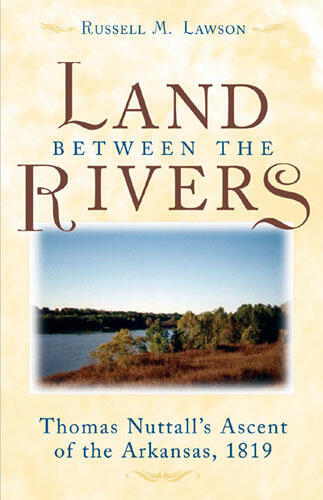 , published by University of Michigan Press, at:
https://press.umich.edu/Books/T/The-Land-between-the-Rivers
Also for a general treatment of the history of science, see my Science in the Ancient World: From Antiquity to the Middles Ages, published in an affordable paperback on Jan 22, 2026, by Bloomsbury: find it at: https://www.amazon.com/Science-Ancient-World-Antiquity-through/dp/B0FSW74DKZ/ref=books_amazonstores_desktop_mfs_aufs_ap_sc_dsk_0?_encoding=UTF8&pd_rd_w=6oCC7&content-id=amzn1.sym.299f645c-0a78-440a-94a2-fb482e7cb326&pf_rd_p=299f645c-0a78-440a-94a2-fb482e7cb326&pf_rd_r=142-5197957-8175817&pd_rd_wg=Erb81&pd_rd_r=7cdd0d6a-0a38-49cf-a2ba-a