War Story

Bob lived in an old two story tenement, thin, tall, and long with clapboard exterior badly in need of paint. Other tenements of similar age and quality lined the street, which was crowded with parked cars, some working but others in stagnant decay. Children ran and played, darting in and out among the cars, on a bright sunny day in August. The house on Franklin Street was in the industrial town of Haverhill, Massachusetts, where Bob had grown up and spent his life.

Bob had attended Haverhill High School when the Japanese attacked Pearl Harbor; he enlisted at the end of his junior year, and returned to the town after the war to spend a large part of the remainder of his life.


He lived with his parents during the years of declining health, their’s and his. When his father died in 1973, Bob continued to live with his mother until she went to the nursing home and died, after which he lived in the tenement alone.

Bob lived on the second floor. One entered the house from the outdoor stairs at the rear of the dwelling. The door opened to the kitchen.

When I first met Bob, he had the look of a recluse. The house was dark, save for the generous sunlight entering the window above the kitchen table. The darkness of the shadowy rooms provided an appropriate background for his drab, dark clothing, dark hair, and black-rimmed glasses. His eye-contact was brief and retreating, his mannerism nervous, betraying discomfort, his voice hesitant, soft and raspy. Bob was not one to shake hands. Yet he had a pleasant if shy smile and said hello weakly if sincerely. He held his right arm close to his side and performed all actions using the left. He was terribly stooped over, his back and hips dominating, his arms and chest appearing fragile.

The house was warm, as the windows were closed, and the air was still save for gentle currents stirred by an old fan that rotated methodically. Bob was dressed in blue-gray trousers and a colorless short-sleeve button-down shirt. He wore black leather shoes and dark socks. He was clean-shaven and his hair well-groomed with hair tonic, the parting meticulously formed. The atmosphere of reclusiveness tempered the conversation, which focused on mundane matters of family.

Bob rarely left the tenement. He infrequently saw his mother, who was in ill health, living in a nearby nursing home. Bob stayed connected to the outside world by television and, in particular, radio. Bob loved listening to his small portable that he kept on the kitchen table. He would spend hours sitting and listening to the music of his youth, the big band sounds of Glenn Miller, Benny Goodman, and Tommy Dorsey.

Bob in middle age began to suffer from the effects of spondylitis, a degenerative disorder of the spine, which caused him to progressively stoop over. The doctors told Bob that an operation could perhaps alleviate some of the spinal curvature, hence some of the pain he suffered. But Bob had seen enough of hospitals–one and a half years of recovery was enough for anyone. The best solution, he reasoned, was rest, sameness, and immobility. Bob could not, of course, work by this time, and his VA benefits helped him get by with the few necessities he required of food, coffee, shaving cream, hair tonic, comb, toothbrush, radio, and television. The list had once included cigarettes, but as Bob watched his mother increasingly suffer from the effects of emphysema, he found his smokes, once a necessity, now repulsive.

Bob ordered his solitary existence the best he could. The great tunes of the 40s, the screaming trumpets and melodic clarinets, helped to pass the time, as did the television. Bob also enjoyed reading magazines about electronics and automobiles—Popular Science and Popular Mechanics. His daily regimen rarely changed. He awakened late in the morning, having stayed up to midnight or beyond listening to the radio or watching an old movie. Upon rising Bob ate brunch, washing down the food with strong black coffee, which he called “high test.” Bob sat long over his meals, sometimes an hour or more. His favorite dish was salt fish dinner–boiled new potatoes covered with sugar beets and a white sauce made of salt cod and salt pork. With his mother in the nursing home, Bob currently relied on TV dinners delivered from the local market.

Bob’s daily toilet was extensive. He could spend an hour at shaving, and almost as long combing his hair. Everything had to be in its place.

Bob’s unusual slowness was due, not only to his methodical obsessions, but also because of his arm, injured so long ago, that permanently crippled him. His back made him stoop terribly and his arm disabled him, to be sure; but these were symptoms of the underlying disability, which was of the mind and spirit.

Being a student of human nature, I was intrigued by this strange man. Settling down in nearby New Hampshire, I took the opportunity whenever possible to observe Bob. Uncle Bob, as the family called him, was tortoise-like, peaceful, harmless, usually staying securely in his shell, though sometimes popping his head out to eat and converse with the few people that he trusted.

One of these was Milt, like Bob a veteran of World War II, who was Bob’s complete opposite. Milt was loud, gregarious, active, and charming, a successful businessman and corporate executive. The happenstance of marriage had brought these two men together, Milt having married Bob’s sister Shirley. Every summer Milt and Shirley made a pilgrimage to the family summer cottage at Country Pond, New Hampshire, which Bob’s family the Newcomb’s had owned for years. Bob, and his mother and father while they were still alive, spent the summer months at the cottage.

Bob would disrupt his normal routine when Milt arrived, and would tag along wherever Milt went, asking questions, making observations, allowing his loneliness to exude from him, attempting to make up in a few weeks for the long months of emotional solitude. Milt was an engineer who could understand Bob’s unrelenting questions about automobile suspensions, wheel bearings, disk brakes, horse power, cylinders, and more. Bob loved to talk long into the evening about whatever sedan Milt had brought on his month-long summer sojourn in New Hampshire.

Milt spent his vacation doing repairs to the cottage. As Milt painted the walls Bob stood nearby, humped, right arm safely out of the way in his pants pocket, watching Milt work, unwilling to help but filled with admiration and happiness. It was a sad time indeed when Labor Day approached and summer ended, Milt and family departed. Bob returned to Haverhill, the days grew shorter, and the long winter set in. Bob retreated to his table and his radio and into the past, reliving, trying to explain it, wondering what if things had been different.

Bob at first never spoke of his experiences during the war. Indeed, most veterans of World War II were silent about the war. Some were reluctant to bring up the memories of a horrendous past. Others had made a promise to themselves to live only in the present and forget the past. Some were unwilling to de-mythologize the war with stories of personal involvement. Bob had submerged memories of the past deep within the mundane experiences of the present moment. Nevertheless, the horror, the shock, the pain, the torture, the fear, the waiting, the boredom, of the past revealed itself in Bob’s mannerisms and actions.

As the few years that I knew him passed, Bob began to talk about his experiences to me in response to my queries about the war. He recalled the sights and sounds of the war. He loved recounting the great speeches of FDR and Churchill. He began to tell me about how he came to be a part of D-Day. . . .

Private First Class Robert Newcomb of Haverhill, Massachusetts was part of the D-Day invasion in June, 1944. Bob was still in high school when he enlisted in the infantry. He had watched the war throughout his school years, and had tried to support it by buying stamps to support the effort. Upon enlistment, he was transported to Texas for basic training, then on to Camp Meade in Maryland, for more extensive training, during which he developed into a sharpshooter.

Training materials included pamphlets on what to expect in Europe. A Short Guide to Great Britain told those heading toward England that “you are going to Great Britain as part of an Allied offensive—to meet Hitler and beat him on his own ground. For the time being you will be Britain’s guest. The purpose of this guide is to start getting you acquainted with the British, their country, and their ways. America and Britain are allies. Hitler knows that they are both powerful countries, tough and resourceful. He knows that they, with the other United Nations, mean his crushing defeat in the end. So it is only common sense to understand that the first and major duty Hitler has given his propaganda chiefs is to separate Britain and America and spread distrust between them. If he can do that, his chance of winning might return. We can defeat Hitler’s propaganda with a weapon of our own. Plain, common horse sense; understanding of evident truths.”

The men, destined for France, read the Pocket Guide to France: “You are about to play a personal part in pushing the Germans out of France. The Allied offensive you are taking part in is based upon a hard-boiled fact. It’s this. We democracies aren’t just doing favors in fighting for each other when history gets tough. We’re all in the same boat. Take a look around you as you move into France and you’ll see what the Nazis do to a democracy when they can get it down by itself.”

The goal for soldiers like Bob was to reach Germany, where, according to the Pocket Guide to Germany: “Whether you fight your way in, or march in to occupy Germany under armistice terms, you will be doing a soldier’s job on the soil of the enemy. The occupation of Germany will give you your chance to build up a personal guarantee that as soon as you turn your back to go home, the German will not pick up his shooting irons and start throwing lead and lies at an unsuspecting world once more. One of the greatest challenges of the Peace to come is to make certain that the German people will take their place as law-abiding, useful citizens in the family of nations.”

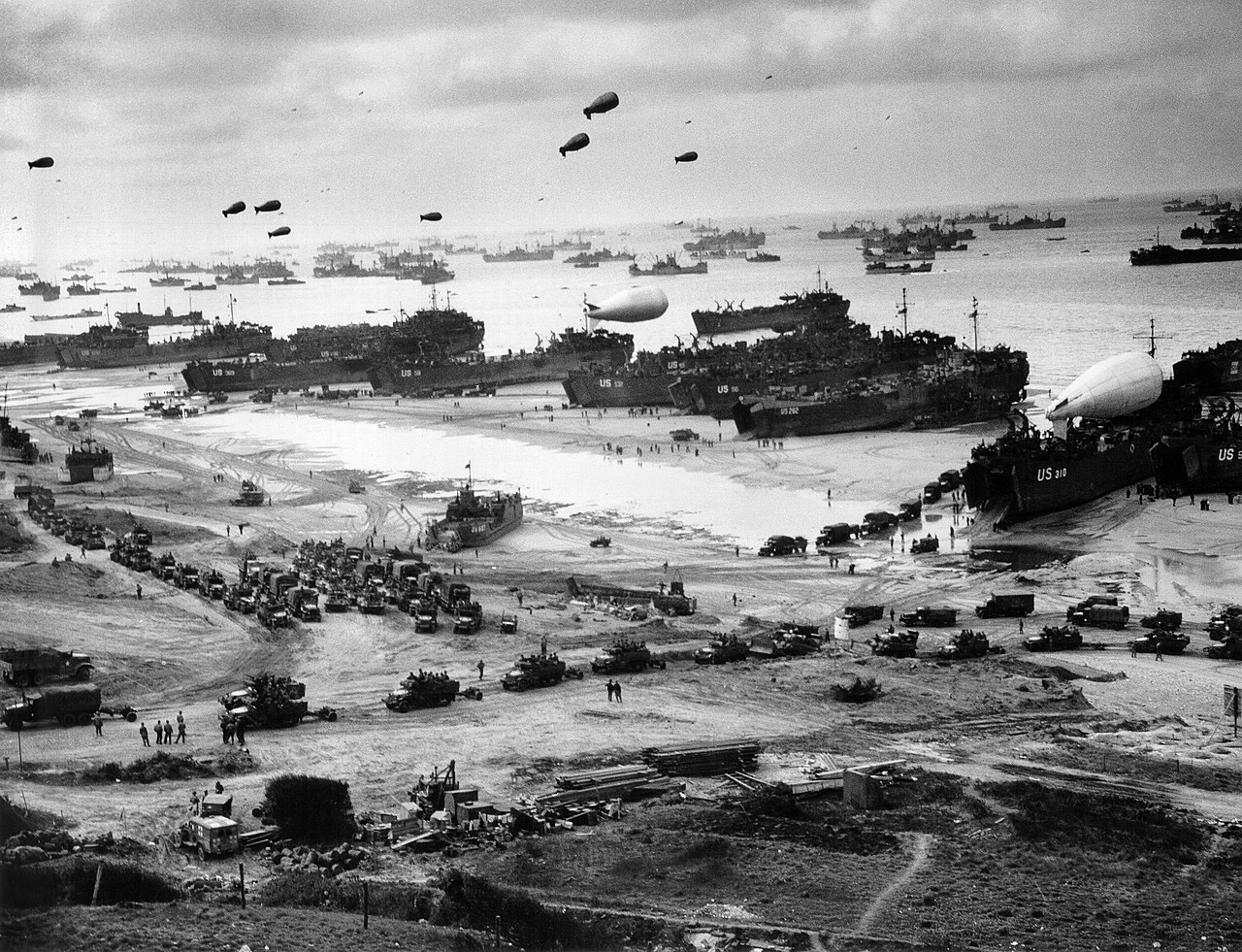
Bob was transported along with his company across the Atlantic to England, where he spent months preparing for the invasion of Europe. June 6, 1944, Operation Overlord began. The 29th infantry was ferried across the English Channel on transport boats.

During the voyage, the water was choppy, and the men were seasick. Approaching Omaha Beach, Bob’s craft hit a mine and exploded. Although most men on board died, Bob was thrown from the craft into the sea, where he swam to shore, all the while under attack from bullets and shrapnel from German defensive positions. After several days, he reunited with his unit, and they marched inland to a town called St Lo. There, on August 1, Bob was wounded when a shell exploded near him. He lost the use of his arm. Taken to a field hospital, he was eventually transported back to Britain, then America. Eventually he was sent to a resort in West Virginia to recover from his wounds. He was in various hospitals for almost a year.

Bob, now aged 20, returned to Haverhill a changed man. He could not use his arm for the rest of his life. But the emotional wounds were deeper, more profound. He became an emotional cripple who lost his zest for life, and spent the remainder of his years yearning for what could have been, but never was.
undefined

Private Robert Newcomb

Posted in American History, Biography, European history | Tagged , | Leave a comment

Reflections on “Uncle Tom’s Cabin”

First, I will admit that I have been teaching American history for almost 35 years and have never, until recently, read Harriet Beecher Stowe’s Uncle Tom’s Cabin.

Why?

For several reasons, I suppose. First, it was never assigned in any high school or college courses. Second, my specialty was early American rather than the 19th century. Third, Uncle Tom’s Cabin was always one of those books that a person knew about (like Alice in Wonderland) and never quite got around to reading. Besides, everyone knew what the story is about: the horrors of slavery’; the heroic slave, Uncle Tom; the abolitionist point of view; the book that helped inaugurate the Civil War. What else could be gained by reading it?

So, the book has been on my bookcase since the 1980s, unopened, unperused. Until now. I finally read it. And, to my surprise, it was good, really good.

Unlike what I expected, the book was not just a polemical treatise against slavery, but a moving, dramatic tale that showed how slavery enslaved everyone, Whites as well as Blacks—and indeed, the memory, and continuing effects of slavery on American culture, still entangles everyone regardless of race or color.

Stowe’s writing is superb. The best part of the book is the portrayal a conversation between Augustine St. Claire and his cousin Ophelia. St. Claire, who is a handsome, young New Orleans planter who inherited his slaves and allows them a fairly easy existence; who is indolent; who despises slavery but has neither the courage nor the will to do anything about it, tells Ophelia:

“This cursed business, accursed of God and man, what is it? Strip it of all its ornament, run it down to the root and nucleus of the whole, and what is it? Why, because my brother Quashy [read, every slave] is ignorant and weak, and I am intelligent and strong,–because I know how, and can do it, –therefore, I may steal all he has, keep it, and give him only such so much as suits my fancy. Whatever is too hard, too dirty, too disagreeable, for me, I may set Quashy to doing. Because I don’t like work, Quashy shall work. Because the sun burns me, Quashy shall stay in the sun. Quashy shall earn the money, and I will spend it. Quashy shall lie down in every puddle, that I may walk over dry-shod. Quashy shall do my will, and not his, all the days of his mortal life, and have such chance of getting to heaven, at last, as I find convenient. This I take to be about what slavery is. I defy anybody on earth to read our slave-code, as it stands in our law-books, and make anything else of it. Talk of the abuses of slavery! Humbug! The thing itself is the essence of all abuse! And the only reason why the land don’t sink under it, like Sodom and Gomorrah, is because it is used in a way infinitely better than it is. For pity’s sake, for shame’s sake . . . .” (pp 190-191, London: 1852)

Over time in America, beginning a few decades after the publication of Uncle Tom’s Cabin, a pejorative term emerged, Uncle Tom, for the Black who kowtowed to Whites, who like the stereotypical Sambo would do whatever was necessary to fit into to the dominant White culture.

The Uncle Tom stereotype, however, seems in no way to be based on Harriet Beecher Stowe’s book.

Uncle Tom in the book is anything but a cowering, subservient Black dedicated to ingratiating himself into White culture. Indeed, I find his character to be quite the opposite.

Stowe’s Uncle Tom is a heroic figure, a person whom I wish I could be like, a person who will do right no matter what the cost, who is good in all ways, who has not allowed an evil institution to drive away the divine spark of goodness and righteousness within him.

Often over the years, slavery has been interpreted by scholars as a total institution that would, like Nazi concentration camps, attempt to make the slave a childlike blithering idiot whose only goal was to please his/her master.

Subsequent scholarship has shown this was far from the case, as Harriet Beecher Stowe knew, for her Uncle Tom has been able to rise above the total institution of slavery to keep his dignity and humanity.

It would be nice if there was a new stereotype of Uncle Tom, to represent self-sacrifice, for doing what is good and right, for Christian virtues, for love of fellow humans.

Uncle Tom was able to see that all humans are children of God, that all lives matter.

undefined

Posted in American History, books, Christianity, God's Providence | Tagged , , | 4 Comments

Blessed are the Poor?

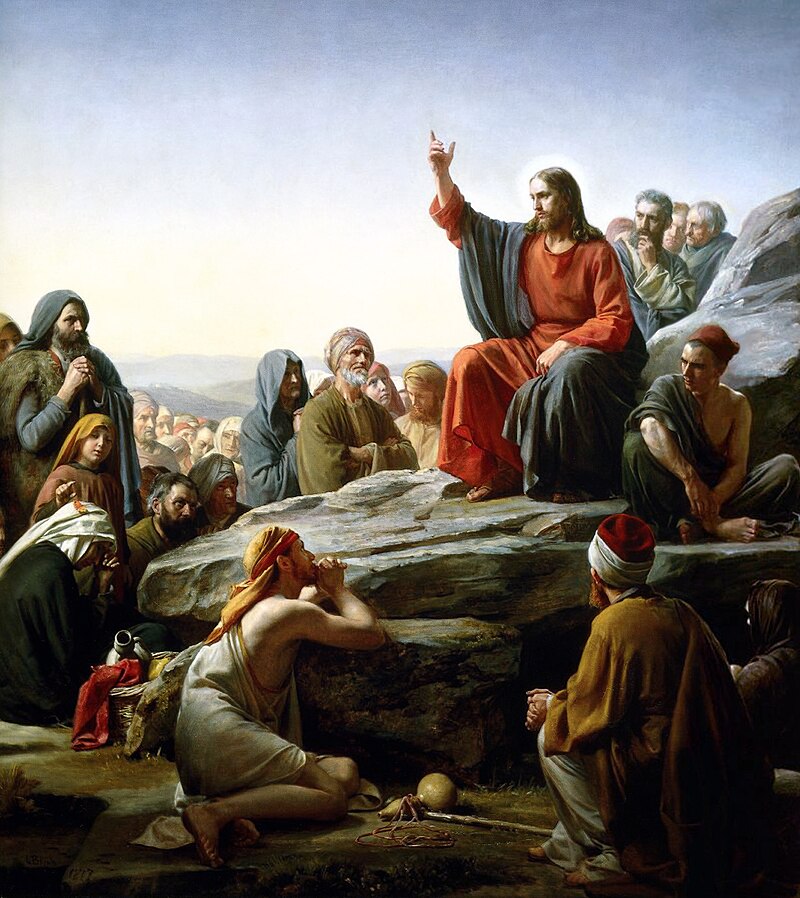
In the Sermon on the Mount, the Beatitudes, as recorded in the Gospels of Matthew and Luke, Jesus taught his disciples as well as others what he considered to be the most important lessons by which to live.

Matthew and Luke agree on the general scope of the Beatitudes, though they differ on some particulars. Matthew, for example, records Jesus as having initiated the sermon with the comment, “Blessed are the poor in spirit, for of them is the kingdom of the heavens.” Luke records a terse, less confusing comment, stating simply, “Blessed are the poor, because yours is the kingdom of God.” Whereas Luke then records Jesus as saying, “Blessed are the ones hungering now, for you will be satisfied,” Matthew records a comment of more depth: “Blessed are those hungering and thirsting for righteousness, for they shall be satisfied.” Luke’s gospel has Jesus say, “Blessed are those weeping now, for they shall laugh,” while Matthew’s gospel says, “Blessed are the mourning, for they shall be comforted.”

undefined

The Beatitudes are mystifying in today’s world because they contradict everything that our modern world culture is based on: materialism, power, wealth, comfort, pleasure, entertainment, indulgence. Jesus blesses the poor, the weak, the sorrowful, the meek, and proclaims, in Luke, woe to the wealthy, the full, the happy, and the self-satisfied. And yet what do we see today, but that the rich and powerful seem to be experiencing something very different from anguish.

How, indeed, can the poor be blessed? The New Testament Greek word for poor is ptochoi, plural of ptochos, to crouch like a beggar, straitened, to be distressed, to be a mendicant. Why would Jesus bless such people? Because the poor have not yet been rewarded while the rich have? Because the poor are more aware of the simple blessings in life? Because there is a connection between material and spiritual poverty and according to Matthew one is blessed if spiritually poor?

Pre-modern poverty was characterized by no modern conveniences, by periodic bouts of famine, by recurrent hunger . . . and consequent humility and acceptance, among some, in the face of such uncertainty.

Famine, hunger, and poverty have declined in the modern world, which is materialistic in so far that constantly more items are acquired, wanted, hence there is a growing restlessness, lack of acceptance, and growing hubris as possessions provide false and fleeting self-esteem. A society therefore that declines in poverty and increases in wealth will decline in humility and increase in hubris. The pre-modern poor were desperate for food and shelter; the modern poor are desperate for wealth and power.

Jesus said, “you will always have the poor.” Indeed, there have always been poor and notwithstanding the plans of countless Utopian thinkers there apparently always will be. Why? In part because human society will never have answers to the questions of humans, “who live for a day.” Time dooms humans to ongoing anguish, because the future is never settled and clear, hence humans live a life of foreboding and fear that the next moment will bring suffering, war, disaster, and so on. So those with the most fear make sure they will never know such a day. Hence they plan and save and exploit and steal and whatever else to ensure that they will not be in want. In so doing they will take or keep what could be or belongs to another. In some ways we live in a world of material limits where there is enough for everyone in a communist society, but humans because of our peculiar temporal situation will never allow such a society to work–hence there will always be abundance for some and want for others.

The Apostle Paul of Tarsus, in his second letter to the Corinthians, echoed the teachings of Jesus in Matthew and Luke, proclaiming that God’s power is perfected in weakness. “For whenever I am weak, then powerful I am.” How great is the gap between the message of Christianity and the message of modern society and culture! How can weakness be better than strength, poverty better than riches? The New Testament has a disconcerting teaching: Woe to the rich, the filled, the laughing, for God does not bless these people–the beautiful, confident, powerful, and secure. God blesses, rather, the hungry, sick, suffering, the ugly, insecure, and frightened. Jesus tells adults to act as children before God. His teachings contradict what humans naturally strive for, to feel important, to be strong, to be seen as beautiful, to gain wealth and power, to find security.

Jesus’s great gift as a healer was his ability to see deep within the human psyche, to see that humans profess but do not feel so important, strong, wealthy, and powerful, because there is always present the fear that riches, power, beauty, and youth will vanish. His was a message of acceptance. Life is about acceptance, not resistance. Accept, he told his listeners, your lot, your poverty, your weakness, your ignorance, your nakedness, the thorns of your flesh, your ugliness, your obesity, your fears, your mortality, the fleetingness of life, the movement of time, the coming of death.

Deep down inside we all are poor. But this is a blessing. Beware being filled, because then one becomes like a Pharisee, satisfied, knowing. No, remain empty, remain poor, always await the reward. Humans are becoming, always in each and every minute. We are never satisfied, never have, never know, never filled, never rich, always just becoming. As riches increase, hubris increases, humility decreases. The very poor are the most open to God. When I am weak, then I am strong.

Posted in Christianity, God's Providence, Reflections on the Psalms | Tagged , , , , , | Leave a comment

Images of Lincoln

When I was a teenager–not very thoughtful and focused mostly on baseball and basketball–my grandfather, a retired custodian whom I would have never thought would read such books, gave me a three-volume biography of Abraham Lincoln by Carl Sandburg. The books appeared well-used, so clearly my grandfather had read them again and again. They must have been his favorite books, and now he was giving them to me—perhaps my grandfather’s wisdom and Carl Sandburg’s wisdom and Abraham Lincoln’s wisdom would combine to provide the sixteen-year-old inquisitor with wisdom itself! And so, despite the fact that most of the books I read were about sports, I began to read Sandburg’s portrayal of Lincoln.

Sandburg’s Lincoln was a humorous storyteller and practical joker; a shy, introspective man; a thoughtful, caring, honest, empathetic man; a great wrestler; a strong and dedicated worker: flat-boater, rail-splitter, store-keeper, postal-clerk, and self-taught lawyer; and a Good Samaritan—who became President of the United States. Sandburg’s Lincoln cared for people, for all people of whatever color, and for this care he became a martyr, a sacrifice to the principles of equality and freedom.

Sandburg’s Lincoln became part of the myth of Lincoln: the Great Westerner, the Great Emancipator, the Log Cabin President, Honest Abe. The reality of Lincoln, who Lincoln really was, is tougher to get at, especially with the profusion of biographies and other nonfiction books about Lincoln; the wide variety of fiction and fantasy; movies, both serious and absurd; portraits on coins and bills, art, photography, and statues; anecdotal stories told for generations; musical portraits, such as by the composer Aaron Copland; and other stuff of legend.

The real Lincoln, detached from legend, is more human: he suffered from depression, what he called melancholia, as well as from constipation; he was a consummate politician as well as statesman; he became rich serving as a lawyer for railroads; he advocated the colonization movement (to send freedmen back to Africa); he was a segregationist, and not an abolitionist; and the Great Emancipator’s Emancipation Proclamation did not, initially, free anyone.

At the same time, Lincoln, a northerner who was born in Kentucky, a slave state, but grew up in Indiana and Illinois, and spent his life in Illinois, which were free states, was a lifelong opponent of slavery. When in 1828 he worked on a flatboat taking goods down the Mississippi River to New Orleans, he saw slavery and developed a lifelong opposition to it.

Lincoln settled in Springfield, Illinois, and taught himself law; in the 1830s Lincoln ran for state office as a Whig (a party created in the 1820s out of the old Federalist party—it was a northern, anti-slavery, pro-business, pro-federal power). He served in state office in Illinois. Not until 1846 did Lincoln serve in national office, when he was elected to the U.S. House of Representatives. The President at this time was James Knox Polk, who presided over U. S. involvement in the Mexican War, which Lincoln opposed. Lincoln was not, however, opposed to federal power, nor to the increasing power of the Presidency. Lincoln believed in the Declaration of Independence, and the words: “we hold these truths to be self-evident, that all men are created equal.” The federal government, he thought, should have power to enforce the ideas of liberty and freedom, which were the bases of the U. S. Constitution.

At the same time, Lincoln professed a literal reading of the Constitution. The Constitution declared that Congress decided issues of slavery or freedom in territories. The Constitution also did not make slavery illegal. Lincoln believed that neither the Congress by legislative action nor the President by executive order could end slavery in the United States.

Lincoln retired from federal politics after his term as U. S. Representative ended in 1849. He left the Whig party after what he considered to be the disaster of the Compromise of 1850, which introduced the idea of popular sovereignty, wherein the people of a territory or state could determine the legality of slavery. After the 1854 Kansas-Nebraska Act, which confirmed the idea of popular sovereignty, and which was introduced by Illinois senator Stephen Douglas, a Democrat, Lincoln re-emerged on the political scene. When he ran for the U. S. Senate against Douglas in 1858, Lincoln was a member of a new political party, the Free Soil Republicans, the platform for which was that Congress had the right to decide on the spread of slavery to U. S. territories. Most Republicans, like Lincoln, were opposed to slavery, but most did not think that Congress or President could end slavery, so they believed the way to end slavery was by stopping its spread to other territories or states.

Lincoln ran as a Republican for the Presidency in 1860; he won without gaining a majority of the votes, nor by winning any southern votes. Indeed, Southerners declared that they would not stay in a United States with an abolitionist for a president, which led to the secession of seven states, forming the Confederate States of America, by January, 1861. When Lincoln was inaugurated in March, 1861, eight slave border states had not seceded from the Union. Then in April, South Carolina attacked Fort Sumter, and Lincoln responded by calling up 70,000 militia troops, and the Civil War began. Four of the border states seceded.

In April, 1861, the nation was split into two countries, the Union (U. S. A., governed by the Constitution) and the Confederate States of America (governed by their own constitution). The country was so badly split, that many families split, communities split, states split. When the war began in April, the North had the industrial power, factories, steel, armaments, more weapons, more money, more population than the South, which had some factories, but not as many as the North, and was bankrupt for most of the war.

The new President was against slavery. He thought slavery was immoral and wrong. But he believed the Constitution would have to be amended to end slavery. Further, he believed that the Civil War was not about slavery, rather about maintaining the union of the states. Lincoln believed the United States was perpetual, and the South had no right to secede from the Union. He never recognized the Confederacy, and only referred to the secessionists as rebels.

Lincoln embraced a broad interpretation of the Constitution when war came to America. When Fort Sumter was attacked, Congress was not in session, nor did Lincoln call Congress into session until July. The President embraced Congressional powers for a time: he called the militia out; he engaged in war; he provided for the army and navy; he suspended the writ of Habeas Corpus (the right of all citizens to be charged after arrest); he declared martial law; he repressed newspapers; he proclaimed the emancipation of slaves; he put in motion Reconstruction: Lincoln assumed that all of these powers fell under his rights as President to take care that the laws are faithfully executed and administered, and to serve as Commander in Chief.

In short, Lincoln embraced during wartime the ethical standard of moral exigency: “the end justifies the means.” Questions: Should war provide the justification for a President to embrace and use unusual power? Should war be the reason to abandon traditional moral standards to embrace moral expediency?

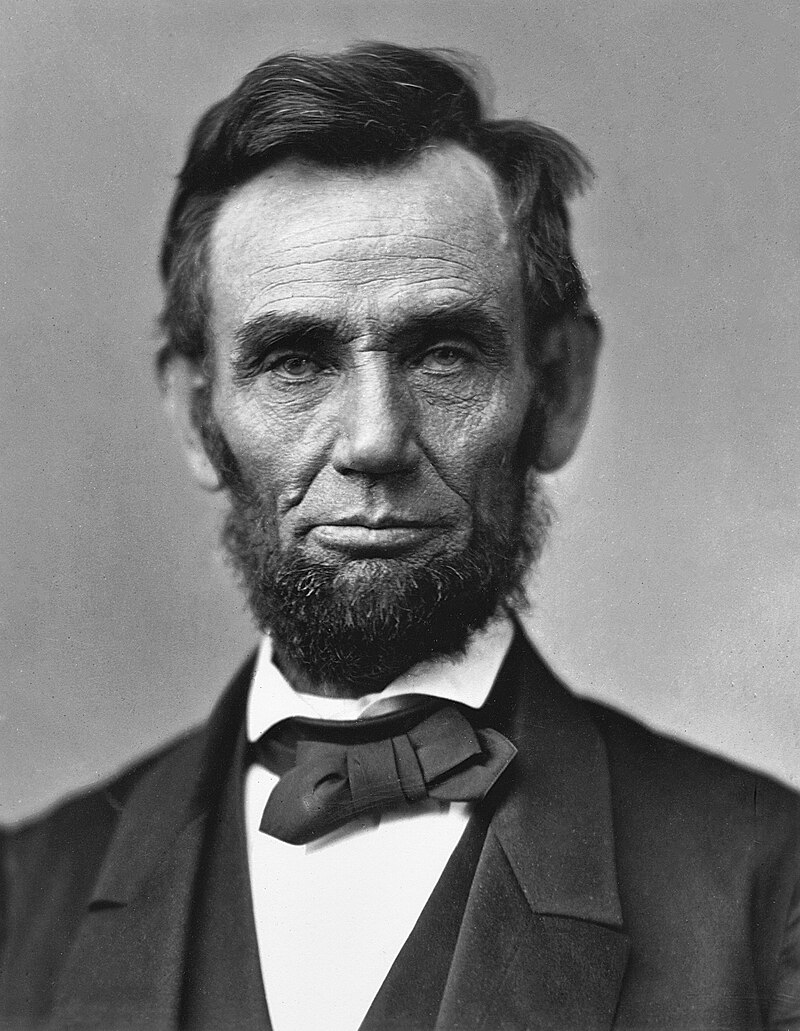
A bearded Abraham Lincoln showing his head and shoulders


Posted in American History, Biography, books, Government | Tagged , , , | 4 Comments

Moral Expediency and the Atomic Bomb

The Manhattan Project that resulted in the development of the Atomic Bomb was one of the most creative moments in world history. American scientists accomplished what only a few years before was considered unthinkable–exploiting the power of the atom in a release of tremendous, deadly energy. Other countries–Germany, Japan, Soviet Union–had programs to develop such a weapon during World War II, but the United States alone succeeded. Using an international team of scientists and engineers and the wartime resources of the U.S. government, in less that three years, from 1942 to 1945, the U.S. developed two atomic weapons that were used to end World War II against Japan in August 1945.

The story of the atomic bomb begins with the work of early 20th century physicists and chemists exploring the structure of matter. The discoveries and theories of scientists Marie Curie, Ernst Rutherford, Neils Bohr, and Albert Einstein provided the foundation for the explosive relationship between energy and matter. In 1932, Englishman James Chadwick discovered a neutral force surrounding the atom, the neutron (+-), which led, in 1934, Hungarian scientist Leo Szilard to theorize on the possibility of a chain reaction of the fission of uranium that could produce a massive amount of energy. In 1938, German scientists Otto Hahn and Lise Meitner demonstrated the fission of uranium in a laboratory in Germany. At this time, Germany was beginning its move toward the domination of Europe. The Nazis appointed world-famous physicist Werner Heisenberg to head of the Nazi nuclear program. Meanwhile Szilard, in America visiting Albert Einstein (who had fled Germany in 1933) at Princeton University, convinced Einstein to draft a letter to President Roosevelt warning of the possibility of a nuclear weapon. The scientists discussed scientific developments over the recent years leading to fission of a uranium atom, but emphasized that it seemed improbable that a workable bomb could be developed.

When Japan bombed the U.S. naval base at Pearl Harbor in December, 1941, there were already government teams investigating the science of fission, but nothing had officially begun. This changed when in 1942 President Roosevelt asked Secretary of War Henry Stimson to organize an official U.S. effort to build an atomic weapon. Code named Manhattan Project, Stimson appointed General Leslie Groves head of the military aspects of the Manhattan Project. Physicist J. Robert Oppenheimer of the University of California was appointed the head of the scientific aspects of the project. Three laboratory facilities were quickly constructed, the most important at Los Alamos, New Mexico, where the engineering of the Bomb took place. At Oak Ridge, Tennessee, a laboratory manufactured the fissionable isotope Uranium 235. At Hannford, Washington, a laboratory manufactured plutonium. The University of Chicago was also involved in experimenting with the chain reaction of uranium. Oppenheimer recruited a host of world famous scientists to work on the Manhattan Project. Many of these scientists, such as Edward Teller, Hans Bethe, and Enrico Fermi, were immigrants from Nazi or Fascist occupied countries in Europe.
President Roosevelt and Secretary of War Stimson meanwhile worked out a plan for using the bomb should it be successfully developed. Roosevelt believed that the U.S. alone was sufficiently responsible to hold the keys to atomic power, hence he wanted the U.S. to hold a monopoly on the Atomic Bomb. The U.S. could use the power of the threat of the Bomb to diffuse situations around the world, promoting world peace. Although he shared information about the Manhattan Project with Winston Churchill, he refused to inform Joseph Stalin, who nevertheless knew something was up and had spies in the United States who informed the Soviet Premier of the U.S. atomic project.

By the beginning of 1945, the Manhattan Project was nearing a successful conclusion at the same time that American and Soviet armies were surrounding Germany and Japan was surrounded by the U.S. Navy. The American army captured the German atomic program and discovered the Nazis were nowhere near accomplishing their objective. The German threat of having the Bomb ended, and Germany nearing defeat, American scientists and policy-makers asked, what should be the plan for using the Bomb? Some scientists, such as Leo Szilard, had grown to oppose military implementation of the Bomb. Others believed it was a means to bring the war quickly to a close and to save lives.

Such was the opinion of Secretary of War Stimson, who although he realized the dangers of proliferation of atomic power, anticipating rogue states using the weapon for terrorist purposes, he nevertheless believed that the needs of the moment—to end the war and save lives—was paramount over future concerns. When he informed President Truman (upon the death of Roosevelt) of the Manhattan Project and his (and Roosevelt’s) plans for implementation and monopolization, Truman concurred.

Truman wrote in his diary in July 25, 1945:
“We have discovered the most terrible bomb in the history of the world. . . . Anyway we “think” we have found the way to cause a disintegration of the atom. An experiment in the New Mexico desert was startling–to put it mildly. Thirteen pounds of the explosive caused the complete disintegration of a steel tower 60 feet high, created a crater 6 feet deep and 1,200 feet in diameter, knocked over a steel tower 1/2 mile away and knocked men down 10,000 yards away. The explosion was visible for more than 200 miles and audible for 40 miles and more. This weapon is to be used against Japan. . . . I have told the Sec. of War, Mr. Stimson, to use it so that military objectives and soldiers and sailors are the target and not women and children. Even if the Japs are savages, ruthless, merciless and fanatic, we as the leader of the world for the common welfare cannot drop that terrible bomb on the old capital or the new.”
(Quoted in Robert H. Ferrell, Off the Record: The Private Papers of Harry S. Truman (New York: Harper and Row, 1980) pp. 55-56. Truman’s writings are in the public domain.)

Official portrait of Harry S. Truman as president of the United States

Scientists, policy-advisers, and military experts had advised Truman during the late spring and summer months of 1945. In the end, Truman chose to use it. Three bombs were made by the summer of 1945. One, a plutonium bomb, was tested July 1945 in the New Mexico desert. A second, uranium bomb, was used on the Japanese city of Hiroshima on August 6, 1945. A third, plutonium bomb, was used against the city of Nagasaki on August 9. Japan surrendered on August 10, 1945.

Questions remain: for example, did the atomic bomb force the surrender of Japan, and if so, how? Although Japan was ostensibly a monarchy, the emperor had little authority, rather possessed a massive historical, symbolic presence. A war council had come to power after World War I, and this war council ran the country during the decades of Japan’s rise to power. In 1945, the war council, made up of six leaders, were evenly split as whether to surrender or to keep fighting to the death. They rejected the Potsdam Declaration of July 25, 1945, demanding surrender, as “unworthy of public notice.” Even after Hiroshima was bombed, and the Japanese realized it was an atomic weapon, that one bomb destroyed an entire city, the council was still split three to three. The destruction of Hiroshima, however, impelled Emperor Hirohito to act. In an unprecedented move, Hirohito informed the council that it was his will that Japan surrender. This broke the deadlock. About the same time that the U.S. dropped a second bomb on Nagasaki, the Japanese had determined to surrender. The A-Bomb had, apparently, swayed but one man.

A larger question, in light of the ensuing seventy years of Cold War, nuclear proliferation, and the potential of terrorists to use a nuclear weapon, is: was it moral, just, and right for the United States to use, and introduce to the world stage, such a Weapon of Mass Destruction? Critics and commentators have been divided on this question. Some have argued that the Bomb prevented, at least up to now, World War III. Others argued that the Bomb was a blatant show of force by the United States to gain the upper hand against the Soviet Union. Others have said that it heralded the rise of unrestrained human technology that is ultimately, uncontrollable.

It is obvious that Stimson and Truman embraced the moral theory of the end justifies the means. Indeed, has this not been the moral stance of the United States (as well as most other countries) during the 20th and 21st centuries? Although the West, including the United States, has generally embraced Just War Theory to justify military action, usually the moral standards for war are very simple: if the end seems just, then it is justified to use whatever evil means are necessary to accomplish it.

The end justifies the means, or to put it more simply, moral expediency, is the natural moral response to the human experience of time. When we are subject to the tyranny of the never-ending present, always balancing our memory of what has happened in the past with what we anticipate might happen in the future, we make decisions on what makes us feel best at this moment. Never mind how it once made us feel. Never mind how it might make us feel. Rather, how do we feel about it, now? When the pursuit of existence is feeling good, now, then there is no way behavior and the underlying motives can be otherwise than what is expedient, now.

Philosophy and religion tell us that by belief and religious/spiritual practice we can rise above moral expediency, to do what is right and good: not just now, in the moment, but in all moments, past/present/future, transcending time. Contemplating such virtue can make people feel good, though at the moment of action they resort to what their instincts, formed in time, tell them to do: what is expedient for survival, to live, to feel good.

Ultimately, then, what Truman and Stimson did was what anyone would have done: use the Bomb according to moral expediency, to save lives, to end the war, to feel good, in the moment, disregarding what religion and philosophy has taught, disregarding what the future results of their actions might bring, disregarding what Jesus or Buddha might have done. Such are the consequences of human time and its consequences, such as war, violence, murder, death, destruction. As long as we can avoid for now, put the inevitable (our own demise) further into the distant future—it is as much as we can do. To profess the ability to do something more is, after all, quite impossible.

Or is it?


J. Robert Oppenheimer

Posted in American History, Government | Tagged , , , , | 11 Comments

Montaigne Revisited: Do I Play with My Dog, Or Does My Dog Play with Me?

Humans have long considered themselves the masters of creation. The Book of Genesis declares that humans are made in God’s image. The implication is that other forms of life do not reflect the image of God. Genesis declares further that all of the Creation, all other life, is to serve, or be at the disposal, of humans. The Pentateuch of the Old Testament goes even further, picking and choosing what forms of life are clean and what are not, which is an absurd idea, as what is clean or appealing or beautiful is in the eye of the beholder. (A bat or skunk might consider a human as disgusting as a human commensurately considers it.)

Also in Genesis, we find that after the act of creation, God considers His Work to be Good. This moral, qualitative declaration and judgment that the Creation is good implies that all things, animate and inanimate, alive as well as dead, past, present, and future, are good. Humans therefore have the moral obligation to treat all things, all of existence, as good, to cherish, to embrace, to love, to preserve. Is this not what all of the world’s philosophy teaches us? Do we not find such ideals reflected in Greek philosophy, Chinese philosophy, and Indian philosophy?

One of the great philosophers of all time, the French thinker Michel de Montaigne, was a combination Christian, Skeptic, Humanist in 16th-century France. He wrote wonderful essays in which he questioned human knowledge, questioned the human assumption that of all creatures the human is best, that of all sentient beings the human knows most. He asked pointedly, in one of his essays, The Apology for Raymond Sebond: “When I play with my cat, who knows if I am not a pastime to her more than she is to me?”

Indeed!

Why do we assume that animals are lesser creatures, lower on the old Medieval chain of being, that we are higher, next to God and the Angels? That we control the Earth with our technology is not an excuse. One could as easily say that an employer is better than an employee, or that a master is higher up that a slave. Why should we assume that life is graded according from best to worst, master to slave, essential to nonessential?

Perhaps we humans do not really understand what the essence of life really is; perhaps we are still in the state of preservation of species, like any animal. Do we have all of the senses necessary to know the truth? Are we superior to other creatures in this regard? If our reason is dependent upon senses, and if our senses are faulty, what then?……..

undefined


Posted in books | Tagged , , | Leave a comment

The Sanctity of Life

In my last post, I discussed Just War. To continue…

The key to solving the issue, the plague, of war, just or unjust, is for humans to adapt a culture of life.

We are raised from infancy in a culture of death. Whenever anything is uncomfortable, inconvenient, or fearsome, we kill. So if a spider appears, I kill it. If a fly is on my hamburger, I swat it. My hamburger itself, of course, comes from a dead animal that was killed for my convenience. Because my culture is so advanced, I can eat anything I want anytime I want from a variety of forms of life killed for my convenience. If my yard is being destroyed by a mole, poison will do the trick. If a mouse is haunting my pantry, a mousetrap will stop it cold.

Death is all around us, and death caused by the human propensity to kill at will. We have few compunctions about taking life for our own purposes. Girls and women are taught that if a pregnancy is inconvenient, that it can be terminated—i. e., the fetus, a life, is killed. Some prospective parents will terminate pregnancy because the fetus has been determined to be “deformed,” hence kill and try again.

War is just an extension of the human propensity to kill other forms of life, now brought to the same life-form, ourselves. Because a person looks or acts differently, they are fearsome, and humans have long figured out that the easiest way to deal with fear is to cut it off at its apparent source—of course, the fear remains, often now combined with guilt.

Fear of the other combined with narcissism leads us to assume that we have a right to our possessions, have a right to defend ourselves (defensive war has long been the explanation for going to war), have a right to take another life to preserve our own life or our culture. Life as a thing of wonder and beauty is lost when all we can think about is me: my convenience, my safety, my rights, my possessions.

Jesus taught in the Gospels that life is to be treasured, life is sanctified. God concerned himself with even lowly forms of life such as birds. How much so does God concern himself with human life? Jesus said, “I am the way, the truth, and the life”—that last word, life, is the essence of the Creation, the essence of God, the essence of who we are.

Who, in short, has given us the right to determine who should live and who should die?

Posted in books, Christianity, Reflections on the Psalms | Tagged , , , , | 2 Comments

Is War ever Just?

In his novel, The Things They Carried, novelist Tim O’brien, writing about the Vietnam War, says: “A true war story is never moral. It does not instruct, nor encourage virtue, nor suggest models of proper human behavior, nor restrain men from doing the things men have always done. If a story seems moral, do not believe it. If at the end of a war story you feel uplifted, or if you feel that some small bit of rectitude has been salvaged from the larger waste, then you have been made the victim of a very old and terrible lie. There is no rectitude whatsoever. There is no virtue. As a first rule of thumb, therefore, you can tell a true war story by its absolute and uncompromising allegiance to obscenity and evil.” Paul Tibbetts, commander of the Enola Gay, which dropped the A-Bomb on Hiroshima on August 6, 1945, was asked repeatedly if he regretted the bombing. He claimed that he never lost a night’s sleep, that there was no reason to, as the bombing was part of war, and war is neither moral nor immoral—it is amoral, that is, morality does not exist in wartime.

If war is amoral, then anything goes. Immorality in war at least implies there is an opposite condition, morality, that countering evil is good. Amorality means simply that there are no rules, no standards, no leniency, no forgiveness—just outright brutal, instinctual conflict. Perhaps Tibbetts believed that it is absurd even to contemplate morality or immorality, because during the face of battle the soldiers themselves are so overwhelmed, so scared, so brutalized, that an amoral response is the only option.

The polar opposite of Tibbett’s point of view is the doctrine of Just War, which brings morality to bear on war, and is considered and practiced by the religions of the Judeo-Christian heritage, including Islam. The Jews, as their ideas are presented in the Old Testament, believed that war is just, that is holy, since it is sanctioned by God, or Yahweh. Indeed to fulfill His divine will, Yahweh called upon and directed the Hebrews in a a series of wars to conquer the land of Canaan and defend their conquest. When the Hebrews came to the city of Jericho, led by their commander, Moses’s successor Joshua, Yahweh helped them to destroy the walls of the city; He commanded them to destroy all life in the city, humans as well as livestock. The book of Deuteronomy counseled the Hebrews that when they made war against the Hittites, Amorites, and Canaanites that “of the cities of these people, which the Lord thy God doth give thee for an inheritance, though shalt save alive nothing that breatheth.” (Deuteronomy, 20: 16)

undefined

In contrast, Islamic Jihad, holy war, differs according to which branch of Islam, Sunni or Shi’ite, is interpreting the Qur’an, the holy scripture of Islam. For Sunni’s, Allah approves holy war only for defensive, rather than offensive, purposes: to defend a religious shrine, religious freedom, and mosques. War cannot be initiated; it is only a response to aggression. Noncombatants cannot be killed, and prisoners must be treated fairly. Admittedly, there are some passages in the Qur’an that imply offensive jihad, and some Sunni’s countenance the practice; but by and large it is against Sunni teachings. The Shi’ites, on the other hand, believe that jihad is a pillar of Islam that every male must practice. As the Qu’ran says, Sura 9:5: “Slay the idolaters wherever you find them.” Holy war is the means of building the world order of peace and justice as required by Allah. Jihad can be aggressive, not just for defensive purposes. But the jihadist cannot impose his beliefs on his enemy.

Notwithstanding the teachings of Jesus of Nazareth, Christianity has also developed a concept of just war. For Christians, war is just only when it is unavoidable, and war is the only way to achieve justice. The nine tenets of just war, as outlined by Roman Catholicism, are:

  1. Just war is based on just cause, for defense, to protect against invasion.
  2. Just war must be waged by competent authority such as authorized government.
  3. Just war must be comparatively more just than the alternative, the enemy’s ways and point of view.
  4. Just war must be made through right intention.
  5. Just war must be the last resort.
  6. Just war must be waged only if there is a probability of success.
  7. Just war must be proportional: more good must arise from it than evil.
  8. Just war must be fought with more morality than immorality.
  9. Just war must be discriminating: some places and peoples should not be attacked.

“You have heard that it was said, ‘An eye for an eye and a tooth for a tooth.’ But I say to you, Do not resist one who is evil. But if any one strikes you on the right cheek, turn to him the other also.” (Matthew, 5: 38-9) Such were the teachings of Jesus in the Sermon on the Mount. But could he have seriously meant this? How can his teaching of nonresistance to evil and turning the other cheek be reconciled with the concept of just war? Jesus was talking of personal sin in this sermon. He was counseling against sin. If a person strikes another, which is a sin, to strike back, even in self-defense, is a sin as well. Do not allow the sinner to cause you to sin as well. So turn the other cheek, and avoid sin. But can a nation do this? When the British tried to take the ammunition that the Americans were hiding at Concord, Massachusetts, in April, 1775, would it have been better for the Americans to have allowed them into the town, to turn the other cheek, hence to avoid war? When South Carolina fired upon Fort Sumter in April, 1861, would it have been better for Lincoln to have denounced the act, but not to have called up 70,000 northern militia to respond in war? When the Germans provoked the United States in 1917 by barbarous acts at sea and by the Zimmerman Telegram, would it have been better for Wilson to have denounced the former and ignored the latter, not to have been drawn into a barbaric and evil war? When the Japanese attacked Pearl Harbor in December, 1941, was there any way the Americans could have turned the other cheek? When Iraq refused to allow United Nations weapons inspectors into its country, and seemed to be building WMD’s, in 2002 and 2003, would it have been better to react patiently, rather than invade the country, a decision that was later regretted? When should a country turn the other cheek and not seek vengeance? Is it even possible for a country, much less a person, to turn the other cheek and not to return violence with violence? As Jesus knew, as long as the response is violence, in anger and vengeance, rather than passivity, turning the other cheek, refusing to sin, war will continue to haunt humankind, forever.

undefined

Posted in Christianity, God's Providence, Reflections on the Psalms | Tagged , , , , , | 8 Comments

The Seduction of Time

In Mark 8:33 of the New Testament, Jesus tells his disciple Peter, “Go behind me, Satan,” because Peter has suggested that Jesus was not going to suffer as the Son of Man. What does this verse tell us about Satan, about Jesus, about evil, about time?

Satan here and in Matthew is Satanas (as opposed to Satan, devil), which (according to Strong’s Dictionary) is Aramaic/Chaldean in origin and means accuser. Devil, or diabolos, means false accuser, slanderer, traducer (to humiliate or disgrace). Satan is called or referred to in the New Testament as adversary, enemy, accuser, serpent, dragon, author of evil, beguiler of Eve, tempter. A synonym of tempter is seducer.

Mark 8:33 is comparable to Matthew 4:10, in which Jesus uses the same verb (Go, ypage) and says, “Go, Satan,” in response to Satan’s tempting in the wilderness.

undefined

In Matthew 4 (and Luke 4), Satan is an apparent being, but in Mark 8:33, Satan is not a being, but is personified by a person, in this case Peter, who doubts and denies the truth. Peter is thinking only about the present, the acceptable and predictable, rather than the unexpected, the fearful, the contrary to logic.

Peter is, in short, thinking about himself, and his connection to the Messiah. That he is willing to rebuke (admonish, censure) Jesus shows that Jesus’s prediction of his coming humiliation and death has hit Peter to the quick, has challenged his conception of the present and the future, his conception of time.

Jesus says that if you seek to save your life, you will lose it, which of course is a contradiction. The world says not to deny self, to save life, but Jesus says one must deny self, lose life, for the sake of something else, something beyond self. Peter, however, has refused to accept this teaching.

You don’t need an actual evil force personified, like Satan tempting in the wilderness, when you have humans who are seducers all around you.

Satan, the Seducer, in Matthew and Luke tempted Christ, attempted to seduce Christ, with images of personal pain and security and food and comfort in the present moment. Satan could have been many things rather than an evil being: The seducer could have been a fantasy, a person or persons (like Peter), the subconscious mind, or the conscience.

The Seducer seduces people then uses these seduced people to seduce others. The implication in Mark 8:33 is that someone or something has seduced Peter and he is attempting to seduce Jesus. To seduce is to turn away from oneself and what one believes and stands for. The mere act of seduction is evil.

To seduce is evil. But to be seduced and to allow it, not to resist, is evil too. To be seduced and to allow it is a way to become a seducer, because you accept the seduction and make it a part of you so that anyone you come into contact with is influenced by your seduction.

Seduction means to overwhelm reason with awe and wonder, to mystify, to grab the senses, to convince otherwise, to kidnap the mind and body, to imprison one’s sense of normality, one’s sense of rightness and goodness, one’s sense of time. The present moment becomes enlarged, more important than the past or future.

Seduction involves an other, an outside force, who seeks to impose their will on your will. The implication is that their attempted imposition is malevolent in nature, an attempt to capture, take over, conquer.

A seducer is therefore an invader of another person’s freedom, privacy, reason, feelings, and sense of self.

A seducer is apparently not content with him/herself, but lacking something that makes them seek to invade. They want something that they see in you, or they seek to accomplish something through you.

So a seducer, and to be seduced, is evil. But why does a person seduce, and why does a person allow himself to be seduced? One word: fear.

Evil is not just a moral phenomenon, but a psychic phenomenon as well, involving overwhelming fear.

Fear is the foundation for evil in all of its seductive forms.

Evil seduces with fear.

A person fears the future, fears what they are and will remain or become, fears boredom, fears pain, fears death. Momentary pleasure, momentary glory, momentary satisfaction of hunger, can stifle the pain, the fear of the future, if just for a moment. The seduction of momentary pleasure rids one temporarily of the constant overwhelming fear of life.

But Christ seduces evil with love.

Love knows no fear.

With love there is no seduction by evil.

However, love works in time and so it will be imperfect and never absolute.

Christ is the presence of love, He is the absolute, in time working to redeem us from evil in time.

Love is not a metaphysical with Christ but an emotional, physical, and psychic reality in time.

Love is therefore a historical process in each year of our Lord (Anno Domini).

How does love combat evil?

The Father and the Son and the Holy Spirit is Love.

Love is a transcendent truth but an everyday temporal reality as well.

Evil is not transcendent but found in the everyday temptations of life.

Love is also found in the everyday but it is more lasting and fulfilling since it is transcendent.

We have free will within the confines of grace, which means that God’s will for us is revealed through His love, which is both transcendent and everyday.

When we accept and willingly respond to God’s love we do so through free will while at the same time conforming to His will.

Hence we are fighting the seduction of evil with love.

What I write here is Christian but it doesn’t have to be, exclusively, because love is not just Christian and the transcendence of love, while a constant and a human truth and, I would consider a divine truth, is countered by the everyday temporality of evil. All religions, I believe, consider evil to be mostly dwelling in the everyday, the momentary, in time.

Posted in Christianity, Reflections on the Psalms | Tagged , , , , , , , | Leave a comment

Montaigne and Repentance

Michel de Montaigne, the French writer of Essays, was a thinker. Alone in a library, his library, pondering. Alone, as he was in conception, as he will be in death. Alone, facing his maker, facing the universe, facing himself. No one thinks but that they are alone. No other can think for us. Only an individual can think, can hope to know. And so he sits and thinks, surrounded by books, classics: Sallust, Seneca, Plato, Livy, and especially Plutarch. Surrounded as well by quotes, statements carved into the wooden rafters of the thinker’s hall, reminding him of earlier thinkers, of great thoughts. They are not his thoughts but he wants them to be. He wants them to seep within him, became a part of him, become him. Old thoughts resurrected, restored, renewed. What were another’s thoughts to become his, singularly expressed, unique, once-in-a-lifetime thoughts.
Montaigne had cause to think. His life was filled with thought and confusion, joy and sorrow, peace and conflict. He lived at a time of religious wars. He was a Catholic but could not countenance their violence toward Protestants, nor could he countenance the wanton disregard of religious order that the Protestants violently pursued. In his personal life, death was an all too frequent visitor for a man who lost his father, best friend, younger brother, and five children all by the time he was fifty. In a 1570 letter, Montaigne dedicated to his wife Francoise de La Chassaigne his departed friend La Boetie’s translation of Plutarch’s “Letter of Consolation to His Wife.” The couple had recently lost their first born, Thoinette, at the age of two months. Montaigne claimed that all of his feelings regarding the sad event were best summed by Plutarch, who consoled his wife upon the death of their daughter at the age of two. Montaigne and his wife had five times the experience of this most fleeting moment of life. Six daughters they conceived and brought forth: all save one died within three months. The last, Marie, died within a few days of her birth. Montaigne was (like Plutarch) not the type to bounce an infant on his knee in play. Yet to bury five infants, five wonderful examples of God’s grace, each a singular incarnation, took a significant toll on Montaigne, who characteristically (and stoically) submerged his feelings under the weight of philosophy and faith. What more proof is needed to show humans to be doomed to mirror the passing instant, overwhelmed by the passage of time, uncertain where they are going and where they have been, living only in the narcissistic moment?
Death defined Montaigne’s being. Born in1533, he spent his life on the family estates in the wine region of Bordeaux. He served for years in the Bordeaux Parlement, and was an adviser to royalty. He married in 1565, just three years before his father’s death to kidney stones. The son inherited the disease five years later, and lived with it for almost twenty years before it finally killed him in 1592. Montaigne enjoyed semi-permanent retirement during these years of disease and expectation of death. He typically spent his days in his library, secluded from the rest of the chateau. There he surrounded himself with the past, with his favorite authors and their profound words, carved into the beams of the ceiling and elsewhere throughout the cylindrical room.
Montaigne wrote the course of his life into his Essays. He followed the ancient Stoics in believing that one must control one’s passions and live moderately, rid oneself of needless emotions and conquer the fear of death. Philosophy can teach us how to die, Montaigne declared, as had so many philosophers before him. But great thoughts could not turn away the fear of acquiring, and pain of having, kidney stones. In his longest essay, the Apology for Raymond Sebond, Montaigne challenged the human presumption of reason, questioned what can be known, and explored the dependence of humans upon God. His Essays are introspective, intuitive, in which he discovered the universality of his own experiences, confronted his own mortality, and discovered the means of achieving contentment. Montaigne decided that knowledge, if it could be gained, must be based on tracing his own movement over time.
Montaigne subjectively embraced his own experience as a moment of existence, but with sensitivity to the past lives of others. He developed a mature sense of historical distance while remaining empathetic toward past humans, but assumed that his own experiences were just as, if not more, important than those of kings and conquerors. Montaigne recorded human history as a participant rather than as an observer. He broke from the fundamental assumption held by historians of his own time as well as by historians of antiquity of the necessary separation between the subject and object of inquiry. Montaigne was a historian of humanity because he was a historian of himself. He was aware that it is absurd for a human to try to objectively analyze humans. Who can objectively analyze one’s own self, one’s own being? The mirror image of humanity always stares right back. Montaigne turned autobiography into a general history of human experience. Montaigne focused on the particular, humdrum events and thoughts of his life, and in the process painted a portrait of human experience. The reader of the Essays can look at Montaigne’s life in the continuum of time, and at a given moment, and see it reflected in one’s own passing, one’s own particular moments. Montaigne’s confrontation with death, his search for happiness, his need “to live appropriately,” becomes my own.
A good example of Montaigne’s chameleon-like quality respecting his simultaneous pursuit of the secular and religious past is one of his final essays, Of Repentance. A quick glance at Of Repentance does not reveal a religious treatise. The title indicates one’s struggle with sin and desire for absolution from God. Instead, Montaigne opens the essay with a discussion that shows relish for his task of self-description. Rather than seeking forgiveness for past wrongs, Montaigne says that his “conscience is content with itself.” He discusses the reflection on past times that comes with old age. He notes the ease with which one can live a public life; what is challenging is one’s private behavior, at home with spouse and children. Montaigne makes only a couple of passing references to God—he is not perfunctory, rather serious. Even so, one wonders what Augustine would have done in such an essay. Montaigne appears to secularize a topic that usually requires the utmost humility and piety.
But there is more to Of Repentance—indeed to Montaigne’s Essays—than the immediately obvious. Of Repentance perhaps more than any other essay (save Of Experience) reveals Montaigne’s fundamental assumptions about personal and human experience. Montaigne refers to his Essays as “history”—not a standard, static history, but one that changes as the object of inquiry, the self, changes. “I do not portray being: I portray passing. Not the passing from one age to another . . . but from day to day, from minute to minute.” Montaigne focused on the particular, humdrum events and thoughts of his life, and in the process painted a portrait of human experience. The reader of the Essays can look at Montaigne’s life in the continuum of time, and at a given moment, and see it reflected in one’s own passing, one’s own particular moments. Montaigne’s confrontation with death, his search for happiness, his need “to live appropriately,” becomes my own. Through my dialogue with Montaigne’s past I come to see my own past…..

undefined

Posted in Biography, books, Christianity, Michel de Montaigne | Tagged , , | Leave a comment