Montaigne and Human Folly

In the opening note to the reader in Montaigne’s Essays, the author suggests, since the Essays are only about the experiences and ruminations of Michel de Montaigne himself, that it is folly to read further. Montaigne was quite right, of course. The Essays are all about folly, both personal and human, and to read them is to look into a mirror of the absurd.

Montaigne’s ultimate expression of human folly is found in his longest essay, the Apology for Raymond Sebond, which is found in book two of the Essays. This essay is an extensive diatribe against human pretention and ignorance. Influenced by the classical Skeptics and Cynics (or Pyrrhonists), especially Seneca and Sextus Empiricus, Montaigne questions the bases of human thought, and the notion, proved erroneous over and again, that humans are the superior creature on Earth, far above all other animal life, and closest to the spiritual realm, the angels, saints, and God Himself. “The participation we have in the knowledge of truth,” Montaigne claims, “such as it is, is not acquired by our own force; God has sufficiently given us to understand that, by the witnesses he has chosen out of the common people, simple and ignorant men, that he has been pleased to employ to instruct us in his admirable secrets. Our faith is not of our own acquiring; it is purely the gift of another’s bounty; it is not by meditation, or virtue of our own understanding, that we have acquired our religion, but by foreign authority and command; wherein the imbecility of our own judgment does more assist us than any force of it; and our blindness more than our clearness of sight: it is more by the mediation of our ignorance than of our knowledge that we know anything of the divine wisdom.” In support, Montaigne quotes Paul’s first letter to the Corinthians, in which the Apostle argues persuasively that human wisdom is nothing compared to God, whose foolishness is greater than anything that humans can conceive.

Montaigne’s Essays are filled with examples of human folly. For example, the perplexing role of personal experience in human experience: can one person represent the whole? If so, why should we study other humans, in the past and present, in thought, society, and emotions, in the social and behavioral sciences and humanities, if self-study is the ultimate form of knowing? An extension of this question is the debate between subjective and objective knowledge: how can I know an other better than my self? And isn’t time, as a result, complete foolishness, to think that we can actually know by means of tracing the sequence of events. As Augustine taught, human time is but an extension of personal time. Or, as Marcus Aurelius taught, how can the duration of time, the duration of life, have meaning if there is no meaning beyond the individual moment? Montaigne constantly juxtaposed the folly of gauging life by the approach of death; his obsession with his illness, the kidney stone, and perception of the nearness of death occupied his thoughts, ruled his fears, and shadowed his life. What is death, anyway, and why is it that humans fear something that is so completely unfamiliar and unknown?

Montaigne’s own time of the 16th century was filled with the debate between piety and faith versus doubt and skepticism. Although great thinkers were lauding human knowledge, Montaigne could not but respond: “The most wretched and frail of all creatures is man, and withal the proudest. He feels and sees himself lodged here in the dirt and filth of the world, nailed and rivetted to the worst and deadest part of the universe; . . . and yet in his imagination will be placing himself above the circle of the moon, and bringing the heavens under his feet. It is by the same vanity of imagination that he equals himself to God, attributes himself divine qualities, withdraws and separates himself from the crowd of other creatures, cuts out the shares of the animals, his fellows and companions, and distributes to them portions of faculties and force, as himself thinks fit.“

Credulity battles incredulity among the knowledgeable and ignorant, skeptics and pious, scientists and clergy. The subtle struggles incumbent upon time, the body, ignorance, and sin, lead us to credulity (that all is good and lasting) and periodic incredulity (doubt and skepticism that all is good and lasting); credulity (that we actually know things) and incredulity (doubt springing from real ignorance living in time); credulity (that life will continue no matter what) and incredulity (when we finally die); credulity (that all of our sins make sense and are justified) and incredulity (when afterwards we realize how evil we are and what consequences our sins bring); credulity (believing that God exists) and incredulity (realizing that God exists); credulity (believing that nature is perfect) and incredulity (realizing that in nature’s imperfection is perfection); credulity (believing in God’s will, in providence) and incredulity (realizing that within the scope of human history there is such pattern and continuity that proves the presence of divine goodness and guidance).

Although scholars have long suggested that Montaigne was so much a skeptic and cynic as to disbelieve anything, including God, such an argument is the ultimate folly. Montaigne could even accept the miraculous, when God circumvents his own laws of nature. What is folly to God is overwhelming to us; what is folly to us is God’s truth. Life reeks with the absurd, the senseless, the ridiculous, and yet our experiences lead us to realize that there is an overwhelming, unrecognized truth in life. This is the ultimate truth of life’s folly.

undefined

Posted in books, Christianity, Michel de Montaigne | Tagged , , , | Leave a comment

Montaigne’s Trials

The French thinker Michel de Montaigne wrote in his essay, Of Books: “I make no doubt that I often . . . speak of things that are much better, and more truly, handled by those who are masters of the trade. You have here purely an essay of my natural, and not acquired, parts.” Montaigne titled his work, Essays which means literally, trials. Over a twenty-year period from 1572 to 1592 he penned 107 such trials, attempts to know, on subjects ranging from cruelty to names to vehicles to cannibals to experience to books.

Montaigne professed at the outset of his Essays that his was an honest book, that his aim was private, to inform his family of their patriarch, who would shortly leave this earth; that he was not seeking to court the public’s favor, and that it would be a waste of time for a reader to seek anything further.

Many skeptics might assume that Montaigne was being tongue-in-cheek, that he clearly thought that his life and opinions were important, that he cherished fame and sought immortality through words. Montaigne himself was a skeptic, but a forthright one. There is no reason to doubt his words. Indeed, perhaps his greatest accomplishment was to write an honest book, to be as truthful as possible even at the expense of sometimes appearing foolish, sometimes contradicting himself, and sometimes appearing vain and ignorant.

What writer publishes a book merely for the sake of the human race and not for his own selfish reasons? Montaigne refused to hide his personal motivation for writing–to deny it would be patent nonsense.  He wrote the Essays for friends and relatives, perhaps assuming that those who took the time to read the Essays would be his friends, linked in the spirit of inquiry. And, true, to study one man seems frivolous and unrewarding. But what object of study is not, ultimately, a futile exercise? Who can say that they have acquired more than just a fleeting knowledge of the great questions of life? Montaigne was honest enough to admit his inability to know. So he turned to the object of study that of all others he might master best: himself. “I study myself more than any other subject,” he declared in Of Experience. “It is my metaphysics; it is my physics.”

A serious man, nevertheless Montaigne reveals in the Essays his penchant for a good joke. Life is filled with humor. Doubtless Montaigne’s sides would split to find so many books, articles, conference proceedings, essays, reviews, critical analyses, monographs, biographies, et cetera, written about himself. Scholars have made Montaigne a big academic business. More humorous, perhaps, is the many scholarly epitaphs that have decorated Montaigne’s grave. He is critic, essayist, skeptic, humanist, atheist, Catholic, Frenchman, psychologist, ethnographer, Stoic. He is rarely called merely human. Humor degenerates to perfect absurdity when one examines the scholarly work surrounding Montaigne in our own day. Some scholars argue that we cannot take Montaigne at face-value. That he is an unconscious liar, that his words mean something besides what he intended. Who knows what his words mean? Why, the scholar, of course! Montaigne has been condemned for his inconsistency, his lack of clarity, his contradictions, his inability to know himself and his motives.

Well . . . yes. Montaigne wrote about the scholarly world of interpretation in Of Experience: “Never did two men make the same judgment of the same thing; and it is impossible to find two opinions exactly alike, not only in several men, but in the same men, at different times.” “There is more ado to interpret interpretations than to interpret things, and more books upon books than upon all other subjects. We do nothing but comment upon one another. Everywhere commentaries abound: of authors there is great scarcity.”

Clearly Montaigne anticipated all the lovers of semantics that would wrench and twist his Essays, reinterpret and explain, expound the real Montaigne, and so on. The real Montaigne is dead. Should a miracle occur and Montaigne appear again, and should you sit and converse with the resurrected Montaigne for hours, still he would remain an enigma. Only Montaigne knew Montaigne! And this knowledge he doubted more than once!

There are two ways to approach Montaigne. One, is the way of modern scholarship. Montaigne described this in Of Books: “they will chew our meat for us; they will take upon themselves to judge of, and consequently to bias history to their own fancy.” The other way, is Montaigne’s approach to study those writers he admired. Montaigne was like Francesco Petrarca, “Petrarch,” in that he communicated with the writers of the past, with Cicero and Plutarch, Plato and Horace. He engaged in a dialogue with these past writers.

This “dialogue with the past” is the only way to approach Montaigne, or any great past writer, any historical episode. What right do we have to judge the past, to judge others for what they thought or did during a past time? Rather, the past invites us to explore it on a two-way street: one must explore past lives by exploring one’s present life. Who can know a person of the past if they cannot know a person, oneself, in the present?

Montaigne’s goal was a private one, personal knowledge. The individual who seeks a dialogue with Montaigne, to respond to the Essays, must himself admit their own private goal. In the end the dialogue with the past is a subjective trial, a pursuit of an answer to the question, “What do I know?”

undefined

Posted in books, Michel de Montaigne | Tagged , , | Leave a comment

Reflections on Montaigne’s Essays

A year ago, I created this blog, the American Plutarch, to write reflections on a variety of historical, philosophical, and religious topics. I invite responses from readers, as I enjoy a dialogue about the nature of humanity.

To me, history, philosophy, and religion are all about the nature of humanity. One of the most significant writers in this regard, in my view, was Michel de Montaigne, a French aristocrat who lived from 1533 to 1592. I was introduced to Montaigne and his works, the Essays, when I was a graduate student at the University of New Hampshire (many years ago!). Professor Donald Wilcox asked me to read some of Montaigne’s Essays when I took a summer reading seminar. Linda and I lived at Country Pond, New Hampshire, and I read voraciously while enjoying nature and life with Linda, our preschooler Ben, and our dog Hannibal. Montaigne’s writings opened up a new world to me. His essays were a combination of erudition, skepticism, wit, penetrating philosophy, self-reflection, faith and piety, and historical thinking. Montaigne was himself deeply influenced by the ancient classics of Greece and Rome, and particularly the writer Plutarch, author of Lives. I, too, when a teenager, had discovered Plutarch, and found in Montaigne a like-minded thinker who engaged in a “dialogue with the past” with Plutarch and other ancient writers.

This idea of the dialogue with the past probably defines me more than anything else. In a way, I live in the past, not so much my own, but the human past. It surrounds me. Likewise Montaigne, in the library of his chateau in Burgundy, France, surrounded himself with the books of ancient writers as well as words carved into the wooden rafters of the room from the most compelling writers of the past. He surrounded himself with the works, the ideas, the experiences, of the past. I do, too.

I have always encouraged students (I have been teaching since 1983) and readers (my first book was published 18 years ago) to engage in a dialogue with the past. It is the means by which to know oneself. Since we live in time, and the present is so fleeting, and the future is unknowable–does not exist, yet–the past is essentially the repository of knowledge. The past, of course, also does not exist, but the mind, through memory, and images in art, photography and video, and writings in books and other literary expressions, provide us with the means to recover the past in a way that we cannot similarly know the future, as it does not yet exist, nor make sense of the present, as it is so fleeting. The past is the key to knowledge. Therefore, everyone is a historian.

Montaigne wrote in his final essay, “Of Experience”: “Our great and glorious masterpiece is to live appropriately.” The idea that living can be a masterpiece, a work of art, is an old one in world thought: it is the sum of the thought of Epicurus and Zeno, Socrates and Plato, Livy and Cicero, Marcus Aurelius and Boethius, the Psalmist David, Lao Tze and Siddhartha Gautama, Augustine and Jesus. It is our most difficult challenge, as Michel de Montaigne knew.

Montaigne’s Essays were written in French, and can be found in a variety of good translations. I use Donald Frame’s translation, published by Stanford University Press. If you wish to read Montaigne’s Essays in a free, English version, you can find the entirety at Google Books: search Montaigne, Essays, and William Hazlett.

undefined

Posted in books, Michel de Montaigne | Tagged , | 1 Comment

Richard Hooker’s Message from the Past

In light of the Supreme Court decision on marriage this past week, and the controversy from opposing sides that has ensued, it is worthwhile, in my opinion, to seek the wisdom of the past. Oftentimes the human perspective living in the moment is skewed by the immediate concerns and needs of the present; to have a perspective of time, granted by historical study, allows for the ability to form more balanced judgments not driven by the enthusiasm of the moment.

Richard Hooker was arguably the greatest English theologian, who wrote The Laws of the Ecclesiastical Polity in 1594. In this book he argued for the validity of the established Church of England, that the wisdom and tradition of the Christian past focused through human reason based on the study of natural and human history, provided moral stability and theological order that surpassed the superficiality of the passing moment.

undefined

For Hooker, whereas Catholics claim the authority of the Church infallible, and the Bishop of Rome the ability to provide statements of Church doctrine that have the force of truth, the Anglican church has the Book of Common Prayer, which is a written testament based on Scripture, tradition, and reason, hence has a sense of authority and power that transcends the individual believer. The Book of Common Prayer, like Scripture, can embrace various peoples of different times and places, to share a broad communion over time, that is, to provide a liturgical, scriptural, traditional anchor for transient individual lives. The individual can still interpret for self within the overarching umbrella, as it were, of the Book of Common Prayer, Scripture, and Church. The Anglican church provides more freedom of individual interpretation than does Catholic Dogma but not so much freedom as to allow for the particular whims of the moment, by groups or individuals, to take hold, as Calvinists did in the past, and independent congregations do today.

Hooker pointedly criticized the Puritans for focusing too much on personal beliefs, for focusing too much on the moment, for deciding that whatever they feel or think in time is in accord with God. He argued that they sought power as the moment, circumstance, and whim struck them. As a result, they were often inconsistent.

He wrote regarding the human proclivity to believe what is the priority of the moment: “Nature works in us all a love to our own counsels. The contradiction of others is a fan to inflame that love. Our love sets on fire to maintain that which once we have done, sharpens the wit to dispute, to argue, and by all means to reason for it.” “When the minds of men are once erroneously persuaded that it is the will of God to have those things done which they fancy, their opinions are as thorns in their sides, never suffering them to take rest till they have brought their speculations into practice.”

People, Hooker wrote, who dispute the current order will always have hearers because of human restlessness and dissatisfaction, whereas those who defend the current order are supposedly doing so for their own benefit or out of preconceived bias.

On human morality, Hooker wrote that “nature teaches men to judge good from evil, as well in laws as in other things” by “the force of their own discretion.” It follows then that “whatsoever we do, if our own secret judgment consent not unto it as fit and good to be done, the doing of it to us is sin, although the thing itself be allowable.” In short, it might be legal to do something though it is, according to God’s law, immoral.

Respecting the laws of God and humans, Hooker wrote that God is a law unto Himself, in that He is both the Author of Law and the Doer of Law, both equally in perfection. Human natural and civil laws are learned from nature, learned from God, not original to humans, who perceive disorder and chaos because we are ignorant of God’s true purposes and His eternal laws: all things work according to His will, which is good and perfect.

Some things in nature in human hands do not work perfectly, which is a consequence of human sin, “divine malediction, laid for the sin of man upon these creatures which God had made for the use of man.”

Humans want to do good, Hooker wrote. All things yearn for what is more perfect, all things therefore yearn for Goodness, and by this yearning, all things are good. All things therefore yearn for God. “There was never sin committed, wherein a less good was not preferred before a greater, and that willfully.” The Deceiver misleads us as to what is good. In doing evil, we seek the good, but there is a greater good we ignore, usually through indolence and what is convenient in the moment.

Humans who behave most closely to apriori truths of nature most closely imitate nature, hence mirror the universal morality and truth brought forth by God.

“The general and perpetual voice of men is as the sentence of God himself. For that which all men have at all times learned, Nature herself must needs have taught; and God being the author of Nature, her voice is but his instrument. By her from Him we receive whatsoever in such sort we learn.” By listening to the voice of reason and the authority of teaching over time we know the Good.

The human challenge, according to Richard Hooker, is to discover the truths that transcend the individual moment, the current fad or whim. The difficulty in accomplishing this is revealed starkly by the tendency of the Protestant Episcopal Church, the American expression of the Anglican Communion that still calls Richard Hooker their intellectual father, to embrace the whims of the moment to satisfy the individual, particular needs of humans now irregardless of what appears to be the ongoing transcendent truth as revealed in Scripture and countenanced by by God.

Posted in books, Christianity, European history, God's Providence | Tagged , , , , | Leave a comment

Whose Democracy Is It, Anyway?

Is America under the Constitution a democracy?

The Constitution was written over the course of a summer in 1787 (in Philadelphia: the Constitutional Convention). The 55 or so men who wrote the Constitution did not have mandated authority from the 13 states to alter the then present government (the Articles of Confederation) much less to write a new plan of government. Of the men who wrote the Constitution, about a third owned slaves. The only race represented at the Constitutional Convention was Caucasian. The models for the Constitution were the democracy of ancient Greece, the republic of ancient Rome, and the constitutional monarchy of England.


The Framers of the Constitution modeled the Constitution more upon the Roman Republic than the
Democracy of Greece, since republicanism, representative government, allows for control by the best people. The Framers of the Constitution believed that there was a natural aristocracy of talent, merit, and wealth more than an aristocracy based on birth. These men mistrusted Democracy because they mistrusted the common people: hence protections against the unbridled power of the people became a part of the Constitution.

One protection against the power of the people was that members of the powerful upper house of the legislature, the Senate (each state of which has two), were elected not by the people, rather by state legislatures (the 17th Amendment in 1913 changed this to allow the direct election of Senators by the people). Another protection against the power of the people is the Electoral College, which ensures that a direct vote of the people (the popular vote) for President can be overturned by a few people, the members of the Electoral College, who ultimately elect the President about a month after the popular vote (the Constitution has never been amended to change the Electoral College). To allow for future contingencies, the Framers of the Constitution made the list of powers of the three branches of government (legislative, executive, judicial) intentionally vague, which has led to the expansion of federal power.

undefined

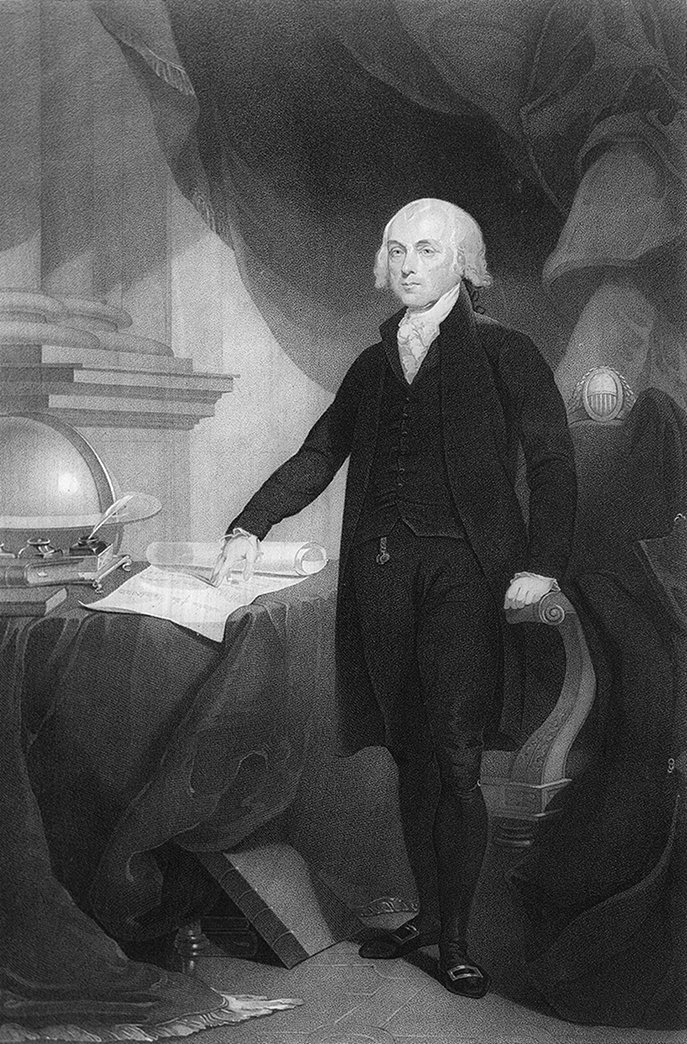
James Madison, principle author of the Constitution

The Framers of the Constitution decided to create a very powerful executive (the President of the United States–even though most Americans distrusted giving so much power to one individual), partly because the first person that they assumed would be President, George Washington, was a man they could trust.

In the space of 226 years, the Constitution has only been amended 27 times, and 10 of those times occurred in one year, 1791—the Bill of Rights, the first 10 Amendments of the Constitution, which were brought about by the opponents of the ratification of the Constitution. The Anti-Federalists only agreed to support the adoption of the Constitution if it would be immediately amended with a clear list of the rights of the people.

The Constitution grants sovereignty to “the people,” but “We the People,” the first three words, appears to mean “citizens,” which at the time the Constitution was written included only adult white males of property, at the most 20% of the population. White paupers, Indians, Blacks, Women and Youth were disenfranchised (no votes, no power) by the Constitution. For the first fifty years, poor Whites were not given the right to vote. Slaves were freed by the 13th Amendment (1865), given civil rights by the 14th Amendment (in 1868), and given the right to vote (free adult black males) by the 15th Amendment (in 1870). In 1920, adult Women were given the right to vote (19th Amendment). American Indians are only mentioned once in the Constitution, and were not made citizens until 1924; since then, Indians have often been denied the right to vote by states and localities.

The Voting Rights Act of 1965 ensured that all citizens can vote irregardless of racial and ethnic background. The right to vote was extended to young people between age 18 and 21 in 1971 (the 26th Amendment). Today, Children under the age of 18 cannot vote, yet this group is the most defenseless and the poorest in America, especially if Black, Hispanic, or Indian children.

Even if many people have been disenfranchised in America over time, a majority of citizens today typically do not care to vote, disenfranchising themselves.

Democracy is a word that comes from the Greek, meaning rule (cratia) of the people (demos). Democracy involves the people, citizens, who have certain rights and responsibilities: the right to speak, believe, meet, and move; the responsibility to vote, participate, legitimize the government, and protect one-another.

Democracy involves debate and disagreement by people who are involved in a common pursuit of what is right and good. Democracy thrives on different points of view. But it also thrives on the respect people have for different points of view, and allowing those who disagree to disagree without feeling threatened.

The Framers of the Constitution feared mob rule, feared the common people, feared that the people would be captivated by a demagogue, feared that most Americans would not have the sense to think, to participate, to discuss intelligently, to disagree respectfully. They feared violence, disorder, intimidation, silencing the other.

So, whose democracy is it, anyway?

Posted in American History, Government | Tagged , , , | 1 Comment

Liberty or Order?

The title of this essay, Liberty or Order?, has been a headline in the news recently. Indeed, it is one of the longest running headlines in the American news media. The first newspapers in America, printed in the early 1700s, frequently printed the headline—or something like it. Often the headline has been posed less as a question and more as a mandate: liberty then order, or, order then liberty. The question has intrigued thinkers for millennia. The Athenians of the fifth century, BC, asked it when they invented the idea of democracy. The Romans at the same time asked it when they invented the Republic. The question intrigued Cicero and Caesar in the first century BC. Since then it has constantly been on the minds of political thinkers, whether conservatives seeking more order than liberty, or liberals seeking more liberty than order. Magna Carta was signed by King John II in the shadow of the debate over liberty or order. The English Civil War was fought to reconcile the issue. The participants of the American Revolution, and after it the French Revolution, furiously (and violently) debated the issue. It was central to the debates among the Lincoln administration during the Civil War. It entered foreign policy discussions during the administration of Woodrow Wilson. It was a hot topic when Roosevelt proposed the New Deal. Liberty or order became a life and death issue during World War II and in its aftermath, when America stood opposed to the Soviet Union, while McCarthyism raised its ugly head at home in the 1950s. It was again a frequent headline in the 1960s during the Vietnam War. More recently, since 9/11, the issue of liberty and order dominates political discussion, especially in the wake of the creation of the Department of Homeland Security, and the government’s attempts to stifle terrorist acts in America. A few years ago, Christopher Dodd, Connecticut Democrat and presidential contender, stated in an interview on NPR that he disagreed with the Republican contention, as enforced by the Bush administration, that Americans should be “more secure with less rights.” It reminds me of the New Hampshire license plate, “Live Free or Die.”

There have been a variety of great philosophers over the centuries who have considered the issue of liberty or order. Two of the most important, especially in respect to American government, were Thomas Hobbes and John Locke. Hobbes and Locke were English philosophers who lived and wrote during the 1600s, at the same time as the founding and development of the British-American colonies. Hobbes was the philosopher of the English Restoration (1660), when Charles II ascended the throne of England, restoring monarchy to the realm. Locke was the philosopher of the Glorious Revolution (1689), when James II was exiled and William of Orange made king. Hobbes is best known for his book, Leviathan. Locke is known for his Letter Concerning Religious Toleration, Essay Concerning Human Understanding, and Treatises on Civil Government.

undefined

Thomas Hobbes

Hobbes wrote Leviathan to argue that a strong orderly government, particularly the rule of one man (monarch), was the best way to ensure liberty, since without order people cannot experience the freedom to go about their business unimpeded by criminals and harassed by those who live a different lifestyle. Hobbes assumed that humans are inherently sinful, evil, hence will constantly be tempted to hurt others, to make war, as it were, on their fellow humans.

Locke wrote Treatise on Civil Government to argue that order comes about naturally through liberty, since humans are inherently good. Though humans can live together without a structured government, they voluntarily choose to associate or incorporate themselves in government to ensure their own survival, even prosperity.

undefined

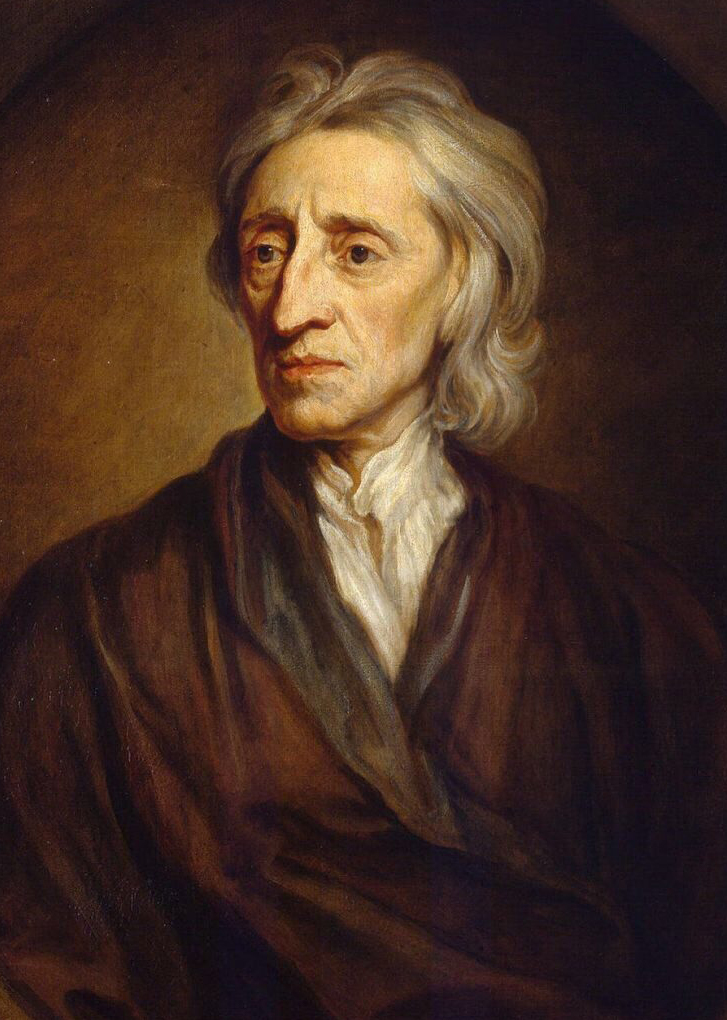
John Locke

So who had it right, Locke or Hobbes? Is liberty or order the best platform upon which to build government?

Posted in Government | Tagged , , , , | Leave a comment

Healing History

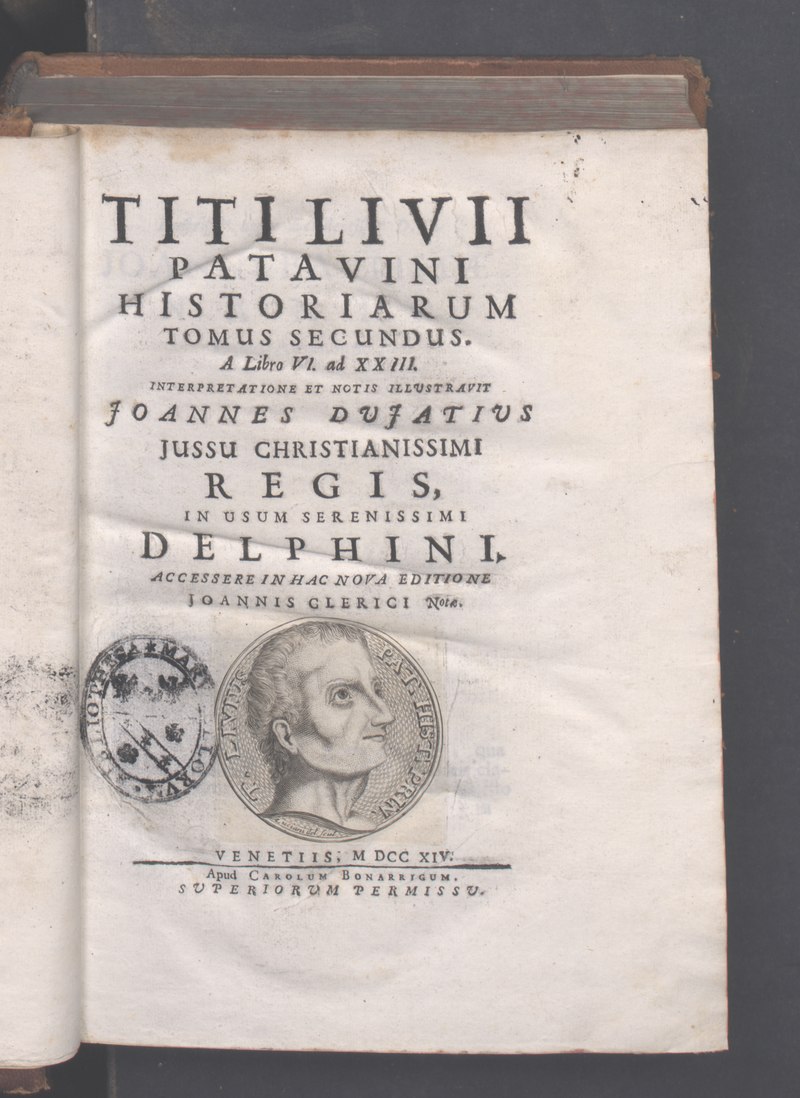
Two thousand years ago Titus Livius, in his History of Rome, declared that his book, indeed any narrative history of human events told with empathy and truth, is therapy for mental malaise, especially the malaise that is a product of conspicuous consumption, avarice, lust, fear, violence, narcissism, and all of the other sins that beset humankind. History is therapeutic, Livy argued, because its study is the means by which a person can find the good in past human behavior to imitate, and discover the evil in past human behavior to avoid. History provides a didactic purpose of moral reform.

undefined

Does it still? Is this still the point behind historical inquiry, to educate people in moral behavior, to teach them how to act, how to achieve contentment? I wonder . . . especially in our age of cultural and moral relativism, where “anything goes” seems to be the moral prerogative of people—as long as one’s behavior does not apparently hurt anyone else (no matter what it does to the self), then the behavior is acceptable

One argument against didacticism in historical study is that there is no longer a recognized universal moral system that unites people of such diverse cultural, ethnic, racial, religious, and philosophical backgrounds. Narrative history such as Livy wrote tends to reflect the worldview of the writer who typically represents the majority view of the time, leaving out the cultural, ethnic, and racial minorities.

Livy wrote, however, during a golden age of historical inquiry, when the likes of Tacitus and Plutarch wrote. Plutarch, the author of Lives and Moralia, believed that the historian/biographer should treat the past like a person inviting a guest to visit; Plutarch would settle down to his writing desk and, looking through the writings of Caesar (for example), invite the Roman general and writer, as it were, to sit down with him, and vicariously discuss the issues and ideas of his time. This dialogue with a person of the past allowed Plutarch to build an intellectual and empathetic connection with the past person, which allowed the subject and object (Plutarch and Caesar in this case), to join together, seeing what united them, what divided them, and discovering the common human experiences, feelings, and thoughts that bridge time and place.

undefined

The dialogue with the past is the didactic purpose behind historical inquiry that I seek to reproduce and engender in my writing. This is the kind of moral history that I believe in. When two humans—and many more—join together in a dialogue, enabled by surviving historical sources, joining feelings and thoughts together, then I believe the historian and his/her readers discover what is universally true in human affairs, and yes, as Livy would have it, what is the good to imitate, and what is the evil to avoid.

Posted in Biography, books, Christianity | Tagged , , , , | 2 Comments

Time and the Church

The Church, that is, organized Christian religion, has always struggled to make sense of time. The date of Christian holy days, such as Easter and Christmas, has been under dispute for centuries. Some Christians in the past, and even today, are annoyed that Christ’s birth and resurrection are celebrated during pagan ceremonies of the winter solstice and spring equinox. The Christian calendar begins with the year 1, anno domini, yet Jesus most certainly was not born on this year, rather in any one of a dozen years before or after 1 A. D. New Testament writers refused to date annual events except according to the system of dating used by the Romans. The first great Christian historian after Luke, Eusebius of Caesarea, was very unclear when Jesus was born, and it was not until Dionysius Exiguus in the 6th century that a system, ante Christos and anno domini, became accepted by the Christian world. Yet even in the past century the Church has gone along with the politically correct decision to change BC/AD to BCE/CE—Before the Common Era and Common Era—essentially denying that the Western dating system has anything to do with Jesus of Nazareth.

Many Christian denominations are beholden to the Christian calendar according to the supposed chronology in the life of Jesus. The calendar begins with Advent, then proceeds to Christmas, Epiphany, Lent, Easter, Pentecost, and Ordinary Time until Advent returns in late autumn. Hymns, liturgy, prayers, and sermons are guided by this calendar, and some of it can be quite moving and wonderful; but as with anything repeated over and over, it often becomes stale and repetitive, requiring new ideas, new approaches, new ways to celebrate the same events. Indeed, liturgy in more formal Christian denominations can be mystifying to outsiders, and even to insiders, the participants and members, the words are said and the hymns are sung, not always with meaning and feeling.

Even more perplexing is the scriptural basis for the church calendar, indeed for the church itself. Jesus rarely used the word ekklesia, which meant not church, rather assembly. Indeed, he was extremely vague as to how his followers should go about spreading the good news, loving one another, doing God’s will. Once, in the Gospel of Mark, he is told that his mother and brothers are waiting for him, and he responds that those who do the will of God are his mother and brothers. The will of God, he says over and over, is to love: others, friends, enemies. Jesus sometimes preaches to a group of people, sometimes to individuals. The New Testament can speak to groups, and to the individual. The assembly of believers, the ekklesia, might be people in a certain community who join a set organization, but it can refer to people worldwide, in different places reading the same words, worshiping the same God, or it can refer to people across time and place, those who a thousand years ago worshiped God and those who worship God at this particular moment. Doing the will of God matters little when one does it, at what season one does it, or where one does it, alone or with others. Doing the will of God is something not subject to the constraints of time and place, to the Christian calendar or the Church. Love, after all, cannot be set by the clock, the calendar, the venue, or the particular people joined together. Love is timeless, placeless, simply love.

Posted in books, Christianity, God's Providence | Tagged , , , , | Leave a comment

The Sea Mark and Missionaries

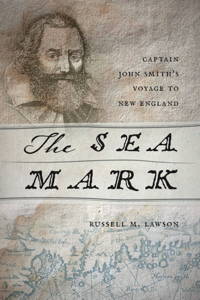
New book The Sea Mark: Captain ‘s Voyage to

Fulbright Canada tweeted today about my latest book, The Sea Mark: Captain John Smith’s Voyage to New England. I was a Fulbright Visiting Research Chair at Brock University in Ontario in 2010, during which time I taught a class on the History of the First Nations of Canada and researched Anglican missionaries to the First Nations during the 18th and 19th centuries.
It was during this Fulbright sabbatical that I began to consider the various expressions of missionary work in America. I studied Roman Catholic, Methodist, Baptist, and Anglican missionaries to American Indians throughout North America. As I studied Anglicans, I realized that the Great Commission, Jesus’s command to his disciples to spread the Good News to all nations, to the whole creation, was something that motivated many more people than just missionaries and priests. Indeed, many of the sailors and explorers who crossed the Atlantic to North America seemed to have had the Great Commission in the fore, or at least in the back, of their minds. I found this to be the case with John Smith, who though he was a man of action, soldier and discoverer and colonist, still believed that he was driven by God’s will, which included the Great Commission.
There were many sides to John Smith, as there were many sides to other explorers and discoverers of America. They  had many failings, they committed many sins. But part of their motivation was the Great Commission, and God’s commandment to love one-another.
Posted in Biography, books | Tagged , , , , | Leave a comment

Jesus and Time

Time is a mystery. Is time a physical phenomenon? Is it a geologic phenomena? Does time exist outside of human consciousness? Is time absolute or relative? Why do humans put so much emphasis on time, so that we gauge our entire lives by hours, days, months, years?

The Bible, Old Testament and New Testament, says little that is concrete about time. Time, indeed, seems more of a metaphor for passing than an exact instrument of measuring movement. Like all ancient literature, there are no dates, no clear chronology, in the Bible. And yet Jesus, as the Gospels record his comments and sayings, appears to have been very aware and concerned about time.

Take Matthew chapter 6, after Jesus tells his disciples that one cannot serve both God and Mammon. Mammon–riches–are acquired in time: people spend their hours, days, weeks, months, and years trying to figure out how to gain property and accumulate riches. Jesus brings Mammon down to an everyday level: the food we eat, the clothes we wear. He cautions the disciples not to spend their days worrying about food, drink, clothing, and shelter. Life is more than this.

Anxiety adds little to our existence, yet, Jesus implies, people spend their days anxiously trying to secure food, drink, clothing, property, wealth, riches. He argues that if God provides for the birds of the air, the flowers of the field, then God will provide for us.

Each day has it owns challenges, its own evil. One should focus on the moral challenges of the day rather than what to eat and drink. Each moment should be savored for the life that is being lived rather than constantly anticipating what will happen next, what I will eat and wear and where I will go to do it.

I constantly feel oppressed by time and worry over its passing and the passages of my family and my life. I seem to want to record or grasp hold of passing moments, perhaps to the exclusion of actually experiencing and savoring them. Each moment is a gift from God and should be savored—one doesn’t know how many such moments one has in life, how many are left. On the other hand, I have also felt dissatisfied in various moments, like I cannot wait for them to pass to get to another time, another day, another week. I feel restless and often at a loss as to what to do. My books often seem to be a panacea for this restlessness, but in the act of writing them I am restless for the end of the book to come and for the next project to begin. What folly!

Jesus taught that there are increments of transcendent truth found in the everyday, in the isolated moments of existence, in the sensations and feelings that appear real if fleeting, true if just for an instant, that we can gleam from everyday life. We hardly see them in the distractions of the moment but these increments we see combined as we reflect on the past in retrospect, and we see revealed the transcendent, that truth exists.

Therefore, he says, don’t be anxious for tomorrow, for tomorrow will have enough in it to produce anxiety. Think of today, the present, and achieve contentment now, in God. Each day has it own challenges, its own evil: to find peace–rather than a good dinner and excellent glass of wine–is the key to happiness, to living as Jesus taught us to do.

Posted in Christianity, God's Providence | Tagged , , | Leave a comment