Time and the Church

The Church, that is, organized Christian religion, has always struggled to make sense of time. The date of Christian holy days, such as Easter and Christmas, has been under dispute for centuries. Some Christians in the past, and even today, are annoyed that Christ’s birth and resurrection are celebrated during pagan ceremonies of the winter solstice and spring equinox. The Christian calendar begins with the year 1, anno domini, yet Jesus most certainly was not born on this year, rather in any one of a dozen years before or after 1 A. D. New Testament writers refused to date annual events except according to the system of dating used by the Romans. The first great Christian historian after Luke, Eusebius of Caesarea, was very unclear when Jesus was born, and it was not until Dionysius Exiguus in the 6th century that a system, ante Christos and anno domini, became accepted by the Christian world. Yet even in the past century the Church has gone along with the politically correct decision to change BC/AD to BCE/CE—Before the Common Era and Common Era—essentially denying that the Western dating system has anything to do with Jesus of Nazareth.

Many Christian denominations are beholden to the Christian calendar according to the supposed chronology in the life of Jesus. The calendar begins with Advent, then proceeds to Christmas, Epiphany, Lent, Easter, Pentecost, and Ordinary Time until Advent returns in late autumn. Hymns, liturgy, prayers, and sermons are guided by this calendar, and some of it can be quite moving and wonderful; but as with anything repeated over and over, it often becomes stale and repetitive, requiring new ideas, new approaches, new ways to celebrate the same events. Indeed, liturgy in more formal Christian denominations can be mystifying to outsiders, and even to insiders, the participants and members, the words are said and the hymns are sung, not always with meaning and feeling.

Even more perplexing is the scriptural basis for the church calendar, indeed for the church itself. Jesus rarely used the word ekklesia, which meant not church, rather assembly. Indeed, he was extremely vague as to how his followers should go about spreading the good news, loving one another, doing God’s will. Once, in the Gospel of Mark, he is told that his mother and brothers are waiting for him, and he responds that those who do the will of God are his mother and brothers. The will of God, he says over and over, is to love: others, friends, enemies. Jesus sometimes preaches to a group of people, sometimes to individuals. The New Testament can speak to groups, and to the individual. The assembly of believers, the ekklesia, might be people in a certain community who join a set organization, but it can refer to people worldwide, in different places reading the same words, worshiping the same God, or it can refer to people across time and place, those who a thousand years ago worshiped God and those who worship God at this particular moment. Doing the will of God matters little when one does it, at what season one does it, or where one does it, alone or with others. Doing the will of God is something not subject to the constraints of time and place, to the Christian calendar or the Church. Love, after all, cannot be set by the clock, the calendar, the venue, or the particular people joined together. Love is timeless, placeless, simply love.

Posted in books, Christianity, God's Providence | Tagged , , , , | Leave a comment

The Sea Mark and Missionaries

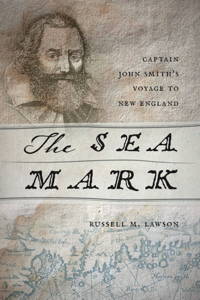
New book The Sea Mark: Captain ‘s Voyage to

Fulbright Canada tweeted today about my latest book, The Sea Mark: Captain John Smith’s Voyage to New England. I was a Fulbright Visiting Research Chair at Brock University in Ontario in 2010, during which time I taught a class on the History of the First Nations of Canada and researched Anglican missionaries to the First Nations during the 18th and 19th centuries.
It was during this Fulbright sabbatical that I began to consider the various expressions of missionary work in America. I studied Roman Catholic, Methodist, Baptist, and Anglican missionaries to American Indians throughout North America. As I studied Anglicans, I realized that the Great Commission, Jesus’s command to his disciples to spread the Good News to all nations, to the whole creation, was something that motivated many more people than just missionaries and priests. Indeed, many of the sailors and explorers who crossed the Atlantic to North America seemed to have had the Great Commission in the fore, or at least in the back, of their minds. I found this to be the case with John Smith, who though he was a man of action, soldier and discoverer and colonist, still believed that he was driven by God’s will, which included the Great Commission.
There were many sides to John Smith, as there were many sides to other explorers and discoverers of America. They  had many failings, they committed many sins. But part of their motivation was the Great Commission, and God’s commandment to love one-another.
Posted in Biography, books | Tagged , , , , | Leave a comment

Jesus and Time

Time is a mystery. Is time a physical phenomenon? Is it a geologic phenomena? Does time exist outside of human consciousness? Is time absolute or relative? Why do humans put so much emphasis on time, so that we gauge our entire lives by hours, days, months, years?

The Bible, Old Testament and New Testament, says little that is concrete about time. Time, indeed, seems more of a metaphor for passing than an exact instrument of measuring movement. Like all ancient literature, there are no dates, no clear chronology, in the Bible. And yet Jesus, as the Gospels record his comments and sayings, appears to have been very aware and concerned about time.

Take Matthew chapter 6, after Jesus tells his disciples that one cannot serve both God and Mammon. Mammon–riches–are acquired in time: people spend their hours, days, weeks, months, and years trying to figure out how to gain property and accumulate riches. Jesus brings Mammon down to an everyday level: the food we eat, the clothes we wear. He cautions the disciples not to spend their days worrying about food, drink, clothing, and shelter. Life is more than this.

Anxiety adds little to our existence, yet, Jesus implies, people spend their days anxiously trying to secure food, drink, clothing, property, wealth, riches. He argues that if God provides for the birds of the air, the flowers of the field, then God will provide for us.

Each day has it owns challenges, its own evil. One should focus on the moral challenges of the day rather than what to eat and drink. Each moment should be savored for the life that is being lived rather than constantly anticipating what will happen next, what I will eat and wear and where I will go to do it.

I constantly feel oppressed by time and worry over its passing and the passages of my family and my life. I seem to want to record or grasp hold of passing moments, perhaps to the exclusion of actually experiencing and savoring them. Each moment is a gift from God and should be savored—one doesn’t know how many such moments one has in life, how many are left. On the other hand, I have also felt dissatisfied in various moments, like I cannot wait for them to pass to get to another time, another day, another week. I feel restless and often at a loss as to what to do. My books often seem to be a panacea for this restlessness, but in the act of writing them I am restless for the end of the book to come and for the next project to begin. What folly!

Jesus taught that there are increments of transcendent truth found in the everyday, in the isolated moments of existence, in the sensations and feelings that appear real if fleeting, true if just for an instant, that we can gleam from everyday life. We hardly see them in the distractions of the moment but these increments we see combined as we reflect on the past in retrospect, and we see revealed the transcendent, that truth exists.

Therefore, he says, don’t be anxious for tomorrow, for tomorrow will have enough in it to produce anxiety. Think of today, the present, and achieve contentment now, in God. Each day has it own challenges, its own evil: to find peace–rather than a good dinner and excellent glass of wine–is the key to happiness, to living as Jesus taught us to do.

Posted in Christianity, God's Providence | Tagged , , | Leave a comment

Time, the Healer

There is an expression often used by the wise that time is the great healer, which of course means that as time passes people forgive wrongs done to them, scars slowly fade, and the memory of what was once so important, so terrible, slowly dims and is forgotten.

Time is a healer both for the individual as well as the society and culture at large. There have been many horrible actions taken by a government over its people, or by one group over another. Some of these wounds have not quite healed in America: for example, slavery perpetrated against African-Americans and, after the 13th Amendment outlawed slavery, its by-products in Jim Crow laws and the many forms of racism that continue to haunt and hurt people in the present. Likewise American Indians succumbed to the onslaught of aggressive government policies and greed among American land speculators and bigotry among white settlers that continue to hurt and haunt.

The passing of the years, the movement from one generation to the next, and the distance from past times of evil and woe, allow people to find a measure of contentment, tarnished some by the memory of past wrongs—but the wrongs become fewer and they are mitigated by a society that is increasingly aware of the wrong-headed policies and beliefs of the past.

Race-relations among whites and blacks, whites and American Indians, have clearly become less violent, more peaceful, and although there are some who hold on to past views and past wrongs, more people today in America accept others of different skin color, different beliefs and customs. We are truly becoming a more tolerant, multi-cultural society.

Time heals: it is a natural occurrence, a blessing brought by the passing moments of our lives as we move from youth to adulthood to old age.

Such healing cannot be rushed. Such healing cannot be legislated. A government that tries to force upon people a head-on confrontation with past wrongs and biased views stirs up people, makes people hope for premature change, inflames passions, and as a result violence often erupts.

Artificial healing, artificial removal of past wrongs and memories, doesn’t work. People must be allowed the time to forgive and forget. Natural ways are best. Time naturally heals. Let us embrace this slow movement of change, rather than trying to force it, artificially, by laws, directives, and the false promises of demagogues.

Posted in Christianity | Tagged , , , , | Leave a comment

History and Miracle

What is a historian to do about miracles, events in time that break the rules of natural law and sensory evidence, products of a supernatural force, that is, God?

The easiest approach is, of course, to reject all theism, to put on the atheist’s mantle, and say simply that miracle, anything supernatural, has not occurred, does not occur, will not occur.

But anything that cannot be fully explained, that is out of the ordinary, might have a supernatural basis. If we cannot quite explain the creation of the universe, or what the nature of time is, or how genetic mutation occurs in life, or from where life originates in the first place, or what happens at death—or the many other countless questions that humans have pondered and for which we have no definite, scientific, logical answer—then how can we be certain, how can we know for sure, 100%, that a supernatural force, God, has not been behind it, created it, willed it, planned it?

There have been many skeptics over the centuries who have questioned, ridiculed, declared insignificant anything that cannot be explained by humans, by science. David Hume the English skeptic criticized those who accept miracles described in the New Testament with the argument that any argument based on sensory evidence is stronger than an argument based on hearsay evidence. Thomas Paine, in The Age of Reason, represented Deists of the 18th century in condemning the New Testament as nonsense to the rational mind: How can a person who is dead live again? How can a person walk on water? How can water be turned into wine? These things do not happen, and contradict natural law.

Yet consider: If there is a God, if that God is active not passive, if that God has power and uses it, even the power to listen to prayers and respond, if God is the God of Creation, the maker, even the originator, of all things, if God is outside of time in the one moment and sees all things, knows all things, then why cannot such a God of creation of time, of knowledge, hence of power, cause the physical and material world, time and space, to alter according to His will?

To us who live in time and space, living moment by moment in the material world, the normalcy and predictability of it, of the laws of nature, are expected and assumed by our observation and confirmation of the process of cause and effect. But God and His ways are so different, so beyond our comprehension limited by time and space, that it requires singular arrogance to assume we know, and only what we know and observe, or hypothesize and predict, can exist, and therefore eliminate all miracle or the supernatural.

The eighteenth-century historian and scientist Jeremy Belknap, in his book, Dissertations on the Character, Death & Resurrection of Jesus Christ, argued that if we assume other ancient works written by reasonable humans, such as Plato and Aristotle, are legitimate sources, if accounts of people observing things and recording them, like Livy and Plutarch, are legitimate, then why not the Gospels as well? If we assume that Plato’s account of the death of Socrates in Phaedo is a legitimate source, then why not John’s account of Jesus’s death in the fourth Gospel? Belknap correctly argued that the Deist assumption of the regularity and order of the created universe requires as much faith as the Christian assumption of the divinity of Christ. Besides, Belknap argued, to read and analyze the New Testament requires more than a purely credulous mind, rather a mind seeking “sensible demonstrative proof.” Even Jesus’s disciples doubted what he did and taught, but in time “there was an exercise of reason in judging of the evidence, and the result was conviction and faith.” No one can read the Gospels without the exercise of reason that “applies to his understanding, judgment, conscience, will and affections.”

Belknap, who was a leading scientist of his day, played Hume’s (and Paine’s) game, trying to conform the New Testament to standards of human science. But think: Jesus in the Gospels repeatedly challenges our basic ideas, received tradition, expectations, customs, and thoughts with his teaching, some of which can appear almost foolish. Clearly the Gospels have to be read with feeling and intuition more than logic and science.

undefined

The Apostle Paul noted that the foolishness of God surpasses the weakest human wisdom. God uses weakness, foolishness (the weakness of logic and reason) to accomplish his purposes and make known his strength.

Jeremy Belknap argued that there are two Scriptural foundations for belief: the written scriptures of the Old and New Testament and the Elder Scripture of God’s works in nature. Humans must approach both of these sources of scripture with reason, study, analysis, and thought. Science and logic applied toward natural history, Elder Scripture, is clearly justified, just as using reason when studying the written scriptures. There has to be a balance—of faith and reason, credulity and incredulity, intuition and logic analysis, deduction and induction. One must bring the objective and subjective mindsets to bear on any object of inquiry, whether it be the Gospels, natural history, human history, science, God, or miracle.

If miracle then exists, how does it occur in time, in history? When are events in the past and present contingent, happenstance, or the product of the will of God? How is the historian to interpret the amazing, and unexpected, events of the past?

Posted in American History, books, Christianity | Tagged , , , , , | Leave a comment

The Great Commission, Love, and Science

Go into all the world and preach the gospel to the whole creation.”

I have written a previous post about the Great Commission, as recorded in the Gospel of Mark, which is the basis for Christian missionary activity for the past two thousand years.

But the Great Commission is about much more: it is the driving force of love in Christianity, and perhaps, a driving force behind science during the past two millennia.

Commissioners, those acting upon the Commission of Christ, to spread the Good News, the Word, to the whole creation, are, in short, spreading love to the whole creation.

Commissioners traveled, explored, discovered, met with others, learned. All that they learned of God’s creation, natural and human, served to increase knowledge, that is, to penetrate a bit of what God is the sum of.

To work for, travel for, sacrifice for, God, is to have faith. Faith in God yields faith in self. God is the unyielding source of power and strength, the food that continually feeds, the drive that never ceases, the love that never forsakes. Love of God yields love for all of God’s creation, including love for self, love for humankind, love for nature. Love of self is the propeller for action to move in time according to a set purpose. When one feels God’s love one feels love itself, toward oneself and toward others.

It is noteworthy that the Apostle Paul makes this love for God and God’s creation the first point in his writings. In Paul’s first epistle, not in order of when written but in the New Testament–the Letter to the Romans–he said that since the beginning of time the creation itself is a testimony of God’s works and love; this awareness of God in nature is intuitive to humans, and it takes great arrogance to deny God’s existence when it is apparent in all that we see. If all humans sense God, and God is love, then all humans know God’s love. The more we know of nature, the more we know of God.

The key to world peace, to peaceful interaction, not confrontation, among peoples, is the ability to feel consciously God’s love, to encourage and sense it in others, and to share it with those who have not yet sensed it. The missionary’s ultimate goal is therefore spreading the love of God. To spread it is to feel it, to know it in oneself, and it is to recognize it in all God’s works.

This is the essence of piety, to feel overwhelming love for God because of awareness of all God’s gifts of knowledge, life, love, purpose. What God has given is awe-inspiring. The pious scientist studies natural and human history to achieve this awareness. Natural and human history, seeing God’s works over time and the wonderful intricate patterns and consistency of it all, yields continual piety, awe, in God’s plan and God’s creation. The scientist who examines cause and effect, patterns, explanations for phenomena in human and natural history, discovers God’s consistency, regularity, and order—in short, God’s love. The study of natural history is therefore the study of the origins and reasons behind the whole creation.

As the Gospel of John says, through Him [the Word] all things came to be. It has only been in the past century and a half that some humans have decided that science and religion are at odds. But to examine the history of science for the many centuries before the 1800s is to see that science and religion were joint enterprises leading to the same goal: knowledge of God.

Perhaps the skepticism among scientists, philosophers, even theologians of the past 150 years is an aberration in the whole course of things. Perhaps as our knowledge grows of the unity among all things in the universe we will become aware again that love is the basis for the entire creation. Knowing that love is behind all things, perhaps we will commit ourselves to loving all things: other humans, animals, the environment, the Earth, the universe.

For an example of an American missionary, see

Posted in American History, Biography, Christianity, Great Commission | Tagged , , , | 5 Comments

Rescuing the Dead

One of my favorite authors is Captain John Smith. Smith, the founder of Jamestown, of Pocahontas fame, was a contemporary of John Donne, William Shakespeare, and Francis Bacon. Smith did not write poetry like Donne, sonnets and plays like Shakespeare, or essays like Bacon; Smith wrote largely autobiographical histories, mostly of his adventures in America. His style is earthy and unrehearsed, plain yet often satirical, and above all, brutally honest.

Captain John Smith was the first historian of America. He defined history, in one of his final books, Advertisements for the Unexperienced Planters of New England, as “the memory of time” and “the life of the dead.” History has been kind to Smith, because he is well-remembered, even four hundred years after the founding of Jamestown. But to most of the dead, history is not kind, particularly to the millions upon millions of anonymous everyday common men and women of the past.

I have tried in my books to follow Smith’s definition of history as “the life of the dead.” The job of the historian is, in short, to rescue the dead.

During the past year I have written a 300 page history of Bacone College, during the course of which I have aimed to “rescue the dead.” How does one accomplish this? How are the dead to be rescued and, in Smith’s words, given life?

In one respect the remains of the dead are all around us. On this campus, in these buildings, on these grounds, the dead were once alive, were once living, breathing humans laughing, crying, experiencing pleasure and pain. But for most people who have lived, worked, and studied at Bacone College over its 135 years, they are long gone, now just simply dead.

The remains of the dead are often governed by chance. Most of what has happened in the past, the actions, words, feelings, of people long dead, have disappeared, are irrecoverable. Fortunately Bacone had a library, and had people, especially faculty and administrators, who wanted to preserve the past and the present, who believed that there was a historical significance to Bacone College. Hence for many years materials and books were deposited in the library in the basement of Samuel Richard Hall. Some are yet there. Most have been moved to the new Betts Library. They were allowed over the years to accumulate dust and mold; some were lost; many have been recovered and restored. Through these documents and photos and other material remains the historian can try to reconstruct the past, to bring life to the dead.

For some people of Bacone’s past, this is quite easy. Almon Bacone, for example, the namesake of the college, left his mark on it in more than his name: his shadow, as it were, falls all across the campus: in its aims and goals, curriculum and reason to exist. Bacone left behind some works—manuscripts, letters, photographs, as well as his body. Yes, that’s right, Bacone College has a cemetery located north of the President’s residence. Almon Bacone was buried in this cemetery in 1896, and he yet still lies there. So there is a very real presence of Almon Bacone on this campus.

Almon Bacone was not the first person buried in the cemetery. He was proceeded by at least one person, a teacher named Alfred Shoemaker. Shoemaker was a Baptist minister in Philadelphia who in 1886 felt the call to travel west and minister to the American Indians. He arrived at Indian University—the original name of the college—in 1886, and taught for only three months before he succumbed to illness. He became quite popular during his short stint, so that everyone—students, faculty, administration, trustees—were affected by his death. People recalled that only a week or two before his death, he had told the students of life, “It is but a shadow. It lasts only an hour; only an hour.” These words are etched on his monument.

Bacone joined Shoemaker ten years later. On his granite monument are these words:

“In memory of Almon C. Bacone President and founder of Indian University, Indian territory. Born April 25, 1830, died April 33, 1896. Erected by his wife, children, pupils, and friends. No man in Indian Territory was more greatly esteemed and loved than President Bacone, who rests from his labors, but his works follow him. ‘Let me die the death of the righteous, and let my last end be like his.’ Numbers 23,10. ‘A Christian school planted in the midst of a people, becomes one of the most powerful agencies in the work of civilization.’ ACB. Hundreds of Indian youth were inspired to a higher life by him, who was actuated by the above and like principles.”

Benjamin Weeks realized, during the course of his twenty-three year administration, which lasted from 1918 to 1941, that Bacone College had been and still was Almon Bacone’s college—Weeks emulated Bacone in everything: mission of the school, curriculum, emphasis on Christianity, reaching out to American Indians. Upon Weeks’s death in 1950, the new president of the college, Francis Thompson, directed the memorial service, during which these lines from Tennyson’s “Crossing the Bar” were read:

“Sunset and evening star,

And one clear call for me

And may there be

no moaning of the bar

When I put out to sea.”

The Bacone Indian, the student driven newspaper of the 1930s, 1940s, and 1950s, quoted just as aptly from the words of English architect Christopher Wren’s gravestone: “If you would see his memorial, look about you.” Indeed, most of the buildings then and now that stand about the Bacone campus are from Weeks’s administration.

Thirteen years before, Benjamin Weeks preached at the memorial service honoring

Mary Prosser Jayne, long-time missionary to the Cheyenne, Arapaho, and Pawnee, who was laid to rest in the Bacone cemetery. During the late 1920s and 1930s, in retirement from active missionary work, Jayne was matron of Barnett Hall, the boy’s dormitory. As she became more feeble, she built a small cottage on campus. Here she died January 5, 1937. President Weeks said of Jayne: “When [the students] were sick, she was their physician; when they were in trouble, she suffered with them; when they were in sorrow, she was their comforter. Words, of which she was so great a master, were not needed for the lesson she taught them. They learned from her a way of life, and they will never forget it.” Her headstone reads: “Mary Prosser Jayne, 1867-1937; Thirty-six years a missionary to the Indians of Oklahoma; Faith, Service, Immortality.”

In death, of course, there are no rich and poor, no great and obscure. Death’s egalitarianism is represented in the Bacone cemetery, where alongside presidents and their wives, faculty, and missionaries, are the graves of people for whom there is no record—they are unknown, at least to us. Such is M. Parker Sleeper, buried in 1891; Bessie Lee Cowan, an infant buried in 1907; and Baby Spinks, buried in 1953. Little is known of these people save their names. Others lying at rest were current and former students when they died. One lonely monument stands to commemorate the life of Abel Archibald, who died in his 23rd year. Abel and his twin brother Cain attended Bacone from 1910 to 1918; they were orphans who lived at the Murrow Indian Orphan’s Home, founded by Joseph Samuel Murrow in Atoka, Oklahoma, and relocated to the Bacone campus in 1910. The Archibald brothers were Creek Indians. Bacone at the time they attended mostly instructed students in the primary and secondary grades; there were also a few college students. Cain and Abel slowly moved from the third to the seventh grades during the eight years that they attended Bacone. Abel succumbed to meningitis in 1921. Another Indian student who lived in the orphanage and attended Bacone was Lovina Wallace, born in 1909, who attended the first grade from 1915 to 1918, and died February 25, 1918. Likewise Solomon Folsom was a sixteen-year old fifth-grader, Bacone student and orphan, when he died in 1915.

In January, 1909, before the Murrow Orphans’s home moved to Bacone, while still at Atoka, ten-year-old Solomon wrote a letter to Joseph Murrow:

“Dear Uncle Row:

I am glad holidays are over and I can go to school again. Miss Rogers says I can soon get into another reader. I like the Bible study. I am beginning to read in the Bible I bought. . . . I love you and Aunt Row.

Your little boy, Solomon Folsom”

Aunt Row was Mrs. Murrow, the former Kate Ellet, who was an instructor at Indian University in the 1880s before she married Joseph Murrow, known to students as Father Murrow, or Uncle Row.

When Solomon Folsom died in 1915, the same year that the Jefferson Highway began, one hundred years ago, students dedicated the school newspaper, the Bacone Chief, to Uncle Row, proclaiming:

Today, a man’s life is reckoned in terms of service rendered. This man has served all men by carrying the Gospel to those who had not heard the call and by helping to establish institutions of learning which have been the means of educating thousands of Indian boys and girls. He has lived a conscientious and godly life. And by doing so, he has ennobled many characters. He is looked upon as a ‘Father’ by many of the Indians. He has the honor of being a member of the committee who helped to establish this university.

There were several hundred students in attendance at Bacone College in 1915. The President, J. Harvey Randall, the pastor the Bacone Baptist Church, and the sixteen members of the faculty and staff, many of whom had been missionaries, promulgated the Word of Christ to the students of the college, most of whom were American Indian. The year before, the Bacone Baptistry, which still stands, was constructed, and dozens of students every year were baptized by the college chaplain and area ministers. Chapel and church services, of which there were many, were held in the chapel, which had been opened in 1914 in Rockefeller Hall. Under Randall, as under his predecessors and successors, the College operated through the generosity of the American Baptist Home Mission Society, wealthy alumni, such as Patrick Hurley, and regional goodwill. Few students had adequate resources to pay for their schooling. All students worked to contribute toward their tuition, room and board. The College, surrounded by acres of land, grew crops and raised livestock. The local newspaper, the Muskogee Times-Democrat, reported that Bacone crops “are the best in the surrounding neighborhood. The farm is also well stocked with a high grade of horses, cattle and hogs, there being some especially fine registered cattle and hogs on the farm.” In 1916, the College purchased “four handsome and aristocratic Holsteins,” making “the Bacone college herd . . . the finest of its class in Oklahoma.” Randall announced “that the farm now has nine of the best Holsteins in the United States, two males and seven females.” Students adopted “the Holstein as the official college cow.” As successful was the poultry farm; many regional Indians bought their poultry from Bacone.

Nevertheless sometimes the college finances were tight, and the menu for breakfast, lunch, and dinner restricted. One student commemorated the Bacone diet, rhyming:

There’s nothing like Bacone beans,

That are eaten by the Bacone fiends.

Beans, beans, beans, morning, noon and night,

Baked, stewed, and fried they are just all right.

Beans in the porridge, beans in the pot,

Beans served cold, beans served hot.

Bean bag socials, beans in College,

Beans, beans, beans make more knowledge.

Bacone College was connected to Muskogee by rail and, in 1915, a highway. Students took the trolley to the city on day’s off. Oklahoma was a dry state (in terms of alcoholic beverages), but there were a number of ne’er-do-wells who brewed and sold illegal spirits. In April, 1915, one man, Charles House, sold liquor to a couple of Indian boys who attended the college. The liquor was “rotten,” and the boys became extremely intoxicated, and landed in jail. The next day, President Randall bailed them out, and addressed a crowd of Muskogee businessmen. “Tears” streamed “down his face.” Randall appealed to the citizens of Muskogee to do something, which they did. The sheriff raided liquor “joints” in an attempt to stifle drinking and gambling.

To try to keep the students occupied the College in 1915 had a the Sacajawea Literary Society for girls and the Sequoyah Literary Society for boys; an active YMCA and YWCA; vocal and instrumental music lessons; holiday parties, picnics, and frequent socials; and athletics such as football, basketball, “soccer football,” baseball, tennis, and track. Boys learned manual training, working with tools, and girls learned domestic science, cooking and sewing. Boys lived in Rockefeller Hall, on the west side of campus, while girls lived in Sacajawea Hall, on the east side of campus. In-between was an area for walking, talking, thinking, and holding hands known as the “heart.” Romance was, however, under the watchful eyes of faculty and administrators, and typically boys and girls could woo only on supervised Sunday afternoons.

There are several unmarked graves in the cemetery, mere stones signifying a person’s remains, one of whom belongs to Janet Treat Rice, daughter of Professor and Mrs. Ambrose C. Rice. Ambrose Rice taught science at Indian University. He was a former Baptist missionary serving in Burma, as were so many of the faculty and staff in 1915. Rice had taught at the Rangoon Baptist College until 1910. He came to Bacone in July, 1912, and his family prepared to move into a “cottage south of the street car line,” a bit away from the center of campus. His little girl Janet, 3 years and ten months old, died July 22, and was buried July 26, 1912.

A colleague of Professor Rice and fellow missionary, Prof. W. A. Seward Sharp, who taught Bible at Indian University, wrote a poem in commemoration of Janet:

Oh thou my bonnie blue-eyed girl

With laughing glee and song,

I’ve wondered, if we worshipped thee,

Our hearts were sadly wrong.

How oft thy head of golden curls,

Brought sunshine in our home,

And led our hearts to follow thee,

Where’er thy feet did roam.

With dimpled hands to help us work

Our labors turned to play,

The darkest hours thy face beguiled

And night was turned to day.

We may not worship thee, ’tis true,

But we shall ever love,

And give again, our gift, to God,

To take thee safe above.

My child, whene’er our Father speaks,

We bow in humble prayer,

And when our toil on earth is done,

We’ll join thee over there.

The verse tells us something of the little girl: that she had blue eyes and sun-shine hair that matched a sunny disposition; she loved to laugh and sing; her parents and all about her adored her; she had soft, plump hands and sometimes helped her mother and father and siblings in simple chores. She was a blessing, and made those who watched her buried yearn to join her in the hereafter.

Yet Janet Rice has been dead for 103 years, and when she died she was but a child, having accomplished nothing comparable to the likes of Almon Bacone, whose monument dominates the cemetery. Many people remember Almon Bacone; few have heard of, much less remember, Janet Rice.

No image, no epitaph, recalls her for us; only a poem.

Michel de Montaigne, the French essayist of the sixteenth century, who spent so many years pondering life and death, had a response to this juxtaposition of the great and memorable and small and insignificant. “We are great fools. ‘He has spent his life in idleness,’ we say, and ‘I have done nothing today.’ What! Have you not lived? That is not only the fundamental, but the most noble of your occupations. ‘If I had been put in charge of some great affair, I might have shown what I could do.’ Have you been able to reflect on your life and control it? Then you have performed the greatest work of all. . . . Our duty is to compose our character, not to compose books, to win not battles and provinces, but order and tranquility in our conduct. Our great and glorious masterpiece is to live appropriately.”

During Janet Rice’s three years, she brought joy to many, and lived appropriately.

Life is a series of singular moments that follow one upon another. In such moments of time are often found a brief portrait of the whole. Hopefully our examination into a singular moment of time that occurred a century ago has allowed us a glimpse into the life of otherwise forgotten or lesser known people, to resurrect, if for a few minutes, the memory of, in John Smith’s words, “the life of the dead.”

Posted in Christianity | Tagged , , | 2 Comments

Captain John Smith: Conqueror, Colonizer, Commissioner

The Sea Mark: Captain John Smith’s Voyage to New England, published by University Press of New England (http://www.upne.com/1611685169.html), juxtaposes three different mentalities and activities: the conqueror, colonizer, and commissioner.

Smith the conqueror was a soldier who believed that whoever was in the way of his interest, that is England’s interest, was expendable.

Smith the colonizer believed it was his and England’s destiny to expand power, increase wealth (and possessions), and control.

Smith the commissioner believed it was his and England’s job to act on the Great Commission, that of Christ to spread the Gospel to all nations.

Are these contradictory or commensurate? What kind of personality combines these three disparate mentalities and activities?

Today, Smith’s three mentalities—conqueror, colonizer, commissioner—appear contradictory, but to him, in his time, they were commensurate.

Smith was an Anglican, convinced that God’s Providence was at work throughout time and in Smith’s own life.

It was God’s will, Smith believed, that he engage in these, to him, commensurate activities of conquering, colonizing, and commissioning the Gospel to the Indians.

The Sea Mark: John Smith’s Voyage to New England, tells the story of this complex man, John Smith, in the context of his 1614 voyage along the northeast American coast, during which he christened the land, New England.

Posted in American History, Biography, books, Christianity, Great Commission | Tagged , , , , , , | Leave a comment

College Students, College Thinkers

Students…
Why are you at college?
What brought you to college?
What motivated you to come to a college rather than to stay where you were, to continue what you were doing?
There are many possibilities…a degree program in criminal justice, health science, physical science, social science, humanities…athletics…a family connection…the expectation that you should do something more, earn more, achieve more…
I submit that something more fundamental was at work in bringing you to college.
Four hundred years ago there lived a great philosopher and mathematician, Rene Descartes. Perhaps you have heard of him. Descartes was one of the great thinkers of his age, seventeenth century Europe. Descartes lived at a time of doubt. There were new theories in science, and dramatic changes to Christianity. Scientists like Galileo were questioning the earth-centered conception of the universe. Protestant theologians, following the lead of Martin Luther, were questioning the very foundations of Christianity. Descartes was not sure what to believe, what was real, what was true. He was a doubter, a questioner, a skeptic. He was one of those who refuse to believe something just because it is taught him. He needed absolute proof before he would commit himself to a system of thought. In his quest for knowledge, for truth, he decided to reduce his search to whatever he could know for certain, without any doubt. He arrived at one principle, one thing in existence that he could not doubt. Existence itself. If he was able to doubt, then he clearly existed. If he was able to doubt, he clearly was able to think. “I am a thinking thing,” he said. He was aware of his own existence; “I am,” he said. And he declared, “I think, therefore I am.” He knew he existed because he was a thinker.
“I think, therefore I am.” Consider this proclamation. There are two things that we all share, two things we are certain of. We are thinkers. We exist.
What does it mean, to think? Descartes wrote: “What then is it that I am? A thinking thing. What is a thinking thing? It is a thing that doubts, understands, affirms, denies, wills, abstains from willing, that also can be aware of images and sensations.” As a thinker he was able to consider, to conceptualize, to analyze, to objectify, to observe, to seek, to question, to answer. To think, to be aware of existence, is to consider time, to reflect upon the past, to anticipate the future, to be aware of action in the present. Thinkers continually examine what is outside themselves according to what is on the inside, that is, they judge the “other” according to the “self.” Thinkers are able to break from the concern of only satisfying their own needs; they are able to break from selfishness; they able to reach out to others, to learn from them, to understand them. Thinkers can consider the foreign without fear. Thinkers can break from fear of the unknown, to make it known. As the Apostle John said in his first epistle, “love knows no fear.” In short, the more one thinks, the more one loves.

“I think, therefore I am.” Someone else proclaimed “I am.” In the Gospel of John, Jesus tells the Jews that he has always existed, that he is the “I am.” And indeed, when we think, we become “I am.” Thinking allows us to know who we are, where we came from, where we are going. Thinking allows us to transcend the moment, to consider not just the present but the past and the future as well. Thinking gives us the ability to see what is transcendent, what is divine, within us.

I believe what brought you to college is not so much academics, athletics, or programs, but the fact that you are a thinker. As a thinker, you ask questions, you seek answers. And there is no better place to question and seek answers than a liberal arts college. This is where you can really think!

undefined

Rene Descartes

Posted in Christianity, General Essays | Tagged , , , , | Leave a comment

The History of Bacone College Symbolized by a Single Work of Art

The Indian Christ in Gethsemane, a painting by Cheyenne artist Dick West, tells the story of the history of Bacone College.

It portrays a young Plains Indian as Christ in western Oklahoma kneeling before God the Father, praying, “Thy Will be Done.”

Dick West’s Cheyenne name was Wah-pah-nah-yah. He grew up on the Cheyenne Reservation in western Oklahoma. The Cheyenne had been relocated to western Oklahoma in the 1870s. They struggled with trying to adjust to a farming lifestyle in an inhospitable environment. The buffalo had long been their mainstay, but in Oklahoma they tried to live on government cattle; they fought against despair, disease, and resentment.

In the 1890s Baptist missionaries arrived at the Cheyenne reservation. One was Robert Hamilton. Another was Mary Jayne. Hamilton struggled to bring the Gospel to a people who were searching for the path or road that would take them from the despair and loss of hope that they felt. Hamilton told them of the Jesus Road: this road would take them from hunger and thirst to satisfaction, from pain and suffering to peace and hope, from the dismal past to the glorious future.

The Cheyenne were reluctant; the traditional tribal road took them on the road of their forefathers, the road where the someday the Indian would be avenged, the road back to the buffalo.

Hamilton was untiring. He relied on Cheyenne interpreters to bring the message of the Jesus Road, and persevered in his goal to fulfill Christ’s Great Commission.

One who had lost her son said that when he died, she had been tempted to throw away the Jesus Road, and take up again her old heathen religion, but that now she could see that it was better to trust in Jesus, and that she could see that His way was right, she asked the church to forgive her for her sinful thoughts, and promised to walk in the ‘Road’ more carefully.”

He was soon joined, in the 1890s, by Mary Jayne, a Baptist missionary from Iowa. She ministered to such people as Lightfoot West, his wife Rena Flying Coyote, and their young son, Wah-pah-nah-yah.

The young boy grew up following the Jesus Road. When he was of school age he attended Concho Indian School, then Haskell Indian School, then in 1936 came to Bacone College. He was now know as W. Richard, “Dick”, West: at Bacone, where he played football, his nickname was Bull West.

Mary Jayne, after a long career as a minister, had been matron to the boy’s dormitory at Barnett Hall, though when Bull West matriculated in 1936 she was in ill health, and died the next year. Bull West served as a pall bearer at her funeral.

At Bacone, Bull West studied art under Acee Blue Eagle and fell in love with piano instructor Maribelle McCrea. After graduating from Bacone, Dick West studied art under Oscar Jacobsen at the University of Oklahoma, then returned to Bacone to marry Maribelle. After serving in World War II, Dick and Maribelle returned to Bacone after the war, Dick teaching art, Maribelle teaching piano.

Tragedy came to this couple in 1952. Maribelle was diagnosed with a brain tumor and was given only half a chance to survive. During the experience of surgery and recovery, Dick painted the Indian Christ in Gethsemane. “Thy Will be Done.”

Maribelle’s friend Margaret Erickson wrote in her Memoirs: “the surgeon said to Dick later, ‘There is something about your wife, something I don’t understand. There was a serenity in our surgery, a serenity in and about your wife that I can’t explain.’ Well, Dick could explain it.”

Maribelle survived, of course. Years later, when Dick was showing a series of paintings called The Indian Christ, including the Indian Christ in Gethsemane, to Plains Indians in western Oklahoma, an “old Comanche Christian . . . said to him, ‘If we had those pictures in the early days when the missionaries first told us about Jesus, it would have helped us to understand him better’.”

The Indian Christ in Gethsemane symbolizes the history of Bacone College.

Bacone was founded in the 1880s by Baptist missionaries to the American Indians. From the beginning it was a source of Christian thought and culture, teaching the Jesus Road, to a peripatetic people who had suffered much and had been forsaken. But as the Chief of the Delawares and one of the original trustees of Bacone College, Charles Journeycake, wrote:

“We have been broken up and moved six times. We have been despoiled of our property. We thought when we moved across Missouri River and had paid for our home in Kansas we were safe, but in a few years the white man wanted our country. We had good farms, built comfortable houses and big barns. We had schools for our children and churches where we listened to the same gospel the white man listens to. The white man came into our country from Missouri and drove our cattle and horses away and if our people followed them they were killed. We try to forget these things but we could not forget that the white man brought us the blessed gospel, the Christian’s hope. This more than pays for all we have suffered.”

For 135 years the college has struggled to survive, struggled to find its path, struggled to keep to the Jesus Road at the same time as trying to direct others on the same path. All of the pitfalls that can be put in the human path—poverty, disease, war, hubris, sin—have been put in the path of this college. And yet it still endures. Why?

If there is an answer to this question, it is, I believe, revealed in Dick West’s painting, Indian Christ in Gethsemane. West and his wife prayed and persevered, accepted God’s will and continued to work, did what they could according to the grace of God.

Live, pray, act, work, and teach others: what more can we do?

For more on the Baptist missionaries of Oklahoma and artists such as West, see Marking the Jesus Road: Bacone College through the Years, newly republished in January 2026 and available on Amazon at Marking the Jesus Road: Bacone College through the Years: Lawson, Dr. Russell Matthew: 9780977244805: Amazon.com: Books

Posted in Christianity, Great Commission | Tagged , , , , | Leave a comment