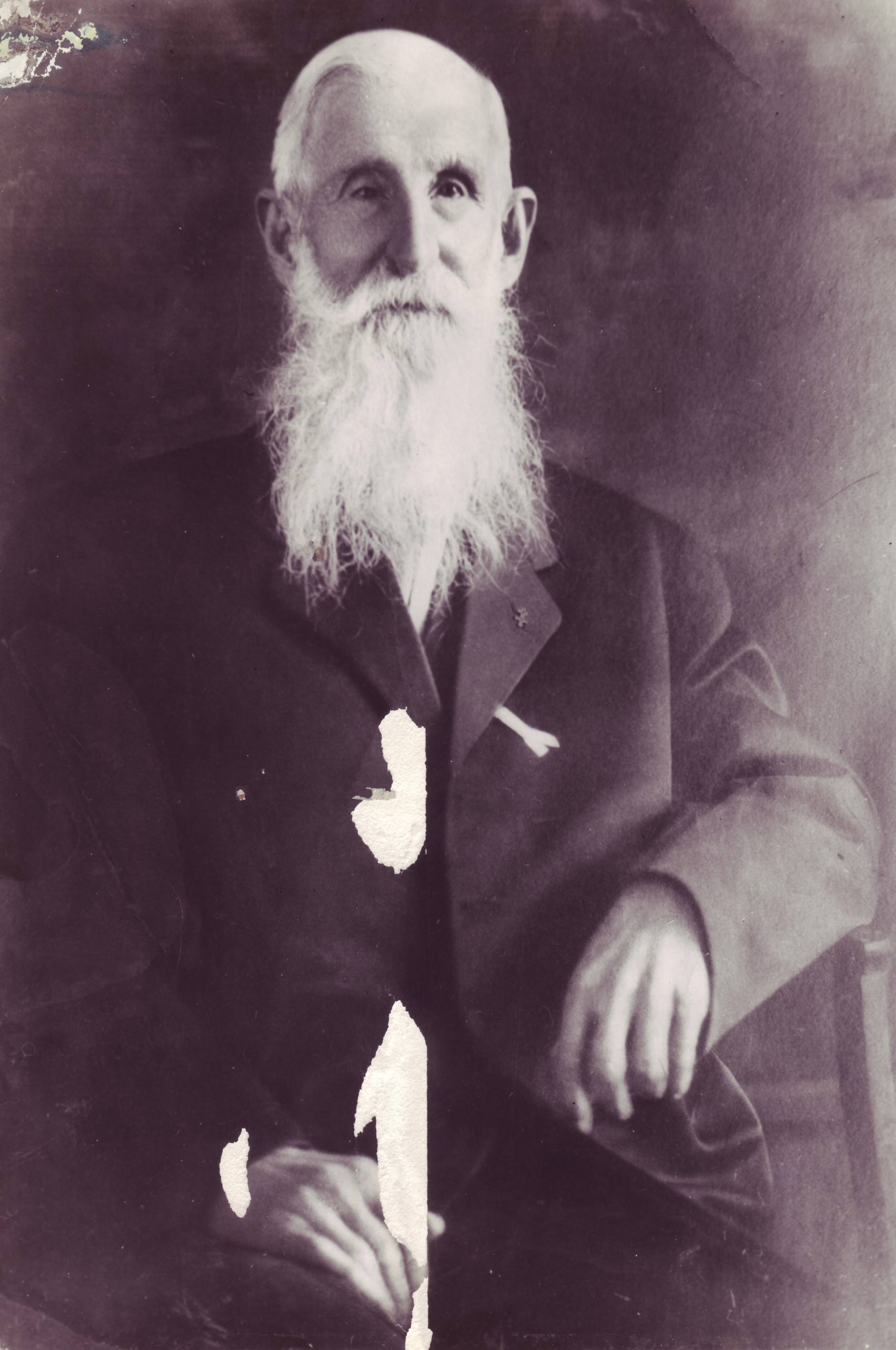
Philo Judaeus the Pious Scientist

Ancient thinkers–philosophers and scientists–of the Mediterranean world knew that wisdom is a universal that transcends individual knowing, an awareness of truth that transcends the individual existence of each person. The Old Testament and New Testament imply that the Creation has this awareness of God’s glory, the truth that is present in all Creation. In his Gospel, John referred to it as logos. Logos was an ancient Greek philosophical construct that united the thinking of Plato and Aristotle, the Platonists and the Stoics. Ancient Hebrew thinkers as well believed in the logos, as the works of Philo Judaeus attest.

It is through this awareness of the logos, God’s word present at the Creation, that Greek, Roman, and Hebrew philosopher-scientists in the centuries before Christ had a deep sense of piety when observing and seeking to understand the Creation. Philo was a contemporary of Jesus, a Pharisee, an intellectual who lived in Alexandria. His Works provide us with the philosophical and scientific underpinnings of his belief that all thoughtful endeavors to understand the universe are pious responses to the glory of God’s Creation. His thinking is profound, as in this statement, from On a Contemplative Life: God “is superior to the good, and more simple than the one, and more ancient than the unit.” In this Philo revealed that he was a student of the works of Plato, that he anticipated the philosophy of the Neoplatonists and their founder Plotinus. and that he knew the mathematics of Euclid. Philo wrote further that “The elements are inanimate matter, and immovable by any power of their own, being subjected to the operator on them to receive from him every kind of shape or distinctive quality which he chooses to give them.” This was precisely the teaching of the Greeks in their understanding of the universe and how the inanimate is formed by the mind of God. He was also influenced by the Greeks in his belief that Moses had been educated in Egyptian philosophy, and through him the Greeks learned of Egyptian philosophical concepts, which resulted in the earliest philosophical and scientific work of, for example, Thales of Miletus. Such was Philo’s faith in God’s Creation that he said simply, God creates not over time but “at once, not merely by uttering a command, but by even thinking of it.” Those who deny this truth, he wrote, deny the source of piety, that God is the Creator and Caregiver.

Anyone who has studied that New Testament knows that the Pharisees and Sadducees were superb if inflexible intellectuals. There was a large contingent of Jewish thinkers in Alexandria after its founding by Alexander at the end of the fourth century BC. These thinkers had studied in depth ancient philosophy and science, particularly that of the Greeks, as the production of the Septuagint suggests. A contemporary of Philo Judaeus was the author of the Old Testament book Wisdom. This unknown Jew probably lived in Alexandria at the end of the first century, BC; hence he provided an additional source to Philo to understand the Jewish approach to science and philosophy. Speaking as Solomon, the unknown writer of Wisdom proclaims: “For both we and our words are in his hand, as are all understanding and skill in crafts. For it is he who gave me unerring knowledge of what exists, to know the structure of the world and the activity of the elements; the beginning and end and middle of times, the alternations of the solstices and the changes of the seasons, the cycles of the year and the constellations of the stars, the natures of animals and the tempers of wild beasts, the powers of spirits and the reasonings of men, the varieties of plants and the virtues of roots; I learned both what is secret and what is manifest, for wisdom, the fashioner of all things, taught me.” This is a succinct summary of Greek science, as represented by the works of Aristotle; for the author of Wisdom proclaims knowledge of epistemology, chemistry and physics, the nature of time, astronomy, zoology, botany, biology, and the knowledge of the transcendent. This knowledge, he claims, is due to God, who provides humans with wisdom, hence eliciting from humans praise and piety.

The other books of the Old Testament, and the New Testament as well, confirm that the many authors of these writings were cognizant of the latest in philosophy and science in the ancient world. Genesis chapter one can easily convince most observers that the myth that Moses brought knowledge to the Greek philosophers has a kernel of truth, especially since the description of the origins of the universe in Genesis is just as sophisticated as those of the great intellectuals among the Greeks, Pythagoras, Thales, Anaximenes, Anaxagoras, Socrates, and Plato. Philo recognized this when he used Biblical and Greek philosophical ideas to describe the Creator: “the active cause is the intellect of the universe, thoroughly unadulterated and thoroughly unmixed, superior to virtue and superior to science, superior even to abstract good or abstract beauty.” Likewise, the Hellenistic author of the Book of Sirach wrote of physicians in the same manner as Greco-Roman writers on medicine: “Honor the physician with the honor due him, according to your need of him, for the Lord created him; for healing comes from the Most High, and he will receive a gift from the king. The skill of the physician lifts up his head, and in the presence of great men he is admired. The Lord created medicines from the earth, and a sensible man will not despise them. Was not water made sweet with a tree in order that his power might be known? And he gave skill to men that he might be glorified in his marvelous works. By them he heals and takes away pain; the pharmacist makes of them a compound. His works will never be finished; and from him health is upon the face of the earth.” Pious physicians “pray to the Lord that he should grant them success in diagnosis and in healing, for the sake of preserving life.”

One of the great achievements of the Greeks was in their understanding of human behavior, the human mind, even what we would call the subconscious mind. The portrait of human behavior is what makes Homer’s works so wonderful. The first century essayist and historian Plutarch recognized this and eulogized Homer’s ability to portray the human psyche as well as the psyche of the world soul. Philo, also, made use of Greek philosophy in his attempts at psychology, writing that human psyches, or souls “are under the mastery of terrible and almost incurable diseases, which pleasures and appetites, fears and griefs, and covetousness, and follies, and injustice, and all the rest of the innumerable multitude of other passions and vices, have inflicted upon them.” Human mental woe is not the product of demons, nor spirits, nor gods, just human sin. Humans bring it on themselves, he argued, just as the greatest psychological portrait of human beings, the Psalms, portrayed time and again. The Psalmist provided such accurate psychological portrayals of humans, their angst and wandering ways, their dependence upon God, their extreme piety even as they fell short in their actions: “O Lord, thou hast searched me and known me! Thou knowest when I sit down and when I rise up; thou discernest my thoughts from afar. Thou searchest out my path and my lying down, and art acquainted with all my ways. Even before a word is on my tongue, lo, O Lord, thou knowest it altogether. Thou dost beset me behind and before, and layest thy hand upon me. Such knowledge is too wonderful for me; it is high, I cannot attain it.”

Psychologists today would do well to combine such piety as portrayed in the Psalms with their analyses and diagnoses, hence providing the most accurate assessment of what plagues human minds. Likewise the ancient Greeks would tell us, and Philo Judaeus as well, that any kind of science—social, behavioral, physical, biological, mathematical—done without reference to the Creative Mind, the Logos, is folly indeed.

This article first appeared in Catholic Exchange.

For more on piety and science, see my book Science in the Ancient World: From Antiquity through the Middle Ages, now in paperback: Amazon.com: Science in the Ancient World: From Antiquity through the Middle Ages: 9798216445173: Lawson, Russell M.: Books

Posted in books, Christianity, European history, History of Science | Tagged , , , , , | Leave a comment

Piety and Science

Records of the human quest for knowledge have existed for four to five thousand years, revealing that as humans have confronted the vastness of the cosmos, as they have watched and listened and felt the natural environment, their response has been an awe, a wonderment, a sensation of the grandeur of the creation, feelings and sensations and thoughts captured by the word piety. For thousands of years and even today nature has captivated humans as an overwhelming entity of mystery that dwarfs any one of us, generating a pious response, demanding reverence, humility, dedication to protect, faith in its continuation. 

Until only recently in the history of civilization, scientific and religious thought were complementary not contradictory. Scientists prior to the modern age were convinced that their research into nature shed light on the divine. The most valid response to God the Creator was a pious attempt to understand His Creation. Implicit in the piety of thinkers was an awareness of the profundity of existence, of life, and the role of the Creator in making and sustaining life.  Not all of these thinkers had the same view about life, but they all respected and had piety toward life in many, if not all, of its forms. 

Examples are many of great thinkers of the past who brought piety to their scientific inquiries. The ancient Greek thinkers Anaxagoras, Socrates, Plato, and Aristotle were pious philosophers, and since until the Scientific Revolution of the past three to four hundred years philosophers and scientists were one in the same, these thinkers were pious scientists. Socrates, Plato, and Aristotle embraced Anaxagoras’ conception of a spiritual, nonmaterial being that creates what is good, what is justice, what is beauty, all that is. Socrates and Plato were more philosophers than scientists, yet they believed that to understand what they called the ideal forms, especially the Good, thinkers must engage in years of what today we would call the liberal arts:  Plato’s student Aristotle embraced these ideas but with a more empirical approach than his teachers. Aristotle utilized experimentation, observation, data collection, analysis, induction, and deduction in books such as Metaphysics and Physics, in which he understood the basis of reality to be an incorporeal transcendent being that, by studying creation in all its forms, the scientist could come to know and understand. Aristotle’s impact on subsequent thinkers was immense: the Hellenistic Age, the Roman Empire, the Middle Ages, the Renaissance, the Age of Science. During the Hellenistic Age (330-30 BC), Hebrew thinkers were heavily influenced by Greek scientific philosophers. For example, Philo of Alexandria brought his piety to bear in some of the great questions facing students of nature. After the Fall of Rome in the Middle Ages, pious scientists such as the late Roman philosopher Boethius, the Spanish encyclopedist Isidore of Seville, the Carolingian philosopher-scientist John Scotus Eriugena, the English philosopher Anselm of Canterbury, the Franciscan philosopher Bonaventure, the Parisian professor Albert Magnus, the Italian-French scientist-philosopher Thomas Aquinas, and the English Franciscan William of Occam intermixed classical inquiries with Christian faith seeking a pious understanding of God the Creator. One of the founders of the Scientific Revolution in Europe, Nicholas Copernicus, brought his pious understanding of the cosmos to bear in arguing for the heliocentric universe. Michel de Montaigne, the French Catholic aristocrat, and Raymond Sebonde, the Spanish Catholic philosopher/scientist, continued to bring the new thinking of the Renaissance to answer old questions about Elder Scripture, the Creation of the world predating Christian Scripture. As the New Science focusing on the ideas of Copernicus and Galileo began to preoccupy European scientists, even skeptics such as Rene Descartes still dutifully practiced his Catholic faith and Blaise Pascal asked some of the most penetrating questions about life, nature, and God. By the nineteenth century, while many scientists began to abandon their Christian faith, others, such as the French-Mexican scientist Jean Louis Berlandier, embraced piety in all of his scientific inquiries. By the time of the twentieth century, human knowledge, creativity, and technology were eclipsing the millennia-long relationship between piety and science. Even George Lemaître, the astronomer-priest, suggested the idea of the Big Bang, the instantaneous beginning of the universe billions of years earlier, without reference to God’s role as the Creator.

As long as humans felt dependent upon nature, hence upon nature’s Creator, piety reigned in thought, culture, society, and science. But when, during the eighteenth and nineteenth centuries, humans began to discover that they could develop machines that overwhelmed the apparent limits imposed on living things by nature and its Creator, humans began to develop a hubris that limited the once long-held piety. Humans came to understand the way nature works, using this understanding to build machines to control nature, even to destroy it. Human creations, human the creator, overwhelmed God’s creation, God the Creator. Some humans even went so far as to eliminate the creator from all inquiry, to assume that what is, has always been, that it is the result of chance, and that humans, godlike, are the masters of nature rather than its servants and dependents. As Henry Adams succinctly expressed in his autobiography Education, the artificially-divine electric motor, the Dynamo, replaced in the temples of worship the sublime god of nature, which he called, with religious and naturalistic symbolism, the Virgin.

Cultural and social influences of the nineteenth and twentieth centuries led to a reconsideration of a divine role in the creation of the universe that is revealed by His works, and more of a general anonymous sense of a great mystery in the universe that could or could not be divine. Indeed, there was a slow conversion from the seventeenth to the twentieth centuries from a providential to a more deistic God then to a more distant perhaps supernatural force that has some sort of a role in the vastness and complexity of the universe, and finally to pure agnosticism and atheism doubting any kind of supernatural agency at work in the universe.  Piety changes during this time from a clear sense of a personal God–in the West the Christian God–to a more generic sense of a Creator God to a more amorphous mysterious presence to nothingness.

The drivers of this paradigmic change away from piety were inside and outside of science. Those inside were new discoveries in physics, chemistry, geology, and biology as well as the development of the professionalization and institutionalization of science with associations/organizations and universities. Those outside were war, industrialization, mechanization, disease, and the modern mentality, the change from a traditional to modern society, as well as the broadening education of the public because of the growth of universities; increasing awareness of human diversity and equality; and forms of communication that spread knowledge and excited speculation. 

Modernity has denied the course of history, in which humans since the beginning of civilization have watched the cosmos and sensed continuity, purpose, thought—the act of Creation. Some thinkers conceived of infinity and eternity in the cosmos; others believed there must be a beginning, imitating life, and like life, there must be an act of creation, a Creator, a being so beyond human conception as to yield astonishment, bewilderment, excitement, and a consequent thirst to know. Ancient thinkers asked: whence does the Cosmos derive? What is the Creator? Can the examination of the Creation reveal the mind and purpose of the Creator?  Throughout time pious scientists such as Aristotle, in his search for knowledge, sought, in Pope Benedict XVI’s words in the encyclical Deus Caritas Est, love, agape: “the divine power that Aristotle at the height of Greek philosophy sought to grasp through reflection, is indeed for every being an object of desire and love– and as the object of love this divinity moves the world.”

Aristotle’s encyclopedic understanding of the Creation inspired thinkers for well over a thousand years. Philosopher/scientists of the later Roman Empire, the Christian and Muslim thinkers of the Middle Ages, those bringing a rebirth to thought and culture during the Renaissance, and subsequent thinkers of the European Scientific Revolution and beyond, were beholden to Aristotle, and before him Plato, Socrates, Anaxagoras, and others of the ancient Milesian School, in their pious attempts to understand the Creation, and through it God.

How in the space of a little more than a century could scientific thinkers go from the natural theology of Edward Hitchcock, author of The Religion of Geology and Its Connected Sciences, to the nihilism of Richard Dawkin’s The Blind Watchmaker? There has been a revolutionary shift in the understanding of the origins of the universe, hence the origins of life itself, and the origin of the purpose and meaning of life, during the past one hundred and fifty years. The drivers of this paradigm shift from piety to nihilism are both inside and outside of science. But where do our existential and metaphysical questions lead us to today? What are the consequences of our modern way of thinking, which is distinct from every other era of human thought? Through this series on piety and science, we aim to explore the human understanding of God inextricably tied to scientific thought, exhibiting the proper role of piety within our understanding of the universe.

This article first appeared in Catholic Exchange.

For more on piety and science, see my book Science in the Ancient World: From Antiquity through the Middle Ages, now in paperback: Amazon.com: Science in the Ancient World: From Antiquity through the Middle Ages: 9798216445173: Lawson, Russell M.: Books

Posted in books, Christianity, European history, History of Science | Tagged , , , , , , | Leave a comment

Jack Kilpatrick’s Vision of Bacone College

One of the more famous Bacone alumni was Jack Kilpatrick, a Cherokee, who graduated from Bacone Junior College in 1935. Kilpatrick was a member of the men’s vocal ensemble the Singing Redmen and he was Editor-in-Chief of the student newspaper, the Bacone Indian. After graduating from Bacone, Kilpatrick attended the University of Redlands in California before returning to Oklahoma, where in the 1930s he worked with the Works Progress Administration. He was an excellent pianist and composer, who composed such noteworthy works as “The Cherokee Suite”.

In 1940, when Benjamin Weeks was President of Bacone, Kilpatrick wrote Weeks a letter in which he described the impact that the college had on his life. The Bacone Indian published the letter in November, 1941. “I have been called an Indian composer,” Kilpatrick wrote, “dealing with the folk music of a race that is, according to popular belief, essentially pagan; yet my music has been described as having a persistent Christian undertone. Is there a deep and complete contradiction in that?” Not for a Bacone alumnus. Students, such as Indians, sometimes come to Bacone feeling inferior, but leave it changed, with a new sense of the value of themselves and their heritage. “Bacone taught them that Indians were a peculiar people, bearing strange but beautiful gifts, and that in whatsoever is lovely and of good report . . . no race has a more precious heritage. Bacone taught them that talent, intelligence, and character know no racial divisions. . . . Bacone taught them to hold fast to that which was good in their own culture.”

“In moments of discouragement and deep anxiety,” Kilpatrick continued, “I have recalled to mind the singing of the birds in the quiet groves of Bacone. I have brought back also the scene of the winking lights in the valley shining up through the fog of twilight at my vantage point on Bacone’s hill top. If here, indeed, was not peace, I do not know the meaning of the word: not mere cessation of physical activity, but a mood founded on the only sure Rock that we know.” Kilpatrick concluded, “I think that this resolves the question of why I write the type of music I do. I think this will make one understand why a student does not usually go to Bacone but that he takes it with him forever.”

For more on Kilpatrick and Bacone College, see my book, Marking the Jesus Road: Bacone College through the Ages, found at Marking the Jesus Road: Bacone College through the Years: Lawson, Dr. Russell Matthew: 9780977244805: Amazon.com: Books

Posted in American History, Biography, Christianity | Tagged , | Leave a comment

Father Murrow of Bacone College and the Jesus Road

Joseph Murrow was a Southern Baptist Missionary who spent much of his life working among the American Indians of Oklahoma, bringing Christianity to people throughout Oklahoma and Indian Territory and the State of Oklahoma.

Murrow first came to Indian Territory in 1857 when he was twenty-two years old. He arrived at North Fork Town, near Eufaula, in November, and immediately met with the Creek Indians. In Murrow’s first sermon to the Creeks he spoke words that would become his motto for life: “For I seek not yours but you.” This white man from Georgia did not come among them to take, but to give, not to acquire their land, but to acquire their love in giving the message of Jesus Christ. And he was successful. Murrow was apologetic for what the Indians had suffered, determined that he would help them recover, that he would not contribute to the crimes committed by Whites against the Indians. 

Murrow’s eyes were immediately opened to the spirit and ways of these people, their inherent goodness and desire to embrace the truth. “It seems to me that here,” he wrote in December, 1857, “if anywhere in the world, is god worshipped in spirit and in truth.” The Indians were sincere in their religious affectations. “These Indians do everything in the spirit. They sing in the spirit. . . . They pray in the spirit, too.” They welcomed Murrow and his new wife so unreservedly, that “our souls were almost lifted out of the poor mortal clay. Mrs. Murrow was almost overcome. I just felt that if my work had even then been finished that I would have been richly repaid for all the sacrifices which I had made in coming out here.” But his work was not finished, and would continue for over seventy years.

During his brief time with the Creeks, Murrow’s wife and first child died, and he was very ill; he remarried and decided to move further west to minister to the Seminoles, arriving in 1860. When the Civil War began, and throughout the war, Murrow stayed with the Seminoles, ministering to their needs, supporting their decision to support the Confederacy, as most Indians of Indian Territory did. Murrow was one of the few Baptist missionaries who stayed and worked in Indian Territory during the war. At the end of the war, Indian Territory was largely devastated, and half the lands of the Five Civilized tribes were taken by the United States government. Murrow discovered that the Choctaw Nation needed the services of a missionary, so he moved to the Choctaw town of Boggy Depot, then founded the town of Atoka, where he resided for the rest of his life. Murrow founded the Atoka Baptist Church, and outlived many children and four wives. He became very involved in helping to establish and organize Indian Baptist associations, such as the Choctaw-Chickasaw Association. The Rehoboth Association of the Southern Baptists supported Murrow’s missionary work for many years, replaced in the 1880s by the Home Mission Board of the Southern Baptist Convention. 

During the 1880s and 1890s, however, a dispute arose in Indian Territory between the Home Mission Board of the Southern Baptist Convention and the American Baptist Home Mission Society, centered in New York City. The split in the Baptists of America dated back to the sectional rift over slavery in the years before the Civil War. Murrow was involved in many religious political disputes as he tried to serve at the same time the Southern Baptists and the American Baptists. Murrow joined with the American Baptists Daniel Rogers and Almon C. Bacone in founding Indian University (Bacone College). The Southern Baptist Murrow was the first President of the Board of Trustees of Indian University, and continued in that position for many years, even as Indian University was founded, funded, and essentially controlled by the American Baptist Home Mission Board. His concern was not religious politics but the Great Commission. Murrow believed it was absolutely necessary to continue Almon Bacone’s dream of Indian University existing to mark the Jesus Road for Indians.

Joseph Murrow had a dream. He dreamed (as he recorded it in 1913) that there was “a man standing on a high hill, looking intently over the landscape, far and near.” Murrow approached the man and discovered that he was “a well-known Indian, of strong character, with a broad, far-seeing outlook, whose influence among his people was great.” The time of the dream was a few years after the Civil War, which had devastated Indian Territory. The Indian bemoaned “the condition of his people and his country; his country being laid waste . . . , and his people homeless.” In the dream, a white man from Georgia approached, greeted the Indian, and made a speech in which he apologized for the actions of white people in driving the Five Civilized tribes from the homeland in the East. He claimed that God had punished the Southerners for their ill treatment of the Indians by destroying the South in the Civil War. He said that Whites were fleeing the destruction, moving West, hoping to find homes in Indian Territory, and wished the Indian to know that they were apologetic, and wished to be forgiven and embraced so that White and Indian could work together to thrive in the new land. Another white  man approached, and he said he was a sojourner from Missouri, that he was looking for a new place, and that he promised, if allowed to settle there, to treat the Indians fairly. 

In Murrow’s dream the Indian listened to the speeches, then replied that he was “greatly astonished at what you have said,” that most Whites lie, but these men appear to speak the truth, and to be sincerely sorry for their actions. He realized that the Indians needed the help of the white man to thrive, that they wished for the blessings of Christianity and that “all the tribes would become Christians if they had an opportunity.” At the same time, he recalled the past, he recalled how his people had once lived among Christians and yet they “were treated almost like dogs” by the Whites. “They were not allowed to enter the schools, nor the churches, nor other public places, not even the dwelling houses of your people.” Yet the Indian believed that if all Whites were as sincere as these two men, that Indians and Whites could indeed live together in peace. 

Soon, in the dream, another white man approached, this one from New England. He professed his belief in God, his agreement with what the others had said, and his desire to bring money from the North to help the impoverished Southerners and Indians to live together in harmony. Then, strangely, another white man approached, who proclaimed he was “a commissioner or official from Washington City.” He agreed with all that had been said, and wanted to pledge to the Indians that the United States government would henceforth treat them fairly, and respect all treaties, even those that had been previously broken. 

Murrow, in his dream, had been an observer of all that had been said, and when he saw that Whites from the South and the North, even the United States government, were now going to work to help the Indian, bring Christianity to him, and treat him fairly, he cried out “Hallelujah”! 

Murrow “awoke, and behold it was a dream. ‘Of all sad words of tongue or pen, The saddest are these, It might have been’.”

It might have been, but it was not. What was this nightmare that Murrow faced when he awoke? It was a nightmare of unfulfilled promises, of the loss of faith, of the work of years allowed to slip away, of continuing abuse, of ongoing exploitation.

Murrow founded the orphanage in 1902 to help Indian children who were increasingly prey to unscrupulous extortionists seeking to take legal control of lands allotted to the parent-less. “True, they have land,” Murrow told his daughter Clara McBride, “but it is universally and lamentably true that they can neither eat nor wear their land and that unless some one personally interested in these children has charge of their allotment, their fate is invariably a hard one.” The allotment of individual Indian’s land (usually 160 acres) often helped support an independent and progressive lifestyle, especially of a person who was ready and willing to assume such responsibility. On the other hand, allotting land to youngsters who did not have the slightest idea what to do with it, especially if the land was productive or had mineral wealth, could become a ripe occasion for various forms of exploitation. The land-shark, or better, leech, “which goes upon two legs, and takes the form of a white man, . . . is found quietly waiting on the verge or in the midst of every business center frequented by . . . Indians.” The land leech “wins the good will of the Indian by helping him with the loan of a small amount of money when the Indian is in need.” One young Indian orphan, “after she became of legal age,” visited relatives and friends “and was inveigled into signing a deed for a piece of property, at a price not half what it was worth, and when the deed was made out it covered twice the amount of land sold. The girl did not understand the description and so was ignorant of its import. The deed was, however, properly signed and witnessed and so must . . . stand.” Orphans who had lost their land by these means were the object of Murrow’s benevolence. Murrow asked “that they be gathered into a home, on a farm, and taught habits of industry and thrift, taught moral Christian principles, given a common school education and thus saved from ignorance and indolence, a burden and menace to society, and trained to become productive citizens.” This was the aim of the Murrow Indian Orphans’ Home initially in Atoka, and after 1910, at Bacone College. 

Murrow in 1903 launched a newsletter, The Indian Orphan, to attract attention to the Orphans’ Home; when control of the home passed to Bacone College in 1910, so did responsibility to publish the newsletter. The October, 1910, issue of the Indian Orphan explained the reasoning behind relocating the Orphans’ Home: “Here we had a school founded for the Indian, a school of such grade as would provide opportunity for our children to continue their education on through the academy and the college course if inclination so directed. Here we had land sufficient to carry on all the operations of practical farm work. . . . The college could help the Home by furnishing trained teachers in agriculture, manual training and domestic science, . . . ; and in return The [Orphans’] Home would naturally become the feeder of the college by furnishing it pupils from its upper classes.”

Murrow was a great support to Indian University/Bacone College during the first fifty years of its founding and growth. He worked closely with Almon Bacone and Benjamin Weeks, two of the most important presidents of the college. Murrow declared Weeks to be “God appointed”—“an excellent President. He has the confidence of all the Indians and of all his workers and pupils.” Murrow, a dedicated Mason, would be hard put to give up on a brother who was “a thirty-second degree Mason,” very accomplished in the order, given to charitable works.

When Murrow met with the Kiowas, Comanches, and Apaches; “the strongest of the chiefs, Lone Wolf (Kiowa) came to Father Murrow and asked that some one be sent to teach them the New Trail,” the Jesus Road. Murrow returned with two missionaries, Miss Reside and Miss Ballew; Murrow “requested that the Indians give protection to the women who had come to teach them. Lone Wolf answered by drawing three circles. He asked the missionaries to stand in the first circle. Big Tree, Stumbling Bear and Lone Wolf stood in the second. In one still larger, the rest of the Indians were placed. Thus surrounding the women the Indians pledged loyalty and security.”

Among Indian children, Murrow was known as Father Row; among adults, he was Father Murrow. His useful and long life came to an end in 1929.

The above narrative is taken from Marking the Jesus Road: Bacone College through the Years, newly republished in January 2026 and available on Amazon at Marking the Jesus Road: Bacone College through the Years: Lawson, Dr. Russell Matthew: 9780977244805: Amazon.com: Books

Posted in American History, Biography, Christianity, Great Commission | Tagged , , , | Leave a comment

Charles Journeycake and Indian University (Bacone College)

Charles Journeycake, Chief of the Delawares, a founding Trustee of Indian University, was born in1817. His mother, Sally Journeycake, converted Charles to Christianity; he was baptized in 1833. Charles began preaching to the Delawares and other Indian tribes of Kansas in 1837. Journeycake became Chief of the Delawares in 1861, and after the Civil War, led his people from Kansas to Indian Territory. Ordained a Baptist minister in 1872, he became a leading intellectual and preacher among the Delawares and others of northern Oklahoma.


In 1886, Journeycake assessed the coming of the whites to America and their impact on his people. His statement is carved into the northwest corner of the Bacone College Chapel:
“We have been broken up and moved six times. We have been despoiled of our property.
We thought when we moved across Missouri River and had paid for our home in Kansas
we were safe, but in a few years the white man wanted our country. We had good farms,
built comfortable houses and big barns. We had schools for our children and churches
where we listened to the same gospel the white man listens to. The white man came into
our country from Missouri and drove our cattle and horses away and if our people
followed them they were killed. We try to forget these things but we could not forget that
the white man brought us the blessed gospel, the Christian’s hope. This more than pays
for all we have suffered.”


Charles Journeycake experienced the contradictions of white civilization, which professed a Christian society of peace and love while at the same time condoned the mistreatment of American Indians. A means to emphasize the former virtues while denigrating the latter vices was education, hence Journeycake’s support for Indian University. Charles Journeycake forgave but did not forget.

For more on the Baptist missionaries of Oklahoma, see Marking the Jesus Road: Bacone College through the Years, newly republished in January 2026 and available on Amazon at Marking the Jesus Road: Bacone College through the Years: Lawson, Dr. Russell Matthew: 9780977244805: Amazon.com: Books

Posted in Biography, Christianity, Great Commission | Leave a comment

Behold, The Handmaid of the Lord

Never has there been a more pure and holy place, one marked by God’s love and will. It is a wilderness of utter security, warmth, and peace, an environment of darkness, stillness of time, space, and consciousness. There, in the womb, it is formed—all that is and will be, all that becomes, all that is living, breathing, knowing. In this prelude to consciousness is the conception of being. The womb holds timeless secrets revealed in time. A singular, eternal moment becomes flesh. The womb nurses the soul, the spirit, the essence, the mind, the feeling of oneness. In the unspoiled womb the supernatural becomes natural, and humanity is wrought from the divine. The tyranny of time and space is scarcely known in this nursery of grace.

For thou didst form my inward parts,

Thou didst knit me together in my

mother’s womb.

The Psalmist knew that the grandest moment in history is repeated over and over, worldwide, throughout time. Everywhere conception and pregnancy result in new life, in the thoughts and ideas of the parents made flesh, the spirit of endeavor, love, and survival breathing, crying, reaching out in love, receiving love. The incarnation occurs, the child is born, its origins unknown, the miracle of its conception unexplained, the path it shall take undetermined, the will through which it shall act unformed. An image of the divine, sweet purity unperturbed, unstained by evil, profile of truth, fresh and new, content in grace, by angelic care secured, a gift by which the will of God is served.

Repeatedly the mother is asked to accept the burden of the creation and nurturing of life. Repeatedly she is asked to risk her peace and contentment, to give herself to another, to sacrifice self for another, to become two when she has been one, to break from selfishness and her supposed singularity to sponsor new life, to nurture the divine. Her natural impulse is to resist. Who can accept the call to pain, sacrifice, and suffering? How can she accept the endless torment of fear, the anxiety of self made manifold in another? Why must she accept what is not her will? Why must she accept her destiny? She consciously wishes to resist, but something within tells her to accept.

The child is blessed from the moment of conception. The blessed being is given the vast riches of life. He is blessed as well with the intuitive feelings of love. He is a seeker and receiver of love, which is as much as anyone can ask for in life. Life’s setting, events, duration, pleasure and pain, matter little: for he is blessed with life. He has a mind with which to think, to reason and calculate who he is. The surroundings in which he lives provide him ample opportunities with which to search for the truth, and abide by it accordingly. This truth is not outside of him anyway, yet always in him, even before birth. There, in the womb, he is.

The blessed being is as pure as his circumstances allow. Sin as a product of willfulness is a present unknown possible only in the future. Life brings movement, pain, frustration, growth, illness, and the ever present chance of death. Such is original sin. The infant will respond to his physical needs and cry in hunger. Yet his spiritual innocence is unsurpassed. He is created in God’s image; hence he is goodness itself; he is love; he is and was and will be.

Life is a search to recapture the oneness and grace of the womb. After birth, all forward movement is looking backward. The very nature of sin is the feeling of being incomplete, the insecurity, the dissatisfaction with self all alone with self. One person, twisted by hate and bitterness, lashes out against others in violence; another seeks to acquire more material goods; yet another yearns for unending euphoria and pleasure–all are panaceas to loneliness, despair, self-hatred, rejection. The power of dominance, the illusory hubris of riches, the excitement of the narcissistic moment brought about by intoxication, are feeble attempts to regain the contentment, warmth, and utter love of the womb. The future is utterly beholden to the past in the fruitless search to recapture the bliss of conception.

Mother will swaddle the child in love, clothe him in hope, and pray that he will live forever just as he is, running, laughing, playing, singing–a flowing and vibrant lump of clay fashioned into the most beautiful sculpture of God’s utter and complete benevolence. For mother, the blessed child will be a constant reminder of unborn life, the hidden seed, the pinpoint of light thriving with the promise of life, marked by God, known to God, yet unseen by humans, unknown to anyone save the mother. The father will see in it over and over the miracle of birth, emerging from the dark silence of the womb into the consciousness of noise and light, the mother’s screams and the babe’s cries combining to form a mystical symphony to be played repeatedly throughout the ages. Few experiences are more ubiquitous than mother and child living a lullaby of daily life. The mother treasures these experiences in her heart.

In the womb the blessed child consciously begins to form his environment. The material world succumbs to its power. An idea has been born, a human the likes of which has never been seen, the power to live unsurpassed by all creatures, its ability to mirror the transcendent inherent, its urge to love unquenchable, its thirst to know unstoppable, its instinctual drive for peace, contentment, silence, humility, and acceptance pervasive.

Yet the blessed being emerges into a world of ignorance and darkness, where all that is becomes dominated by fears of what will be and anxieties about what has been. Time curses this being and shrouds the meaning of life in a mist of momentary, corporeal, fleeting, transient, concerns. All that seems to matter does not. All that appears significant is not. Life itself, and the divine spark within it, is the buried core to all else that flutters and blows about making noise and causing terror.

The child was conceived in a society in which mysticism and credulity mixed with attempts at rational thought and skepticism, when fundamental assumptions, basic rules and accepted traditions, were sufficiently rigid to become antithetical to all supposition and belief. Hypocrisy overwhelmed the wise as well as the ignorant, the leaders as well as the led. Mirroring changing time, it was a culture of diversity and movement, cosmopolitan yet traditional, overtly stagnant but within were swirling currents of conflict and uncertainty. Society and culture were deeply in need of something. The primitive and sophisticated stood side by side. Barbarism countered civilized behavior. At the same time as there were large cities, trade, and technological advances in communication, architecture, food production, and medicine, the society was marred by a love of violence, ongoing rivalries and conflicts, dependence on the natural environment, famine and disease, ignorance and uncertainty. Humans aggressively pursued wealth, power, honor, immortality, and knowledge only to come up short on all accounts. Human weakness, ignorance, frivolity, suffering, aggression, and sinfulness were never more apparent than at the time during which he was conceived.

The moment when the transition occurred from Ante Christos to Anno Domini was like all moments: people were completely dependent upon the past yet in utter expectation of the future. Contemplation of the past brought disillusion to those who could see the bleak and dark colors of suffering, pain, ignorance, hunger, poverty, disease, violence, and war. The faint possibility that the future might bring a change, some fulfillment to the past, to end the consequences of sin, gave people hope. But it was hope compressed within the narrow confines of the present, of time, therefore of the institutions, society, assumptions, and expectations of the passing moment. Disaster and disappointment had hitherto comprised the story of human existence, the pattern of civilization throughout the ages. Falsehood, deception, sin, and evil confronted those who sought in the past, present, and future truth and goodness. Sermons and writings of priests and prophets complimenting the divine on the vast wonder of Creation, on the goodness and mercy of providence, seemed but hollow words to people who experienced the dismal consequences of sin, the apparent wrath of Heaven. Benefactors of humankind came to horrible ends and everlasting torment at the hands of the very gods that humans prayed to for help and redemption.

Yet the world continued to hunger for the divine embrace, for love that would be eternal. The world had had enough of hate to inspire this urge for the peace and bliss of the divine. Priests and prophets, holy men and women, offered a route to, communication with, the transcendent ideas and forces of life, love, and nature. There were mysteries that only a few wise people knew; they formed ceremonies and sacraments for the uninitiated to become initiated into the secrets of the divine. So many were the possibilities! Each place had a favorite, some heavenly being to answer needs and reward behavior. The deities went by different names, donned different apparel, enjoyed special powers, and were particularly jealous of rivals. The Egyptian fertility goddess Isis, the Thracian god of ecstasy Dionysus, the Earth Mother Cybele, the Sun god Mithras, the divine singer holding the keys to the underworld Orpheus, the divine healer Asclepius, had rites of initiation that led to a mystical cleansing of sin, which resulted in communion with the divine to transcend the body, time, and evil—the result would be eternal joy.

The mysteries remained mysterious, and only the dead knew the truth. How often do the living know the truth? Did Mary know the truth? Did the ethereal messenger from God implant awareness of the truth? Did the Holy Spirit implant not only the seed of God, the Son, but commensurate knowledge as well? The writer of the Gospel of Luke thought as much.

Mary pondered in her heart the gift of the child. Pondering, feeling, sensing: God chose Mary for her empathy, her talent at pondering life, feeling another’s feelings, sensing human character. Life is countless people each with an infinite number of potential experiences all interacting and being experienced simultaneously. God in a single moment, as Aurelius Augustine argued, is able to peruse the whole of experience, the infinite plethora of human experience. God’s perusal is empathetic; God feels all of these human experiences. Empathy in the singular moment connects with transcendence of human experience. When Mary pondered in her heart she experienced this empathetic transcendence, feeling and sensing the manifold experiences that her child would enjoy and endure over his life. This empathetic transcendence occurs in a single moment of awareness, an entrance to the transcendent truth that is God. Isolated human experiences combine into a whole, into a united human experience that transcends the individual moment. Her response to the miraculous, to the improbable circumstances of her life and the child’s conception, was understanding, simple humility, and acceptance of God’s will.

For more, see https://www.amazon.com/Metamorphosis-Jesus-Nazareth-Vanquished-Legion-ebook/dp/B07N9B75YF?ref_=ast_author_dp_rw&th=1&psc=1&dib=eyJ2IjoiMSJ9.kUZIS5Al0_zKgdrrr5SzCIiJF30vxn6uHcNP6k2N52r2DWHgoEJmJic1Cy_s_3O7DjGJlIiS-MDaEOdx78oBRY_Mpga-vr8P4GNEO3Ng2fJAYMr8A4rfJBtSsaCDx6Of31ApJ_I70Rd9s0k4zerljQWzBD8qNbOgWzzAEw267FnlZ9Rpa6FQHqpqjtZMf3NwW4BWH-dLlhMoVP8HGNGMPLVJfbM2cgirprcTiCc_lVQ.hKVKjxkQjPY4ak8BMDsIrHSTxy1lzy6kcUB2l1K5v-8&dib_tag=AUTHOR

Posted in Christianity | Tagged , , , , , | Leave a comment

The Great Commission and the Discovery of America

Seventeenth- and eighteenth-century Americans and Europeans, after they had come to know the variety of indigenous tribes of North America, were perplexed by the question of their origins. The seventeenth-century Puritan clergyman Roger Williams argued that the Indians had remarkable similarities to the Hebrews of the Old Testament—but how these Hebrews would have migrated to America was perplexing. The English historian William Robertson believed that the ancient Phoenicians had thousands of years ago visited an America already inhabited by native peoples; but when and from where had they come?. The greatest eighteenth-century America scientist, Thomas Jefferson, argued that the Indians of America had so many similarities to the peoples of northeast Asia that the latter must have migrated to America in the distant past. The American historian, scientist, and clergyman Jeremy Belknap believed that America’s peopling was comparatively recent, after the death of Christ. His reasoning was based on the Gospel of Matthew of the New Testament, at the end of which, after the crucifixion and resurrection, Christ told his disciples to bring the Gospel to all nations of the world. Belknap wrote in 1782: “the Lord of heaven and earth, . . . He who made and governs the whole world in the most extensive sense, who gave his life a ransom for all, . . . [gave] commission to his apostles . . . to go and disciple all nations, to go into the world, and preach the Gospel to every creature, in order to accomplish the great design of his death and resurrection.” But the indigenous peoples of America had never heard of Christ, His life and message: “If it was necessary that the Gospel should be thus universally published at that time and by that set of men, who were endowed with peculiar powers for the purpose, why was not the gospel at that time and by those men brought into America? Should it be said that America was unknown to the Apostles, it may be answered that it was not unknown to Him who sent them. . . . Why were not even miracles wrought to show the Apostles the way? Why were they not inspired with the knowledge of the magnetic needle, and with the same penetration which Columbus discovered in reasoning out the probability of another continent? . . . Some of Belknap’s contemporaries believed that the Apostles had come to America; but, Belknap argued, there was no evidence of awareness of Christianity in the religious beliefs of the inhabitants first contacted by the Europeans during and after Columbus’s voyage. Belknap could not reconcile the evidence of Indian ignorance of the Gospel with Christ’s commission to His disciples. He therefore concluded “that America was not then peopled. If this be admitted, all the difficulties at once vanish, and though it be not capable of demonstration, yet there are appearances which render it probable that the population of America is an event which has taken place within the Christian era.”

               In light of what we know today about the origins of indigenous peoples in America, Belknap’s argument seems absurd. But at his time, during the eighteenth century, all sorts of theories were being considered to explain the origins of the American Indians and their uncertain relationship with Christianity. Alternatives to Belknap’s implausible argument that America was not inhabited until after Christ’s death, hence it was not part of the Great Commission, included the argument that Christianity (or at least Judaism and the concepts of Yahweh and Messiah) had come to America by means of the ancestors of the Indians, the Lost Tribe of Israel, so actually had been included in the Great Commission; An advocate of this point of view was the founder of Rhode Island, the Puritan minister Roger Williams. Williams had no doubt that Christ, the all-knowing Son of the Father, knew that His Great Commission was to be fulfilled everywhere in the world, and much sooner than the fifteenth century after His death. Williams, who befriended the Indians of Rhode Island, published a study of the American Indian, A Key into the Language of America, in 1643. One section, titled “Of Indians, their Originall and Descent,” includes the following hypothesis about their origins in America:

From Adam and Noah that they spring, it is granted on all hands. But for their later Descent, and whence they came into those parts, it seemes as hard to finde, as to finde the Wellhead of some fresh Streame, which running many miles out of the Countrey to the salt Ocean, hath met with many mixing Streames by the way. They say themselves, that they have sprung and growne up in that very place, like the very trees of the Wildernesse. . . .

Wise and Judicious men, with whom I have discoursed, maintaine their Originall to be Northward from Tartaria [China]. . . .

Other opinions I could number up: under favour I shall present (not mine opinion, but) my Observations to the judgement of the Wise.

First, others (and my selfe) have conceived some of their words to hold affinities with the Hebrew. Secondly, they constantly annoint their heads as the Jewes did. Thirdly, they give Dowries for their wives, as the Jewes did. Fourthly (and which I have not so observed amongst other Nations as amongst the Jewes, and these🙂 they constantly separate their Women (during the time of their monthly sicknesse) in a little house along by themselves foure or five dayes, and hold it an Irreligious thing for either Father or Husband or any Male to come neere them. They have often asked me if it bee so with women of other Nations, and whether they are so separated: and for their practice they plead Nature and Tradition. Yet again I have found a greater Affinity of their Language with the Greek Tongue. . . .

They have many strange Relations of one Wétucks, a man that wrought great Miracles amongst them, and walking upon the waters, &c. with some kind of broken Resemblance to the Sonne of God. . . .

I dare not conjecture in these Uncertainties, I believe they are lost, and yet hope (in the Lords holy season) some of the wildest of them shall be found to share in the blood of the Son of God.

               The theological context in which Belknap and Williams wrote had developed over the course of sixteen centuries, during which theologians beginning with Paul of Tarsus, the first Apostle, tried to understand the significance of the life and teachings of Jesus of Nazareth. The theology of the Old Testament and New Testament, in brief, is the theology of human sin and redemption, that humans, symbolized by Adam and Eve, had disobeyed God and required forgiveness and redemption in the person of Jesus Christ. Some European thinkers, after Columbus’s discovery of the Indians, argued that in the Great Commission Christ was speaking only about the Fallen, that is, those who inherited the original sin of Adam and Eve; perhaps the Indians were not part of the Fallen. More to the point was the question asked by churchmen: were these people saved by Christ? Writers had for centuries discussed in detail the outlines of salvation provided in the New Testament. One of the more powerful writers was the fourth century theologian, Augustine of Hippo, whose book, City of God, provided a powerful discussion of the nature of human society in light of God’s overwhelming will. Augustine noted that any human society, primitive or not, is the City of Man, where sin, evil, and suffering reign. The City of Man is doomed to destruction. In contrast is the City of God, the heavenly or eternal city of timelessness where God reigns and humans hope to go upon death. The City of God is sinless. According to this way of thinking, the indigenous peoples of America were akin to the peoples of Europe in their mutual sin, awaiting the redemption of Christ so to join Him in the Heavenly City. The logic of Augustine’s City of God was that, if the peoples of America had hitherto been omitted in the Great Commission, it was therefore time to include them.

               At the same time that theologians were debating the relationship of the American Indian to the Great Commission, more secular historians were debating whether or not the Indians were truly indigenous peoples; if not, where did they come from? and when and how did peoples of the Old World (Europe, Asia, Africa) come in contact with them?

               From the beginning, Europeans and Americans assumed that the indigenous peoples of America were indigenous in so far as they came to America long before recorded memory. The Christian worldview dominated thought up through the nineteenth century, and Christianity taught, based on the book of Genesis in the Old Testament, that all humans are descended from one act of the special creation of God in the Garden of Eden. Since all humans derived ultimately from Adam and Eve, their descendants had spread from the Garden, in Mesopotamia, throughout Asia, to Africa, to Europe, and clearly to America as well. As it is written in the New Testament book of Acts (17, 26-27): “And he made from one every nation of men to live on all the face of the earth, having determined allotted periods and the boundaries of their habitation, that they should seek God, in the hope that they might feel after him and find him.” The American Indians had to have come to America from another place—otherwise Scripture would be incorrect. So from where, then, did the Indians derive? There were possibilities from all three of the Old World continents. Some thinkers believed that an ancient Welsh explorer, Madoc, came to American long ago, and the Indians were descended from the Welsh. Even up to the 1800s explorers tried to find evidence of the Welsh Indians. Other thinkers favored the theory that one of the sons of Noah, or one of the sons of Jacob, might have led the Israelites to America. Then there were those who believed that the ancient Phoenicians sailed to America by way of their western Mediterranean colony Carthage in North Africa. Ancient Greek and Roman writers had recorded accounts of Phoenician sailors in the Atlantic Ocean and Carthaginian sailors discovering a giant island far west in the Atlantic. Some fanciful thinkers considered this island to be Atlantis, the ancient civilization that according to legend was swallowed up by the sea, and which was the namesake of the great ocean. Or, perhaps Atlantis was in fact America. The most reasonable argument was that the Indians were descended from the ancient Tartars, as they were called, that is, the ancient Chinese. Besides the similarities of physiognomy, hair, and stature, it seemed plausible that the people of ancient Siberia could have made the crossing of the Bering Sea and journeyed into America. The first advocate of this point of view was Jose de Acosta, who wrote The Natural and Moral History of the Indies in 1590. Others took up this argument, notably the greatest eighteenth-century American scientist, Thomas Jefferson, who in his Notes on Virginia, written originally in French in 1782,  includes the following passage:

Great question has arisen from whence came those aboriginal inhabitants of America? Discoveries, long ago made, were sufficient to shew that a passage from Europe to America was always practicable, even to the imperfect navigation of ancient times. In going from Norway to Iceland, from Iceland to Groenland, from Groenland to Labrador, the first traject is the widest: and this having been practiced from the earliest times of which we have any account of that part of the earth, it is not difficult to suppose that the subsequent trajects may have been sometimes passed. Again, the late discoveries of Captain Cook, coasting from Kamschatka to California, have proved that, if the two continents of Asia and America be separated at all, it is only by a narrow streight. So that from this side also, inhabitants may have passed into America: and the resemblance between the Indians of America and the Eastern inhabitants of Asia, would induce us to conjecture, that the former are the descendants of the latter, or the latter of the former: excepting indeed the Eskimaux, who, from the same circumstance of resemblance, and from identity of language, must be derived from the Groenlanders, and these probably from some of the northern parts of the old continent. A knowledge of their several languages would be the most certain evidence of their derivation which could be referred to. How many ages have elapsed since the English, the Dutch, the Germans, the Swiss, the Norwegians, Danes and Swedes have separated from their common stock? Yet how many more must elapse before the proofs of their common origin, which exist in their several languages, will disappear? It is to be lamented, then, very much to be lamented, that we have suffered so many of the Indian tribes already to extinguish, without our having previously collected and deposited in the records of literature, the general rudiments at least of the languages they spoke. Were vocabularies formed of all the languages spoken in North and South America, preserving their appellations of the most common objects in nature, of those which must be present to every national barbarous or civilized, with the inflections of their nouns and verbs, their principles of regimen and concord, and these deposited in all the public libraries, it would furnish opportunities to those skilled in the languages of the old world to compare them with these, now, or at any future time, and hence to construct the best evidence of the derivation of this part of the human race.

               Jefferson’s supposition that the American Indians were not indigenous to America, rather were migrants from northeast Asia and, perhaps, mariners from Asia or elsewhere, finds support among modern archeologists, who place the origin of the Indians in America at between 12,000 and 40,000 years ago. According to this view, migrants by land followed herds of the mastodon from Siberia across a land bridge now covered by the Bering Strait to Alaska, then proceeded south, over the millennia spreading throughout North, Central, and South America, forming distinctive cultures.

               The debate over the origins of the Indians in America and how their distinctive cultures have developed continues among scholars to the present day. Modern scholars differ in their explanations for the emergence of culture in America. Some believe it is indigenous, others that it is borrowed. Isolationists argue that American culture is indigenous, that cultures worldwide emerge in isolation through parallel development. For example, the reason why many world cultures built pyramids was because of the human attempt to reach the sky, to approach the divine: a universal idea that finds concrete realization in the monumental architecture of many cultures. Some isolationists embrace the theories of Carl Jung, that there is a shared universal human consciousness that would explain how humans living in isolation from one-another can still have the same ideas. Diffusionists, however, believe that cultural characteristics diffuse from one culture to another. For example, the idea of the pyramid began at ancient Iraq, (the mastaba or primitive pyramid), spread to Egypt: (the same mastaba, now more sophisticated), then to India (Harappan step pyramids), and finally to America, where step pyramids are found throughout the cultures of Central America. Norwegian archeologist Thor Heyerdahl made several dramatic attempts to prove the diffusion of cultures. He built several boats along the lines of ancient models and made successful attempts at crossing the Pacific and the Atlantic. Heyerdahl argued that the indirect evidence of his voyages supported the theory that ancient Peruvians could have sailed across the Pacific from South America to South Pacific Islands, and that ancient Egyptians could have sailed west across the Atlantic to America.

               Heyerdahl, in Early Man and the Ocean, argues that ancient peoples worldwide were much greater mariners than historians have otherwise suspected. The earth’s oceans have prevailing winds and currents that will take any craft under sail, or even adrift, in a set direction—west across the southern Pacific if the mariner launches off of the coast of Chile; northeast toward the Aleutian Islands if the mariner begins off of the coast of northeast Asia; west toward the Caribbean if the mariner launches off of the coast of northwest Africa. To support this theory, Heyerdahl in 1947 built a raft, christened the Kon Tiki after an ancient Peruvian god, made of balsa wood from the forests of Peru, and set sail west from Peru in the southern Pacific, eventually reaching the islands of Polynesia. In 1969 and 1970 Heyerdahl constructed two ships from papyrus, the tall reed that grows along the Nile and other rivers of the Middle East. He discovered archeological evidence that ancient peoples constructed sea-going vessels of papyrus, and he decided to try it out. In 1970 Heyerdahl and a small crew successfully sailed such a reed ship, christened the Ra after the Egyptian sun god, from northwest Africa across the Atlantic to the Caribbean. Heyerdahl was careful in his claims for the visits of ancient Africans and Asians to ancient America. Other diffusionists have made more extravagant claims. Barry Fell, in America B.C. and Bronze Age America, argued that throughout America there are archeological sites of the ancient Greeks, ancient Romans, ancient Phoenicians, and ancient Egyptians. The Irish legend of a Catholic monk, St. Brendan, setting sail for paradise across the ocean west of Ireland has spawned attempts to recreate his voyage to America. There is a tourist site in New Hampshire that allows the credulous visitor to wander the ruins of ancient Irish buildings that are thirteen to fourteen hundred years old. The ancient Greek mariner Pytheas of Massilia set sail around 300 BCE west through the Strait of Gibraltar and north along the European coast to Britain to trade in tin. But he apparently explored even further, to a distant land called Thule, which could have been Scandinavia, Iceland, Greenland, or even further west. The ancient Carthaginians, following the great seafaring traditions of the Phoenicians (Carthage was a colony of Phoenicia, founded about 1000 BCE) explored the Atlantic; one story has it that Carthaginian mariners came to a large island with great rivers, that unfortunately they refused to explore further. Perhaps ancient Egyptian mariners did sail to America four thousand years ago followed by the Carthaginians twenty-six hundred years ago and the Greeks three hundred years later. But if so, what impact did they have on the native peoples? Did they return to Africa, Asia, and Europe with knowledge gained from their experiences in America?

               To be sure, whoever the first voyagers were to cross the Atlantic or Pacific to America found a land already inhabited and cultivated, and successful societies built and thriving. Native American communities extended throughout the North American continent. Along the east coast south of the St. Lawrence River, the natives were divided into many tribes that spoke different dialects that were all part of the Algonquian language. Up the St. Lawrence, and west to the Appalachian Mountains and the trans-Appalachian region to the Mississippi River, tribes spoke dialects of the Iroquoian and Siouan languages. Further south, from the mid-Atlantic to the Gulf of Mexico, tribes were part of the Muskogean language family. West of the Mississippi River, in the Great Plains, were Cadoan and Siouan language groups. In all of these regions, the Native Americans lived off of the land through hunting, gathering, and agriculture. They typically lived in modest communities in wooden and skin homes. They had a strong community ethos yet each tribe was fiercely independent.

The first contacts between European explorers and Native American tribes for which we have recorded evidence were sometimes peaceful, othertimes warlike, but always unequal due to the superior technology of the explorers from across the Atlantic. Whereas Native American culture and society was based on a comparatively primitive technology of tools and weapons fabricated from stone, wood, and animal bones, Europeans had long before discovered metallurgy, and by the second millennium CE produced sophisticated tools and weapons out of a variety of different elements, particularly iron, copper, and tin. Whereas Native Americans were at least part of the time nomadic, living in loosely structured tribes dominated typically by warriors, Europeans lived in settled communities with a patriarchal government with a citizenry with some freedoms and a growing sense of equality.

North American Indian tribes did not independently invent writing; as a result, Native American historical experiences are often known to us today through the recording of their customs, habits, stories, and experiences by means of outside observers: explorers, adventurers, scientists, and missionaries who made contact with and traveled among or lived with the native peoples. Examples are numerous of these European and American sources of information about the American Indians. In this and subsequent chapters, we will sample a variety of sources providing firsthand accounts of a variety of native peoples. The sources range in quality from being excellently written and scientifically detached to being poorly written and biased against Indians. The examples provided in the narrative that follows mirrors, chronologically, the exploration and colonization of America by Europeans beginning with the Vikings around 1000 CE.

               The explorations of the Vikings or Norse from Scandinavia about 1000 AD provide the first recorded evidence of Europeans crossing the Atlantic and exploring America. According to the Vinland Sagas, stories told for centuries of the Viking colonization of a land that they called Vinland (which could mean either land of wine, land of grapes, land of vine, or land of grain), one Erik the Red, a criminal from Iceland who established a colony in Greenland, had a son Leif (the Lucky), who crossed the Atlantic from Greenland to Baffin Island (Canada) becoming the first known European to visit America. The Vinland Sagas discuss subsequent voyages of the Norse to this new land. For many years scholars assumed that the Vinland Sagas were based on legend and myth, until in the early 1960s Helge Instad, a Norwegian archeologist, discovered the remains of a Viking settlement at L’Anse de Meadows, Newfoundland (northern tip of Newfoundland). Did the Vikings explore other parts of North America? Possibilities include the St. Lawrence River upstream to the Great Lakes, and the bays of the Maine coast. Viking explorers would have found the rivers of the St. Lawrence watershed as well as the many rocky inlets of the Maine coast similar to Scandinavian coastal and inland waters. Viking ships had a single mast with a square sail to propel it before the wind and oars for navigation and extra propulsion against the wind or when going upstream. Ships had shallow drafts, excellent for exploring narrow rivers and intricate bays, such as along the Maine coast. The only concrete evidence of a Viking presence centuries ago in Maine is a silver coin dating from the eleventh century found at Naskeag Point, a peninsula jutting into the Atlantic at Penobscot Bay. The environs of the Bay, with its many islands and rocky points, would feel like home to the transplanted Scandinavians. As Naskeag Point was home to generations of Abenaki, the coin might have belonged to a native who acquired it by trade originating from the Norse settlements of Newfoundland. There are, moreover, throughout America museums and parks with runestones, runic being the writing script of the Vikings. A well-known example is the Kensington Stone in Minnesota.

The geographical and chronological extent of Viking settlements in North America are unknown; however, wherever they did establish camps and communities, they made contact, often violent, with the native peoples, whom the Vikings called, derisively, Skraelings—in Newfoundland these were either the Beothuk or Mi’kmaq tribe. One of the Vinland Sagas, the Graenlendinga Saga, describes a brief but violent conflict between the Vikings under one Thorvald and the natives, who attacked in “skin boats,” canoes made of moose hide. Both sides suffered losses. Another saga tells the story of Thorfinn Karlsefni’s voyage to Vinland, during which he established trade with the Indians, who offered skins in return for cows milk. Eirik’s Saga provides more details of Karlsefni’s voyage, including an account of the approach of numerous Indians in skin boats: “the men in them were waving sticks which made a noise like flails, and the motion was sunwise [clockwise].” The Vikings took the waving of these rattlesticks as “a token of peace,” and approached the natives with a white shield. The Indians “rowed towards them and stared at them in amazement as they came ashore. They were small and evil-looking, and their hair was coarse; they had large eyes and broad cheekbones. They stayed there for a while, marveling, and then rowed away south round the headland.” Later they returned to trade, giving up skins in return for the red cloth of the Vikings. Still later they arrived in numerous skin boats, this time waving their sticks in a counter-clockwise fashion and screaming loudly, which the Vikings correctly interpreted as a war cry. The two sides came to blows. The natives attacked with small ballistic weapons: the Vikings “saw them hoist a large sphere on a pole; it was dark blue in colour. It came flying in over the heads of [the Vikings] and made an ugly din when it struck the ground. They also used arrows and other projectiles with sharp flint heads. At one point after the battle, the Vikings came upon “five Skraelings clad in skins, asleep; beside them were containers full of deer-marrow mixed with blood.” The Vikings “reckoned that these five must be outlaws, and killed them.” The marrow and blood was probably pemmican, meat mixed with marrow used by hunters on long hunts. The Vikings also captured five Indians: a bearded man, two women, and two boys; the man and women escaped, but the boys were adopted by the Vikings, baptized, taught the Icelandic language, and encouraged to tell about their culture. The boys told the Vikings that their people had “no houses” but “lived in caves or holes in the ground.”

               The Vinland Sagas imply but are not explicitly detailed about the eventual abandonment of their American colonies by the Vikings. The Viking discovery of Vinland was well-known in Iceland and Scandinavia but apparently not further west and south in England, France, Spain, Portugal, and Italy. By the time Columbus developed his idea of sailing west across the Atlantic to China, it appeared to him and the Europeans to whom he conveyed it as a new idea. There is some evidence that Columbus heard of Vinland on voyages he made to England and Scandinavia, but if he did hear of the Viking voyages, such awareness was not recorded, and whether or not it influenced his developing ideas of exploration is not known.

               Columbus sailed at a time when European explorers of the fifteenth century were in quest of new trade routes to Asia (the East Indies). To discover a new route to Cathaia (which is what Marco Polo called China), the Portuguese (King John II) sponsored several exploring voyages from Portugal south down the coast of Africa. Portuguese sailor Bartholomew Dias in 1488 reached the Cape of Good Hope, proving wrong the belief of ancient geographers that Africa is landlocked; Dias discovered that the continent is surrounded by oceans, and by extension there is more water on the earth’s surface than hitherto recognized. Another Portuguese sailor, Vasco da Gama, in 1497 rounded the Cape of Good Hope, and sailed through the Indian Ocean to India, founding a Portuguese colony there. Columbus, who was inspired by the scientific and exploring work of the Portuguese, was born in Genoa in 1451, went to sea as a boy, but had no formal education. He was a ship captain by age 20. Self-taught, Columbus learned a variety of languages, including Latin, and techniques of cartography. During his career, Columbus captained ships that explored the Atlantic down to the Gulf of Guinea, and north as far as Thule (so called by the Europeans; perhaps Scandinavia, Iceland, or Greenland). Living in Portugal in the 1580s, he developed his idea of the “Enterprise of the Indies,” a plan to sail west from Europe to reach Asia. He tried to sell this plan to Italian princes, and the kings of Portugal, Spain, France, and England. Columbus argued (erroneously) that geographic knowledge indicates that the quickest and most efficient way to get to Cathaia is to sail directly west from Spain with the Trade Winds and in two months time the ship should reach Asia. After repeated attempts, Columbus finally convinced Queen Isabella of Spain to support his voyage. Columbus set sail with three ships in August 1492. He made landfall in the Bahamas, Oct 12, 1492. In all, Columbus made four voyages (1492-93, 1493-96, 1498-1500, 1502-1504), and was the first known European to discover the islands of the Caribbean, the coast of South America, and the coast of Central America. Columbus never sailed along the coast of North America. His journals of his voyages describe in detail what he saw and the impressions he had of the native peoples.

Posted in American History, Christianity, Great Commission | Tagged , , , , , , , | Leave a comment

The Messengers

(Note, This is the Inaugural Fulbright Lecture given at Brock University Oct. 2010)

Almost two thousand years ago, the resurrected Christ appointed His disciples to become Apostles, that is, messengers. His commission to them—the Great Commission—as recorded in the Gospel of Mark, reads:

“Go into all the world and preach the gospel to the whole creation.”

Before Biblical exegesis in the nineteenth and twentieth centuries, scholars and theologians took these words literally, at face value, which presented something of a problem. The world was not entirely known to the Greco-Roman culture in which Jesus and His disciples lived—the Americas, for example, were not known—so how was the Gospel to be taken to places unknown? The Gospel of Matthew provides perhaps a more understandable version of the Great Commission: “Therefore go and make disciples of all nations.” But Mark says, to preach the Gospel to the whole creation. The Greek word, “ktisis,” literally means “creature” or “creation.” How does one preach to all creatures, to the whole creation?

Nevertheless, Christ’s messengers over the centuries have done their best to bring the Gospel to all creatures, to the whole creation. To bring the Gospel to the human part of the Creation took centuries, especially since the messengers did not know of the Americas until the end of the fifteenth century. To bring the message to the other part of Creation, Nature, was of course a bit of a problem. But the messengers assumed that by the Creation Christ meant that the messengers must be students of natural history, that is, scientists as well as theologians. The Great Commission therefore required messengers who were willing to travel, explore, discover, and engage in scientific study. Indeed, such was the commitment of the messengers to the Great Commission that their activities on its behalf has had a tremendously powerful influence on exploration, science, discovery, and settlement from the fifteenth century to the present.

I have been honored by the Fulbright Commission and Brock University in being appointed the Visiting Fulbright Research Chair in Transnational Studies at Brock University. Transnational studies involves cultural exchange, that is, the exchange of goods and ideas, peacefully or through violence, between and among two or more peoples. My Fulbright research project, which involves examining missionaries to the indigenous peoples of North America, is a study in the cultural exchange of ideas between two cultures. In this case cultural exchange involved one people, represented by the messengers, who were more aggressive than the other, indigenous people because the former believed that they knew the truth, the reality that explains all the creation over time, a truth that, they assumed, the other, indigenous people, did not know—but the Great Commission required that these people be taught.

Until just recently I was not aware how closely my life was connected to the cultural exchange brought about by the Great Commission. I grew up in Tulsa, Oklahoma, a city which is also part of the nation of the Creek people. I teach at a college in Muskogee, Oklahoma, Bacone College, which was founded on land provided by the Muskogee Creeks in the 1880s. Messengers came to Oklahoma long ago to bring the Great Commission to the dozens of indigenous tribes that lived in Oklahoma. One of those messengers was Almon Bacone. who was the founder, first faculty member, and first president of Bacone College, which was established in 1880 in Indian Territory. Bacone was a native of New York, a graduate of Rochester Theological Seminary and the University of Rochester, and a teacher of note in Ohio, New Jersey, and New York before moving to Indian Territory in 1876. Bacone was Principal of the Cherokee Male Seminary, Tahlequah, Indian Territory, from 1876 to 1880. Subsequently Bacone was founder and president of Indian University, Indian Territory, until his death in 1896. Indian University, renamed Bacone College in 1910, began on February 9, 1880 in a tiny room of the Cherokee Mission with a faculty of one and a student body composed of three Indian boys. Before the first year had ended the faculty was doubled, and the student body numbered 56. The primary object of Indian University was to prepare native preachers and teachers to become messengers to bring the Great Commission to the Indian tribes of America.

Today, 130 years later, Almon Bacone continues to have a very real presence on the campus. He is buried in a small cemetery plot on the northern end of campus. The memorial erected by his wife, children, students, and friends is inscribed with Almon Bacone’s own words: “A Christian school planted in the midst of a people, becomes one of the most powerful agencies in the work of civilization.”

Bacone clearly meant that people can hardly be ready to receive the message of the Great Commission if they do not have the accoutrements of civilization possessed by the messengers themselves. Bringing the Great Commission to others was no easy challenge for the messengers because it consists of a hard teaching indeed, of a transcendent and eternal God who becomes incarnate, human, who takes a body and becomes imprisoned like the rest of us in time, who lives with men not as a ruler and king but, strangely, as a humble person, an itinerant teacher whose teachings arouse such suspicion that he is arrested and executed in the most heinous manner, the slow torturous death of crucifixion. The teacher taught peace not violence, acceptance not resistance, humility not arrogance, all of which teachings most humans find difficult to accept.

How, then, is the Great Commission to be carried out? People of a given culture obviously assume that their customs, institutions, and beliefs are the correct way, the Truth. And if one knows the Truth, is it not incumbent upon oneself, is it not natural and compulsive, to tell others? To impart the Truth to willing people wishing to know and learn requires that the messenger be a teacher, translator, and builder. How often, however, are people of cultures with their own values and traditions, their own Truth, willing to give it up for another truth? Usually the culture spreading its form of truth to another culture is the actor, the mover. And when an active mover confronts resistance, what happens? How important is it to a person to spread his or her truth to another person? If I know and you do not, do I have an obligation—to myself, to you, to a wider culture, to God—to inform you of the truth? And if you resist, how far do I go to force my truth upon you? The key word here is force. How much of the impartation of knowledge, of truth, requires force? When does persuasion become coercion? If another learns the truth, they will be better off: know more, live better, be happier. I am doing them a good turn to teach them the truth.

If such philosophical concerns about the nature of truth and how to impart it to others were not sufficiently daunting to the messenger, there were the more practical concerns of who, exactly, made up the Creation. On the human side, the indigenous people of America were hunters and warriors, sometimes of fiercesome appearance and violent, even deadly, behavior. How, for example, would a messenger bring the message to a Kickapoo warrior? The Kickapoo, originally from the regions of the Great Lakes, had a reputation for their prowess at war. And here, let me digress a bit to tell you a story.

In the early 1830s, physician, scientist, and neophyte missionary Jean Louis Berlandier watched as his friend, an unnamed Kickapoo Indian, lay dying. The two men had met in 1828 when Berlandier, a Frenchman who had joined a Mexican expedition to the coast of the Gulf of Mexico, had become ill around the location of the current city of Houston, Texas, and had been forced to break off a journey of investigation of east Texas to return with other sick and disillusioned men, most of them soldiers, toward the town of San Antonio. The Mexicans and the Frenchman Berlandier were not quite sure how they would fare, being sick men trying to live off of the humid Texas landscape, on a journey that would take several weeks. All of a sudden two Kickapoo warriors showed up and offered to accompany them. The Kickapoos were terrible to behold, but their demeanor belied their appearance. They explained to Berlandier in Spanish that one of the warriors was in pursuit of his wife, who had run off with another warrior. They wanted to retrieve the horse she had stolen. On the journey to San Antonio, the Kickapoo provided the men with venison, so helped them to survive. Berlandier, a scientist and student of human and natural history, became interested in these men, and befriended them. Indeed, they were friends for several years, and one of the Kickapoo warriors lived with the Frenchman at his home at Matamoros, Mexico. But various places throughout the world in the early 1830s were visited with cholera, and the Kickapoo succumbed to the disease. The Kickapoo, who had been a great warrior and hunter, who had given off a fierce appearance in his dress, paint, and bearing, who had once, to Berlandier’s consternation, exacted terrible revenge against his estranged wife and her lover, lay dying at the home of his friend Berlandier. By this time the Kickapoo had grown tired of his indigenous religion, which had allowed him to justify murderous vengeance; he had given up those ways where “once offended” by treachery, he believed his soul “to be defiled” and sought “at any cost and at every moment to destroy those who” had injured him. Guilt engendered by a growing knowledge of Christianity and the behavior and teachings of his friend Berlandier convinced the Kickapoo to repent and to embrace the message of the Gospel. How long he believed in Christ’s redemption before he accepted baptism is not recorded; perhaps he had been coming to the belief for some time; perhaps it occurred when he realized the nearness of death. The Kickapoo had been under Berlandier’s care, when Berlandier encouraged his mortally ill friend to be baptized. The Kickapoo consented, and Berlandier sent for a Catholic priest, then watched as his friend “rejoiced at the sight of the priest” who was to administer the sacrament. Berlandier, who was not a proselyte of Christianity, recorded what he observed: a former “savage” of the plains had willingly accepted the sacrament that would cleanse his sins and mark him as Christ’s own.

What happened?  Some missionaries and other commentators before, during, and after this time tended to explain Indian embracement of Christianity as superficial, even inspired by mercenary reasons. The Kickapoo, however, believed that he had nothing to gain from baptism but his eternal soul. Berlandier observed his dying friend to “invoke the Most High” when the priest sprinkled the holy water upon his head. The invocation was “in his own way,” in his own language and according to the beliefs of his youth, “indicating the sky as His place of residence.” The astonishment and change in belief that the Kickapoo experienced was an act of accommodating new beliefs with the old; the new supplants, but does not eradicate, the teachings of youth and experiences of a lifetime. Like many Christians before and since, the Kickapoo embraced Christianity while not completely abandoning his previous indigenous beliefs.

My interests as a scholar has involved research into explorers and scientists of early America. Yet several years ago, when researching Berlandier in the course of writing a book about him, I came upon this account of his Kickapoo friend’s conversion. I began to ask questions that would lead me to my current Fulbright research. Living in Oklahoma and teaching at a small liberal arts college that is still dedicated to educating the American Indian, I learned of little used documents held in a small corner of the Bacone library called the Indian Room. There I discovered manuscript documents detailing the work of Christian messengers to the Indians of Oklahoma. In particular, I found and studied the manuscript letters and writings of Baptist messengers, such as Robert Hamilton, who ministered to the Cheyenne, Arapaho, Comanche, and Kiowa tribes of Indian Territory, current Oklahoma, at the end of the nineteenth and beginning of the twentieth centuries.

These papers provide accounts of conversion experiences of American Indians to Christianity. But perhaps I should not use the word, conversion. Recent scholarship on the Christian experience of indigenous peoples has questioned whether or not conversion is an accurate, sufficiently descriptive concept of what happens when a person puts aside traditional to embrace new beliefs. Some scholars argue that conversion implies an ethnocentric view that describes the Christian experience of the Western Tradition—but does it describe the experience of indigenous peoples as well? Scholarly emphasis has been upon the synchronistic experience of indigenous religious change. Indeed, religious change from one belief to another is neither static nor isolated, but partakes of experiences over time and in particular places.

At the same time, these manuscripts in the Bacone Room illustrate the problems Indians of particularly western Oklahoma had in adapting to white culture and federal land allotment laws. Baptist missionaries who kept extensive diaries of their interaction with Indians, sent and received correspondence with individual Indians, and submitted detailed reports to missionary organizations, consistently recorded the chagrin, anger, and depression of indigenous individuals who were trying to conform to the beliefs, institutions, and laws of white civilization while being tugged in the different direction of their tribal past. Baptist missionaries reported on the poverty, malnutrition, sicknesses, and passivity brought about by the new way of life of the Indians that afflicted the physical and emotional well-being of the tribes. Were such social and economic problems the stimuli for seeking and questioning that resulted in religious change to Christianity? How exactly did an indigenous person come to renounce traditional tribal beliefs to embrace the religion of white messengers? What individual experiences of loss and suffering, or joy and understanding, resulted in the desire for baptism? How did conversion impact the individual’s sense of self?

One particularly industrious missionary, Robert Hamilton, was tireless in bringing the message to the Indians and in writing accounts of religious change in his diary and letters. Hamilton was a messenger of the American Baptist Home Mission Society, active in western Oklahoma, bringing his message to the Cheyenne and Arapaho Indians, from the 1890s to the 1920s. Hamilton was part of a missionary movement into Indian Territory by Catholics, Methodists, Baptists, Quakers, and other Christians during the latter half of the nineteenth century and first decades of the twentieth century. Like Christian proselytes during the preceding centuries in America and Europe, these missionaries considered civilization and Christianity to be one in the same. Missionaries generally adopted a patronizing, condescending attitude toward indigenous people at the same time that they exhibited outstanding energy and bravery in the face of overwhelming despair, poverty, conflict, and violence.

Hamilton, who had been ordained a Baptist missionary in 1892, was a man of tremendous drive and devotion, energy and patience, curiosity and courage. He, like other missionaries in Oklahoma before and after statehood, cared for the indigenous people, whom he considered to be like children; he was their missionary father, and indeed the Indians themselves adopted the designations of “children” and “father” when addressing him. Hamilton understood that “the Indians are by nature religious, mystical, ritualistic, reverent,” as he wrote in The Gospel Among the Red Man, a partially autobiographical account of Baptist missionary activities in nineteenth- and early twentieth-century America. “It is one of the evidences of the divine nature of the gospel,” he wrote, “and of the efficiency of the Holy Spirit to ‘guide into all truth,’ that the missionary to a primitive people, with an unskilled interpreter, can get the message to them, and the resultant surprising grasp they have of divine truth.” In the manuscript account, Sketch of Work Among Cheyennes and Arapahos, found in the Bacone Indian Room archives, Hamilton narrated in third person the scene when in 1892 he began to meet with the Cheyennes: “These Indians had only nineteen years before quit the warpath, and were living in the midst of a people, who if they had understood them, might have been a great blessing and help to them, but who viewed them with suspicion, and only visited their camps out of curiosity or to trade with them. For these reasons, they continued to live apart from their white neighbors, practicing the most disgusting of heathen customs in the name of religion.” Hamilton wrote that he “attended an Indian burial, at which a woman cut gashes in her arms and legs for the dead, until the blood ran down to the ground. He saw women, who in their grief for their children, had cut off a joint of their fingers one after another until their hands were but stubs.” More astonishing was the Sun Dance ceremony “at which twenty men stripped of all their clothing, danced continuously for three days and nights without food or water. . . . Others had places cut in their breasts, and a skewer put through under a muscle, and this tied to a rope which was attached to a central pole of the dance lodge. Throwing their weight upon the rope, they would dance until the muscles were torn out.” He also witnessed the Ghost Dance, “where all night long, they formed a large circle, going round and round keeping step to the weird, plaintive music as they sang their Messianic songs. He saw a woman go inside the circle and stand for more than an hour with her hands stretched out toward the north, praying most fervently, while the tears ran down her face, pleading for the coming of the Indian Messiah. Her tone and posture expressed the most intense longing. Finally exhausted, she fell in a swoon.”

Into this pagan environment, Hamilton came preaching the Gospel, comparing himself to the Apostle Paul, who likewise made way the teachings of Christianity among a similarly polytheistic and animistic people. Although Hamilton was vain and full of himself, he nevertheless believed wholeheartedly in the Great Commission given by Christ to His disciples. Delivering the Gospel was the sole object to him, and he and his family endured privation and the environmental extremes of western Oklahoma to succeed in this self-appointed goal. The Indians of Oklahoma, like the missionaries that came among them, thought of life as a journey down a well-traveled road, as it were. The Indians knew of many roads to religious enlightenment: the peyote road and the traditional tribal road. Hamilton helped them to discover a new road, the “Jesus Road.” Frequently they were called upon by missionaries and their own people to make a choice among the available roads. The Cheyennes, Hamilton wrote in the manuscript, Recommendations as to the Cheyenne Field, “in the beginning received the missionaries and their message more readily, and came into the Jesus Road more quickly than any of the other tribes.” The Jesus Road, of course, was fraught with peril to the mind and soul; it was a terribly hard road to follow, and many times the Indian man or woman slipped, unable or unwilling to regain the Jesus Road, rather returning to the road of their ancestors.

Hamilton provided many examples of this conflict and confusion over the correct path to happiness and redemption. He heard firsthand accounts from Indian men and women, a few of whom could speak English; for others, Hamilton relied on interpreters. In the manuscript pamphlet Christmas with the Cheyennes and Arapahoes, Hamilton described the anguish of two women, who had been through much sorrow because of personal loss of family, including their children. He wrote: “One who had lost her son said that when he died, she had been tempted to throw away the Jesus Road, and take up again her old heathen religion, but that now she could see that it was better to trust in Jesus, and that she could see that His way was right, she asked the church to forgive her for her sinful thoughts, and promised to walk in the ‘Road’ more carefully.” In the manuscript Sketch of Work Among the Cheyennes and Arapahoes, Hamilton described the personal experience of “one old man,” who “told the missionary that in the olden times it was thought an honorable thing to steal from those who were not their friends, and the man who could steal the most horses and cattle, and thus make the best feasts and presents to his people, had the greatest respect. . . . How Jesus had changed his heart from that way of doing[!] Now he had learned to love his enemies, and to do good to all men, and his life bears out his testimony.” In the same manuscript, Hamilton described how some Cheyennes, for example the Ghost Dance prophets, rejected the message brought by the messengers and persecuted those who believed.  Nevertheless, even some Ghost Dancers in time rejected their traditional beliefs to follow the Jesus Road.

The missionaries of western Oklahoma such as Robert Hamilton helped the Indians form an association of converts, called the Blanket Indian Association. They met annually in June during the first years of the twentieth century. At one meeting, held on the land of the Kiowa chief Lone Wolf in western Oklahoma, indigenous peoples of several tribes—the Kiowa, Comanche, Cheyenne, Arapaho, Osage, and Navajo—met along with Baptist missionaries for a day of testimonial. On this day former Kiowa warriors, leaders of armed bands of men who had raided white settlements and attacked military installations in Texas and Indian Territory, but who had come to embrace peace, spoke of their commitment to the Jesus Road. One of the most notorious of the Kiowa warriors, Big Tree, proclaimed: “I express my gratitude to the Father above for knowing that the Lord Jesus is here. The Almighty created the earth and no part of it has been changed by any other power. God planted his word and work and it has been going on until it reached us. At last it reached me personally. All the Kiowas know what I was—bad—but now I have eated God’s food and been filled. Thirty years ago I was arrested and sent to prison I was so wicked. Lived that way until the Bible came before my face. I didn’t go round or back, but went up to it. My wife first baptised, I follow her, so must you . . . follow missionary teaching, all good. Religion is like throwing away an old garment and getting a new clean garment. I want you head-men to start in this road, it is a good road for all of you; it is the only road which will lead you to the best place we all can think of. Lone Wolf is our only chief, he is a good work-horse, but can’t pull alone, we all must help him; if we would all do this, it would be like traveling with a fast team on a good road. Now this is for the Comanches; tell your leading men to leave off their evil ways and walk in the Jesus road, and then we will get their followers. Today speak out and tell what you will do. Kiowas pushing and fighting every day and we are getting on. The Kiowas are like an engine to a train, it go first and pull, so we start in good, we help you all we can.”

One Comanche named Ninsie told his brothers and sisters: “If you want to take the road straight, put away all bad roads. Our brother Jesus is strong, he is very loving, but if Jesus and God pull you out of the fire, and you hold some of it in your hand, they can’t help you.” Lone Wolf himself, who grew up hearing about his father and grandfather’s violent raids on farms and supply trains, spoke during another meeting of the Indian Blanket Association; his comments were recorded by one of the missionaries: “Some time ago [Lone Wolf said] I went up to visit the unfriendly Osages. I found them doing all the old time things. One of their leaders is here, and I want him to know I am very sorry to see them in the old time roads. (He said this with his eyes full of tears.) The white people see me and think I am educated. My father and my grandfather taught me the warpath, and I never had a chance to learn in school. Just as the children will learn the old roads, if not taught. . . . My father should have taught me, but he did not know the Jesus road. I am man enough to know that it is a good road, and take it.”

One of the most dramatic testimonials given at a meeting of the Blanket Indian Association was by another Kiowa convert, Sanco. “He said,” in the words of one of his hearers, that the experience of embracing Christianity and coming to know the Gospel was “like a stream of living water without sticks or stones or mud in it, ever-flowing, clear as crystal, free to all.” He added: “before the missionaries came they knew nothing about God; the Indians lived in the dark; their minds were covered just like a veil over the face, but now they can see clearly.” Indigenous converts such as Sanco who experienced a religious change frequently spoke of Christianity, the Gospel, and Christ according to allusions toward their natural religion and the natural environment on which they depended.

The accounts of religious change among the Plains Indians of western Oklahoma translated by Indian interpreters and transcribed and recorded by Robert Hamilton were, notwithstanding the time, place, language and events, similar in evocation of feeling and sincerity of mind to the accounts of other religious feelers and thinkers who had their sensations, thoughts, words, and deeds translated and recorded by others. Was the experience of religious change of the Kiowa Sanco any different from the dazzling light that blinded Paul of Tarsus; the child’s voice that responded to Saint Augustine’s agonizing question; the austere, universal presence of the One that so captivated Plotinus and his disciples Porphyry and Julian; the oneness that Siddhartha Gautama experienced in the rushing water of  the river of life; or the fear and awe that Moses knew when standing on holy ground before Yahweh? Common in most of the world’s great testimonies of religious change is the question of who and what exists, followed by the search for being or substance outside of yet connected to oneself, which leads to the discovery of the answer, change in belief and behavior, and finally, acceptance of what is.

My research with the manuscripts in the Bacone Indian Room led me to reconsider other research I have performed over the course of my career, particularly into the work and writings of Protestant ministers of late eighteenth-century New England. These ministers, such as Jeremy Belknap and Jedidiah Morse, were historians and scientists. But I became interested in another of their roles, that is, their work on behalf of the Society for Propagating the Gospel, centered in Boston. Belknap, a graduate of Harvard, and Morse, a graduate of Yale, were theologians and scientists who wholeheartedly embraced Christ’s words of the Great Commission, that they should bring the Gospel to the whole Creation. This they did, journeying, traveling, studying, recording, and writing their observations of natural and human history, all with a goal, through their piety to God and His works, of fulfilling the Great Commission. The two men journeyed to upstate New York in 1796 to visit the Iroquois Indians, to discover whether or not the work of messengers such as the missionary Samuel Kirkland, had succeeded.  Morse, long after the death of Belknap, journeyed west in 1820 and 1821, visiting the indigenous peoples of upstate New York, the Great Lakes, and Upper Canada. Indeed Morse met with the Governor of Upper Canada, Peregrine Maitland, who agreed with Morse that the two civilized peoples on both sides of the Great Lakes should work in conjunction to reach a common goal, “the complete civilization of the Indians.” In written comments after the fact, Morse congratulated himself that the two governments will now work together “to raise the long neglected native tribes, whom the Providence of God has placed under our care, as Christian nations, from their present state of ignorance and wretchedness, to the enjoyment, with us, of all the blessings of civilization, and of our holy religion.” Belknap and Morse were experienced students of human nature who knew that the conversion of indigenous peoples to Christianity would be a lengthy, arduous process. They despised the methods of Catholic Jesuits and Franciscans, who ingratiated themselves with the Indians by promising salvation by the mere act of sprinkling baptismal water upon people who were otherwise unfit to receive the Gospel message. Rather, Belknap and Morse believed, civilization must precede Christianity, that is, the indigenous peoples must embrace a lifestyle that will make them ready to receive the Gospel. What would this lifestyle entail? Standard prerequisite changes to indigenous culture that all messengers agreed upon were learning to read, embracing a monogamous and chaste lifestyle, rejecting alcoholic beverages, and adopting the pastoral society based on farming the land. Belknap believed that such a pastoral existence would lead to what he called social happiness, which conformed to God’s will. Belknap argued in his many and varied writings published during his lifetime that God provided hints for humans to seek out, discover, and employ, which would result in social happiness. These hints are inherent in natural and human history, so the Christian, the messenger, must be a historian and a scientist to discover these hints and bring them to society to achieve God’s aims. As long as the indigenous peoples refused to look for and act upon God’s hints, they would remain uncivilized, and unprepared to receive the Gospel.

In their report to the Society for Propagating the Gospel, Belknap and Morse provided an extensive apology to explain why it is so difficult for Indians to be civilized and to convert to Christianity. Even in civilized societies people often refuse to give up natural liberties for the sake of creating a good society. Education and polite manners often disgusted Indians and repelled them. Belknap and Morse related an anecdote about an Indian youth who is taken from his tribe and put among whites to be educated, but he is always faced with their comments and actions reinforcing in his mind his difference and inferiority. Yet at the same time he is now different from his own tribe and in their eyes inferior. He is caught between two worlds and cannot quite become part of the former or return to the latter. So he turns to drink in frustration. This two-world phenomenon reveals that in the transfer from one civilization, one set of fundamental assumptions, morals, and customs, to another, from pagan to Christian and vice-versa, those caught in between often struggle. Any person experiences something of this struggle when they try to do something that challenges their heritage and upbringing. Anxiety and uncertainty are often the consequence, which can be responded to by drink; but as an alternative, Belknap and Morse wrote, the response can also be to Christ. For the Indian the struggle was a transition from a life of fewer restrictions to a life of more restrictions. The former, savage life is free insofar as there is no surrender to higher authority, whether that authority be society, government, morality, or God. So one is free to engage in unrestrained passion and vice. However, sin becomes its own master. One can become so ruled by vice, lust, and drink, that this apparent natural freedom is completely lost.  So in the psychology of the transition from one culture to another, any culture will offer attributes where peace and contentment can be found, but to be in abeyance from one to another, neither accepting either, resisting both, is to create uncertainty and anxiety. This anxiety was precisely what the Iroquois Indians of New York were experiencing. For some Indians, the transition and resulting anxiety was too great, so rejected.

No wonder it was so difficult to convert and to civilize the Indians, for conversion to Christianity as well as embracing the pastoral, agricultural way of life are long, difficult processes. Time, coming to know God experientially and through books, was required. The response of the missionary must be patience. To convert and civilize native peoples was such a long term process that it would take many years. But, Belknap and Morse believed, Christians had the responsibility to civilize and convert Indians, and not just because the Great Commission required it, but because providential history showed that the Indians were not unlike ancient Europeans who over time moved from savagery to civilization. Belknap and Morse piously understood the movement of human history over time, the movement toward progress and civilization for all peoples. Progress and civilization required thoughtfulness and reflection, which the process of Christian conversion best engendered in people.

After my years researching the lives and works of messengers such as Berlandier, Hamilton, Belknap, and Morse, a year and a half ago I proposed to the Fulbright Commission that I should bring my attention to messengers who sought to bring the Gospel to the First Nations of Canada. Having focused on Protestant messengers up to this point, I wished to continue my research into those, such as the Anglicans and Methodists, who journeyed to Ontario to bring the message to such indigenous peoples as the Ojibway, Mohawk, and Cree.

As I took up residence in St. Catharines this past August, it made sense that I should focus on the best known messenger from the early years in the forming of Upper Canada, when settlers, many of them Loyalists dislocated by the American Revolution, arrived to the Niagara region. Anglican messenger Robert Addison arrived at Newark, as Niagara on the Lake was then called, in the spring of 1792. Fortunately, the records of St. Mark’s Parish and the Diocese of Niagara for that time still exist; included in these records is a memoir of his life. In it, we learn that Addison “had the blessing of being the son of parents whose circumstances enabled them to give him a liberal education.” He attended Trinity College, Cambridge, and excelled in the classics and mathematics, though he was constantly challenged, in the words of one of his mentors, “to overcome the natural indolence and diffidence of his character.”  This intelligent, humble man, lacking in self-confidence, recruited by the Society for the Propagation of the Gospel, found himself in 1792 in a small village from which he was to minister to the people of the Niagara peninsula and beyond, including the Mohawks living along the Grand River.

Addison possessed the compulsion, found in many of these Protestant messengers, to reach out, which leads to an awareness of, an empathy toward, others. Addison felt that Christians had a responsibility of stewardship toward others, the unfortunate, including indigenous people. Twice a year, for many years, Addison journeyed to bring the message to the Mohawks along the Grand River. He was convinced that his labors would lead to the probable conclusion “that other tribes might be induced by the example of the Mohawks to profess Christianity.” On every visit to Brantford and the Mohawk Chapel, he baptized about twenty, and only those who “seemed to offer themselves from a persuasion of the truth and value of our holy faith, without which he had no wish to baptize any of them.”

Addison appears to have not been terribly sanguine about his efforts in this regard. Anglicanism taught then, as well as now, that the Christian journey toward redemption is a long journey, and transformation does not occur in an instant. Anglican conversion, indeed, is lifelong, and one rarely finds an Anglican who experiences the blinding light of the Apostle Paul on the road to Damascus.

Toward the end of Addison’s life, in the 1820s, other Protestant messengers came to Upper Canada preaching a brand of Christianity, Methodism, that afforded the instantaneous change of the religious mystic. One of the leading Methodist messengers was Massachusetts born William Case who, “after years of religious impressions, and a sinful course,” converted in 1803, and became a missionary two years later. The Methodists chose as missionaries those who were aggressively out for conversions, who believed conversion led on the road to a sinless life, and who consequently focused on strict behavior, such as the total abstinence from alcohol. Case was completely dedicated to spending, he wrote, “all my time, my talents & property, yea my life in the service of God.” Case was humble, doubtful of his abilities, but driven by intense spirituality. Case was instrumental in helping to form the independent Methodist Episcopal Church in Canada modeled on its American counterpart. Increasingly devoted to promoting conversions among the indigenous peoples, Case led numerous camp meetings during the 1820s in Upper Canada. He preached to Mohawks at Grand River and the Ojibways at Rice Lake. Case believed that Indians must be civilized as well as converted, so he worked to provide books, including translations of the Bible into Mohawk and Ojibway, to establish schools, and to help the indigenous people learn to live like the English. He wrote: “the Indian character has been but little understood. Let these people possess the advantages of Christian example and instruction and they are as capable of instruction and good impressions as any nation.”

Two Ojibways who heard Case and were converted were Peter Jones and Peter Jacobs, both of whom became missionaries to their own people, and to other Indian tribes of Canada as well. The accounts of the religious transformations of Jones and Jacobs are very similar. Let us focus for a minute on the conversion of Peter Jacobs. He published an account of his religious transformation in 1853. In it, he wrote that in 1824, “I was a heathen, and so were all the tribes of Canada West. When I was a lad, I never heard an Indian pray, as Christians pray, to the Great Being. Our people believed in the existence of a Great Being, the Maker of all things; but we thought that God was so very far away, that no human voice could reach Him; and, indeed, we all believed that God did not meddle with the affairs of the children of men.” Indians did not fear God. They took care of affairs with the tomahawk. His pagan prayers at the time, he wrote, were as follows: “O God, the Sun, I beseech you to hear my prayer, and to direct my steps through the woods in the direction where the deer is feeding, that I may get near him, shoot him, and kill him, and have something to eat thereby.” Then at a camp meeting Jacobs heard Rev. Case preach. Jacobs thought that Case spoke of the white man’s god, not the Indian god, but Case assured him otherwise, so Jacobs set to praying as follows: “O God, be merciful to me, poor Indian boy, great sinner.” Soon, Jacobs recalled, “the word of God had now got hold of my heart, but it made me feel very sick in my heart. I went to bed, and I could not sleep, for my thoughts trouble me very much. Then I would pray the words over and over again, and go more and more sick in my heart. I was very sorry that God could not understand my Ojibway. I thought God could only understand English; and when I was praying, tears came spontaneously from my eyes; and I could not understand this, because I had been taught from infancy never to weep. In this misery I passed three or four weeks. I then met with Peter Jones, who was converted a few months before me, and, to my surprise, I heard him return thanks, at meal, in Ojibway. This was quite enough for me. I now saw that God could understand me in my Ojibway, and therefore went far into the woods, and prayed, in the Ojibway tongue, to God, and say, “O God, I was so ignorant and blind, that I did not know that though couldst understand my Ojibway tongue! Now, O God, I beseech thee to be gracious to me, a sinner! Take away this sickness that I now feel in my heart; for all my sins lay very heavy in my heart! Send now thy Holy Spirit to come work in my heart! Let the blood of Christ be now applied to my heart, that all my sins may depart!” Jacobs continues: “Though I could now pray in this way in my native tongue, yet God did not seem to think it best to hear my prayers at this time, but left me to pass many miserable nights. And I cried out again, ‘O God, I will not let thee alone! I shall trouble thee with my prayers, till thou bless me!’ And at last God heard my prayers, and he took away this heavy sickness of heart; but not till many tears had been shed. And when this sickness was taken away from my heart, then I experienced another feeling, which was joy in the Holy Ghost, which was indeed full of glory. My tongue could not express the joy I then felt. I could say nothing but, ‘Happy, happy!’ When I found this religion of Christ so sweet in the heart of man, I wanted all my people then to know of the great and true God; but they all said, No: that I was wrong; that I had been to the white man’s God, and not the Saviour of the Indians. But I said that God was the Saviour of all the nations of the earth; for I know in my own heart what he has done for me: and what he has done for me, he can do for you. And they began to pray for mercy and the forgiveness of their sins; and they praying in strong faith, many of them were converted; and now at this time there are hundreds that are converted among the North American Indians. I was the first fruits of the Missionary labors in my tribe.”

And so Peter Jacobs became another in a long line of messengers following the dictates of the Great Commission. To be sure Jacobs and his fellow messenger Peter Jones were hardly silent about the abuses that white Christians had committed against the indigenous peoples. These abuses occurred long after their respective deaths, into the twentieth century and beyond. During my past ten years at Bacone College, I have heard Indian students, professors, staff, and alumni at continue to lament their victimization at the hands of white society.  Some Indians, both in the United States and Canada, condemn white government and society with attempted genocide. So, yes, there continues to be a cloudy future of race relations ahead based on a checkered past of intimidation and violence. But as I have tried to convey today, there is another side as well. The messengers of the Great Commission had their share of sin, of course, and they often made mistakes. But as I continue my research I find among the Protestant messengers more a force of love rather than hate that motivated and drove them.

Christianity as an experience of religious change has been an ecumenical force in world history because the religious seeker finds in the scriptures, teachings, traditions, music, liturgy, and the experience of the holy their own questions and answers and their own search and discovery notwithstanding the place or time. The indigenous peoples of America discovered in the words of the messenger explanations for human behavior, for mistakes and doubts, for unhappiness and suffering. Even the most fierce warriors sought to be embraced in overwhelming love. The closest experiences to such love that tribal beliefs offered were the promises of happiness in the next life, or the benevolence of the Great Spirit, or the means by which nature nourished, clothed, and sheltered them. Indians such as the Kiowa Sanco adapted the natural theology inherent in Christianity to his own experiences of delight and satisfaction when finding a pure stream of bright, crystal water, or when coming from out of the darkness of a spring thunderstorm into the broad horizon of the plains covered by the ubiquitous rays of the sun. Not only did Christianity emphasize the importance of natural history in the scheme of redemption, but one’s personal physical and spiritual experiences were known to God, who watched to see whether or not these peripatetic people would keep to the Jesus Road, eschewing all other roads as being distractions of ignorance, hubris, and idleness.

Missionaries to North American tribes were struck by how eager the indigenous people were to learn of this new religious road that they could take out of the shadows of darkness and doubt into the light of understanding. These religious converts understood what Jesus meant when he told Nicodemus that one must be born again from the mother’s womb. There was no other way, no other road. As one messenger put it: “The evidence of a genuine work of grace in the hearts of these children of the plains are so marked and varied that no one can doubt the reality of their conversion”–or, should we say, the reality of their change from one religious belief to another belief that offered similar conceptions of a universal deity that defied understanding, of rituals of blessing and healing, but which offered something more, a clear path undertaken originally by a man whom the Indians knew simply as Jesus. By forging a road through life and time amid distractions, temptations, suffering, and death, Jesus showed, by means of his example and by the examples of his messengers, that his road was one for all people. Christian Indians believed that by taking the Jesus Road they shared Jesus’s experience, even if they did live on the fringes of white settlement, hunting the dwindling numbers of beasts and living in mud huts or skin dwellings, impoverished but proud, willing to humble themselves to others, to the Other, for the sake of love.

For more on the Baptist missionaries of Oklahoma, see Marking the Jesus Road: Bacone College through the Years, newly republished in January 2026 and available on Amazon at Marking the Jesus Road: Bacone College through the Years: Lawson, Dr. Russell Matthew: 9780977244805: Amazon.com: Books

Posted in Christianity, Great Commission | Tagged , , , , , | Leave a comment

Captain John Smith’s New England

If anyone in American history has the honor of being called the discoverer of New England, it is Captain John Smith. That’s right—John Smith, one of the founders of Jamestown, the savior of the infant colony of the Virginia Company, the friend of Pocahontas; Smith the braggart, the conqueror, the fighter, the mariner, the one never to give up, never to give in. Captain John Smith was the most important founder and discoverer of New England.

Smith’s Description of New England and Map of New England, published in 1616, based on a short voyage along the coast in the summer of 1614, stirred interest in England to colonize the land. He christened the northeastern coast based on his voyage from Maine to Cape Cod. Smith’s designation, New England, is 400 years old.

Smith did not found a colony, but he wanted to, and wrote book after book describing, offering his services, promoting the land and its resources. Not a gifted writer, nevertheless his many accounts of New England, based on experiences and observations, inspired by his own interest and England’s interest, made his writing passionate, witty, forceful—and people such as the Puritans of England took notice. The Pilgrims of the Mayflower in 1620 used Smith’s Description and Map to make their way to America. John Winthrop, who led the Puritans to Massachusetts in 1630, knew Smith’s work. And so did many others.

Smith had taken the time in his Description of New England to propose new, English names to replace the indigenous names of rivers, bays, islands, and points along the coast. The young Prince Charles took a liking to Smith and his names, and many were changed. The great river flowing between Boston and Cambridge, for example, named for the prince, was proposed by Smith.

Smith trained himself to be a mariner, though he was a landsman by birth and occupation. He learned how to navigate barks, pinnaces, and shallops, and sailed a small shallop, accompanied by eight other sailors, from Monhegan Island south to Cape Cod. He explored Penobscot Bay, sailing into the mouth of the river; he explored the many indentations of the Maine coast—the rivers, bays, islands, peninsulas. He explored the Kennebec River to the fall line. He made note of the Piscataqua River, and explored the Isles of Shoals off the coast of New Hampshire and Maine, naming them for himself—Smith’s Isles.

Smith explored the mouth of the Merrimack River, and Plum Island, as well as Cape Ann, and what became Gloucester. He saw Salem Harbor and explored Boston Harbor long before Massachusetts Bay was changed and filled in, creating South Boston and East Boston, and the land presently occupied by Logan International Airport. Smith sailed along the coast of Massachusetts, declaring this area to be the paradise of New England. He entered Plymouth Harbor, and had a run-in with the local Patuxet Indians; although blood was shed, the English and Indians quickly befriended each other. Smith sailed along Cape Cod, naming the peninsula for the King, Cape James, though sailors would have none of it, and retained the name given the long sandy cape by Smith’s friend Bartholomew Gosnold.

Smith appears to have had a guide on his voyage along the coast: a Patuxet Indian who had spent time in England named Tisquantum—today people call him Squanto. Tisquantum accompanied Smith on the promise that the Englishman would allow him to remain in his native land in return for his services as a guide and interpreter. Tisquantum fulfilled his half of the bargain, and so did Smith, leaving Tisquantum at Cape Cod.

Smith returned to England at the end of August, 1614, and quickly tried to get the backing of wealthy merchants to ship out again with the intention of founding a fishing colony. But on the way, in the spring of 1615, he was halted by French pirates, and made a prisoner aboard a French corsair. During his captivity he penned the Description of New England. The indefatigable Smith contrived to escape, almost drowned in a storm, but washed up on a French beach near the Charente River and the city of Rochelle. He made his way back to England, and had his Description and Map of New England published.

Ill-fortune and happenstance guaranteed that Smith would never return aboard a ship spying the islands and bold cliffs of America in the distance. But in his mind, vicariously, Smith returned again and again to wander the sandy shores, fish the bays and rivers, meet and trade with the indigenous peoples, and spy the inland peaks. A keen observer of humans and nature and ad hoc scientist—a geographer, historian, cartographer, ethnographer, mineralogist, zoologist, botanist—Smith was the first historian of New England.

New England, of course, was inhabited when Smith sailed the coast; Algonquian people had resided in the region for thousands of years. Smith was a discoverer only for the English, who in possessing what was not their’s sought to name it, map it, describe it, settle it, conquer it. Smith was a conqueror and colonizer for the English, and a commissioner as well: he believed fully that it was the responsibility of the English—of all Christians—to fulfill the Great Commission of Jesus of Nazareth, as recorded in the New Testament, to make disciples of all nations. John Smith realized that it was problematic what right the English had to possess and rename the indigenous lands of America, but he believed that, ultimately, it was God’s will that the English, and John Smith, bring Christianity to these people of New England.

My new book, published by University Press of New England, The Sea Mark: Captain John Smith’s Voyage to New England, is a full narrative account of Smith’s experiences in and about New England.

See more at Amazon.com: The Sea Mark: Captain John Smith’s Voyage to New England eBook : Lawson, Russell M.: Kindle Store

The Sea Mark: Captain John Smith’s Voyage to New England: Lawson, Russell M.: 9781611685169: Amazon.com: Books

Posted in American History, Biography, books | Tagged , , , , | Leave a comment

The Conundrum of the Past and Present

The Conundrum of the Past

is coming an hour and now is…

The mirror of the past is the only way to peer at the image of the Son of Man. The reflection is darkened by time and sin. Specters of the dead, haunting the dusty stacks of long-ago thoughts, turn up repeatedly, if indistinctly, on library shelves and in the dens of archivists. Storytellers such as the Greek Homer, abstract philosophers such as the Athenian Plato and John the Evangelist, poets such as King David and the Italian Petrarch, historians such as the Romans Livy and Tacitus, biographers such as the Greek Plutarch and the Physician Luke, essayists such as the Roman Seneca, the emperor Marcus Aurelius, and the Frenchman Michel de Montaigne, lived the past, made it their own, spoke to it and heard a response. Such writers expressed empathy toward past lives that span the ages. They engaged in a dialogue with the past, a discussion of self in light of others, creating a sensitive portrait, based on the varied experiences of humans at particular places and times, of the image of God in man, the Son of Man, apparent throughout the ages. This is true history.

            History has always promised so much. Since the future is unknown and the present a fleeting moment upon which nothing wise and solid can be based, only the past remains to teach us, to inform us how to live, to provide us with guidelines on what is true and lasting, to give us the truth. And yet, history has seemingly failed us.

            Notwithstanding that there are countless history books and university academics who specialize in all branches of the past, that there are television channels, historical novels, Hollywood movies, that inform watchers and readers of the past, the world is much the same today as in the past, plagued by war, violence, injustice, ignorance, sin, and mental malaise. Titus Livius, Livy, at the beginning of his epic history of the rise of the Roman Empire, wrote: “The study of history is the best medicine for a sick mind; for in history you have a record of the infinite variety of human experience plainly set out for all to see; and in that record you can find for yourself and your country both examples and warnings; fine things to take as models, base things, rotten through and through, to avoid.”[1]

Livy wrote at a time of moral and political sickness, when Roman society had passed through cataclysmic civil wars that destroyed the Republic only to be followed by an age dominated by one man, Augustus Caesar. Livy was an expert at his sort of medicine, didactic history, and his account of Rome’s rise to power throughout the Mediterranean is highlighted by moral treatises and a parade of personalities, the good, like Cincinnatus and Scipio, the bad, like Philip V of Macedon, and the tragic, like Hannibal. To detail the events of right and wrong, Livy used the narrative. Through his account of the actions of humans struggling with themselves and others in time, Livy’s readers might gain a sense of the reality of the past, a sense of historical identity.

Other historians besides Livy wrote during the Augustan Age and after, during the Pax Romana, when the Roman Empire provided relative peace and harmony from southern Europe to northern Africa to the Middle East. Their message was the same as Livy’s: that Rome’s rise to power was based on discipline, virtue, self-sacrifice, respect for others, and piety. Tacitus presented this message to the Romans a century after Livy in his Histories, Annals, and Agricola. Plutarch, whose writings are less pessimistic than Tacitus’, in his Lives and Moralia also taught the same moral precepts. Indeed, historical inquiry and writing was a dynamic part of Roman culture during the several centuries after the birth of Christ. Some, like Arrian and Dio Cassius, wrote in Greek; others, like Suetonius and Ammianus Marcellinus, wrote in Latin. All wrote from the heritage established by the Greeks centuries before, a heritage based on Homer and Hesiod, Herodotus and Thucydides, Xenophon and Polybius, Plato and Aristotle, Zeno and Epicurus. What emerged were fundamental assumptions of justice based on the rule of law, republicanism, the brotherhood of humankind, action tempered by thought, the pursuit of truth and the courage to defend it, the essential harmony of nature, the existence of universal ideas, veneration for ancestors, and a respect for the lessons of the past.

            But if history is medicine for a sick mind, as Livy said, and if the Roman Empire was a time and place when Clio, the muse of history, was lavishly entertained, her patronage encouraged, then what explains the paradox that Roman society should grow so many cancers, spread so many plagues, catch so many fevers? Why did the Roman Empire decline, its civilization replaced, its power eradicated, its culture transformed? Why did the medicine of history not halt this dissolution? Why were the lessons of the past not sufficient to enlighten the Romans and lead them to surpass the greatness of the Greeks rather than to crumble to the illiterate, ahistorical hordes of Germanic invaders?

            History purports to tell the story of past lives. But are politics, wars, social changes, and economic processes the stuff of life? How meaningful is it to know that the Battle of Cannae killed thirty thousand Romans, that Lincoln won the Presidency without a popular majority, that class struggle brought about the French Revolution, that declining production may have brought down Rome? Marx saw history as the story of class conflict. Plutarch saw it as the story of great lives. To Livy, history was a didactic tale of good and bad. To Augustine, it was the tale of two cities, of God and of Man. More recently, history is the study of institutions, of collective human behavior, of subconscious motivation, of the subtle pursuit of power in everyday life, of the impact of anonymous forces on the individual human. History today is more sophisticated, more penetrating, than ever before. Historians employ a variety of research techniques, social-scientific models, and quantitative methodologies to accumulate greater amounts of more precise data. But our expanding knowledge masks a startling omission. Socrates confessed that his knowledge merely made him more aware of his ignorance. History, the story of human experience, tells us about the external environment in which humans act: the kingdoms, societies, institutions, schools, economic and social structures, religious systems, and worldviews of countless, varied humans. Rarely does history probe within the outer clothing to reveal our stark nakedness. Rarely does history tell about our humanness, what sets us apart from other beings, what makes each individual unique, what is that glowing ember within each of us.

            History is the bad news, the chronicle of sin and crime, disaster and death, rather than the bearer of happy tidings. Marx correctly said that there would be no history if there was no conflict. Open any history book and see that the story is of war, politics, exploitation, class conflict, and the misfortune of all sorts of hapless souls. History if rarely an account of the pleasant events of the past. Gibbon told not of Rome’s virtues but of Rome’s vices, not of birth but death. To remind his readers of the glorious days of the Republic, Tacitus felt compelled to recount the crimes of the Caesars. Historians today are busy finding new skeletons in the closets of the past, telling tales of the sufferings of the disadvantaged and the exploited, rewriting history to relate the struggles of political and social minorities. To be sure, these new histories record the victories of the downtrodden just as traditional histories eulogized the heroism of select individuals during times of war and revolution. What is common to old and new histories is the tendency to select conflict as the medium for relating the perceived virtues and triumphs of past individuals. The history of love and happiness as well as the current news of good tidings are eschewed as trivial, dull, and not very marketable. Happy stories are inevitably light and comic stories. History is more apt to be ponderous and dramatic, with a touch of tragedy amid greatness. The stuff of history is as serious as the stuff of philosophy. And it is as rare to find a history of contentment as it is to find a contented philosopher.

            Freud went too far in assuming that civilization is the cause of human misery. Locke’s idea of the Eden-like character of humans in the state of nature seems similarly ridiculous. Yet that we can find in almost all tragic stories of the past kernels of positive thinking, optimism, and satisfaction; that we can find in the most dismal accounts of destruction and terror grounds for hope; that amid all of the sufferings of humankind we still find humans refusing to give up—these constant examples of perseverance, faith, and patience indicate that somewhere hidden amid the external affairs of human existence, the conflicts, wars and disasters, there exists in humans a will to happiness, a core of contentment, that seems worthwhile to evoke and to portray.

            Will Durant, in his monumental The Story of Civilization, says of the ancient biographer Plutarch that “it is refreshing to find a philosopher who is wise enough to be happy.”[2] Plutarch’s life contained many possible sources of discontent. A Greek living in the Roman empire, Plutarch was all too aware of the violent legacy of the Greek and Roman past. His native Chaeronea was the site four centuries earlier of the battle that destroyed the Theban Sacred Band and resulted in the loss of Greek city-state independence. Plutarch himself escaped the violence of the preceding and subsequent centuries that enclosed the Pax Romana. But like all humans Plutarch had his share of trials and grief. And if it was not enough to be cognizant of the manifold human crimes that comprise the past, Plutarch was as well a philosopher, a thinker, and hence prey to the despair and depression that ruminators feel. That Plutarch found happiness was due not so much to his wisdom or grand thoughts, rather to his dialogue with the past, because of which he found that rare strand in the web of time that inspires a benevolent and contented spirit.

            Plutarch engaged the past not only in his historical works, the Parallel Lives, but in his Essays as well. In “On Contentment,” for example, Plutarch provided a common-sense approach, based on his knowledge of human experience, toward finding happiness. Some of his advice is simple and logical: do not focus on the possessions, the talents, or the fortune of others and ignore your own gifts and advantages; moderate your desires before their constant pursuit controls your life; practice positive over negative thinking; don’t struggle against, rather accept, your lot in life. Plutarch naturally followed Plato’s dictum of “know yourself”; discover what you are “naturally suited” to do and live accordingly.[3]

            Plutarch himself wrote in On Contentment: “The world is a temple of the highest sacredness, and nowhere could be more suitable for divinity; and man is introduced into this world by means of his birth not to view manufactured, immobile images, but to gaze upon what Plato describes as the perceptible likenesses of intelligible things which divine intelligence has manifested as containers of an inherent principle of life and movement–the sun, moon and stars, the rivers with their continuous discharge of renewed water, and the earth with its supply of means of nourishment for plants and creatures. Life is an initiation into these things and there is no more perfect way to celebrate them; life, therefore, should be full of contentment and joy.”

            Plutarch believed that contentment relies on a historical perspective. Discontent is a product of living in the fleeting present, hungering for the future, with no thought of the past, no mature contemplation of the future based on the possibilities suggested by the past. “Anything present is accessible for the minutest fraction of time and then escapes perception, and consequently foolish people think that it ceases to be relevant to us, or ceases to be ours.” One must rely on memory, keeping past experiences close at hand, making them a part of the ongoing present. The memory of past experiences represents the essence of oneself, one’s being: the self as it encompasses past, present, and future. Plutarch believed that each human has an “innate well of contentment” filled with the ongoing experiences of time’s fluidity. The variety and whims of human experience brace the thinker for the infinite possibilities of the future, good and bad, and for the one certainty of time, death. “Remember the past without ingratitude,” Plutarch counseled, “and approach the future happily and optimistically, without fear and without apprehension.”

Plutarch, who practiced what he preached, told his wife upon the death of their daughter at the age of two: “Please try . . . to use your mind as a vehicle for often returning to the time when this child of ours had not yet been born and we had no reason to blame fortune; and then connect that time with the present, and imagine that our circumstances are no different again. You see, my dear, we will seem to regret that our child was ever born if we find more to complain about now than in the situation before her birth. We must not erase the intervening two years from our memories, but since they brought happiness and joy, we must count them as pleasant. The good was brief, but should not therefore be regarded as a long-term bad influence; and we should not be ungrateful for what we received just because our further hopes were dashed by fortune.”

            Plutarch wrote bios, stories of human life, discovering that: “The virtues of these great men [serve] me as a sort of looking-glass, in which I may see how to adjust and adorn my own life. Indeed, it can be compared to nothing but daily living and associating together; we receive, as it were, in our inquiry, and entertain each successive guest, . . . and select from their actions all that is noblest and worthiest to know.”[4] Plutarch sought to see the oneness of human experience, to link self with others by means of a dialogue with the past–to see oneself reflected in others’ lives.

            One of Plutarch’s most avid readers over the centuries was Michel de Montaigne, who claimed that his Essays relied heavily on what he had learned from Plutarch’s Lives and Moralia. Montaigne relied on Plutarch during some of the most anxious moments of his life. Death, an all too frequent visitor for a man who lost his father, best friend, younger brother, and five children all by the time he was fifty, transfixed Montaigne. In a 1570 letter, Montaigne dedicated to his wife Francoise de La Chassaigne his friend La Boetie’s translation of Plutarch’s “Letter of Consolation to His Wife.” The couple had recently lost their first born, Thoinette, at the age of two months. Montaigne claimed that all of his feelings regarding the sad event were best summed by Plutarch, who consoled his wife upon the death of their daughter at the age of two. Montaigne and his wife had five times the experience of this most fleeting moment of life. Six daughters they conceived and brought forth: all save one died within three months. The last, Marie, died within a few days of her birth. Montaigne was (like Plutarch) not the type to bounce an infant on his knee in play. Yet to bury five infants, five wonderful examples of God’s grace, each a singular incarnation, took a significant toll on Montaigne, who characteristically (and stoically) submerged his feelings under the weight of philosophy and faith. What more proof is needed to show humans to be doomed to mirror the passing instant, overwhelmed by the passage of time, uncertain where they are going and where they have been, living only in the narcissistic moment?

            Death defined Montaigne’s being. Born in1533, he spent his life on the family estates in the wine region of Bordeaux. He served for years in the Bordeaux parlement, and was an adviser to royalty. He married in 1565, just three years before his father’s death to kidney stones. The son inherited the disease five years later, and lived with it for almost twenty years before it finally killed him in 1592. Montaigne enjoyed semi-permanent retirement during these years of disease and expectation of death. He typically spent his days in his library, secluded from the rest of the chateau. There he surrounded himself with the past, with his favorite authors and their profound words, carved into the beams of the ceiling and elsewhere throughout the cylindrical room.

            Montaigne wrote the course of his life into his Essays. He followed the ancient Stoics in believing that one must control one’s passions and live moderately, rid oneself of needless emotions and conquer the fear of death. Philosophy can teach us how to die, Montaigne declared, as had so many philosophers before him. But great thoughts could not turn away the fear of acquiring, and pain of having, kidney stones. In his longest essay, the Apology for Raymond Sebond, Montaigne challenged the human presumption of reason, questioned what can be known, and explored the dependence of humans upon God. His Essays are introspective, intuitive, in which he discovered the universality of his own experiences, confronted his own mortality, and discovered the means of achieving contentment. Montaigne decided that knowledge, if it could be gained, must be based on tracing his own movement over time.

            Montaigne subjectively embraced his own experience as a moment of existence, but with sensitivity to the past lives of others. He developed a mature sense of historical distance while remaining empathetic toward past humans, but assumed that his own experiences were just as, if not more, important than those of Cicero and Caesar: “I would rather be an authority on myself than on Cicero. In the experience I have of myself I find enough to make me wise, if I were a good scholar. . . . The life of Caesar has no more to show us than our own. . . . Let us only listen: we tell ourselves all we most need.” Montaigne recorded human history as a participant rather than as an observer. He broke from the fundamental assumption held by historians of his own time as well as by historians of antiquity of the necessary separation between the subject and object of inquiry. Montaigne was a historian of humanity because he was a historian of himself. He was aware that it is absurd for a human to try to objectively analyze humans. Who can objectively analyze one’s own self, one’s own being? The mirror image of humanity always stares right back. Montaigne turned autobiography into a general history of human experience. Montaigne argued that if we “listen” to the past “we tell ourselves all we most need.”

            Montaigne refers to his Essays as “history”—not a standard, static history, but one that changes as the object of inquiry, the self, changes. “I do not portray being: I portray passing. Not the passing from one age to another . . . but from day to day, from minute to minute.” Montaigne focused on the particular, humdrum events and thoughts of his life, and in the process painted a portrait of human experience. The reader of the Essays can look at Montaigne’s life in the continuum of time, and at a given moment, and see it reflected in one’s own passing, one’s own particular moments. Montaigne’s confrontation with death, his search for happiness, his need “to live appropriately,” becomes my own. Through my dialogue with Montaigne’s past I come to see my own past.

            Montaigne’s dialogue with the past was a didactic interaction with past human failure and success. Montaigne used his past, Socrates’s past, Cicero’s past, Alexander’s past, and others, to teach himself the ways of life, the keys to happiness. He learned from Socrates the philosopher’s calm approach to death, seeing the final moment as just that, a moment, nothing more. He learned from Alexander that war and conquest may be accompanied by magnanimity and humanity. He learned from Epaminondas that the most important virtues of the great and powerful are innocence and humility. He learned from Julian the ease by which one may remain chaste and abstain from drink. Solon taught Montaigne to endure the tricks of “fortune” with “tranquillity,” “contentment,” and “resolution”—the stuff of happiness. From others, less famous, Montaigne learned that preparations for death need be simple rather than concerned with “the pomp and ceremony” of the funeral march. He learned from “a simple Spartan boy” the human capacity to endure intense pain. In response to the supposed goal of philosophy to prepare one for death, Montaigne pointed to the peasants who worked his estates, who approached death with “better grace . . . than Aristotle.” “I never saw one of my peasant neighbors cogitating over the countenance and assurance with which he would pass this last hour. Nature teaches him not to think about death except when he is dying.”

            Montaigne learned from twenty years of interacting with his own past, the pasts of his friends and neighbors, the pasts of his ancestors the French, Greeks, and Romans, that the study of the past teaches one to learn how “to live appropriately.” A person says, “If I had been placed in a position to manage great affairs, I would have shown what I could do”. Another says: “I have done nothing today; ‘I have spent my life in idleness’.” Montaigne responds: “What! Have you not lived?” “Have you been able to think out and manage your own life?” If so, “you have done the greatest task of all.” “We seek other conditions because we do not understand the proper use of our own, and go out of ourselves because we do not know what is within us.” To be happy one has to accept oneself. To accept oneself one has to accept the present and the past, not struggle, trying to overcome, to surpass, to vicariously change or make up for limitations or mistakes, to somehow alter the past or the present by living the anticipated future differently. One simply has to accept the past and present, which in so doing will guarantee the acceptance of the future.

            Nevertheless, the most difficult human accomplishment is to accept the past. The past haunts us. We constantly struggle to engage the past, to meet its demands, to fulfill its requirements, to overcome its limitations, to exceed its boundaries. The past tells us who we should be, what we should become, how we should think, by what we should measure ourselves, what is likely to happen, what choices are available, what is inevitable and what is not. The past, being the only yardstick by which to measure experience, the only guide of the varying directions to proceed, the only judge of what to do and become (since the present is fleeting and the future unknown), controls, dominates, oppresses, even forms us.

            Acceptance of the past is the most elusive phenomenon in human experience. Think how different the world would be had Hitler accepted himself as a young artist in Vienna before World War I, had he accepted Germany’s defeat in 1918. Great was world change because of eighteenth-century intellectuals such as Thomas Jefferson and John Adams, who refused to accept British colonial rule. Much of the same can be said of explorers such as John Smith and Christopher Columbus, both of whom impatiently drove themselves forward in search of wealth and fame—and the world was henceforth irrevocably changed. What if Luther and Calvin had been enraptured more with piety than with politics? Yet the Medieval and early Modern Popes and their secular counterparts in western European kingdoms were unequaled in their hubris and delight in the fleeting and transient. European affairs have always been marked by resistance, whether it be those like the Hebrews who resisted oppression with bloodshed, those like the Romans who resisted peace and anonymity for war and glory, or those like the Athenian philosophers who resisted silent contemplation to pronounce revealed truth.

The past oppresses in so many ways. One constantly judges oneself according to what one has been (and based on what one has been, what one hopes to be). One judges oneself according to what parents, friends, society, country have been. In America at the beginning of the third millennium, Anno Domini, the past demands success, money, good looks, great career, big house, two cars, happy suburban lifestyle, thin waist and strong muscles, youthful good looks—in sum an independent, materialistic, narcissistic approach to life. Those who think they are rebellious are rebelling against the dimensions and restrictions of the past. The past tells one to be happy and carefree, unafraid of death, living forever in the sun, young and exciting, progressive, being the best one can be—to be anxious, scared, passive, old, conservative is to be overwhelmed rather than liberated by the past. History shows with countless examples that the burden of the past occurs in all societies. Two centuries ago the past so dominated a group of restless Americans that they rebelled against England to secure for the future the benefits of the conservative and traditional British Constitution. The claims of the Christian past and the search to recreate the Christian societies of the first century, Anno Domini, drove the English Puritans of the seventeenth century to cross the Atlantic and to settle New England. The art and literature of the Renaissance, the greatness of Shakespeare and Michelangelo, derived simply from their attempt to imitate past models of writing and sculpture. Medieval and modern science was for centuries the story of trying to live up to, then to disprove, Aristotle. Rome built its empire on its piety to the past. Clearly each human constructs an identity based on the past, both one’s personal past and the past as represented by society and culture.

Modern historians endeavor to control the past thereby surpassing its limitations in the present and the future. Through the process of exhaustive research and interpretation the historian makes the past conform to an image of the present and an expectation for the future. Yet as Augustine argued, the past cannot be relived, only recalled, re-experienced in the mind, the analysis of which points out limitations and mistakes, errors to be corrected. One reviews the past out of discontent, not because of happiness. He who is happy has no need for the past; the present alone matters, and the contentment felt now, at this moment. One yearns for the future because of dissatisfaction just as one pines for the past because of dissatisfaction. The standard cliché respecting the utility of historical inquiry is that history helps one learn from the past to prevent repeating the same mistakes in the present. One studies history as a corrective, a stimulant, a confession, an absolution to counter the mistakes, depression, guilt, and yearning for forgiveness that one feels in the immediate moment. The past is a tonic or a purgative depending upon the needs of the moment.

            The discontent of civilization is what makes historical inquiry relevant. If we understood the essence of civilization, the ins and outs of change and conflict, why civilizations last as long as they do and why they eventually decline, why Rome fell, perhaps we would discover a basis for contentment. Unfortunately historical inquiry is itself, like human civilization, tenuous and relative, inconsistent and changing. Historians admit that each generation remakes the past to fit its own present and perceived future. Interpretations of the causes of major world events change from decade to decade. Each generation of thinkers seems convinced that their methods and answers reflect the truth even as a new generation of younger thinkers erects new paradigms.

            Particularly during the past several centuries the answers to questions of history and the search for contentment have been elusive. Traditional Christian society offered to humans a sense of security and belonging, a sense of truth and reality, a sense of authority. But beginning in the Renaissance and continuing through the Enlightenment to today we find a questioning of the traditional authorities of knowledge, ethics, and beliefs. The Industrial Revolution brought a challenge to the community, to traditional social classes and republican modes of government. Old forms of certainty and truth in the twentieth century were quite abandoned–this is true for any society that has seen its traditional organic, agrarian structures fall to social and geographic mobility, modern communications, the impersonality of the city, bureaucratization—all of the characteristics of modernization. Without the old structures and universals of agrarian life the individual is released into a world that provides few absolutes. The individual searches for meaning, but finds, according to modern social scientists, alienation, loneliness, and anomie. Rather than achieving meaning from the community, as in the traditional society, the modern individual finds meaning in artificial groups without the sanction of time or nature. Some individuals turn within for comfort, find meaning in self-satisfaction, in narcissism. One serves oneself not God, Church, Society. To focus on oneself and one’s happiness is not bad, but to do so without any sense of truth leads to unhappiness. If all one can do is give oneself pleasure in the immediate moment without a sense of pursuing or living for a higher object, one is not going to be very happy—Augustine’s Confessions teaches us this lesson. If current structures in society do not help a person find meaning, if religious institutions fail to inspire knowledge of God, if government grants no role, if there is no clear sense of community, if one exists in an impersonal environment—then either the structures have to change to accommodate the search for meaning, or the individual must find a different source of meaning.

            History, all inquiries, or historia, of natural and human affairs in the past, have always promised knowledge, progress, contentment, wisdom. If natural history—science–was going to deliver progress and peace and happiness, something went wrong. What? Is there a reason why historical knowledge, scientific knowledge, has failed us? It is because of the fallacy of objectivity, the fallacy of cause and effect, the fallacy of the historical and scientific methods, which provide us with general knowledge about things outside of ourselves, but not knowledge of ourselves, which is the only means by which true progress, true knowledge and wisdom and contentment, can occur.

            One of the casualties of science, of all scholarship during the past century and a half, is the division of faith and reason, which for centuries was considered united; now it is divided, and for the worst, as knowledge, contentment, peace cannot be considered through the objective mindset, but must rely on the subjective, the self, and the self’s relationship with the Other, the numinous, God.

            History is human and natural, is subjective and objective, involves the public and the person, the group and the self. Personal history is as important as public, general, human history. The history of self is a means to make history mean something. But the self is not alone. The self is surrounded by others, by the Other, whether that Other is the human race, all life, nature, the ultimate reality, God. Whenever a person tries to fit himself amid something larger, it is a spiritual quest, a means by which to extend what is the core of self, the soul or spirit, out to others, to engage in a dialogue to influence and be influenced, to know and have others know, to find a place to fit and be content.

            All knowledge, all science, all religion, the search for truth, the questions and answers of existence, are historical in nature because of time; passing time means that the past is the only repository of information that we can examine besides the fleeting moment, which appears inadequate upon which to base knowledge. We are so tied to cause and effect, sequence of events, that we of necessity rely on the past to provide us with knowledge and wisdom. So knowledge, contentment, wisdom, and progress are united with time and history, which involves the group and the individual, personal and human history.

            Because of this reliance on time and history, humans focus on central events in the past to provide meaning, a point of reference. Significant events help humans gain bearings, so to speak, in their own lives and communities. If we examine the means by which humans gain meaning in time, it is by measuring its passing in minutes, hours, days, weeks, years. We keep track of our years, our time, and automatically measure everything according to our own personal history. Humans have latched onto dating systems and chronologies as the means by which we keep track of ourselves vis a vis others in time. We keep track of where we are in terms of our own passing, our own age, and the passing of our own time, our generation, and the passing of centuries, even millennia. There have been and are many different kinds of dating systems. The one universal dating system upon which governments, business, travel, and education are based is to measure years chronologically according to centuries and millennia. We date according to Common Era (CE) and Before Common Era (BCE) to provide reference of human passing over time. But what do these mean, CE and BCE? Upon what are they based? Where do they derive? The birth of the child Jesus—the incarnation. Time as we measure it today is linked to a religious, even a supernatural, moment.

            To look at this moment, to see what happened upon which we base our lives, chronologically, is to discover what is missing, to see why the promise of history and knowledge has passed us by, to discover what the true source of contentment might be. 

The Conundrum of the Present

I am…

William James, an avid reader of the Meditations of the Roman emperor and Stoic philosopher Marcus Aurelius, once commented on a “’curious paradox’ found in Aurelius, namely that all life equaled the present but the present was too short to have significance.”[5] The Meditations is a diary meant only for the author written sporadically in consolation, expression, rumination, joy, and sorrow. Marcus Aurelius was at heart a Stoic philosopher whom fate had thrust into a position of utter responsibility as leader of a state of millions of people. During his reign, from 161 to 180, Anno Domini, the Roman Empire suffered military disasters and plague. Aurelius found himself usually not in Rome but encamped on the Danube River facing Germanic invaders. That Stoicism taught human equality and the brotherhood of all mankind was not lost on Aurelius, who resented his military duties and ruminated about the nature and meaning of life. He based his ideas of the brevity and insignificance of life, the irrelevance of fame and glory, and the ignorance and depravity of humanity, on the contemplation of his own thought and experiences in light of the thoughts and experiences of other, past humans. “Think of the countless changes in which you yourself have had a part,” he told himself on one occasion. Then, broadening his awareness of other humans, he considered “the times of [the Roman emperor] Vespasian; and what do you see? Men and women busy marrying, bringing up children, sickening, dying, fighting, feasting, chaffering, farming, flattering, bragging, envying, scheming, calling down curses, grumbling at fate, loving, hoarding, coveting thrones and dignities. Of all that life, not a trace survives today. . . . Take a similar look a the records of other past ages and peoples; mark how one and all, after their short-lived strivings, passed away and were resolved into the elements.”[6]

            Aurelius clearly perceived existence in terms of the present as a “moment” in time. But this awareness was based not on a restricted perception of time and existence, rather on a broad perspective, to the degree that Aurelius could conceive of one’s life as a solitary moment amid the many moments that make up existence as a whole. “In the life of a man, his time is but a moment.” Life for Aurelius was a continuum of movement from past to future, a seamless process, a flowing, the stops or moments of which reduce to nothingness. Whereas another might see one’s life as an end in itself, a complete teleological whole, Aurelius understood life as just a moment in something much greater, something incomprehensible. As just a moment in time, the duration of life is insignificant. “Were you to live three thousand years, or even thirty thousand, remember that the sole life which a man can lose is that which he is living at the moment. . . . This means that the longest life and the shortest amount to the same thing.”[7]

            Historians often assume that a true sense of history depends upon a sense of linear movement such as Christians developed during the first millennium, Anno Domini, since secularized into the historicism of our own age. Aurelius’s sense of history was cyclical: “all the cycles of creation since the beginning of time exhibit the same recurring pattern, so that it can make no difference whether you watch the identical spectacle for a hundred years, or for two hundred, or for ever.” But hidden within this cyclical sense of time was a broad historical perspective. In his awareness of the transience of life in the rapid movement of time, in his belief that past, present, and future lives are similarly brief and insignificant in the scale of time, Aurelius was able to break from the constraints of the moment to see in the future what is in the present, what was in the past. We see all three strands of time in his statement that “the good man’s only singularity lies in his approving welcome to every experience the looms of fate may weave for him.” This man who lived in the moment constantly anticipated the future from the perspective of the past: “keep before your eyes the swift onset of oblivion, and the abysses of eternity before us and behind.” With such awareness Aurelius was able to see that existence “is not mere sequence alone, but an order that is just and right.” The varied moments yield a transcendent truth. His life, moment by moment, was an attempt to be “in tune with every note of thy great harmony,” to live a life that conforms to truth.”[8]

            Aurelius lived each moment, “every one of life’s experiences,” trying to gauge “its worth to the universe,” to the whole. Believing that in the “present moment” is found “all that has been since time began, and all that shall be unto the world’s end,” seeing “virtue” as a transcending force, he tried to cultivate “the divine spirit within me” to achieve such virtue so as to gain awareness of the whole. To develop “holiness within” was to yield “selfless action without.”[9] Inner knowledge and consequent action consistent with the order and harmony of the universe derive from an awareness of time, the human past, and one’s personal past, which spawns a sense of well-being, a contentment with oneself, happiness.

            Marcus Aurelius’s death in 180 inaugurated a period of slow decline that resulted in the Fall of the Roman Empire. Thinkers at the end of the second into the third and fourth centuries tried to find meaning at a time when society seemed old and decayed, humans were weighed down with sin and suffering, and the world as they had known it was coming to an end. Some sought an escape to a new and better reality by means of the mind. This was certainly true of the third century Neoplatonic philosopher Plotinus, who believed that the means of achieving the divine lies within the self–to unite with the ultimate reality, the One, in an ecstatic transformation. Gnostic philosophers and Christians believed that reality is nonmaterial, noncorporeal, hence must be ignored, neglected, or punished. This period from the third to the fifth century, Anno Domini, was the time of the great desert hermits and self-mutilators such as Simon Stylites, who believed that the body has nothing to do with personal identity, indeed hampers man’s experience with the divine world. Total sexual abstinence was extremely popular; some fanatics castrated themselves; others refused to bathe; some loaded chains on their bodies to purge it of sin; others practically starved themselves in the name of purity. Such actions implied tremendous guilt, which appears to have been a common experience as a response by individuals and groups to the growing problems of the Roman Empire, such as civil war, famine, epidemics, violence, and apathy.

            The centuries of the Later Roman Empire were years of conflict between two different expressions of the same civilization. The polytheistic, superstitious, pantheistic pagans, who watched constantly for divine signs to indicate the course of the future, became the quasi-monotheistic, similarly superstitious Christians who conceived of a variety of supernatural forces of both good and evil who waged war over the Christian soul. There were more similarities than differences between paganism and Christianity, so that it was common to find, during the second, third, fourth, fifth, and sixth centuries, anno domini, Christians who like the philosopher Boethius could not quite rid themselves of their pagan proclivities, and pagans who like the emperor Constantine were sufficiently attracted to Christianity to approach full conversion.

            Constantine, the first Christian emperor, came to power after the third century of almost complete chaos and war. Roman armies fought Roman armies in bloody civil wars. Roman generals declared themselves Emperor only to die at the hands of other Roman generals with similar claims. From 235 to 384 there were 26 emperors; all save one died a violent death. This period of civil war was brought to a temporary halt by the emperor Diocletian, who imposed an autocratic rule over the Romans, including the establishment of a system of imperial power, the Tetrarchy (an Augustus of the West and of the East and subordinate Caesar of the West and of the East), designed to prevent succession problems and civil war; each of four leaders ruled a region called a prefecture. Diocletian sought to root out any subversion to his absolute authority. He believed that Christians, refusing to worship the traditional gods, were subversive, hence several years of bloody persecution ensued.

            In 305 Diocletian, who had ruled Rome for twenty years, abdicated in favor of two new emperors (Augusti) and two Caesars (lieutenants to the Augusti), one of whom was Constantine Chlorus, father of Constantine. Contantine grew up at the court of Diocletian, learning from the emperor, eventually serving as a soldier. With Diocletian’s abdication Constantius Chlorus was named Augustus; Constantine, passed over as Caesar, returned to Britain to be with his father. However after a brief reign of a year, Constantius Chlorus died–the Roman legions of Britain proclaimed Constantine heir and emperor. Diocletian’s Tetrarchy had clearly failed, particularly because of Rome’s age-old problem that if a military commander had the support of troops, he could proclaim himself Augustus. Constantine’s rivals were many, which turned into civil war, out of which Constantine slowly emerged triumphant. At the Battle of Milvian Bridge, 312 anno domini, Constantine defeated his chief rival Maxentius. On the eve of battle, Constantine had a vision of a blazing cross in the sky. His success convinced Constantine to embrace the deity of the cross. Upon his conversion, Constantine became a Christian with pagan undertones, as he remained devoted to the pagan sun-god, Sol Invictus.

            Constantine’s Christianity was of the most elementary kind, the intricacies and subtleties of his adopted religion escaping the emperor, making him a pawn for the many bishops who had political and theological agenda. Constantine ruled as Augustus of the West while Licinius was Augustus of the East. After sharing power with others for decades Constantine finally defeated Licinius in 324 and became sole emperor of Rome. A Christian emperor, he threw his autocratic weight in terms of wealth and power behind the Church, providing exemptions of service and taxation for the clergy, granting the Church tremendous wealth, allowing bishops significant influence over his decisions.

            In the year 325, at Nicaea in western Turkey, bishops from throughout the Roman Empire came by order of Constantine to reach a unified position on the many divisive issues facing the Church, chief of which was the question of the role of Jesus Christ in the Church, and whether or not Jesus is the logos, eternally at one with God the Father, or the Created Son, not co-eternal, rather subordinate to the Father. One of the most significant documents in the history of Christianity emerged from the Council of Nicaea: the Nicene Creed, which proclaimed the Triune God, which became the basis for the Christianity of western and eastern Europe. Even today millions of Christians proclaim the Nicene Creed as their statement of faith.

            A year later, however, Constantine accused Crispus, his eldest son, and Fausta, his wife and daughter of Maximian, former emperor with Diocletian, of unknown conspiracies; both were executed. The executions revealed Constantine’s credulous and suspicious personality as well as the autocratic conceptions of his own power. Constantine’s family had divergent loyalties, a house of intrigue and violence–and yet it was the leading Christian family of the empire.

            Constantine died in 337; on his deathbed he was baptized, cleansing himself from his many sins. Constantine left the Empire to his three surviving sons, Constantine II, Constans, and Constantius II, co-emperors of Rome. Predictably, upon the emperor’s death the many stored-up rivalries and ambitions among his brothers, nephews, cousins, and sons came to a head. A blood-bath ensued, and many members of the House of Constantine were eliminated. In time the three sons of Constantine became rivals for power, and periodic civil conflict continued.

            The transition from paganism to Christianity reached a climax during the fourth century, an age of great pagan philosophers and orators such as Julian, Themistius, Libanius, and Symmachus and influential Christian apologists and theologians such as Eusebius, Ausonius, Ambrose, Jerome, and Augustine. The Roman Empire of this time bridged not only differing religious expressions but different cultural and linguistic traditions, Latin and Greek, as well as disparate political traditions—republicanism and authoritarianism—and different continents: Europe, Asia, and Africa. Ruling for twenty-four years (337-361) over this complex, diverse empire was the emperor Constantius II, son of Constantine. Constantius was an Arian Christian whose reign is memorable for its protection and promotion of Christian institutions and theology. Historians then and since, finding in Constantius’s philosophic, heroic successor Julian a character more to their liking, have generally maligned Constantius as a paranoid, murderous tyrant. Suspicious and cautious he was indeed, as well as a warrior and judge with blood on his hands. Constantius, interestingly, also was an active promoter of Christ’s Kingdom who simultaneously considered himself a philosopher in the best Hellenic tradition.       Constantius was a normal, neither brilliant nor superior, man whom birth elevated to leadership of an artificial, decaying structure of social and political institutions. His personal life of insecurity and searching mirrored the Late Roman Empire. Artificial material and structural forms of order took the place of organic expressions of order and harmony represented by love. Constantius, had he the ability to break from the constraints of duty and artificially-imposed roles and responsibilities, might have found agreement with a theologian who was a mere boy at the emperor’s death in 361. Perhaps it was Augustine’s childhood memories that helped to formulate his adult theory to explain the demise of Rome. Human structures and institutions, created in time according to human passions, desires, and limitations, never match their intended goals, however idealistic, and are doomed to fail. Only those human constants of love, which are unable to be fully institutionalized, will in the end succeed, become ends in themselves. Love, the philosophy in a nutshell of the Son of Man, was the common ground of Aristotelian virtue, Platonic idealism, the philosophy of the Stoics, the search of the Gnostics, and the messianic aims of the Hebrews. Amid the destruction of temples and cities and deaths of countless thousands at the end of the ancient world was love undaunted.

            Augustine’s though matured during the late fourth century when the Roman Empire staggered under a series of internal and external blows. Internally, centuries of civil war had taken its toll on manpower, the Greco-Roman city, thought and culture, and the general sense of well being of the individual Roman. Autocratic emperors had removed any vestiges of once Republican Rome. Slavery and serfdom were on the rise. Cities were places of vice and filth. At the same time a variety of less “civilized” peoples on Rome’s borders sought to enjoy the wealth, infrastructure, and civilization of the Roman Empire. Parthians to the east, Germanic tribes to the north, and Numidians and Berbers to the south put constant, unrelenting pressure on the borders of the Empire. At various times these peoples pierced holes, as it were, in the armor of the Empire’s defenses. One such occasion was the Battle of Adrianople in 378, where Roman emperor Valens died at the hands of the invading Goths.

            In 410, the unthinkable occurred, when Goths under Alaric entered and sacked the city of Rome, which had been spared such violence for eight hundred years. Romans wondered what were the causes of such catastrophes plaguing the Empire. Pagans argued that the reason for Rome’s troubles was the abandonment of the worship of the traditional gods, such as Jupiter, whose anger was bringing the Empire to a halt. The Christians were to blame for substituting a new religion for the traditional beliefs of early Rome. The Christian bishop of the city of Hippo in North Africa, Aurelius Augustine, took exception to these attacks on Christianity. He decided to write a book in response. The City of God became one of the great religious treatises of all time, and provided a clear answer to the question, What caused the Fall of Rome?

            Aurelius Augustine’s answer was twofold. On a grand scale of human history, he argued that there are two cities, the City of Man and the City of God. The former is corrupt, sinful, the heir to the original sin of Adam; the latter is timeless, eternal, untouched by sin and evil. The former City of Man, humans and their institutions, will never succeed at approaching the absolute truth and harmony of the City of God while on this earth and subject to the consequences of sin. Just as the body slowly ages and decays and death awaits all humans, likewise human institutions—such as the Roman Empire—age, decay, and die. Romans often referred to the city of Rome as the Eternal City; but this is completely false, Augustine argued, for nothing created by human hands can be eternal. Rome, then, is destined to fall, just as all empires, all institutions, all human creations, each human, is destined to fall, to die. Live life with your eyes on the City of God, and await your destiny, after death, of becoming a citizen of that Eternal City.

            How precisely does one became a citizen of the Eternal City of God? Augustine used the story of life, in this case his own, to find the answer. Introspective even when growing up in the North African city of Thagaste, arrogance and vanity compelled him to reject his mother Monica’s Christian teachings to pursue success and fame as a scholar and orator. Sin drove him to unhappiness even as he sought happiness through philosophy. Cicero and Roman Stoicism had an early influence on Augustine, who found appealing the Stoic notions of humanitas: a common humanity, equality, and the dignity of humankind. The Stoics emphasized human experience as the key to happiness, but all of Augustine’s attempts to unlock the door failed. During these years of his late teens and twenties Augustine was a materialist who, when Stoicism could not provide sufficient answers, sought elsewhere. The words of his autobiography, Confessions, exudes the pain of recollection that he strayed so far as to embrace an eastern materialistic philosophy, Manicheism. Augustine sought from the Manicheists an explanation of the pain and sorrow he felt, the evil within him. The Manicheist solution was simple: evil has a material presence within oneself; likewise the material of good can be increased or decreased depending upon lifestyle. Manicheism, however, did not bring him contentment.

            In pursuit of success–in pursuit of truth–Augustine migrated to Rome, then to Milan, where he taught rhetoric. At Milan he came under the influence of the Bishop, Ambrose. Augustine admired Ambrose, who influenced Augustine to begin a reassessment of Christian scripture, which Augustine had long considered with disdain as filled with fantastic stories that did not even make eloquent reading. But, Ambrose suggested and Augustine considered, what if the stories of the Old and New Testaments were allegories of more profound spiritual phenomena? Meanwhile Augustine read Neoplatonist philosophers such as Plotinus, who helped to convince Augustine that truth is spiritual not material, and that sin is not a substance but willful error in behavior.

            Slowly, under the onslaught of the appeals of his mother, the sermons of St. Ambrose, and Neoplatonic arguments that reality is spiritual, Augustine turned to Christianity. He studied the Scriptures, particularly the Epistles of the Apostle Paul. He found in Paul a rational theology of a mind equal to his own.

            At this point living at Milan, wealthy, successful, and famous, understanding the contributions to human understanding of the Stoics, Neoplatonists, and Manicheists, deeply influenced by Ambrose and his own mother, Monica, Augustine now realized that his experiences were Paul’s experiences. Paul, too, had been burdened by the reality of sin, the constant helpless recognition of his own willfulness and error. Notwithstanding his new awareness, Augustine found the struggle with the flesh defeated his desire for chaste living. Eventually sin and unhappiness drove him to a pinnacle of personal anguish where he sought the strength to control his temporal desires. While in the garden at the home of a friend, Augustine broke down into tears during which he heard a child’s voice cry, “Take it and read, take it and read.” Augustine answered the child’s call by turning to Paul’s Epistles and reading the first passage upon which his eyes fell, which was Paul’s comment, “Not in reveling and drunkenness, not in debauchery and licentiousness, not in quarreling and jealousy. But put on the Lord Jesus Christ, and make no provision for the flesh, to gratify its desires.” The words hit home and Augustine was changed, born again.

What is most fascinating about his conversion experience was the child’s voice. What really happened? Was it the wind? Was it Augustine’s imagination? Perhaps it was his unconscious mind, the voice of despair from his sinful youth. Upon hearing the voice Augustine’s first response was to think “hard whether there was any kind of game in which children used to chant words like these”–clearly it was an auditory event. But why a child’s voice? Why not a blinding light or a booming expression of omnipotence? Notwithstanding Augustine’s beliefs respecting original sin, a child represents innocence if for no other reason than that a child is beginning, newness, potential–and the future awaits. A child best represents humanity in its purity, for it is new to the world, and in its questioning, its wide-eyed wonder. It is not surprising that the Gospel writers Matthew and Luke began their stories of the life of Jesus with tales of his birth. Their message was that the Messiah was ever youthful, ever innocent, ever pure, ever simply human–uncorrupted, unmoved, by civilization. The child symbolizes the inherent equality and dignity of humanity; the child is a model of humanity, transcending time and place: what can be less unique, less an individual, than a newborn? Augustine’s experience of the voice of the child was all things and more: imagination, the unconscious mind, the wind blowing, a thought and a memory, corporeal and auditory, distinctly heard in a passing instant. The voice was all the phenomena, events, thoughts, and feelings that make up an individual human–a transcendent occurrence in a single moment of time.

            Based on this experience, Augustine wrote the Confessions, which recounts his life from childhood to middle age, tells the story of his conversion, and traces his passage over time. In examining time, he became aware that neither the past nor the future exist, only the fleeting present of no duration. Augustine discovered the human quandary of how to achieve knowledge in the passing moments of fluid experience. Augustine concluded that time is the experience of each individual’s mind as it recalls the past by memory, awaits the future by expectation, and gauges the present by momentary awareness.

He illustrated his idea of time by means of the recitation of a psalm: “Once I have begun, as much of the psalm as I have removed from the province of expectation and relegated to the past now engages my memory, and the scope of the action which I am performing is divided between the two faculties of memory and expectation, the one looking back to the part which I have already recited, the other looking forward to the part which I have still to recite. But my faculty of attention is present all the while, and through it passes what was the future in the process of becoming the past.” Augustine transformed such a humble example taken from any random moment of a person’s experience into an explanation for human history itself. “What is true of the whole psalm is also true of all its parts and of each syllable. It is true of any longer action in which I may be engaged and of which the recitation of the psalm may only be a small part. It is true of a man’s whole life, of which all his actions are parts. It is true of the whole history of mankind, of which each man’s life is a part.” Time, the movement from future to present to past, hence history, is completely personal, in the mind, an individual’s fleeting recollection of events experienced either vicariously or actually.

The Confessions portrays Augustine’s personal experience of time as the human experience of time. Birth and death, creation and judgment, were the beginning and the end of Augustine’s life-span of seventy-six years. His life was one of infancy and childhood, rather like the creation of Adam and Eve and the age of the Patriarchs. His teen years were similar to the Hebrew sufferings in Egypt and the wanderings in the wilderness. His twenties were like the years of the kings of Israel and Judah and the captivity in Babylon. The millennium after King David were centuries of expectation of the Messiah; likewise Augustine’s young adult years were in expectation of the truth. Then it came in an instant: the voice of the child, the incarnation of Christ, a moment in time when God became Man in Augustine’s experience. His subsequent years were filled with memories of the grand event—likewise Christians have recalled the life and death of Jesus and have tried to use memory to confront their own individual presents and futures as they have approached, collectively, the end.

Augustine’s view of personal time, as expressed in the Confessions, found few adherents in the coming years, because it implied the self not society, a personal relationship with God rather than the Church. At the same time, his scheme of history as described in the City of God, of an omniscient God in charge of a Heavenly City toward which the inhabitants of the sinful City of Man strive to gain entrance, was embraced by Christians over the next thousand years as providing a wonderful corollary to the growing power of the Church, and the notion that the Church was the guardian of the Holy City in an otherwise dismal world.

Augustine’s theories of time and history were symbolic and contemplative if difficult to experience. Christians before and after his age were looking for a system of measuring the passage of time that would bring relevance to their lives as they awaited the coming City of God. Theologians and chronologers were particularly concerned with dating the Resurrection, that is, Easter. They had to rely on a motley of Greek, Roman, and Hebrew dating systems, until Dionysius Exiguus, in the sixth century, tried to base the reckoning of the dates of Easter not according to the older systems, rather according to a new system based on the greatest event in human history, the incarnation of Christ. He used Luke 3,1 (John the Baptist appeared during the 15th year of the reign of Tiberius, 28-29) combined with Luke 3:23 (Jesus was about 30 years old when he began his ministry), to estimate the year 1 (the first year or the year of our Lord, Anno Domini).

            The birth of God become man, the nativity of the Son of God, the act of the Word becoming flesh, the incarnation of Christ, the Messiah, is the central moment in human history if for no other reason than that the birth of Jesus in Bethlehem two thousand years ago has made such a profound impact on human expression, thought, and institutions. This statement should go without saying, but if it does not, then consider the following most obvious example of the continuing impact of the Incarnation. The year of this writing, 2014, is a numerical symbol for a solar year, the 2014th since some important event, so important an event that clocks, calendars, cell phones, governments, security agencies, world financial institutions, and more, base their systems, their very institutional beings, on an event that happened so long ago. How did this dating system emerge, and around what event? The answer to the former question is long and complex, covering centuries of attempts to erect chronological systems around the event, which was like so many other such events that occur everyday and have occurred everyday for the past thousands of years: the birth of a child.

            One might assume that an event so important to world history would have been and is well known and celebrated around the world on its anniversary—and it is. One might assume that such a significant event would likewise be so well known in all of its details that the exact time, place, setting, time, and chronology compared to other events would be well known—but not so. Strangely, arriving at a correct date for the birth of Jesus of Nazareth has long been a perplexing, unsolvable problem. Jesus could have been born during any one of a range of a dozen years two millennia ago. Of these, the least probable year for his birth is the year 1. There exist only two sources, the Gospel of Matthew and the Gospel of Luke, which provide any information whatsoever about this central event in the history of humankind. Yet the two Gospels cannot be reconciled chronologically. Indeed, the four sources that purport to provide biographical portraits of Jesus–Matthew, Mark, Luke, and John–as a whole provide limited contradictory accounts of his birth. And yet the birth of Jesus of Nazareth is considered the central even in human history by the religion, Christianity, with the most adherents worldwide, and it has for centuries been the basis for the world’s most commonly accepted dating system: the linear system of Ante Christos (BC) and Anno Domini (AD), since euphemistically renamed Before the Common Era (BCE) and Common Era (CE).

            Time is so important to humans individually, collectively, personally, and institutionally. Yet what is known of time? What is it? Theologians, philosophers, and historians for centuries have tried to uncover the true nature, to comprehend, time. Is time an artificial measure, a tool by which humans trace their own existence? Or, does time have an independent existence, a phenomenon separate from human experience? Is time geologic, the earth carving a temporal path from its beginning to its end? Is time dependent upon human awareness?—hence without humans to know and trace it time is meaningless, nonexistent. Is time an absolute, a constant that can be measured with mechanical devices, a certainty that, as Newton believed, has very little fluctuation, hence allows humans the confidence to base our lives upon it? Clocks, chronometers, and calendars help us to safely trace the passing of years, days, months, which gives us meaning, helps us to know ourselves and our world. Or is time relative, as Einstein believed? Einstein argued in the theory of relativity that time depends on movement, that a person who travels at an extremely high rate of speed experiences time differently than a person at rest. Since it depends upon the experience of an individual, time is inconstant and fluctuating, governed by outside forces, significant only insofar as it yields for each person a way to gauge personal movement. According to the theory of relativity, one person’s time is not the same as another person’s time. Although time appears to move quickly in the twenty-first century because humans move rapidly, coming and going, and information is quickly exchanged, seemingly in an instant, does this mean an individual perceives time any differently than someone from the past, say in first-century Rome? Does a person’s bodily movement, the movement of the mind, the aging process, change with changing technology, with rapidity of motion? Is it important to know one’s age or date of birth, to know the year, the month, the day, the hour, the minute, the second? What does it mean to regulate institutions, government, the most minute human events, according to the passage of seconds, minutes, and hours? Does an individual experience life differently by knowing the precise time according to satellites, cellular devices, computers, and atomic clocks?

            The Gospel of Matthew records the birth of Jesus as occurring toward the end of the reign of Herod the Great, King of Judaea, who died in the year 4 Ante Christos/Before the Common Era. Matthew’s Gospel portrays the world as in need of a savior; then a star appeared, followed by visitors, the magi, coming from the East. Through the magi, according to Matthew, Herod learned of the birth of the Messiah in Bethlehem, which led the desperate king to order the murder of all children in Bethlehem under the age of two years, according to the period during which the child was purportedly born. Matthew’s account has little precision in terms of actual events, placing several isolated episodes together into one not entirely convincing narrative. Matthew wrote in Greek, the language of learning in the Roman Empire, of which Judaea was a part. The dating systems used at this time in the Roman Empire were Roman and Greek. According to the former, Roman system, Jesus of Nazareth was born about 749-751, a.u.c. (ab urbe condita, from the legendary founding of Rome by Romulus and Remus). According to the Greek dating system, Jesus of Nazareth was born at the end of the 193rd Olympiad or beginning of the 194th Olympiad (an Olympiad having occurred every four years since its founding almost 770 years before)–in short, 6-4, Ante Christos, Before the Common Era.

            Luke, who professed at the beginning of his gospel to give his readers an accurate and complete story of the life of Jesus, provided two different accounts of Jesus’s birth that would result in two contradictory dates. Like Matthew, Luke, in chapter one, used episodic accounts, bringing into his narrative the stories of the visits of the angel Gabriel to Zechariah, father of John the Baptist, and Mary mother of Jesus. According to these stories, Jesus was born six months after the birth of John the Baptist, which occurred near the end of the reign of King Herod, which conforms with Matthew’s dating system. Unlike Matthew, however, Luke’s account, in chapters two and three, also provides chronological facts by which to date the birth of Jesus. Luke’s gospel implies simultaneity to several events: the creation of the province of Judaea by the Romans after almost a half century of rule by Herod and Herod Archelaus; Augustus Caesar’s ordering of a census; the subsequent rebellion of Judas of Galilee; and the appointment of Quirinius as Governor of Syria. Luke’s system of dating according to simultaneous public events is as sophisticated as the best Roman historians of the first century. According to Luke, Jesus was born in 760 a.u.c. or two years after the 196th Olympiad (i.e., 6 Anno Domini, Common Era).

            In Luke, chapter three, the historian dated the beginning of Jesus’s ministry to several simultaneous public events: the 15th year of the reign of Tiberius Caesar,  when Pontius Pilate was Procurator of Judaea; Herod Antipas was Tetrarch of Galilee; Philip, son of Herod, was Tetrarch of Ituraea and Trachonitis; Lysanias was Tetrarch of Abilene; and high priests of the Sanhedrin were Annas and his son Caiaphas. Luke also stated in chapter 3, verse 23, that Jesus was about thirty years old when he began his ministry. Had Luke been exact regarding Jesus’s age at this time, then it would be clear that he was born a few years after the death of King Herod, about 1 or 2 Ante Christos/Before the Common Era. Luke’s vague statement in 3:23 does not, however, accord with Matthew, or even with Luke’s earlier statements regarding the incarnation.

            Subsequent chronologers who tried to date the birth of Jesus of necessity relied on Matthew and Luke supplemented by the Jewish historian Flavius Josephus. In his Antiquities and History of the Jewish War, Josephus provided confirmation of some of the events and rulers listed in Luke, chapter two. Josephus’ difficulties in dating events is illustrated by his chronology of the Roman destruction of the temple. Rather than relying on the Roman system of ab urbe conditia of the Greek system of Olympiads, Joseph used a Hebrew system according to significant events and the rule of kings: “From its first foundation by King Solomon to its present destruction, which occurred in the second year of Vespasian’s reign, was a period of 1,130 years, 7 months, 15 days; from its rebuilding in the second year of King Cyrus, for which Haggai was responsible, to its capture under Vespasian was 639 years, 45 days.”[10]

            The problem facing chronologers was, besides the inherent contradictions in the gospels of Matthew and Luke and the lack of an account of Jesus’s birth in the other two gospel writers Mark and John, that ancient historians and scientists disagreed upon which chronological system to use to date events. The great Athenian historian, Thucydides, relied on the reigns of Spartan ephors and Athenian archons to provide dates in his account of the Peloponnesian War. The Greek historian Polybius in his Histories used the more accurate and, from the standpoint of the Greeks, universal dating system of the Olympiads. The Roman historians Livy, writing during the reign of Augustus, and Tacitus, writing about a hundred years later during the reign of Domitian, used, besides the Olympiads, the system of dating events from the founding of the city of Rome (ab urbe conditia). In subsequent centuries, however, Christian writers, unwilling to rely on pagan dating systems, wished for a chronological system based on religious events. Eusebius of Caesarea, writing during the reign of Constantine, added to the pagan dating systems and the chronology of Josephus a hypothetical chronological scheme beginning with the birth of the Patriarch Abraham. Yet three hundred years after the incarnation, Eusebius still struggled to date the birth of Christ: “It was the forty-second year of Augustus’s reign, and the twenty-eighth after the subjugation of Egypt and the deaths of Antony and Cleopatra, the last of the Ptolemaic rulers of Egypt, when our Saviour and Lord, Jesus Christ, at the time of the first registration, while Quirinius was governor of Syria, in accordance with the prophecies about Him, was born in Bethlehem, in Judaea.”[11]

            Aurelius Augustine, born a few decades after Eusebius’s death, provided an alternative to formal chronologies and history, dating systems, and the record of public events. Augustine realized that the incarnation and resurrection cannot really be understood according to reason and logic, the stuff upon which chronologies and dating systems are based. The New Testament itself, specifically the Gospel of John, provides support for Augustine’s method of personal time to understand the incarnation and its significance.

            Unlike Mark, John does not altogether ignore the birth of Christ; instead, he finds it irrelevant. Jesus is the eternal word, the logos, not born in the traditional sense of created by God in the act of conception in the woman’s womb, rather he is co-eternal, is, God become incarnate. The typical sense of the human experience of time—birth, life, death—is disrupted by the incarnate God coming into the world. John implies the confusion that results when he says, in chapter one, that John the Baptist precedes Christ’s coming, but in reality, as the Baptist tells others, although it will appear that Jesus comes after him in reality he comes before him, existing first. The order and sense of time are confused by Christ’s coming: the logos is already in time; we are just now made aware of it. This confusion is made apparent at the wedding at Cana, where Jesus turns the water into wine; the master of the feast notes that it is best, and typically is reserved till later in the feast. The traditional sequence of events, therefore, has been altered by Jesus. In the first few chapters John refers to “the first day,” “the second day,” implying chronological order, which is made nonsensical by the episodic nature of the retelling of events during Jesus’s time on earth. The Jews, with a traditional sense of time’s order, are put into a conundrum by Jesus’s interpretation of time. When in John, 2:19, Jesus tells the Jews, “destroy this temple and in three day’s I will raise it up,” they assume that Jesus is talking about a building and a traditional sense of time—the temple took forty-six years to build! But Jesus is referring to the temple of his body, which reveals how his interpretation of time is personal, based on his own bodily sense of time, rather than public, based on the people’s sense of time.

            Jesus’s unique interpretation of time is illustrated again in John, chapter three, when he converses with the Pharisee Nicodemus. Jesus uses veiled and strange words to indicate his sense of salvation, which is dependent neither upon time nor place; it is like the wind. Jesus confuses Nicodemus when he says that one must be “born again,” a reference to a person experiencing a new beginning, not in time, through movement and growth, but in beliefs and personality, in the core of being not subject to time. Jesus tells Nicodemus that a person does not know where the spirit comes from or where it goes, that is, the past and the future, but only that it is, in the present. Those born of the spirit, born again, do not know the origins of the spirit of revelation, of their destiny.

In chapter four, John provides the example of the Samaritan woman and Jacob’s well, which again reveals Jesus’s unique sense of personal time. In the story, Jesus arrives at a particular time and place; it is the sixth hour. A woman arrives (by apparent happenstance) to draw water. Jesus requests a drink of real water in time to quench his bodily thirst acquired during travel. In response to her confusion (that a Jew would request a drink from a Samaritan), he says that he can provide her with a drink of water that transcends time; this drink quenches thirst, period. By quenching thirst, this drink stops thirst, bodily movement that brings about thirst, stops time, hence no more bodily thirst in time. In this singular moment, the transcendence is gained, life that lasts an eternity, everlasting, that is, a singular moment than continues on and on. Jesus then tells the woman that there will come a time, and the time is now, in the present, when worshipers will not worship at a place, but in spirit and truth, that is, not according to time and space, but in the singular moment. For something to be coming but is, becoming and being, shows again that in the presence of the logos, time is altered. The woman then says the messiah is coming; Jesus contrasts this future-oriented statement with the proclamation, “I am,” meaning that the messiah is now, in the moment, and not in the future. When she leaves the disciples ask Jesus to eat, but he refuses this momentary bodily nourishment, claiming that he has food that is spiritual, that transcends the moment. Emphasizing this, he mentions the saying, four months then the harvest; he says on the contrary that the harvest is already present. The traditional sense of time, moment by moment, is distorted in this episode, and indeed, in many other episodes that follow in John’s Gospel.

The philosophy and methods of Augustinian, or personal, time, revealed in the Gospel of John to be how Jesus of Nazareth conceived of time, appears to have been the approach of Mary the mother of Jesus to reflecting on her son’s life. Twice in the Gospel of Luke (2: 19 and 2: 51), Mary responded to the amazing events she had experienced and witnessed—the virgin birth, shepherds proclaiming the Messiah, prophecies of Simeon and Anna, and Jesus’s statement in the temple that “I must be in my father’s house”–not logically or rationally, which was impossible, rather intuitively, pondering such events in her heart. Following Mary, the person seeking to understand the life of Jesus must use personal time, pondering in one’s heart the events recorded in the four Gospels.


[1]
 

       Livy, The Early History of Rome, trans. Aubrey de Selincourt (Harmondsworth, England: Penguin Books, 1971), 34.

[2]      Will Durant, Caesar and Christ: A History of Roman Civilization and of Christianity from their Beginnings to A. D. 325 (New York: Simon &  Schuster, 1944), 486.

[3]      Plutarch, Essays, trans. Robin Waterfield (London: Penguin Books, 1992), 227.

[4]      Plutarch, Lives of the Noble Grecians and Romans, trans. John Dryden (New York: Modern Library, 1932), 293.

[5]
 

       William James, The Writings of William James, ed. John J. McDermott (Chicago: University of Chicago Press, 1977), xxxi, quoting the editor.

[6]      Marcus Aurelius, Meditations, trans. (), 64, 70-71.

[7]      Ibid., 49-51.

[8]      Ibid., 50, 61, 64, 66, 68.

[9]      Ibid., 52, 82, 97, 99.

[10]

       Josephus, The Jewish War, trans. by G. A. Williamson (Harmondsworth, Middlesex, England: Penguin Books, 1970), 347.

[11]    Eusbius, The History of the Church, trans. by G. A. Williamson (London: Penguin Books, 1989), 17.
Posted in Christianity | Tagged , , , , | Leave a comment