The Lawsons of the American Southern Hill Country

The search for the self can take many paths. I especially like the path of the past. Past lives open up so many avenues for exploration of self. I love to engage in a dialogue with past individuals: the way we communicate is by means of existing records and my historical imagination. In particular, I believe each one of us is comprised in part by our ancestors. Ancient peoples knew this, and venerated their ancestors. I might not go that far, but I do believe that the personalities and experiences of my ancestors are in me, are a part of me, in ways that I cannot know scientifically, rather intuitively. I can sense the presence of the past in me. This is what draws me to investigate and to try to recreate the lives of my ancestors. For example, the Lawsons.

The Lawsons of America derive from the MacClaren Clan of Scotland. In the 1600s one branch of the many Lawsons who came to America was a family who lived along the Falling River in central Virginia. These are called by genealogists the Falling River Lawsons. One family was that of William and Isabella (Kennedy) Lawson. William was born about 1680 in Henrico County, Virginia. He was possibly the son of Joshua and Ann (Smith) Lawson. When William was a young man he moved along with his family to the Falling River region, what came to be called Lunenburg County. Here he lived and farmed until his death around 1754. Lunenburg County is in south central Virginia north of the North Carolina border, west of Norfolk, southwest of Richmond, southeast of Lynchburg. It was a forested, fertile region with a warm southern climate good for growing grains, tobacco, and eventually cotton.

William and Isabella had at least three sons, John, Jonas, and Bartholomew. Bartholomew was born sometime in the 1720s in Lunenburg County. In the 1750s he married Susanna Simpkins, born around 1731, daughter of John and Elizabeth Simpkins of Lunenburg County. John Simpkins purchased land at Falling River in 1746 making him a neighbor of William Lawson. It is unknown when Bartholomew and Susanna married. They made their home in Lunenburg County like their respective parents. In local records, Bartholomew is often called Bartly, Barclay, Bart, and Bartlett. Bartholomew and Susanna moved south to North Carolina in the early 1760s. Some genealogists report that Bartholomew died in 1765. However, in a court record from 1848 a very old Randolph Lawson, Bartholomew’s son, reported that his father served under the same Captain Gholston as he did around 1780 in the Revolutionary War. It is likely, therefore, that Bartholomew died shortly thereafter, in 1782. Susanna died about five years later. The number of their children is uncertain, but possibly included two girls and six boys, including Randolph Lawson.

Randolph was born probably in November 1752 in Cumberland, North Carolina. According to a court record in 1835, Randolph informed the court that he was 82, having been “born in Cumberland Co, NC in the fall or winter of 1752.”

When the War for Independence broke out, many of the Lawsons participated on the Patriot side. These included Randolph’s brothers John, Morman, and William and their sister’s husband Moses Carrick. Randolph’s father Bartholomew most likely also fought during the war. Randolph served in 1780 and 1781 in battles in North Carolina and South Carolina. In court testimony fifty-five years later, Randolph recalled that he enlisted as a militia soldier in July 1780 under a Captain Coke (or Cox) under the command of a Colonel Knowles. The exact nature of his service is unclear. His papers were burnt in the early 1800s, and his memory was not precise when he tried to get a veteran’s pension in the 1830s and 1840s. The records indicate that he served to protect the baggage train during battles and also briefly served as a scout.

Randolph married Susannah Cross on 13 June 1791 in Patrick County, Virginia. Born in 1765, she was the daughter of William and Sarah Elizabeth Cross. Over the course of their marriage Randolph and Susannah had eleven sons and thirteen daughters. One of those sons was Maxwell Lawson, a farmer of Tennessee and Arkansas. The young couple after their marriage moved to Montgomery County, Virginia, living there until 1797. They relocated to Hawkins County, in eastern Tennessee after the turn of the century. They bought one hundred acres in the Puncheon Camp Valley on Clinch River. Puncheon Camp is in northeast Tennessee about forty miles south of the Cumberland Gap. At Puncheon Camp their son Maxwell was born, on May 5, 1802. It was around this time, according to Randolph’s 1838 court testimony, while living in Hawkins County, that “his house was burned and all papers destroyed.” This tragic event must have precipitated the move to Campbell County, perhaps in 1803. The family stayed in Campbell County for thirty years. They lived near the present town of Huntsville in the hilly, forested part of northeast Tennessee. They lived on land near the mouth of Paint Rock Creek where it flows into New River.

At this time, Paint Rock Creek in Campbell County was a complete frontier with few inhabitants or towns. Jehu Phillips, son of Elizabeth Lawson “Millie” Phillips and grandson of Randolph Lawson, when he was a very old man early in the twentieth century recalled that “in those days one could see deer by the gangs, and there were plenty of bears, wolves, wild cats, foxes and turkeys and a few panthers.” The land had to be cleared with the ax before the seed planted. Once a harvest provided for steady food, split rail fences went up to designate one’s land holding. The families wore home spun made of linsey (linen clothes made of flax fibers) and moccasins. The boys wore coonskin caps. There were no churches, though sometimes an itinerant Baptist preacher held a service. There were no schools, stores, etc. Salt had to be imported. Phillips recalled that “lead was brought from Virginia to Jacksboro and the people here had to go to Jacksboro to get lead. At that time lead was worth about 25 cents per pound. . . . the people used to make powder by hand. . . . Everybody had flint lock guns.” He recalled also the “plenty of fish in the streams in this county. Father had a trap in New river just below the mouth of Bull Creek and we got all the fish we wanted.” The inhabitants entertained themselves with “log rollings, house raisings and corn shuckings,” which “would always be followed at night by a frolic and I tell you the people used to have some good old times in those days. At the frolics there was always one or more fiddles. The fiddles were home made but I tell you they were good ones.”

Jehu Phillips was in error (or there was a typo in the printed recollection) when he recalled a Reynold Lawson as one of the few inhabitants of Paint Rock Creek. This was undoubtedly Randolph Lawson, who according to Phillips “built the first water grist mill in the county.” Earlier in his document he had reported that his mother Millie lived where there was a “water grist mill near the mouth of Paint Rock,” that is, on her father Randolph Lawson’s land. A grist mill was for grinding grain into flour. Inhabitants from the region would bring their harvested grains to the mill and for a fee in cash or kind grind the grain. If it is indeed the case that Randolph Lawson built the first grist mill, this would have been quite an accomplishment requiring a lot of skill. In fact, a grist mill was the ultimate expression of technology in such a frontier environment. It required a craftsman to create an exact waterwheel that the falling water of a spring would turn. The waterwheel would connect by a piston to gears within the structure of the mill. These gears in turn drove a large flat stone in rotation against another flat stone, which would grind the grain. To contrive such a machine required the skills of a blacksmith and wheelwright.

Downstream from Randolph and Susannah Lawson their daughter Lakey Kattie Lawson and her husband Thomas Chambers lived at the mouth of Buffalo Creek. Next door to Randolph and Susannah lived their son Thomas Andrew Lawson, who married one of the daughters of an early settler, William Jeffers; her name was Nancy. She and Thomas married in 1822. Next to them lived one of her brothers or uncles, Jacob Jeffers.

Jehu Phillips recalled that there were no roads in Campbell County at the beginning of the nineteenth century. Inhabitants moved about on foot or horse. Crops were brought to the mill via sled. People grew corn and potatoes and raised hogs. People drank water, though some fermented drinks from stills were common. Generally the inhabitants “were all very healthful and there was very little sickness.”

Driving through the region even today one can easily imagine the wildness of the land two hundred years ago. The region of northeastern Tennessee is still largely rural, with dense forests cut by small streams and rivers. The people are heavily given to the Baptist church, as were their forebears of two centuries past.

In the nineteenth century, the farmers were poor and the land not the type to sponsor slave labor, hence there were very few slaves in Campbell County, and indeed the people of northeastern Tennessee were against secession from the Union in 1861.

In the 1830 federal census for Campbell County, the Randolph Lawson family had five people living with them. Next door was their son Thomas. Two doors down was Robert Lawson, two people living there, and next door to Robert was Blackburn and Lucretia Lawson Thompson, with ten people in their family. Down the way was Samuel Lawson, two people in his family. Thirty lots away was Maxwell and Anna Lawson, with seven people in their family. There was also Randolph’s son Elisha Lawson nearby.

Trying to determine the exact line of descent of one’s ancestors is dependent on historical sources. The Lawsons of Campbell County were widespread, so much so that even today there are landmarks named for the family. There is a Lawson Mountain and a Lawson Cemetery. Several different families of Lawsons from Virginia and North Carolina inhabited the region. Many shared similar given names, such as Robert and Randolph.

Some Lawson genealogists believe that Maxwell Lawson was the son not of Randolph and Susanna but Robert “Robin” Lawson and Anne Goad Lawson, he being the son of William Lawson of Scotland, she being the daughter of Abraham Goad and Anne Ayers Goad. Circumstantial evidence for this claim, besides tradition, includes the following: Robert and Anne lived in Campbell County, and he lived near other Lawsons, such as Randolph, Maxwell, Samuel, and Thomas. There is a record that he fought in the American Revolution. Indeed, the Montgomery, Virginia court records list that in 1778 joining Capt. Jonathan Isom’s militia company was Abraham Goad, James Goad Sr., James Goad Jr., Randolph Lawson, Robert Lawson Sr., and Robert Lawson Jr. One might assume that one of the Robert Lawsons so mentioned ended up living in Campbell County, Tennessee. And it is possible that this Robert Lawson was the father of Maxwell Lawson. But I think that tradition and evidence lean more toward Randolph Lawson.
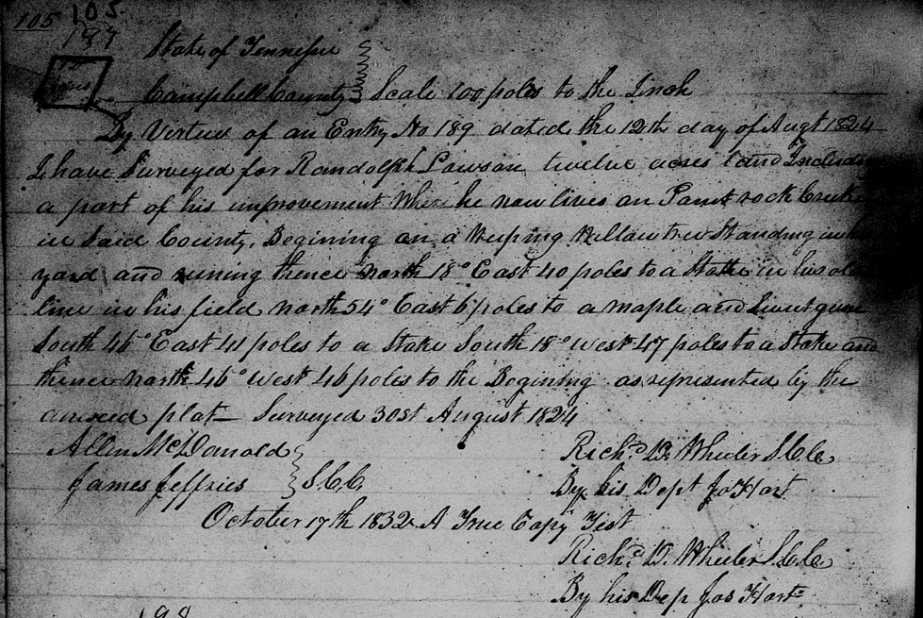
Land Purchase Record for Randolph Lawson

In the late 1830s Randolph and Susanna relocated to Illinois, then moved to Clinton County, Kentucky, where they would die, she in 1844, he in 1848.

Although all of these states in which Randolph and Susanna lived—Virginia, North Carolina, Tennessee, and Kentucky—practiced slavery, Randolph and his descendants appear not to have owned slaves.

Randolph and Susanna, like many of the Lawsons of the southern Appalachian hill country, had many children. Their first child, Elizabeth “Millie”, was born June 10, 1786, in Montgomery County, Virginia, living there until 1797. She moved with her parents when an infant southwest to the Cumberland Plateau, in northeast Tennessee. Here she lived until her death. She married Joseph Phillips and would die in Scott County, Tennessee in 1838.

Their second child, Lakey Kattie, was born in 1792; she married Thomas Chambers and died in 1838 in Scott, Tennessee. Lakey’s twin sister Lucretia “Lucy” married Blackburn Thompson and moved to Wesley Arkansas along with her sibling Maxwell. Other children: Elisha was born in 1793 and died in 1870; Sophia was born in 1794 and died in 1880; Mary Louis was born in 1797 and died in 1870. When Randolph and Susannah relocated to Hawkins County, in eastern Tennessee, they bought one hundred acres in the Puncheon Camp Valley, on Clinch River. Here, south of the Cumberland Gap near Hawkins and Campbell counties, Tennessee, daughter Maggie was born in 1800. She would die young in 1812 in Campbell County. Also at Puncheon Camp their son Maxwell was born, on May 5, 1802. It was around this time, according to Randolph’s 1838 court testimony, while living in Hawkins County, that “his house was burned and all papers destroyed.”

This tragic event must have precipitated the move to Campbell County, perhaps in 1803. The family stayed in Campbell County for thirty years. Here, their son Thomas Andrew was born in 1803. He lived in Campbell County but eventually moved to Erath County Texas, where he died in Feb. 1891. He was married to Nancy Jeffers. Also in Campbell County their daughter Clary (Clarissa) was born in 1812. She married William Jeffries, and died in 1897 in Barry County, Missouri. Son Madison Addison was born in 1814 and would die in 1870. Their last child Milton was born in 1820.

Meanwhile, Randolph and Susanna’s son Maxwell married Anna Gray in 1820; he was 18, she was 13. After several years the couple began to have multiple children. Their first born was a boy, Calvin, born in 1825 followed by Nancy in 1826, Mary in 1827, Sarah in 1829, and Elizabeth in 1830. Maxwell and Anna lived just downstream from Randolph and Susanna, who lived at the confluence of Paint Rock Creek and New River; Maxwell lived near the mouth of Buffalo Creek and its confluence with New River. Nearby on Buffalo Creek his cousin Absolom (Abe) Cross lived, married to Mary Queener. Abe was three years older than Maxwell. Maxwell’s brothers Elisha, Thomas, Samuel, and sister Lucretia lived comparably nearby as well, up New River from Buffalo Creek. It was a hard land to negotiate, to make a living from, to farm. Hills and dales made travel difficult and families isolated. Nevertheless there was much land speculation, as with work the land promised much. For example in 1836 Maxwell and Anna purchased 24 acres “adjoining to land he now owns on Montgomery’s fork of New River.” The land lay in the shadow of various ridges and mountains, as Montgomery Fork of New River divided Gray Mountain, Roach Ridge, and Horse Gap Ridge from Anderson Mountain, McCoy Ridge, and Horsebone Ridge. Probably Maxwell, Anna, and family did not live at Montgomery Fork, because soon after purchasing the land they moved from Tennessee to Arkansas. By this time Randolph and Susanna had moved north to Illinois. Maxwell and Anna and children appear to have moved from eastern Tennessee to western Arkansas around 1836 or 1837. The date of the departure is not clear because the Arkansas censuses for 1850, 1860, and 1870 are contradictory regarding the birth places of Maxwell and Anna’s children.

Why did Maxwell and Anna relocate to Arkansas? Arkansas became a new state in 1836; the mountainous, forested Ozarks of northwestern Arkansas were similar to the lands of the Cumberland Plateau of northeastern Tennessee. They were sparsely settled and awaiting the hardy pioneer. Around the same time Jacob and Mary Gray, Anna’s parents, moved from Campbell County Tennessee to Madison County Arkansas; perhaps the two families relocated in unison. Randolph and Susanna had already departed Campbell County. In 1838 court testimony Randolph claimed that he left Campbell County “in the fall of 1832. Two men had been talking to him about securing a pension, but having sold out and was preparing the move to Illinois, with his children he knew anything of the matter and had no chance to stay and attend to the business, he decided to move on have his business attended to where he settled. Accordingly, moved to Johnson Co., IL.”
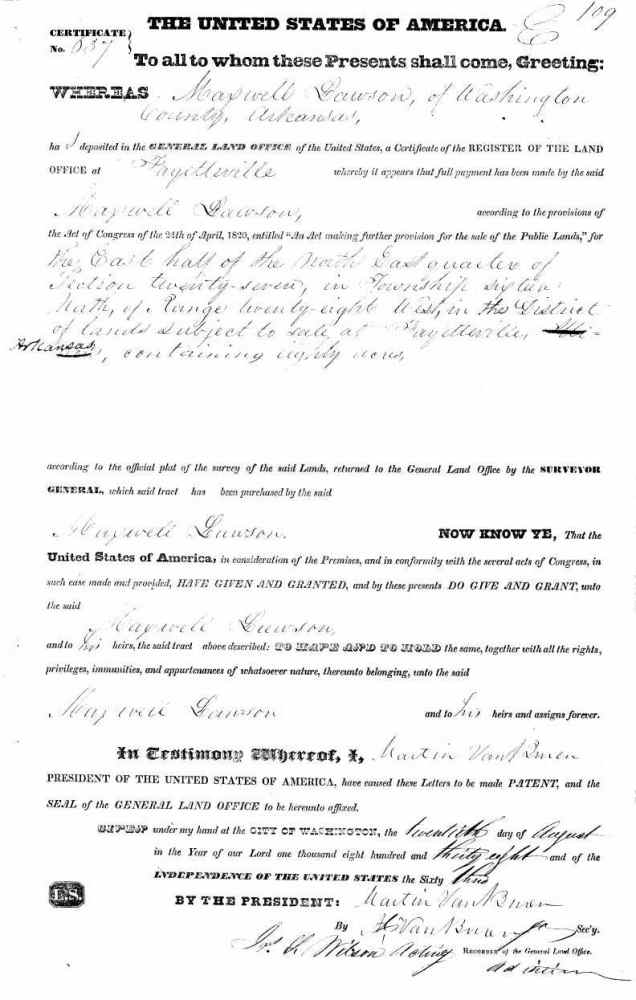
Land Purchase Records for Maxwell Lawson

After Maxwell and Anna Lawson moved to western Arkansas, other Lawsons followed. Blackburn and Lucretia Lawson Thompson (Maxwell’s sister) moved in 1856 to western Arkansas. Blackburn and Lucretia (1792-1880) were married in 1832. He was from Virginia, living from 1792-1861. The couple lived in Campbell County Tennessee next door to Lucretia’s brother Thomas; Thomas had married Nancy Jeffers, and some of her family lived close by. Blackburn reputedly fought under Andrew Jackson in the War of 1812. In Arkansas, he and Lucretia lived in Richland Township, named for the creek of the same name. Preceding Blackburn and Lucretia’s move to Richland Township was Maxwell and Anna’s second child, Nancy, married to Exekiel Templeton; they moved to Arkansas by 1846. Exekiel was born in Tennessee, as was Nancy; it is not known whether or not they met in Tennessee and migrated to Arkansas, or met and married in Arkansas. Their children included Thomas, Cynthia, Rhoda, John, William M., and James C. Nancy died in 1859 possibly because of complications in childbirth.

Many families with whom the Lawson’s would intermarry, such as the Thompson’s and Templeton’s, included early pioneers to Arkansas. George Washington Counts was an early immigrant to western Arkansas, coming at least by 1830, the year his son Martin was born. GW and Matilda Johnson Counts married in Tennessee in 1826 and lived next to Nicholas Counts and Pleasant Johnson. Nearby in 1830 lived David Wilson Williams (1794-1869), father to William A., husband to Matilda Lawson, and Andrew Jackson Williams, husband to Caroline Lawson, both of whom were daughters of Maxwell and Anna. Moreover, Green Gipson, father of Talitha, wife of William Riley Lawson, arrived at Madison County also in the 1830s. He settled township 16, range 27 in 1839. He moved from Tennessee.

Another pioneer who arrived in western Arkansas in the 1830s was Jacob Gray, born in 1779, and Mary Shreeves “Polly” Gray, born in 1789, parents of Anna Lawson, Maxwell’s wife. Jacob and Mary lived in Tennessee when they were married in June, 1806. The moved from Campbell County to Arkansas during the 1830s around the same time as Maxwell and Anna. Land was granted to Jacob Gray on Aug 20, 1838, at Fayetteville land office, 5th Meridian PM, township 16-N Range 28 W, section 27. Besides Anna, the Gray’s children included Phebe, who married Andrew J. Thompson, John, James, Calvin, and Martha. The 1850 federal census for Madison Arkansas listed John, age 30, as head of family, implying that Jacob had died by this time. Mary was still alive, not dying until 1865.

The Lawson, Gray, Counts, Fritts, Williams, Johnson, Gibson, Henson, Lucas, McElhaney, Thompson, and Templeton families of western Arkansas, living mostly in Madison and Washington counties, formed a network of kinship relations that enabled these pioneers to withstand the hardships of living in such a frontier environment. Of the children of Maxwell and Anna, their first born Calvin, third born Sarah, and twelfth born Samuel married Fritts’ children: Calvin married Jane Ann, Sarah married Claiborne, and Samuel married Kesiah. Maxwell and Anna’s fourth child Elizabeth married Martin Counts and seventh child David married Bashaby Counts. Their seventh child Caroline and thirteenth child Matilda married brothers A. J. and William Williams.

These relationships were sorely tested during the decade of the 1860s, on the eve, during, and after the Civil War from 1861 to 1865. Arkansas during these years was a divided state over the issues of slavery and secession from the United States. Arkansans of the southeastern part of the state, where cotton was profitable, supported slavery and secession. Arkansans in the hilly northwestern part of the state, where there were few slaves and few cash crops supporting slavery, were divided on the issue of secession. Some Arkansans wanted to stay with the Union, unlike many others of the more fertile parts of the state. However, once Arkansas voted for secession, state government was forceful in requiring young men to fight for the Confederacy. Most young Arkansans did, though some fought for the Union.

Maxwell and Anna Lawson had the experience of many parents during the Civil War, watching their sons and sons-in-law march off to war; some did not return. There were family divisions as well, as one son refused to fight, unlike his brothers, for the Confederacy, rather for Union. It turned out to be a fatal decision. War is disruptive of loyalties, families, the regional economy, and order and security. During and after the war Arkansas, including the hilly northwest, was subject to frequent lawless gangs of desperadoes and bushwhackers who ignored the law and raped and pillaged at will. The extended Lawson family experienced tragedy as a result.

In 1860, Maxwell and Anna Lawson and their children lived in the Richland Township region of Madison County Arkansas. This was place of hills with names like Roundtop and Boyd cut by numerous springs such as Cherry Creek, Pigeon Creek, Drakes Creek, Hock Creek, Lollars Creek, and Richland Creek, some of them named for local farmers, all flowing into White River. Maxwell Lawson was 58 years old and Anna was 55. The value of their farm was rated at $1200; their personal estate was $1000. Living with them was 20-year-old Samuel, 16-year-old John Calhoun, 13-year-old Calloway, 12-year-old Freeman, and 5-year-old Louisa. Could Maxwell and Anna in 1860 peer into the next five years of war, they would find happiness and sorrow. Son Samuel would soon leave home to marry Kesiah Fritts. Samuel and Kesiah had two daughters, Sarah Ann, born in 1862, and Mary, born in 1864, named for her mother (Mary Kesiah Fritts). Samuel served in the 17th Cavalry Battalion of the Arkansas Confederate forces. He survived the fighting of the war, but coming home crossing the Mississippi River on May 10, 1865, he was killed by bushwhackers. Kesiah eventually remarried and died in 1944 in Wesley. John Calhoun also eventually served in the Arkansas Cavalry (Company E. Washington Ark regiment). Unlike his brother Samuel he survived, married Macy Burks in 1873, and lived until 1926. Teenager Calloway also served in the war, as a private in the Confederate 16th Regiment Arkansas Infantry Co 1. Calloway returned from the war, became a farmer, and married, July 31 1872, Elizabeth Jane McElhaney, whose grandfather James B. McElhaney had come from Tennessee to Arkansas in the 1830s. Elizabeth’s father John died young in 1859, which perhaps explains why Elizabeth and two of her siblings were cast upon the chance of fortune in the chaos during and after the Civil War. Zac Templeton and Nancy Jane Templeton Lawson’s marriage terminated in 1859 with her death. Zac remarried, so that in the 1870 census his wife was Lucinda. Besides his children with Nancy and Lucinda, also living with the Templeton’s in 1870 were Jane McThaney, 14, Jemiah or Jeremiah McThaney 12, and John McThaney, 10. This was the same Elizabeth Jane McElhaney who married Calloway Lawson in 1872. Twelve-year-old Freeman was apparently too young to fight during the war. He lived at home with Maxwell and Anna during the 1860s into the 1870s, when he married a neighbor from Madison County, Nancy Davis. They moved south to Sebastian County. Fiv- year-old Louisa died at some point during 1860 for an unknown, tragic reason.

Next door to Maxwell and Anna lived Andrew Jackson Williams, husband of their daughter Caroline; his brother William and Caroline’s sister Matilda lived in the same house, though both men owned real estate and personal estates. A. J., or Bud, and Caroline were expecting their first of seven children, Nathaniel. The 1860 census listed Caroline, but not Matilda, as illiterate. Bud Williams would serve in the First Regiment of Arkansas Infantry Volunteers as a corporal during the Civil War. He survived the war to live until he died at age 85 in Oklahoma. His brother William, however, did not survive the war. William served the Confederacy in First Battalion, Arkansas Confederate Cavalry. He was made a Yankee prisoner in May, 1863, and was imprisoned at Point Lookout Prison, a prison on a peninsula jutting into Chesapeake Bay. Like most such prisons, the conditions were crowded and unsanitary, and many prisoners died. William contracted dysentery, and was released in January, 1864, shortly before his death. William and Matilda had no children; she was a widow for fifty years; when she died in 1914 she was buried next to William in Evergreen Cemetery, Fayetteville. Five farms away lived Maxwell and Anna’s daughter Elizabeth and her husband Martin Counts. Martin served the Confederacy as a private in the 27th Regiment of the Arkansas Infantry; he survived the war to live until 1908, outliving Elizabeth by twelve years. They had eight children. Martin and Elizabeth in 1860 lived next door to his father and mother George and Matilda Counts and eight of their children. About six lots away lived A. J. Thompson and Phebe Gray Thompson, Anna’s sister.

The war divided the Lawson’s, as the experience of Maxwell and Anna’s seventh child, David, reveals. David was the only son or son-in-law of Maxwell and Anna who fought for the Union during the Civil War. Surviving records of the time scarcely reveal the subtle tugs at conscience, the apparent loyalty to the United States, or any other possible motives that forced David to make what would appear to be an unpopular decision. It’s possible that the fate of war was so forceful upon Arkansas families that despair and tragedy was focused on the war itself and that sons must go off to fight and perhaps die—and not so much which side they chose. If David’s decision caused angst to his mother and father, siblings, their wives and husbands and relatives, it is unknown. It was a fateful decision, however.

David and Bathsheba Counts married in April, 1852. She was fourteen and he was seventeen. She was the daughter of James Madison and Dorothy Johnson Counts. David and Bathsheba had three children together: James Maxfield, 1853, Miles Milford, 1857, and Dorothy Ann, 1860. David and Bathsheba owned land in Richland Township, Madison County; in 1860 his real estate was valued at $600 and his personal estate at $600. David was twenty-six or twenty-seven years old when he enlisted in July 1862 as a private in Company C of the First Regiment of Arkansas Volunteer Cavalry. He died probably two months later, September 21, when his cavalry troop, a small detachment of men led by a Captain Gilstrap, attacked Confederate troops holding the town of Cassville, in southwest Missouri. The Union cavalry drove out the Confederates temporarily. One Union soldier died, possibly David Lawson. Bathsheba filed for a pension from the Union government on May 15, 1863. Bathsheba remarried William Bailey.

Living close by Zac Templeton in 1860 was William Riley, Maxwell and Anna’s eleventh child. Age 21, he was a farmer living with his older sister, Mary Gertrude Lawson Johnson, the (apparent) widow of James Johnson. She had five young children living with her on a farm worth $1700; William Riley, who owned a personal estate of $700, lived with the family and helped, doing some of the farming. But not for long. Soon he would join the Confederate forces as a private in Company I of the Sixteenth Arkansas Infantry. In 1862 he was made First Lieutenant, and then in 1863, he raised his own cavalry company, serving as Captain. He participated in a variety of battles: at Pea Ridge, which occurred in northwestern Arkansas at Elk Horn Tavern, March 1862, a Union victory; at the Battle of Iuka in Mississippi in September 1862, a Union victory; at the Battle of Corinth in Mississippi in October 1862, a Union victory; at the Battle of Port Hudson in Louisiana, July 1863, a Union victory; at the Battle of Farmington, Tennessee in October 1863, a Union victory; at the Battle of Marks Mill in Arkansas, April 1864, a Confederate victory; at the Battle at Jerkins’ Ferry in Arkansas, April 1864, a Union victory, and the Battle of Prairie D’Ane in Arkansas in April 1864, a Union victory. He was wounded once and made a prisoner twice. He was among Confederate forces that surrendered to Union forces at Jacksonport, Arkansas, June 1865.

An entrepreneur, after the war William Riley farmed and raised stock and engaged in mercantile activities in Madison County. He married Talitha Gibson, daughter of Green Berry and Rhoda Hawk Gibson of Madison County. From 1867 to 1869 he built a house in Wesley for his family to live in. Still standing, it is a beautiful two story southern style home with twin chimneys and a large porch built on a hill looking out upon Richland Creek. William also served as a local postmaster. Their children were Charles Mortimer, born in 1867, Oscar S., born in 1870 (who became a physician), Green M., born in 1877, Lelia Myrtle, born in 1873, and Beulah Gertrude, born in 1880.
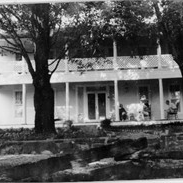
William Riley Lawson’s House, Wesley Arkansas

Also living in Richland Township, farming the land, was David Wesley Lucas, who had married Maxwell and Anna’s tenth child, Martha, born in 1837. David Lucas, born in Mississippi in 1834, had moved to Arkansas in the 1850s, where he met Martha. David purchased forty acres of land at Fayetteville, February 1860. The couple had two children, Nancy and Viola, in 1860; they also had a domestic servant living with them, perhaps because Martha was ill; indeed she died in 1860. David remarried; there is no evidence that he participated in the Civil War. Perhaps this is because David, at least in the 1880 federal census, listed himself as a minister of the Gospel.

Living in Prairie Township, Madison County, in 1860, was Maxwell and Anna’s third child, Sarah, born in 1829. Eighteen-year-old Sarah Lawson married twenty-two-year-old blacksmith Claiborne Fritts, son of Henry Fritts, in 1847. Sarah, illiterate, and Claiborne, literate, moved about quite a bit, partly because of war. They were living and farming in Madison County, Arkansas, in 1861 when the war broke out; Claiborne enlisted as a First Lieutenant in the 17th Arkansas Infantry, Confederate States of America, in November, 1861. A few months later, he became ill or wounded, and returned home, from which the family abruptly moved west to Texas. There is a record of Claiborne enlisting in Parker County Texas, where he served sporadically; in 1864 he enlisted as a private in the CSA. In 1867 the family returned to Arkansas, living again at Prairie Township, eventually a part of Hindsville. Claiborne was a Mason and helped to organize a lodge in Hindsville in 1868; his brother-in-law William Riley Lawson was also an organizer. Claiborne was also known for his Baptist, missionary activities; he helped organize the Spring Valley Church in Hindsville in 1877. For some reason, the family moved again to Texas in the late 1870s, so that by the 1880 census they resided in Comanche County Texas. Here, Sarah and Claiborne would live and die, she in 1897, he in 1916.
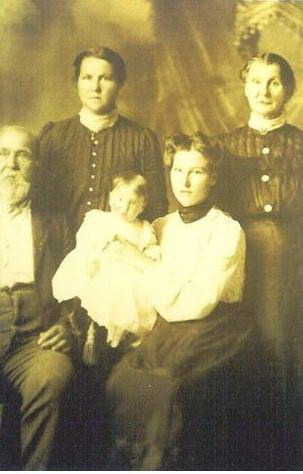
Claiborne and Sarah Lawson Fritts

Six lots away from Maxwell and Anna lived their oldest son Calvin and his wife Jane Ann Fritts. Jane Ann and Claiborne were siblings. Indeed Calvin and Jane Ann were surrounded by members of the Fritts family, mainly her cousins; ten years before in 1850 Calvin and Jane had lived next to her father Henry. From 1850 to 1860 this had changed, however. Henry had moved. He purchased 120 acres in February 1860. Calvin likewise purchased land at the same time, 37.31 acres, and at the same land office at Fayetteville. Jane Ann was mysteriously called “Eden” in the 1860 census. She was born in January, 1835, in Monroe, Indiana to Henry and Lucinda Jane “Lucy” Fritts. Her mother died in 1840 when she was five years old. She married Calvin in 1850 when she was fifteen years old. They were married for 52 years.

Calvin served in the Civil War, in Company K of Stirman’s Arkansas Cavalry Battalion, Confederate States of America. Precisely when and where he saw action is unclear. Possibilities include the period from 1863 to 1865 participating at the Battle of Vicksburg during the spring and summer of 1863; Vicksburg was a strategic key to control of the Mississippi; the battle was a Union victory. Calvin could have also experienced the conflict over control of southwest Arkansas (the Camden Expedition) in the spring of 1864, a Confederate victory; also, the raid of Confederate troops into Missouri (Price’s Raid) in August 1864, a Confederate loss; and perhaps attacks on Union steamboat shipping along the Arkansas River at the Dardanelle, January 1865, a Confederate victory. Along with other veterans, he received small cash benefits for his service until he died.

When Calvin returned from war in 1865 his wife Jane and children William, 11, Lucy, 9, Mary, 7, and James R., 4, and a newborn, John Calvin, welcomed the father home. Calvin must have had at least one furlough during his term of service. John Calvin would have been conceived in the fall of 1863—perhaps after the Confederate surrender at Vicksburg. Two years later Milton was born. By this time Calvin and Jane contemplated a move west to Texas. In the 1870 federal census, they lived at Fannin Texas between Goliad and Victoria near the Gulf of Mexico. He was listed as a farmer, with a personal estate of $75 and no real estate; perhaps he was a sharecropper. Even with such poverty, Calvin and Jane had two more children: Parris in 1872 and Samuel in 1875. Five-year old Milton died in 1872. We can speculate that poverty as well as the death of Maxwell in 1872 (and perhaps Milton as well) brought the family back to Arkansas, where Calvin was again farming in Richland Township, Washington County, in 1880. Widowed Anna Lawson at this time lived with daughter Matilda, also a widow, and grandson Samuel Williams. She lived next door to David Lucas, now remarried, and not far from her son William Riley.
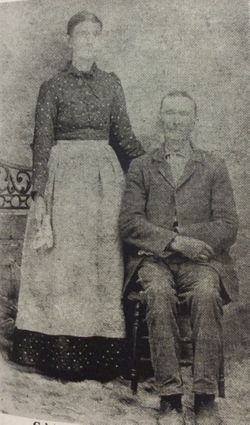
Calvin and Jane Lawson

In 1880, Calvin and Jane Ann had a large family: Lucy A. (Paralee), 24, Mary E, 20, James R. 18, John C. 14, Parris Lee, 8, Samuel, 4, and Malinda Fritts, 20, Jane’s niece. Jane, James, and John Calvin were listed in the 1880 census as illiterate. As the children of Calvin and Jane grew and married, most lived in the same region of the northwest Arkansas hill country.

John Calvin, for example, lived in northwest Arkansas for a time after he married Josephine Robbins in 1886. He was 22 and she was 18, daughter of James and Esther Robbins of Richland Township, Arkansas. James and Esther were both native Arkansans; he was born in 1840, she in 1843. Josephine was born to a large family on March 4, 1868.

The Robbins family was from Kentucky, from which they emigrated to Arkansas Territory in the 1820s. Richard Robbins died in 1844, leaving behind his widow Nancy (born in Alabama) to farm and raise the family. In 1850, for example, Nancy was in charge of a farm on White River in Washington County, caring for her 84-year-old mother Nancy, assisted by her three sons Richard, George, and James. James married Esther Vian Brewer, whose family hailed from Tennessee, in the 1850s. After James died in 1887, Esther ran the farm in Durham, Washington County, southwest of Wesley on the White River. This is also where Calvin and Jane had moved at some point after 1880. Indeed the Lawson’s and Robbins’ were practically next door neighbors, which would explain how John Calvin and Josephine met, courted, and married.
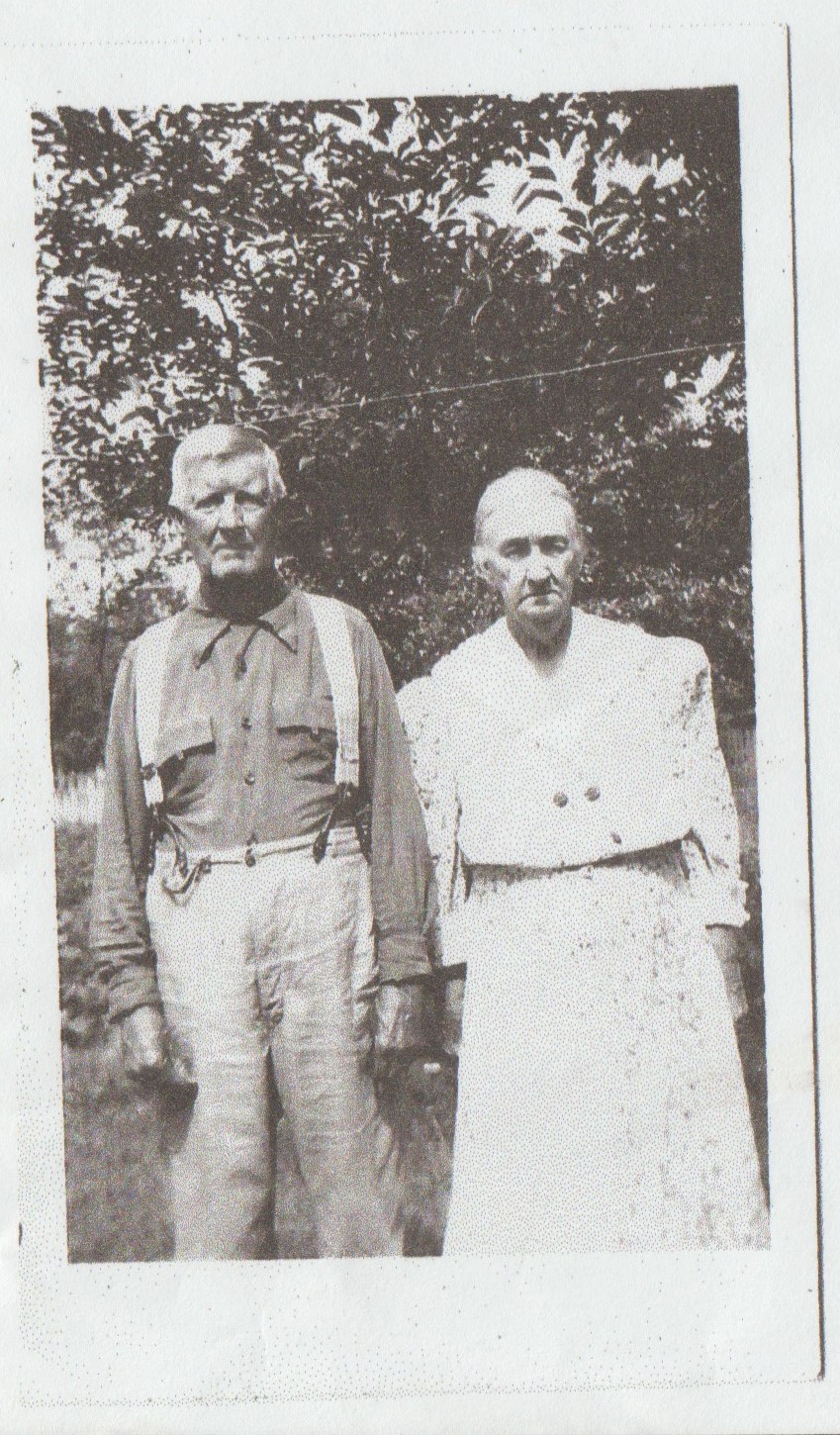
John Calvin and Josephine Lawson

At some point in the 1890s, about 1895, John Calvin, Josephine, and their young family—James H., born in 1888, Denver J. born in 1891, and Samuel Clint, born in 1894, moved west to Township 22, Cherokee Nation, in Indian Territory, which is present Delaware County in Oklahoma, northwest of Siloam Springs. After living there about a year daughter Allie May was born in 1896. The family rented a farm. John and Josephine moved back to Arkansas some time during the summer of 1900 as their fifth child, William Leverett, was born November 5 in Weddington, Arkansas. The family lived and farmed in Weddington, situated between Siloam Springs and Fayetteville in western Arkansas. In 1910, their eldest son James Henry married Anna Etta Hess; they farmed nearby in Rhea, Arkansas. Eventually they relocated to Fayetteville where he worked as a custodian for the University of Arkansas. Four years later John Calvin and Josephine’s son Clint married Flossie Randolph; they also lived in Rhea. The same year daughter Allie May married Marvin Roberson in Adair County, Oklahoma. At the time nineteen-year-old Allie was living in Westville, Oklahoma. They moved to Siloam Springs Arkansas, where their first-born Ferris was born in 1922. Meanwhile Denver (called Jack) departed for service in World War I; he sailed on the ship Amphion as a private from Base Hospital No. 81, departing St. Nazaire, France on June 3, 1919. Immediately upon his return Jack married Gladys Durnal in 1919; they quickly moved to Tulsa, Oklahoma. Tulsa in 1920 was a growing city in northeast Oklahoma, in what had been Creek Territory, now since 1907 the State of Oklahoma. Already living in Tulsa were Clint and Flossie. Soon Marvin and Allie moved to the city as well; their second son Eugene was born in April, 1924 in Tulsa. In 1925 Allie and Marvin lived in Tulsa at 814 E. 5th St. He was a car washer at Tulsa Auto Washing Co. In time they moved west to California, where he became involved in the used car business. In 1920 Clint, Flossie, and son Dayton and daughter Doris lived next door to Jack and Gladys on South Main Street in Tulsa. Jack was a truck driver for an iron works company; they rented their place, as did Clint and Flossie. Jack eventually moved to 226 Seminole St; in 1940 he worked in the stock room of a steel company. Clint was an oil worker at a Tulsa oil refinery. In 1930 Clint and Gladys lived at 2313 S. Phoenix Ave. Then, he was a truck driver for an oil company. In 1940 they lived at 1114 Quaker Ave. He was at that time a wench truck driver for an oil refinery. The youngest of John Calvin and Josephine’s sons, John Calvin Jr., moved to Tulsa as well in the 1920s or 1930s, but migrated west in the late 1930s to work in a federal job in Los Angeles. He worked as a mechanic of street maintenance equipment. His wife Nelva and her father Clarence Virgin also lived in their home, purchased by John. He stayed in California, living in Monrovia, east of LA, working as a supervisor.
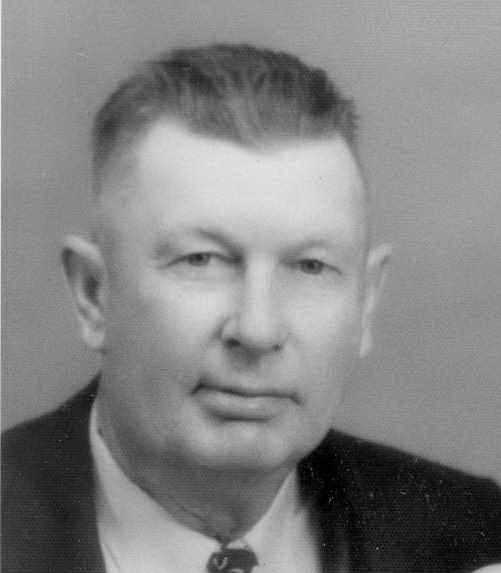
Clint Lawson

William Leverett Lawson, born November 5, 1900, did not serve in World War I, as he was exempt from service as a farmer. On December 15, 1920 he married Martha Susan Sorrels. He farmed in Weddington until in the early 1920s when he and Martha moved to Tulsa.

Martha Susan was the daughter of Van Wesley and Martha Euphronius Tully Sorrels. Van was born in 1875, Martha in 1874. The Sorrels family hailed from the southeast. Van’s father Ephraim was born in North Carolina in 1847. His father Thomas fought and died for the Confederacy when Ephraim was a teenager. When he was a boy, the family moved from North Carolina to northwestern Arkansas living in the town of Mountain Home on the White River. Ephraim was a woodcutter, a profession his son Van took up. After marriage Van and Martha (whose family was from Texas), moved to far western Arkansas, living in various locations. He was a woodsman not a farmer, and made his living chopping wood, fashioning railroad ties, fence posts, and so on. He was also a musician who made his own instruments. He and Martha formed a family band with their children that featured guitar, mandolin, and fiddle. They had six children. Martha Susan was their fourth child.
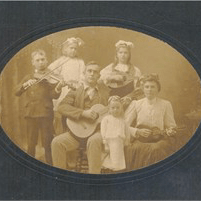
Van Sorrels Family

Will (as he was called) and Martha Susan (Susie) had a child, Chloe Elnora, in 1922; they soon after moved to Tulsa to live by his brothers and sister and work. In 1928 they had a son, Oliver Roy.

In the 1930 census, Will and Susie owned a radio, rented a house at 1520 N. Victor, and Will worked as a mechanic at an electrical shop. Soon after, the family moved to 1545 N. Birmingham Pl., where Oliver began kindergarten at Springdale Elementary, 2510 Pine St. They lived there for several years, then around 1936/37 relocated to West Tulsa, living in a house they owned at 16 S. Santa Fe. This bungalow style home was long and narrow, atop a rising hill. The front steps went up a brief steep incline. There was a large porch and a porch swing. There was an alley next to the house that Will took to park his auto in the unattached garage at the back of the lot. The house had a deep basement.
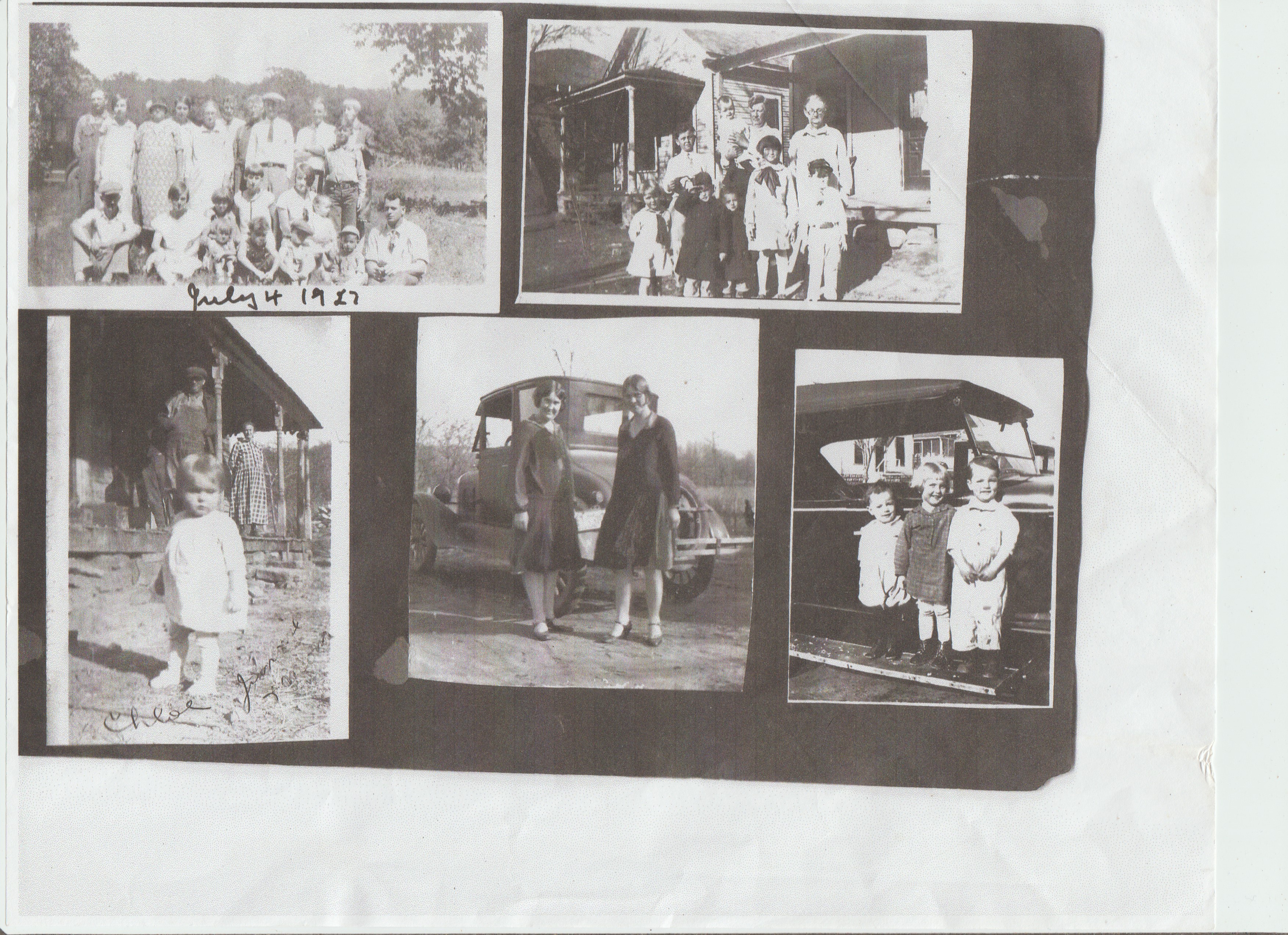
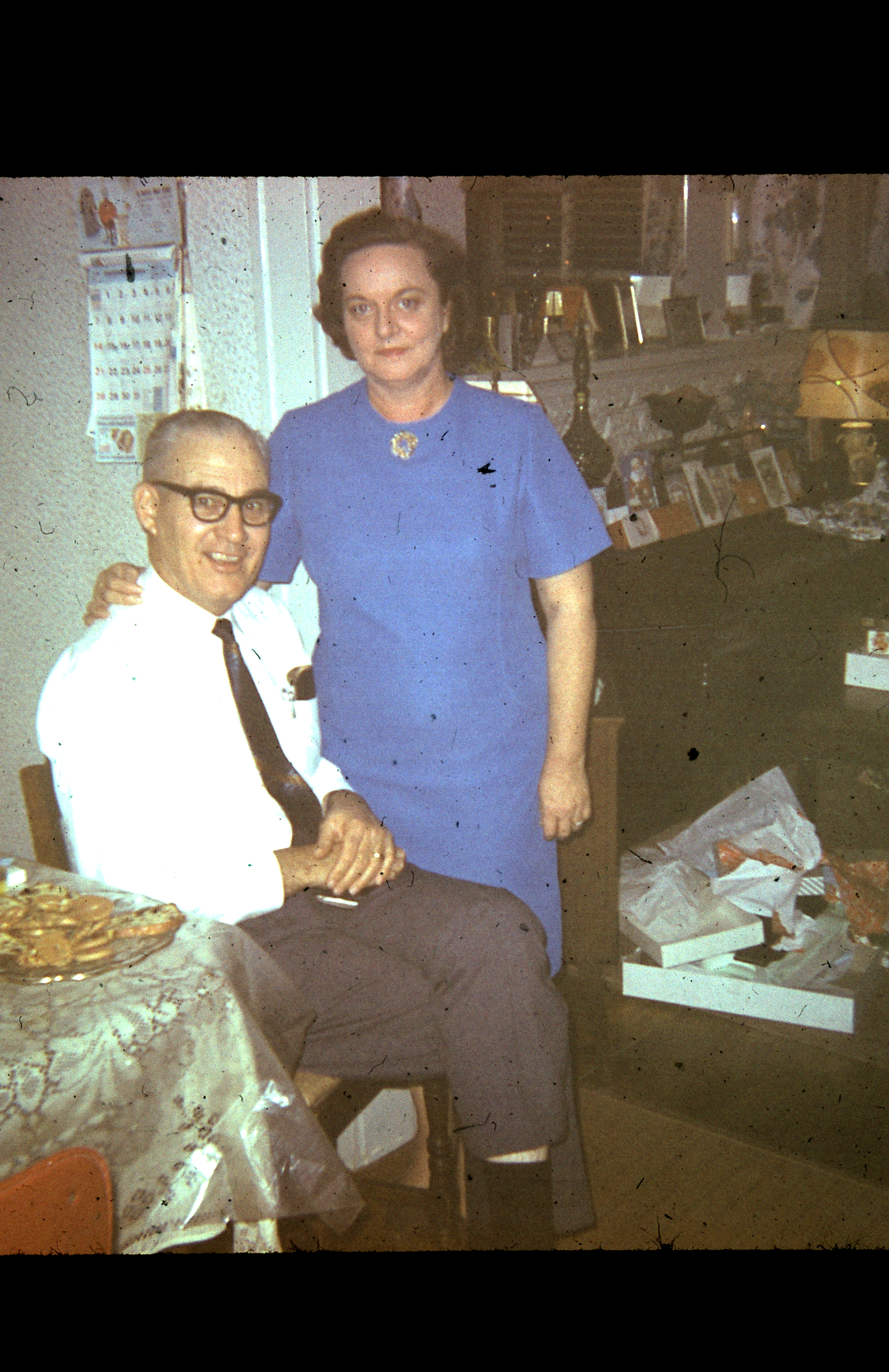
Lawson Family in the 1920s

In the 1940 census, Will was listed as an auto mechanic, working 48 hours per week, at Adams Motor Co, 5th and Detroit in Tulsa. He later worked as a mechanic at a Ford dealership, and retired in 1966 from Fred Jones Ford, 12th and Boston, in Tulsa. He drove a black 1950 Ford, then later invested in a white Mercury Comet.

Will’s elderly parents John Calvin and Josephine followed their children to Tulsa, where they lived out their lives and were buried. Susie’s elderly parents likewise moved to Tulsa, where they lived out their lives; they were buried in Arkansas.

The Lawson’s of the Southern Hill Country, then, moved from the American colonial south to the west, first to the Appalachian West, then further west to Arkansas, then Oklahoma. The records that tell us about these people are few, just land and census records mostly, and a few photographs. They do not reveal much of the inner personality. There seems to have been a reticence in their behavior, a suspicion, a willingness to wait—upon chance, or God. Movement was often forced upon them by circumstances of need and the urge for survival. They were not an emotional people. They were unsure how to express feelings. How does one express love toward another when one is unsure, and reticence is the typical response to everything in life? How can one feel excitement, feel love, feel wonder, feel happiness, in an uncertain world where inaction, waiting, watching, seems the most comfortable approach to life? The Southern hill country personality is outwardly pious, but inwardly barren. Outwardly such people belong to a church, believe in God, say the proper grace at meals, sing the proper hymns, but without emotion, without feeling, because religion is something not to express emotion over; to express love for God is just as uncomfortable as to express love for another, a child, a relative, a parent. Besides the church, associations and institutions are generally treated with some suspicion, befitting a rural people. the fears and trepidations of life are often dealt with not by masking them in formalities, rather by submerging them in the informalities of a more community existence: plain speaking, suspicion of others outside of one’s typical familiarity, a rough appearance to the world to show “ain’t scared,” even if one is.

Maxwell and Anna Lawson typified these mannerisms. Maxwell was a big, burly man, very serious, virile, living until age 70. He had a full head of hair and was generally handsome. His photographic portrait shows a stern, dignified country man. He does not appear sad, just more a serious gaze into the hardship of life. A survivor.

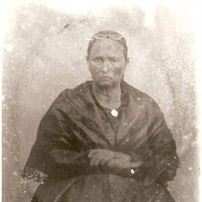
His wife Anna was likewise big, burly, serious, and virile, bearing 19 children and living until she was 70. She was born five years after Maxwell and outlived him by five years. She appears to have been a beautiful woman with nice features. But there is a sense of sadness and hardship in her photographic portrait.

But then again, Maxwell and Anna had a reason for such an approach to life. The Civil War cut through their existence, destroying what was normal, destroying lives of those they bore and bred. And the post war period was just as harsh, living in an unforgiving environment of northwest Arkansas where achieving a good life was a challenge, where the remnants of war were everywhere. No wonder that their descendants departed west, some as far as California, others to Oklahoma and an urban existence, which was not dependent on the soil, the fickle weather, the price of crops, and the struggle to survive as a small southern farmer.
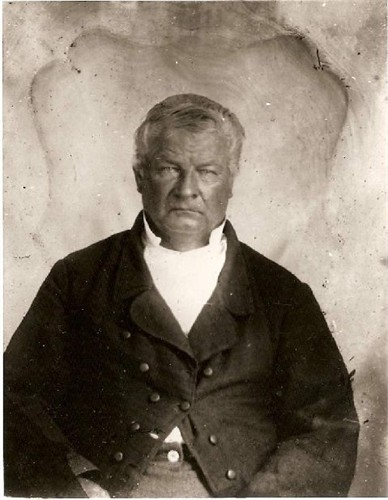
Maxwell Lawson
Anna Lawson

For a complete history of the Lawsons of the Southern Hill Country, see my book published by Amazon: https://www.amazon.com/dp/B0G9RDT3PF/ref=sr_1_1?crid=36PPTM7BCTC2Z&dib=eyJ2IjoiMSJ9.cqGw_xgnYBNRNQQZ3VVlDTDuoYsfRKxj_sIIwKXnNqz3Sc9Q0z_tRe-gXhSqrYuSiTeWVpdkbeR0UsauvA-pdRwLV29G0a8HbEi3x-NPsvfHRuI9MFZ7xnvafLMgxAVJDSsu9Aup3YrsJkFIqa3HntEFmdb1m36V2e5Jki2B2VORJ0fxrcOagNlw1y07G0_Z83CLGFv4t6Dyfi3RuXu6coGUAjCvcSesMxcQDkon0yc.r7TvUj2h-Yky7rx02rNzQHuEsw1e1NIPpuyyyQjelbo&dib_tag=se&keywords=Russell+Lawson&qid=1766343535&s=books&sprefix=russell+lawson%2Cstripbooks%2C211&sr=1-1

Posted in American History, Biography | Tagged , , , | Leave a comment

Randolph Lawson, Veteran of the American Revolution and Southern Appalachian Farmer

Like many early Americans, the story of Randolph Lawson’s full life is very unclear for the historian of today. It is not known precisely when and where he was born, precisely who his parents were, and precisely who his children were. Although he was a veteran of the American War for Independence, fighting in the southern colonies against the British, his precise actions during the war are lost to time.

Randolph Lawson was born, perhaps, in November 1752 in Cumberland, North Carolina. Other sources put his birth in 1757 or as late as 1765. But in a court appearance in 1835 he told the court he was 82, having been “born in Cumberland Co, NC in the fall or winter of 1752.” His father, perhaps, was Bartholomew Lawson and his mother was Susannah Simpkins. Bartholomew Lawson possibly died in Cumberland County, North Carolina, in 1765 or in Lundenberg Virginia in August, 1782.

Randolph’s siblings included his older sister Elizabeth, who married George Rogers, a younger sister Susan, who was born in 1755 and married Moses Carrick (1750-June 17, 1826); Moses Carrick lived in Pennsylvania during the War for Independence; he was a corporal in the continental army; he moved to Kentucky and died in Tennessee.

Another of Randolph’s siblings was John, who was two years older than him. John was born in 1750 in Cumberland County, North Carolina and died January 4, 1838, at Morgan County Tennessee. John was a Revolutionary War veteran like Randolph. Randolph was present at his older brother John’s wedding to their cousin Anna Lawson in January 1775. They were married in Stokes County, in north central North Carolina, at the home of John Heart by a minister named Newman.

Other siblings included veteran of the Revolutionary War Morman I., born 1751. Morman also served in the War of 1812 as a corporal. Another brother, William, was a Second Lieutenant in the Virginia Continental troops during the Revolutionary War. Elisha, another brother, was born about 1753; he died in 1834. Brother Jacob was born in 1761, and died in 1832 in Hawkins Co, Tennessee. Brother Peter Lawson was born in 1758 and died in 1834.

When the War for Independence broke out, many of the Lawsons participated on the Patriot side. Randolph served in 1780 and 1781 in battles in North Carolina and South Carolina. In court testimony fifty-five years later, Randolph recalled that he enlisted as a militia soldier in July 1780 under a Captain Coke (or Cox) under the command of a Colonel Knowles. “They then marched toward Camden,” he remembered, “near which place they met Gen. [Horatio] Gates by whom they were then commanded and soon after were engaged with Lord Rawdon in the Battle of Camden, sometime in Aug 1780. This applicant was not actually engaged in the battle being detached as a guard of the baggage in which the Americans scattered and appeared by the conduct of the Militia.” The battle was a horrible loss for the patriots. The record continues: “They did not get together to effect any thing again during this term of 3 months. He did not receive any discharge from this tour of 3 months and there was nothing more of any interest or possible during this tour of service. He again entered service as a volunteer for a tour of six months sometime in Jan. or Feb. 1780 under Capt. Duck. He thinks under the same Col. [Knowles]. He does not recollect where they rendezvou[s]ed but when organized, they marched on toward Guilford Court House where they Met Gen. [Nathaniel] Green, who commanded them and where they had an engagement with Lord Cornwallis and were again defeated. This applicant was not again actually engaged being young was again on detached duty as a guard of the baggage. After the battle, General Green marched on toward Camden, where he attacked Lord Rawdon, sometime in April, but this applicant under the command of this same field officers and he thinks commanded by General [Charles Henry] Lee was sent on a different expedit[i]on, in which, however, he had no engagement, that he recollects, nor does he recollect for anything further being done or transpiring of interest during this term of six months. He was discharged however, 2 weeks before the expiration of this tour of six months, having served 5 months and 2 weeks, making in all eight months and 2 weeks. He received a written discharge from this last tour of six months.”


As an old man living in Tennessee and Kentucky, Randolph was attempting to secure a pension for his revolutionary war service, which required proof that he has served six months. In another court record from May 1842, Lawson, “a resident citizen now of Clinton Co., KY, age 90, said that he volunteered under Capt. Gholston, as he yet believes his name to be, he thinks it was in June 1780, for 3 months under Capt. Gholston, or Gordin, is not positive as to the name, but knows the Capt. under which applicant’s father served one tour in the same war, was Gordin but his captain ‘s name was Gholston. He then lived in Cumberland Co., NC and was attached to army command by Gen. Gates.”

His memory being clearly problematic, he was assisted by various old comrades who appeared on his behalf. One, John Parley, “a resident citizen of Wayne Co., KY; states that he was personally acquainted with the soldier in the state of NC and knows that he was a private soldier in the Revolutionary War at the time of the Gates defeat but was not retained in service at that time, the length of the time for which he was engaged, afterwards, he was a volunteer private in the other tours one of which was under Capt. Gholston, attached to Gen. Green’s army, for 3 months and in scouting a company for about 3 months.”

It appears based on these records that Randolph served as a soldier protecting the baggage and as a scout. Why one record indicates that he protected the baggage due to his young age doesn’t make sense, as he would have been 28-29 years old at the time.

Another old comrade appeared on his behalf: the “Affidavit of Thomas Phillips, resident of Campbell Co., TN, who states that he and the soldier were both residents of Cumberland Co., NC and well recollects that in the year 1780, and knows that he now lives in the south edge of KY and volunteered under Capt. Cox, and was in the Revolution and hence it was sometime before Gates’s defeat and that shortly after the defeat he returned home and knows that in the later part of the season of the fore part of 1781, he again went into service under Capt. Gholston in Col. Alston’s regiment and was . . .  army and was back at Camden or scouting expeditions for sometime and then returned home to Cumberland Co., NC – affiant being now age 75 and not far from the age of Applicant. Affiant has been acquainted with the Lawson family for many years, from his first recollection, having married an own cousin to the applicant for pension, Randolph Lawson. Signed – Thomas Phillip.”

Another affidavit by Willis Cole “states, he was personally acquainted with Randolph Lawson, who is now of KY when the said Lawson resided in NC and knows he was in the Revolutionary War, sometime under Gen. Gates. Then in 1781, served under Capt. Golston, attached to Gen. Green’s army and was engaged for 3 months in actual service of his affiant’s certain knowledge. Although he did not belong to said company and again in the Summer of 1781, was again in service. Afterwards believes he served 3 different campaigns, the 2 last was under Gen. Green and affiant believes and has no doubt that in the 2 campaigns that Randolph Lawson served full six months in the Revolutionary War, called out by the Capt. Authority that an emboided corp and in his acquaintance with Lawson after the war, he frequently heard Lawson state that he served 3 tours of 3 months each, but has not seen him for many years, until lately. This affidavit was made in Fentress Co., TN.”

The testimony was deemed inconclusive, and Randolph never received a pension.

Randolph married Susannah Cross on 13 June 1791 in Patrick County, Virginia. Randolph and Susannah were reputedly the first couple to be married in Patrick County, a newly formed county in mountainous southern Virginia.

The marriage contract reads:

“Know all men by these presents that we Randolph Lawson and Jacob Lawson of Patrick County are held and firmly bound unto the Govourner of the state of Virginia and his Successors for the time being in the sum of Fifty Pounds to which payment well owed Truly to be made we do bind ourselves our . . . firmly by these sealed with our seals and dated this 13th day of June 1791.”

“Whereas this is a marriage depending & by Gods permission . . . intended between the above bound Randolph Lawson & Susanah Cross. The bond action of the above Obligation is such that of these is no lawful cause to Obstruct the said Marriage. Thus the above Obligation to be read else to remain in full force . . . . Signed sealed and delivered in the Presents of Sam Shaples. Randolph Lawson his mark. Jacob Lawson his mark.”

The bondsman was Jacob Lawson, Randolph’s brother. The bond was an early American institution by which the man declared his intent to marry and was so serious that if any objection came forward before the nuptials he would forfeit the bond money.

Over the course of their marriage Randolph and Susannah had eleven sons and thirteen daughters. One of those sons (probably) was Maxwell Lawson, a farmer of Tennessee and Arkansas.

The young couple after their marriage moved to Montgomery County, Virginia, living there until 1797. Here they had their first child, Elizabeth “Millie”, born June 10, 1786. She would marry Joseph Phillips and would die in Scott County, Tennessee in 1838. Their second child, Lakey Kattie, was born in 1792; she married Thomas Chambers and died in 1838 in Scott, Tennessee. Lakey’s twin sister Lucretia “Lucy” married Blackburn Thompson and moved to Wesley Arkansas along with some of her siblings. Other children: Elisha was born in 1793 and died in 1870; Sophia was born in 1794 and died in 1880; Mary Louis was born in 1797 and died in 1870. Randolph and Susannah relocated to Hawkins County, in eastern Tennessee. They bought one hundred acres in the Puncheon Camp Valley, on Clinch River. Puncheon Camp is in northeast Tennessee about forty miles south of the Cumberland Gap. This was near Hawkins and Campbell counties, Tennessee. Here, daughter Maggie was born in 1800. She would die young in 1812 in Campbell County. Also at Puncheon Camp their son Maxwell was born, on May 5, 1802. Possibly Maxwell had a twin brother, Randolph, who died in 1870. Here also, Randolph, Sr, became embroiled in some sort of religious conflict at the Big Springs Baptist Church. The church records for October 2, 1802 state: “The report from Rob Camp and thought not proper that Randolph Lawson’s name should be made record til he cleared himself of a charge against him.” What were these charges? Often people who broke one of the commandments had to face their accusers. Sometimes the drunk and disorderly did as well. However, the church records for December 2, 1802 state: “Released Randolph Lawson from the charges lodged against him.”

Two weeks later, on December 18, 1802, Randolph received a grant of 500 acres from the State of North Carolina. The record reads: “Know that we have granted unto Randolph Lawson Five hundred Acres of land in our Eastern District on Poor Valley and waters of Holston River.” North Carolina granted land in the claimed territory of what is today eastern Tennessee to veterans at the end of the war in the 1780s. Whether this was the case respecting the land grant to Randolph Lawson almost twenty years later is unknown. This land was located in the Eastern District of Poor Valley Creek on the Holston River in Hawkins County, TN.

It was around this time, according to Randolph’s 1838 court testimony, while living in Hawkins County, that “his house was burned and all papers destroyed.”

This tragic event must have precipitated the move to Campbell County, perhaps in 1803. The family stayed in Campbell County for twenty years. Here, their son Thomas Andrew was born in 1803. He lived in Campbell County but eventually moved to Erath County Texas, where he died in Feb. 1891. He was married to Nancy Jeffers. Also in Campbell County their daughter Clary (Clarissa) was born in 1812. She married William Jeffries, and died in 1897 in Barry County, Missouri. Son Madison Addison was born in 1814 and would die in 1870. Their last child Milton was born in 1820.

A Tennessee land record still exists that indicates that Randolph’s brother William granted him one acre of land in 1811:

“The State of Tennessee To all to whom these presents shall come greetings that in of an entry made in the office of the surveyor of the fourth district of number 758 dated the 15th day of November, 1810 founded on a certificate of number 28 issued by the register of East Tennessee to Micajah Cross for four hundred acres of land dated the fifth day of January, 1810 fifty acres of which are assigned by Cross to William Lawson and one acre by William Lawson to Randolph Lawson. There is granted by the said state of Tennessee unto the said Randolph Lawson and his heirs a certain tract a parcel of land containing one acre lying in the county of Anderson in the district of Hamilton on Paint Creek waters of the New River beginning at a hickory and buck on the south side of the buck thence north forty four east sixteen poles to a white oak north forty six west poles to a dogwood south forty four west sixteen poles to a spruce pine then south forty six east ten poles to the beginning of survey September 16th, 1811 with the and appurtenances to have and to hold the said tract or parcel of land with its appurtenances to the said Randolph Lawson and his heirs forever. In witness whereof Willie Blount, Governor of the State of Tennessee hath here unto set his hand and caused the oath of the said state to be affixed at Nashville in the day of July in the year of our Lord one thousand eight hundred and thirteen.”

Another Tennessee land record reads:

“State of Tennessee Campbell County Scale 100 poles [16.5 feet] to the inch By virtue of an entry no. 189 dated the 12th day of Aug, 1824, I have surveyed for Randolph Lawson twelve acres land including a part of his improvement where he now lives on Paint Rock Creek in said county beginning on a weeping willow tree standing yard and running thence north 180 east 40 poles to a stake in his old line in his field north 54° east 6 poles to a maple and sweet gum South 46° east 41 poles to a stake South 18° west 47 poles to a stake thence North 46~ west 46 poles to the beginning as represented by the plat-surveyed 30th August, 1824.”

And another:

“I do certify that by virtue of an entry made in the entry taker office of Campbell county, Tennessee No,301 dated January 27, 1826 I have surveyed for Randolph Lawson twenty five acres of land in said county on the waters of Paint Rock Creek beginning at a white oak near the top of a ridge running east 64 poles to a chestnut thence north 64 poles to a stake and beginning as represented in the annex plat surveyed the 4th day of September, 1805. Henry Thompson-scc Mark Richardson __ Robert Jeffers-scc Surveyor cc 25 acres-scale 80 poles inch.”

The land purchased on Paint Rock Creek is in the vicinity of the modern town of Huntsville, Tennessee.

In the 1830 federal census for Campbell County, Randolph’s family was listed as: one free white male, age 15-19, one free white male, age 60-69, one free white female, age 10-14, one free white female, age 15-19, one free white female, age 40-49. He lived next door to his son Thomas Lawson, who had six people living in his family. This census was in error, as Randolph was 78 in 1830 and Susannah was 65. The young male was perhaps Milton. The teenage female was perhaps Clarissa. The young teenage female, perhaps a relative.

Two doors down was Robert Lawson, two people living there, and next door to Robert was Blackburn and Lucretia Lawson Thompson, with ten people in their family. Down the way was Samuel Lawson, two people in his family. Thirty lots away was Maxwell and Anna Lawson, with seven people in their family. There was also son Elisha Lawson nearby.

In the 1840 federal census, Clinton Kentucky, the Randolph and Susanna Lawson household had one free white male, 20-29, one free white male 80-89, two free white females, 5-9, one free white female, 30-39, and one free white female, 60-69. Their next-door neighbor was son Elisha with a family of seven. The census taker made an error in Susannah’s age; she was 75. The young male was perhaps Milton. The two young females were perhaps grandchildren.

In his 1838 court testimony Randolph claimed that he left Campbell County, Tennessee, “in the fall of 1832. Two men had been talking to him about securing a pension, but having sold out and was preparing the move to Illinois, with his children he knew anything of the matter and had no chance to stay and attend to the business, he decided to move on have his business attended to where he settled. Accordingly, moved to Johnson Co., IL, and there became sickly and having no old acquaintance nor no chance of proving service and after having lived there sometime and concluded to move back and accordingly started back, but on his way concluded to settled in Clinton Co., KY, immediately on the Fentress Co. line in TN, about 60 miles from Campbell on the settlement where he started from and from his extreme old age and bodily infirmity is unable to attend court or attend to business from home and having no acquaintance in Fentress Co., it is most convenient to have his business transacted in Fentress Co., TN.”

Randolph died March 1848 in Albany, Clinton, Kentucky, near the border of Tennessee, where he was buried. Susanna had preceded him in death by four years, in 1844.

Tennessee land sale to Randolph Lawson, 1832

For a complete history of Randolph Lawson and his descendants, see my history of the Lawsons of the American South, published by Amazon: https://www.amazon.com/dp/B0G9RDT3PF/ref=sr_1_1?crid=36PPTM7BCTC2Z&dib=eyJ2IjoiMSJ9.cqGw_xgnYBNRNQQZ3VVlDTDuoYsfRKxj_sIIwKXnNqz3Sc9Q0z_tRe-gXhSqrYuSiTeWVpdkbeR0UsauvA-pdRwLV29G0a8HbEi3x-NPsvfHRuI9MFZ7xnvafLMgxAVJDSsu9Aup3YrsJkFIqa3HntEFmdb1m36V2e5Jki2B2VORJ0fxrcOagNlw1y07G0_Z83CLGFv4t6Dyfi3RuXu6coGUAjCvcSesMxcQDkon0yc.r7TvUj2h-Yky7rx02rNzQHuEsw1e1NIPpuyyyQjelbo&dib_tag=se&keywords=Russell+Lawson&qid=1766343535&s=books&sprefix=russell+lawson%2Cstripbooks%2C211&sr=1-1

Posted in American History, Biography | Tagged , , , | 3 Comments

The American Southern Hill Country Personality

The Southern hill country personality type is a reticence towards others, even a reticence toward life, a suspicion about others, really a suspicion about everything, being afraid to commit, being afraid to take action, waiting, accepting—accepting not so much God, awaiting the will of God, as accepting because of unwillingness to act, to take a chance. And so life can pass by and one sits and waits, stifled by inaction, stifled by indecision, until finally something forces movement. Movement may be caused by hunger, or fear, some outside force that impels the person to do what he might not otherwise have done. The consequent movement, action, might be absurd, completely out of character, yet circumstances have brought about this action, this movement, and the person goes blindly along, not sure, waiting even while moving, passive even while in the process of acting, faithless even while seemingly throwing all aside in an act of blind faith.

Emotions, likewise, are restricted, because one is unsure how to express them. How does one express love toward another when one is unsure, and reticence is the typical response to everything in life. How can one feel excitement, feel love, feel wonder, feel happiness, in an uncertain world where inaction, waiting, watching, seems the most comfortable approach to life? Rocking in the chair on the porch, waiting—for what? For nothing really, just waiting. Perhaps just waiting for death, waiting for everything to finally come to an end. Waiting for the boredom to end. Waiting for the failure to end. Waiting to be released from the stifling inaction and uncertainty and hopelessness and faithlessness.

The Southern hill country personality is outwardly pious, but inwardly barren. Outwardly such people belong to a church, believe in God, say the proper grace at meals, sing the proper hymns, but without emotion, without feeling, because religion is something not to express emotion over; to express love for God is just as uncomfortable as to express love for another, a child, a relative, a parent. It is embarrassing.  

Thank God for radio and television, by which one can submerge inaction and lack of confidence and the endless waiting for who knows what into a fantasy world of action, of love, of certitude, of confidence, of knowing exactly what to do, of taking life and directing it according to one’s will. How relieving to be able to watch a program, watch others, who are doing what you are unable, unwilling, to do, but you can watch along as they do it, and feel the satisfaction of a life well lived even if it is not your own.

Such crutches are everywhere, to help one limp along in life. If not television, if not the internet, then booze, or pills, or gambling, or something that takes one’s mind away from what is, to focus on what could be, what might be, and so lose oneself in a stupor, a fantasy world where one is exactly what one is not, where one is a great actor, a great mover, a great lover, a wealthy dynamic mover and shaker, a confident person wrestling with life and winning the match time and again.

What happens to you if all of a sudden chance (or destiny) steps in and wrestles  you away from such a life, and you are brought into an awareness of something completely different, a different approach to life, whether it be due to the northern urban personality or some sort of personality in which the fire has been lit, and there is no embarrassment, and a person acts, sometimes foolishly, sometimes in failure, but acts just the same. What is it to put aside inaction to grasp an opportunity and do it? How can the southern hill personality abide by such a notion? Perhaps there becomes a contest of different personalities, different approaches to life, and a person is caught in between, and the personality conflict rages within, the genes of the past confronting the newness of the present, and the split personality results in internal chaos. North and south meet, action and inaction, arrogance and humility, certainty and uncertainty, willingness and unwillingness, and the split personality is torn in so many directions, between choice and non-choice, action and inaction, moving and waiting, doing and watching, accepting life as opportunity or accepting life as struggle.

How can life be both opportunity and struggle, action and inaction, doing and waiting, getting up and sitting down, embracing and distancing, feeling emotion and fearing emotion, loving but being embarrassed by love?

Northern Yankees and Southern hill people: two different ways at looking at life. One is more accepting, but still has the same fears and trepidations as others, but masks the fears in the formalities and structures of urbanized living—the associations or gessellschaft of modern society. The other is suspicious of such formalities, befitting a more rural people; the fears and trepidations of life are often dealt with not by masking them in formalities, rather by submerging them in the informalities of a more community existence: plain speaking, suspicion of others outside of one’s typical familiarity, a rough appearance to the world to show “ain’t scared,” even if you are.

Posted in American History, Christianity, General Essays | Tagged | Leave a comment

Squirrel Dance

Jumping about the trees

Swinging from branch to branch

A daredevil on the elm and maple.

Taunting gravity, death;

And the dogs on the ground,

Look upon him, track him,

Waiting.

A young one, not as adept at the game–

The domesticated predator watches.

He jumps from the trunk, runs madly for the next one.

Jaws of death surround him.

He breathes his last.

I take him to the forest,

Lay him down for his long rest,

Returned to his Maker.

Posted in poetry | Tagged | Leave a comment

Clinton Dan Stackhouse Jr., (1923-2009), World War II Veteran of the War in Europe

Clinton Dan Stackhouse Jr. was born in Okmulgee, Oklahoma, and died in Tulsa, Oklahoma. During the course of his long life he served in the Army Air Corps throughout World War II in Europe. After the war he was an auto then an airline mechanic, and served as an inspector for the Federal Aviation Administration. He was a lifelong member of the Church of Christ.

Dan’s father, Clinton Dan Stackhouse Sr., was born in 1900 in Sarcoxie Missouri. His mother Eva Bryant, born in Arkansas, lived in Okmulgee when she married Dan Sr. in 1921. Dan Sr. was a traveling salesman, hence the family moved about a lot. In the 1930s, for example, the family resided in several towns in Missouri. In 1940, when Dan Jr. was seventeen years old, the family lived in Tulsa. Dan went to and graduated from Central High School in Tulsa. He dated a girl who also attended Central, and who lived down the street, Chloe Elenora Lawson, daughter of William and Martha Lawson.

Dan was working as an auto mechanic when the Japanese bombed Pearl Harbor on December 7, 1941. Dan enlisted eleven days later, Dec 18, 1941; he traveled to Oklahoma City to enlist. He joined the Army Air Corps. He was stationed at Napier Field Air Base in Alabama. He and Chloe married in April, 1942, and she lived in the married housing with Dan while he trained. When Dan was shipped out to England, Chloe returned to Tulsa to live with her parents.

Dan served as a nose gunner on a B-24 Liberator that flew missions over Europe. The B-24 was the most produced bomber by the US during the war. A nose gunner was an enlisted soldier who handled a high caliber machine gun to protect the plane from enemy fighter planes. On one mission over Germany, Dan’s plane was shot down. He survived and was imprisoned in a German prisoner of war camp. Dan somehow contrived to escape as the war was winding down. He was able to reach the Allied lines in Germany.

Dan was discharged on October 21, 1945. He and Chloe lived in Tulsa. Dan worked as an auto mechanic for Fred Jones Ford. They had their first-born child, Dan Michael, in September, 1946. Their second child, Denise Chloe, was born in July 1948 and died at about nine weeks. Dan took a job as an airline mechanic with Spartan Aeronautics in Tulsa. In time he became an inspector with the Federal Aviation Administration. He and Chloe moved to Seattle, where she died in 1976. Dan moved back to Tulsa, remarried, but when he died in 2009, he was buried next to Chloe at Rose Hill Cemetery.

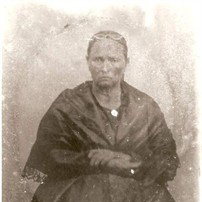
Dan and Chloe, Christmas 1969

For a complete history of Chloe’s family, the Lawsons of the American South, see my new book published by Amazon: https://www.amazon.com/dp/B0G9RDT3PF/ref=sr_1_1?crid=36PPTM7BCTC2Z&dib=eyJ2IjoiMSJ9.cqGw_xgnYBNRNQQZ3VVlDTDuoYsfRKxj_sIIwKXnNqz3Sc9Q0z_tRe-gXhSqrYuSiTeWVpdkbeR0UsauvA-pdRwLV29G0a8HbEi3x-NPsvfHRuI9MFZ7xnvafLMgxAVJDSsu9Aup3YrsJkFIqa3HntEFmdb1m36V2e5Jki2B2VORJ0fxrcOagNlw1y07G0_Z83CLGFv4t6Dyfi3RuXu6coGUAjCvcSesMxcQDkon0yc.r7TvUj2h-Yky7rx02rNzQHuEsw1e1NIPpuyyyQjelbo&dib_tag=se&keywords=Russell+Lawson&qid=1766343535&s=books&sprefix=russell+lawson%2Cstripbooks%2C211&sr=1-1
Posted in American History, Biography | Tagged , , , , | Leave a comment

Maxwell Lawson (1802-1872) and Anna Gray Lawson (1807-1877), Tennessee and Arkansas Pioneers

Maxwell Lawson (perhaps christened as John Maxwell Lawson) was born in 1802 in Tennessee, but who exactly his parents were is unclear. Maxwell married Anna Gray in 1820, but what her ancestry was (besides her parents) is overall unclear. Maxwell and Anna had 19 children; they lived in Tennessee until the 1830s, when they moved to western Arkansas.

Maxwell was a farmer, initially in northeast Tennessee near the Cumberland Mountains. He did well enough to be able to support a large family and buy land. He must have moved west in part because he sought more opportunity where land was more available and perhaps less expensive.

Maxwell was a Democrat politically and a primitive Baptist religiously.

Maxwell and Anna relocated to Wesley, Arkansas. They bought a house in 1832, which was destroyed or razed, replaced by a two-story house still standing in Wesley that was built by their son William Riley after the Civil War; Maxwell and Anna probably lived in the house at the close of their lives. The house was a southern style house with a broad open veranda-porch. It was situated in the Arkansas forest.

Maxwell and Anna’s children fought for the Confederacy. Maxwell was apparently a captain in the Tennessee militia during the 1830s. There is no evidence that he owned slaves, though his father-in-law, Jacob Gray, who also moved to western Arkansas, owned a few female slaves.

Maxwell’s sister Lucretia married Blackburn Thompson in 1832; he was born in 1791 in Virginia. They moved to Campbell Co Tennessee and had a child Andrew J. Thompson on Oct 7, 1816. Blackburn fought under Jackson in the War of 1812. He and Lucretia moved to Madison Co Arkansas in 1856; he died in 1861.

Maxwell possibly had other siblings as well: Sophia, (1794-1880); James Robert (1803-1871); James Henry (1805-1876); Martin (1820 -?)

Maxwell’s parents were probably Randolph and Susanna Cross Lawson (the other strong candidates are Robert and Anne Goad Lawson). In support of the Randolph and Susanna is a land deed from 1832 that shows that Randolph purchased land in Campbell Co, the same place where Maxwell was born and where he too owned land. There is also a land purchase in the 1820s that shows Randolph Lawson and Maxwell Lawson buying land by New River. Robert Lawson also bought land in Campbell County. He and Randolph were apparently close friends or relatives, and fought together in the Virginia militia during the American Revolution.

Anna’s parents were probably Jacob C. Gray and Mary A. (Polly) Shreeves.

Maxwell seems to have been a big, burly man, very serious, virile, living until age 70. His photographic portrait shows a stern, dignified country man. He does not appear sad, just more of a serious gaze into the hardship of life. A survivor. He had a full head of hair and was generally handsome.

His wife was likewise big, burly, serious, and virile, bearing 19 children and living until she was 70. She was born five years after Maxwell and outlived him by five years. There is a sense of sadness and hardship in her photographic portrait. She appears to have been a beautiful woman with nice features.

Of their children, first born Calvin, 1825 to 1907, was a farmer who fought for the Confederacy. He married Jane Ann Fritts. Both were illiterate. Their second child was Polly, who married a man named Johnson. Their third child was Sarah, born in 1829 and dying in Texas in 1897. She married Clairborne Fritts in 1847. He was a Confederate soldier. Their fourth child, Elizabeth, born in 1830, married Martin Counts. Their fifth child was an unnamed female who died young. Their sixth child, Caroline, born in 1834, married Bud Williams. Their seventh child, David, born 1835, married Bashaby Counts. He was killed in the war. Their eight child, named Miles, died young. Their ninth child, Martha, was born in 1837. Their tenth child was William Riley Lawson, who was a Captain in the Confederate cavalry during the war. He married in 1866 and served as a postmaster and storekeeper in Wesley Arkansas. Their eleventh child, Samuel, born in 1841, married Kesiah Fritts. He was killed May 10, 1865, crossing the Mississippi River, coming home from the war, by bushwackers. Their twelfth child, Matilda, born in 1842, married a man who was killed in the war. Their thirteen child, John, born in 1843, married Mary Burks. Their fourteenth child, Phoebe, married Sam Henson. Their fifteenth child, Calloway, born in 1846, married Elizabeth Jane McElhaney. Their sixteenth child, Freeman, was born in 1848. Their seventeenth child, Nancy, married Zak Templeton. Their eighteenth child, Louisa, was born in 1855. Their nineteenth child, Margaret, married Dave Lucas.

Maxwell and Anna and other family members are buried in a small cemetery outside of Wesley, Arkansas.

For a complete history of the lives of Maxwell and Anna, their ancestors and descendants, see my book published by Amazon: https://www.amazon.com/dp/B0G9RDT3PF/ref=sr_1_1?crid=36PPTM7BCTC2Z&dib=eyJ2IjoiMSJ9.cqGw_xgnYBNRNQQZ3VVlDTDuoYsfRKxj_sIIwKXnNqz3Sc9Q0z_tRe-gXhSqrYuSiTeWVpdkbeR0UsauvA-pdRwLV29G0a8HbEi3x-NPsvfHRuI9MFZ7xnvafLMgxAVJDSsu9Aup3YrsJkFIqa3HntEFmdb1m36V2e5Jki2B2VORJ0fxrcOagNlw1y07G0_Z83CLGFv4t6Dyfi3RuXu6coGUAjCvcSesMxcQDkon0yc.r7TvUj2h-Yky7rx02rNzQHuEsw1e1NIPpuyyyQjelbo&dib_tag=se&keywords=Russell+Lawson&qid=1766343535&s=books&sprefix=russell+lawson%2Cstripbooks%2C211&sr=1-1

Posted in American History, Biography | Tagged , , , , | 5 Comments

A Review of Slaughterhouse Five, by Kurt Vonnegut

Slaughterhouse Five, written in 1969, is overall an antiwar book in which war so messes with a person that they go in and out of imaginary dreams and experiences, time is totally disoriented, the traditional narrative of life is broken, and all that once seems normal is not.

The author purports at the beginning that he has long aimed to write a book about the experiences of the bombing of the German city of Dresden by Allied forces in 1945 at the end of World War II, but he didn’t know how to go about writing such a book, such a narrative; it is as if to try to write a rational book about so irrational an event is absurd.

So, instead, he writes an absurd book to reflect the absurd reality that he has found himself in. It is a book about a loser who goes to war and is captured by the Germans and abused, is put in a slaughterhouse to work like a slave, is in the meantime kidnapped by aliens and taken to an alien planet where he exists in a zoo so that the aliens can watch him. He is imprisoned, in other words, by these aliens, just as he is imprisoned by the Germans, imprisoned by his memory, imprisoned by his mind, constantly going back to tragic events that he wishes he could forget. His mind is so disordered, that not only does he imagine something as ludicrous as the aliens on Tralfamadore, and his presence there with a porn queen exhibiting sex for the aliens, but he also goes in and out of time, back and forth, whenever and wherever his disordered brain takes him.

In the book there is no sense of morality, or right and wrong, and the behavior of humans is generally disordered and often ludicrous. To treat others with such cruelty is ludicrous. And although Billy is generally an ok guy, not trying to harm anyone, he is constantly being harmed, by not only other humans, but even aliens as well. The order of Western Civilization, based on the order of human reason, God’s will, morality and goodness, and the order of time, its slow linear movement, has completely vanished in a world of hate and destruction, random events, and the overwhelming rule of chance and contingency.

Even though the Tralfamadorians lock him up in a zoo, Billy still is impressed by their philosophy of life, that death is an illusion, that we can experience life anytime we want to, that all of the moments of life are randomly available to us, and hence there is no death as an end to linear time, because linear time doesn’t exist, rather random moments of time exist; hence there is no end, it is all circular and sporadic. But it is godless, amoral, filled with chance and irregularity and senselessness, hence overall absurd. Why would anyone want to exist in such an existence of circular momentary recollection of random events? How can there be any meaning?

But of course there is no meaning. Vonnegut, who experienced the bombing of Dresden, taking refuge in a slaughterhouse while everyone outside was burnt to a crisp, comes out of the war with a sense of meaninglessness. This is what philosophers call the Postmodern, as it comes after the order and regularity of the Modern. The Postmodern is meaningless and absurd, and there is no purpose, no direction, no goodness, no God.

Posted in books, European history | Tagged | Leave a comment

Vespasian Bradford, London Cook, 1560-1618

Vespasian Bradford of early 17th century London was a craftsman belonging to the city livery company, or guild, of cooks, people involved in the preparation of food.

Vespasian’s namesake was the Roman Emperor Vespasian, who ruled Rome from 69 to 79 AD. Who named the English child born in 1560 this unique name is a mystery. His parents were either William and Alice Bradford or Richard and Catherine Bradford.

Vespasian was likely born in Yorkshire, England, in 1560, during the reign of Queen Elizabeth Tudor. He died during the reign of Elizabeth’s successor, James Stuart.

Vespasian married late in life, to Joane Burrowse, on May 28, 1604, when he was 44, and she was 12. This young woman was the daughter of Sir Richard Burrowse and Lady Barbara Burrowse. They were married in the Shoreditch Church in London.

According to The Parish Registers of St. Thomas the Apostle, London, containing the Marriages, Baptisms, and Burials from 1558 to 1754 (London, 1881) Vespasian and his wife had a son Richard, baptized June 25, 1605, a daughter Margaret, baptized May 15, 1606, a daughter Elizabeth, baptized May 9, 1607, a daughter, Anne, baptized June 18, 1608, a daughter Jane, baptized July 6, 1609, a daughter, Joane, baptized Aug. 7, 1610, and a son Richard, baptized Dec. 9, 1611.

Vespasian was a member of the Worshipful Company of Cooks in London, a very old livery company. In 1616 he was listed in the charter of the Worshipful Company of Cooks as an Assistant, one of a small group of liverymen who were in charge of the guild—the Court of Assistants.

Vespasian was buried April 11, 1618, at St. Antholin Church, Budge Row, London—an Anglican church in the heart of the city.

Joane outlived Vespasian by seven years, dying in 1625. Their grandson, Richard Bradford, emigrated to Virginia in the 1650s. His great-great granddaughter, Lena Bradford, married James Amos. She is my fifth great-grandmother on my mother’s side. Vespasian is my 11th great-grandfather.

Posted in Biography, European history | Tagged , , | 13 Comments

William Hawkins, 1609-1699, and Margaret Harwood Hawkins, 1612-1687: Early Settlers of the English Colony of Rhode Island

William and Margaret Harwood Hawkins were among the first English settlers of Rhode Island. William, by trade a glove-maker, was a native of Exeter, England, born in 1609; his parents were William Hawkins and Katharine Gonson. William, Jr, sailed from England in 1634 bound for St. Christopher (St. Kitts). On board the same ship was Margaret Harwood who listed her home as Stoke Gabriel, also in Devonshire, south of Exeter. She was born in Bulmer, Essex, north of London, in 1612. Her father was Thomas; one record said she was a bastard, hence her mother was unnamed.

Whether William and Margaret already knew each other, or romance blossomed onboard the ship to America, is not known. One record suggests the possibility that they did know each other before sailing: “February, 1634, among persons bound for St. Christopher’s who have taken the oath of allegiance before the Mayor of Dartmouth: William Haukins of Exter, Devon, glover about 25 and Margaret Harwood of Stoke Gabriel, Devon, spinster about 22.” A perplexing question is: what were the two young English people doing aboard a ship for the new English colony of St. Kitts? William and Margaret were both young, perhaps strong and able-bodied. The English were recruiting such people to help colonize Caribbean islands, over which the English were competing with the French, Spanish, and Portuguese. St. Kitts was a new English colony in the Caribbean dedicated to sugar production. The work of clearing the tropical jungle of trees and plants, battling hordes of insects and rats, and planting crops such as tobacco and especially sugar was exhausting, and the more people involved the better. Also, there were conflicts with rival French colonists and the native Carib people.

William and Margaret married in 1634, and within a few years relocated to New England. Emigrating, William and Margaret were among those who in 1638 received lots of land in the new settlement of Providence, founded and headed by Roger Williams. The new town was on the western side of a hill on a broad peninsula bordered by the Seekonk river to the east and Great Salt River, or Providence River, to the west. William’s land, which was allotted to him on December 20, 1638, was at the southern edge of the peninsula, or neck, near Mile End Cove. William in 1640 along with his neighbors signed an agreement to form a government.

It would be nice to know how and why a young immigrant to the sugar colony of St. Kitts had moved north with his wife to a new colony in North America just recently founded by Roger Williams—and became a landowner and one of the original stakeholders of the colony at that! Not only were they original proprietors, but William and Margaret were members of the church in Providence. Thriving, William was able to purchase the lands of his two neighbors to the north in the mid-1640s. He was repeatedly made a freeman—meaning a person of property and legal consequence–of Providence.

William and Margaret arrived at a contested region between Anglo-American newcomers and indigenous tribes. Roger Williams had befriended the Narragansett tribe and negotiated with them, and was for decades a supporter of the rights of freedom of conscience and fair-dealing with the American Indians. After the Pequot War of the 1630s, relations between the English and the Narragansetts were tenuous. War returned to New England in 1675: King Philip’s War. The English attacked the professedly neutral Narragansetts, who joined forces with the Wampanoags and Nipmucs; intense warfare in and about Providence followed. Many of the Rhode Islanders fled, but not William and Margaret Hawkins and family. William helped to man the garrison in Providence, notwithstanding the destruction all around. Because he “stayed and went not away” during the conflict, after the defeat of the Indian tribes, in 1677, the colony awarded Hawkins with land taken from the Narragansetts. Indian captives were treated as prisoners of war, often sold into slavery or bound into servitude. English veterans of the war, such as William Hawkins, earned the right to use Indian servants. William and Margaret were significant landowners with a “considerable estate of lands and livestock” and, it appears, a secure labor force, the consequence of his valiant behavior during King Philip’s War. Along with wealth came political status, as William was elected to represent Providence in the Rhode Island General Assembly in 1677 and 1678.

Bond labor was a phenomenon throughout the British, French, Dutch, and Spanish colonies in America. Bondage took many forms: slavery, servitude, apprenticeship. Children and adults, Blacks, Whites, and Indians, were bound to labor for periods of years, sometimes for life. Some colonists were early opponents of slavery in America. Some Rhode Islanders in 1652 requested that slaves serve only a term of years, “as the manner is with the English servants” rather than for life. William Hawkins eventually agreed. He purchased a twenty-year-old slave named Jack from a Barbados plantation owner in 1695. However, four years later he manumitted Jack “to take effect in 26 years from this date” because “he had respect for him.”

The document granting manumission is found in The Early Records of the Town of Providence, vol. 4, pp 71-72:

Be it knowne unto all People by these presents that Whereas I William Hawkins of the Towne of Providence in the Collony of Rhode Island & Providence Plantations, in the Narragansett Bay in New England haveing for Me my heirs & Assignes, Purchased, Procured, bought & obtained of one william Mackcollin of the Island of Barbados, Merchant a certaine Negro man of about twenty yeares of Age, Named Jack to be unto me my heirs & Assignes for Ever, as may appeare by a bill of sale under the sd William Mackcollins his hand & seale, beareing the date the seventh day of June. 1695; But notwithstanding I the sd William Hawkins bought the sd Negro Jack for Ever, yet upon further Consideration & in favour to the said Negro Man Jack (haveing a Respect for him) Doe by these presents: Relinquish, Release, Discharge & for Ever set free from all & all Manner of service or servitude to me, my heirs, Executors, Administrators or Assignes, after he hath by service Compleated the full & just terme of Twenty & six yeares time from & beginning upon the seventeenth day of June last past being in this present 1699; the said Negro Man Jack; And doe injoyne My selfe, my heirs & Assignes after the sd twenty & six yeares as aforesaid be expired never to make any Claime or Demand to the sd negro man Jack by vertue of My said Purchase of him from the said William Mackcollin as abovesd; In wittnes of the Premises I de here-unto set my hand & seale the Eighteenth day of November in the yeare One Thousand six hundred ninety nine.  Signed & delivered in the presence of Tho:Olney senr: and John Whipple junior

By this time, Margaret had died, probably in 1687. The couple had five children: John Hawkins, William Hawkins Jr, Edward Hawkins, Mary Hawkins Blackmar and Madeline Hawkins Rhodes. William died sometime near the end of 1699.

Map showing the original proprietors of Providence in 1640. William and Margaret Hawkins’ land is the third plot up from the bottom.
Posted in American History, European history | Tagged , , , | 4 Comments

And shepherds were tending their sheep at night and behold . . .

The grinding movement of time toward the end was slow and steady, one day following another, night falling expectantly, darkness ruling the land until the hues of dawn foretold the beginning of a new day like all the others. The beauties of starry nights and rosy dawns were lost amid the suffering and cries of the tortured, ill, and dying. The people could not see that truth and goodness overshadowed the land at dusk and brightened the world with new light. The divine punctuated the sameness of daily toil and disturbed repose. Creation waited expectantly, if humans were blind to the emerging truth surrounding them. The stars appeared ever brighter, the night sky ever clearer, the sounds of night like a choir rejoicing in the arrival of the child. Most people closed their doors and shuttered their windows to the lights and sounds of the night. Some people, however, could not help but see and hear. Shepherds watching over their flocks knew the night sky, watched the progression of stars and constellations, kept track of Orion and the Pleiades, the rising of the Dog Star, Sirius, the strange patterns of the wandering planets. They knew the sounds of night, and the sameness of each night, the constancy of creation from season to season. But there was a change to the unending sameness. The constancy of nature was suspended as the timeless entered time. The lights and songs of the night jarred them from their slumber, and they looked in awe, listened intently, to the message told them by the night. A child is born. God is with you.           

            Travelers caught on the road took extra care to keep to the path, letting the stars, which shown brightly in the clear desert air, guide them. Gentle zephyrs whispered among the palms, sycamores, and figs. Those still awake resting after the labors of the day awaited sleep and the new day. Everyone, human and beast, anticipated dawn. In the town, a few feeble lights interrupted the overwhelming darkness. Candlelight and oil lamps cast great shadows upon mothers caring for sick children, feeble old men refusing to sleep, and the anxious despairing over deeds of the past and retribution yet to come. Tavern owners had shut the doors and hostelers closed the gates. Those wanderers needing food and rest were left to fend for themselves.

            The man and woman, having come from afar to fulfill the requirements of the law, arrived after dark. The man was a native of the town, though not a resident, and had known of neither friends nor family who could host him and the woman for the night. The woman was exhausted and about to give birth. Starlight pointed the way to a rustic barn filled with hay and feeding troughs. The woman tried to stifle her fears and the cries of pain as the baby would wait no longer. The man found a bucket and a well, drew water and wet some clothes, and tended the woman the best he could. After a time she made the final push and the baby emerged in a splash of warm fluid from the womb amid cries of anguish and joy. The man cut the cord and gave the naked child to the mother, who wrapped him in clothes to protect him from the cold and held him to her still heaving breast. Soon the cries were stifled and the child slept. The man put the child in the only object resembling a cradle, a manger that he packed with straw. The woman kneaded her womb to try to stop the ongoing cramps.

            In the dead of night the stars shown more brightly, particularly one that seemed to herald for the man the new life brought into the world. Accompanying the apparent brightening of the star were noises caused by the movement of the natural and supernatural. The man heard rapturous singing voices and wondered whence they came. Soon he heard the footsteps and shouts of man, and guardedly asked what they wanted. He could detect trembling in their voices and fear in their faces, glistening from tears. They were shepherds, they said, who were reclining in the surrounding hills, watching over their sheep, when they had been astonished by amazing figures in the sky, glowing ethereally, singing, glorifying God. One of the messengers told them of the miraculous birth of the son of the most high God in this very town of Bethlehem, and that the child would be found lying in a manger in a barn. When the messengers departed, in their wake was the bright starlight that shown upon the town. The men said that though they had been terrified they could not doubt their senses, and knew that God had commanded them to go and find the baby, to worship this child, Immanuel. They looked upon the sleeping infant and continued to weep and shutter excitedly, glorifying God and the great miracle He had deigned to allow them to witness.

            The appearance of the shepherds astonished Joseph, the father, who was nevertheless not completely unprepared. He was a descendant of King David, the anointed, and had been taught the Scripture, and knew the prophecies that the Messiah would herald from the house of David, and be born in the City of David, Bethlehem, Joseph’s own birthplace. Although Joseph was a craftsman, not a scholar, he was dutiful in attending the synagogue, following Mosaic Law, and reading the Scriptures. He knew what Isaiah said about the suffering servant who would be born of a virgin. Reality and experience reflected the dream that had informed Joseph that his wife, Mary, was this virgin.

            Mary listened to the shepherds and pondered what they had witnessed. All that she had been told was coming true. Nine months before, she had been a young maiden living with her parents in Nazareth in Galilee, betrothed to a good man, Joseph the carpenter. Her dreamlike experience of the messenger who hailed her and proclaimed that she was the mother of God had in due course occurred as predicted: her body had changed and her womb had grown. The birth of a wonderful, healthy child and the words of the shepherds were amazing, if expected. 

            Joseph and Mary had bound themselves in the acceptance of God’s will. During Mary’s pregnancy they had learned, along with the other inhabitants of Galilee, Samaria, and Judaea, of Caesar’s requirement that all heads of family enroll at the place of their birth. Mary had been in her ninth month when they began the five-day journey to Bethlehem. Jews were taught to obey the Mosaic Law in synagogue and the Roman law by circumstance.

            The checkered political history of the Jews, the ongoing political struggle for power by dynasts among the chosen people, combined with the ceaseless aggression directed toward Israel and Judah, later Galilee, Samaria, and Judaea, by outsiders—Chaldeans, Assyrians, Persians, Greeks, Romans—had left the Jews a weakened people subject to the whims of outside forces. For several generations the most compelling and dominant force was that of Rome. Like most occupying powers throughout history, Rome required little from its subject peoples as long as they obeyed the laws and paid their taxes. The enrollment that forced Joseph and Mary to journey to Bethlehem was in accord with the latter. Romans governed subject peoples indirectly by means of local rulers, kings and tyrants, and directly, by appointed officials, who were given complete authority subject to the supervision of the Senate, formerly, and at this time, the imperial power, held by Octavian, or Augustus, Caesar. Augustus, the adopted son of Julius Caesar, had held power for almost forty years. He along with other tyrants, had destroyed the Republic, substituting the rule of one person. Augustus held power by controlling Rome’s huge military. In the Near East, he preferred to control kingdoms by means of a patron-client relationship with rulers such as Herod and his sons and successors. These men ruled as long as they followed Augustus’ bidding and kept order. Often they worked in cooperation with Roman officials—procurators, propraetors, proconsuls, and governors. Augustus maintained remarkable control by a strong Roman troop presence on the frontiers of an empire that encompassed parts of three continents. The large military was a continual drain on the empire’s resources, for which Augustus paid by taxation. To know what was the proper tax quota for each province and client kingdom required meticulous records of the number of citizens. Hence Augustus ordered the enrollment, or census. Joseph, Mary, and the child stayed in Bethlehem for several days to allow for Mary’s recovery and for Joseph to enroll with the local officials. Joseph was able to find more secure lodgings for his family. He prepared to make the journey home to Nazareth, planning on his way to stop at Jerusalem to accomplish Mary’s purification according to Mosaic Law and for the circumcision of the child according to the Abrahamic Covenant. Meanwhile the shepherds were not silent about their miraculous experience. Word had spread and the devout and curious came from surrounding villages to see the child. Most astonishing of all the visitors were Chaldean stargazers bearing gifts and kneeling before the child.

(This is an excerpt from Metamorphosis: How Jesus of Nazareth Vanquished the Legion of Fear, available at Amazon: https://www.amazon.com/gp/product/B07N9B75YF/ref=dbs_a_def_rwt_bibl_vppi_i7)

Posted in books, Christianity | Tagged , , , , | Leave a comment