Andrew McCrillis of Early New Hampshire and Maine

Andrew McCrillis was born on August 21, 1775, Meredith, NH. He died on Feb. 27, 1856, in Maine.

Andrew McCrillis was Maria Antoinette Nettie McCrillis’s grandfather, and since Maria was Lida Jane Collamore’s mother, hence Roland Newcomb’s grandmother, then Andrew McCrillis was Roland Newcomb’s great-great grandfather, Shirley Newcomb Phillips’ great-great-great grandfather, and Linda Phillips Lawson, Craig Phillips, and Joy Phillips Bonitz’s great-great-great-great grandfather.

He was born in Meredith, New Hampshire, near Lake Winnipesaukee, when this region of New Hampshire was being settled by newcomers, especially from Massachusetts, in the years before the American Revolution. The economy at the time he was born was farming and lumbering. Andrew would have been an infant during the war, but since there was little action in New Hampshire, especially around Lake Winnipesaukee, he doubtless only experienced the economic privation brought to New Hampshire by the war. His father was James McCrillis, a Massachusetts immigrant, and his mother was Deborah Whitcher McCrillis. His son, Maria’s father, was Randall Phineas McCrillis, born June 5, 1821 in Maine.

Andrew married Betsey Webb from Maine at an indeterminable point; they lived in Maine for many years, living in old age with their son Randall in Palmyra, Somerset Co., Maine, in 1850 when Andrew was 75 years old and Betsey was 72 years old. After Andrew’s death, Betsey lived with her son until her death in 1868 at age 90.


Posted in American History, Biography | Tagged , , , | Leave a comment

Robert King Newcomb, Maine Farmer

Robert King Newcomb, August 23, 1836-Feb. 6, 1927

Robert King Newcomb was born August 23, 1836, in Charlotte, Washington Co., Maine, to Robert B. Newcomb and Lydia Beals Lishness Newcomb, daughter of Lewis and Sophia Lishness of Maine. Robert’s father was a mechanic, perhaps a carpenter, and farmer living in a well-watered, forested part of Maine near the St. Croix River and Passamaquoddy Bay. Robert had eleven siblings, seven brothers and four sisters. After he left home his parents had four more children. Two of his brothers died in 1862 while he was in California.

What Robert did during the Civil War is unclear, though there exists a California voter record of him living in 1867 in Nevada City, California, working as a miner. Family records indicate he left Maine for California in 1859.

Upon returning to Maine before 1870 he married and purchased a farm in Perry Maine.  He and his newlywed Alvira Nancy Damon were living in Perry, Maine, when the 1870 federal census was taken. Perry was a town on Passamaquoddy Bay, which separated Maine from New Brunswick. Robert and Alvira owned $2500 worth of real estate. Their child Robert Eugene Newcomb was six years old, in 1875, when Alvira died. Robert King remarried Laura Ann Leach, who was sixteen years his junior. In the 1900 federal census Robert and Laura owned their land without mortgage; both were literate, as were their children. In the 1910 federal census, Robert and Laura were living with their son, Oscar, though the census made clear that they had their “own income,” hence were not financially dependent upon their son. Robert was 74 years old. In the 1920 census, Robert, now 84, once again owned his own farm, and lived there with Laura.

Robert King Newcomb died on Feb. 6, 1927, in Perry Maine, at age 90, and is buried in Leland Cemetery.

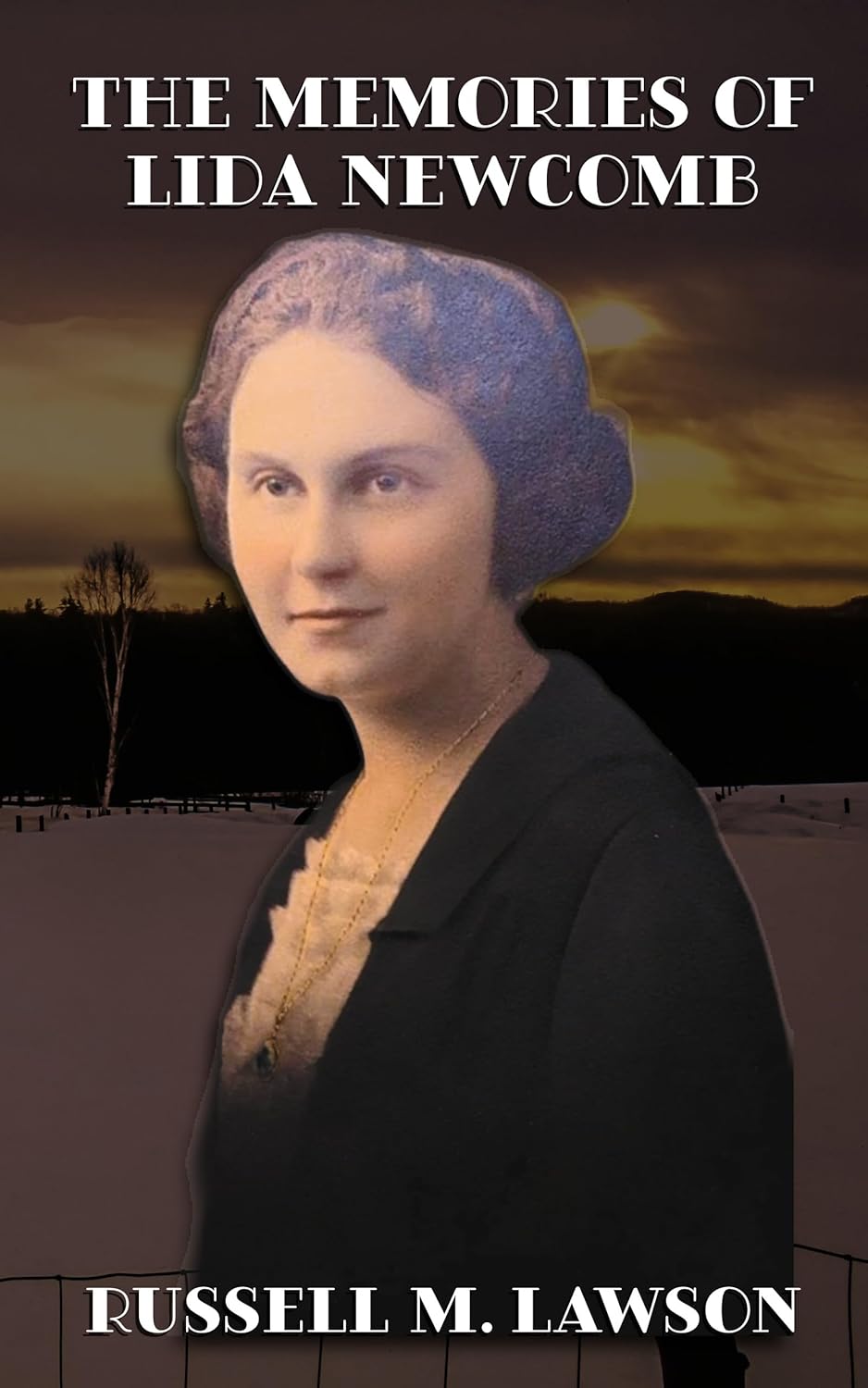
Read the account of Robert King’s daughter in law Lida Newcomb, Robert Eugene’s wife, in the new biography by Russell M. Lawson: https://www.amazon.com/Memories-Lida-Newcomb-Russell-Lawson-ebook/dp/B0FT1N91TD/ref=sr_1_2?dib=eyJ2IjoiMSJ9.J8vuhayH38hhAiGCVPI0bOHz49ZRH61Xxd-IxplouP6kWzxNr1PRLK0p_JnFy9SukVK-0Pp2lhkiUJlTbtYSV10jaDoFjfbZKdUdBON-FVAEPZ7LiPGKmtqJ4Uf58hFNz98hbxZfGHjuV5AhGjWkKVCnMcU-7w-Qo8rACpCouWjv1-MNLeisNsUtAnd7F6H4oPcqxRtFrtkUxaZRV96-cswnUzrHPID7qxP1OhmKUHY.v1zUq4Sd9m4iwTHN1E_zRIUdrgcYSHbvvfLKu-p-11w&dib_tag=se&keywords=Russell+M+Lawson&qid=1761776294&s=books&sr=1-24

Posted in American History, Biography | Tagged , , , | Leave a comment

Peter Etter, American Loyalist

Peter Etter lived from July 5, 1751 to 1798.

Peter Etter was of Swiss descent, his father Peter having been born in 1715 in Bern, Switzerland. His mother, Margaretta Martin, was born in Switzerland in 1724. The elder Peter Etter (following his father, Johannes Etter) and wife emigrated to Pennsylvania in 1737, where he practiced the weaver’s trade in Philadelphia. Johannes and Peter the elder were friends with Ben Franklin and his family. Peter moved to Braintree, MA, in 1750, hoping to work with other German-speaking weavers in a joint weaving operation. In Braintree, the elder Peter became friends with John Adams, although they had quite a few political disagreements. Even as Massachusetts moved toward revolution, and Peter the elder having married into a Loyalist, Anglican family (Margaretta having died in 1754, he married Elizabeth Veazie in 1755), Peter and John Adams remained friends.

Braintree was the place of Peter Etter the younger’s birth on July 5, 1751 to Peter and Margaretta Etter. Peter lived in Braintree until political events forced the Etter family to flee to Boston in 1775. There, Peter, his brothers Franklin and Daniel, and father Peter, signed an agreement with other Boston Loyalists to join together into a defensive association to help the beleaguered British troops defend the city against General Washington and the American militia then laying siege to the city. When the British evacuated Boston in 1776, Peter, Elizabeth, and seven children, including the younger Peter, fled to Halifax. They were among thousands of Loyalists who fled to Nova Scotia, New Brunswick, Quebec, and Ontario. Peter Etter the elder lived in Halifax, and was buried in the Old Burying Ground in 1794.

During the war, Peter the younger joined the “Royal Fencible American Regiment” of Nova Scotia to fight against the rebellious Americans. He became a jeweler, as did his brother Benjamin, and married Sarah Nartain in 1786, perhaps in Halifax. In 1790 he moved to Westmorland County, New Brunswick, with is near the upper reaches of the Bay of Fundy, and lived on land his father had originally purchased.

A good source for the Etter family is Joan Magee, et. al. Loyalist Mosaic: A Multi-Ethnic Heritage, 1984.

Posted in American History, Biography | Tagged , , , | Leave a comment

Will Perkins, Family Historian

William Lennox Perkins, July 12, 1868-August 25, 1946.

William Perkins, brother of Hattie Perkins Brown, who was the mother of Florence Brown Phillips and the grandmother of Milton Arnold Phillips, was the Perkins and Crawford family historian as well as a local historian of Pawtucket, Rhode Island. Uncle Will on several occasions penned extensive accounts of his family and his own life for the sake of local historical associations, especially the Rhode Island chapter of the Sons of the American Revolution.

William Lennox was born July 12, 1868 to George H. Perkins and Margaret R. Crawford. Margaret was George’s second wife, as his first, Mary Ann Tourgee, died in 1865. Margaret immigrated from Glasgow, Scotland, in 1853. George and Margaret lived in the Pleasant View section of Pawtucket; Will spent his whole life there. Although George was born in western Rhode Island, in the town of Exeter, where the Perkins had for centuries owned land, he apparently moved to Pawtucket because of Margaret (or, he was living there when he met Margaret). Will recalled that “my father was a Baptist Deacon until about the time I was born. At that time, he became interested in a newly formed Episcopal Mission near our home, and when it was really organized as the Church of the Good Shepherd, he became its first treasurer and senior warden.” He “was a clerk, vestryman, junior and senior warden for a period of more than fifty-seven years.”

Will graduated from Pawtucket High School in 1886 with a focus on English studies. He wrote that when he “was a young man I used to spend a vacation every summer in Exeter, Rhode Island, on the farms of my aunt, Mahala Perkins Reynolds; my grandfather, John Prosser Perkins; and my uncle John Riley Perkins. I used to sit down with a notebook and write down different statements which were given me by Aunt Mahala. Aunt Mahala was born September 13, 1827. What she did not know about the family history was not worth knowing.”

Will wrote further: “The various Perkins families owned a number of adjoining farms near Escoheag Hill, Exeter, Rhode Island. Exeter, on the west, adjoins Voluntown, Connecticut, which is only a short distance from where my ancestors’ farms were located. These farms were several miles from where my people lived when I spent my boyhood vacations, and so I had no early personal knowledge of them. A number of years ago my father showed me the different farms where his folks lived when he was a boy. Of course, these farms have been sold and resold, and to find, in most cases, where different people were buried is almost impossible. . . . The town of Exeter is about fifteen miles long and three miles wide. From where the Perkins families lived, it was a long distance to the Town Clerk’s Office, so not all of these births and deaths were recorded. Prior to the advent of the automobile, the town of Exeter was nothing but country roads and very high hills; the country roads have disappeared but the hills are still there; so that it was difficult for people living in this remote district to go to the Town Clerk’s Office and to other places like Providence, which was about forty miles away, in order to record various events.”

Will recalled that “there is quite a large cemetery on top of Escoheag Hill. It runs back to somewhere around 1700. With my father, I visited this cemetery on Memorial Day, 1897. I have good reason to remember the date. Most of the stones were common field stones with simply initials and dates, in most cases, scratched on.”

Will was extremely proud of the Perkins’s family history. The first Perkins in America, John Perkins, “came over in the Ship Lyon with Roger Williams in 1631 and settled in Ipswich.” Indeed, “from the time of Roger Williams down to the date of my birth,” Will wrote, his family “were all very good Baptists.

Will was a bookkeeper: from 1900 to 1920 he was Head Bookkeeper, Greene and Daniels Manufacturing Co., which when taken over by Fisk Rubber Co., Will became Purchasing Agent in the textile division until 1927, when he retired. He was active in all sorts of civic associations. He was a member of the RI Society of the Sons of the American Revolution, the Odd Fellows Association, and the Masons.

Will and Harriet L. Johnson were married on March 18, 1896; she died Feb. 8, 1897. On May 20, 1902, Will and Anna Elizabeth Ullrich were married. Their children included William Perkins, Jr., a schoolteacher who died in 1942, Henry C. Perkins, who was a Captain in the Coast Guard and eventually a Rear Admiral, and Miriam M., who died as an infant.

Will wrote proudly in 1945: “Earle A. Phillips, the husband of . . . Florence, is the Head of the Science Department in the Pawtucket West Senior High School, and Florence’s son, Milton Arnold Phillips, graduated with high honors from Brown University February 25, 1945, and is now an Ensign in the Navy.”

Will had a sense of humor. In a letter sent to his sister Hattie, he wrote:

“May 4, 1936

Rhode Island Tercentenary

Dear Sister Hattie:

Greetings! I have waited for 300 years to send you this message. Fearing I may not be here 300 years more am sending it to day.

Roger Williams wanted to be remembered to you all. He says Providence has changed some, since he saw it last.

We are going to have a fine dinner at the Biltmore with the S[ons of the] A[merican] R[evolution] and D[aughters of the] A[merican] R[evolution] in honor of the occasion.

With love

From Brother Will and Lizzie”

Will Perkins died August 25, 1946.

For more on Will Perkins and the entire Perkins family, read my new book The Memories of Katie Perkins, sold by Amazon: https://www.amazon.com/Memories-Katie-Perkins-Related-Families/dp/B0CH2QVCYY/ref=sr_1_19?crid=398YMK046NRTF&keywords=Russell+M+Lawson&qid=1703172044&s=books&sprefix=russell+m+lawson%2Cstripbooks%2C124&sr=1-19


Posted in American History, Biography, books | Tagged , , , , , | Leave a comment

Bessie Lura Amos Largent, Pioneer Woman in Early Oklahoma

Bessie Lura Amos Largent was born 129 years ago on Christmas Eve, 1891, in Sebastian County, Arkansas, to William Wilburn Amos and Ursula Calhoun Amos. Bessie was the first born to this farm family that rented land in the region south of the Arkansas River in eastern Arkansas. Ursula Jane Calhoun, her mother, was daughter to William C. Calhoun and Martha D. Rhodes; she was born in Illinois, and illiterate. William Wilburn, Bessie’s father, was son to George Washington Amos III and Mary Jane Carter; he was illiterate and born in Alabama. In the 1900 federal census, 8-year-old Bessie could neither read nor write. According to the 1910 census, Bessie was 18, attended school, could read but not write.

bess arch damron pauline may

(Bessie Lura Amos and friends: Bessie is on the right)

Bessie married Claude Christopher Largent on December 3, 1911, in Booneville, Arkansas, where they made their residence during their early years of marriage. They had four children: Marie, born in 1913; George Amos, born in 1915; Joyce, born in 1919, and Wanda June, born in 1928.

According to the 1920 census, Bessie and Claude and their first three children lived in Center Haskell, Oklahoma, on Kinta Stigler Road. Claude was listed as a farmer who paid a mortgage on his own home. Claude and Bessie were both literate. According to the 1930 census, Claude and Bessie were living in Seminole County, Oklahoma, in the Econtuchka township. Claude was no longer a farmer, rather a teacher. Their three older children attended school. In the 1940 census, the family lived in Stigler, Oklahoma. Claude was a music teacher with the Works Progress Administration, a federal program of the New Deal. With the coming of the Second World War, the family moved to California for war work, but returned after the war to Oklahoma.

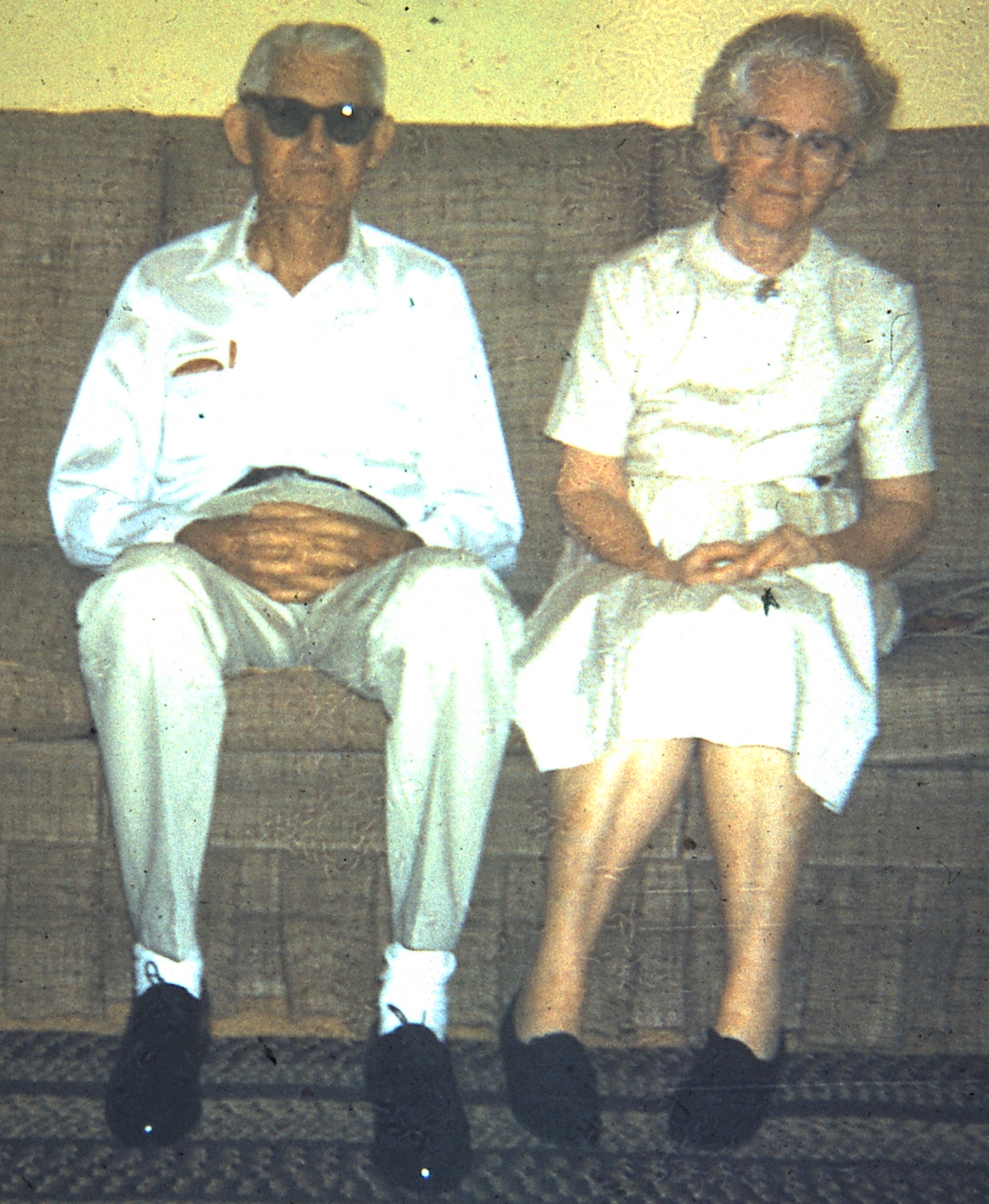
In Tulsa, Claude and Bessie lived in a small house in West Tulsa. Claude worked for Tulsa Public Schools in maintenance while Bess kept house. Every Christmas the entire extended family of children, grandchildren, and great-grandchildren filled the house and enjoyed Christmas cheer. Claude and Bess had their own easy chairs, from which they could sit and watch television. Claude enjoyed smoking his pipe and Bess enjoyed dipping tobacco. They were both quiet people. Bess, especially, was tough, no-nonsense. Claude predeceased Bess by three years. She lived for a brief time in a nursing home, and died on April 29, 1979.

claude and bess nov 1967

Posted in American History, Biography | Tagged , , , , , | Leave a comment

Florence Beatrice Brown Phillips: Life in early 20th century Rhode Island

Florence Beatrice Brown Phillips, August 1, 1899-December 3, 1973.

Earle and Florence Phillips

(Earl and Florence Brown Phillips)

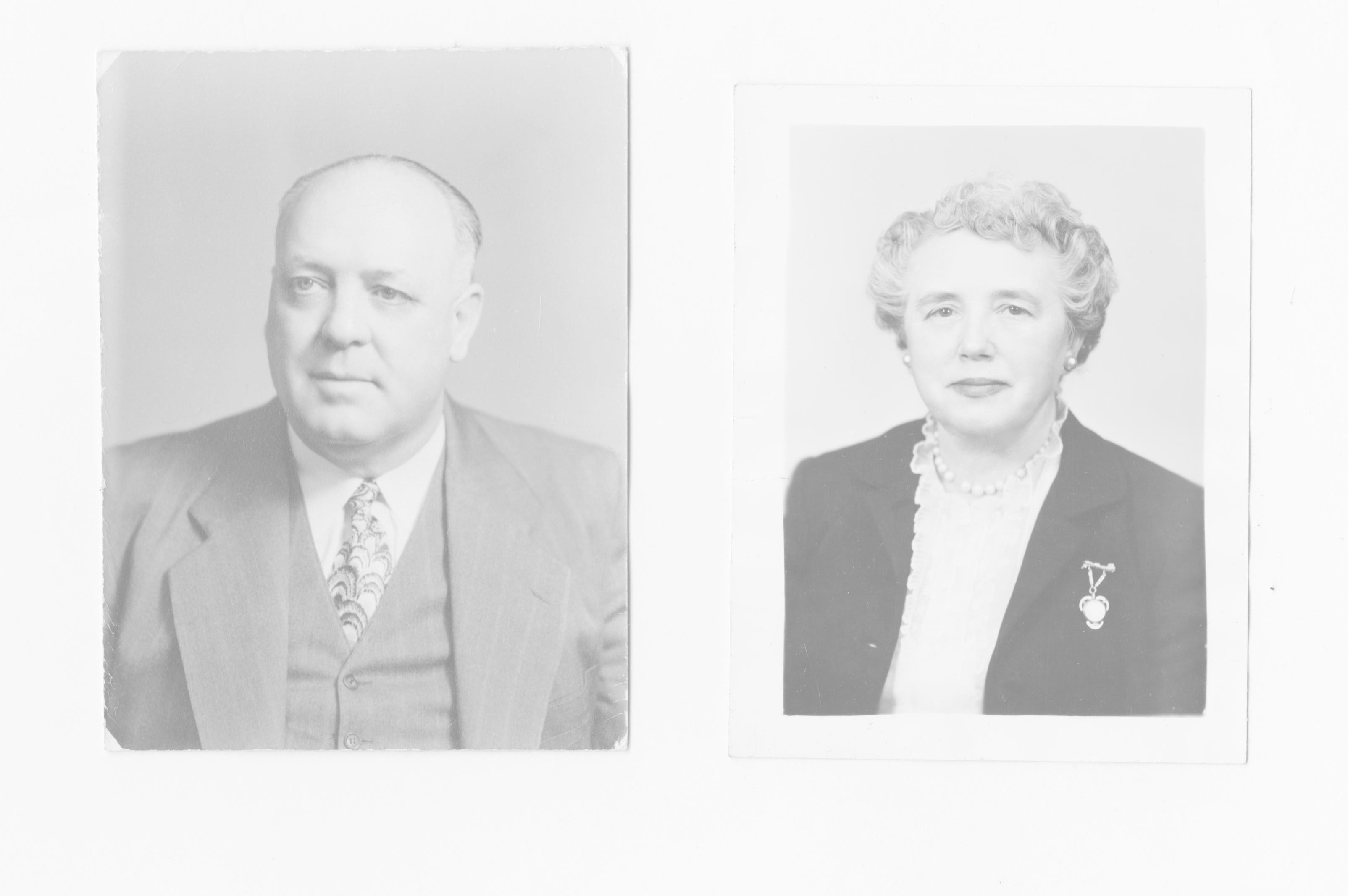
Florence Beatrice was born on August 1, 1899, to Samuel Francis Brown and Hattie Tyler Perkins Brown. She was an only child. When Florence was born, Samuel and Hattie lived with Hattie’s parents, George and Margaret Perkins, in Pawtucket, Rhode Island. In the 1910 census, Florence was 10 years old, her father was 35, and mother 31. They had a boarder living with them, named Mary King, who was 23. Samuel worked at a wireworks, and Hattie was a nurse. In the 1920 census, Florence, age 20, is unmarried, working as a stenographer in an office in Pawtucket. When Florence married Earle A. Phillips in 1921, he was a store manager; by 1930 he was a schoolteacher; she kept house and took care of Milton, their only child; her mother Hattie lived with them. Son Milton was born in 1922. They lived at 758 Newport Ave., in Pawtucket.

Florence was a collector of news-clippings, postcards, and Christmas cards. Her postcards and diaries that survive provide a historical account of her early adulthood. For instance, a brief surviving diary from January to March, 1916, provides some interesting insights into her late teen years.

“January 2, 1916 [1917]. School again. Broke typewriter. Nobody going skating. Wonder if Earle went. . . . Mrs. Duxbury brought perfume, box chocolate, and this book [the diary] for me. Skating spoiled; all thawed. Wednesday. Bookkeeping exam. Planned to go to Rumford. Miss Burke sick. Worked till 5:10. . . . No skating. Retired 12:00. Mouse interrupted my slumber. . . .

January 16, 1917. Saw the ‘Professor’ with a girl on Main St. Said ‘Hello” instead of ‘How do you do?’ Took her to Fisk’s. Like to know who she is. . . . Thursday. . . . Ray called up to go skating. Refused—because French exam to study for. Friday. Day of fate–‘French.’ Comfortably easy. Elizabeth Ingles and I went skating. Ice great. . . . Sunday. Got up at 9:40. Went back to bed with Dream Book for ¾ hr. Breakfast at 11:00. Dinner at 3:15. . . . Fudge!! Boys spent evening. Like old times. Everybody agreeable. 2 escorts!! . . . . Wednesday. School. Walk to Park suggested. . . . Boiled dinner. Palm read 10 cents apiece. Going to marry, 4 children, 2 girls and 2 boys. Prosperity, money and happiness. . . . Feb. 25, 1917. I don’t know exactly what has happened since Feb. 2 but I do know that I have been too busy to write in this book. . . . Earle has the scholarship. Went to Borden’s two weeks ago to-night. . . . O! Forgot about my auto ride with Arthur. Brought me home from down street in his machine. Finest I have ever ridden in. Very slow driver. Very thoughtful of him. Enjoyed it immensely. . . .”

She worked for a time for Kirby-Smith Associates, a Christian fund-raising organization. Exactly when is unclear. After Earl died in 1955, for the last 18 years of her life she lived part of the time with her only child Milton and his family, both in Rye, NY, and Tulsa, OK. She died December 3, 1973.

For more on Florence, Earle, and their family, see my book The Memories of Katie Perkins, at Amazon: https://www.amazon.com/Memories-Katie-Perkins-Related-Families/dp/B0CH2QVCYY/ref=sr_1_19?crid=398YMK046NRTF&keywords=Russell+M+Lawson&qid=1703172044&s=books&sprefix=russell+m+lawson%2Cstripbooks%2C124&sr=1-19

Posted in American History, Biography | Tagged , , , , | Leave a comment

John Calvin Lawson, Farmer in Arkansas and Indian Territory (Oklahoma)

John Calvin Lawson, August 4, 1864-Jan. 30, 1955.

John Calvin Lawson was born in Arkansas in 1864 to Calvin A. Lawson (1825-1907) and Jane Ann Fritts (1835-1902).

In the 1870 census John C. is 6-years-old; Calvin is 40 and a farmer, Jane is 36 and keeping house. They live in Texas: Precinct 2, Fannin, Texas [Goliad County]. Calvin was born in Tennessee, Jane in Indiana. Both were white. John Calvin’s siblings were William H, ten years older, Lucy A, eight years older, Mary E., six years older, James R., three years older, and Milton, four years younger.

In the 1880 census. John C. is listed as 14, which is a mistake, as he was born in 1864; he and his family live in Richland, Washington Co, Arkansas. He is listed as a laborer. John C cannot read and write.

In 1886, John Calvin married Josephine Robbins. He was 22 and she was 18. She was born in 1868 in Arkansas. She was the daughter of James and Esther Robbins.

In the 1900 federal census, John C. and Josephine live in Township 22, Cherokee Nation, Indian Territory (T-22-N-R-25-E). John C., age 36, and Josephine, age 32, have 4 children: James, Denver, Clint, and Allie. He is a farmer; he and she can read and write English. They rent.

According to the 1900 Arkansas census, widowed Esther, Josephine’s mother, lives next door to Calvin and Jane Lawson, John Calvin’s parents: so perhaps John Calvin and Josephine met as next door neighbors.

In the 1910 federal census, John Calvin, aged 45, and Josephine, aged 41, live in Wedington, Washington Co., Arkansas. Their children are: Denver J., 19, Samuel Clint, 17, Allie May, 14, William Leverett, 9 and John C., 1. They own their own farm and house.

In the 1920 census, the only children living with John and Josephine (called Josa) is Will, who is 19 and a farmer, and 11-year-old John C. All can read and write.

By 1930, John Calvin and Josephine Lawson are living in Tulsa, perhaps because Will and his wife Martha Susan have also relocated to Tulsa.

Josephine died in 1949. John C. died six years later in 1955. They are both buried at Rose Hill Cemetery in Tulsa.

great grandparents

For a complete history of John Calvin, his ancestors and descendants, see my book published by Amazon: https://www.amazon.com/dp/B0G9RDT3PF/ref=sr_1_1?crid=36PPTM7BCTC2Z&dib=eyJ2IjoiMSJ9.cqGw_xgnYBNRNQQZ3VVlDTDuoYsfRKxj_sIIwKXnNqz3Sc9Q0z_tRe-gXhSqrYuSiTeWVpdkbeR0UsauvA-pdRwLV29G0a8HbEi3x-NPsvfHRuI9MFZ7xnvafLMgxAVJDSsu9Aup3YrsJkFIqa3HntEFmdb1m36V2e5Jki2B2VORJ0fxrcOagNlw1y07G0_Z83CLGFv4t6Dyfi3RuXu6coGUAjCvcSesMxcQDkon0yc.r7TvUj2h-Yky7rx02rNzQHuEsw1e1NIPpuyyyQjelbo&dib_tag=se&keywords=Russell+Lawson&qid=1766343535&s=books&sprefix=russell+lawson%2Cstripbooks%2C211&sr=1-1

Posted in American History, Biography | Tagged , , , | Leave a comment

Claude Christopher Largent: Teacher in Early Oklahoma

Claude Christopher Largent, July 2, 1888-July 25, 1975.
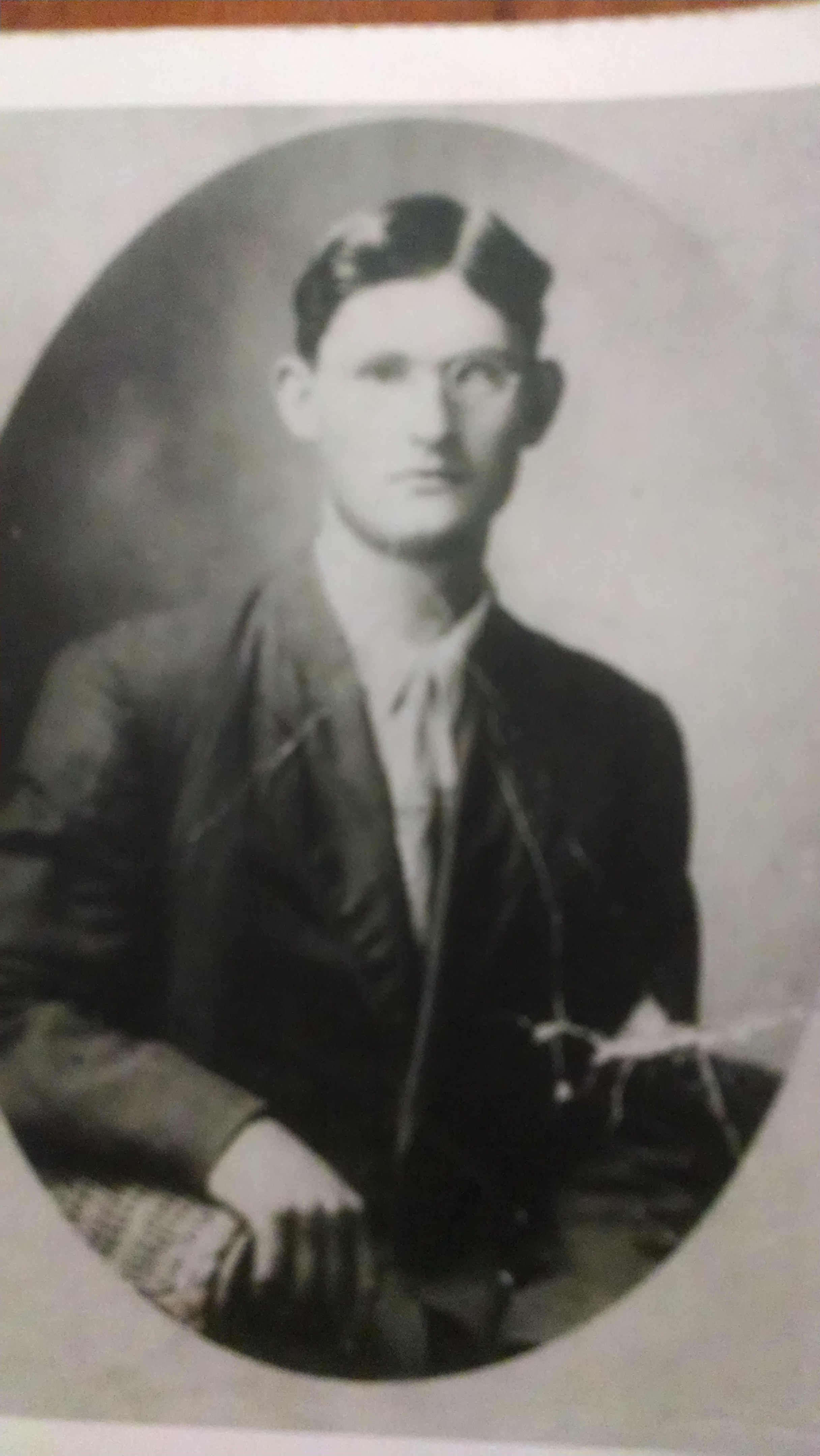
claude as young man

Claude Largent was born to George Washington Largent and Mary Lue Smith in Booneville, Arkansas, on July 2, 1888. George Washington (GW) was a farmer and Mary Lue, who was half Indian (tribe unknown) was his third wife. She and GW had thirteen children, of which Claude was the first. His siblings were: George (November, 1889-December, 1889), Norris (Narcissie) A. (1892-1952), (Mary E, 1893-infant), Mary L. (Bettie), (1894-1960), William, (1896-1896), Evert (1898-1899), Sarah E. (1900- ?), Tommy (1902-1907), Mattie (1904-?) May (1906-?), Viola M. (1907-?,) Georgia Naoma (1909-?).

For many years Claude’s children and relations believed he was born in 1889, and indeed the 1900 U. S. Census claims as much. However, George Washington II was born in November, 1889, and died the following month. Hence what Claude recorded on his 1917 draft registration, that he was born in 1888, was true. (Strangely, however, in his 1942 draft registration, Claude listed his birth erroneously at 1889.) Claude was born a few weeks before GW, aged about 32, and Mary L, aged 17, were married. So Claude was an illegitimate, firstborn son. Perhaps the illegitimacy haunted him and he did not receive some of the benefits of the second living son, Norris.

Claude’s early life was undoubtedly a struggle, in part because he was illegitimate and ¼ Indian, he was not well educated, though he sometimes attended school (his parents were both illiterate). A family tradition has it that Mary Lue stood up to GW in support of Claude when he wanted to attend school. Of Claude’s many siblings, only two appeared to have survived childhood; hence Mary Lue was pregnant a lot and the babies and infants died regularly—death was a frequent visitor to the Largent household.

In the 1900 federal census, he was listed as 10 years old, born in July, 1889, which was an unfortunate error. Claude’s father George W. was born August, 1860, in Illinois, as were his parents, and Claude’s mother Mary L., born Oct. 1871 in Arkansas. Her father, about whom little is known, was born in Missouri, and her mother, otherwise unknown, was born in Arkansas. GW in 1900 owned his own farm, and had no mortgage. Mary was mother of 7 children, 4 living. Their place of residence was Washburn, Logan Co., Arkansas.

Claude’s draft registration in 1917 reveals that he was a self-employed farmer, was married with two children under 12. He lists himself as Caucasian. He was medium height, slender, brown eyes, black hair in June 5, 1917.

Claude married Bessie Lura Amos on Dec. 3, 1911. They lived in Booneville, Arkansas, and had four children, three daughters and one son.

In the 1920 federal census, Claude and Bessie and three children—Marie, Amos, and Joyce—were living in Center Haskell, Oklahoma. Claude was a farmer who owned his own home with a mortgage.

Claude was ambitious enough to educate himself so that he could eventually serve as a school teacher. His daughter June recalled that “the folks talked about several towns where they lived and Dad taught. I believe Pawnee, Shawnee, and towns around Seminole were some. Dad taught in Oklahoma and Arkansas. I remember them talking about him teaching “up on the mountain” in Arkansas.”

In 1928, they were living in Booneville, Arkansas, where GW lived. GW allowed Claude and family to live in a small shack on his land. June recalls that “Mother talked like she didn’t like him; I don’t remember why. Of course, he didn’t leave Dad anything, and I think he had a lot of land. He also had a lot of kids.”
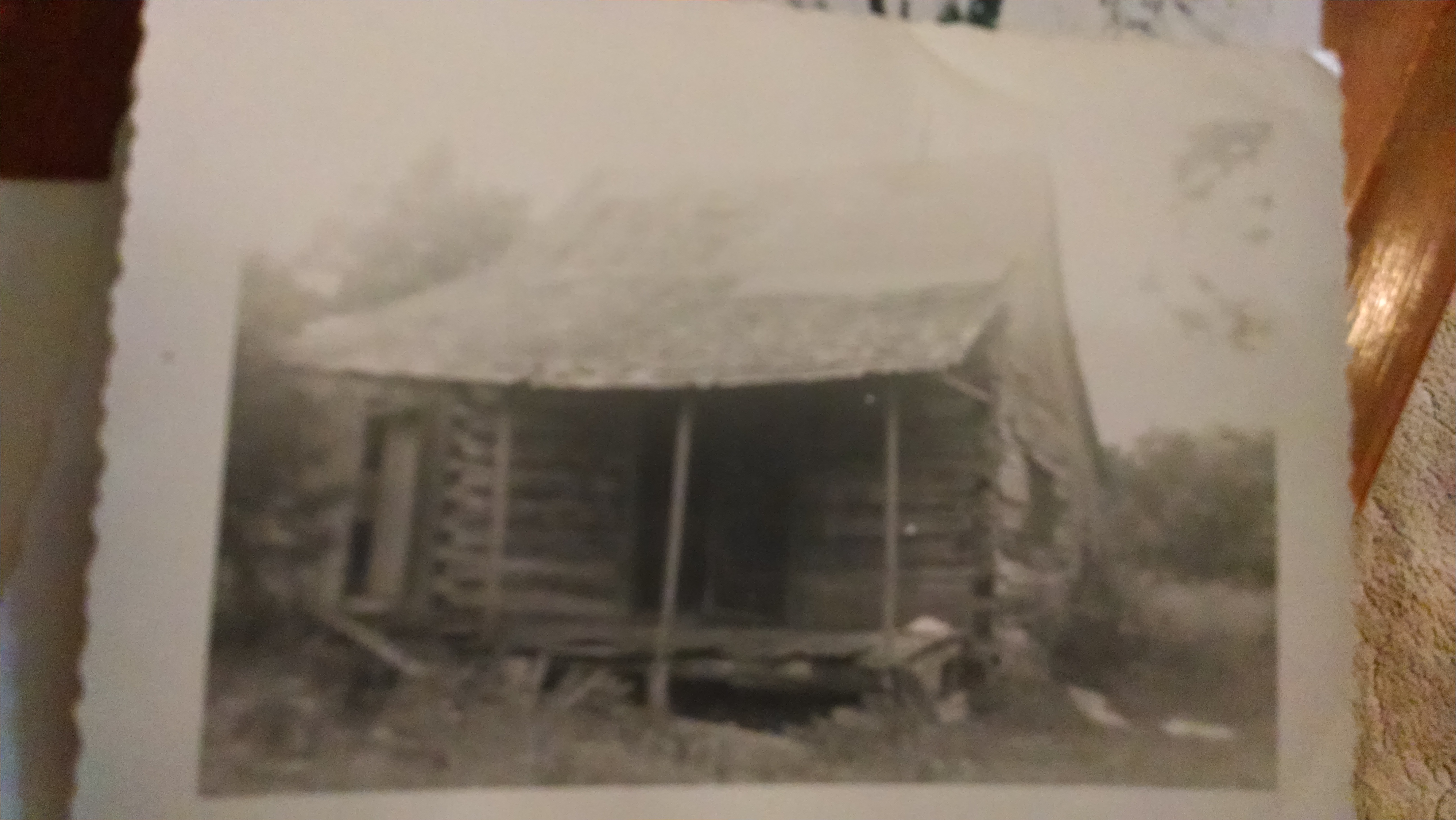
house where Claude and Bess lived and June born

The 1930 census shows Claude and Bessie living in Seminole County, Econtuchka township, Oklahoma. It reveals that they did not own a farm, rather rented. Claude was a school teacher in Econtuchka, which was a small town near the North Canadian River that divided the lands of the Seminole and Pottawatomie Indian tribes.

During the Depression, according to family tradition, “Claude taught school for some $40.00 per month. Walked 10 miles to teach singing lessons during the summer. Sold newspapers in Wewoka. . . . Was not easy, but they made it.” Wewoka is 35 miles from Econtuchka, so either Claude drove an auto to sell newspapers, or the family lived in Wewoka for a time.

Claude moved his family to Stigler in 1934. The 1940 census reveals that the family continued to live in Stigler. They rented a home and did not farm. Claude had completed the second year of college, attending Northeastern State University in Tahlequah. His son George Amos had completed the third year of college. Claude taught music in a Works Progress Administration school. Claude and Marie were a singing duo in local Stigler churches. The Largent family were Methodists.

In 1942, they were living in Stigler, Oklahoma; Claude was employed by Claud Frix, who was the proprietor of a retail dry goods store. But that same year Claude, Bess, and June, their youngest child, made the trek of the Okies to California to look for work. They lived in San Diego in 1942, then moved to Santa Monica in 1943, living there until 1944. Claude worked in the aircraft industry and in a lumber yard. June attended Santa Monica schools. They returned to Stigler in 1945, and Claude worked as an elementary school custodian.

The family moved to Tulsa in 1945. Claude worked for the Tulsa Public Schools, Irving and Mark Twain schools, as a custodian. He also worked for a church in Tulsa. They purchased a house in West Tulsa in 1946 with a Teacher’s Credit Union loan.

Claude retired in 1959 from Tulsa Public Schools and spent his time working in a large garden in the backyard where he grew all sorts of vegetables.

His grandson, Rusty, remembers him as very old, thin, cross-eyed, yet quiet, possibly thoughtful. He wore sun-glasses, even inside, perhaps because of his cross-eyes. Rusty would sometimes join his grandfather in the vegetable garden. Claude said little, but walked about gathering the vegetables and pruning branches; Rusty followed, watching. One time, Claude gave Rusty some books without comment. The books were a two-volume biography of Abraham Lincoln by Carl Sandberg. The books appeared well-used, so clearly his grandfather had read them again and again. They must have been his favorite books, and now he was giving them to Rusty—perhaps his grandfather’s wisdom and Carl Sandberg’s wisdom and Abraham Lincoln’s wisdom would combine to provide the sixteen-year-old inquisitor with wisdom itself. And so, despite the fact that most of the books he read were about sports, Rusty began to read. Sandberg’s portrayal of Lincoln was of a humorous, shy, witty, thoughtful, caring, empathetic man who became President of the United States. Rusty’s grandfather had the same body-type, the same apparent demeanor, as Abraham Lincoln, though as far as Rusty knew his grandfather had only been a custodian for his working years. Sandberg’s Lincoln cared for people, for all people of whatever color, and for this care he became a martyr, a sacrifice to the principles of equality and freedom.

Sandberg’s Lincoln by means of a Claude’s gift opened up a new world for Rusty. It was a world of thought, of stories, of people, of the past. It was a world of the distant and not-so-distant past, which was huge, vast, so vast as to be unknowable. Only a few things about the past could be known. Most past experiences were not known, would never be known. But the possibilities inherent in the past, the countless lives and experiences, were simply too tempting to turn away from. And so Rusty began a quest to know, to read. He was not a gifted intellectual, merely an average student, but he had a desire to know. He began to read science fiction, much of which was based on past human experiences. He read philosophy. The summer after his senior year in high school, as he prepared to go to the university, he read Plato’s Republic—and didn’t understand much. But the whole idea of being able to read the great thoughts of a philosopher from over two thousand years ago, to wallow in the wisdom of the past, was irresistible, and he continued to try to read great books. He particularly enjoyed reading Greek mythology. He read Homer’s Iliad and Odyssey, and not only did he understand these works, but he loved them. He loved the stories of battle, of heroes, of gods and goddesses, of monsters, of revenge, all set in the distant past in a distant land.

By this time in his life, when he turned eighteen and was preparing for the experience of the university, Rusty enjoyed thinking that the mind could elevate him above all the cares and questions of life. It sometimes worked. When in July, 1975, his grandfather Claude became terribly ill, and Rusty went to the hospital to visit the old man, he found him in his bed, partially clothed, senseless, thrashing about in convulsions. It was deeply disturbing, but to a rational, logical person, acceptable as the consequence of life, and Rusty left the hospital as emotionless as possible, as would a philosopher.

Claude Christopher Largent, a kind, quiet man, died in Tulsa on July 21, 1975.
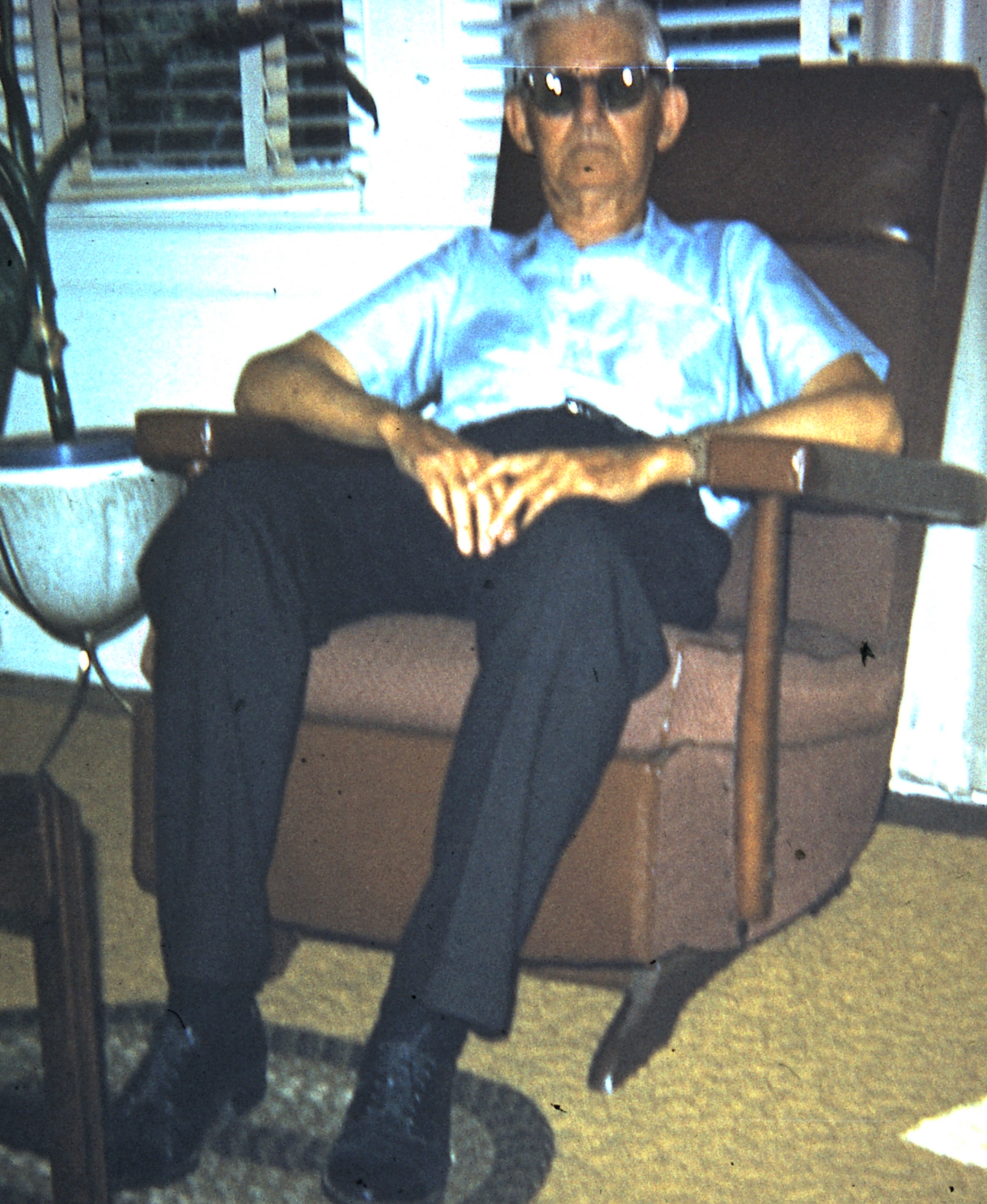
claude largent 1967

Posted in American History, Biography | Tagged , , , , | 2 Comments

George Washington Largent, Arkansas Farmer

George Washington Largent, August 15, 1855-Feb. 26, 1924

George Washington Largent’s life has a bit of mystery about it. His gravestone lists his birth date as August 15, 1859. The month and day are probably correct, though the year of his birth was probably 1855 or 1856 rather than 1859. According to the 1860 U. S. Census, the family of Thomas Largent, in Macoupin Co., Illinois, was comprised of four children, including five-year old George Washington. He could not have been born in 1859, as he had two younger siblings, Lauretta, two, and Charles, four months. His mother, Narcissa Ann Hayes, died with the birth of Charles. So George Washington was five-years old when his mother died. (However, the 1870 census lists him as 14—so he must have been born in 1855 or 1856.)

When George was 10 or 11, his father married a 19-year-old, Lydia Stout. They moved from Illinois to Missouri at some point. In the 1870 federal census, Thomas farms in Deer Creek township, Bates, Missouri. He and his wife Lydia can read but not write, but his son George Washington was completely illiterate, and apparently remained so his entire life.

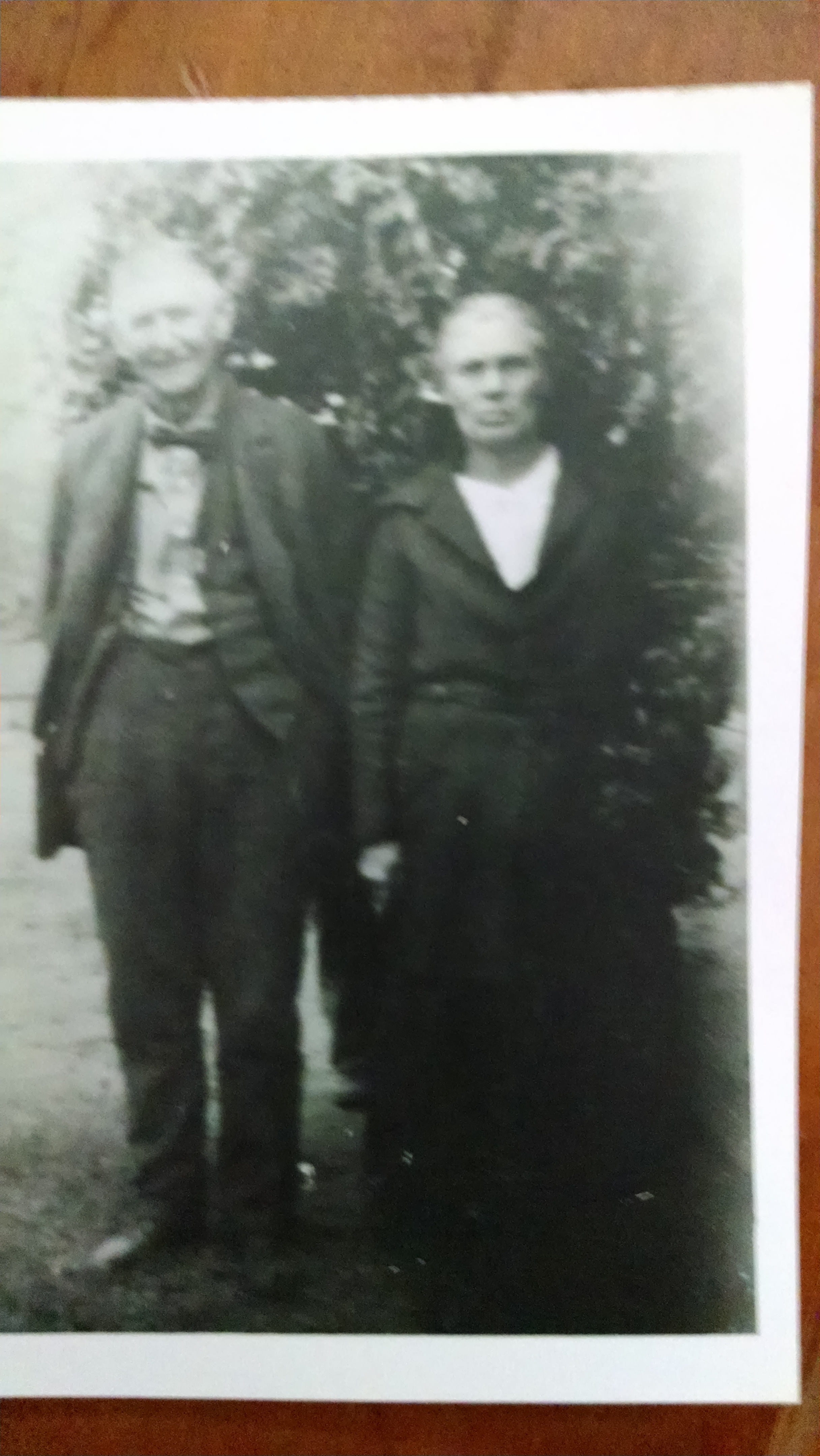
George had four wives during his life, outliving at least three. He was married to Armenty Dunagan, Sarah Bryant, Mary Lue Smith, and Annie Pool. George’s first child was born to Armenty–Rosettie, born in 1859. The rest of his children were born to Mary Lue Smith, who was, according to family tradition, ½ American Indian, tribe unknown. George and Mary conceived their first child, Claude, out of wedlock, as they were not married until July 25, 1888, and Claude was born on July 2, three weeks earlier. George was about 33, Mary was 17. Overall, they had 13 children.gw largent    George Washington Largent

GW and Mary Lue

(The above photo shows GW and Mary Lue Largent, date unknown)

George Washington’s namesake, born in 1889, died in infancy; GW and Mary Lue’s third child, Norris, seems to have been favored over their first born, Claude. In the 1920 federal census, Norris and his family lived next door to GW and Mary Lue; meanwhile Claude and his family lived in a shack on GW’s land. In 1920, GW is 60, Mary L is 50; four daughters live at home. He is a general farmer, owns his land. He and Mary L are illiterate. He is born in Illinois, his parents also. She is born in Arkansas, her father in Missouri, mother in Arkansas.

According to family traditions,  GW left “Illinois under some kind of trouble.” Also, Mary Lue stood up for Claude when he wanted to go to school, and GW would lock the gate to keep suitors from courting his granddaughter Marie.

In the 1930 federal census GW owns his house, farms, is 71, cannot read or write, has no schooling. He is remarried to Annie Pool.

GW and Mary Lue were buried side by side in Ferguson Cemetery, Chismville, Logan Co., Arkansas. His epitaph reads: “An honest man’s the noblest work of God.”

Posted in American History, Biography | Tagged , , , , | Leave a comment

Waiting

Reflections on Psalm 40

Waiting

I waited for the Lord . . .

Waiting. Everyone is waiting. The whole world is in expectation. Such is the way of time, that each moment passes and a new one is coming, and we await to see what it brings us. Will it be good or bad? Blessings or curses? What is to become of us? The Psalmist waited on the Lord, and was brought out of the mire to the sturdy land, where he could stand, walk firmly, and gaze ahead. He felt strong in the Lord and he was able to put behind fear and hope in the Lord.

Happy the person whose hope is in the name of the Lord . . .

Notwithstanding what faces us, what tragedy, or epidemic, or war, looms before us, so that the future seems so uncertain, and tomorrow can bring doom, we must put our hope in He who overcomes fear, He who transcends time, He who holds the world in His hands. Many put faith in vanities, in things of a day, in riches, and reputation, and power, but the Psalmist put hope in the one and only certainty in life, God.

In a scroll of a book it is written of me . . .

The book is the Lord’s and God is the author. I can only read it in retrospect. But the book has been written, and God knows. It is for me to trust in God’s authorship, His plan, the Chapters that remain, and I will hold fast to what God wills for me. Perhaps the book ends tomorrow, or the next day, or in ten or twenty years. There is a certainty–if hidden from me.

The glad news of righteousness . . .

There is good news, notwithstanding what happens today or tomorrow. The news is always good when it is the Lord’s. Human news is never good. The Lord’s news is truly good news. It is the news that reassures us that all is well—even when it appears otherwise.

My heart failed me . . .

It does in each moment. I am not alone, knowing that the Psalmist felt the same way, so many thousands of years ago. Each moment brings more bad news, more fears, more to worry about. But the Psalmist declared, and I agree, “Let the Lord be magnified!”

Poor I am and needy . . .

Always. I am never rich and full. It is the consequence of moving time, that I can feel momentarily rich and full only to have it siphon out, and I am alone again, waiting.

O my God, do not delay.

Posted in books, Christianity, Reflections on the Psalms | Tagged , , , , | Leave a comment